


Motorola Droid X2 official at $200: launching online May 19th, in stores May 26th
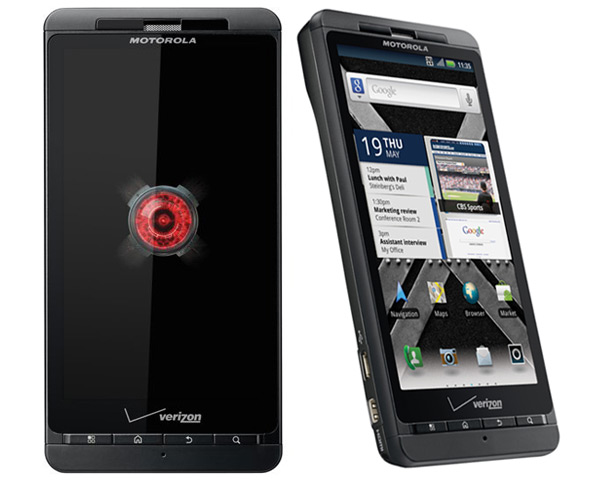
Motorola and Verizon have finally stopped teasing us and have made the Droid X2 official. This is a 4.3-inch Android (2.2, to be upgraded to 2.3) smartphone with a qHD screen resolution and a dual-core 1GHz processor. An 8 megapixel camera with continuous autofocus and HD video recording graces the back. The X2 will cost the usual $200 on contract and will be available to buy online tomorrow, May 19th, before making its way out to stores a week later, on May 26th. Leap past the break for the full PR.
Interestingly, we’ve also spotted the close proximity of the USB and HDMI ports on the side of the new X2. That arrangement is reminiscent of the one on Motorola’s Atrix, where the two connectors served to hook that handset up to its lap
via Motorola Droid X2 official at $200: launching online May 19th, in stores May 26th — Engadget.

Samsung Galaxy Tab 10.1 Limited Edition review

It may be a bit difficult to pay attention to the spate of Honeycomb tablets that seem to be popping up left, right and center — you know, now that Ice Cream Sandwich has been officially promised — but what’s not easy to overlook is an 8.6mm slate. Checking in at a sliver of a pinch thinner than the illustrious iPad 2, Samsung’s rethought-out, redesigned and definitely-not-renamed Galaxy Tab 10.1 is the first Android tablet to date that seriously goes toe-to-toe with Apple in both specifications and design. Granted, the consumer models aren’t slated to ship out until June 8th, but given that Google handed us one last week during its annual I/O conference, we figured we’d spend the following weekend wisely. You know, photographing, benchmarking and testing this thing to the hilt. (Of note, the unit tested here was the Limited Edition model, devoid of TouchWiz, 3G and a microSD card slot, but is otherwise identical to shipping units aside from the design on the rear.)
The Tab 10.1 — not to be confused with the older, since-relabeled Tab 10.1v — weighs just 1.31 pounds (marginally besting the iPad 2’s 1.33 pound chassis), and if looks could kill, few people would’ve made it out of Moscone West with all organs functional. But as you well know, style only gets you in the door — it’s the guts, the software, and the marriage of it all that makes or breaks the tablet experience. Hop on past the jump to find out why we think Samsung truly delivered on the promise of a Google-powered tablet, and why you should all seriously consider socking away funds as early June approaches.
Read More Samsung Galaxy Tab 10.1 Limited Edition review — Engadget.

HTC Flyer review
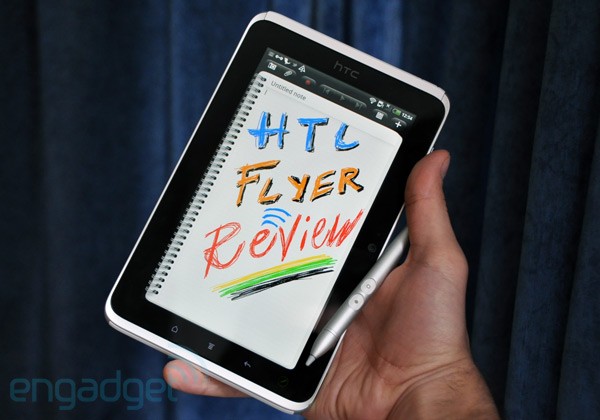
Over the past couple of years, HTC has rapidly built up an enviable reputation (and bank balance) in the smartphone space with a succession of feature-rich, smartly designed, and innovative handsets. The HD2 introduced us to the 4.3-inch form factor, the EVO 4G ushered in the era of 720p video recording, and the Legend wrapped itself inside a never-before-seen aluminum unibody enclosure.
Full Review: HTC Flyer review — Engadget.
Official: Samsung Galaxy S and Galaxy Tab getting Gingerbread update in mid-May
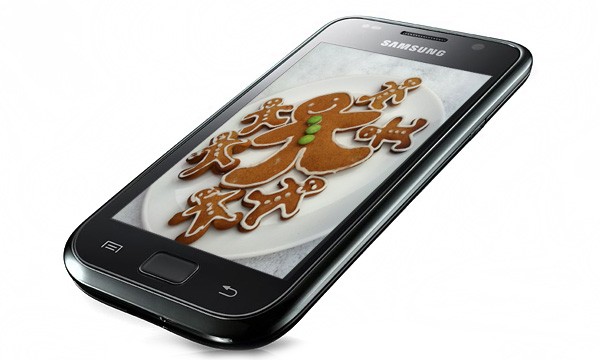
After encountering a little hitch with its mid-April Gingerbread delivery, Samsung is now ready to boot up Kies for another try. The company has this morning released word that it intends to update its entire Galaxy S family line, starting with models in the UK and Nordic countries from the middle of this month. The rest of the globe, including North America, will follow suit “according to the regional plan.” Also benefiting from a Gingerbread upgrade will be the 7-inch Galaxy Tab, which already got a taste of Android 2.3 in Italy, and the company’s bevy of budget Galaxy devices, the Ace, Gio, Fit and mini. Read the full PR after the break.
via Official: Samsung Galaxy S and Galaxy Tab getting Gingerbread update in mid-May — Engadget.
New Features Coming in the Windows Phone Mango Update
“The newest update to Windows Phone 7 called “Mango” (Windows Phone 7.5) is coming this fall with some enticing features.These new features illustrate WP7’s open mindedness, but also the degree to which they are behind the competition.”
Business Insider, easily my favourite newly-discovered site, has put together a list of the best upcoming features in Mango – and these are only the ones we know about. I have a feeling there may be a surprise or two when it ships. Of course, I was already surprised by one thing I saw on this list: SMS dictation! I seem to have missed that feature in the other round-ups of Mango features that I’ve read. There’s some good stuff coming – and I sincerely hope that by the time Mango is ready to go, we won’t have the scattered, confusing mess of an update story that we got with NoDo.
via Windows Phone Thoughts – Daily News, Views, Rants and Raves.
Android 3.1 on the Motorola Xoom: hands-on (video)
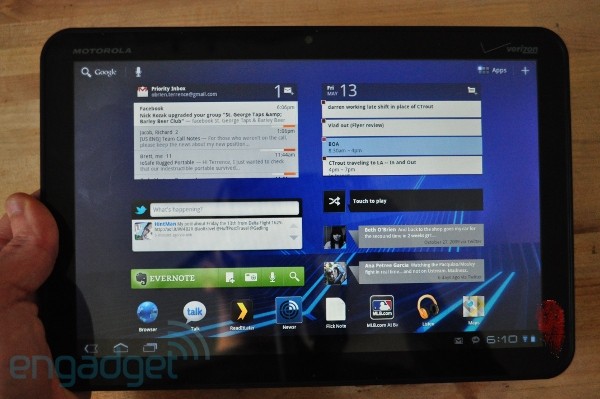
That Android 3.1 update that Google announced during I/O is slowly rolling out to 3G Xoom owners as we speak. How’d we know such a thing? Why, it just landed on our in-house Xoom, of course! Most of the changes to Honeycomb are happening under the hood — better HTML5 support, faster performance, and USB host functionality for connecting peripherals like game controllers and mice — but there are some improvements that will be a lot more obvious to the user. Perhaps our favorite is the addition of resizable widgets. For the moment only the email and Gmail inbox, calendar and bookmarks widgets can be stretched or shrunk, but we’re sure others will follow. We’re particularly appreciative of the expandable calendar widget, which always felt a tad cramped. The task switcher also received a much requested upgrade and now lets you scroll through your last 18 launched apps, instead of just the five most recent. Lastly, the Android Market now offers movie rentals, alongside books and apps, which range in price from $1.99 to $4.99 for 24 hours of playback. There isn’t a ton of revolutionary stuff going on here, but it’s certainly a welcome and worthwhile update. Check out the video after the break to see Android 3.1 in action.
via Android 3.1 on the Motorola Xoom: hands-on (video) — Engadget.
Samsung Galaxy S2 review
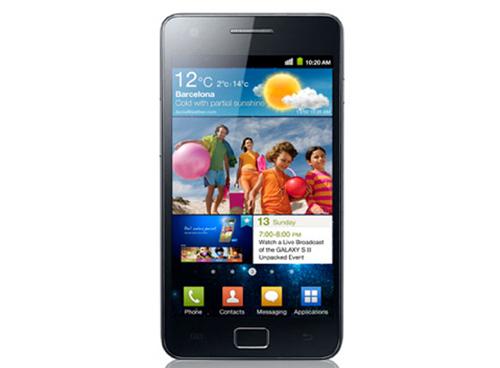
Pick up the phone and the first thing you notice is how light it is – it’s just 116g. Measuring 8.49mm, it’s incredibly slim in comparison to 9.9mm for the original Galaxy S; 9.3mm for theApple iPhone 4 and 8.7mm for the Sony Ericsson Xperia Arc.
While the Galaxy S2 will certainly fit into the tightest jeans pocket, the compromise is build quality – the body just feels cheap and uninspiring. Things don’t improve when you remove the wafer thin back to insert a sim – we’d be seriously worried about snapping it.
Controls are limited to volume on one side, power on the other, MHL port, which serves a dual purpose of charging via USB and outputting to HDMI, and a 3.5mm jack on the top, Samsung includes a range of streaming options including DLNA. Read more 
Netflix releases Android app for select HTC phones, Samsung Nexus S
 Well, it looks like the LG Revolution won’t be the first Android phone to get Netflix after all. The app has just hit the Android Market and is currently available for the HTC Incredible, Nexus One, Evo 4G, and G2, plus the Samsung Nexus S. As you might expect, there’s not a lot of surprises in terms of functionality — you can resume watching where you left off on your TV or computer, and the app will allow you to manage your instant queue in addition to letting you simply browse movies. On its official blog, Netflix explains that while the app is currently limited to phones with “requisite playback support,” it anticipates that many of the “technical challenges will be resolved in the coming months,” and that it will be able to “provide a Netflix application that will work on a large majority of Android phones.” That’s some curious wording, to be sure, and a notable change from earlier talk that suggested only certain Qualcomm processors would support the necessary DRM for Netflix. Also not supported at the moment: Canada. If none of that precludes you, however, you can hit up the Android Market link below to try it out for yourself.
HTC Pyramid emerges from the mists of speculation with a 1.2GHz dual-core, 4.3-inch screen, T-Mobile 4G
 First Sprint got a 4G-capable, 4.3-inch Android phone from HTC, then this January AT&T (Inspire 4G) and Verizon (Thunderbolt) received promises of the same. Is T-Mobile feeling left out? It might not be for long, as the rumor mill has just churned out a rather mighty 1.2GHz dual-core beast of a handset and is ascribing it to the Magenta network for a launch some time around May or June. We’re hearing it’ll come with qHD resolution (960 x 540, just like the Atrix 4G) and the SOC within will be that famedSnapdragon MSM8260 that Qualcomm teased briefly at CES a couple of weeks ago. Lending credence to this scuttlebutt is the fact that both TmoNews and Android and Me found sources affirming the Pyramid’s existence, leaving us only to wait and wonder about what we can do with a device of its kind.
Android 3.0 Honeycomb emulator has traces of smartphone support
 Thought Honeycomb was just for tablets? Well, it’s not! Sure, tablets might be Google’s main thrust with the release, but we’ve been able to dig up enough evidence in the preview SDK’s emulator released yesterday to suggest that these guys are still keeping their eyes on the smartphone prize.
Here’s how it works: the emulator can be set to load at an arbitrary screen resolution. By default, that’s WXGA, 1280 x 768 — perfect for tablets, but obviously a wee bit large for even the biggest smartphones. Well, it turns out that setting the emulator to WVGA (like you might find on a modern mid- to high-end smartphone) triggers a moderately different shell UI that lacks most of the whiz-bang home screen stuff Google’s shown on the Honeycomb tablets. In fact, the default launcher crashes out entirely, which means you need to install a replacement (Launcher Pro works nicely) just to play around.
Once you get in, it’s pretty raw, but you immediately notice that the emulator’s got some traces of smartphone support. Notably, the status bar reverts to a more smartphone-friendly form, albeit one with pre-Gingerbread background coloration and incorrectly-inverted font colors. The lock screen (pictured above) is back to its old form, not the webOS-esque circular lock in the Honeycomb tablet UI. The browser — which has been completely revamped in Honeycomb — works, though without visible tabs; Google might be thinking that they’d take up too much real estate on a screen this small.
Again, you can’t glean much here, but it’s interesting primarily because the emulator knows to revert to a smartphone UI layout at the lower resolution — a possible sign that Honeycomb will be a true dual-mode, dual-purpose platform from day one. And even if it isn’t, it looks like they’re setting themselves up for a two-UI strategy down the road.

