


Skype 2.0 brings two-way video calling to Nexus S, Desire S, Xperia Neo and Xperia Pro
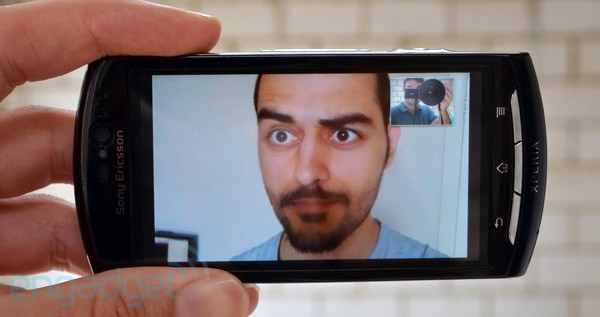
The latest update to Skype’s Android application has just been rolled out and a big part of its goodie delivery is two-way video calling. Only a quartet of phones are supported right now: Google’s own Nexus S, HTC’s Desire S, and the Xperia Neo and Pro from Sony Ericsson, all handsets that shipped with Android 2.3 installed. We suspect the rest of the Android world won’t be far behind — Thunderbolt users will surely be wondering why they’re not included in this first batch — but for now it’s just that fearsome foursome. Also included in Skype v2.0.0.45 is a UI overhaul and support for SMS messaging, neither of which suffers from any handset restrictions. Hit up the Android Market on your phone (the web Market still lists version 1) to get at the latest software.
via Skype 2.0 brings two-way video calling to Nexus S, Desire S, Xperia Neo and Xperia Pro — Engadget.
HTC EVO 3D review

The first time we saw the rumored Supersonic we were blown away. HTC and Google had just wowed us with the Nexus One, and here we were looking at something even better — a 4.3-inch phone with WiMAX wrapped in a white body. This prototype was buggy and had abysmal battery life, but it was real. Four months later it landed in our hands at Google I/O. We’re of course talking about the EVO 4G which went on to become a runaway hit for HTC and Sprint as the first ever 4G smartphone in the US. And here we are a year later with the HTC EVO 3D, the legitimate heir to Sprint’s mobile kingdom — at least until the Motorola Photon 4G comes along. When we first played with the 3D-capable handset at CTIA we were suitably impressed, but we left with a lot of unanswered questions. How do the 1.2GHz dual core processor and qHD display affect battery life? Is 3D a compelling feature or just a gimmick? What is 2D camera performance like with the lower specced camera? Is the EVO 3D a worthy replacement for the EVO 4G? Find out in our review after the break.
Droid X2 review

Would a Droid X by any other name smell as sweet? When we reviewed that phone last year we found it to be a solid performer in a solid chassis. In short: a very good phone. Now it’s back with a new name, or a revised one at least, the Motorola Droid X2 offering the same basic design as its predecessor but packing a lot more heat on the inside — a dual-core dose of Tegra 2, to be specific. Will it tickle your olfactory sensors just like the first X?
HTC EVO 3D launches on June 24th for $200, joined by EVO View 4G tablet at $400

The HTC bonanza that Sprint has been cooking up for a while now has its official launch date: June 24th. That will be the day when the 4.3-inch EVO 3D and its tablet buddy, the 7-inch EVO View 4G, launch on the Now Network, both equipped with WiMAX radios and Android 2.3 Gingerbread as their OS. The 1.2GHz dual-core EVO 3D costs $200 on contract, with pre-orders available right now provided you buy a $50 Sprint gift card, whereas the 1.5GHz single-core EVO View 4G will set you back double that, at $400, while still requiring a two-year contract. Skip past the break for the full press release details.Oh, weve also just noticed that Sprint Premier customers will be able to buy the EVO 3D online on June 21st — a three-day headstart on the competition to say thank you for being so damn premier.
via HTC EVO 3D launches on June 24th for $200, joined by EVO View 4G tablet at $400 — Engadget.

HTC Sensation review

A hotly anticipated smartphone with a 1.2GHz dual-core processor, a “Super” 4.3-inch screen, and a manufacturer-skinned version of Android 2.3 — we must be talking about the Samsung Galaxy S II, right? Not on this occasion, squire. Today were taking a gander at HTCs Sensation, a handset thats just begun shipping in Europe under a short-term Vodafone exclusive and which should be making its way to T-Mobile in the USA early next month. By beating its stablemate the EVO 3D and Motos Droid X2 to the market, the Sensation becomes the worlds first 4.3-inch smartphone with qHD resolution, while also serving as the debut phone for HTCs Watch movie streaming service and Sense 3.0 UI customizations. That leaves us with an abundance of newness to review, so what are we waiting for?
Barnes & Noble announces new touch-enabled Nook for $139
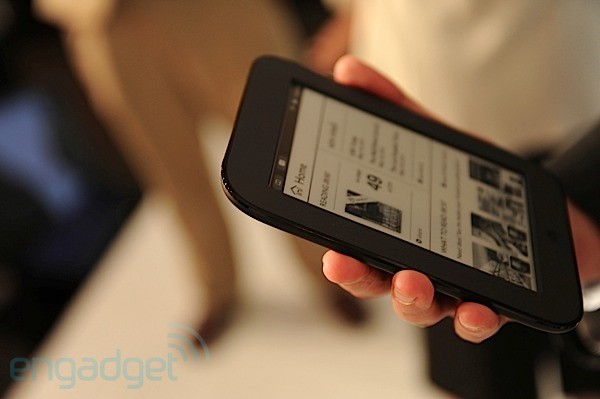
Not to be outdone by Kobo, which just unleashed its latest E Ink reader yesterday, the folks at Barnes & Noble are back with the latest update to their line of Nook devices. The “all new” Nook has the same Zeforce infrared touch layer as the aforementioned Kobo, and lasts up to two months on a single charge. The Pearl E Ink screen boasts “80-percent less flashing” during page turns, something that many fans of the devices have resigned themselves to having their eyes assaulted by. B&N is also quite proud of its streamlined interface which it brags has 37 less buttons than the Kindle 3. Around the back is a soft-touch rubber surface that should feel great in the hand while reading, though, we’ll have to wait to manhandle one ourselves to be sure.
The new Nook has a redesigned home screen with your current reading list and suggested titles. It also adds a few new features like FastPage Zoom forward, which lets you jump to any page in a title, and (finally) displays the number of pages left to go. Inside is Android 2.1, 2GB of storage, which can be expanded using the microSD slot, and a WiFi radio — but sadly no 3G. You’ll also be able to share quotes, lend books, and update your status on social networks using Nook Friends, which debuted last year with the Nook Color.
You can pre-order online and in stores now and the updated Nook should start shipping to customers June 10th. You’ll also be able to pick one up at BestBuy, Walmart, Books-A-Million, and Staples for $139 at the same time.
via Barnes & Noble announces new touch-enabled Nook for $139 (video) — Engadget.
ASUS Eee Pad Transformer Review
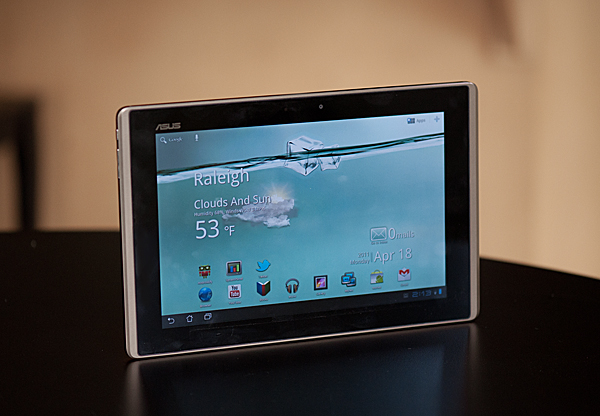
I’ve been on a bit of a tablet kick lately, so even if you have dinner with me—tablets are bound to come up (I only break out the SSD conversation for the truly patient). Last week I had the pleasure of having dinner with Tony Tamasi and Jim Black of NVIDIA, and of course—tablets came up.
I’ve been thinking about device synergy, something I brought up in our PlayBook review. The problem is as follows: if I’m on my desktop with half a dozen tabs open and perhaps a PDF as well, but I decide to switch over to a tablet—there’s no quick way that I can transition my reading environment between the devices. What I have to do is sit down on the couch, whip out my tablet, and manually navigate to each website and redownload/open the PDF. What I’d like to do is something along the lines of HP’s Touch to Share, but just on a larger scale.
Pantech Announced World First 1.5 GHz Dual-Core Phone

Pantech is one of the leading mobile phone companies in S.Korea, and they always announce some amazing devices but mostly in S.Korea. They are also offering some of their devices in the States via AT&T and Verizon, but all of them are just mid-range devices, and we are still waiting for Pantech to announce their superphones in USA, like the new Pantech Vega Racer. It’s the first device to come with a 1.5 GHz Dual-Core Qualcomm MSM8600, 1GB RAM and a blazing fast Adreno GPU. Unfortunately, the device will be available only on SK Telecom later this month. It comes with a 4.3-Inch TFT LCD display with a resolution of 800×480 and the phone is rocking on Android 2.3 Gingerbread. There is an 8 MP camera on the back side and a 1.3 MP front-facing camera. It’s only 9 mm thin, features 1650 mAh battery and weighs 120 grams. Pantech is also planning to launch a tablet later this year, so let’s see if the tablet is powerful enough to beat XOOM and other tablets.
via Pantech Announced World First 1.5 GHz Dual-Core Phone › AndroidGuys.
HTC Flyer hands-on video
HTC’s first attempt at tackling the tablet market, the HTC Flyer has landed in the T3 offices and so we have compiled a gallery of hands-on images with the 7-inch device.
Available to buy now priced £599.99 as a standalone device the HTC Flyer, first unveiled at Mobile World Congress back in February, comes equipped with Google’s Android 2.4 Gingerbread mobile operating system with an upgrade to the tablet centric 3.0 Honeycomb reportedly already in the works.
Touting a 7-inch display with a 1024 x 600p resolution the Flyer’s spec sheet is plumped by the inclusion of a 1.5GHz single core processor 1GB of RAM and HTC’s hugely popular Sense UI skin running over Google’s Android OS.
With full Flash 10 and HTML 5 compatibility, the HTC Flyer comes boxed with a HTC Magic Pen stylus for note taking and improved user interaction with a 5-megapixel rear mounted camera with 720p HD video recording capabilities joins by a 1.3-megapixel forward-facing snapper.
via HTC Flyer hands-on pictures with the Android tablet | T3 magazine.
The ASUS Eee Pad Transformer and Acer Iconia Tab A500 will get Honeycomb 3.1 in June
With the Motorola Xoom being the first tablet to get Honeycomb 3.1, where does this leave other tablets? We know the Samsung Galaxy Tab 10.1 will ship with it pre-installed. ASUS and Acer have announced that they will be updating the ASUS Eee Pad Transformer and the Acer Iconia Tab A500 to Honeycomb 3.1 in June.
You can expect the update to be over-the-air and it will bring performance improvements, UI enhancements like stretchable widgets, a new task switcher, and support for USB peripherals.
LG said they will be updating as well, but would not commit to a date.
With the competition heating up in the tablet war, lets hope all the manufacturers recognize that they need to get these updates quicker rather than later.
via The ASUS Eee Pad Transformer and Acer Iconia Tab A500 will get Honeycomb 3.1 in June.
 AIVAnet