


Sony grows its Xperia line by two with the 6-inch T2 Ultra and Walkman-centric E1

You’d think a company that very recently announced two new flagship smartphones at CES would slow its roll and hold off on the product announcements for a bit. But no, Sony’s introducing two more handsets to the mix with the Xperia T2 Ultra and Xperia E1, albeit for very specific markets. Neither the T2 Ultra, which gains its ‘Ultra’ distinction by virtue of a 6-inch, 720p display, nor the diminutive 4-inch E1, with its 100Db speaker and focus on music, are going after the early adopter crowd. Instead, Sony’s crafted these devices for those with less champagne tastes; the T2 Ultra’s aimed at “emerging markets”, while the E1′s a mid-tier take on Sony’s Walkman legacy. And both arrive with dual SIM variants.
For the T2 Ultra, Sony’s kept some specs consistent with the original Xperia T, like the 720p display (here of the Triluminos variety) and 13-megapixel camera, while enlarging the phone’s overall footprint and beefing up its battery life with a 3,000mAh cell. Yes, that 6-inch display means pixel density will suffer, but on the upside, the phone is relatively thin at 7.6mm — the same thickness as the iPhone 5s. Storage-wise, users are looking at meager 8GB of internal memory with the option to expand that by an additional 32GB via microSD.
Sony’s bundled a handful a camera apps for those users that want to take advantage of the T2 Ultra’s 13-megapixel module. It’s not entirely the same app suite we saw on the Z1S — Info Eye, AR Effects and Social Live didn’t make the cut — but users will have access to Background defocus, Sweep Panorama, Collage, Timeshift burst and the selfie-friendly Portrait Retouch.
Despite its emerging markets bent, the T2 Ultra is indeed an LTE handset, owing to the unspecified 1.4GHz quad-core Snapdragon processor inside. That said, HSPA-only versions will be made available in certain markets where LTE isn’t readily accessible.

As for the E1, that tiny (by today’s standards) 4-inch HSPA+ handset’s all about the music, not top shelf specs and will be available in three colors: white, black and purple. Its combination of a WVGA display (800 x 480), 1.2GHz dual-core Snapdragon 200 processor paired with 512MB RAM, and 1,700mAh battery makes the E1 a solid budget device. What saves it from mid-tier Android smartphone obscurity and sets it apart, however, is its 100Db speaker.
If you’re unfamiliar with decibel ranges, the E1′s 100Db speaker essentially means you’ll be able to blast the latest Pitbull/Ke$ha collabo over your dad’s Saturday morning lawn mowing or the soothing sounds of jackhammers attacking the pavement. We’re aware that audio quality could take a hit at those levels, but Sony’s packed in its ClearAudio+ and xLoud technologies to ensure overall balanced sound. The E1 also features a dedicated hardware key for Sony’s Walkman application, support for shake-to-shuffle play controls and a 30-day trial for Sony’s Music Unlimited catalog.
At the moment, Sony hasn’t released pricing or release info for the Xperia T2 Ultra or Xperia E1 — not even pegging them for something as vague as a Q2 launch. We do know though that the Xperia T2 Ultra is being geared towards China, the Middle East, Africa and Asia Pacific, so don’t count on seeing it show up in Europe or stateside anytime soon. The Xperia E1, on the other hand, is more of a wild card, but we’re betting that 4-inch Android boombox gets the broader market rollout.
Filed under: Cellphones, Wireless, Mobile, Sony
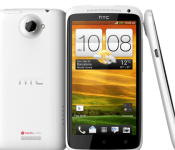
HTC One X and One X+ Won’t be Moving Past Android 4.2.2
 Looks like the 2012 HTC One X and One X+ will be left back on Android 4.2.2 with the Sense 5 package. HTC made the news official in a Tweet response to David O’Rourke asking about if the rumor was true.
@davidjorourke Hi. We can confirm that the One X+ will not receive further Android updates & will remain on the current version of Android.
— HTC UK (@HTC_UK) January 9, 2014
For a device that is only 14 months old, it does seem odd that HTC would drop it so soon. Obviously they are putting all their eggs in the HTC One and the various versions that have released more recently. Still, the One X and One X+ are still new enough and customers are still probably pretty far away from an upgrade that they should have put a little effort into it. While we all know the device is capable of supporting KitKat, HTC Sense Skin might be too much for the phones to handle to make a feasible option. It is funny that they offered up an explanation to The Verge that states both devices have been optimized to their potential for their “amazing camera and audio.”
Images of Nokia’s first Android phone leak
An upcoming phone being made by Nokia code-named “Normandy” has pretty much only been seen as renders until today, when @seamissu leaked a photo of the device on Twitter.
The device was first seen in November thanks to @evleaks, and it has been said that Nokia has the device nearly ready for consumer release.
Reports have suggested that Nokia has forked Android, similar to how Amazon uses it, to create a customized operating system, a move that gives more control over the experience, differentiating it from other Android devices, while still allowing most Android apps to work on it.
Previous leaks have also suggested that the device has one capacitive back button, is running Android 4.4 KitKat with a Qualcomm Snapdragon processor and that its OS has styling similar to that of Nokia Windows Phone devices.
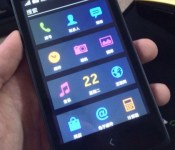
One other photo was leaked today by Chinese blogger Zhang Zhicheng.

This photo supposedly shows the Android app launcher on the device, but it could be an order version since the UI doesn’t exactly match up with the polish of some previous leaks.
Who knows if this device will ever see the light of day as Nokia is awaiting final notification of the acquisition of its Devices and Services division to Microsoft, expected at the end of this quarter.
via @seamissu Twitter, Neowin
The post Images of Nokia’s first Android phone leak appeared first on AndroidGuys.

HTC confirms One X and X+ won’t be upgraded to Android 4.3 or higher

It looks like Android 4.2.2 will be the end of the upgrade roadmap for the HTC One X and X+, two of the company’s primary flagship phones in 2012. The phone maker tweeted out — and later confirmed to the press — that neither handset will be upgraded to Android 4.3 or anything newer. As frustrating as this announcement is, we don’t consider ourselves shocked: the original One X launched nearly two years ago, and we speculate that the 15-month-old X+’s Tegra 3 processor may have been the reason for its fate. Take a look at HTC’s official statement below.
We can confirm that the HTC One X and One X+ will not receive further Android OS updates beyond Android 4.2.2 with Sense 5. We realize this news will be met with disappointment by some, but our customers should feel confident that we have designed both devices to be optimized with our amazing camera and audio experiences.
Filed under: Cellphones, Wireless, Mobile, HTC, Google
Via: The Verge
Source: HTC UK (Twitter)
Flash any Samsung Device via Your Web Browser with JOdin3!
As of today’s era everything we do is involved with some sort of application we utilize, from organizing our daily lifestyle to entertainment & productivity it all revolves around applications. Keep in mind there are various types of apps, web apps, hybrid apps & like the majority, “native apps”, are those we have on our devices home screen.
Today I want to introduce to you a new application or program that many Samsung owners have used before, except this time we have it in a web based flavor if you will. XDA Recognized developer Adam Outler has created yet another useful tool to make our crack flashing lives just a tiny bit easier. If you aren’t familiar with the famously known Odin software then you might not have a Samsung device or just don’t flash your phone much. Odin is essentially software used for flashing firmware to Samsung devices via Download mode which is useful as I just stated, for flashing back to stock firmware, custom stock roms and is helpful in unbricking a mistake. Moving along, Adam has developed a web app to do just the above but using only your web browser, now that is impressive.
Previously this could only be accomplished on windows via an application. All of that has changed, now you can now use JOdin3 to flash your device from the web browser on Linux, Mac or Windows. As astonishing as it sounds it’s all true. Not only is it versatile on various OS platforms, it’s open sourced. This is an original in mobile flashing and it sure is going to keep getting better and better with more support. Head over to the official website of JOdin3 below for more in-depth details on how and why JOdin3 is the next alternative to flashing your device on the web and even using it as an offline flashing tool! Below are the steps on how JOdin3 functions.
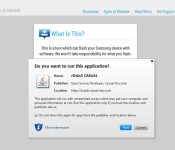
Upon using JOdin3 you will be asked to run java on this site, click yes.
 After that, all you need is common sense.
 Finally you are presented with the initial starting point of flashing to your hearts content. Enjoy !
 Source: Casual-Dev
GameFace Mark IV: The other VR headset at CES 2014 (hands-on)

After all the time we’ve spent with Oculus VR’s latest Crystal Cove prototype last week — our first Best of CES award winner! — you might think we’re all VR’d out. You’d be wrong, and when the folks at GameFace Labs offered us a chance to check out their Android-based, standalone VR headset, we jumped at the chance.
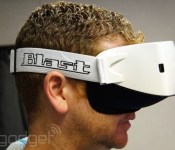
The Mark IV model of GFL’s unnamed headset is a 3D-printed proof of concept, and it serves that goal fantastically. We put on the headset, were handed a paired Bluetooth gamepad (Sony’s DualShock 3) and were instantly transported to a lower-res version of the Tuscany demo we’ve seen running previously on the Rift. Only there’s one major difference here: no wires.
Pushing one of three front buttons on the outside of the headset, we jumped back out to a basic (placeholder) app grid where a handful of demos were selectable. Using the DualShock 3, we next jumped into a roller coaster demo where disorientation hit an all-time high — it was the first time this writer’s ever felt nausea while playing any VR demo.

That disorientation may be a standard of GFL’s VR headset, at least for now…and it’s kind of not their fault. The act of standing up and using a VR headset, untethered, is extremely scary. With a VR headset strapped on, there’s no way to re-center yourself in reality. After moving around, the only way to figure out where you are (again, in real life) is by removing the headset. By that point, you’re feeling really disoriented. Or at least we did.
All that said, it’s incredible using a VR headset without even one wire running out of it. The model we tried had a Tegra 4 powering games, meaning stuff like Dead Trigger and the Tuscany demo rarely hitched, or tore, or any other issues we’d expect to see with a low-horsepower device. A 5.2-inch LED panel with 1,920 x 1,080 resolution is cradled inside the headset, though a larger size is in the works. The folks at GFL are also planning on building out an Android VR store to support the headset, as playing games on the scale of the Oculus Rift simply isn’t possible (which makes sense, given that the Rift is powered by your PC).
But that’s okay, because for now, operable VR is impressive enough to circumvent graphics complaints. A platforming demo really sold us on GFL’s headset: a snaking, thin platform must be navigated, and the DualShock 3 only controls forward momentum and jumping. To turn or look, you must physically move your head and body. Oh, and the world is floating in the sky — which is terrifying. That last bit cannot be overemphasized. Despite rough graphical chops, the sense of vertigo was nearly overwhelming.
GFL’s got big plans for the Mark IV, which includes retail availability by the end of this calendar year as the device goes from prototype to product. The company’s even in talks with NVIDIA to potentially incorporate its new K1 chip, which would assuredly add another layer or two of processing power and graphical chops (as well as Unreal Engine 4 support).
Filed under: Gaming, Peripherals, Wearables, HD, NVIDIA

UK carrier O2 dropping its mobile wallet service after less than two years

O2 UK’s carrier-independent Money mobile wallet may have proven a little too ambitious. The network is shutting down the service on March 31st so that it can investigate “new and better ways” to handle payments — in other words, it’s not satisfied with Money’s performance. Both the market and O2′s parent company Telefonica have changed in the past two years, the provider tells Computerworld UK. We can’t say we’re shocked by the closure when there are now many more ways to pay with your phone in the country; it’s a fiercely competitive space. Still, the news will be disappointing to shoppers who were hoping that O2′s clout would give Money an edge over its rivals.
Filed under: Cellphones, Mobile
Via: Computerworld UK, Business Insider
Source: O2 Money, O2 Community
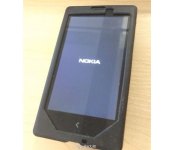
Rumored Nokia Normandy prototype surfaces on Twitter, reveals little

That thing up there? Word on the street (that is, Twitter) is that it’s an engineering prototype of the Nokia Normandy, a low-end Android device due sometime in 2014. The name has been floating around for a few months now, often accompanied by images flaunting Nokia’s usual design cues but without the hardware shutter button or LED flash that adorn its Lumia devices. Normally, that would peg the hardware for Nokia’s Asha line, but rumors persist that the Normandy will actually be running a Nokia-tweaked version of Google’s open-source OS.
Screenshots leaked earlier this month also suggested that the device would support dual SIMs and showed of mockups with touch-screen notifications and a customized Skype app. Unfortunately, the leaked device doesn’t do much to add or detract from that rumor, revealing only a generic back button, a Nokia boot screen and a rubberized case that obfuscates the handset’s features. Still, something is clearly afoot; we’ll let you know when we know what, exactly, it is.
Filed under: Cellphones, Nokia
Via: GSM Arena
Source: Twitter

Jelly Bean claims 59.1 percent of Android device share as KitKat inches forward

Google has released its first Android device share data for 2014, and it’s now clear that many users are flocking to a newer OS version… just not the latest version. While the shiny new KitKat release did climb to 1.4 percent of active devices in January, Jelly Bean was the real winner — the older software jumped from 54.5 percent in December to 59.1 percent this month. There’s no real mystery as to what happened, though. KitKat remains limited to mostly Google hardware, whether it’s the Nexus line or Motorola phones; we haven’t quite reached that point where large numbers of third-party devices either get KitKat upgrades or ship with the revision pre-installed. That surge may come soon, however, and the team in Mountain View can at least take comfort in knowing that over 60 percent of Android’s active customer base is reasonably up to speed.
Filed under: Cellphones, Tablets, Mobile, Google
Via: Android Central
Source: Android Developers

Hands-on with the consumer-ready Muse headband and software

If you think the person above looks weathered, broken and a little bit ill, you’d be right. After all, it’s the last day of CES, and although this editor wasn’t sure he had any working neurons left, he nevertheless took a trip to InteraXon’s booth to check out the consumer-ready version of Muse, the mind-probing headband. We first came across Muse this time last year, and in terms of hardware, only minor changes have been made. The EEG sensors in contact with your forehead — seven in total, measuring four channels — are now made of conductive ink instead of cold metal, the whole thing is more flexible, and rubbery cushions have been added to its ends. These make wearing the headband perfectly comfortable, but otherwise, its form factor remains unchanged. The band itself is available for pre-order for 270 bucks, with the first units expected to start shipping in spring. To make use of the hardware, InteraXon has, of course, developed companion software for iOS and Android (the band communicates with mobile devices via Bluetooth). Last year, we saw a basic demo whereby changes in our brain activity triggered different events in a wintery scene. What the company has built over the past year, however, is much more polished.
The app, which we experienced on an iPad mini, starts with a couple of calibration exercises. These go from making sure the headband is fitted properly and all sensors are registering brain function, to asking you to think about different topics for determining what your “noisy” mind looks like. The grand finale is a beach scene that reacts to your mental state. A lady with the soothing voice of a classical radio DJ, who has guided you up to this point, requests that you close your eyes, focus on your breathing, and relax. The more zoned-in you become, the lighter the wind, and sustained periods of concentrated calm will even coax birds to land on the beach. Following your timed session — ours was three minutes, but you can increase this — the app follows up with some stats. There’s also a “gamification” element that awards points based on how long you were able to hold an engaged, albeit relaxed state.
Accumulating points over time unlocks more advanced features, but InteraXon really wants you to set personal goals after you’ve “completed” this process. While others will be able to create games and the like using Muse’s SDK, planned updates to the official software will look at data accumulated over the long term and how users might benefit from different and regular mental work-outs — like a fitness tracker for your grey matter. After all, the company’s goal is to help improve your cognitive function, memory, and decrease stress by using its headband and software. For us, at least, a few minutes of slow breathing and the sound of distant waves certainly did the trick after a long week in Vegas.
Filed under: Peripherals, Wearables
Source: InteraXon

