


Motorola’s Project Ara team being integrated with Google’s Android team
The Internet is buzzing about Lenovo’s acquisition of Motorola Mobility and you may be wondering what is going to happen to Motorola’s Project Ara.
We have great news for you…. the Googlely project will remain with Google. It seems that the about $3 billion purchase of Motorola Mobility to Lenovo does not include the Advanced Technology and Projects group led by former DARPA director Regina Dugan, whose biggest project is the Project Ara modular phone.
According to The Verge, sources familiar with the matter said that the team of just under 100 people will be moving from their current offices in Sunnyvale to Google’s Mountain View office where they will be integrated with Google’s Android team. There Dugan will report to Android/Chrome OS chief Sundar Pichai, while maintaining “a more independent role.”
Anyone think that Project Ara could potentially become a Nexus some day? Thoughts?
via The Verge
The post Motorola’s Project Ara team being integrated with Google’s Android team appeared first on AndroidGuys.
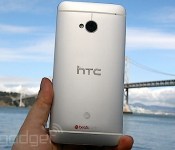
HTC to deliver KitKat to One owners a couple weeks late (updated)

HTC pledged to put KitKat on One handsets in the US 90 days after the newest version of Android’s release, but today, the company revealed that it’s going to miss its target date. While things looked to be on schedule as late as last week — when the company pushed the final software out to AT&T, Sprint, T-Mobile and Verizon — it appears that certification process is taking longer than expected (HTC One owners outside the US may experience a more timely rollout, namely in the Nordics, Eastern Europe, Turkey, Ukraine, Middle East and North Africa regions). There is a silver lining to be found, however. The delay should only last a week or two according to HTC Americas President Jason Mackenzie, and, of course you can keep an eye on the firm’s Software Update page. That way you One owners will know precisely when you’re able to break off a bit of KitKat for yourselves.
Update: We should mention that the update’s already rolling out to folks in Scandanavia, Eastern Europe, Turkey, Ukraine, Middle East and North Africa, with more to come.
Filed under: Cellphones, Software, Mobile, HTC
Source: HTC
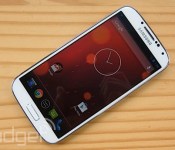
Reported Google deal could see Samsung deliver cleaner Android, less bloat

Google and Samsung agreeing to a 10 year patent licensing deal was good news for Android. But that might only be the tip of the iceberg. According to a report from Re/code the two are working together on a broader initiative that will bring the Samsung version of Android more inline with Google’s vision. The talks appear to have started at CES following the reveal of Galaxy Tab Pro and Note Pro lines, which featured a new skin called Magazine UX. The interface was not only a dramatic departure from the familiar TouchWiz, but from the very core of Android itself. In fact, the panel-based home screen looks a lot more like Windows 8 than Mountain View’s mobile OS. But Re/code’s sources say that future Samsung devices will either feature a drastically scaled back version of Magazine UX or lose the interface all together. Obviously, keeping the Android experience as consistent as possible across devices and brands is good for Google, but it could also help Samsung, which is now looking at maintaining three different Android-based tablet skins.
Google has been pressuring companies to minimize the tweaks to the Android UI (with varying degrees of success) for sometime now. So it balking at Magazine UX should come as no surprise. The more interesting part of the deal reportedly involves Samsung’s in-house apps. For years now the South Korean giant has been promoting its own (often lackluster) products that replicate functions of Google’s core Play Services. For example, WatchON, ChatON and the mSpot-enhanced Media Hub. Sammy has apparently agreed to instead shift focus to the Play store, Newsstand, Hangouts and other Google-built apps. Again, this will bring additional consistency to the Android universe and, considering the size of Samsung’s market share, will broaden the reach of Mountain View’s services.
What isn’t clear, is what concessions Samsung wrangled out of Google to get this deal done. It could simply be that Sundar Pichai threatened to pull access to the Play store if the Galaxy line didn’t, well, get in line. But that seems doubtful. Perhaps the company was promised the next Nexus device or even a seat at the brainstorming sessions for Lemon Meringue Pie (Lollipop? Lik-M-Aid?).
Filed under: Cellphones, Software, Mobile, Samsung, Google
Source: Re/code

Android climbed to 79 percent of smartphone market share in 2013, but its growth has slowed

Android may have quickly reached the top of the smartphone world, but there are signs that this red-hot growth is cooling off… if only just. Strategy Analytics estimates that the platform claimed nearly 79 percent of smartphone market share in 2013. While that’s both a record high and a big step up from almost 69 percent in 2012, it also represents Android’s slowest annual growth rate since its birth. As the analysts note, Google is facing an increasingly saturated market; there are only so many more customers it can reach.
Not that things were rosy for other mobile operating systems last year. Apple shipped more phones in 2013, but not enough to avoid a dip to 15.5 percent market share. Windows Phone grew to 3.6 percent share, although its one-point improvement over 2012 wasn’t going to make Apple or Google nervous. And for smaller platforms, 2013 was downright ugly. BlackBerry, Symbian and others fell from a collective 9.1 percent in 2012 to just 2 percent. The smartphone market in 2014 is effectively a three-horse race, and it’s doubtful that the rankings will change any time soon.
Filed under: Cellphones, Mobile, Apple, Microsoft, Google
Source: Strategy Analytics
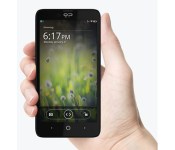
A first glimpse of the new ‘multiOS’ handset from Geeksphone

Though we were able to tell you all about the Geeksphone Revolution’s specs last month, the gestation-themed stock photo gave no clue as to how it actually looked. Now, we finally have pictures of the Firefox OS / Android dual-boot handset (there’s another after the break) and a further description of how it’ll work. First off, Geeksphone is now referring to the Firefox OS option as “Boot2Gecko by Mozilla,” harkening back to the original (awful) name for some reason. Nomenclature aside, it’ll come with Android installed (a version hasn’t been specified yet) and you’ll be able to choose Boot2Gecko or “any other community supported ROM” — but it won’t be dual-boot. You’ll get OTA updates for whichever OS option you choose, along with the previously reported dual-core 1.6GHz Intel Atom CPU, a 4.7-inch 960 x 540 screen, 1GB of RAM and an 8-megapixel front / 2-megapixel back camera. There’s still no sign of a release date and, more importantly, the price — that’ll no doubt weed out those willing try the MultiOS device from those who prefer the devil they know.

Filed under: Cellphones
Source: Geeksphone
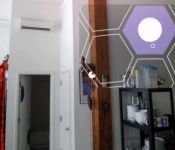
Google hacked together some pretty underwhelming games for Glass (video)

While Google Glass may still be in its infancy, gaming on the wearable is practically in the zygote stages. To help change that, developers at the search giant have cobbled together some games in an effort to “inspire” developers. That said, what Google is offering doesn’t seem too different from what we’ve seen out of other teams. There are five diversions in total (including a Fruit Ninja clone, as well as tennis and a matching game), but there isn’t anything particularly exciting about them. For example, Balance tasks you with keeping a stack of shapes from falling off of your skull via Glass’ baked-in accelerometer. Clay Shooter, on the other hand, has you yelling “pull!” to line up the target with your eyepiece’s crosshairs, and shouting “bang!” to shoot the pigeon — sure to be a big hit in crowded areas. Still, if you’re curious what official Glass games look like, we’ve embedded video after the jump.
Filed under: Wearables, Mobile, Google
Source: Google Developers

LG G Pro 2 pics leak out, show the G2’s rear button setup mounted on a larger phone

LG only just announced that it’s launching the G Pro 2 phone next month, and now two pictures that claim to show the device have surfaced on a Korean forum, DC Inside. Following up on last year’s 5.5-inch Optimus G Pro, the pictured device features a rear-mounted button setup mirroring LG’s most recent flagship phone, the G2. The pics lack accompanying details, although Android Central mentions rumors have hinted at a size bump to 6-inches, support for faster LTE-A networks, a Snapdragon 800 CPU and 1080p screen — it’s also unknown if the G Pro 2 will follow the G2′s software tweaks with “knock on” and QSlide multitasking. Check after the break for one more picture — we should have all the details confirmed by the time the Mobile World Congress 2014 event begins in Barcelona on February 24th.

Filed under: Cellphones, Mobile, LG
Via: Android Central
Source: DC Inside
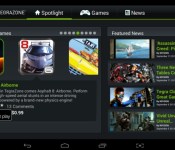
NVIDIA’s mobile game portal now available for non-Tegra devices

Jealous of your friends’ phones packing NVIDIA chips and the access to TegraZone that they enjoy? You need not be any longer, as the game portal’s latest update means you can install it on gadgets with generic (read: non-Tegra) silicon. Plus, Android Community reports that it also adds enhanced support for the Mad Catz Project M.O.J.O. and NVIDIA Shield consoles. The update also brings achievements (thanks to Google Play Game services) and a Google+ login system that “personalizes” the application to your tastes… whatever that means. We checked the Play Store and the app was available on all of our devices — even an old LG Optimus V — but of course, your mileage may vary. Just try to not be disheartened if you see it stocked with games that your gizmo can’t run, okay?
Filed under: Gaming, Home Entertainment, HD, Mobile, NVIDIA
Via: Android Community
Source: Google Play, TegraZone

LG opens its QSlide mini-app platform to developers

LG’s QSlide mini-apps are handy for quickly checking your calendar or playing a video, but they’ve been limited to just a handful of first-party offerings so far. You may get a healthier selection of bite-sized software in the near future, though, as LG has just published a QSlide developer kit. The framework lets third-party Android apps pull off the same QSlide tricks as official programs, including floating windows and transparency. While it will take some time before any of these augmented apps reach a device near you, coders who want to try the SDK can get started at the source link.
Filed under: Cellphones, Mobile, LG
Via: TechnoBuffalo
Source: LG Developer
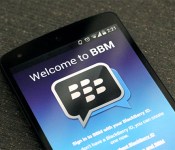
BlackBerry targets developing markets with Gingerbread BBM app

BBM for Android has been installed millions of times since its (bumpy) launch, but that’s not enough for the folks in Waterloo. Today BlackBerry has confirmed what many already suspected: it’s planning to launch a version of BBM for phones still running Android 2.3 in February. Those first versions only ran on Ice Cream Sandwich or later, and BlackBerry has been not-so-quietly scouting for Gingerbread beta testers for at least two weeks. It’s not hard to see why the company wants to branch out further, especially since it’s dealing with pressure from buzzy messaging apps like Snapchat and WhatsApp. And while it might feel ancient, Gingerbread still powers over a fifth of active Android devices. Lots of those phones are sold at cut-rate prices across the globe, so BlackBerry has a shot at maintaining its messaging mojo in developing markets… though pumping out cheap Foxconn-made phones should help too.
Source: Inside BlackBerry

