



Android and the Smart Home
Home security is no longer just for at home. The past 5 years have seen cell phone technology transform the way we interact with the things we own, putting their management into the palm of your hand. You can now control everything from baby monitors to refrigerators with your smartphone, and Android is emerging as the dominant software in smart home technology.
 At times, their dominance is a result of their direct integration into a system. Google recently announced Open Automotive Alliance is high profile example of this strategy. By building Android into cars and
other consumer centered platforms Google can seamlessly integrate with a host of their other products and services. This is certainly the strategy behind the $3.2 billion acquisition of Nest.
But another part of their dominance has come from getting companies to integrate their own systems into Android. Companies like ADT, who were once at the forefront of smart home technology with their home monitoring system, have been forced to adapt to the new environment the smart phone has created. They released ADT Pulse on both iPhone and Android to adapt their offerings to the ever expanding Internet of Things. ADT has also expanded the traditional security features to encompass home automation in general, linking your lighting, climate control and more to any web-enabled device. Android is a key technology ADT has been forced to integrate with in their efforts to survive.
If you take a look at ADT Pulse’s features, it is clear the Internet and mobile phones have played a significant role in the product’s design. Just look at the features available:
- Arm and disarm your security system
- Lock and unlock doors
- Control climate and lighting
- Receive text and/or email alerts
- Check on video surveillance
Mobility and ease of use are driving the product offerings of ADT Pulse. They are also the same drivers behind Android’s integration into the automobile and home services landscape. Companies that once relied on Android for serving their customers could soon become overshadowed by Google itself as it flexes its software muscles to enter spaces traditionally occupied by its partners.
Remote access to your home, whether it’s turning your security system on and off, locking or unlocking your doors, managing your lights, optimizing your heating and cooling system, or generating customized alerts about the on-goings in your home, is the future of how we experience and manage our homes. Google is preparing to be a big part of how consumers will interact with their homes and Android is their big bet on how to win the market.
GUEST BLOG CONTRIBUTOR: Anna Stephens
The post Android and the Smart Home appeared first on AndroidGuys.
Pebble appstore beta now available for Android, finalized version coming soon
Pebble promised to release its new appstore to the public Monday and it kept its word… sort of.
If you’re on an iOS device, you can download the updated Pebble companion app from iTunes that has the appstore baked in, but Pebble is still fine tuning a few things before releasing the final version for Android.
If you’re okay with a buggy version though, the company has released a beta appstore for Android through its developer blog and says that with everyone’s help, they should be able to finalize the app quickly.
Some known issues are with the pairing process, an app or watchface cannot be configured if it’s running on your Pebble, Android developers might have Android dev options of “Limit Background Processes” and “Don’t Keep Activities” checked that need to be unchecked or disabled to use the Pebble app and the mobile app shows a “Settings” icon for all JavaScript apps, even if they are not configurable.
If you do download the beta, or get it once the final version is available through Google Play, you’ll see that the store is laid out in different sections for apps and watchfaces, and has subsections under apps for Tools & Utilities, Notifications, Remotes, Fitness, Games, and “Daily” applications. This should make it much easier to find and install apps than before, when you had to sideload or use third-party app stores.
Hit up the link below for more information about the Android appstore beta.
via Pebble
The post Pebble appstore beta now available for Android, finalized version coming soon appeared first on AndroidGuys.
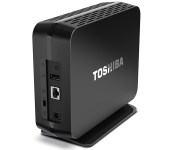
Toshiba’s new drive could take the headaches out of networked storage

There aren’t many network-attached hard drives for the home, and those that exist aren’t always easy to use… not unless you enjoy drive mapping, anyway. Toshiba may just make the experience simpler with its just-shipped Canvio Home, though. This sequel to the Canvio Personal Cloud takes some of the guesswork out of setting up and finding your storage on your home network; if you just need to drag-and-drop files, you could be up and running within minutes. The Canvio Home also introduces official Mac support. As before, you can access the Canvio Home from anywhere (including Android and iOS apps), and it will stream media to local DLNA-capable gadgets. Toshiba is selling a 2TB version of the new disk for $200, while its 3TB sibling costs $260.

AllCast Android media streamer and Chromecast are friends again now that the SDK is here

Google’s Chromecast has teased seemingly limitless potential since its release last year, but until the Cast SDK came out yesterday most developers couldn’t take advantage of it. That includes Koushik Dutta, creator of the AllCast app that we’ve already seen featuring screen mirroring or streaming music, video and pictures from Android devices to the dongle, but that’s all changed. He reports that adding Chromecast support to his existing app (previously limited to streaming with Apple TV, Roku, Xbox, Playstation and other DLNA/AirPlay ready devices) took about 20 minutes in a “trivial” procedure requiring almost no extra code. A video demo of the feature is embedded after the break, and while it loads a little slower than other devices, pushing media from phone to TV is now just a button press away.
That bodes well for other apps we’d like to see supporting Chromecast, and hopefully means that tiny button will pop up everywhere soon. As for AllCast, an update with Chromecast support is coming “soon,” interested users can grab a free version that works for one minute to try it out, or upgrade to the unlimited premium edition for $4.99.
Filed under: Home Entertainment, HD, Mobile, Google

Samsung Galaxy Note Pro and Tab Pro series coming to US February 13th

Looks like Office Depot wasn’t messing with us when it began offering pre-orders of Samsung’s brand-new 12.2-inch tablet ahead of its official US launch; it just jumped the gun a bit. As it turns out, the entire litany of Samsung’s Galaxy tablets announced at CES — which include the 12.2-inch Note Pro and all three sizes in the Tab Pro series — will be available stateside on February 13th. Just in case you’re worried about hordes of people trying to grab one as a last-minute Valentine’s Day present, you can also pre-order any of the products starting right now through one of several online retailers like Best Buy, Walmart, Amazon, Fry’s, Newegg and others. There’s no word on any carrier agreements yet, however, and it appears that all four models are WiFi-only.
Pricing varies wildly depending on which model you’re getting. Starting at the low end of the spectrum, you can grab the 8.4-inch Tab Pro (16GB) for $400; the 10.1-inch Tab Pro (16GB) for $500; and the 12.2-inch Tab Pro (32GB) for $650. Last but not least, the productivity powerhouse itself — the Note Pro — can be yours for $750 (32GB) or $850 (64GB). Additionally, the devices come with 50GB Dropbox space for two years, a $25 Google Play credit, three-month trial Hulu Plus subscription, six months of Cisco WebEx Premium 8 and a year subscription with Bloomberg Businessweek.
Samsung also confirms that the new tablets are still outfitted with Magazine UX, which means these products haven’t been affected by the company’s rumored deal with Google. According to reports from last week, Samsung agreed to tone down the amount of customization and special features in its Android devices. Naturally, if this does happen, we expect it to be a while before it finally takes effect.
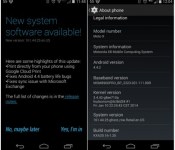
Android 4.4.2 Soak Test Rolling Out for T-Mobile Moto X

Anyone that owns a T-Mobile Moto X, and participates in their soak tests, the Android 4.4.2 soak test update has started rolling out today. Of course this isn’t a major update from Android 4.4, which I am sure you already gathered. Improvements to the camera are the major features in this update, and of course the normal general enhancements. This will be build number 161.44.25, and should already be on your Moto X given you participate in these soak tests. If everything is runs smoothly with this Android 4.4.2 update, then the actual update will roll out shortly after. Let us know if you got it.
Source: Droid-Life

Pebble’s appstore rolls out on iOS, starts beta testing on Android

Pebble’s smartwatch appstore has arrived as promised and it’s loaded with over 1,000 apps and watchfaces. Our review of the new Steel watch has more details on how it all works, and users with the iOS companion app will see the new features right away. An Android version isn’t quite ready for release, but a beta APK is up on Pebble’s developer website if you want to try it out early. There are known issues with the pairing process and a few things to be aware of when loading new apps, while any new issues will be listed on the blog as they’re discovered. Assuming you’re ready to sideload the app on your phone or tablet then the file is available here, iOS users can hit iTunes for an update.
And now for a very special treat………the Android BETA8 app (now with more appstore!) https://t.co/iEWLTrQ5eV pic.twitter.com/XGrB9VLBqn
– Pebble Developers (@PebbleDev) February 4, 2014
The latest iOS app (2.0) brings a new look, fresh features, and the Pebble #appstore. Enjoy! http://t.co/zJ3vBzBdGH pic.twitter.com/dkmpSjThD9
– Pebble (@Pebble) February 3, 2014
Filed under: Wearables, Mobile
Source: Pebble Blog, Pebble Developer Blog

Samsung’s ‘Unpacked 5’ event promises a new flagship device

Samsung sure knows how to whet the appetite of its fans. The Korean tech giant has announced that it’s holding an “Unpacked 5″ event at Mobile World Congress on February 24th — a potentially not-so-subtle reference to the upcoming Galaxy S 5. There’s no guarantees that the new high-end smartphone will appear in Barcelona, especially when Samsung has only unveiled one Galaxy S device (the Galaxy S II) at the trade gathering. However, our invitation mentions a “flagship product,” and it comes nearly a year after the company invited us to get “ready 4 the show” — we all know what that digit was referencing. Whether or not the fifth-generation flagship makes an appearance at the event, you can be sure that we’ll be there.
Filed under: Cellphones, Mobile, Samsung
Source: Samsung Mobile (Google+)
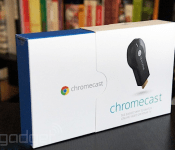
Google finally opens Chromecast SDK, invites developers to get hackin’

The Chromecast is already a pretty easy sell: It’s $35 and brings most of the biggest names in streaming media to your TV with minimal hassle. So, now that Google has opened the SDK to developers, it’s pretty much a no-brainer. While there are no specific apps to announce at the moment, it’s safe to assume the Play store will be flooded with updates soon enough. The SDK will allow coders to add a cast button to their app or site, be it on Android, iOS or in Chrome. The obvious use is for video apps, but there are plenty of other potential options here as well. If a developer decides to create a “custom receiver application” (rather than use the pre-built one provided by Google), they can put any standard web technologies on the big screen. So expect at least a few games and productivity apps to make the jump to Chromecast as well. Imagine firing up a presentation from Google Drive, displaying it on your 4K TV and controlling it with your phone. Or maybe Sony will build a version of Jeopardy where the board and clues are shown on the TV and your handset acts as the buzzer. Obviously, we’re just speculating right now, but if we see those ideas come to fruition, we’ll be expecting a nice royalty check. If you’re more technically inclined, check out the video overview of the Chromecast SDK after the break.
Filed under: Home Entertainment, Software, Google
Source: Google Blog, Chromium Blog

Scentee’s smelly smartphone notifications are now available worldwide

If you were crestfallen when you heard that Scentee’s fragrance-emitting smartphone add-on would be hard to get outside of Japan, you can relax — it’s now available worldwide through the company’s site. The perfume plug-in sells for $35 by itself (plus a whopping $30 in shipping), while scent packs for coffee, lavender, rose, rosemary and strawberry will cost you $5 each. That’s quite a lot to pay for smell-based notifications on your Android device or iPhone, but Scentee is at least more practical than some of the other novelty imports that we’ve seen as of late.
Filed under: Cellphones, Peripherals, Mobile
Via: Electronista
Source: Scentee

