


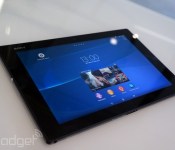
Sony claims the Xperia Z2 Tablet is the world’s thinnest and lightest waterproof slate

With its VAIO PC business all but gone, Sony’s betting big on smartphones and tablets. Three post-PC products are weighing surprisingly light in its pockets at this year’s Mobile World Congress, the largest of which is the new Xperia Z2 tablet. It’s a lighter, thinner version of the year-old Xperia Tablet Z, which has been given a thorough upgrade in order to help it take on the iPad Air and Samsung larger slates. Like its predecessor, the 10.1-inch tablet features the same design language as Sony’s latest flagship Z2 smartphone, complete with “OmniBalance” look, uniform thickness and straight edges. Cosmetic similarities aside, the Z2 Tablet has runs a lightly-skinned build of Android 4.4 KitKat and is powered by a 2.3GHz quad-core Snapdragon 801 with 3GB RAM to get things really moving. Is an internal overhaul enough to capture your eye? Follow us and find out.
This time last year, Sony told us that the Xperia Tablet Z was the world’s thinnest and lightest tablet. At 6.9mm, the year-old slate still comes in thinner than Apple’s newer iPad Air. That obviously wasn’t thin enough, because Sony has shaved a few extra points of a millimeter and 70 grams off the Z2 Tablet, allowing it to make the same claim again. The form factor is far from unique, but its depth and weight reductions make up for Sony’s use of enormous bezels.
That brings us onto perhaps the most important part of Sony’s tablet experience: entertainment. The company debuted a suite of TV apps and services with the Tablet Z, and for the Z2 Tablet it’s leaning on its movie studio arm to bundle six “blockbuster” movies. Further cementing its “one” approach, Sony’s including enhanced gaming controls on both the Xperia Z2 and Z2 Tablet by way of support for the DualShock 3 PlayStation controller. Lack of controller support made many of the swipe-intensive games installed on the tablet very hard to play.

Users who like their media loud will profit from Sony’s decision to act on user feedback and move the side-facing speakers (where they were easily covered by fingers) to the front. It certainly made for a far better stereo experience when we played The Amazing Spiderman 2 trailer back on the Z2 Tablet’s improved 1,920 x 1,200 pixel Triluminos display. Sony has used its BRAVIA TV technology to generate brighter and more consistent colors, by using a mix of red and green phosphor and blue LEDs.
Along with its familiar design, the Z2 Tablet comes a similar (though somewhat lesser) focus on enhanced imaging. It’s included very latest Exmor RS sensor for this slate’s 8.1-megapixel rear-facer, while the 2.2-megapixel front camera retains the same Exmor R sensor as its predecessor. Sony retains its older suite of camera apps, giving you automatic scene recognition, HDR stills and better noise reduction.
The Xperia Z2 Tablet has certainly been given a thorough tuning, but a lot of Sony’s older hardware and software features still remain. Luckily, the company isn’t waiting long to get its new slate onto shelves, as it’s looking to ship globally in March. You’ll be able to grab a black or white model, although Sony hasn’t yet told us how much they’ll cost.

Sony’s Xperia Z2 brings a richer display and 4K video recording

Sony’s flagships have struggled to find success, but that hasn’t stopped the company from quickly iterating its smartphone line to keep up with its rivals. With the Xperia Z now over a year old and the Xperia Z1 staring its six month birthday in the face, Mobile World Congress comes at the perfect time for Sony to unveil its latest flagship: the Xperia Z2. It certainly borrows a lot from its predecessor in terms of looks and features, but the company’s breathed some extra life into the phone to set it apart from its older siblings. What’s it added, you ask? Head past the break for the lowdown.
Since we know you’re dying to find out what’s fresh, let’s dive straight into the details. The Z2 features a 5.2-inch full HD (1080p) Triluminos display encased in an one-piece aluminum housing. Look inside and you’ll find a 2.3 GHz quad-core Snapdragon 801 supported by 3GB of RAM, 16GB of internal storage (with microSD support) and a 3,200mAh battery. Sony’s using the same 20.7-megapixel Exmor RS camera found in the Z1 (although there’s 4K recording support tucked away), opting for a slightly improved 2.2-megapixel shooter on the front. That’s all protected from a watery demise by IP58 waterproof certification.

The end result is a handset that has been upgraded in nearly all departments, something that Sony consistently done across its Z-series smartphones, at least in the past year. While it’s slightly taller and thinner than the Xperia Z1 you’d be hard pressed to identify it in a lineup alongside its younger sibling.
One area that Sony has improved is the display. In an effort to further optimize its screens, Sony got its TV division involved and has outfitted the Z2′s Triluminos IPS screen with BRAVIA tech. Live Color LED is a one example of that, generating brighter and more consistent color using a mix of red and green phosphor as well as blue LEDs. Our short time with the handset allowed us to see the Xperia Z2 and Z1 displays side-by-side and we noticed significant improvements across the board.

Sony’s strong optics make for impressive photos, but its desire to futureproof its handsets has led to developments in the video department too. The Z2 includes 4K video recording at 30 frames per second with SteadyShot image stabilisation. You’re not going to witness the full glory when you play a 4K video back on the Z2′s 1080p screen (Sony maybe hopes that you’ll buy one of its 4K TVs too), but you’ll still be able to zoom in and inspect the stunning detail of your recordings on the device.
If specs aren’t enough, Sony’s also developed some new custom camera apps to get even more mileage out of it: there’s Timeshift video, which’ll let you shoot and quickly edit slow motion video at 120 frames per second, new creative effects, background defocus, and augmented reality options are now available for video. Unfortunately, Sony’s limited Timeshift videos to 720p at 120 frames per second, putting a dampener on those plans to record a slo-mo of yourself on a slip-and-slide in high-definition.
A strong entertainment focus helps set Sony apart from many of its rivals, and it’s looking to push that angle a little more with the Xperia Z2. If the device ticks all of the right boxes and you find yourself heading out on launch day to grab Sony’s latest flagship, Sony willl bundle a pair of MDR NC31EM headphones in the box as a little thank you. They’ll do a pretty great job at isolating ambient noise on their own, but with a little help from the Z2′s built-in digital noise cancelling algorithms, you’ll be oblivious to most of the great outdoors.
Sony tells us that for the Xperia Z2 “the difference is in the experience,” but given the spec bumps across the board, it’s certainly trying to appeal to consumers who want industry-leading hardware and software. The phone is light but sturdy, fast and responsive, and continues to utilize all of the best features from other Z-series smartphones. There’s plenty to like about Sony’s new flagship, we just hope that stays true when it our hands on it for a full review. It’s set to launch globally from March, so we won’t have long to wait.
Filed under: Cellphones, Mobile, Sony

Sony’s Xperia M2 offers respectable specs at a mid-range price

Sony’s come to Mobile World Congress with three brand new devices. Its new flagships, the Z2 smartphone and Z2 Tablet, may attract all of the attention but there’s a budget-friendly handset it also wants you to get to know: the Xperia M2. Acting quickly to replace the still youthful Xperia M, which only launched in June last year, Sony has injected new life into its mid-ranger by including a larger 4.8-inch qHD display, a 1.2GHz quad-core processor, 8-megapixel camera, 2,300mAh battery and LTE support to take care of your increasing thirst for data.
While the Xperia M was far from a benchmark buster, Sony tells us that its successor is the best in class on device thickness, display size, camera resolution and processor cores. We’d say its main competition comes in the form of the Moto G, which impressed us when it launched last year. Its slim 8.6mm profile, NFC and LTE support certainly help in that regard, especially as the Moto G is 3G-only, but the Xperia M2′s 960 x 540 display is some way off its rival’s.
For Sony, diversity certainly isn’t key when it comes to handset design. The Xperia M2 may lack the top-level internals found in the Z2, but it’s rocking the same “OmniBalance” design as Sony’s new flagship. You’ll notice on closer inspection that its lacks the premium finish of the Xperia Z2, but for those looking for flagship looks at a mid-range price, the Xperia M2 will still invoke the odd double-take.
We’re still waiting on exact pricing info, but what we do know now is that Sony is looking around the €220 ($302) mark. It’s not limiting its launch either: black, white and purple variants are all set to hit stores when the device launches the Xperia M2 globally in April.
Filed under: Cellphones, Mobile, Sony
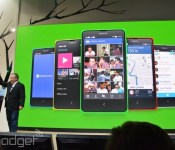
Nokia announces the X and X+, its first Android phones

Nokia is officially launching its very first Android devices, known as the X and the X+, on stage at its annual Mobile World Congress press conference. We were all taken aback by the second (and third) device (since only one leaked), but either way it’s still incredible to see Nokia take this particular approach. The X will have a 4-inch, 840 x 480 IPS screen, 512MB RAM, 4GB of storage expandable storage via microSD slot and 3-megapixel camera, while the X+ sports the same specs but more RAM (768 MB) and an included 4GB microSD card. You won’t be getting Google’s apps or Play store, however as both handsets will be based on the forked AOSP Android OS. Nokia says that’ll have the advantages of the Android ecosystem, but with a “differentiated experience.” So far, Here Maps, MixRadio, Skype and Outlook are being featured on the Nokia Store. You can access the Nokia and third party stores using the devices, but not Google Play, obviously.
The new devices are featuring a ported version of FastLane for Asha devices, to give a similar experience as its other budget handsets. When you swipe across it, it’ll bring up a sort of notification bar showing recently used apps, missed calls and texts and other activities. During the demo, Elop showed both the Nokia Store also Yandex, where he pulled down Aero Express, a Russian-flavored app. The X will be available immediately in growth markets (ie, not the US) and run 89 euros. The X+, meanwhile, will run 99 euros but won’t arrive until sometime in Q2 this year.
Filed under: Cellphones, Mobile
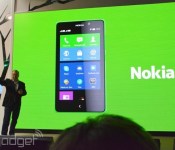
Nokia introduces a third Android device, the 5-inch Nokia XL

Well, Stephen Elop is just full of surprises today. On top of two other Android devices just launched, the Nokia X and the Nokia X+, we now have the Nokia XL, a bigger 5-inch Android device. It’ll have a WVGA IPS screen, a 5-megapixel rear / 2-megapixel front camera with an LED flash, 768MB of RAM and 4GB of storage, expandable via microSD. As with the X and X+, there will be no Google services or Play store, so you’ll have to access apps through Nokia’s store and other third-party Android markets. It’ll also feature the Android version of FastLane borrowed from Asha for easy access to apps and text and call notifications. It’ll arrive sometime to emerging markets in Q2 2014 at 109 euros — but not to the US, for now.
LG G2 Android 4.4 KitKat update hitting UK in March
Great news for the LG G2 owners in the UK, as LG have announced that they will begin rolling out Android 4.4 KitKat to its users as soon as March.
The company says the update, above anything, significantly increases performance over the previous version of Android, and they’re touting it being as much as 17 percent faster.
In addition, the update will bring various other 4.4 KitKat features to the LG G2 such as cloud printing.
With LG responding relatively quickly to rollout the 4.4 update, it can only spell good news for current G2 owners and the upgrade path they have bought into.
The post LG G2 Android 4.4 KitKat update hitting UK in March appeared first on AndroidGuys.
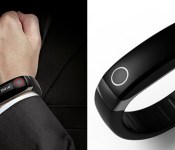
Google and LG are reportedly working together on an Android smartwatch

Rumors of a Google-powered smartwatch just got a little more tangible — both CNET and the Wall Street Journal claim that the search firm is teaming up with LG to make the Android-based wristwear. We still don’t know much about the hardware’s capabilities, but CNET believes that Google would follow the Nexus model and create a reference device that would launch at Google I/O in June. The WSJ notes that other manufacturers could also join the fray. None of the companies involved have commented on the rumor so far, so you won’t want to start budgeting for the gadget just yet. However, a Google-badged, LG-made smartwatch would make sense when the two companies have enjoyed success making phones like the Nexus 5, and LG is already designing wearables like the Lifeband Touch.
Filed under: Cellphones, Wearables, Mobile, Google, LG
Source: Wall Street Journal, CNET

Orange’s Gova smartphone promises fast LTE on a budget

We don’t normally think of Orange’s smartphones as quick, but we’ll have to make an exception for the carrier’s just-unveiled Gova. The 4.5-inch, Android 4.3-toting handset is the provider’s first with 150Mbps LTE, giving subscribers fast data without making them spring for more advanced hardware. It’s also one of Orange’s more capable phones overall thanks to its 1.2GHz quad-core processor, 1GB of RAM, 5-megapixel rear camera and 8GB of built-in storage. The Gova should reach Luxembourg, Mauritius, Moldova, Poland, Spain, Slovakia and Tunisia in April. Those that don’t need quite so much power can opt for the already available Reyo, which combines more modest data speeds with a 5-inch screen, Android 4.2 and a 1.3GHz dual-core chip. Unfortunately, there’s no word of UK launches for either of these frugal devices.
Filed under: Cellphones, Mobile
Source: Orange
Huawei brings LTE Cat 4 to affordable Ascend G6 smartphone and MediaPad M1 tablet

This year’s all about LTE Cat 4 for Huawei, which is why it’s pushing this faster 4G technology into both the high-end market as well as the lower price points, in order to help drive its network business — LTE Cat 4 only works if your carrier supports it, after all. At MWC, the company announced the launch of two affordable devices that will come with this 150Mbps technology: the Ascend G6 4G and the MediaPad M1.
The Ascend G6 appears to share some design elements with the higher-end Ascend P6, so it looks quite pretty in the above render. It features a lesser 4.5-inch 960 x 540 LCD, a 1.2GHz quad-core processor, NFC and an adequate 2,000mAh battery. The cameras are surprising nice, though: there’s an 8-megapixel f/2.0 imager (with Sony’s IMX134 sensor) on the back, plus a 5-megapixel front-facing counterpart with unknown aperture. This phone will first arrive in its 3G-only, 7.5mm-thick form in Q1 this year, followed by a 7.85mm-thick 4G version in April.
The 8-inch MediaPad M1 tablet (pictured after the break) has a 1,280 x 800 IPS display with stereo front-facing speakers, and with the help of its 4,800mAh battery, users will be entertained by hours of movies (Huawei claims up to eight hours) on one charge. Other specs include a 1.6GHz quad-core chip, a 1-megapixel front camera and a 5-megapixel main camera, all tucked within a 7.9mm-thick body. Like the 3G version of the G6, the M1 will also launch in various countries in Q1 2014.

Filed under: Cellphones, Tablets, Mobile
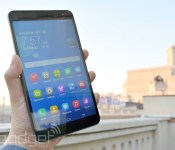
Huawei MediaPad X1 is the lightest and narrowest 7-inch tablet, plus it’s also a phone (video)

Does the world need bigger smartphones? Huawei answers this question at MWC with the launch of its MediaPad X1, a 7-inch Android tablet that lets you make phone calls. As ridiculous as it sounds, this device is designed in a way that makes it more usable than other colossal phones. At just 239g heavy and 103.9mm wide, the X1 is the lightest and narrowest tablet in its class, beating the likes of the ASUS Fonepad 7, Kindle Fire HDX 7 and the latest Nexus 7. Don’t be deceived by the lightness, though; Huawei has managed to stuff a generous 5,000mAh battery — again beating the other 7-inch tablets — and a high-res 1,920 x 1,200 LTPS display inside this 7.18mm-thick aluminum body.
Let’s get the remaining specs out of the way. First and foremost, you get a pair of cameras: 13-megapixel f/2.4 on the back, and 5-megapixel f/2.2 on the front. There’s 16GB of internal storage, and you can add up to 32GB of external space via microSD. The SoC here is Huawei’s HiSilicon Kirin 910 (as seen on the Ascend P6S), which features a 1.6GHz quad-core Cortex-A9 CPU, along with 2GB of RAM and a Mali-450 MP4 GPU. There’s support for both TD-LTE and FD-LTE, meaning you can enjoy 4G speeds in both China and a large part of the world. Likewise, the same phone also works on both WCDMA and China Mobile’s TD-SCDMA 3G networks. Sadly, the WiFi radio only goes up to 802.11n instead of the more powerful 802.11ac, but the 150Mbps LTE Cat 4 radio should somewhat make up for this — if your carrier supports it, that is. Read on for our hands-on video and thoughts.
To our surprise, the MediaPad X1 feels good in our hands. Compared to the aforementioned 7-inch tablets from other manufacturers, this one is significantly easier to hold with one hand thanks to its narrow bezel, light weight and solid aluminium construction. Of course, you may get some funny looks when you hold the X1 up to your ear. As for pocket-friendliness, your mileage may vary depending on what jacket or trousers you wear; but it slips into my relax-fit Levi’s jeans without much difficulty. If you wear tighter trousers then the X1 will definitely get in the way when walking up stairs. If you want to keep the phone in your bag or pocket more often, you may want to consider picking up Huawei’s new TalkBand B1 smart band and Bluetooth earpiece.
Huawei’s added a few neat software features, with our favorite one being the ability to scroll with one thumb while still gripping onto the touchscreen with the other thumb. We’re also meant to be able to jump straight to the home screen by double-tapping anywhere on the screen at any time (thus skipping the home button entirely), but we haven’t been able to get this feature to work. Other software goodies include motion control (like flip to mute, pick up to reduce ring volume, and automatically make or answer calls when placing the phone next to your ear), hover gesture (to preview photo albums, videos and calendar events) and voice-controlled camera.
We’re still waiting on the pricing info, but what we do know now is that the MediaPad X1 will be available in China, Russia, Western Europe, Middle East, Japan and Latin America starting in March this year. If you reside in any of these regions, do keep an eye out for this 7-inch phablet — not that you’d miss it, of course.
Filed under: Cellphones, Tablets, Mobile

