


Square’s Pickup app streamlines ordering take-out in San Francisco

If you thought ordering a new shirt from Uniqlo and grabbing it from the store 20 minutes later was rad, Square has something similar cooked up for your favorite restaurants. The outfit is demoing a new Android and iOS application called Pickup at a handful of San Francisco eateries, according to Priceonomics. With the app, Square is streamlining the food ordering process to a few taps on your smartphone: you choose an item from the menu, pay for it and then, well, pick it up. Given Square’s popularity with small businesses (especially with competition from GoPago, GrubHub and OrderAhead), hopefully it isn’t long before the outfit releases Pickup outside of NorCal.
Filed under: Cellphones, Software, Mobile
Source: Priceonomics, Square Pickup
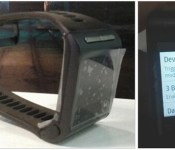
Pictures leak of the Motorola-made Google smartwatch that might have been

You may not have to wait until later this year to see a smartwatch from Google or Motorola — in fact, you may be looking at a jointly developed watch right now. Android Police claims to have photos of Motorola-built prototype wristwear from 2013, nicknamed Gem, that was intended as an official Google device. The gadget runs Android and includes both dedicated controls for fitness and voice commands. It also mentions a “3 Bit mode” that may have been meant to save battery life by reducing the on-screen color palette. Unfortunately, it’s not clear whether we’ll ever see a finished version of Gem as we know it. The watch would likely need changes before it shipped, and Lenovo’s acquisition of Motorola’s phone business casts doubts on the whole project. If you’re only looking for a possible peek at Google’s early watch strategy, though, you’ll get your fill at the source link.
Filed under: Wearables, Google
Source: Android Police

uNu Unity Battery Case for Samsung Galaxy S4 Review
Overview
Modern smartphones are often judged by their ability to hold a charge, and are regularly criticised for just how long you have to have your device plugged into the wall. With smartphones becoming more feature-rich with bigger screens and better cameras, the charge is becoming an increasingly difficult manufacturing challenge to master, with phone makers often left with a trade-off between a bigger battery and keeping the device small.
uNu have addressed the battery concerns associated with modern smartphones with their Unity Battery Case for the Samsung Galaxy S4. The case has a built-in battery so effectively doubles the capacity and life of your Samsung Galaxy S4.
Design

The uNu Unity Battery Case for the Samsung Galaxy S4 is a relatively simple design and comes in 3 parts. First there’s the battery which fits into your device and your existing battery hooks into. Your device then sits in a new bezel with a new back and it all clips together very well.

This is your new device – encapsulated in a protective casing encompassing two batteries. Access to all the ports is retained, and easily too. Charging is exactly the same as normal, since your old battery hooks into the new one so they feed off each other, which means both get charged simultaneously, and I didn’t even notice an increase in charge time, despite charging two batteries.

The uNu case is very well made, with the Galaxy S4 sitting nicely in the case with very little movement. If anything it was too snug, as it took some force and wiggling to actually get the device into the case.
And then comes the biggest factor with the case, and it was always going to be the killer feature. It’s not the design, or whether it makes your battery last longer, or even if it’s aesthetically pleasing. It’s just how much fatter does it make your nice slim Galaxy S4.
Obviously you’re effectively doubling the width of the device by adding another battery, and my initial reactions out of the box was that I didn’t like it. I bought the Galaxy S4 actually over the HTC One because I liked how it felt in my hands and the thinness of the device was a major plus point. To completely compromise this is a big deal, but surprisingly after only around an hour of use, I now actually prefer the feel of the device in the uNu Unity Case.


The uNu Unity case has a natural curve to it, which makes it extremely nice when sitting in your hand. By adding that additional thickness to the device, it oddly makes it feel more usable. The Galaxy S4 is thin, I mean really thin, and sometimes that can compromise usability by making it seem fragile. By adding a centimetre or two to the thickness it makes the device feel more solid – something I really liked about the case.
Naturally as well as the increased battery life, which we’ll get onto in a moment, it adds alot of protection to your device.
Functionality

With such an increase in the thickness of the device, you want a hell of a lot of added functionality for that compromise, and the uNu Unity Case certainly delivers. The battery life is simply incredible. It is now 20:00 and I have had the device on since 06:00 this morning. During that time I have been playing Spotify for the 4 hours travelling I do, plus GPS whilst navigating Google Maps and playing Ingress, together with all the syncing going on with my Gmail and Facebook etc. and it’s still sitting at 56%.
I can deal with a few extra centimetres for that kind of result.
With these track results, you’d be looking at easily 2 days of heavy use before charging, and probably close to 4 days on light use. Those sorts of figures in a modern day smartphone are just unheard of, so uNu really knocked it out of the park here.
Of course, to accompany this, you have the added protection it physically gives your device, which is a nice peace-of-mind to have.
Conclusion

I have been pleasantly surprised by the uNu Unity Battery Case for the Samsung Galaxy S4 as I am someone who usually doesn’t entertain the idea of such a case, simply because I like the slim profile of my device. However, I have been completely turned by just how nice the uNu case feels to hold, and also the benefit adding another battery gives. I can finally not worry about staying next to a socket on the train ride home incase I run out of juice.
The uNu Unity Battery Case for the Samsung Galaxy S4 is available for $69.95, and I promise you it will certainly impress you.
The post uNu Unity Battery Case for Samsung Galaxy S4 Review appeared first on AndroidGuys.
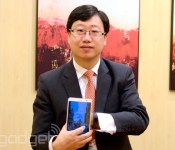
Huawei’s flagship phablet is only $300 in China, and its CMO explains why

Huawei’s recently announced MediaPad X1 has caused quite a stir — it’s the lightest and smallest-ever 7-inch tablet (let alone a phablet), while also packing decent features like a 1,920 x 1,200 display, 5,000mAh battery and 150 Mbps LTE. The retail price quoted at the launch event was €399 or about $550 for the LTE model, but back in China, it appears that Huawei’s slapped an insane discount on the same quad-core tablet, albeit under a slightly different name. Dubbed the Honor X1, the 3G model will retail for just CN¥1,799 or about $290, and the 4G version will go for just CN¥1,999 or $330. That’s a $220 drop for the LTE model! So when we caught up with Huawei Device’s CMO Shao Yang at MWC, we had to ask him: What was he thinking? Well, it’s all about the way consumers perceive this device in different regions.
The exec explained that his company conducted different tests in four countries: China, Germany, Saudi Arabia and Russia. For the China tests, many people identified the X1 as a phone, which isn’t surprising given the increasing popularity of phablets in Asia. Folks from other countries, however, saw the X1 as a tablet that can be used as a phone.
“As Honor is our online brand, we’re saving channel costs and can therefore offer a further deal.”
“Under these circumstances, we priced the device according to the way it’s perceived in each region,” said Yang. “In Europe, the iPad mini with LTE costs about €499 to €599, so our partners are still extremely happy with our €399 price point over there. In China, it’s a special case: the X1 is sold under the Honor brand. As Honor is our online brand, we’re saving channel costs and can therefore offer a further deal.”
Of course, it’s no coincidence that the Honor X1 is priced the same as the Xiaomi Phone 3 — which doesn’t even have LTE, nor storage expansion — and other flagship phones from similar Chinese online brands. It’s apparent that Huawei’s willing to drastically squeeze its margins just to starve its local online competitors, in order to hold or even leap from its number four position in China. But at the same time, you have to also admire Huawei for innovating in the wearable space to reach this goal, and Yang told us to stay tuned for more later this year.
Filed under: Cellphones, Tablets, Mobile
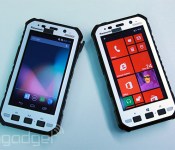
Panasonic’s latest Toughpad has the strength of ten smartphones, and the thickness (hands-on)

Panasonic may have bowed out of the consumer smartphone game, but gadgets for businesses are a completely different story. That’s why the Japanese company came to Mobile World Congress with a new pair of rugged Toughpad smartphones in tow. You can’t mistake them, despite their identical looks, because one runs Android 4.2.2 and the other has Windows Embedded 8 Handheld — and we just got a chance to see what they’re made of.
The Toughpads are well over an inch thick, but the heft is valuable since it helps the duo resist dust, drops, and liquid. Sadly, we didn’t have a bucket of water to hurl the things into, and drops on the carpeted floor of Panasonic’s press room weren’t as satisfying as we’d hoped. These Toughpads are modular (if not as stylish as other concepts we’ve seen). Some of the components lodged in the Toughpads’ backs can be unscrewed and swapped out completely, so folks who can’t think of anything to do with a barcode scanner can kiss it goodbye.
The company may bristle at our use of the dreaded s-word, preferring instead to call them tablets, but come now: if it looks like a smartphone, and makes calls like a smartphone, you’re not fooling anyone. That said, both Toughpads sport the same slew of rubberized buttons, port flaps and 8-megapixel rear cameras. The internals aren’t the same, though: The Windows Embedded version features a 2.3 GHz quad-core Qualcomm Snapdragon 800 chip while the Android model got stuck with a pokier 1.7GHz Snapdragon S4. Both devices felt snappy and responsive, and the 5-inch, 720p screens were better than you’d expect considering these things are meant to take a beating.
The thing to remember here is that you’re not going to waltz into a big box store and see one of these on the shelf. These Toughpads are designed for being tossed around warehouses and construction sites, not in and out of your skinny jeans. The prospective price tag just drives that point home: they’ll run you about 130,000 yen ($1,300) when they officially launch later this year.
Matt Brian contributed to this report.
Filed under: Cellphones, Tablets, Mobile
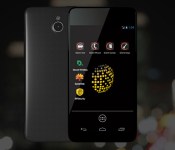
Blackphone offers a mostly secure Android-based smartphone for $629

In a perfect world, everybody’s sure their right to privacy is honored. Since that’s not the case, people tend to whip up special tools for protection, like the Blackphone — a privacy-focused device whose thick veil of mystery has now been lifted at Mobile World Congress. Its creators (SGP Technologies, made up of Silent Circle and Geeksphone) said very little when the shadowy phone was announced in January, but we now know that it’ll retail at $629 unlocked and has similar specs to comparably-priced Android devices. While its final components might be altered later, right now the developers are aiming to equip the device with a 2GHz quad-core processor, 4.7-inch HD IPS display, LTE connectivity, 2GB of RAM, 16GB of storage (no microSD card slot in sight), 8-megapixel rear and 1.3-megapixel front cameras.
The Blackphone will come loaded with a derivative version of Android called PrivatOS that’s supposedly more secure, and it’ll be bundled with two-year subscriptions to a few privacy tools. These include Silent Circle’s encrypted app suite (for messages, calls and contacts), a VPN, anonymous search and browsing tools, and secure cloud storage. You’ll also get a free Wi-Fi analyzer and a remote wipe and recovery tool. Plus, if you place very little faith in carriers — the Blackphone will work with any GSM carrier, though it’s partnered with KPN Mobile in Europe for launch — you’ll be happy that the creators will issue software updates directly.
Now, if you’re looking for a foolproof device to shield you from stalkers, hackers or, you know, government agencies, it may best to wait for more info before shelling out your cash. We still don’t know whether the phone touts secure hardware, and you can only text or call people through Silent Circle’s apps if they’re users, as well. Sure, the device comes with one-year subscriptions to the app suite for three friends and family, but that certainly won’t cover all your contacts. Also, the security only lasts as long as you use those apps — which will cost you and your friends after the first twelve months. Blackphone general manager Toby Weir-Jones even said: “We’ve never made the claim we’re offering an NSA-proof device, but we are offering a tool that makes a huge difference to someone who’s using no privacy tools at all.” With that ringing endorsement, who wouldn’t want one? Good thing you can pre-order one right now and get your paws on it sometime in June.
Filed under: Cellphones, Mobile
Via: TechCrunch, Geek
Source: Blackphone
Samsung Galaxy S5 vs. the competition: the battle of Android flagships has new contenders

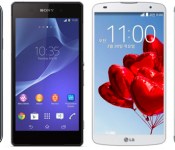
Samsung has just outed its shiny new Galaxy S5 at Mobile World Congress, but you may be curious how it stacks up against flagships from other outfits. Well folks, we’ve lined it up side-by-side with the Sony Xperia Z2, LG G Pro 2 and HTC One on the other side of the break. While the GS5 and Xperia Z2 appear to be neck and neck, it may come down to those standout features to see which handset gets the edge. Of course, a new HTC flagship is on the way next month, so we’ll have to take stock all over again once the details are revealed. If you’re anxious to see how the GS5 matches up with your current daily driver, you can add in that model and tally the numbers with our Compare tool.
| Samsung Galaxy S5 | Sony Xperia Z2 | LG G Pro 2 | HTC One | |
|---|---|---|---|---|
| Starting price | N/A | N/A | N/A | Free (on-contract) |
| Known Dimensions | 5.59 x 2.85 x 0.32 inches (142 x 72.5 x 8.1mm) | 5.78 x 2.89 x 0.32 inches (146.8 x 73.3 x 8.2mm) | 6.22 x 3.22 x 0.33 inches (157.9 x 81.9 x 8.3mm) | 5.41 x 2.69 x 0.37 inches (137.4 x 68.2 x 9.3mm) |
| Weight | 5.11 oz (145 g) | 5.57 oz. (158g) | 6.07 oz. (172g) | 5.04 oz. (143g) |
| Screen size | 5.1 inches | 5.2 inches | 5.9 inches | 4.7 inches |
| Screen resolution | 1,920 x 1,080 (432ppi) | 1,920 x 1,080 pixels (424ppi) | 1,920 x 1,080 pixels (377ppi) | 1,920 x 1,080 pixels (468ppi) |
| Screen type | Super AMOLED Full HD | Triluminos Full HD (IPS) | Full HD IPS | S-LCD3 |
| Battery | 2,800mAh (user removable) | 3,200mAh | 3,200mAh (user removable) | 2,300mAh (non-removable) |
| Internal storage | 16 / 32GB | 16GB | 16 / 32GB | 32 / 64GB |
| External storage | microSD (up to 128GB) | microSD (up to 64GB) | None | None |
| Rear camera | 16MP, 4K video, LED flash, OIS, | 20.7MP, 4K video, LED flash, OIS | 13MP, LED flash, OIS+ | 4MP, LED flash, Ultrapixel, OIS |
| Front-facing cam | 2.0MP | 2.2MP | 2.1MP | 2.1MP |
| Video capture | 4K | 4K | 4K | 1080p |
| NFC | Yes | Yes | Yes | Yes |
| Bluetooth | v4.0 |
v4.0 |
v4.0 | v4.0 |
| SoC | 2.5GHz Qualcomm Snapdragon 800 | 2.3GHz Qualcomm Snapdragon 801 | 2.3 GHz Qualcomm Snapdragon 800 | 1.7GHz Qualcomm Snapdragon 600 |
| GPU | Adreno 330 | Adreno 330 | Unspecified | Adreno 320 |
| RAM | 2GB | 3GB | 3GB | 2GB |
| WiFi | 802.11 a/ac/b/g/n, dual-band | 802.11 a/ac/b/g/n, dual-band | 802.11 a/ac/b/g/n, dual-band | 802.11 a/ac/b/g/n, dual-band |
| Operating system | Android 4.4 | Android 4.4 | Android 4.4 | Android 4.4 |
| Standout features | Fingerprint scanner, heart rate sensor, Ultra Power Saving Mode, IP67 certified, 4K video | IP58 certified, BRAVIA screen tech, Exmor RS camera, 4K video | KnockCode, Backside buttons, Mini view, Multi Window | Ultrapixel camera, Zoe, BoomSound, BlinkFeed |
Filed under: Cellphones
Switched On: Android (tablet) inside
Each week Ross Rubin contributes Switched On, a column about consumer technology.

Inexpensive 7-inch tablets were everywhere in 2013 and became, as Switched On noted in December, a populist platform that fulfilled the promise of the sub-$100 PC. But despite their exceptional portability, aided by light weight and slim profiles, some may find the mere act of dragging them within range of something like their boombox, television or car to be too daunting a chore. Worry not, lazy but intrepid crowdfunders. Kickstarter has recently debuted a trio of products that integrate an Android tablet experience for your enhanced enjoyment, productivity and mobility.
The Boombox

The Auris Wily is a shiny, oblong portable audio device similar to many we’ve seen from Logitech, Jambox and others. It claims some appealing audio specs in a lightweight device. But of course what sets it apart from those products is the front-and-center mounting of a 7-inch Android tablet. Is it a tablet with superior speakers or a boombox with better intelligence and usability?
Regardless, while Switched On has previously questioned the utility of making the whole Android app library available on platforms such as TVs and cameras, there seems to be a stronger case for it on the Wily. Obviously, a wide range of audio applications such as Pandora, Spotify and Audible make sense. The Wily also has an HDMI connector for filling in the gap on that smart TV that may not have all the services you’d like. And it can even serve as a standalone device for internet calls or video chats.
The Wily was close to its $65,000 funding goal, but Auris pulled the project owing to an apparent breach of confidentiality on the part of its contract manufacturer. The next Switched On will delve into how Auris and Kickstarter dealt with the cancellation. Fear not, though. While the Wily will probably return to solicit funds at some point, those who want their Android tablet-enabled portable audio a bit more rectangular can look forward to a series of “smart audio” products announced by Vizio at CES.
The Landline
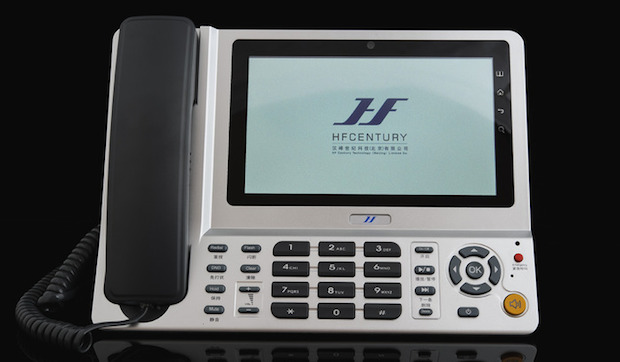
The HFC Canna is one of the most retro-tech ideas seen in a long time. Companies such as Panasonic and Hisense have shown cordless-phone systems with handsets that are essentially low-end Android devices. But the Canna goes for a bigger screen and drops any pretense of a wireless handset by putting a 7- or even 10-inch Android tablet smack-dab in the middle of a landline phone.
Apps such as Skype and WhatsApp make some sense in this context. But the more interesting work is around the core voice calls for which we use a landline. A Contacts app makes dialing from a landline less of a memorization chore. Answering machine messages can be saved as easily transferred MP3 files, and calls can be recorded with the touch of a button (and permission, if one is prudent). Pledge levels to obtain the Canna’s various flavors range from a $199 early bird to $399 for a version that can connect to a cordless (DECT) system. For those chained to their desks and who live off their landline, it may be worth a look. But otherwise, it will be tough to find those who find their landline that valuable.
The Ride

If jamming an Android tablet into your home phone and portable boombox aren’t enough, how about taking it on the road? Despite looking remarkably like a 7-inch tablet, the creatively spelled CarSkreen is merely a display suspended somewhere conspicuous in your center console with a harness. A wee shelf is provided to hold your smartphone, which must handle all input tasks.
By showing navigation and music apps (and hopefully nothing too distracting beyond that) on the slightly bigger display, one combines the enlarged real estate of displays built into car consoles or premium aftermarket car stereos with the flexibility and responsiveness of modern apps. Pledges to obtain the device start at over $300, which would cover a 7-inch tablet and quite a bit of tethering.
Indeed, while the campaign page lists a number of other potential alternatives to the CarSkreen in a favorable (surprise) comparison chart, the most obvious alternative — a cellular-enabled tablet — is unlisted. In addition, emerging standards such as MirrorLink and iOS in the Car promise to make this kind of functionality more widespread in the coming years. Still, if you’re committed to one unshared data plan and don’t mind the front interior of your car looking a bit like a miniature suspended scaffold, you can join the cause for it materializing in May.
Ross Rubin is principal analyst at Reticle Research, a technology, media and telecom advisory firm, and founder of Backerjack, which covers crowdfunded product innovation. He blogs at Techspressive.

WWE Network wrestling is now streaming on virtually every device you own

WWE promised that Americans would be watching body slams and piledrivers on a myriad of devices toward the end of this month, and that moment is finally at hand. WWE Network apps are now available in the US for almost every major platform under the sun, including Android, Apple TV, iOS, PlayStation 3, PlayStation 4, Roku players, Xbox 360 and Xbox One. In all cases, you’ll pay $10 per month to stream live wrestling events as well as beyond-the-ring content like documentaries and classic matches. The app also serves as a second screen companion when you’re watching live TV shows. International grappling fans will have to remain patient, however — WWE Network won’t reach other countries until late 2014 or early 2015.
Filed under: Gaming, Home Entertainment, HD
Source: WWE, PlayStation Blog, Roku
Samsung has sold more than 200 million Galaxy S smartphones

Want to know how big a player Samsung is in the smartphone market? The company now says that it’s sold over 200 million Galaxy S phones since the line first went on the market in 2010. For reference, the Korean tech giant had notched up sales of 100 million Galaxy S devices as of slightly more than a year ago. Samsung isn’t breaking down the sales by model, although it had sold over 40 million Galaxy S 4s as of last fall — much of that 200 million clearly came from more recent customers. It’s difficult to compare the data against other manufacturers, since few of them break out sales by range. Apple, for example, said that it shipped 700 million iOS devices of all kinds as of October. However, it’s safe to say that Samsung remains a heavyweight at the high end of the smartphone market.
Filed under: Cellphones, Mobile, Samsung

