



RunKeeper adds training plan feature to its Android app

RunKeeper has a solid track record when it comes to giving users new ways to interact with the application. It’s no surprise, then, that the fitness-focused app is getting some fresh tidbits on Android. Most notably, you’ll now see a training plan feature which is set to coincide with the goals you’ve set up within the app. This version also brings a redesigned “Me” tab, an option to keep a close eye on training schedules and the ability to view your workout history. It’s a very nice update, to say the least — and given that it’s Monday, it couldn’t have come at a better time to inspire your next run.
Filed under: Misc, Software, Mobile
Via: Android Community
Source: Google Play

Photo suggests Oppo’s Find 7 smartphone might have a 50-megapixel camera

Oppo may have just stolen Nokia’s camera resolution crown. The Chinese company has posted a whopping 50-megapixel (8,160 x 6,120) photo that was reportedly taken with the upcoming Find 7 smartphone. On a surface level, the image checks out — there’s a lot of detail here, including street signs that suggest Oppo took the picture in Barcelona (despite the likely fake Florida license plate). However, we wouldn’t be too quick to praise the Find 7′s photographic abilities. Oppo is known to occasionally post bogus teasers that don’t translate into shipping products, so it wouldn’t be surprising if the company’s new flagship relies on more modest camera technology.
Filed under: Cellphones, Mobile
Source: Sina Weibo (translated)
Flappy bird craze is still alive: 1 in 3 Games is a Flappy Bird Clone
The original Flappy Bird game is long gone, with the developer pulling it for unknown reasons. Some speculate that it was a legal threat, whilst others state it was simply a personal action.
Regardless of the reason, Flappy Bird created a shockwave through the mobile gaming industry, showing how a simple idea could sky rocket to success, seemingly overnight. When the game was pulled from the various App Stores across the different mobile platforms, it left a big hole, and it seems every man and his dog have tried to fill it.
A wave of Flappy Bird clones began hitting the Google Play Store, and other platforms too, all ranging in quality and authenticitiy. Some took the chance to spin off the concept, creating new unique games which borrowed the Flappy Bird concept, whilst others used the popularity to bundle malware in poorly coded clones.
The situation has in fact gotten so bad, that a recent survey has shown that 1 in 3 Games across all platforms is a Flappy Bird clone. Unfortunately the success of such a simple game has also been its demise, and the best advice to take given the sheer volume of clones is to not install any of them.
Luckily, those who were (un)lucky enough to not get caught into the Flappy Bird craze can, on Android, sideload the .apk file straight to their device, despite it being removed from the Google Play Store.
However, Flappy Bird seems like one craze that isn’t dying down any time soon.
The post Flappy bird craze is still alive: 1 in 3 Games is a Flappy Bird Clone appeared first on AndroidGuys.
First dual-boot Windows Phone 8 and Android handsets said to arrive by June

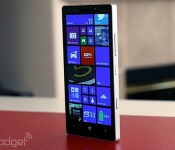
Windows and Android are such good pals, they’re quite literally inseparable on a number of dual-boot devices. Aside from some old community-driven projects, however, the relationship between Google’s mobile OS and Windows Phone hasn’t blossomed to a point where they’re officially comfortable sharing a smartphone. Well, they better pencil in a bonding session, because The Times of India reports local manufacturer Karbonn is set to launch the first such dual-boot handset by June. With the ink now dry on a deal with Microsoft — presumably a WP license agreed behind closed doors at MWC — plans are to offer a range of split-personality devices with professional and tech-savvy types in mind. Perhaps they’ll run Windows Phone 8.1 right off the bat, too, given the new version’s broader hardware support, and show that you needn’t create mutant advocates to tempt consumers one way or another.
Filed under: Cellphones, Software, Mobile, Microsoft, Google
Via: Gizmodo
Source: The Times of India
Gartner: Android is now top tablet OS
After its dominance in the smartphone world, Google’s mobile platform is now tops in the tablet industry.
According to a research conducted by Gartner last month, Android tablets reached 121 million sales, which is 61.9 percent of market share. Android-powered tablets market share grew 16.1 percent; 45.8 percent in 2012 with 53 million sales. Roberta Cozza, research director at Gartner, mentioned that the development of cheap Android tablets launched during 2013 played a huge role to this significant progress in both sales and market share — and beating Apple as well. Though, low-pricing won’t be enough to compete in the future, she added.
When it comes to iOS camp, Apple’s iPad line up market share declined from 53 percent in 2013 to 36 percent in 2012, even though it increased sales from 61 million to 70 million over the period.
“As the Android tablet market becomes highly commoditised, in 2014, it will be critical for vendors to focus on device experience and meaningful technology and ecosystem value — beyond just hardware and cost — to ensure brand loyalty and improved margins,” she said.
Worldwide Tablet Sales to End Users by Operating System, 2013
| Operating system | 2013 sales | 2013 market share | 2012 sales | 2012 market share |
| Android | 121 million | 61.9 percent | 53 million | 45.8 percent |
| iOS | 70 million | 36 percent | 61 million | 52.8 percent |
| Microsoft | 4 million | 2.1 percent | 1.1 million | 1 percent |
| Other | 41,598 | <0.1 percent | 379,000 | 0.3 percent |
Have anything to add to this story? Sound off in the comments below.
Source: Gartner via FierceMobile
The post Gartner: Android is now top tablet OS appeared first on AndroidGuys.
Imo drops support for third-party chat networks to focus on its own

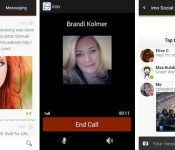
Imo has long served as a chat network aggregator, putting all your conversations in one place. However, the company believes that this strategy has led to compromises that hold back its own messaging efforts. To sharpen its focus, it’s dropping support for all third-party services. The firm will start turning off the lights on March 3rd, and you’ll have until March 7th to download your chat history from outside platforms. Imo argues that the narrower scope will help it create the “fastest and most reliable” communication service on the planet. The company may need to act quickly on that goal if it wants to keep and grow its fan base — we can’t imagine that many users are happy with Imo losing one of its most appealing features.
Filed under: Cellphones, Internet, Mobile
Via: TrueTower
Source: Imo.im Blog

Google’s ‘Projected Mode’ in-car system possibly leaked by Mercedes-Benz

Job adverts aren’t most reliable way to hear about new technology, but interesting ones do crop up from time to time, and that’s why our eyes are drawn to one recently posted by Daimler, the parent company of Mercedes-Benz. The ad requests the services of a software engineer who can help the German car maker implement Google’s forthcoming in-car system, which is apparently called “Google Projected Mode” and which is described as a way to “seamlessly integrate” Android smartphones into a dashboard’s head unit. This head unit would presumably house a bigger display that mirrors a simplified version of the Android UI — unless the use of the word “projected” implies something more futuristic.
The ad makes no mention of how the connection is made between the phone and the dash, for example whether it’s cabled, wireless or a mixture of the two. However, it does refer to media playback, messaging, calls and navigation all being handled “safely” through the vehicle’s control system, which suggests this will be a fully featured alternative to Apple’s “iOS in the Car.” Perhaps the most revealing thing is a line at the end of job description that refers to Google Projected Mode coming to “all Mercedes-Benz vehicles in all markets worldwide.” That sounds like a pretty firm commitment to the platform, even if Daimler can’t claim to be a founding member of Google’s new Open Automotive Alliance.
[Thanks to everyone who sent this in.]
Filed under: Cellphones, GPS, Transportation, Mobile, Google
Source: Daimler [German]

Instacube photo frame finally shipping, will arrive with support for video

Well, that took awhile. Remember Instacube, the purpose-built digital photo frame designed to pull images directly from your Instagram feed? The Android-powered photo screen found itself short on both funding and manufacturing options last summer. These issues set production back almost a year, but come April 5th, it’ll all pay off — the first units are finally shipping out. Instacube’s creators used the extra time productively, at least: the final hardware was redesigned to include speakers (to support Instagram video). Future updates will imbue it with the ability to stream content from Facebook, Vine, Flickr and other services, too. Kickstarter backers who opted for the white or classic models should get their units in the next few months, but the team says additional styles won’t be available until production hits full steam. A bummer for sure, but hey, folks have waited longer to get Instagram.
Filed under: Internet
Source: Kickstarter

Google Glass team forgoes monthly updates for bigger changes, like Kit Kat

Whether you’re a Google Glass wearer or merely observing the new devices, you may have noticed a lack of major updates in January and February. Android Police and Glass Almanac reveal a post from the Explorers-only community forum explaining that after version XE12 closed out last year, those monthly updates might not be monthly anymore. That’s not necessarily a bad thing however, since the team is focused on making larger changes, and is currently focused on moving Glass from the Android 4.0.3 (Ice Cream Sandwich) software it shipped with to the current version of Android, 4.4 (Kit Kat), and all the improvements that includes.
According to Glass team member Teresa Zazenski, it will make things “smoother and just plain better,” adding that developers should be excited too. There is one small change to report though, as Glass wearers can now post photos and videos directly to Google+ communities. While we wait to find out what’s in store, the Glass team just linked a behind the scenes video for tomorrow’s Academy Awards, giving a POV look behind the scenes from workers who make the show happen — check it out after the break.
Filed under: Wearables, Mobile, Google
Source: Android Police, Glass Almanac
Nokia X gets rooted bringing custom ROM and Google Services
One of the best things about Android is the customisation options available. So when the Nokia X was announced only for it to be confirmed there would be no Google services integration, developers everywhere simply took that as a challenge.
Nokia still make arguably the best hardware out of all smartphone manufacturers, and fans have been longing for a Nokia running Android. However, given the integration with Microsoft, Nokia chose to remove the Google services (Gmail, Play Store etc.) and go with Windows services instead.
Luckily, developers have already rooted the Nokia X and ported a custom ROM to it bringing across Google services in the process.
Using a tool called Framaroot, the guys over at XDA Developers managed to obtain root access to the device and port over a custom ROM, so now you can enjoy the full Android experience complete with Google services on the Nokia X.
The Nokia X as standard comes with its own store whereby developers would submit their Apps to the Nokia Store, which Nokia says can be done without rewriting any code. Whilst not a huge deal, cutting out Gmail and the Google Play Store is a big loss.
Nokia X devices are currently only shipping to developers, but this news means for those wanting a full Android experience can now have it.
The post Nokia X gets rooted bringing custom ROM and Google Services appeared first on AndroidGuys.

