


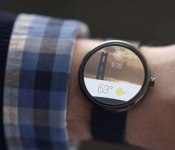
Google announces Android Wear, a Nexus-like platform for wearables

Google’s getting into smartwatches in a rather large way. As previously reported, the search giant is extending its Android platform to more wearables than just Glass. In a blog post that went out today, Google announced Android Wear, which is essentially a way for the company to extend its mobile OS to a new category of devices while offering a lower cost for developers and users — think Nexus for smartwatches. Of course, smartwatches are just the beginning, Google acknowledged that there’s plenty more to come, but it was ” starting with the most familiar wearable.”
One of the most eye-catching features we’ve seen so far is the same always-listening experience that we’ve enjoyed on the Moto X. Anytime you need to do something with your watch, just say “OK Google” and everything from pulling up nearby gas stations, to restaurant reservations are just a quick voice command away.
Developing…
[Image credit: Getty Images]
But there’s more to Wear than just putting voice search on your wrist. As the rumors have suggested, it pulls in contextual updates as well, just like Now — putting the power of its preemptive search a quick glance away. Obviously it also pulls in notifications from messaging apps like Hangouts or your social networks. But the real power lies in the ability for developers to extend their applications to your Android-powered smartwatch. For example, Google is already promising that “favorite fitness apps” will offer real time speed and distance tracking. (Get on that RunKeeper!)
We’re still waiting to get details on specific watches, but features like these (and many more) have to be incredibly power efficient to ensure your new fancy piece of digital jewelry actually lasts longer than a day. Expect to start seeing devices working on the new platform sometime next quarter (as luck would have it, Google I/O will be held at the very end of that quarter). And, fingers crossed, maybe Google will announce that Now is opening up to third parties as part of its wearable push.
Filed under: Wearables, Wireless, Mobile, Google
Source: Google
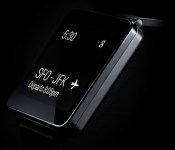
LG G Watch to launch next quarter with Android Wear

Over the last two years, LG has established a storied history of collaboration with Google. The two companies have worked together on three devices (two Nexus smartphones and a Google Play edition tablet) and today we’re hearing about the fourth — a smartwatch. LG’s latest piece of handywork, known as the G Watch, features Google’s new wearables platform called Android Wear. LG’s keeping quiet on the specs and other details of the new device, but the above image at least gives us a sneak peek of what we can expect. Just by looking at the Now-like flight information on the watchface, we can tell that Google Now features prominently on the platform. And just like on the Moto X, users will be able to initiate voice commands by simply speaking “OK Google.”
LG wants the G Watch to act as a “low barrier to entry” for developers, while offering a Google experience to users at the same time; this likely means that when the watch arrives sometime next quarter (exact date and pricing remains unknown), we can expect it to sell at a rather competitive price point. “The opportunity to work with Google on LG G Watch was the perfect chance for LG to really pull out all stops in both design and engineering,” said Dr. Jong-seok Park, CEO of LG’s Mobile Communications division. “We’re confident that a well-designed device has the potential to take the smart wearable market by storm.”
Filed under: Cellphones, Wearables, Wireless, Mobile, Google, LG
Facebook Messenger beta lets Android users test new features
Following Facebook‘s introduction of the Beta program for their Android application last year, the company have just announced the Facebook Messenger for Android Beta program which will give users who opt-in the latest versions of the messenger app before general release.
As with the main Facebook application, our goals with this program are to expand our pool of testers and gain feedback across a more diverse set of devices. Simply by using the app and reporting issues, beta testers will be able to help us improve performance and the overall experience on a wide variety of Android devices at scale.
Anyone is able to join the Beta program for Facebook Messenger, but be aware that since the purpose of the app is for testing, Facebook will be closely monitoring user activity. The monitoring will be looking for bugs and how people use the app and the new features, but to do so it means providing increased awareness of your activity within the app, which for something as social and personal as Facebook Messenger may not be entirely desirable.
The beta program will provide us with an early warning system that will help make everyone’s experience with the app better, once we push it more broadly. Also, since Messenger is all about private sharing and small groups communication, the beta program will give us another channel to understand what kinds of sharing tools resonate with people using Messenger.
If you’re not yet put off by Facebook watching your every move, then it’s simple to sign up for the Beta program.
1) Join the Facebook Messenger for Android Beta Testers Google group:
https://groups.google.com/forum/#!forum/messenger-for-android-beta-testers
2) Allow beta downloads by clicking “Become a Tester” in the Play Store (you need to join the Google Group before becoming a tester)
3) Download Facebook Messenger from the Play Store to update your app
4) Turn on automatic updates, as the beta version of Facebook Messenger for Android will be updated multiple times per week
As ever, remember it’s Beta software so is bound to be riddled with bugs and unexpected occurrences, but with the latest Facebook Messenger features at our fingertips who cares, right?
The post Facebook Messenger beta lets Android users test new features appeared first on AndroidGuys.
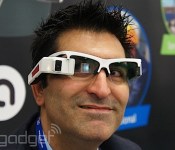
A look at Optinvent’s updated Ora smartglasses (hands-on)

On the last occasion we got to enjoy some face time with Optinvent’s Ora smart glasses, things were a little more… “prototype.” Today, at the Wearable Technology Show in London, we got a chance to see how things have moved along since then. While we were still looking at far-from-final hardware, things have definitely moved on. As you’ll see from the gallery, the latest prototype is still lacking the polished, seamless finish that the retail version will have, and a lot of the touches (rubber seals adjustable nose bridge etc) are not present here. What we do see, however, is a much better sense of how the glasses will look when joe public gets to put its face in them in the next month or so. Oh, and we had a quick spin on them too.
The first thing we noticed is that they’re not as slight and delicate as other smart glasses we’ve seen. The general fit is comfortable, and we appreciate that things will improve with the retail units, but the section containing the camera, touchpad, and we assume main innards, that sits over your right ear might take some getting used to. The trackpad interface (which we didn’t see last time) was responsive, and tactile enough that it’s easy to find — especially given that it’s surrounded by bezel. The same arm is where the screen mount attaches, and is adjustable, meaning you can tilt it up and down to place to display in different locations of your field of view. Definitely a bonus for personal preference, as well as specific app functionality (notifications, versus augmented reality for example).

The main news here today, is that this prototype was fully working with the functioning (Android 4.2) operating system, custom user interface, touch control and the much needed WiFi connectivity. We weren’t able to test any apps and features out, but we did get a good feel for how it will work. Unsurprisingly, it’s very similar to Google’s offering, but also that’s no bad thing. There are a host of other hardware features, too, that include GPS, proximity detection, 9 axis accelerometer, an ambient light sensor and that rechargeable battery. One that, incidentally, will last longer (up to 3 hours intensive use, or 8 hours “typical” use) due to recent optimization, and will be replaceable (so you can stock up on spares). If you’re wondering if all those sensors come at a price, you’d be right. A pair can be ordered from the Optinvent website now for $949/699€ and are expected to ship in May.
Filed under: Wearables
Source: Optinvent
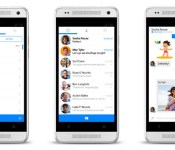
Facebook needs testers for new Messenger features on Android

Apparently Facebook’s found the silver bullet for developing its Android apps: crowdsourcing bug testers. In an effort to make Messenger more stable for everyone, Zuckerberg and Co. are asking adventurous Google fans to help work out the application’s kinks before new features are released to the general public. The process essentially mirrors what we saw with the open beta for its main app last year. Just sign up for the related Google Group, tick the “become a tester” box in the Play store, download the app, turn on automatic updates and voila you’re getting early access to new features. Should a glitch pop up, Facebook asks that you report it with the in-app dialog box. Simple enough, right? Naturally, as is often the case with beta tests, those new bells and whistles might make the app a touch less stable than you’re used to.
Filed under: Internet, Mobile, Facebook
Source: Facebook Code
ADD52 gives Samsung another reason to ask Galaxy owners if they “Got Milk”
On the heels of launching Milk Music, Samsung has just announced a partnership with Russell Simmons and Steve Rifkind, co-founders of All Def Digital (ADD) and All Def Music, along with Narrative_today, and the world’s leading music entertainment company, Universal Music Group (UMG) to launch the new ADD52 service that will be a platform for emerging artist. .
Singers around the world can take their shot at stardom simply by posting their tracks to ADD52.com. The only requirements are that the musicians have an original song and a dream for a record deal. Several tools are made available online to help the emerging artists promote on the site and across various social media.
“For artists, it’s the place to be discovered. For music lovers, it’s the place to discover,” — Russell Simmons
Using Samsung’s new radio streaming service as the core platform, the curated ADD52 station will be exclusively on Milk. Selected artists will get more than just exposure and airtime on ADD52; production budgets will be extended to a select few in order to create their own music videos and remixes. Other perks include access to world-class studios, mentorship from industry legends, and the ADD52 TV show hosted by DJ Skee. The new ADD52 service gives Samsung another reason to ask all of it’s users if they “Got Milk”.
Milk Music is a free and ad-free streaming radio service launched by Samsung launched for select Galaxy smartphones (currently U.S. only) and is available in the Google Play Store.
Source: BusinessWire
The post ADD52 gives Samsung another reason to ask Galaxy owners if they “Got Milk” appeared first on AndroidGuys.

LINE’s internet calling service goes live on Android, starting at 2 cents per minute

If you’ve been waiting to give LINE’s Call service a try, now’s your chance — so long as you live in the right country, anyway. Those using LINE’s Android app in Colombia, Japan, Mexico, Peru, the Philippines, Spain, Thailand and the US can dial most any phone number at rates that might well beat what their carriers would offer. Americans get one of the best deals: their calls start at 2 cents per minute using prepaid credit, and they can pay 70 cents per month for an hour’s worth of talk time. The Chinese will get a similar bargain when Call reaches them in the near future, and LINE-to-LINE conversations are always free. There’s no iOS support yet, but we wouldn’t be shocked if the corresponding app update arrives relatively soon.
Filed under: Cellphones, Mobile
Via: TechCrunch
Source: LINE, Google Play

Larger iPhone 6 May Cause Massive Spike in Upgrades, Lure Android Users
Apple’s upcoming iPhone 6 is widely rumored to include a larger display, which could encourage a significant number of users to upgrade in 2014, according to analyst Brian Marshall of ISI Group, who released a note to investors today.
Echoing past iPhone 6 rumors, Marshall suggests Apple will release two versions of the phone, one with a 4.7-inch screen and one with a 5.5-inch screen. The launch of two phones, both of which offer a total redesign of the existing 4-inch iPhone 5s, could spark a massive upgrade cycle.

Apple’s current installed base is estimated to be at 260 million users, and ISI Group calculates that half of today’s iPhone purchases are made by upgraders, users who are upgrading their iPhones from an existing iPhone to a new version of the product.
ISI indicates that while the upgrade rate (percentage of installed base upgrading devices in a given quarter) was at 10 to 11 percent in 2011–2012, it has now dropped to approximately 9 percent because users have fewer reasons to upgrade with the iPhone 5c and 5s not introducing any significant design changes.

Peak quarters have seen upgrade rates of 12 to 14 percent, and ISI expects a similar upgrade rate during the second half of 2014 when the iPhone 6 is launched, resulting in a higher number of sales. An iPhone 6 with an increased screen size may also lure customers who have switched to Android from the iPhone because of the latter’s lack of a large display.
“Large-screen envy” is prevalent among the iPhone installed base and we believe a ~5” form-factor iPhone would spark a massive upgrade cycle as well as many “Android switchers” returning back to the iPhone (we refer to this as the “mother lode” of all Apple upgrade cycles).
Citing both “large-screen envy” and “pent-up demand” ISI Group suggests the new iPhone 6 models could result in an extra $3.00 earnings per share following release in the second half of 2014.
Higher demand for an iPhone during a redesign year is not unreasonable, as it has now been two years since the 2012 introduction of the iPhone 5. While the iPhone 5s included multiple internal improvements and the Touch ID fingerprint sensor, it retained the same 4-inch display and design of the iPhone 5, as did the iPhone 5c, which was just a repackaging of the existing model.
     |
Get This Look: ‘Remix’ Zooper Widget
We’re huge fans of changing the home screen around a bit and creating a new user experience for our Android. So much so that we present our ongoing series of Get This Look posts. In a nutshell we show you a new layout, app, widget, or icon set for your Android handset and tell you which apps you’ll need to mimic the feel.
Some of these are a little easier to create than others and many of them can be tweaked to no end. The following details are but the ingredients to which you can create your own delicious Android dish; your results will vary. Which is awesome! If nothing else, this is a great way to discover new apps, widgets, icons, and more!
Remix by ToxicThunder
Why we love this look:
if you’re after a complete redesign of your Android device then Remix is what you’re looking for. This Zooper widget completely changes the look of your homescreen into something that doesn’t look like Android at all. With quick access to important media such as your music and gallery, and with notifications and custom shortcuts organised in a visually appealing way, Remix is sure to have your friends asking ‘where did you get this look?’. What you’ll need:
The post Get This Look: ‘Remix’ Zooper Widget appeared first on AndroidGuys.
Google helps devs create cross-platform Android and iOS multiplayer games

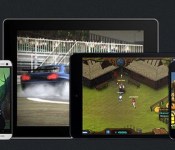
The annual Game Developers Conference descends on San Francisco this week, and Google’s wasting no time in sharing its news. For gamers, Mountain View’s said it’ll be launching a “game gifts” service for sending in-game swag to other players, and increasing the number of game categories in the Play store to 18 in the hope you’ll stumble upon titles you might like easier. More important, however, is what devs can do with the new features of Google Play game services, a backend tool for managing leaderboards, achievements and more in Android, iOS or web games. Multiplayer support has been added for iOS games, and via an update to the Unity plug-in, cross-platform multiplayer between Android and iOS devices is now possible. These features have to be implemented by developers, of course, but next time you see that friend who’s always arguing the merits of one mobile OS over another, you might just be able to settle the discussion in-game instead.
Filed under: Cellphones, Gaming, Tablets, Software, Mobile, Google

