


Chupacabra update makes the OUYA game console a better media center

Go ahead and dust off your OUYAs, friends — it’s updatin’ time. The little Android game console that could wasn’t exactly the runaway hit its creators were hoping for, but some fresh features found in the new Chupacabra update help this thing stand a bit taller. As far as the team is concerned, the biggest draw is the addition of AC3, DTS and AAS audio passthrough support for the exceedingly popular XBMC media center app. The OUYA itself doesn’t have the proper licenses to play certain bits of audio (say, a movie’s surround sound audio track), but now it can pass them over to a user’s home theater receiver that does have the licenses. In short, those of you using your tiny Android consoles as media centers can finally play some of the trickier videos in your collection.
Also tucked away in the update: a cleaner view at game information, a download manager and the ability to set certain games as favorites for easy access. Alas, it’s not all sunshine and rainbows here — OUYA said it would remove its free-to-try requirement, and that change has finally taken hold. Granted, the move basically neuters one of the most gamer-friendly parts about owning an OUYA (who doesn’t love free game demos?), but we suppose the company’s gotta do what it has to in order to keep those game developers happy.
Source: Ouya
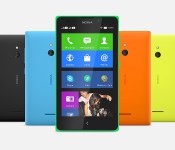
Install the Nokia X camera on your Android 4.1+ device

Whilst the Nokia X wasn’t exactly the flagship high-end spec’d out Android device we were hoping for from Nokia, the camera that is bundled with the device has some pretty nice settings, and we all know Nokia can make a pretty good camera (app).
If Google’s own camera app doesn’t quite do it for you, then the guys over at XDA Developers have managed to port the Nokia X camera software to pretty much any Android device running version 4.1 (Jelly Bean) or better.
These settings that the Nokia X camera app features include: ISO sensitivity control, the ability to display a live intensity histogram, configurable noise detection, redeye reduction, anti-banding, and more.
What’s more is you don’t even need ROOT access. Think this is something you fancy trying out? Download the file from here and install it on your Android device. Let us know what you think in the comments below.
The post Install the Nokia X camera on your Android 4.1+ device appeared first on AndroidGuys.

Looking for the longest lasting battery experience for your smartphone? Here’s the top devices

A smartphone that doesn’t last a day in the 21st century isn’t a smartphone worth having, and with devices now including more and more processor intensive features, the battle of functionality versus battery life is hotter than ever.
A great device can be let down entirely by the length of time it lasts between charges and it is important to know that you won’t be left without your device on a long day at the office or travelling.
That’s why we’ve compiled a list of the devices which have been proven to have the longest battery life between charges to enable you to make the best decision when choosing your next device. The devices are ranked according to the battery capacity they have, and ultimately the bigger battery capacity the longer it’ll hold a charge, together with user rating against how they performed when it comes to the claimed capacity.
There’s no denying that judging by the above graph that Android trumps both iOS and Windows Phone when it comes to both battery capacity in the devices and user rating for getting the expected life between charges.
Do you find yourself turning off GPS, Bluetooth, WiFi, and even dimming the screen to where it’s almost unreadable at the end of the day to conserve that last few percent of your battery? Let us know in the comments below which device you decided to get and if it lives up to the battery expectation .
The post Looking for the longest lasting battery experience for your smartphone? Here’s the top devices appeared first on AndroidGuys.

Why I buy refurbished tech and you should too

Hi, I’m Tarus, and I’m a “tech-aholic”.
I love mobile tech — phones, tablets, wearables. if it has to do with mobile, I’m all over it. The newest flagship phones are starting to be released, and I’m wide-eyed yet again, hoping to get my hands on the latest and greatest.
With new devices being released all the time, it can be exhausting and extremely expensive to keep up. We are getting to that time of year when it seems like there are new devices being released weekly and we just saw the HTC One (M8) and Samsung Galaxy S5 launch to great fanfare that are expensive on-contract , but off-contract, the prices are through the roof.
This leads me to the question I’ve been pondering: Why is there such a stigma around buying refurbished hardware? I frequent several forums and deal sites and when there is a post about a sale on a refurbished phone or tablet, there is usually a massive number of people making negative comments about the item. I read things like, “I thought this was a good deal until I saw that it was a refurb.” Comments like this really grind my gears.
I think that some people have had bad experiences with refurbished products and it left a sour taste in their mouth. They spew their negativity all over the Internet, and pretty soon, every refurbished product sale has a gang of angry villagers with torches and pitchforks in hand just waiting to vilify the perfectly acceptable products available for purchase.
When I’m in the market for my next Android device, I will check for refurbished deals first. I’ll scour deal sites like Slickdeals and Woot. I’ll look at Amazon, Walmart, Cowboom, and Newegg. Plus, I‘ll even take advantage of Ebay, utilizing reputable sellers to purchase refurbished products.
Personally, I’ve had a really good experience with buying refurbished products, and when purchasing items I need. There are a few reasons why I chose a refurb first, such as:
- Items can usually be had for a fraction of the cost compared to buying brand new.
- Items usually look brand new with little to no signs of use.
- Most refurbished items are store demos, returns, overstocks, or cancelled orders.
- The manufacturer warranty still applies in most cases.
- You can purchase an extended warranty for piece of mind if you’d like.
- Returns are offered on most items.
Now, I am not saying that your experience will be perfect, as I’ve even purchased a smashed, refurbished TV from a certain big box retailer, which I was able to return. Nevertheless, you should highly consider buying refurbished devices if you’re looking to save money and get a deal. Please don’t worry about what others say on the Internet because for every negative commenter, there are a hundred others smiling, kicking back and enjoying their “refurbs”.
The post Why I buy refurbished tech and you should too appeared first on AndroidGuys.
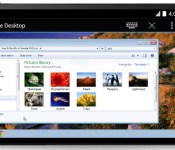
Chrome Remote Desktop for Android browses a PC or Mac from your phone

While we’d seen rumblings that it was in beta testing, Google’s Chrome Remote Desktop app for Android made its official debut today. This means that those who fancy Mountain View’s mobile OS can take a gander at files that reside on a Windows or Mac machine that’s safely docked in the office. The Remote Desktop app has been available on the desktop for quite some time, and now the same access is available through Chrome on Android smartphones and tablets. For those who prefer Apple’s devices, an iOS version of the software should be on the way soon.
Source: Google Chrome Blog, Google Play

Google+ for Android Redesign Leaks

Suspected to be announced at Google I/O, Google+ is expected to get a redesign and it seems that images of the new Android app has showed up on Google+ of all places courtesy of +Yoel Kasub.
He claims that these are images from a test build of Google+ and it seems to be mainly a design change of the user interface as opposed to any drastic functionality changes.


Most notable is the flat UI which seems to follow the same path as what Apple and Samsung are going for and it looks pretty good.
As with any leak, reservation should be exercised as this could be just an internal testing version which was never meant to reach the public domain; on the other hand it could be the new Google+ we’ll see at Google I/O. You decide.
Source: Google+
The post Google+ for Android Redesign Leaks appeared first on AndroidGuys.

Shh, it’s a Secret: The allure of the anonymous internet

“I’m terrified I might not actually be all that smart.”
“Made a batch of Jello just to stick my dick in it. No regrets.”
“I like taking the ferry because I get to drink in public legally.”
This is just a small sampling of posts I’ve recently seen on Secret, an anonymous-sharing app that’s part of a new trend in Silicon Valley. It’s a little like Whisper, a competing app that’s been around since 2012, except that instead of letting you broadcast your anonymous missives to the world, posts on Secret are limited to a network of friends based on your phone’s address book.
When I first heard of these anonymous-sharing apps, I was intrigued, but confused about their popularity. Surely anonymity on the internet isn’t difficult — you can be whomever you want online, right? Just create a fake account or join the social network of your choosing, and you’re free to say whatever you like. But as I spent time on Whisper and Secret, I found that their barrier to entry is so much lower than having to come up with a fake persona. There’s no need for a username or a special profile page — you just download the app, answer a few questions and away you go. You do need to enter in an email address, phone number and password for Secret, but the app guides you through it pretty easily. Secret uses your contact info to connect you to your friends, but if you misbehave or are reported as a “bad actor,” the company will ban you from the network using your phone number.
Once you’re in, the freedom to say whatever you want is strangely alluring, especially so with Secret, where your confessions are likely to be seen by those sympathetic to your woes. In a world where your real name is exposed and everything you say online is recorded for time immemorial, anonymous-sharing apps provide an escape that’s all too rare.

When the internet was young, most of us used fake screen names to identify ourselves. Whether it was LazyCow18 or LonelyGirl15, a nom de plume was preferable. Not only was it an easy way to set ourselves apart online, but it also allowed us to separate our online existence from the real world. Some of us used this cloak of anonymity to try on different personas, while others simply enjoyed the ability to speak freely without the debilitating confines of a shy and awkward personality. These days, however, internet anonymity is not nearly as predominant.
Hidden personas still exist on forums like Reddit, 4chan and most message boards, but by and large, our public and online identities tend to be one and the same. Facebook’s popularity shoulders much of the blame for this phenomenon, especially since the use of real names is core to how the social network works. After all, how else are your old high school mates supposed to find you on Facebook if you’ve named yourself GamerX4000? Real identities are also core to another area of interest for Facebook: targeted ads.
In a world where your real name is exposed and everything you say online is recorded for time immemorial, anonymous-sharing apps provide an escape that’s all too rare.
And it’s not just Facebook, either. Google+ came under fire a few years ago when it banned the use of pseudonyms. (It’s since loosened that rule and now allows the use of “common names.”) YouTube, long known for its cesspool of anonymous comments, recently encouraged real-name use with its integration with Google+. Even if you’ve held strong to your online pseudonym, it’s still likely that you’ve used your real name somewhere on the internet, be it on LinkedIn, Twitter or your company’s website. One of the benefits of this transparency is that you’re held accountable for what you say. Incidences of trolling and bullying are likely to subside if people know their real names are tied to their online activities. Real names also make it easier for us to stay connected, and in the case of LinkedIn, they can also help you find a job.
When Chrys Bader and David Byttow developed Secret last year, their goal was to provide an avenue to let us express ourselves more honestly, which they felt was difficult to do with today’s tools.
“Facebook created order out of chaos,” Bader said in an interview with us. “But that order was very constricting. It trained us to share in a certain way, to curate our identities, to put forward things we wouldn’t be judged for. … It can be stressful after a while.”
The first version of Secret was an app that let you send anonymous messages directly to someone in your phone’s contact list. While this certainly obeyed their initial credo of encouraging people to open up, the subsequent engagement and response to these direct messages were poor. They eventually adapted the product to broadcast to your entire phone’s contacts list instead, which improved interactions dramatically.
“Facebook created order out of chaos,” Bader said in an interview with us. “But that order was very constricting.”
“We wanted people to use their address book as the source of the social graph,” said Bader. “We didn’t want you to find friends and follow people like all the other social services out there.” Conveying emotion, he said, is something that’s much easier to do when you’re with friends. “Sometimes even in a close network, you restrain yourself. You never really discuss taboo cultural things like salary or sex.”

In Secret, however, those topics proliferate. From just one week with the app, I’ve seen posts that include melancholy thoughts about life, salacious sexual adventures, controversial political ideas and just random confessions about unrequited affections and financial woes. Its stream of consciousness feels a lot like Twitter, except, well, you don’t know who’s on the other end.
The benefits of Secret go beyond just catharsis as well. Recently, for example, a woman who goes by the name of “Amy” opined on Secret that she was the only person out of a five-person company who wasn’t hired in a recent acquisition by Google. Though she’s still skittish about coming forward, Secret offered her a chance to speak up about what she perceived to be an injustice. We can imagine a scenario where anonymous-sharing apps are used to reveal a wrongdoing that might otherwise go unsaid. Still, because these posts are anonymous, it’s difficult to corroborate their validity. In the early days of Secret, for example, there was a rumor floating around that Yahoo was acquiring Evernote. This, of course, turned out to be false. However, Bader said it was actually a good thing, as it created a healthy skepticism about what is or isn’t real.
No matter what you think of these anonymous-sharing apps, however, it’s clear that they have a sizable fanbase, at least in the tech community. Whisper, for example, has raised nearly $54 million to date, while Secret has already received early funding to the sum of $8.6 million even though it was only introduced in January this year. Secret in particular has something of a cult following, and frequently gets mentioned on Twitter and the media as a poster child for the anonymous-app movement. There’s even something called anonyfish, a rogue spin-off service designed to let people on Secret message each other anonymously using throwaway usernames. It’s no wonder then that there seems to be a glut of anonymous-messaging apps like Yik Yak, Blink and Confide flooding the market. There are even rumors that Facebook — the originator of the real-name movement — might be considering an anonymous service of its own.
“Secret is like being in a room with all of your friends, but you don’t know who’s saying what,” Bader said. “You get to peer into your friends lives, to experience truth, sadness, loss … raw human emotion. It’s what makes Secret so addicting.”

Google’s new camera app brings Photo Sphere and Lens Blur to Android devices

While Google has continued to toss new features into the camera app shipped on its Nexus devices, many Android phones replace it something else. But just as we revealed a few weeks ago, now it’s available in the Play Store, ready to run on any phone or tablet using Android 4.4 KitKat. Beyond bits like Photo Sphere that we’ve seen before, Google is filling in the blanks on its new “Lens Blur” option. Meant to emphasize the subject while blurring the background for an impressive depth of field effect, it uses algorithms to simulate the large camera lens and aperture your phone / tablet doesn’t actually have. Google’s Research Blog has details on how its done, including a Lytro-like ability to change which object is in focus after you take the shot.

Tired of tilt-shift effects after years of Instagramming, no matter how much math is at work? There’s more to the new camera app than that, it has all the other features we’d heard about too, like a “100% viewfinder” that makes sure you can see everything that will be in the picture on your screen before the shot is taken with no “dropped pixels” and a larger capture button. Panorama shots are better now too, with higher resolution, and Google’s 360-degree Photo Spheres can be captured at up to 50 megapixels.
Filed under: Cellphones, Tablets, Software, Mobile, Google
Source: Android (G+), Google Research Blog, Google Play

Download: HoverChat offers SMS multitasking with Facebook-like ‘HoverHeads’

Since Google decided to scrap the SMS app in Android 4.4, developers have scrambled to fill the gap. Apps including Textra, HelloSMS and EvolveSMS have helped raise the bar for SMS apps on the platform, along with HoverChat, an app you might previously have known as Ninja SMS. Like its rivals, HoverChat utilises the traditional list-based inbox, but it’s how the app handles incoming messages and notifications is what sets it apart from the rest of the competition.
Despite its goofy name, Facebook’s Chat Head feature has proved to be somewhat of a revelation. Assigning a floating chat bubble (normally with someone’s face inside it) to a contact, users can respond quickly to friends no matter what app they are using at the time. HoverChat takes the same approach with its “HoverHeads”, but lets you tailor them to fit your needs. In that respect, you can choose which of your friends will get their own chat bubble when they text, quickly pop-out a chat windows from your inbox, make them semi-transparent (perfect for when you’re reading) and even send encrypted messages. Unfortunately, encrypted messaging is limited to messages sent between HoverChat users, meaning the majority of your outgoing texts will not take advantage of the app’s additional privacy measures.

The app’s customisation features don’t end there either. HoverChat also includes a fully-featured store that serves themes, fonts and custom HoverHeads, with both free and premium options available. Although you’ll probably want to see your significant other’s face inside heart or star shape (softie), premium HoverHeads are often animated. Got a nerdy mate? There’s an “Geek” GIF avatar that’ll do the job. Despite the rise of messaging apps like Whatsapp and Snapchat, SMS still serves a purpose, at least for now. If you find yourself in the midst of a text message onslaught, HoverChat and its HoverHeads will have you multi-tasking like a maestro.
The app is available now for free on Google Play, while the paid version (£2.39) will unlock all of the in-app purchases on the store.
Source: HoverChat (Free), (Premium)

OnePlus One will cost under £290 / €350 in UK and Europe

It’s just seven days until OnePlus launches its first Android flagship, but that hasn’t stopped the company drip-feeding news about the device. Surprisingly, the outfit promises that the unit will cost under £290 in the UK, €350 in Europe and $3,000 HKD in Hong Kong — which we’re taking to mean £289, €349 and $2,999, respectively. By way of comparison, that’s £10 less than you’d pay for a Nexus 5 and £20 more than you’d need for a Lumia 1320. Now, given that the handset is shipping with a Snapdragon 801, 5.5-inch 1080p display and a 3,100mAh battery, what is OnePlus likely to scrimp on in order to get it down to that price? Why not dive in over at the forums and speculate with us.
Filed under: Cellphones, Mobile
Source: Engadget Product Forums, OnePlus

