


Microsoft updates OneDrive app for Android

For those who have come to count on the cloud as a baseline file storage method, Microsoft’s OneDrive (formerly SkyDrive) is a very competitive option, offering 7GB of online storage and transparent Office integration.
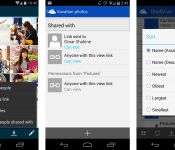
Now the Microsoft OneDrive team, by way of their blog, has provided several updates to their app lineup, including the Android version. Sticking with Android here, with version 2.5 of OneDrive app (for Android 4.0+ devices) one can now:
- Share files and/or folders with others using links or sending files to another app for sharing purposes.
- Adjust viewing and editing abilities right from your Android device.
- Select multiple files to download at once.
- Move and sort files and/or folders.
This update brings much more functionality to OneDrive on Android, especially via the file sharing aspect. While Office documents are still held tied to Office/OneDrive support only (via Office web apps), one can hope that this at least a small step in the right direction to freeing Office files to all apps.
The post Microsoft updates OneDrive app for Android appeared first on AndroidGuys.
Don’t go to North Korea, but do check out this travel app

When we think of the places we’d rather not go, a Whole Foods on a Tuesday night before Thanksgiving or your great-grandparents’ windowless basement apartment come to mind. And then there’s also North Korea, bastion of human rights violations and the favored destination of one Dennis Rodman. If, for some reason, you’ve always wanted to plan your own trip to the “most secretive nation” in the world, but felt it was too complicated, well, now there’s a 99-cent app for that. Yeah. But it doesn’t come from the genius minds of the Democratic People’s Republic of Korea’s propagandists. It hails from Uniquely.Travel, a London-based startup specializing in trips to difficult destinations and Magora Systems, a Russian software maker.
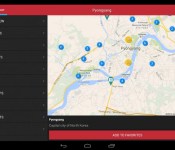
The app appears well-designed enough, with over 350 points of interest, slick menus, hi-res imagery and even recommendations from a tour guide with 10 years of experience traveling in the land that time (and justice forgot). The sights are helpfully mapped out and available for offline access should you need a handy reference while casually strolling through Pyongyang looking for that hot new Tapas bar. And the intrepid among you can even use it to customize your itineraries, compare price quotes from different travel agencies and book travel.
But, really, why would you?
Filed under: Cellphones, Software, Mobile
Via: Washington Post
Source: North Korea Travel
Here’s what the new HTC One might have looked like

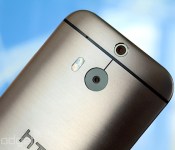
The new HTC One may seem like a logical evolution of the original design, but that wasn’t guaranteed — just the opposite, according to company Creative Director Daniel Hundt. He tells Stuff in an interview that the original guideline was to “start with a chunk of metal” and go from there. As proof, the designer has early design sketches of the many concepts CEO Peter Chou told us about earlier, showing everything from a near-flat One body to a super-curvy front and back. Hardware should look like it’s the “natural result” of its material, Hundt says, and shouldn’t be guided primarily by specs like the battery size.
That’s not to say that HTC was unwilling to let a few hardware elements dictate its design. The antennas and speakers needed space, and the microSD card slot is a response to customer feedback. However, the goal when possible was to keep the smartphone’s basic shape intact. Hundt believes that the company made the “right trade-offs” to get the intended form factor, even if it ultimately led to competitors having a few features that HTC lacks.

The director also gives a few hints as to where the next One is going. The company has certain “signature elements” that it wants to keep, such as the chin, forehead and rear lines. It’s likewise pushing for even more metal next time around, and it’s “looking into” Galaxy S5-style waterproofing. Hundt isn’t revealing much beyond that, but it’s clear that the phone maker isn’t planning a radical break from its recent past. You’ll likely have to wait until next year to learn more about the One’s sequel, then, but you can check out our video interview with Peter Chou below if you’re looking for more insights on the smartphone you can buy today.
Filed under: Cellphones, Mobile, HTC
Source: Stuff
China’s Vivo Xshot slaps Android on a bright and stabilized camera

Despite its relatively small presence outside China, Vivo is still a mobile brand that’s worth keeping an eye on. The company’s known for its fondness for high-end audio chips, and it’s also often one of the very first to pack the absolute latest components into a phone, as demonstrated by its Xplay plus Xplay 3S. At one point, Vivo even boasted the world’s thinnest phone until local rival Gionee broke the record. This time, the ambitious brand has launched a camera-centric smartphone dubbed the Xshot, which is the first to pack a camera with both a fast f/1.8 lens speed and optical image stabilization. Naturally, we had to get our hands dirty with it.
Let’s start off with the basic specs. The Xshot comes with Qualcomm’s awesome Snapdragon 801 SoC (quad-core, 2.5GHz), 3GB of RAM and 32GB of built-in storage, along with microSD expansion (up to 128GB) and Micro SIM support — both of which are on a single pin-eject tray. You also get a more palm-friendly 5.2-inch 1080p LCD, as well as a non-removable battery within the shiny aluminum frame and smooth plastic cover — very much the same solid construction as the Xplay 3S. Unsurprisingly, there’s LTE radio here, but the supported bands will depend on the variant.
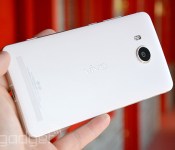
The Xshot’s main camera features the rather common 13-megapixel resolution, but its combination of optical image stabilization plus a bright f/1.8 aperture makes it a rather unique selling point. The downside here, as you can see in the earlier photo, is that the bulky camera literally sticks out like a sore thumb on the back. On a more positive note, you get a two-stage shutter button on the side, which should provide a better grip and easier camera control. Vivo’s also thrown in a dual-tone LED flash that’s also used by the iPhone 5s and the latest HTC One for prettier flash photography. As for video, this camera’s capable of 4K capture, though we remain skeptical of the video quality coming from such a tiny sensor.

The front camera isn’t too shabby, either: it’s capable of shooting 8-megapixel stills plus 720p video, and it even has its own LED flash (Vivo did the same with last year’s female-oriented Y19t). While we weren’t allowed to share sample shots due to the device’s pre-production nature, Vivo’s confident that its collaboration with ArcSoft should guarantee decent images from the Xshot’s cameras.
Don’t worry, Vivo hasn’t sacrificed any audio goodness here for the sake of the camera features. The Xshot comes with a “powerful” Maxim MAX97220 headphone amplifier, along with a refined Cirrus CS4398 DAC that’s apparently less than half the original package size, as well as a Texas Instrument ADC chip for a wider audio input bandwidth. We’ve already praised Vivo’s audio efforts in our Xplay review, so the Xshot shouldn’t be disappointing on this end, either.
Software-wise, the unit we played with ran on Vivo’s Funtouch OS 1.2 based on Android 4.3, but the retail version should ship with Android 4.4. Much like the Xplay 3S’ system, you’ll find handy features including screen-off gestures, “air wake” gestures, voice-activated camera, beautification camera and a timeline desktop that lists out your app plus camera interactions chronologically. By the way, if Chinese isn’t your forte, you’ll have to put up with some “Chinglish” dotted around Vivo’s software.

The sad news is Vivo has yet to officially launch the Xshot outside China, but you should be able to grab one from the usual e-tailers (or just ask your Chinese pen pal). Just for reference, the phone will be available for CN¥2,998 or about $480 unsubsidized in China later this month.
Filed under: Cellphones, Mobile

Epson’s latest Android glasses finally arrive for the faithful few

We doubt that there’s a horde of wearable fans jonesing for Epson’s second-gen Moverio glasses — not after Google’s one-day Glass sale, anyway — but they’re at last available, several weeks behind schedule. Spend $700 and the just-shipping BT-200 headset will put a basic (and frankly decrepit) Android 4.0 interface in front of your eyes. It does have a few tricks up its sleeve that Google can’t quite match, though. There’s head-motion tracking, wireless video mirroring and Dolby Digital Plus surround sound; you’ll also get a long-overdue camera whose LED makes it clear that you’re recording. The new Moverio is far from reproducing the cachet (or social stigmas) of Google’s eyepiece, but look at it this way: The money you save by skimping on trendier eyewear can be put toward nobler pursuits.
Filed under: Displays, Wearables
Via: Connectedly
Source: Epson

The $20 smartphone is coming later this year

In some corners of the world, even starter smartphones like the ZTE Open are too costly; basic cellphones such as the Nokia 105 thrive in areas where whole families can only afford one device. However, ARM believes that smartphones will soon be within reach of just about anyone. While it’s possible to make a $25 Firefox OS phone today, ARM now expects to see a $20 Android phone within the “next few months.” It might not actually be possible to go cheaper using current manufacturing techniques, the chip designer says.
This extra-frugal hardware won’t compete against most budget phones, let alone a range-topping device like the Galaxy S5. The $20 smartphone will have to use a single-core Cortex-A5 processor and 2.5G (read: EDGE) wireless data; for reference, the $49 BLU Dash uses a dual-core chip. Performance isn’t the point, though. A rock-bottom price should bring sophisticated mobile computing to an audience that previously had to make do with calls and text messages — social networks and the modern mobile web will no longer be off-limits.
Filed under: Cellphones, Mobile
Via: Ars Technica
Source: AnandTech

Microsoft OneDrive adds sharing and organization features for Android

If you’re a Microsoft OneDrive user on Android, sharing and organizing files just got a bit easier while on the move. Thanks to an update to version 2.5, the cloud-storage option allows those with Google-powered mobile devices to share via invite, link or sending files to an outside app. You can also download multiple files at once, while moving and sorting individual items and folders as needed. There are some new additions on the desktop side too, including adding items to a previously shared stash, publishing video content to Facebook, custom album covers and more. The new version of the Android app is available now in Google Play and the desktop features are rolling out to users “over the coming days.”
Source: Microsoft (OneDrive Blog), Google Play

Google Maps gets offline mode, lane assist, and more

Google has just deployed a huge update to its Map application which brings offline mode, lane assistance, and Uber integration.
Updated for both Android and iOS, the new Maps app brings the following new functionality:
Don’t miss your next turn or exit. The Google Maps app now shows you which lane to stay in or move to so you’ll never find yourself driving for miles down the wrong road. You’ll also have easy access to alternate routes while you’re navigating, so you can choose the best drive for you.
Don’t worry if you’re not online. Before setting off on your next vacation, hike, or roadtrip, search for an area and tap on its place info sheet, then when available, you can select “Save map to use offline”.
Don’t be late for last call. With new filters, you can browse through restaurants, bars and hotels by opening hours, rating, price, and more.
Don’t limit your options. Frequent Uber rider? If you have the Uber app installed, you can now compare your ride with transit and walking directions right from Google Maps in some cities.
Don’t miss that train. With more than a million public transit stops on Google Maps, you’ll get reliable information to help you get where you’re going.
Don’t forget the park you wanted to visit. See places you’ve saved on Google Maps across all your devices when you’re signed in.
Don’t wait to explore your next vacation spot. Search for your ideal destination—anywhere from the Gateway Arch to the Taj Mahal—then tap on the place card to dive into Street View where available.
The post Google Maps gets offline mode, lane assist, and more appeared first on AndroidGuys.

Tumblr’s mobile apps finally get full-on customization tools

While Tumblr has had mobile apps for years, it hasn’t been easy to truly cut the PC cord; you’ve had to retreat to your computer to fine-tune every aspect of your blog’s look. You won’t be held back any more, though. The social service has rolled out new Android and iOS apps that offer the same editing powers you have on the web. You can now change colors, images and anything else that was once desktop-only, and your color pick will even change the interface’s look on others’ devices.
Tumblr sees personalization as both a way to accommodate its increasingly mobile audience (now half of all users) as well as a way to one-up rival social networks. As the company explains to Mashable, many profiles elsewhere (ahem, Instagram) are locked in a “cookie cutter layout” — the look doesn’t change much from person to person. It’s hard to say if this customization strategy will pay off, but you’ll want to check out the new app if you’re keen on standing out from the crowd.
Filed under: Cellphones, Internet, Mobile
Via: Tumblr Staff
Source: App Store, Google Play

Tesco to launch an Android smartphone alongside the Hudl 2 later this year

After accumulating more than 500,000 sales of its first ever own-brand tablet, the Hudl, supermarket giant Tesco is to expand its device line-up by launching a high-powered Android smartphone. Speaking to BBC Radio 5 Live, chief executive Philip Clarke confirmed that the company’s upcoming handset will feature hardware comparable to Samsung’s Galaxy S5 and, like the Hudl, come preloaded with Tesco apps and services. Speaking of the tablet, Clarke also said Tesco will release a refreshed version of its discount slate, appropriately named the Hudl 2, in September. While the tablet has been priced at the low end of the market at £119 (even less if you used ClubCard vouchers), Tesco’s smartphone is expected to command a higher price to match its specifications. That might make the handset less of an impulse buy, but Tesco says it will still price the handset aggressively, allowing shoppers to pop a couple of Android devices into their trolley alongside their bread and milk.
Filed under: Cellphones, Tablets, Mobile
Source: BBC News

