



Your kids can drive this electric, Android-equipped ‘sports car’

Don’t look now, but your kids may end up owning a better car than you do. Henes recently unveiled the Broon F8 series, a child-sized electric “supercar” that has features you probably wish you had in your own ride. Never mind the independent suspension, differential steering and adjustable driving modes — this vehicle has its own 7-inch Android tablet that serves as both the dashboard and infotainment control deck (yes, there’s a sound system). Junior doesn’t even have to drive at all, since there’s a Bluetooth-based remote control that lets you take the virtual wheel in a pinch.
The Broon F8 will cost much more than your old Power Wheels kit, but it’s relatively reasonable for something with so many creature comforts. You’re looking at between $895 to $1,000 depending on the drivetrain. The real gotchas, as Wired notes, are the size and availability. The car is meant for kids five and under (even an eight year old can find it a tight fit), and it’s still in the prototype stage. It’ll be a while before your little tykes are impressing their kindergarten friends.
Filed under: Transportation
Source: Broon Cars
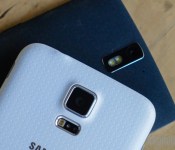
What Android announcements had you most excited, and disappointed, in 2014? (poll)

The year 2014 is finally over, and we are now ushering in a brand new year. Before we completely turn to the future, let’s talk a bit about 2014. A few days before the new year’s arrival, Simon brought us a great “Year in Review” post that pointed out some of the biggest happenings of 2014.
Now it’s time to share our own thoughts. What do you feel was the most important Android-related development of 2014?
// <![CDATA[
(function () ());
// ]]>
On the other side of the fence, what was the most disappointing Android development of 2014?
// <![CDATA[
(function () var opst = document.createElement('script'); var os_host = document.location.protocol == "https:" ? "https:" : "http:"; opst.type = 'text/javascript'; opst.async = true; opst.src = os_host + '//' + 'www.opinionstage.com/polls/2242733/embed.js'; (document.getElementsByTagName('head')[0] ());
// ]]>
How about the best flagship smartphone of the year?
// <![CDATA[
(function ()
document.getElementsByTagName('body')[0]).appendChild(opst);
());
// ]]>
What do you feel was the most disappointing flagship of 2014?
// <![CDATA[
(function ()
document.getElementsByTagName('body')[0]).appendChild(opst);
());
// ]]>
Turning to the new year
In a matter of days CES coverage will kick off and Team AA will be there in full force. This one event will set the stage for the year to come, even though the biggest Android-specific announcements won’t actually hit until MWC timeframe or later. In the days, weeks and months to come, we’ll likely have plenty of articles and features showcasing what we might see this year — and we’ve already done a rumor roundup on Samsung’s upcoming Galaxy S6.
But let’s talk about what you think — what Android device (or development) are you most looking forward to in 2015? Tell us about it in the comments!
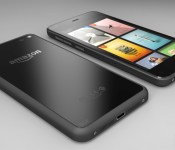
Now you can install Google Play on your Amazon Fire phone

Amazon made their debut in the smartphone market by introducing the Amazon Fire Phone. It is an Android powered smartphone featuring Amazon’s very own Fire OS. Although, it is Android but a user can only use the Amazon App store with the Fire Phone, which means no access to Google Play Store but thanks to someone over at XDA, Fire Phone users can now access the Google Play Store. The best part is that there is no requirement of rooting the phone, however it is not something official so be ready to take the risk.
If you are interested in using Google Play Store on your Fire Phone, check out the video below:
Let us know what you think about it in the comment box below.
Source: XDA

The post Now you can install Google Play on your Amazon Fire phone appeared first on AndroidGuys.

Sony might just launch a VAIO Android smartphone at CES 2015

With CES 2015 rapidly approaching, the speculation inevitably begins, and first up is Sony who may just be set to launch an Android powered VAIO branded smartphone.
There’s no word as to the exact specifics of what a VAIO device may entail, but with the success of Sony’s Xperia lineup, you can bet it’ll be one heck of a device. The VAIO Android device is expected, however, to not be a high-end smartphone, and instead be reasonably priced.
It seems that only time will tell with this one, but keep your eyes peeled on our CES 2015 hub for the latest news.
The post Sony might just launch a VAIO Android smartphone at CES 2015 appeared first on AndroidGuys.

Android 2014: A year in review

In two days time we’ll be celebrating the new year. 2015 is full of possibility, but before we turn our attentions to the future, let’s cast an eye back at the year that was.
Android had a great 2014, full of twists and turns, new releases, new markets, new device categories, and new directions. How did the news play out? What were the biggest stories of the year? Find yourself a comfy armchair, put your feet up, and let’s take a look.
January 2014 – Google and Samsung kiss and make up
There’s little doubt that 2013 was Android’s year as the platform claimed a 79% share of the worldwide market, according to Strategy Analytics. The majority of analysts agreed, but they also pointed to signs of saturation, talking up the importance of emerging markets beyond the US, Europe, Japan, and Korea. China, India and other new markets would be the new battleground for Android smartphones. Google would also have to look at new product categories in order to expand Android’s prospects in its existing strongholds.

As ever CES provided the first big event of the year. It was light on big name smartphones, but there were plenty of wearables and Samsung’s new tablets made headlines for the Magazine UX, which appeared to be a major departure from Google’s Android. You can check out what made our best of CES 2014.
We were still talking about a perceived spat between Google and Samsung, but as the month unfurled the two signed a decade-long cross-license deal and apparently came to some sort of agreement that Samsung would scale back its Android customizations. It looked as though the hatchet was buried.
The persistent rumors about the death of the Nexus line would not go away and there was speculation that it may have formed part of Google and Samsung’s behind the scenes agreement. There was no confirmation of this, but a Google move that definitely was going ahead was the offloading of Motorola, apparently at a big loss.
The Moto G had been a big hit, but Motorola still wasn’t profitable.
We were left to guess about the true motivation behind Google’s sale of Motorola. The Moto G had been a big hit, but Motorola still wasn’t profitable. It felt a little as though Google was giving up just as the partnership was beginning to work, but it may have been under pressure from the other Android OEMs, especially Samsung.
Google’s sale of Motorola to Lenovo was made official for around $3 billion, a bit shy of the amount that Google paid to acquire Nest Labs offering a route into the home automation market.
February 2014 – Flappy Bird frustrates millions

One of the biggest stories of February was about Dong Nguyen’s difficult and unaccountably popular Flappy Bird which was reportedly pulling down $50k per day from an audience of 50 million. The developer would later pull the game and the Play Store was quickly flooded with clones and tributes.
The biggest mobile show of the year, MWC 2014, saw the unveiling of the Sony Xperia Z2, the Samsung Galaxy S5, and the horribly disappointing, ill-fated Nokia Android smartphones. Most of the chatter was focussed on the S5 which got a mixed response. New features like the fingerprint and heart rate sensors were well recieved, the specs looked solid with a much improved camera and water proofing, but there were plenty of jokes about the perforated pattern on the back resembling a sticking plaster.
We heard a rumor about a Nexus tablet from HTC which definitely generated some excitement. Google launched Project Tango which opens up some interesting 3D sensing possibilities. There was also the $19 billion WhatsApp acquistion by Facebook and we heard Google had offered $10 billion and missed out.
March 2014 – Google makes a play for the wrist with Android Wear

The big news in March was the announcement of Android Wear and the release of an SDK, enabling developers to extend their apps to smartwatch devices paired with Android smartphones or tablets. Various OEMs were named as partners and we saw the LG G Watch, but it was the round-faced Moto 360 that won all the plaudits.
It was a good month for Motorola because we also heard that the Moto G had become the biggest selling smartphone in the company’s history.
KitKat began to roll out for a string of devices, but official distribution figures revealed it had only hit 2.5% of devices, with 62% still running a version of Jelly Bean.
Near the end of the month there was the HTC One M8. It was another gorgeous, premium design from HTC building on the success of the M7 with decent specs, though the camera came in for some criticism.
April 2014 – OnePlus One’s flagship killer

Making big waves on the Android scene, newcomer OnePlus finally launched the One starting at an impossibly low price of $299. With highly impressive, cutting edge specs, the OnePlus One claimed a spot on many wishlists, but the competition and invite-only system for prospective buyers prevented a rush of sales. The controversial “Smash the Past” contest, encouraging people to smash up their old smartphones, turned into a PR disaster.
Making big waves on the Android scene, newcomer OnePlus finally launched the One starting at an impossibly low price of $299.
Beyond OnePlus we also took note of rising Chinese stars Xiaomi and OPPO.
The death of Nexus rumor took form with talk of Android Silver, but there was still no confirmation from Google or any other major player.
There was also news of an agreement on an anti-theft remote kill-switch for future smartphones.
May 2014 – LG G3 final flagship

The last shot of the early 2014 flagship round fell to the ascendant LG. The LG G3 was officially announced and it looked set to help LG maintain its upward momentum. With a 2K display, unusual design with buttons on the back, and cutting edge specs across the board — we were blown away. It would be a serious contender for Android phone of the year.
The $1,500 price tag sapped some of the excitement out of the open availability of Google Glass in the U.S. and it was beginning to look like a wider consumer release with reasonable prices would never happen.
May also saw some evidence that the destructive patent war might be winding down with the end of court cases between Apple and Motorola and a jury decision that Samsung would have to pay Apple $120 million, but Apple would have to pay $160k to Samsung. But then there was also an Oracle win over Google.
June 2014 – Android I/O reveals L, Wear, Auto, and TV
The month kicked off with Android’s biggest competitor unveiling iOS 8 and we asked what was new and what was borrowed? It looked pretty good and pressure began building as everyone wondered aloud what Google would show off at the annual I/O event at the end of the month.
Before that happened, we got the long awaited Amazon smartphone and we were quick to explain why the Fire Phone will fail. Long story short – too expensive, locked into Amazon, gimmicky features.

Google didn’t tell us what dessert L was named after, but the new platform was shown off on stage at I/O and we were impressed with the new aestethic, Material Design. There was the promise of improved mutlitasking and notifications, better performance and longer battery life. There was also the Android One initiative aimed squarely at capturing emerging markets with budget handsets.
Beyond smartphones and tablets, we also saw Android Wear in action, the potential seamless sync of our smartphones with our cars via Android Auto, and the long expected Google TV rebrand – to Android TV with voice search and gaming. There was also the welcome news that Chromecast would support Android device mirroring.
July 2014 – Dust settles after I/O
The month began with confirmation about Project Volta and how Android L would extend battery life. We were still digesting the news from I/O and wondering about the importance of Android One and the potential of Android Auto.
There was good news for Americans as Sony quietly launched the Xperia Z2 stateside and the Senate passed a bill to legalize cellphone unlocking which the House approved.
No one was very surprised (or upset) when Microsoft, having fully acquired Nokia, announced an end to Nokia X devices on Android.
The big rumor of the month was about a Motorola-built Nexus 6 smartphone.
August 2014 – All eyes on the horizon
There were plenty of rumors and leaks in August as excitement began to build for the Note 4 release in September. The Nexus rumors continued to swirl. Everyone was also keen to get a real hands-on with the Moto 360, also expected it in September alongside updated versions of the Moto X and the Moto G.
We were surprised to see HTC releasing a Windows Phone version of the gorgeous HTC One M8. We also got our hands on the latest Xiaomi flagship, the Mi4, and it made a good first impression.
Towards the end of the month we took a closer look at Android’s new design guidelines.
September 2014 – Battle of the big smartphones

August may have been the calm before the storm, because September was positively action-packed. We saw some major releases around IFA 2014. There was the Sony Xperia Z3 and the Samsung Galaxy Note 4. More excitingly there was the Samsung Galaxy Note Edge, an obvious attempt to innovate by the leading Android OEM.
We saw some major releases around IFA 2014.
As expected we also got a new Moto X, updated Moto G, and the Moto 360 went on sale.
A few days later the new iPhones landed. The iPhone 6 was expected, but the 6 Plus marked an even bigger departure for Apple. Samsung’s strategy and the general trend towards larger phones was vindicated and there was a lot of gloating. When claims emerged about how easily the 6 Plus bends, the Android OEMs couldn’t resist poking fun at Apple.

Apple Watch
We also saw the Apple Watch, set to go head-to-head with Andriod Wear devices, and there was the announcement of Apple Pay, which could work in Android’s favor by breathing new life and interest into the slow-moving, horribly competitive and fragmented mobile payments industry.
Towards the end of the month we learned that Intel, still sore from missing the smartphone bandwagon, was investing $1.5 billion in China. There was also a lot of interest in the Intel wireless charging bowl, a concept it had first shown off at CES back in January, which was now set for a commercial release before year end.
October 2014 – Suck on this, Android Lollipop and the new Nexus devices

The first new device to hit the market in October was the HTC Desire Eye, the logical hardware result of the selfie trend, boasting 13MP cameras front and rear. It failed to generate a major buzz.
The big news came on October 15 with the official release of Android 5.0 Lollipop. This was the biggest change to Android in years, with a new user interface designed to tie the Android and Google experience together. It also offered a host of improvements and baked more popular features into the platform.
Reaction to the new additions to the Nexus family was more mixed.
Reaction to the new additions to the Nexus family was more mixed. As expected the Nexus 6 was manufactured by Motorola, and the Nexus 9 was manufactured by HTC. There was some disappointment that Google wasn’t continuing the low-priced trend it established with the Nexus 4 and continued with the Nexus 5. We asked is the Nexus 6 really too expensive?
Towards the end of the month Motorola officially became a Lenovo company. LG announced record-breaking sales, we learned that Xiaomi was the third largest smartphone manufacturer in the world, and we wondered what was happening at Samsung in the wake of some disappointing results.
We were also reminded that Verizon’s Droid brand is not done yet as the Motorola Droid Turbo was unveiled. If the Moto X update was a disappointment, then the Droid Turbo made up for it with cutting edge specs, a big battery, and a super-fast charger (8 hours from 15 minutes).
November 2014 – Lollipop rolls out

The existing Nexus devices were among the first to get Android 5.0 Lollipop as it began to roll out in November. Owners of other OEM flagships awaited the news about update schedules hopefully.
Hot on the heels of taking over Motorola, Lenovo was quick to point out that it was now the third-largest smartphone manufacturer in the world, overtaking Xiaomi before it had a chance to get comfortable.
There was a mid-month surprise when Nokia announced the N1 Android tablet. With the smartphone division under Microsoft’s control few expected the leaner Nokia to come out with an Android tablet. It remains to be seen whether it could be the first step towards some kind of comeback, but it won’t be making any new smartphones in the forseeable future.
December 2014

As the year draws to a close it looks as though Android has extended its commanding lead slightly compared to 2013. Strategy Analytics put it at 84% for the third quarter.
The new iPhones look like they’ve been a hit, but Apple isn’t competing at the budget end of the market at all and Android is cleaning up as Windows Phone struggles to make any impact in emerging markets.
It’s been a year to remember for LG, Lenovo, and Xiaomi, but the jury’s still out for HTC, and Samsung and Sony have not done as well as expected.
Rumors and speculation surrounding the HTC One M9 are already grabbing attention. Here’s our list of the best Android smartphones right now, it will be interesting to see how many new entries we have by the time MWC comes round in March.
Whatever 2015 has in store for Android you can be sure to find it here at Android Authority.

Amazon’s Fire TV Stick is shipping (but only if you’ve already ordered)

Did you plunk down $39 for Amazon’s Fire TV Stick as soon as you heard about its promise of low-cost, full-featured streaming? If so, we have good news: as promised, Amazon has started shipping its Chromecast rival to people who ordered early. Unfortunately, those are the only people who can expect to get a Fire TV Stick in the near future… or any time this year, for that matter. Amazon is telling new customers that their orders won’t ship until at least January 15th, 2015, or well after everyone has unwrapped their holiday presents. Unless your gift recipients are cool with IOUs, you’ll have to snag a Chromecast, a Roku Streaming Stick or another “close enough” alternative.
Filed under: Home Entertainment, Peripherals, HD, Amazon
Source: Amazon (1), (2)
Huawei’s 2015 lineup revealed!!!

It looks like Huawei has a few pretty exciting handsets in the pipeline for next year. One is the Ascend Mate8 which is the successor to the venerable Mate7. The Mate8 will have a 2K resolution display, the new Kirin 930 chipset and should be available next fall, retailing for about $650.
That’s not the only high powered handset in Huawei’s stable though. The Ascend D8 should be the companies flagship handset next year, it will feature a 5.5″ screen with a 2K resolution. The Ascend D8 is rumored to have 4 GB of RAM, a 64-bit Kirin 950 processor and 64 GB of internal memory crammed inside. This powerhouse should land sometime in May and retail for about $800.
There will also be successors to other handsets in Huawei’s lineup as well. One of Huawei’s most popular handsets, the Ascend P7, will get a successor called the P8, which should be announced at CES in January. The Ascend P8 is rumored to sport a 5″ screen with a 1080p display, a Kirin 930 chipset (the same as the Mate8), 3 GB of RAM and retail for about $490. Throughout the year we should see numerous other handsets released as well, such as the Ascend 5, 5X, 7 and 7X. Prices should start at $115 for the entry level Ascend 5 and increase up to $320 for the more powerful Ascend 7X. It looks like Huawei is bringing their A game for 2015 with a strong lineup. Just about anyone should be able to find a handset that pleases them in Huawei’s lineup.

Source PhoneArena

The post Huawei’s 2015 lineup revealed!!! appeared first on AndroidGuys.

Roaming Hunger Debuts on Android

Living in an urban area has a lot of advantages. Live music, sporting events, and street fairs are some of the great things available to those who call a city home. The last few years rental prices have increased and the millennial palate has become more sophisticated. The market has responded with the a cheap, mobile, and delicious alternative: the food truck. No longer are these machines reviled as roach coaches. They can be found near trendy late night spots and the parking lots of many Silicon Valley companies.
Roaming Hunger has been the go to iOS app for those wanting to track their favorite food trucks while they too are on the go. Today, the West Hollywood based company has made the foray into the Android space by releasing a full featured version of their already popular app. Roaming Hunger is a service that tracks food trucks in most major North American metro areas and extends as far as Hawaii. With features like real-time truck location, the ability to sort through favorite trucks like a playlist, and photos of menus this app should make any Android foodie very happy. Download the app from Google Play and give it a spin.
The post Roaming Hunger Debuts on Android appeared first on AndroidGuys.
Runtastic Pro: For when you don’t want to track a workout while carrying a phone [‘Watch’ This App]
Taking your phone on a workout is obnoxious at best, and damaging to your phone at worst. You run the risk of water damage or some unfortunate fall, while also having to carry around a clunky, and during a particularly hard work out, a pretty heavy device. The Runtastic Pro app could be the app… Read more »
The post Runtastic Pro: For when you don’t want to track a workout while carrying a phone [‘Watch’ This App] appeared first on SmarterWatching.
Read the rest at SmarterWatching.com!
The post Runtastic Pro: For when you don’t want to track a workout while carrying a phone ['Watch' This App] appeared first on AndroidGuys.

Dracos: high on visuals and audio but lacking in control (game review)

Why train one dragon, when you can train two in Comunique’s latest release Dracos.
Concentrate….Concentrate….Game Over. This is something you will have to get used to when playing Dracos. Utilizing both of your thumbs to control two dragons while they hurdle through a fantastic universe dodging geometrical obstacles will definitely call for deep concentration. However, the lack of concentration isn’t the culprit for all your failed attempts. Like most mobile games, the absence of physical controls hinder the gameplay, sometimes making the game unplayable. Unfortunately, Dracos has become another victim of this pitfall.
The game has a bit of a learning curve when trying to figure out how to maneuver the dragons in a semi-circular motion while avoiding obstacles. Once you figure that out, the amount of focus required does add a nice element to the game. The geometric visuals and vibrant music help you get into a rhythm, until you slightly skew your thumb and poof, the game is over.
There is a universal consensus that on-screen controls will never account for physical controls, although there are many ways to accommodate for the lack thereof. Assigning each half of the screen as a controller for a dragon or giving the user the ability to size and move the controls are two approaches many game developers have taken to fill this gap.
Overall, the geometric visuals and concentrated gameplay accent the game, but still not enough to overcome the poor controls the game has to offer.
What We Liked
- Geometric Visuals
- Vibrant Music
- Concentration Factor
Room for Improvement
- The Controls
- The Controls
- The Controls
The post Dracos: high on visuals and audio but lacking in control (game review) appeared first on AndroidGuys.
 AIVAnet