


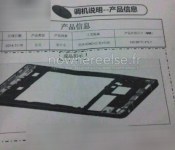
Xiaomi Mi5 could feature an extremely slim form factor

With the Xiaomi Mi5 expected to be launching very soon, we’re learning something new about the device almost every day. And according to a new leak, the smartphone will feature a very slim form factor.
So how slim will it be? Well, if this blurry leaked document is anything to go by, the metal chassis of the upcoming Xiaomi flagship could be a measly 5.1mm thick. And when a battery, camera sensor and other hardware components are added, the thickness could maybe increase up to 6mm, which is still pretty slim by modern standards.
With manufacturers rallying for the thinnest smartphone crown, it was only a matter of time before Xiaomi jumped on board as well. The Mi5 is expected to break cover in a week or two from now sporting a 5.2 or 5.5 inch QHD display, a Snapdragon 805 SoC, a 16-megapixel camera, 3GB of RAM, 32GB of storage and probably with Android 5.0 Lollipop.
Source: Nowhereelse.fr – Translated
Via: Phone Arena
Come comment on this article: Xiaomi Mi5 could feature an extremely slim form factor

Defy Media and Smosh’s Food Battle: The Game (review)

“Defy Media” and YouTube’s “Smosh” together have proven the growing influence and practical applications of YouTube and online communities with their newest app “Food Battle: The Game.” The Smosh duo, Ian and Anthony each make appearances in the game, along with many of the characters and hosts from the smosh universe.
In the game, you play as Anthony, who’s mission is to save the world from the mutated junk food that is attacking. This crazy concept, along with the zany characters that make the smosh channel so charming are present all over this game. While fans of the smosh channel will certainly get a kick out of the game, the gameplay and style are certain to please most android gamers.
The hack and slash style gameplay in Food Battle is executed well, and when paired with the colorful cartoonish art style and smooth gameplay, it makes for a very pleasurable visual experience. The controls however, are one of the weak points in the game. In order to move around, you have to place your finger on the area you’d like to go, which forces your hand to block a part of the screen. This is is especially frustrating during combat, because it seems as though it was designed to be fast-paced.

The game is free to play, and does not require in-app purchases to complete, though they are available. The purchases are not forced upon you, however they do give anyone who buys them a huge advantage. Crystals, for example, are used to buy almost anything in the game including: new ingredients for weapons, new clothes or even a new life if you die, but once you run out it’s very hard to find them, unless they’re bought. The prices are very steep, with the cheapest purchase in the game being about $5, which is more than most people pay for full games on the android platform.
All things considered, Food Battle is a very well made game, that deserves its current 4+ star rating in the play store. What do you think of the game? Let us know in the comments down below!
FEATURED POSTS


The post Defy Media and Smosh’s Food Battle: The Game (review) appeared first on AndroidGuys.

Microsoft’s Office preview for Android tablets is now available to everyone

If you’ve wanted to try the preview of Office for Android tablets during its brief history, you’ve had to request to join a Google+ group. That’s not the hardest thing to do, but do you really want to participate in a special club (and in some cases, sign up for Google+) just to try some productivity apps a little early? As of now, you don’t have to. Microsoft has posted the previews of Excel, PowerPoint and Word on Google Play, so you can download them like you would any other app. The only major requirements are that your slate runs at least Android 4.4 KitKat and that you’re comfortable with less-than-polished software. You may not want to finish an important report with these releases, then, but it’s now easy to experiment with the new Office suite before it’s completely ready.
Filed under: Tablets, Software, Mobile, Microsoft
Via: Office Blogs
Source: Google Play (Excel), (PowerPoint), (Word)

When competition is bad for consumers

“Competition is not only the basis of protection to the consumer, but is the incentive to progress.”
So said American President Herbert Hoover and it’s still a popular idea today. In theory, the companies competing for our cash have to outperform their rivals to secure it. Competition is supposed to drive them on to brave new innovations and ensure that prices fall. In practice it’s debatable whether this is always the case.
There’s no doubt that some level of competition is healthy, in that it drives us on to achieve more. Many of the top OEMs divide internal divisions or project teams and play them off against each other to hit new heights. We’re also undeniably seeing a race to the bottom in terms of pricing in the smartphone market right now.
On the other hand, there’s a clear lack of innovation in smartphones. Designs have stagnated. Competing standards are holding back new developments like wireless charging, the smart home, and mobile payments. Competition is not always good for consumers.
Copying rivals

Few companies in any industry are genuinely focused on doing something new. Probably the most pernicious influence of that keenly felt competition is the need to keep an eye on what your rivals are doing. Any success they have must be emulated. That’s how we reach a situation where countless manufacturers are producing smartphones, but they all look extremely similar and have virtually identical features and functionality.
It’s a given that any successful product is going to dictate new directions and competitors will copy elements of it, or sometimes even rip it off wholesale. But at some point that copying habit goes beyond what has actually been successful with consumers. Companies can’t afford to be late to the party and so they start emulating everything their rivals are doing. They are being guided by their competition and spending huge amounts of money to try and gain an edge with incremental improvements to existing standards.
Instead of forging ahead with new innovations companies begin to focus on how they can protect what they produce. Time and resources plowed into patents and legal teams are diverted from the creative end of the business where you need huge investment to produce great products. But if you’re fundamentally risk-averse then it’s much cheaper to copy a successful idea and build on it than it is to come up with a new one.
A lack of agreed standards

The focus on ownership of the idea and the refusal to collaborate with others is holding back lots of technology. There’s no doubt that this is thoroughly negative for us as consumers. Why hasn’t wireless charging gone mainstream? There’s a demand for it, the technology is getting there, but the major players have been slow to come together and establish standards. It looks mercifully as though this may be starting to happen now, but the lack of agreement has stunted this industry so far and robbed us of a life with fewer wires.
Mobile payments is exactly the same story. There are so many different services out there that the entire industry is confusing for consumers and for retailers. The trouble is that mobile payments are going to offer up a small fee for every transaction for whoever provides the underlying system. It’s a potentially vast sum which is why everyone wants to stick their finger in from the OEMs, to the platform providers, to the carriers, to the new and old guard of payment providers.
Instead of evangelizing about these new technologies and teaching consumers what they can do and why they’re better than the plastic we currently use, companies are locked in a battle trying to secure networks of partners and exclusive deals to lock out the others.
The same lack of collaboration and determination to own the industry looks set to blight the smart home next. Will you be able to put together a system with the best components in home automation that actually works together without buying some expensive piece of software to act as the glue?
Closed ecosystems

Set the interests of the tech giants aside for a moment and think about this from the consumer perspective. Why can’t we just buy the best products as determined by us and have all of our digital content work across all of them? Why can’t rival systems be synced together? Why can’t we have universal standards for accessories?
The idea that your library of apps and purchased content can’t travel with you to a new device looks increasingly like blackmail. You’re never going to get the best possible experience if you have to buy all your devices from one company. How much energy are these companies putting into closing their ecosystems down and avoiding cross compatibility?
Competition is supposed to boost quality and choice. Closed ecosystems seem like the opposite of that.
Where’s the creativity?

Companies get used to planning in terms of their rivals all the time and closing things down. These attitudes become deeply ingrained over time. The agility and creativity you need to come up with new innovations is stifled by huge, overbearing corporate structures. There’s a reason that most of the giants of tech buy in their new ideas now. They lack the atmosphere internally to come up with them and it’s easier to acquire a startup and assimilate them.
Most of the genuine innovation in tech today is coming from small companies and the growing crowd-funded movement that can catapult someone with a good idea into business. If they gain any measure of success then the lucky ones get bought out, the unlucky ones have their idea copied by a company with a much bigger marketing machine that rolls in, undercuts them, and takes over the market.
Without startups and crowd-sourcing where would the new ideas in tech be coming from? The very competition that was supposed to drive progress is now stifling it. The sad thing is that collaboration between rivals can be mutally beneficial. Perhaps instead of focussing on what the competition is doing, it’s time that companies concentrated on what consumers want.

BlackBerry announces BBM support for Android Wear

BlackBerry has just announced that it will “soon” be bringing its BBM messaging service to Android Wear. This should please some of the 50 million Android users who have installed the BBM app, but maybe a specific release date would have pleased them more.
Hit the break to see a full list of what the app has in store when it launches later this year.
- See who a new message is from and read it – while loading grocery bags into the back of your car
- Review and accept invites from would-be BBM contacts while on the go
- Flip through several messages to find that one with the address you’re looking for – while carrying a coffee
- Pick from a list of pre-defined messages to quickly send a response – while in a meeting
- Use your voice and Google Now to respond to messages hands-free.
We will be sure to let you know the exact release date as and when it is revealed.
Source: BlackBerry
Come comment on this article: BlackBerry announces BBM support for Android Wear
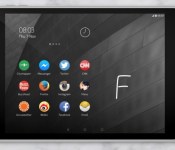
Nokia’s first Android tablet is now available to pre-order in China

Nokia’s maiden Android-powered tablet, the N1, is now available to pre-order in China for 1,599 Yuan — which equates to approximately $256. Shipping will commence to the first batch of customers on Monday, January 29.
Packing a 7.9-inch IPS display with a resolution of 1536 x 2048 pixels, a 2.3GHz Intel Atom Z3580 quad-core processor, 2GB of RAM, 32GB of internal storage, an 8-megapixel rear-facing camera and a 5,300 mAh battery, the N1 looks to be somewhat impressive.
The slate will run the latest build of Android 5.0 Lollipop straight out of the box skinned with Nokia’s extremely functional Z Launcher, which according to the manufacturer “learns how you use your tablet and promotes your favorite apps so you can get to them faster”.
If you’re based in China, like the sound of the Nokia N1 and want to pick one up — hit the source link below.
Source: Zol
Come comment on this article: Nokia’s first Android tablet is now available to pre-order in China
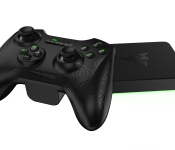
Razer introduces a slew of new products for the living room
<img src="https://i1.wp.com/www.androidguys.com/wp-content/uploads/2015/01/wpid-controller-box1.png-e1420585796622.png?resize=640%2C360" class="attachment-medium wp-post-image" alt="Razer Forge TV" style="display: block; margin-bottom: 5px; clear:both;" data-attachment-id="74900" data-orig-file="https://i1.wp.com/www.androidguys.com/wp-content/uploads/2015/01/wpid-controller-box1.png-e1420585796622.png?resize=640%2C360" data-orig-size="800,450" data-comments-opened="1" data-image-meta=""aperture":"0","credit":"","camera":"","caption":"","created_timestamp":"0","copyright":"","focal_length":"0","iso":"0","shutter_speed":"0","title":"","orientation":"0"" data-image-title="Razer Forge TV" data-image-description="<p>FEATURED IMAGE</p>
” data-medium-file=”http://www.androidguys.com/wp-content/uploads/2015/01/wpid-controller-box1.png-e1420585796622.png” data-large-file=”http://www.androidguys.com/wp-content/uploads/2015/01/wpid-controller-box1.png-e1420585796622.png” />
It appears that Razer, the company known for making high-end peripherals, has been very busy as of late with their recent announcements at CES 2015. Four new products were announced, all aimed at providing a new connected living room experience.
First off is the Razer Forge TV. This “micro-console” runs android TV to bring games and entertainment to the living room for an affordable $99. The powerful hardware included should be able to handle any games or apps you could throw at it, but the defining factor of the console is the ability to stream PC games at full HD over Wi-Fi or an ethernet connection. More details should be available soon, as the release date listed from Razer is Q1 2015.

Packed inside the plastic exterior are a Snapdragon 805 processor, paired with 2 GB of RAM, a 2.5 GHz quad core CPU and an Adreno GPU. The processor offered in the console was built for supporting 4K resolutions, but so far Razer has not commented on whether or not 4K will be possible on this device.
The second announcement was an update to the popular PC game launcher, the Razer Cortex. This new update takes care of the software side of streaming to the Forge TV. It should be an easy setup as Razer has described it as “one-click … PC game streaming.” Multiple PCs are supported and the software will identify whether each game has a traditional mouse and keyboard style, or if a gamepad is worthwhile. The software will retail for $39.99, unless you buy the Forge bundle, or one of the console’s accessories in which case the software will come bundled along for free. As important as Cortex is to the overall experience and individuality of the Forge TV, it is set for a Q2 2015 release, meaning that the console will ship without streaming capabilities at first.

The last two announcements were accessories for the console, the Razer Serval and the Razer Turret which are a gamepad and a lapboard (basically a keyboard with an edge for a mouse) respectively. The Serval has multiple modes to be used with the console, android phones and tablets or with a PC, though it is described as being an android gamepad so its uses on PC are not yet clear. The turret is to be used with the console to bring the accuracy and familiarity of the keyboard-mouse combo to the big screen.
With a $150 bundle including the Serval and the console, 1080p 60fps PC game streaming and all the features of android, the Razer Forge TV is looking like a great deal for an all-in-one home entertainment system. Do you think PC streaming is worth it? Or would you rather hook up your PC or use existing consoles for gaming? Let us know in the comments down below!

The post Razer introduces a slew of new products for the living room appeared first on AndroidGuys.

Could this be the LG G Watch R 2?
A lot of gadgets are on display at CES 2015 this week, but notably is what appeared on the wrist of Ulrich Hackenberg during Audi’s press conference at CES. The watch pictured is made by LG and does look like the G Watch R in design, except for the presence of silver and 3 buttons on… Read more »
The post Could this be the LG G Watch R 2? appeared first on SmarterWatching.
Read the rest at SmarterWatching.com!
The post Could this be the LG G Watch R 2? appeared first on AndroidGuys.

Lenovo announces their new, e-ink smartwatch
Lenovo is jumping into the wearable market, anyone surprised? Their new smartwatch is called the Lenovo VIBE Band VB10. Lenovo’s take on the smartwatch is really more of a fitness band with some smartwatch features included. It uses an e-ink screen to prolong battery life up to 7 days. The smartwatch/fitness band consists of a… Read more »
The post Lenovo announces their new, e-ink smartwatch appeared first on SmarterWatching.
Read the rest at SmarterWatching.com!
The post Lenovo announces their new, e-ink smartwatch appeared first on AndroidGuys.

Sharp debuts next gen displays powered by Android

CES 2015 has been a busy conference so far. Sharp was not to be left out of the whirlwind that has been the first day. The company announced some pretty great things regarding their new lineup for 4K smart televisions. Sharp debuted SmartCentral 4.0 for Android along with an 85 inch 8K LCD prototype display. This announcement also came with a host of new television displays that will be sure to make a splash when they are released to consumers.
The new line of Sharp displays includes what the company is calling “the highest resolution TV” available with their new Aquos Beyond 4K UHD model. This model pacts in 42 million more pixels than traditional 4K units available on the market today and has a resolution that is reaching 8K. This model will available to the public this calendar year.
Later on at CES, Sharp will unveil their new 70 inch Class Super Slim 4K UHD TV. When they say super slim, they mean super slim. With a depth of less than half an inch and a 4K UHD resolution, this display from Sharp offers a design footprint that will definitely differentiate them from other UHD TV manufacturers in this space. It’s clear that Sharp is going full steam ahead with next generation displays. For more information visit www.sharpusa.com.
The post Sharp debuts next gen displays powered by Android appeared first on AndroidGuys.


