


Former Apple Employees on Eddy Cue: Siri and Eddy Were ‘A Bad Fit’ and He is ‘Always Doing Too Many Things’
A new profile on Apple chief Eddy Cue has been shared online today by The Information, highlighting Cue’s history and leadership at the company, as well as a few of his more interesting quirks. Specifically, the story looks at Apple’s services segment — which Cue oversees — and some of the missteps it has taken over the years, despite being a consistent revenue earner for the company.
According to analyst James McQuivey, Apple’s services business “has been the biggest opportunity that Apple has misspent for the last ten years.” Issues include the company’s need to play catchup with Netflix, Amazon, and Spotify in streaming TV and music, fading into irrelevance in the eBooks category, and ongoing struggles with Apple Maps and Siri, the latter of which Cue no longer is responsible for.
Eddy Cue at Re/code’s Code Conference in 2014
As he looked into Cue’s history with Apple, The Information’s Aaron Tilley interviewed more than two dozen people who have worked with Cue. While some describe him “as a leader of intelligence and empathy,” others say he “seems overextended” and has “failed to intercede in conflicts.” Specifically, one former Apple employee gave an example related to the early days of Apple Music, ultimately claiming that Cue is “always doing too many things.”
But others who have worked with him say he seems overextended and, at important moments, has failed to intercede in conflicts—for instance, during the creation of the company’s subscription music service, Apple Music, when former employees of Beats, which Apple acquired, battled with counterparts at iTunes.
“Apple tries to do too much with too few people,” said one former Apple executive, who like most people interviewed for this story requested anonymity to avoid the disfavor of one of the tech industry’s most powerful companies. “That sometimes backfires. Eddy is the best example of that at Apple. He’s always doing too many things.”
According to former employees, Cue “seemed to lack much interest in [Siri]” from “the moment he gained responsibility.” During meetings about technical data for Siri’s performance, Cue “seemed to fall asleep in at least two meetings.” Siri leadership recently moved to Craig Federighi and is now under John Giannandrea.
“Putting Siri under Eddy was a bad fit to begin with,” said one former Siri engineer. “I don’t think he ever had a great deal of interest.”
The profile also looks at Apple’s entry into streaming music, following former CEO Steve Jobs’ derision of the idea of renting music. Apple reportedly “fought tooth and nail” to keep Spotify out of the United States following its debut in Europe, with Jobs going so far as to privately threaten Universal Music by stating Apple would remove its content from iTunes if it worked with Spotify in the U.S.
Following his death in the fall of 2011, Cue decided that Apple had to shift its music business to streaming somehow, ultimately spearheading the largest acquisition in Apple’s history with the purchase of Beats for $3 billion. Following the deal, one former Beats employee who joined Apple told The Information that it eventually became clear that “Apple was under-resourced to manage this.”
Moreover, the two companies clashed so much about decisions over how Beats Music would transition into Apple Music, “there were almost literally fistfights over design aspects, features, aesthetics,” one person said. “They all hated each other.” Amid all of this, Cue’s leadership style was put into question:
As tensions mounted on the Apple Music team, Mr. Cue, who was known for his hands-off leadership style, was rarely seen by the team working on the project, said people working on the streaming service. “One downside with Eddy as a manager was that it’s unlikely for Eddy to mediate between warring factions,” said one former lieutenant. “If there were conflicts or tensions between groups, Eddy didn’t get involved.”
Looking ahead, The Information says that Cue’s “biggest test yet” will be Apple’s streaming TV service. In meetings, Cue is said to have discussed the possibility of making the Apple TV app available beyond Apple’s own devices — even on smart TVs and Android — in an effort to make sure its shows are seen as widely as possible. This also hints that Apple is considering making the TV app the location of its original TV shows, which has been suggested in the past.
The rest of The Information’s profile on Eddy Cue is available to read if you have a subscription.
Tag: Eddy Cue
Discuss this article in our forums
Apple’s Beats by Dre Brand Announces NBA Partnership
Beats by Dr. Dre, Apple’s well-known headphones brand, today announced a marketing and merchandising partnership with the NBA, which will make it the official headphone, wireless speaker, and audio partner of the NBA, and sister associations WNBA, NBA G League, and USA Basketball as of October 2018.
Under the terms of the partnership, which will span multiple years, Beats will establish separate deals with NBA teams to launch audio products for NBA fans, including NBA team-branded headphones.
Apple is aiming to boost Beats by Dre brand recognition through the NBA deal by leveraging NBA stars that include LeBron James, Draymond Green, James Harden, Ben Simmons, Jayson Tatum and Karl-Anthony Towns.

Luke Woods, Beats by Dr. Dre president, said that the company’s partnership with NBA is the “perfect alignment,” an unsurprising statement given that Beats has long used major athletes to advertise its headphones, even prior to the purchase by Apple.
“The NBA and its players have long been significant drivers of global culture. Basketball, music, and style speak as one voice: Julius Erving became a style icon, Allen Iverson cemented hip hop’s place on and off the court and LeBron James is breaking new music every day… the list goes on and on,” said Luke Wood, President of Beats by Dr. Dre. “This partnership with the NBA is the perfect alignment for Beats. It feels like coming home.”
In addition to developing NBA-themed headphones for fans, Beats also plans to provide headphones to players and advertise during major events like the NBA All-Star, NBA Draft, international games, WNBA games, and more.
The Beats NBA partnership will kick off in October, which is when the 2018-2019 NBA season will begin.
Tags: Beats, NBA
Discuss this article in our forums
Apple Will Soon Let Hardware Developers Make MFi-Certified USB-C to Lightning Cables
Apple will soon allow hardware developers to manufacture Made for iPhone (MFi) certified USB-C to Lightning cables, reports Japanese site Mac Otakara. Apple is said to have recently informed developers who participate in the MFi program about the change.
Right now, there are no Apple-approved USB-C to Lightning cables available for purchase, which means customers who want a USB-C to Lightning cable must purchase one directly from Apple for $19. With the new MFi update, third-party hardware manufacturers will be able to create USB-C to Lightning cables.
These cables are necessary for fast charging the iPhone X, iPhone 8, iPhone 8 Plus, and Apple’s upcoming 2018 iPhones when paired with an 18W+ power adapter.
Rumors have suggested that Apple is planning to ship its 2018 iPhones with an upgraded power adapter and a USB-C to Lightning cable, enabling fast charging right out of the box with no need to make an additional purchase.
The approval of Made for iPhone USB-C to Lightning cables indicates that this rumor could be true, with Apple and third-party manufacturers starting to make a shift from standard USB-A Lightning cables to the new fast charge compatible USB-C version.
According to Mac Otakara, developers who want to manufacture a Lightning to USB-C cable will need to use a new C94 Lightning connector provided by Apple, which offers a maximum of 15W of charging with a non-fast charging compatible power adapter and 18W with a compatible power adapter.
Apple has also upgraded its other Lightning connectors, charging about 50 cents more for the new technology.
Apple plans to move C48 Lightning connector to C89 Lightning connector, C68 Lightning connector to C78 Lightning connector, C12 Lightning connector to C79 Lightning connector, the price will also be about $ 0.5 higher.
Mac Otakara expects the first third-party USB-C to Lightning cables to start appearing in mid-2019.
Tags: USB-C, Lightning, MFi Program
Discuss this article in our forums
Space Station hole may have been made by ‘someone with a drill’
A recent safety alert aboard the International Space Station (ISS) led to the discovery of a small hole in the shell of a Russian Soyuz spacecraft, which has been docked at the ISS since arriving with three astronauts in June.
The hole was originally thought to have been caused by a collision with a tiny meteorite fragment, but the head of Russia’s Roscosmos space agency has now suggested that it could have been the result of an altogether more sinister act.
‘Deliberate spoilage’
In a dramatic turn of events, Roscosmos head Dmitry Rogozin said this week that the meteorite theory had to be rejected as “the spaceship’s hull was evidently impacted from inside.” He even went so far as to suggest that it could have been the result of “deliberate spoilage.”
In comments reported by Russian news agency TASS, Rogozin said the investigating team was “considering all theories,” but suggested the hole “seems to [have been] done by a faltering hand,” noting that “there are traces of a drill sliding across the surface.”
The Roscosmos chief said it was now “essential” to discover if the puncture occurred in space or back on Earth, and to find the person responsible.
“We will find out without fail,” Rogozin promised.
NASA insisted that the six-person crew was never in any danger when the hole was discovered last week, but with a drop in cabin pressure detected, it was vital to apply a patch as quickly as possible. And, using thermo-resistant tape as a temporary fix, that’s exactly what the crew did.
Missing home?
Turning the “sabotage theory” dial all the way up to 11, Russian lawmaker and former cosmonaut Maxim Surayev suggested that a homesick astronaut aboard the ISS could have made the hole deliberately in a bid to return to Earth sooner.
“We’re all human and anyone might want to go home, but this method is really low,” Surayev said in comments reported by the Guardian.
“If a cosmonaut pulled this strange stunt — and that can’t be ruled out — it’s really bad.”
He added that he hoped the cause was “a production defect” rather than sabotage, but said that too would be “very sad” as “there’s been nothing like this in the history of Soyuz ships.”
The Guardian’s report points out that the hole is in a part of the Soyuz spacecraft that’s discarded in orbit, and therefore is not used as part of the main vehicle that transports astronauts all the way back to Earth.
It would indeed be extraordinary if the hole was discovered to have been made deliberately, but investigators will also look at the possibility of the damage occurring during testing of the spacecraft back on terra firma, with an engineer perhaps trying to cover a piece of clumsy handiwork with sealant that later fell off after docking with the space station.
Editors’ Recommendations
- Space Station on alert as crew forced to patch hole in docked spacecraft
- Boeing suffers setback in space taxi testing
- Watch inside Soyuz as it blasts astronauts (and toys) into space
- Get your Sagan on with 60 awe-inspiring photos of the final frontier
- Astronauts install hi-def docking cameras for Crew Dragon, Starliner capsules
Red Magic Phone review

Research Center:
Red Magic Phone
Everyone and their mother is making a gaming smartphone these days, which usually means a high-powered processor that prioritizes performance for graphics-intensive games, plus some other features gamers would appreciate. Samsung has pushed this with the Note 9, there’s the Honor Play, last year we saw the Razer Phone, and there’s more to come like the Asus ROG Phone, and the Xiaomi Black Shark.
Add a new one to the list: The Red Magic Phone, from ZTE sub-brand Nubia. It has an innovative cooling system, a game-boosting mode, an RGB LED light strip, and a mid-range price tag. It delivers with performance, but we’re not sure if it’s quite the bargain when phones like the OnePlus 6 exist. Let’s take a closer look.
Unique and flashy design, scuffs easily
Place the Red Magic Phone down on a surface, and you’ll notice it rocks significantly. That’s because of its unique design. The back isn’t flat, as the top and bottom edges slope downwards to form a prism, with a long RGB strip running down the center.
We’re quite impressed with the Red Magic Phone’s look, and the hexagonal-shaped camera is icing on the cake. Despite its large size, the phone is comfortable to hold, and our fingers slipped nicely into place along the phone’s slopes.


That said, the Red Magic Phone does rock a lot when laid down, making it difficult to use on a flat surface, and the anodized metal finish makes it quite slippery in the hand. While the metal will likely prove more durable than glass phones, this is one of the first phones we’ve seen to scratch so easily by keys in a pocket. We don’t think this phone will look too good after a year of use with just regular wear and tear.
We’re fans of the way ZTE found a unique design without compromising on the Red Magic Phone’s usability.
The front of the Red Magic Phone isn’t as interesting. A 6-inch screen is surrounded by slim bezels, and precious little else aside from the front-facing camera. The bezels aren’t the slimmest we’ve seen, but it still looks contemporary. The power button is on the right-hand side, underneath the volume rocker. There’s also an extra button highlighted in red on the right edge, and it controls the Gameboost setting, which we’ll get to later. A USB Type-C port sits at the bottom, and a headphone jack rests at the top, which is always nice to see.
The LED strip on the back is capable of displaying 16 million colors in four different light effects. There are a few options that govern when the strip will activate, but it will generally light up during games, while charging, or to signal when notifications arrive. It’s quite similar to the RBG light on the back of the Asus ROG Phone.
You’re unlikely to see the strip yourself most of the time, since it’s located on the back of the phone. It’s a gimmick, and largely serves to increase the “gamer cred” look of the Red Magic Phone. That doesn’t stop it from looking cool when it lights up, though.
Red Magic Phone Compared To

Motorola Stature i9

Sony Ericsson C902

Casio G’zOne Boulder

Helio Mysto

Motorola MOTORIZR Z3

Jitterbug Dial

Samsung SCH-u620

LG VX9400

Sony Ericsson K790a

Nokia N93

Blackberry 8700c

Blackberry 8700g

Nokia N90

Palm Treo 650

Motorola RAZR V3c
Take a closer look at the back, and you’ll find four red slashes, neatly placed leading up the phone’s central ridge. These aren’t just for looks — the top two function as exhaust ports for the device’s cooling system. The phone uses layers of graphite to draw heat away from components, which is then flushed out of the system through the exhaust ports and the additional surface area of the prism-shaped back.
It’s quite effective. We tested the Red Magic Phone with some intense virtual reality experiences with a third-party VR headset, and the phone stayed cool. Our Galaxy S8 — which has the same processor — grew increasingly hot to the touch during the same experiences.
Decent display, loud speakers
The Red Magic Phone’s 6-inch LTPS IPS LCD display runs a 2,160 x 1,080 resolution in an 18:9 aspect ratio. LTPS — or low-temperature polycrystalline silicon — is a type of LCD display that runs cooler than normal LCD displays. Aside from that, the screen is nothing special. There’s no special 120Hz display magic like we saw on the Razer Phone, and it’s nowhere near as good as the Galaxy Note 9’s AMOLED screen.
We had no problems seeing the screen in direct sunlight, but it didn’t get dim enough. Open the Red Magic Phone at night on low brightness and you’ll be blinded. The auto brightness feature also didn’t work particularly well, as it often failed to adjust the screen based on surrounding light levels.
 Mark Jansen/Digital Trends
These are small flaws — the Red Magic Phone’s screen is still clear, bright, and colorful. It’s not the sharpest, but it’s more than crisp enough to make out the smallest details on your mobile games or favorite apps. It’s just odd the company didn’t try to add a better display or a higher resolution, seeing as it’s what you’ll be looking at the most when playing games.
Thankfully, the speakers offer a more impressive experience. Audio comes out of the two lower slits on the back of the phone. It gets extremely loud — when placed on the loudest notification volume, we could clearly hear the phone chime from three rooms away. Nubia has also added a bunch of features to boost audio quality, including an integrated DAC, DTS Technology, and a Smart Amplifier system.
The positioning and shape of the device also means you’re likely to cup the speakers with your hand when holding the phone in landscape, rather than block them. This forms a rough sound chamber that makes everything sound even louder, not that the phone needs it. The speakers are crystal clear, with acceptable bass and treble, and exceptional volume.
Strong performance from older hardware
The Red Magic Phone is powered by Qualcomm’s Snapdragon 835, and comes with either 6GB of RAM and 64GB of storage, or 8GB of RAM and 128GB of storage. There’s no MicroSD card slot though, so keep that in mind when selecting your model.
With light usage, it wouldn’t be surprising for this phone to last over two days on a single charge.
The choice of last year’s flagship Snapdragon 835 chip over this year’s Snapdragon 845 is odd, especially in a phone meant for high-performance gaming. Surely a gaming phone would want the latest grunt to power through the most demanding games? Nubia claims the Red Magic Phone is not the most powerful phone for gaming — but the most stable. It said the Snapdragon 835 is the best choice in a balance of power, battery consumption, and temperature management. We never ran into problems with phones using the Snapdragon 845, but we also haven’t run into any problems with the Red Magic Phone.
Performance is smooth, apps open quickly, and we haven’t seen any significant slowdown in our use. That speed is at least partly to do with the slim Android 8.1 Oreo operating system. There’s no bloatware or skin; it comes with Google apps and the basics installed. You’ll find extra settings categories for the RGB light and the Gameboost mode, but that’s about it.
Here are a few benchmark results:
- AnTuTu 3DBench: 215,454
- Geekbench 4 CPU: 1,935 single-core; 6,636 multi-core
- 3DMark Sling Shot Extreme: 2,841 (Vulkan)
Nubia said it optimized the Snapdragon 835 in its phone, and that optimization shows. The benchmark numbers exceed most other Snapdragon 835-equipped phones, including the recent Moto Z3, and the Google Pixel 2.
But the Red Magic Phone is built to game, and we have to tackle the question eventually: how good is it as a mobile gaming device? We threw the most demanding games we could find at it, playing multiple rounds of Tekken, Asphalt Legends 9, and Dragonball Legends, and the Red Magic Phone handled each of them incredibly well, with silky-smooth performance. We even managed to get a game of Rocket League running using the Steam Link Android app and USB OTG support to connect a controller to the phone.
 Mark Jansen/Digital Trends
It wasn’t perfect, though. It did have some issues running PUBG Mobile, hitting a few frame hitches during the initial parachuting sequence, but it ran as smoothly as the other games after that — this may not be the phone’s fault, but more the app developer.
The Red Magic Phone is equipped with Bluetooth 5.0, but there’s no NFC. That means you can’t make contactless payments through Google Pay. It’s a shame to see this missing, as several phones in its price range — and cheaper devices — have this feature.
Gameboost mode
Also included with the Red Magic Phone is the Gameboost mode, activated by flicking the red switch on the right-hand side of the phone. It’s supposed to boost gaming performance by forcing a more stable framerate, blocking notification alerts, and increase app loading times. Since the Red Magic Phone’s performance was already so smooth, we didn’t notice much difference whether the mode was on or not. We mostly used the mode as a way to show off the LED strip, and block notifications during gameplay.
A decent camera with low-light issues
The camera is the weakest part of the Red Magic Phone, perhaps unsurprisingly. It’s a single 24-megapixel lens with an f/1.7 aperture. We love the hexagonal rim and red highlight around the lens, though it does slightly protrudes from the back.
It performs well in good lighting, giving us photos with good color accuracy and detail. While there’s no second lens for depth-of-field emulation, the Red Magic Phone has a bokeh mode that adds blur behind subjects. It’s hit-and-miss as it has trouble accurately placing the background blur.
Previous
Next
1 of 6

Mark Jansen/Digital Trends

Mark Jansen/Digital Trends

Mark Jansen/Digital Trends

Mark Jansen/Digital Trends

Mark Jansen/Digital Trends

Mark Jansen/Digital Trends
The lack of optical image stabilization (OIS) really hampers the camera, and you’ll struggle to take decent shots if your target is moving. The HDR mode also tends to overexpose, and things take a turn for the worse in low light. The camera struggled to find a good focus point on a well-lit seafront, resulting in a photo with lots of blur and plenty of noise.
The camera app is fast and responsive, however, and there’s hardly any shutter lag. It’s a little barebones compared to other apps, but you’ll still find a decent suite of features here. Pro mode lets you alter the shutter speed and ISO, and video recording goes up to 4K.
The 8-megapixel selfie camera takes decent photos, but it tends to overexpose — especially the sky. The Beauty mode is also a little heavy-handed, and we looked a bit plastic in a few of our snaps.
All-day battery life and more
The Red Magic Phone comes with a huge 3,800mAh battery that should ensure your gaming sessions are never cut short by a flat battery. We took the phone off the charger at 8 a.m., and after a day of heavy to medium usage watching YouTube videos, music streaming, some light gaming, and instant messaging, it ended the day at 8 p.m. with more than 60 percent battery left. It managed to last until midday the next day, when it hit 15 percent and was plugged in to charge.
You’ll find no wireless charging here, but the phone does support Quick Charge 3.0. Charging from 13 percent with the included charger, it reached 100 percent in less than an hour and half.
Price, availability, and warranty information
The Red Magic Phone costs $520, but it’s not available in the U.S. just yet. A version is being made for the U.S. market, and it will be available on the Red Magic store when ready. Otherwise, it’s available in Europe including the U.K. starting on September 7. The phone was crowdfunded through Indiegogo, and phones have already shipped out to early backers.
Nubia offers a two-year warranty on the phone, and a year on the included charger. Network availability hasn’t been confirmed yet, but the initial reports suggest that it’ll work on every network — but we’ll confirm that closer to the U.S. launch.
Our Take
The Red Magic Phone delivers excellent performance, a strong battery, great speakers, and a neat design. The weak camera doesn’t stop this from being a solid mid-range smartphone.
Is there a better alternative?
Yes. The OnePlus 6 comes with the upgraded Snapdragon 845, a beautiful design, and a much more capable set of cameras. It doesn’t have the Red Magic Phone’s RGB strip, and its speakers aren’t anything to write home about, but it’s the stronger overall phone, and it’ll also game extremely well. If you’re looking to buy in the $500 range, the OnePlus 6 is a tough phone to pass over.
If you’re looking to stick with the gamer-focused branding, then check out the Razer Phone. It has the same processor as the Red Magic Phone, great speakers, and a display with an incredible 120Hz refresh rate. It initially cost $700, but you can find it on Amazon for $550.
Not limited in budget, and simply want a great phone? Check out the Galaxy Note 9, or the rest of our picks in our best smartphones guide.
How long will it last?
We don’t think Red Magic Phone will look good after quite a bit of use, as it has easily scuffed up after a short period of time. It’s metal body is still more durable than glass, but you may still want to grab a case.
The Red Magic Phone will be receiving Android 9.0 Pie at an unspecified date in the future, though we’re not sure what other updates it will receive afterwards. With that in mind, the Red Magic Phone’s slim OS and powerful innards should last you two to three years.
Should you buy it?
It’s difficult to recommend this phone over the OnePlus 6. The only reason you should consider the Red Magic Phone over it is if you’re really sold on the unique design, RGB strip, and gaming-focus, and if you do go for it, we think you’ll be satisfied.
How to download the Android 9.0 Pie beta on the OnePlus 6
Andy Boxall/Digital Trends
The OnePlus 6 comes with flagship-rivaling power, drop-dead gorgeous looks, and a clever and capable camera suite — all for under $600. As if that wasn’t enough, it’s now confirmed that the titanic OnePlus phone will also be getting a software upgrade to Android 9.0 Pie.
Android 9.0 Pie isn’t just a bigger number — it’s packed to the brim with new and improved features. There are too many to list here, but you can expect to find a slick new navigation system, more artificial intelligence goodness, and ways to limit screen time. The final release of the OnePlus 6’s slice of Pie isn’t quite ready yet — but OnePlus has made the beta available to anyone with a OnePlus 6. If that includes you, here’s how to download the Android 9.0 Pie open beta on the OnePlus 6.
Make sure you’re fully backed up
As with any major changes to an Android phone, we recommend you make sure your phone is backed up before you begin. While rare, data loss can occur from OS upgrades, and it’s more likely in the case of beta builds like this one. If you really don’t like it and want to go back to your old operating system, well that’s another way to possibly lose data — so make sure you’re fully backed up before you begin.
On that note, don’t expect everything to work perfectly. Beta builds are works in progress, and you might come across some issues that hamper your usage. As a beta user, these are things that you sign up for when you install the update, so keep that in mind. Finally, note that some of the more secure services will not work. Google Pay will not work with this beta build, and the Google Play Store may warn that your “Device is not Certified by Google.”
Eligible phones
These instructions are intended to be used with the most recent version of OnePlus’ Oxygen OS, and nothing else. You cannot use these instructions with a rooted Android device, or with a device that’s running a custom OS.
How to install the Android 9.0 Pie open beta on a OnePlus 6
Andy Boxall/Digital Trends
Downloading Android 9.0 Pie is simpler than you might think:
Head to OnePlus’ download page on your computer or your OnePlus 6. You’ll find the file you need under the “ROM downloads” section below the OnePlus 6, and the file you’re looking for will be called “OnePlus 6 OxygenOS Open Beta,” followed by a number. Open that link, then scroll down and click the “Download” button.
If you’re using a computer or laptop, connect your OnePlus 6 using the charging cable, and copy the downloaded file over from your PC into your phone. If you’re using a Mac, you’ll need to download the Android File Transfer program to do this.
If you downloaded it straight to your phone, open the File Manager app and go to the Storage tab. Go to Download, tap and hold the file to select it, then tap on the triple vertical dots on the top right and hit Cut. You will now need to choose the path — tap on the Internal storage marker above the file, then press Paste. The file is now stored in the root directory.
Once the file is transferred to your OnePlus 6, head over to Settings > System updates, then hit the vertical dot symbol on the top-right of the screen.
Hit Local upgrade, find the file, and hit Install.
To finalize the installation you’ll need to reboot your phone — but once that’s done, you’re free to enjoy your Pie.
A bit worried about what you’ll do when the final version comes out? Don’t be — OTA (over the air) updates are supported in this beta build, and you should be able to upgrade to the final version of Android 9.0 Pie via the usual updating process.
How to downgrade to Android 8 Oreo
Really not enjoying Google’s latest, or just can’t live with the beta build? Well, no matter — going back isn’t tough either. To roll back to Android 8.1 Oreo, head back to the OnePlus downloads page, tap the beta link, and scroll down until you find the download marked “Downgrade version.” Simply download that file, and run through the same installation process as with the beta to downgrade.
Editors’ Recommendations
- When is your phone getting Android 9.0 Pie? We asked every major manufacturer
- Here’s how to download and install Android 9.0 Pie
- Third-party call recording apps no longer work with Android 9.0 Pie
- The best and worst features of Android 9.0 Pie
- Android 9.0 Pie: Everything you need to know
Wearables are still in style as the global market sees solid growth
The era of the smartwatch is finally here. Well, almost.
According to a new report from IDC, the worldwide wearables market is up by a solid 5.5 percent in the second quarter of 2018. It’s not as big of an increase as some past quarters, but it still shows continued growth in the wearables market — a market that’s largely dominated by Apple.
“Two key forces were at work during the quarter,” said Ramon T. Llamas, wearables research director for IDC. “stronger demand for smart wearables and slower declines in the basic wearables market. Users have come to want more from their wearable devices, and smart watches have met that demand.”
As was to be expected, Apple remained in the top spot when it comes to wearable shipments — something that’s only likely to continue considering the fact that Apple is expected to launch a new line of Apple Watch models, called the Apple Watch Series 4, at its upcoming September 12 event. In terms of market share, Apple held 17 percent, with 3.4 million shipments and a 38.4 percent growth from the second quarter of 2017.
Xiaomi came in second, hot on Apple’s heels with a market share of 15.1 percent. That’s actually not so good for the company, which held the top spot in the second quarter of 2017 with a market share of 13.3 percent — a little more than Apple’s 13 percent at the time.
Fitbit seems to be suffering the worst. While the company commanded a hefty 12.8 percent market share in the second quarter of 2017, in the second quarter of 2018 that market share was down to 9.5 percent — and as Apple and others continue their push into fitness tracking, that downward trend is likely to continue.
While Fitbit fared the worst, Huawei grew the most. The company’s wearable market share grew by a massive 118.1 percent to attain 6.5 percent of the market overall. In general, Huawei seems to be Apple’s biggest threat — recent reports note that Huawei has overtaken Apple as the world’s second-largest smartphone manufacturer, and considering Huawei’s huge growth, it’s certainly possible that could eventually happen in the wearables game, too.
The IDC report also notes which regions are growing the fastest. In particular, it seems like Asia, Latin America, Eastern Europe, and Africa are growing faster than North America and Western Europe. It will be interesting to see if that changes over the next few years as wearables become increasingly common.
Editors’ Recommendations
- Apple shrugs off Fitbit and Garmin to remain king of smartwatches
- Huawei overtakes Apple as the second-largest smartphone seller
- Huawei just overtook Apple as the second-largest smartphone seller
- The time is right to take advantage of these Apple Watch deals for September 2018
- Alexa’s smart speaker market lead slips as Google Assistant and others gain
Sony’s WI-C400 wireless earbuds sound great and last all-day

If you want some cheap earbuds that offer great battery life, Sony’s WI-C400 are for you!
No frills means these earbuds last forever on a charge.
Earbuds are easy to come by these days, and good earbuds are plentiful. When you don’t need to spend more than $20 or $30 to pipe music into your head
Sony has been part of the audio game for the longest time, and its WI-C400 earbuds are well worth their $68 asking price.
Best battery in its class
Sony WI-C400 earbuds

$68 at Amazon
Don’t spend more for earbuds than you need to.
While the headset may lack newer features like USB-C, Sony’s WI-C400 earbuds are well worth your money.
The Good
- Lightweight
- Long, 20-hour battery life
- Sturdy design
- Multiple color options
The Bad
- Micro-USB charging
- Some users may not like the non-retractable design
Sony WI-C400 earbuds What I like
Earbuds are the headphones I use when I’m in the gym, taking helpdesk calls at my day job, or if I just don’t want the bulk of my over-ear headphones in my backpack for the day. Battery life super important — even more so than audio quality, if I’m being honest — because I’d hate to be without a charge in any of these situations.
The WI-C400 headphones are excellent in nearly every situation.
The WI-C400 are excellent in all of these scenarios, as well as just for generic music listening. Neckbuds typically have retractable cables for the actual earbuds, but these just use a series of holes to keep the cables under control. At first, I wasn’t a fan of this — I much prefer the cleaner look that retractable earbuds offer. But the more I thought about it, the more I realized the upsides to Sony’s layout: there’s more room inside for battery, there’s no chance either of the cables will be stuck inside its housing, and there’s no chance of the retraction method wearing out over time. The pulley system here does a great job of keeping the cables from dangling down my chest but also lets me get an earbud in if a call comes in.

These are strictly Bluetooth earbuds, even though some of Sony’s other wireless in-ear headphones support audio through their USB charging ports. This is Bluetooth 4.2, not the newer 5.0. That may seem like a downside, but when using the earbuds, it doesn’t matter. The WI-C400 have the strongest connection of anything I’ve used — even better than Bluetooth 5.0 headphones — and I was able to walk completely from one side of the gym to the other and hear my music without any stuttering or dropouts. That was on a busy Saturday morning, with a bunch of other gym goers and their headphones between my phone and these earbuds.
Sound quality is great too. These use the AAC audio codec instead of the better aptX or Sony’s own LDAC. I’m sure using these technologies would sound better, but that comes at the cost of battery life. No matter if I was on a phone call, listening to some great musicians, or the best Android podcast in the world, everything sounded clear and great. Tastes will differ of course, but these are worth a try before buying some more expensive buds.
That leads us to my favorite thing about these earbuds: the battery life. Sony advertises 20 hours of listening with these, and even at full blast, I manage at least 19 hours before the battery dies. I use earbuds for about 11 hours per day, so using something like the OnePlus Bullets Wireless with eight hours of battery life means I have to charge the headphones in the middle of the day. Not the end of the world, but I’d rather use something like these that lasts the entire day and then some.

Sony WI-C400 earbuds What I don’t like
USB-C charging would push these headphones from great to outstanding.
My only real complaint with these earbuds is that they use Micro-USB for charging instead of the reversible USB-C. My phone, laptop, portable battery, Nintendo Switch and wireless keyboard already charge with USB-C, so it’d be great to have one more device in my home that used the newer connection. It’d also make packing for trips easier since I’d just need one cable. USB-C charging — especially with fast charging — would push these headphones from great to outstanding.
Sony WI-C400 Should you buy them?
Yes. If you like neckbuds and don’t mind the non-retractable cable, these are great for you. At $68, they’re much better than comparably priced earbuds, especially if battery life is your main concern. Micro-USB for charging is kind of a sticking point for me, but it’s common enough still that I don’t think anyone should be deterred.
4.5
out of 5
If you want some great sounding neckbuds that last forever, these are for you.
Stock Android really isn’t all that great
Have you used a Samsung phone recently?
In the world of Android, one point of contention that comes up more often than just about anything else is the endless debate over “stock Android.” Starting first with the Nexus line and then continuing with Pixel phones, the software that’s on Google-made gadgets is seen as a representation of what Google thinks Android should look and feel like — a stock, default setup.
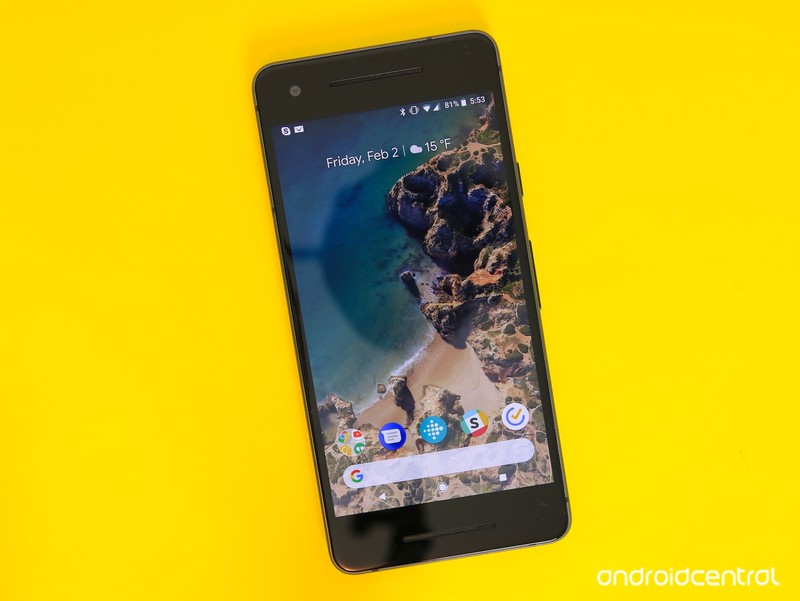
Manufacturers such as LG, HTC, and others often place their own skin on top of Android to give it a unique twist, and ever since Android has been a thing, there’s been a debate about Stock Android vs. OEM Skins.
Stock Android usually comes out on top as the winner, but according to some AC forum users that have been playing with the Galaxy Note 9, the whole stock software experience may not be all that it’s cracked up to be.
KillerQ
09-04-2018 06:30 AM“
Hey, All,
After rooting and modding Android devices for the past Decade, it’s nice to see that the OS has matured to a point where messing around with is isn’t necessary like it once was to get the features I liked.
Starting with the Nexus line, I once thought that stock android was the way to go for pure power, and the Pixel predecessor (specifically the Pixel 2XL) also had me thinking…
Reply
mgbosshogg
09-04-2018 07:26 AM“
Yip. “Stock” Android is a white elephant these days. Why would anyone want less features?
Anyone who uses the word “bloat” is an *****. They really do need to try a modern OEM device.Reply
L0n3N1nja
09-04-2018 12:31 PM“
I’ve used Samsung for years, can’t stand stock Android.
Most of the new features that Google adds Samsung already has, so I see little benefit from getting the latest version of Android faster. I still get security updates almost monthly for 3 years.
Reply
ZOMMBIE1
09-04-2018 01:00 PM“
I’m definitely not a fan of “stock” to get the functionality of the Samsung experience you would have to download a bunch of 3rd party apps.
Reply
What do you think? Is stock Android better than manufacturer skins?
Join the conversation in the forums!
These are our Best of IFA 2018 award winners!

The best tech we saw in Berlin.
The IFA electronics show isn’t typically as exciting as MWC earlier in the year, but IFA 2018 had more than enough announcements to keep us busy. We didn’t expect a whole lot, but were blown away by the number of great smartwatches, phones and Chromebooks we saw at the show. Wear OS and Android One were heavily represented, but there were cool new products in just about every area and operating system.
But some announcements stand out from the crowd — they’re our Best of IFA 2018 award winners, and you can see them all right here.
Skagen Falster 2 smartwatch
It’s true that Wear OS smartwatches are mostly the same on the inside, but what counts in a watch is what the outside looks like — and that’s why we love the Skagen Falster 2 so much. Not only does it have a sleek and simple casing that’s small enough to fit on a wide range of wrist sizes, but it also incorporates new features like NFC, GPS and a heart rate sensor.
It’s also affordable for a full-featured smartwatch, starting at just $250, and the up-charge for nicer bands is about $25. The bands pair nicely with one of the few color options, including a stealthy black, polished stainless steel and matte stainless steel.
The new Skagen Falster 2 and Diesel Full Guard 2.5 are truly gorgeous smartwatches
Casio ProTrek WSD-F30 smartwatch
Unlike Skagen’s latest, Casio is all about promoting the rugged capabilities of the new WSD-F30. It’s the same basic model as the last two generations, but now it has an upgrade pair of displays that can show you more information while lasting multiple days on a charge — not something most smartwatches can offer.
Though it’s still massive, the WSD-F30 also trimmed down in overall size compared to its predecessor. It’s the smartwatch for the person that wants to spend as much time outdoors as possible.
Casio’s new rugged WSD-F30 Wear OS smartwatch has improved dual-layer display, smaller case
BlackBerry KEY2 LE

The BlackBerry KEY2 is better than the KEYone in every way, but it’s also more expensive. Seeing demand at a lower price, BlackBerry has the new KEY2 LE to make this great hardware keyboard more affordable.
It lacks some of the advanced features and higher specs of the standard KEY2, but the LE is every bit a BlackBerry. And with three striking color options, it even has a leg up on the high-end model in one respect.
BlackBerry KEY2 LE hands-on: A $399 ticket to the hardware keyboard party
Lenovo Yoga Chromebook
Lenovo entered the higher-end Chromebook game at IFA 2018 with the new Yoga Chromebook. It’s unique because of its huge size, with a 15-inch display, but it’s also rocking great build quality and high-end specs. You get a Core i5 processor and 8GB of RAM standard, and an optional 4K display resolution is great to see.
This isn’t a tiny portable machine you can take anywhere, but it shows Lenovo is committed to trying out higher end machines running Chrome OS — and we like the trend.
Lenovo Yoga Chromebook hands-on: $599 gets you a whole lot of laptop
HTC U12 Life

HTC doesn’t have any hits on its hands at the moment, but the U12 Life shows what the company’s good at: bringing good-looking hardware to mid-range phones. The U12 Life doesn’t really have any ties or resemblance to the regular U12+, but it’s nice looking in its own right.
The plastic back is tastefully done, the screen looks good and the specs make the marks for this class of device. There’s nothing particularly “wow” worthy here, but it looks a lot better than most phones it’ll be competing against.
HTC U12 Life hands-on: Quite a looker, but in the end it’s a mid-range phone
LG G7 One
LG’s first Android One phone isn’t a total stunner, but the fact that it’s based on the LG G7 immediately gives it appeal. It has the same build quality, display and hardware features like its BoomBox speaker, Quad DAC, headphone jack and water resistance — but the frame has a new matte finish and the glass is frosted to a fine texture. It all looks kind of boring, clearly attempting to not outshine the standard LG G7, but it feels solid.
This is all shaping up to be an amazing device, but a few shortcomings cut back the temptation. It has a lesser Snapdragon 835 processor, 32GB of storage and 3000mAh battery, which drops it down a tier. It’s also missing LG’s unique wide-angle rear camera. Even still, this is easily one of the best Android one phones available.
LG G7 hands-on: This G7 sold its soul for great Android One software
Sony Xperia XZ3
It’s easy to burn out on Sony’s strategy of releasing a new phone every six months, but the Xperia XZ3 is a worthy refresh from the XZ2. It’s ostensibly the same metal-and-glass sandwich as before, but the details make a huge difference — the edges are more finely sculpted and come to a slim point on the side, and the back is more ergonomic. Paired with the new curved OLED screen — much like a Galaxy S9+ — the XZ3 is easier to get a hand around and hold, despite having a 6-inch screen.
The specs are absolutely top notch, too, and Sony continues to not get the credit it deserves for having tons of “must have” features many people look for, like an SD card slot, stereo speakers, wireless charging and more. It’s $900, though, which will people will scoff at — but they really shouldn’t, because this thing looks great.
Sony Xperia XZ3 hands-on: Damn fine hardware, with potential pain points lurking
Motorola One and One Power

It’s hard to get excited by two more mid-range Motorola phones, but the Motorola One and One Power got attention for a few of their styling details that mimic the iPhone X. There’s more to them, though — the Motorola One is a nicer-styled Moto G6 that feels a bit more modern and is pretty compact for the hand, while the One Power is an India-specific device with a huge battery and higher specs. And they both have Android One software, which guarantees an upgrade path — something Motorola’s phones don’t always have.
Neither one is going to change the course of the smartphone industry, but Motorola is going to find success with both of these in the value-focused mid-range.
Motorola One and One Power hands-on: I get it, you think they look like an iPhone X
Huawei Kirin 980 processor

Huawei has (not so) quietly started making some of the best mobile processors in the business with its Kirin lineup — we just don’t really hear about them much considering QUalcomm’s global dominance in the space. But the new Kirin 980, which will launch in the Mate 20, has a lot to get excited about.
It’s the first 7nm processor to be released, meaning it’s faster and more efficient for every kind of task. Huawei’s claiming big performance increases in gaming, memory access, neural processing and more. The Kirin 970 was hardly a slouch, and the 980 bests it across the board.
Huawei Mate 20 series will launch October 16 with next-gen Kirin 980 chip
Huawei Mate 20 Lite

Huawei is fantastic at making big, value-focused phones for the international market — and the Mate 20 Lite is the latest. For just £379 (or local equivalent) it has a 6.3-inch display with a nice metal and glass body, dual cameras on the back and respectable specs: a Kirin 710 and 4GB of RAM, with a 3750mAh battery.
The Mate 20 Lite is launching before the regular high-end Mate 20, and that means it’s coming with EMUI 8.1 … but it’s slated for an EMUI 9 update, with Android 9 Pie, as soon as possible.
Huawei Mate 20 Lite launches in the UK: Kirin 710, quad cameras, big battery

