


Huawei says it’ll stop offering bootloader unlock codes [Update]
The service is being stopped for all phones on May 24.
Updated 5/25/2018 — Shortly after this news broke, Huawei reached out to Android Central with an official response. The statement is almost identical to the one found in the pop-up on the company’s unlocker site, with the addition of citing “system failure, stuttering, worsened battery performance, and risk of data being compromised” as the risks involved with ROM flashing and the ultimate reason this decision was made.
If you’re big into the Android modding community, chances are you’ve taken a liking to Huawei. Huawei’s gradually become one of the more developer-friendly companies in the Android space, but that’s all changing.

According to a pop-up found on the company’s unlock page:
To provide better user experience and avoid issues caused by ROM flashing, the unlock code application service will be stopped for all products launched after 2018-5-24. For products released prior to this date, the service will be stopped 60 days after this announcement. Thank you for your understanding. We will continue to provide you with quality services.
In case you don’t know, unlock codes are required for phones to perform deeper system modifications, such as installing a custom recovery like TWRP, flashing custom ROMS, gaining root access, etc. In addition to Huawei phones, this change holds true for Honor ones, too.
This obviously isn’t something that’ll affect the majority of users, but for those that like digging into Android’s more technical side of things, this is disappointing news, to say the least.
Where to buy the Huawei P20 Pro in the U.S. and Canada
An Amazon Echo sent someone’s private conversation to one of their contacts [Update]
Time to bust out the tinfoil hats.
Updated 5/25/2018 — Amazon has since reached out to Android Central with a statement about why this situation might have happened. According to the company, “Echo woke up due to a word in background conversation sounding like ‘Alexa.’ Then, the subsequent conversation was heard as a ‘send message’ request. At which point, Alexa said out loud ‘To whom?’ At which point, the background conversation was interpreted as a name in the customer’s contact list. Alexa then asked out loud, ‘[contact name], right?’ Alexa then interpreted background conversation as ‘right’. As unlikely as this string of events is, we are evaluating options to make this case even less likely.”
Amazon’s Echo gadgets have exploded in popularity over the past couple years, but some folks have been reluctant about the idea of having an always-listening speaker in their home. Thanks to a report out of Seattle, a lot more people might switch to that mindset.

According to KIRO 7 News, an Echo Dot recorded the private conversation of a husband and wife in Portland, Oregon and sent it to the husband’s colleague all the way in Seattle. The colleague then called Danielle (the woman involved) and told her to immediately unplug all of her Echo speakers.
Per KIRO 7 —
“We unplugged all of them and he proceeded to tell us that he had received audio files of recordings from inside our house,” she said. “At first, my husband was, like, ‘no you didn’t!’ And the (recipient of the message) said ‘You sat there talking about hardwood floors.’ And we said, ‘oh gosh, you really did hear us.’”
Danielle proceeded to call Amazon about why this had happened, and according to a representative she spoke with, “He told us that the device just guessed what we were saying.” However, Danielle says that her Echo never gave off any indication that it was recording/sending the message.
KIRO 7 later reached out to Amazon for comment, and this is what the company had to say:
Amazon takes privacy very seriously. We investigated what happened and determined this was an extremely rare occurrence. We are taking steps to avoid this from happening in the future.
Even if this is a “rare occurrence,” it begs the question of how in the world this was allowed to happen in the first place. Not only that, but has this happened to any other Echo users? What about Google’s Home speakers?
If you use an Amazon Echo or Google Home, will you continue to do so in spite of this story? Let us know in the comments below.
Amazon Echo
- Tap, Echo or Dot: The ultimate Alexa question
- All about Alexa Skills
- Amazon Echo review
- Echo Dot review
- Echo Spot review
- Top Echo Tips & Tricks
- Amazon Echo vs. Google Home
- Get the latest Alexa news
See at Amazon
Best Samsung Galaxy S9 & S9+ Deals and Promotions
Save the Galaxy — spend less money.
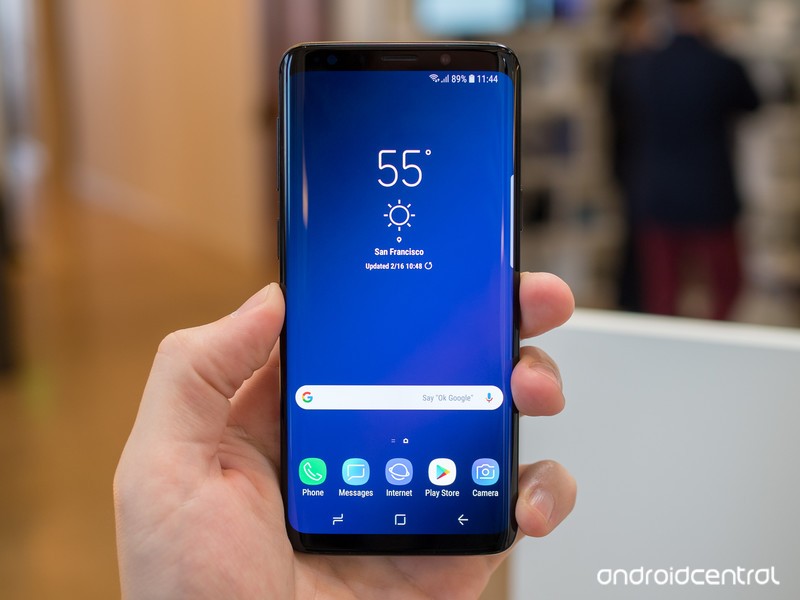
The Galaxy S9 and S9+ are now available to purchase in many countries around the world. Carriers are falling over themselves to give you a good deal on an early purchase of Samsung’s latest phones. Here are all of the latest deals from the top carriers and retailers.
U.S.
Verizon
You can pick up the Galaxy S9 for $33.33 per month and the Galaxy S9+ for $38.75 per month. Both of those are the prices over 24 months, meaning you’ll ultimately pay $799 for the S9 and $929 for the S9+. Ouch. To help reduce those costs, you can trade-in an eligible phone on Verizon and take up to 50% off. The exact details are as follows:
- Galaxy S9 for $16.66/month: Trade in iPhone X, iPhone 8/8 Plus, iPhone 7/7 Plus, iPhone 6S Plus, Pixel 2/2 XL, Pixel/Pixel XL, LG V30, LG G6, Moto Z2 Force, Moto Z Force, Galaxy Note 8, Galaxy S8/S8+, Galaxy S7 Edge.
- Galaxy S9+ for $19.37/month: Trade in iPhone X, iPhone 8/8 Plus, iPhone 7/7 Plus, Pixel 2/2 XL, LG V30, Moto Z2 Force, Galaxy Note 8, Galaxy S8/S8+.
- Galaxy S9 for $21.66/month: Trade in iPhone 6/6 Plus, iPhone 6S, HTC 10, LG V20, LG G5, Moto Z2 Play, Moto Z Droid, Galaxy S7, Galaxy S6/S6 Edge/S6 Edge+, Galaxy Note 5.
- Galaxy S9+ for $25.18: Trade in iPhone 6S/6S Plus, Pixel/Pixel XL, HTC 10, LG V20, LG G6, Moto Z Force, Moto Z2 Play, Galaxy S7/S7 Edge, Galaxy Note 5.
- Galaxy S9 for $25.00/month: Trade in iPhone SE, HTC One M9/M9+, LG V10, LG G4, Moto Z Play, DROID Turbo 2, Galaxy S5, Galaxy Note 4, Galaxy Note Edge.
- Galaxy S9+ for $29.06/month: Trade in iPhone 6/6 Plus, iPhone SE, HTC One M9/M9+, LG V10, LG G5, Moto Z Droid, Moto Z Play, DROID Turbo 2, Galaxy S6/S6 Edge/S6 Edge+, Galaxy Note 4.
See the Galaxy S9 at Verizon See the Galaxy S9+ at Verizon
AT&T
AT&T has upped the price for the phones beyond what you’d pay unlocked or from T-Mobile. The carrier is advertising $26.34 per month for the GS9 and $30.50 per month for the S9+ – but that’s over 30 months, so the full price comes out to $790 and $915, respectively.
For a limited time, though, AT&T is offering 50% off the S9 or $395 off the larger S9+. You must purchase the phones on AT&T Next, start a new line of service, and sign up for a DirecTV or Internet plan.
Those are a lot of hoops you need to jump through, but if you were already planning on getting the S9 or S9+ on AT&T, you might as well look into this.
See at AT&T
T-Mobile
T-Mobile is matching the unlocked pricing of $720 for the Galaxy S9 and $840 for the S9+. T-Mobile says that the S9 series plugs into its new 600MHz spectrum, which offers more coverage in rural areas.
There aren’t any sales on the S9 series right now for regular consumers, but if you qualify for T-Mobile’s military/veteran pricing, you can get 50% off.
See at T-Mobile
Sprint
On Sprint you’ll pay $792 for Galaxy S9 and $912 for Galaxy S9+, but they’re also available through Sprint’s Galaxy Forever lease program, which allows you to upgrade to the newest Galaxy after 12 months, for $33 per month for S9 and $38 per month for the S9+.
There aren’t any deals for buying the S9 series outright from Sprint, but you can save quite a bit with the Galaxy Forever program right now.
Instead of $33/month for the S9 and $38/month for the S9+, you’ll spend just $16.50/month for the S9 and $21.50/month for the S9 Plus. No trade-in is required for this promotion, but you will need to add a new line of service.
Once the order is made, you should see your monthly bill credit applied within two billing cycles.
See at Sprint
Amazon
Amazon matches every other retailer with U.S. unlocked pricing at $719 and $839, with all three colors of both sizes of the phone available. When shopping at Amazon, be sure to get the proper U.S. model rather than the international models that can also be found from third-party sellers — buying an international model may be a tad cheaper in some cases, but won’t come with a warranty.
See at Amazon
Best Buy
You can buy the carrier versions of the Galaxy S9 and S9+ for Verizon, AT&T and Sprint, plus the unlocked version (we recommend that one) at their usual prices. Best Buy runs its own trade-in program, and also typically matches whatever the carriers are offering directly in terms of incentives. Best Buy also offers 24-month no-interest financing if you have a Best Buy credit card.
See at Best Buy
Samsung
If you prefer buying your phones directly from the manufacturer (consider it!), without all the bloatware and potential SIM locking, Samsung is offering both the S9 and S9+ unlocked. In the U.S., you’ll pay $719 for the Galaxy S9 and $839 for the Galaxy S9+, but both are available with Samsung’s financing program if you’d prefer to pay over several months.
Samsung also sells the carrier variants of both phones, matching the pricing you’d find from the carriers but not necessarily any of the other incentives above and beyond that.
One big advantage Samsung has over everyone else is that it’s the exclusive place you can buy the 128GB and 256GB configurations for the S9 and S9+. You’ll pay $50 more per each storage upgrade, resulting in the following pricing:
- Samsung Galaxy S9 w/ 128GB – $769.99
- Samsung Galaxy S9 w/ 256GB – $819.99
- Samsung Galaxy S9+ w/ 128GB – $889.99
- Samsung Galaxy S9+ w/ 256GB – $939.99
Samsung’s got a couple killer deals right now, one of which gets you an instant $350 trade-in credit when you purchase an S9 through the Samsung Upgrade Program. Alternatively, buying the S9 or S9+ will give you the option of getting a free pair of Gear IconX (2018) earbuds or buying the Gear S3 for just $99.
See at Samsung
Canada
Rogers
It shouldn’t come as much of a surprise that Rogers has the Galaxy S9 and S9+. The amount you pay depends on which plan type you choose, with the pricing working out as follows:
- Premium+ Tab: $249 for the Galaxy S9 / $379 for the Galaxy S9+
- Premium Tab: $449 for the Galaxy S9 / $579 for the Galaxy S9+
- Smart Tab: $599 for the Galaxy S9 / $729 for the Galaxy S9+
- Talk & Text or No Tab: $999 for the Galaxy S9 / $1129 for the Galaxy S9+
If there’s a Rogers store near you, you can grab the Galaxy S9 for $0 (that’s right, $0) when you purchase it on one of the carrier’s Share Everything plans after completing an eligible trade-in.
For online shoppers, Rogers is giving out a coupon for 15% off select accessories when you actvate a device from its website and waiving its $30/line Connection Fee.
See at Rogers
TELUS
In addition to Rogers, you can also get the Galaxy S9 through TELUS. The regular S9 costs between $250 and $450 upfront depending on which plan you choose, with the same holding true for the S9+ that varies at $380 and $580.
See at TELUS
Bell
Bell is selling the S9 and S9+ for $250 on a 2-year term with an $80/month contract, or $450 for a $70/month contract. It’s $1019 outright. The S9+ costs $380 and $580 in the same configurations. As with all other carriers, the phone comes in either grey or purple.
If you’re interested in the smaller Galaxy S9, Bell’s letting you pick it up for $0 if you trade-in an eligible device and sign up for a 2-year Premium Plus plan with data.
For this offer, you’ll only be able to redeem it at one of Bell’s physical retail stores.
See at Bell
Unlocked
In Canada, Samsung is selling the Galaxy S9 and S9+ unlocked, starting at $960 for the smaller phone and moving up to $1100 for the larger one. Both phones remain unlocked once you put a SIM card into them, but they download (and keep) the carrier details from the first SIM that was inserted into them, much like their carrier counterparts. In Canada, Samsung is offering only the Lilac Purple and Titanium Grey models.
See at Samsung
UK
O2
O2 in the United Kingdom is selling the Galaxy S9 for £49.99 upfront and then £56 per month for 24 months. If you want the larger and more impressive Galaxy S9+, you’ll pay the same £49.99 upfront cost but a more expensive £61/month charge.
Thanks to the O2 Recycle program, you can score £100 off the purchase of either phone when trading in the Galaxy S7, S7 edge, S6, S6 edge, or S6 edge+.
See at O2
Vodafone
Vodafone is also offering the Galaxy S9 series in the UK, and for the regular S9 you’ll pay £29 upfront followed by £59/month. If you want to step up to the Galaxy S9+, you’ll pay a bit more ay £49 upfront and then £69 per month.
You can currently score an extra 5GB of data when purchasing the regular Galaxy S9 and gong with the S9+ will let you get a free wireless charger.
See at Vodafone
EE Mobile
For EE Mobile customers, you can get the Galaxy S9 for £58 per month and the S9+ for £68 per month. The former comes with 64GB of storage while the latter has 128GB, but no matter which you choose, you’ll be able to get the phones in either Lilac Purple, Coral Blue, or Midnight Black.
See at EE Mobile
India
The Galaxy S9 and S9+ are now available for purchase in India, with prices starting at ₹57,900 ($890). Both devices are on sale direct from Samsung India as well as Flipkart and Paytm Mall, and will be heading to thousands of retail stores across the country.
Both the 64GB and 256GB storage configurations are available in India, but if you’re interested in picking up the 256GB model, you’ll have to buy from Samsung India’s store. Samsung is rolling out a ₹6,000 ($90) cashback to those picking up the phone via Paytm, and HDFC credit and debit card users can also get ₹6,000 off on either device. Here’s how much the Galaxy S9 and S9+ cost in India:
- 64GB Galaxy S9: ₹57,900 ($890)
- 256GB Galaxy S9: ₹65,900 ($1,000)
- 64GB Galaxy S9+: ₹64,900 ($1,015)
- 256GB Galaxy S9+: ₹72,900 ($1,120)
See at Flipkart
Update, May 25: This article was overhauled with new deals, promotions and discounts for the Galaxy S9 and S9+. Because you deserve it.
Samsung Galaxy S9 and S9+
- Galaxy S9 and S9+: Everything you need to know!
- Galaxy S9 review: A great phone for the masses
- Complete Galaxy S9 and S9+ specs
- Galaxy S9 vs. Galaxy S8: Should you upgrade?
- Join our Galaxy S9 forums
Verizon
AT&T
T-Mobile
Sprint
Samsung is launching an AI Centre in Toronto
The Centre’s in the MaRS Discovery District.
Artificial intelligence is becoming more prominent in our world with each day that passes, and today Samsung’s furthering that initiative by opening up a new AI Centre in Toronto, Canada.

This is the second AI Centre Samsung’s launched in North America, the other of which is found in Mountain View, California.
The AI Centre will be used to further Samsung’s development of artificial intelligence in the region, with the Co-Head of Global Artificial Intelligence Research, Dr. Larry Heck, saying —
Toronto and the GTA are epi-centers of machine learning and one of the world’s foremost hubs for AI research and development. Home to not only world-class talent, but also some of the most innovative start-ups in the artificial intelligence field. We are looking forward to contributing to this vibrant AI community and to help push the field forward as we move towards our goal of making all Samsung connected devices intelligent by 2020.
Samsung’s Toronto AI Centre will focus its efforts on computer vision technologies that’ll eventually be integrated into products like self-driving cars, smartphones, smart appliances, and more.
HTC U12+ vs. Samsung Galaxy S9+: Which should you buy?
Customize your entire home with Philips Hue smart lighting systems on sale today
Make your home beautiful.
This sale on Philips Hue lighting is not messing around. There are a dozen different deals available right now, and they include everything from multi-color LED smart bulbs for $42.47 to the 80-inch voice-controlled multi-color light strip for $76.47.

If you’re new to the Philips Hue ecosystem, start with this four-bulb starter kit for $169.99. It normally sells for $200, so you’re saving $30 off the regular price. Plus, it comes with the Philips Hue bridge, which is essential to the entire process. You can buy the bridge on its own for $50.99 and customize your individual purchases based on all the deals available today. Either way, the bridge is how you can control all your bulbs and strips at once and then connect them to your Google Home, Amazon Echo, or other device to add voice control.
Some of the other deals worth noting include the Philips Hue motion sensor for $33.99, a wireless dimmer kit with switch and bulb for $29.74, and a 40-inch LightStrip extension for $25.49.
All of these smart bulbs can be controlled by the Philips Hue app, and it has plenty of great features like the ability to access your home’s lights remotely, scheduling, and soon a feature that will let you capture the glow of your favorite cities around the world.
Almost all of these deals are available through Best Buy’s Memorial Day sale as well.
See on Amazon
Why is Fortnite so damn popular?

Epic Games’ battle royale hit has literally taken the world by storm. But why?
I won’t tell you how much money I’ve spent in Fortnite, buying skins and pickaxes and stupid little dances for my character to perform. I’m not even very good at it, but I’ve lost track of the hours I’ve spent jumping out of that bus and getting shotgunned in the face.
Fortnite was not a battle royale to begin with, and it had a fairly slow start, perhaps due to being behind the paywall of owning the main game to get access.
But that was then. Now we’re at a point where Epic Games has pledged $100 million in prize money to competitive Fortnite tournaments, an unprecedented figure in the world of esports. And there’s not even a proper Fortnite competitive mode yet!
It’s impossible not to have heard of this game. Mainstream media is picking it up, sensationalist headlines are appearing about parents “losing their children” to Fortnite, it’s causing issues within professional sports teams, and it’s one of the hottest things on the planet right now.
But why? I have a few ideas.
See at Epic Games
1. It’s free. Very, very free.

I’ve previously written about how Fortnite is free-to-play done right, and that’s absolutely the case. Normally you’d expect a free game to have some kind of paywall, somewhere you’ll eventually feel the need to empty your pockets to get a better experience.
Not in Fortnite. Nothing in the core gameplay is hidden behind a paywall. The paid stuff is all cosmetics. If you want to look like John Wick or the Raven, or an Easter Bunny or a leprechaun, there’s going to be money involved. But you can be as good as Ninja without paying a dime.
Epic is still making an obscene amount of money from Fortnite, though, because for whatever reason everyone wants those skins. Whether it’s buying the Battle Pass for the season or V Bucks to buy individual items, Epic is printing money. But, you can play for free and still have a great time. Your character just won’t look as cool.
Being free also has other advantages. PUBG costs $30, and especially on Xbox it’s still in pre-release in the Game Preview program. If you don’t have $30 to spend, or you just don’t think it’s worth it, Fortnite offers an alternative 100-player battle royale experience for zero money.
That’s also a reason why it’s so popular with the younger crowd.
Should you buy Fortnite for PS4, or is the free version good enough?
2. It offers something different in a busy space

The battle royale formula is pretty consistent across the different titles, but Fortnite has an instant twist on it thanks to the building mechanics. Simply put, if you can’t build, you’re not going to be very good. (That’s why I’m not very good.)
Watching the best players build a ridiculous structure in seconds, then still circle behind an enemy and deliver a well-timed blue pump to the head is a thing of beauty.
It’s also bringing a very unique style to things. PUBG has quite realistic-looking surroundings and weaponry; Fortnite looks like a cartoon and has a disco bomb that makes your opponents dance.
17 Fortnite tips, tricks, and cheats to help you win a Victory Royale
3. It offers effective cross-platform gameplay
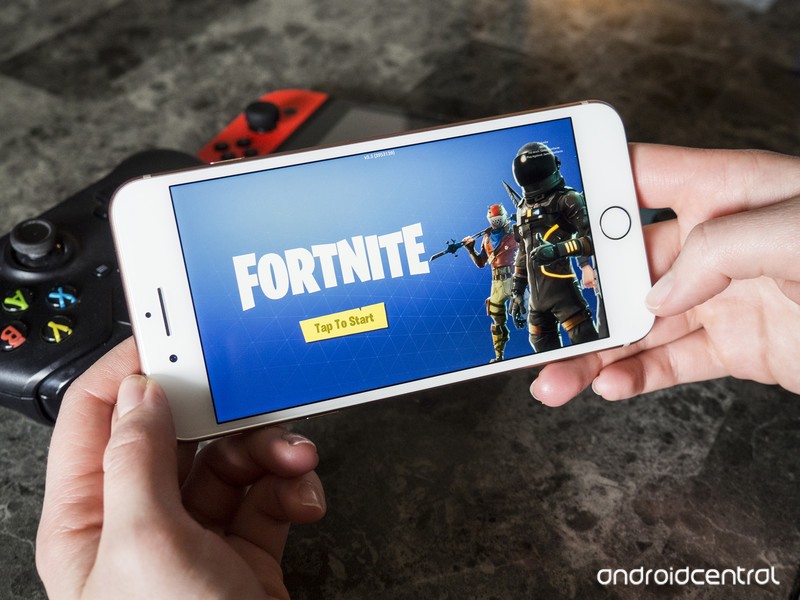
Fortnite is one of the best examples of cross-platform play. You can’t play Xbox versus PlayStation 4, and that’s because of (most likely) Sony. But folks on an iPhone can play with folks on a console and a PC, and vice-versa, and soon, Android users will be able to join in the fun.
It’s opt-in, and you cannot choose to play with phone players from your PC, but you can conceivably play a match with a buddy on an iPhone and another on Xbox while you play on your PC.
You might well get utterly demolished playing on a phone coming up against PC players, but the idea is sound. No-one is left out. If Sony decides to play ball, you’ll get one giant, all-inclusive battle-royale family.
4. It’s fun and frustrating … in a good way

When you first start playing, or if you’re struggling to get your building skills nailed, Fortnite is frustrating as hell. You’ll see an opponent throw up a bunch of ramps, get above you, and obliterate you in seconds.
But you’ll go back to the lobby and you’ll try again. And again. And again. That’s because it’s a lot of fun, and it’s very entertaining.
Hit YouTube and check out the highlight reels from some of the big streamers. Yes, you can ride a rocket across the map and hit someone with an epic no-scope snipe. It’s not easy, but it’s possible, and the entertainment value is unlimited.
And it’s only just begun …
Thanks to the variety of weapons, skins, locations, the building mechanics, and the way the map in Fortnite evolves, it all combines to make a game that’s never the same on different days. Season four started by dropping a meteor into the middle of the map, subsequent updates are seeing parts rebuilt.
Fortnite’s battle royale mode is a living entity, evolving with every update, and Epic Games is doing an incredible job at keeping the community engaged with fresh content. And that always provides a reason to come back. Now the company is providing huge cash prizes, so no doubt everyone wants to become a Fortnite pro player.
These are some of the main reasons why people keep coming back to Fortnite. Epic Games is onto a winner here, and it’s not going to slow down any time soon.
A beginner’s guide to Fortnite: Battle Royale
See at Epic Games
Everything that’s new in OxygenOS

Have a OnePlus phone? Here’s what’s new with your latest update.
OxygenOS is the software that powers OnePlus phones, and even if you’re not enrolled in the Open Beta, it’s still frequently updated with new features and bug fixes to keep an eye out for.
It can be tough to keep track of what’s new, so we’ll be updating this guide with each new OxygenOS update that’s rolled out.
May 25, 2018 — Face Unlock comes to the OnePlus 3/3T with OxygenOS 5.0.3
The OnePlus 3 and 3T may be getting up in their age, but that doesn’t stop OnePlus from pushing new features to them. OxyenOS 5.0.3 is rolling out to the phones now, and the highlight here is easily the addition of Face Unlock.
This is the same technology introduced on the OnePlus 5T, allowing you to quickly unlock your 3 or 3T by just looking at it. Other items included with the update are as follows:
- Android security patch updated to May 2018
- Refined UI for the Shelf
- New app shortcuts design
- More options when long-pressing an app icon
- OnePlus Gallery gets Places menu, ability to share photos to Shot-On-OnePlus, and Recently Deleted collection
- Large Files category in File Manager
- OnePlus Weather app gets new widget, improved positioning accuracy, and refresh interval setting
May 24, 2018 — OxygenOS 5.1.5 adds May security patch and super slow motion video to OnePlus 6
OnePlus just opened sales for the OnePlus 6 a few days ago, but even so, the company already has a new software update that’s rolling out to it.
This isn’t a particularly big update, but two notable additions include the May 2018 Android security patch and a super slow motion mode for the camera that records video in 720p at 480 FPS and 1080p at 240 FPS.
Other goodies include:
- Preloaded OnePlus Switch app
- Toggle for showing/hiding the display notch
- Quick capture when the camera’s in portrait mode
- More actions for recently deleted files
OnePlus 6
- OnePlus 6 review
- OnePlus 6 vs. OnePlus 5T: How much changes in six months?
- OnePlus 6 vs. OnePlus 5: Should you upgrade?
- These are the official OnePlus 6 cases
- The OnePlus 6 doesn’t work on Verizon or Sprint
- Join the discussion in the forums
Kingdom Hearts 3 for PlayStation 4: Everything we know so far!

Want to know what’s going on with Kingdom Hearts 3? Here’s everything we know so far
In the early years of gaming, there were quite a few swings taken at the creation of a game utilizing Disney properties. Most of those games ranged anywhere from unplayable to mediocre as far as quality goes.
Then in 2002, Square released Kingdom Hearts onto the PlayStation 2. Disney fans and gamers rejoiced as they finally had a significant video game with Disney characters. Thus far, there have been a total of nine Kingdom Hearts games and here in 2018 Square stands poised to release a new entry to the gaming public.
We have been hearing rumblings about Kingdom Hearts 3 for years now but there is finally light at the end of the tunnel for fans of the series. As it stands now, we should see a release toward the end of 2018. However, what do we know about Kingdom Hearts 3 right now? Let’s take a look.
A whole new world

Since its inception, an important element of the Kingdom Hearts games has been the setting. Part of the joy of these games is the opportunity to explore familiar Disney worlds in a way that is not possible when you’re watching a film. Some of the worlds which have been tapped for inclusion in KH3 include Andy’s House from Toy Story, Twilight Town, Mount Olympus from Hercules, Monsters Inc, Tangled, and even San Fransokyo from Big Hero 6.
With Disney owning just about every existing IP under the sun there doesn’t seem to be many worlds left that are not within their reach. However, everything indicates that all the worlds tapped for inclusion will remain those who lie directly under the Disney Umbrella, as well as some from underling Pixar.
While Kingdom Hearts 3 isn’t a traditional open world game, Square Enix has a clear goal to increase the scope and capacity of each world. Some of these levels are the most expansive we’ve ever seen in a Kingdom Hearts game. You’ll especially feel the scale at places like Toy Box in the Toy Story world, or Mount Olympus over in Hercules’ corner. Despite the increased size, Square Enix manages to create each world with the level of detail that’ll make you feel like you’re in the theater watching your favorite movies all over again. It’s this nice balance of scope and focus that gets us excited to be sucked into Disney’s magical kingdom once more.
Characters Welcome

Another critical element of the Kingdom Hearts series has, of course, been characters. There is something undeniably exciting about running into some of your favorite Disney denizens whilst you progress through a KH game.
While your main characters will remain steadfast – Sora and the gang are back – there are some additions. With the inclusion of the aforementioned worlds, it should come as no surprise that we will see end up crossing paths with their related character inhabitants. You’ll certainly be seeing Woody, Buzz, and the glutton of other toys living in Andy’s room for the Toy Story sections. I, for one, am totally ready to get some heals from Beymax.
And that’s alongside mainstays such as Goofy, Donald Duck, and Mickey Mouse, all of whom have proven to be valuable comrades for Sora over the years.
Gameplay

Kingdom Hearts 3 will seemingly feature a keen blend of all the combat mechanics introduced in each previous title. Keyblades still cut foes down with ease and magic is still here to help you quickly dispel waves of enemies. However, we’ll also be seeing new mechanics such as character summons, keyblade transformations, link attacks, something Square Enix is calling “attractions,” and more. Here’s a quick rundown of what those types of attacks are:
- Character Summons: You can call on one of your Disney or Pixar friends to fight alongside you for a short time.
- Keyblade Transformations: Alongside your keyblade’s normal abilities and combos, you can transform the keyblade after hitting a series of uninterrupted attacks. The temporary transformation unlocks a wealth of new abilities, as well as a finisher attack.
- Link Attacks: Like Character Summons, this mechanic brings your friends into the fray, but instead of being there as a sidekick they’ll execute a more coordinated and powerful attack with Sora.
- Attractions: These are flashy, big abilities that play out like rides you’d see at Disneyworld and Disneyland. For instance, you can call on something like a water ride to splash through a ton of foes.
There will also be other miscellaneous gameplay mechanics that may be unique to certain worlds and sequences. For instance, Sora can take control of robot Gigas at Toy Box to help him get around the store and fight enemies faster. Expect a lot of variety in this regard.
Players will get stronger as the game goes on with a leveling system that should increase your power, health total, mana pool, and offer new abilities. And it’s not just Sora getting this treatment, either – all your mainstay companions have their own experience to grow.
World traversal has been a big part of the Kingdom Hearts series, and Sora’s movement abilities are seeing some interesting changes with this entry. Sora has seemingly been practicing parkour as a new mechanic allows him to scale up, down, and across walls. This is likely to help players quickly maneuver through a world is just as wide as it is tall, with verticality being a staple element of Kingdom Hearts.
As was the case in most Kingdom Hearts games to date, you’ll be fighting enemies who use Darkness for evil. Darkness is both an alternate realm and an actual force of energy. Good characters can use Darkness to augment their abilities, though the bad ones use it with far more malevolent intentions. Much of your battling will be done against those known as the Heartless, a common enemy in the game. The Heartless are actually living forms of the darkness that exists in everyone’s heart. Their goals are likely driven by some evil no-gooder behind the scenes, as the heartless don’t act on any sort of feeling or emotion of their own.
When can I play?
As it stands, we’re still a bit far away from release for us to start holding our collective breath. Everything is subject to change but at this very moment, Amazon has the release date set for December 31st of 2018. This is likely just a placeholder date, with Square Enix expected to reveal the final release date for Kingdom Hearts 3 at E3 2018 (which takes place the week of June 12th, mind you).
If you want to get in line early, you can always head over and preorder a copy for $60.
See at Amazon
In its long and storied history, Kingdom Hearts has done a stellar job of taking the elements that work and adding new ones. Like a fine wine, Kingdom Hearts has (mostly) gotten better with age. At this point, we don’t know everything about what is in store for us but as the year progresses we will undoubtedly see more new pieces of the puzzle unveiled.
I think Square knows that part of the magic and joy in these games is the surprise of running into unexpected characters. I have no doubt that they are holding a few cards close to their chests for the time being but I can’t wait to find out what those cards are.
What do you want to see in Kingdom Hearts 3?
Why are we reviewing PlayStation 4 games on Android Central? Let us explain.
PlayStation 4

- PS4 vs. PS4 Slim vs. PS4 Pro: Which should you buy?
- PlayStation VR Review
- Playing PS4 games through your phone is awesome
Amazon
Update, May 25th: We’ve updated this article with new details about Kingdom Hearts 3’s gameplay from Square Enix’s recent demo.
This is how Xiaomi wants to eventually win the U.S. market
Not with a bang, but with surgically precise planning.

Smartphone nerds are universally familiar with the name Xiaomi, though few in the U.S. have ever held one of its phones. The brand is explosively popular in many other countries in the world, most recently experiencing growth in India and Spain, but you can’t buy a single Redmi or Mi Mix phone from an American retailer yet.
After the recent and spectacular failures of Huawei and ZTE in the U.S., it’s not difficult to understand why the company is cautiously planning its Stateside launch strategy. But even in the face of those events, Xiaomi remains convinced it will start selling hardware to Americans within the next year or so. To make this work, its plan is to sit back and learn as much as it can about this new market and then approach it like the giant it is.
When sitting down with Xiaomi at Google I/O 2018, just after Google announced the Android P developer preview was coming to the Mi Mix 2S, we asked John Chan, the head of Xiaomi’s global MIUI engineering team, about the future of the company’s U.S. plans — and we were as blunt as possible. The answer wasn’t particularly surprising, either.
Our path [to the U.S.] is getting into the carriers. Traditionally, the only brand with some kind of success outside of carriers in the U.S. is OnePlus, and it’s still catered to a very small market of users. People who do their research and have heard of it. We want to bring in our full range, even the Redmi series. We just have to figure out how to get in with U.S. carriers.
Xiaomi doesn’t want to compete with Motorola or OnePlus or HTC — it wants to compete directly with Apple and Samsung. That works two ways here: you either spend a lot of money on advertising everywhere, or you exist on shelves next to the iPhone and Galaxy phones.
Xiaomi wants to be next to devices like the Galaxy S9 and iPhone X on store shelves in the U.S. And that’s really, really hard.
Spending money on advertising largely goes against the Xiaomi business model. It has publicly vowed, on multiple occasions, to never make more than 5% profit on any device it sells, which means marketing budgets are never going to be massive.
Instead, the company wants its phones to be in stores where people can touch them. The logic here is simple: when someone sees a phone that looks and feels as nice as a Galaxy S9 but is several hundred dollars cheaper, they’re going to ask about it. That only happens when you’re on the shelf next to these other manufacturers.
Carrier support may seem obvious, but it’s also incredibly challenging. Google’s Pixel phones are a prime example — excellent phones with only Verizon and Project Fi support, with mediocre sales numbers despite massive country-wide marketing campaigns. People who see these phones love them, but with support from a single carrier it’s unlikely that support is going to grow wildly beyond what exists right now.
Based on Xiaomi’s UK entrance, which included multiple phones on only a single carrier, it seems unlikely we’ll see a big splashy entrance onto all four U.S. carriers at once. Negotiating these deals so every carrier offers these phones simultaneously is going to be hard, especially if Xiaomi expects budget phones like the Redmi line and its flagship Mi Mix experiences to exist on the same shelf. Carriers are cutting the number of phone models they sell, not expanding.
Will we see Xiaomi make a grand entrance into the U.S. within the next year? I think it seems likely.
More than simply talking to carriers, Xiaomi has made a real effort to ensure its Global ROMs are ready for U.S. users. The way people use their phones in China, where Xiaomi is king, is remarkably different from how we use our phones here.
Xiaomi has already learned these lessons when selling phones in India, where its selfie “enhancing” features upset early users by doing things like removing facial jewelry and causing smearing effects on facial hair. The MIUI software, in particular the way notifications and app shortcuts are handled, needs to be catered to the way U.S. users expect Android phones to behave. Xiaomi says it is up to the challenge, and our continued look at how MIUI Global ROMs have evolved over the last year seems to suggest the company is at the very least headed in the right direction.
Xiaomi understands that software experiences are important for U.S. smartphone customers, which means catering MIUI to a western audience.
Will we see Xiaomi make a grand entrance into the U.S. within the next year? Maybe.
The company has already started selling non-cellular hardware like cameras and scooters to U.S. consumers on Amazon, and its collaboration with Facebook to make the Oculus Go headset has so far been quite successful.
By the end of the calendar year, Xiaomi will likely be a much more common name to small groups of U.S. consumers. If it can secure deals with carriers, and those deals don’t go up in flames like we saw with Huawei, there’s a good chance we’ll see the next flagship from Xiaomi on shelves next year. For those of us who have held these phones before, that is going to be an exciting splash in what would otherwise be a fairly stagnant pond.
These are the top Xiaomi phones you can buy in 2018
PayPal now available with Google Pay across a number of new Google services
PayPal can now be used as a payment method across all of Google.
Google’s been adding a heap of new features to Google Pay ever since it ditched the Android Pay branding earlier this year, and the latest addition comes by way of deeper integration with PayPal.

You can already use your PayPal balance to pay for things in-store using Google Pay, but coming soon, you’ll be able to use your PayPal money via Google Pay across all of Google’s services.
What exactly does this mean? If you add your PayPal account to Google Pay, you’ll now be able to use it as a payment method in YouTube, Gmail, Google Play, the Google Store, and with peer-to-peer payments such as Google Pay Send — all while only having to enter your information once.
This won’t mean a lot for everyone, but if you’re a heavy PayPal user, this is bound to be exciting news.
Download: Google Pay (free)

