


The best Galaxy Note 9 cases you can buy
The Galaxy Note 9 is a premium flagship that you’d be a fool not to keep protected with a case. I love the Spigen Rugged Armor for its low-profile protection and the Speck Presidio Grip for its awesome quality, but there are so many great cases to choose from!
Best from Samsung
Samsung LED View Cover

Samsung offers five different case styles for the Note 9, but I’ll highlight the LED View case because it’s uniquely Samsung and offers the best protection with extra functionality for the Note 9 when it’s closed.
$42 at Amazon
Most rugged
Supcase Unicorn Beetle Pro

The Unicorn Beetle Pro is a case you can trust no matter which phone it’s protecting. This rugged-style case is designed to keep your phone well protected with a built-in screen protector for the display. An optional belt clip holster is also included if you’re interested in that look.
$20 at Amazon
Clearly great
Spigen Liquid Crystal Clear Case
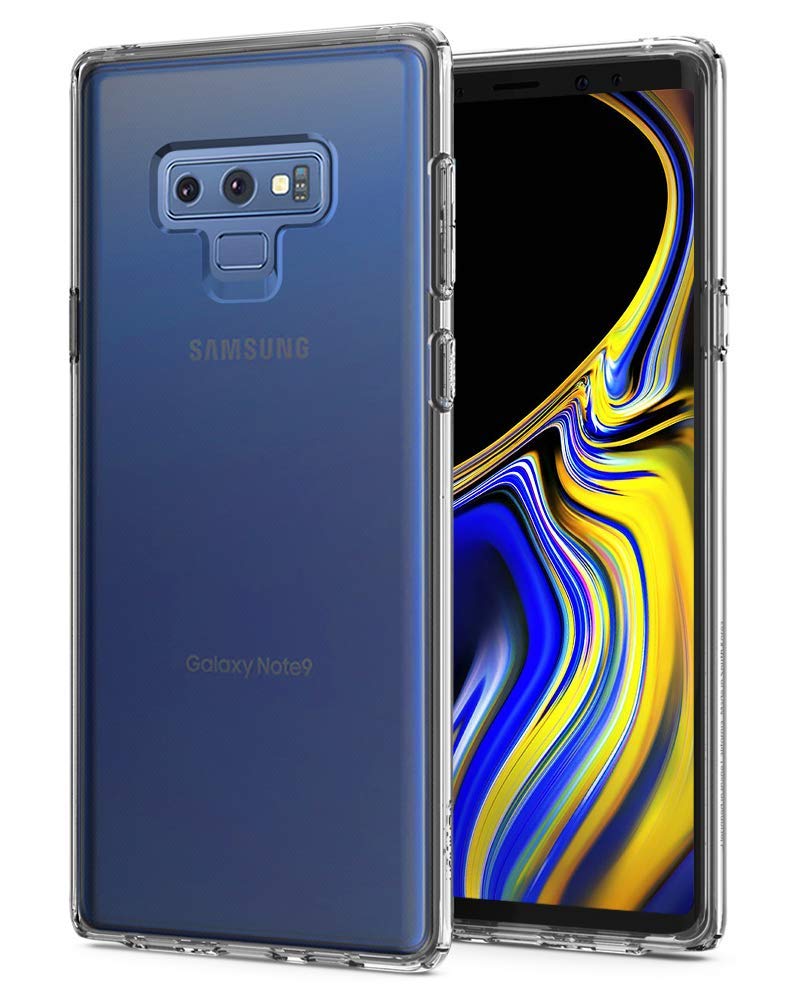
For those who are after a minimalist clear case to show off the Note 9’s design, Spigen has you covered with this ultra-thin clear case. This one-piece case is made of a flexible TPU material that will keep your phone protected from scratches and basic drops, and is thin enough to support wireless charging.
$11 at Amazon
Slim and rugged
Spigen Rugged Armor case

For those who don’t want to sacrifice pocket space for protection, Spigen’s Rugged Armor case is a great option. This sleek, one-piece case is rugged with carbon fiber accents that look great on all phones, but especially big phones like the Note 9. It’s made of rugged TPU material and features a matte finish.
$11 at Amazon
Super thin option
Spigen Thin Fit case

The Note 9 is already a massive phone, so you may want a thin case to protect from scuffs, scratches, and cracks that won’t add too much bulk. Spigen’s Thin Fit case is a minimalist case that offers basic protection and is available in four colors.
$11 at Amazon
Best wallet case
ProCase Leather Wallet Case

For those looking for an extra functional case, you should consider this leather wallet option from ProCase. Not only is this case designed to carry multiple debit and credit cards along with a cash pocket but it also delivers great protection for your phone. Made with genuine leather, this case screams premium design with top-notch craftsmanship.
$28 at Amazon
Clear and rugged
VRS Design Heavy Duty Clear Case

If you want a clear case to show off the design of your Note 9, but also don’t want to risk damaging a phone that’s worth over $1000, this case from VRS Design is a great option. It’s a two-piece case that combines a sturdy acrylic backing with a shock absorbing TPU bumper and should avoid the ugly yellowing that occurs with other clear options over time.
$12 at Amazon
Best for grip
Speck Presidio Grip Case

One of the best ways to avoid drop damage for your phone is to avoid dropping your phone, and this grippy case from Speck is a great option. This case features a stylish pattern of raised ridges along the back and sides which feel great in hand and give this case a unique look.
$40 at Amazon
Trusted brand
OtterBox Defender Series case

OtterBox products are significantly pricier than the other options on our list, but each case is backed by superb customer service and is designed to take all the abuse of daily wear and tear. A worthwhile investment for such a premium device.
$54 at Amazon
Rugged for less
Encased Rebel Armor Case

For a rugged case that won’t break the bank, consider this option from Encased. It’s a dual-layer case that’s packed with protection for your Note 9, including a unique webbing of shock-absorbent texture on the inside and air pockets around the perimeter to help with drops.
$15 at Amazon
Be sure to keep your Note 9 in great condition for years to come with the right case. Looking over all the options I’ve rounded up, Spigen offers the best value with either the Rugged Armor or Liquid Crystal cases that are both available for just $11.
UK Daily Deals: Fitbit trackers, Amazon Echo and Fire devices, and more
Whether you’re looking for new tech gear or household items, we’ve got you covered.
We found plenty of great deals today on Fitbit trackers and other fitness accessories, Amazon Echo and Fire hardware, Xbox Live Gold membership, Amazon Music Unlimited, and much more!
View the rest of the deals
Each day, the Thrifter UK team scouts out and shares amazing deals on products you know and love, helping you find the best prices on the ‘net.
For more UK deals coverage, be sure to keep an eye on Thrifter UK and follow the team on Twitter for the most up-to-the-minute coverage.
Everything we know about the next PlayStation console so far

Sony is gearing up for the PlayStation 4’s eventual successor.
While development on the PlayStation 4’s successor has likely been going on for years, Sony has official confirmed that it’s in the works. Here’s everything we know about it so far.
What form will it take?
Despite Microsoft’s rumored plans to create two separate next-gen Xbox consoles, one specifically designed for streaming through the power of the Cloud, Sony appears to be going the traditional route compared to its competition. According to a report from the Financial Times, sources familiar with Sony’s plans have stated that the future console “might not represent a major departure from the PS4, and that the fundamental architecture would be similar.”
This indicates that Sony may not be working on a streaming platform, though the future does look to be more streaming-friendly as internet speeds and connections improve around the world.
Specs

Do we know any exact specs yet? No. But we can infer that it will be better than the PlayStation 4 Pro in terms of performance. The PS5, or whatever it will be named, will likely support 4K resolution at 60FPS while gaming. As for storage, I’d say it’s safe to assume that its internal hard drive will be 1TB or greater.
The above graphic, which refers to the PS4 Pro by its codename, compares some of the Pro’s specs versus a traditional PlayStation 4.
What will it be named?
The likely answer is simple: PlayStation 5. However, Sony has declined to comment on an official name of any sort. For now, what we know it that it will be the successor to the PS4.
There was some speculation that its codename internally at Sony is Erebus, following the naming conventions of Greek-themed codenames for some of the company’s previous products, but an Epic employee struck this rumor down by stating that Erebus was simply their codename for the Switch version of Fortnite in Unreal Engine 4 before it was announced.
What will it cost?
Again, we don’t know for sure, but it’s safe to say likely over $400 given the technology that may be utilized and prices of previous hardware.
When will it release?
The PlayStation 5 has no definitive launch date, but people are expecting it within the next few years.
There is speculation that a release could come as early as 2019 based on a job listing from Infinity Ward. According to LinkedIn, the company is looking to hire an Associate Game Designer for an “unannounced next-gen title.” Call of Duty fans will note that next year’s Call of Duty release should be coming from Infinity Ward, if the series’ studio development pattern holds true. This is leading many to believe that the next year’s Call of Duty will be a next-gen title. This of course is making the assumption that Infinity Ward—if the studio is indeed developing next year’s Call of Duty for next-gen systems—will release both current-gen and next-gen versions simultaneously, and assuming that this is referring to Call of Duty and not some other project entirely.
Thurrott reports that Microsoft is planning to release the next-generation Xbox in 2020. Plans can change, but if true, Sony will stick with a similar time frame. If Sony wants to keep pace with the competition, the PS5 may release in 2020 or sooner.
PlayStation 4

- PS4 vs. PS4 Slim vs. PS4 Pro: Which should you buy?
- PlayStation VR Review
- Playing PS4 games through your phone is awesome
Amazon
Add some color with the $40 Philips Hue smart dimmable flood light
The Philips Hue BR30 dimmable LED smart flood light is down to $39.97 on Amazon. This light normally sells for around $50, and the deal is a match for the best we have ever seen.

BR30 bulbs are made for recessed, horizontal, or vertical light fixtures. Other than that, they operate just like any other Philips Hue smart light. Each bulb has more than 16 million color options that can be controlled by the app or even via Amazon’s Alexa, Google’s Assistant, or Siri.
In order for the lights to work, you will need the Philips Hue Smart Bridge, which is down to $48 from $60 today. If you already have a bridge as part of a starter kit like this or something similar, you can just add this bulb to that system.
The A19 Philips Hue smart bulb, designed for regular lamps and such, is also on sale for $39.99 right now.
See on Amazon
Amazon Echo Plus (2nd gen) review: The science of good sound
Amazon’s premium model Echo just got even more premium, and we love it!

Amazon has had a long and strange trip from its humble beginnings as a bookseller to where the company is today. Products like the new 2018 Echo Plus give us an idea where the company is headed: the one-stop shop for everything, including “casual” smart home products. It’s a place where you can stretch your dollar and get good products that are easy to install and setup without being a tech genius or needing a 100-page manual. Think Sharper Image without the air of pretentiousness or outrageous prices.
2018’s Echo Plus shows us that not only is this particular segment of the market wide open — Amazon is only competing with itself here when it comes to value — but that it’s possible to build really nice products that look great, are easy to use, and actually outperform expectations. The new Echo Plus is the pinnacle of that triad and it’s a product that offers something for everyone. This is one of the few times I can say that a “plus” moniker is not only well-deserved but worth the price bump, too.
Echo with extras
Amazon Echo Plus (2018)

$150 at Amazon
Updated inside and out.
Amazon’s Echo Plus keeps the features we love but brings a new look and BIG sound.
The Good
- Improved audio
- Temperature sensor
- Volume buttons
- Easy set up
- Stereo pairing and multi-room features
- Price vs. Sonos or Google Home Max
The Bad
- Mute button has a strange icon
- Audio lacks depth in mid tones
- Light animations aren’t as visible as the previous model.

Amazon Echo Plus (2018) What I like
There are two reasons anyone would buy an Amazon Echo, and the Echo Plus does both better than the rest of the Echo family. It’s actually a good wireless speaker and it makes for an excellent smart home control center and hub.
My first impression of the sound this little cylinder could make was “wow.”
I can honestly say the sound of the improved Echo Plus blew me away when I first heard it. Not because it has the best sound of any product of its type, but because it delivers better audio than anything in its price range. You probably know someone who has speakers and amps and a rats nest of wires behind their AV center. I am that guy and have enough equipment here that cost enough money that I’m embarrassed to admit I spent it. The Echo Plus doesn’t sound as good as my stereo, but it cost a few thousand dollars less and for the money, it sounds a lot better than I would have ever expected.
Does it sound as good as a Sonos product or a Google Home Max or Homepod? No. Does it cost as much as any of those? No, and by a healthy amount. It’s a product that is almost as good as its pricey competition, and the best value in wireless home audio. That’s a bold statement, but I’m a bold fellow and the Echo Plus is a bold wireless speaker. Bold speakers sound best when they are used together, which is why the new Stereo Pairing and multi-room audio features make the Echo Plus worth looking at when you buy your next wireless speaker no matter how much of an audio snob you might be. You just might be surprised like I was.
The Echo Plus isn’t just a wireless speaker though. It’s also a voice-activated assistant and control center for all sorts of other smart home products and can act as a smart hub on its own. In this space, there is some fierce competition from Google, Apple (sort of), Samsung, and Amazon’s other Echo products. In many areas, the Echo Plus beats that competition.
When it comes to knowing the minor details of your life, Google Assistant has no rival because of how information about you is saved and used. Apple’s Siri and HomeKit place emphasis on security and privacy, which limits some usefulness and product choice. Bixby Home is too new to make any judgments. For everything else; controlling your lights or your garage door opener or smart blinds and all the other mishmash of smart products from hundreds of manufacturers, the Echo Plus and Alexa has the competition handily beaten.

It’s very likely that the next smart product you buy will just work with Alexa as soon as you power it up. This is because of the popularity of Alexa, Amazon’s partnership with companies looking for a partner, and the software team’s wonderful new way of making it work. If you order any Echo model using your own Amazon account, it arrives ready to go; just plug it in and install the Alexa app on your phone to type in your Wi-Fi password. If you order any of the thousands of products that work natively with Alexa, simply power them up and wait or tell Alexa to scan for new hardware and it too will be ready to go.
Alexa’s software is leaps and bounds above the competition when it comes to easy setup.
If by chance you order a smart product that doesn’t work natively with Alexa, just download the correct skill through the app and a few button taps later it too will be ready to go. The Echo Plus is a full-featured smart hub using the industry-standard Zigbee communication protocol, can transmit and control through “regular” Wi-Fi, and even has its own internal temperature sensor to one day act as a remote sensor for a smart thermostat or weather station. These are all things the average user doesn’t need or want to know, and the important part is that it all just works and is easy. Alexa has that part down pat.
Amazon Echo Plus (2018) What I don’t like
The list here isn’t long, but there are some areas that I feel need a bit of attention when it’s time to make the next generation. They may seem a little nitpicky, but it’s my job to nitpick so you’re aren’t surprised by any flubs.
The microphone array of all the newer Alexa products I’ve tried (2017’s Echo Plus, Echo Mini and the “standard” Echo as well as a Toshiba FireOS television with voice input) has been fantastic. Initially, the early Alexa products had trouble with my accent sometimes or just couldn’t hear me unless the room was quiet. That has changed and I can say, “Alexa turn on the kitchen lights” downstairs in my office and hear several Echos and a television sitting upstairs answer me. However, the new design of the Echo Plus and it’s admittedly attractive tweed fabric covering (my wife and I love the Heather Grey model) make the light ring more difficult to see. I want that visual feedback so I know Alexa is listening.
A microphone symbol provides information. Ǿ is a symbol more at home on a Hobbit’s ring.
I love that there are tactile buttons for volume control rather than a spinning ring at the top, but I don’t like the choice Amazon made for the button to mute the microphones. We have an Echo Plus in the bedroom and there are times when my wife and I want to make sure the microphone array is muted so nothing is inadvertently recorded. The first time that was necessary, I had to look online to be 100 percent sure that the button with the ø (is that a naught symbol or a Norse rune?) was the button we were looking for. The old icon with the crossed off microphone was fine and made it obvious.
While the sound the Echo Plus can produce is much better than I would have ever expected from a product of this caliber, it’s not perfect. The Echo Plus does a fine job handling the high tones, even at volume levels edging towards the extreme. It can also provide strong thumping bass, though I feel the crossover needs a bit of adjustment even with an Echo Sub in the mix. Where it struggles is in the middle of the sound spectrum, where vocals and instrumental solos reside. The quality isn’t necessarily bad but it doesn’t match the higher quality produced by the ends of the soundstage. Again I will remind everyone who would notice this problem to look at the price tag and other features of the Echo Plus before they make any judgment. Remember, I’m here to nitpick.
Two Sonos Ones and a Sonos Sub sound better than the Echo equivalent but also costs $750 more.
Google and Amazon, please stop fighting. Or at least don’t let your silly feud extend to your Nest and Ring sub-brands because that only hurts your customers. I have both Nest and Ring equipment here and seeing them work excellent with their respective parent brands while requiring a third party like IFTTT to replicate those features across both is spiteful. A Jeff Bezos v. Sundar Pichai cage match would be a much better option.
Finally, and this may be the epitome of a niche, Amazon’s voice match could use some work. If you have a parrot who is able to mimic you well enough, it can get Alexa to do all sorts of things. The thrill of having Alexa turn on lights is too much for my parrot to ignore, and if you have a feathered friend of your own you’ll understand. Google is able to prevent this from happening and I’d love to see Amazon do the same.

Amazon Echo Plus (2018) Should you buy it?
If you’re looking for a great wireless speaker and don’t want to pay Sonos prices, you’ll want to check out an Echo Plus. Or a pair of them with an Echo Sub, which lists for just $329 for the set. You’ll be getting 75% of the quality for $750 less than a pair of Sonos Ones and a Sonos Sub. With the new Stereo Pairing and multi-room features, it’s worth a look for sure. Amazon will take them back for a full refund if you don’t like what you hear.
If you want a smart home experience without any work or head scratching, the Echo Plus is where you need to start. Almost everything you can buy is Alexa-enabled, and the way Alexa Skills can be built plus the smart community of users means almost anything is possible. For the most part, what you buy will just work exactly the way you imagined it would because manufacturers work hard to make their products work with Alexa.
If you’re looking for a more personal assistant type of device, I’d steer you towards a Google product instead. A Google Home (or Home Mini or Home Max) is capable of the same smart home features, though sometimes there is a little more work involved getting them working, and can provide a rich media experience as well. And because of all the things Google knows about you, things like daily agendas or video calling is just better with a Google Home.
4.5
out of 5
In short, the Echo Plus is $150, or about $50 more than the standard Echo. The massive boost in audio quality and stand-alone smart hub features you get are worth the extra cash. The Echo Plus is the Echo to buy in 2018.
See at Amazon
Amazon Alexa
- Which Amazon Echo should you buy?
- Get more Alexa Skills
- How to enable and disable Alexa Skills
- How to customize Flash Briefing
- How to get sports updates
- How to sync your calendar with Alexa
- How to shop with Alexa
- Send voice messages with Alexa
See more at Amazon
Google ‘app bundles’ help blur the lines between installed and instant apps

Soon it won’t be at all apparent whether an app is truly ‘installed’ or not.
Google’s developer-focused “Playtime” event series kicked off today, and with it comes a whole bunch of changes for developers publishing apps in the Play Store. The biggest push Google’s focusing on is changing the years-old paradigm of installing big (and increasingly so) apps on your phone in a one-size-fits-all manner.
The changes emanate from a new publishing format called an “Android App Bundle.” Bundles allow developers to compartmentalize their apps into different components to reduce the initial app install size for users. That means when we go to download an app, the file size is likely to be smaller — something we can all agree is a good change — and additional components can download and add on to the app later as needed. This also enables larger overall apps, in the use case of things like games, without using dedicated expansion files.
Google’s making it even easier for developers to distribute apps in multiple ways without building multiple apps.
The move to app bundles helps Google go further down the process of streamlining the app installation paradigm. Part of the process is improving “instant apps” — the recently-announced system that lets apps load their basic components and run without installation. Now, instant apps can be designed to just be part of app bundles — meaning developers no longer need to have a separate “instant” and “installable” app, they just make an app bundle that defines what part will run as an instant app, and the rest can come later. This is a big improvement for developers, who really don’t want to maintain separate versions of their apps, and can benefit from better conversion from being found on the web or Play Store to an actual app install.
When apps are smaller and run faster, everyone wins.
On the consumer end, these two changes are significant in that they further blur the lines of what it means to “install” an app. But when it’s done right, the end user wins — it doesn’t really matter whether an app, part of an app, or no component at all is actually “installed,” so long as the run time is quick and the app operates as you expect. There’s an added benefit of saving on phone storage space, as well as mobile data if you need to get a new app while you’re away from Wi-Fi.
These types of changes will take a long time to ripple out to the masses, and require developers to put in the time to make them a reality in their own apps, but the results should be positive for everyone.
Google has way more to talk about and plenty of updates for developers than what’s detailed here. If this is your area of expertise (or you want it to be), Google has tons of information over on its developers blog.
The best USB hubs for your PlayStation 4
We’re a virtual company made up of tech enthusiasts from around the globe. Android Central’s team of gamers draws on its extensive personal gaming experiences to deliver the best recommendations and information you’re looking for.

The Anker 4-Port USB 3.0 HUB is affordable, sleek, and has all the necessary USB ports to support your various PS4 needs.
Our pick
Anker 4-Port USB 3.0 HUB

$18 at Amazon
It provides extra USB ports and looks good doing it.
Anker’s USB Hub has 4 USB 3.0 ports to expand your PlayStation 4’s capabilities.
Who should buy this USB hub
With hard drives, charging cables, flash drives, PlayStation Move controllers, PSVR headsets, and more fighting for life on your PS4, you’ll find that there just aren’t enough USB ports to go around. Instead of endless amounts of cable swapping, you can remedy that problem with Anker’s USB Hub.
Is it a good time to buy this USB hub?
There’s no time like the present. USB hubs are pretty standard and there are no next-generation technological benefits worth waiting on, so feel free to buy this one whenever your budget can fit it in.
Reasons to buy
- Affordable
- Sleek footprint
- Long cable
- No external power required
Reasons not to buy
- You may want more ports
Perfect for your PS4
Anker’s 4-port USB 3.0 hub has everything you need to support healthy PS4 function. It has 4 USB 3.0 ports, so you effectively quadruple the number of devices you can attach to your console at the same time.
It’s important to get a USB 3.0 hub, as some accessories you use with your PlayStation 4 may either require or work better over the more powerful charging and data port. Some things work just fine over USB 2.0, but this is one of those situations where it’s not that expensive to be on the latest and greatest standards you can, so there’s no good reason not to be.
Anker offers the best combination of quality, reliability, warranty, and price.
The Anker hub not only supports powering and charging your peripherals, but also data transfer. This means most things that actually interact with the PS4’s OS work as intended, freeing up your other USB ports for the things that don’t. Also, because there are only four ports, you won’t need an external power cable to take full advantage of it.
That one big thing that doesn’t work is your external hard drive. The PS4 can’t read an external hard drive through a USB hub, so it must be connected directly to one of the PS4’s built-in USB ports if you want it to work.
Alternatives to the Anker 4-port USB 3.0 hub
Anker’s USB hub is great, but there are other options to consider. One gives you even more USB ports, just in case 4 isn’t enough. And if you can believe it, the other’s even cheaper than the Anker one and offers the same functionality.
Runner-up
Anker 7-port USB 3.0 hub

With 7 ports, this should be all the USB you need.
$32 at Amazon
Anker’s higher capacity 7-port USB hub offers more connections on a single hub and carries Anker’s unmatched brand trust.
This 7-port USB 3.0 hub should have more than enough ports for anything you need. It’s a little pricey and it requires the use of a power adapter, but it’ll serve you well if you can deal with the unwieldiness.
Value pick
Sabrent 4-port USB 3.0 hub

If you’re looking for the ultimate value, Sabrent delivers the bare necessities.
$10 at Amazon
Sabrent won’t win any design awards, nor will they get much in the way of recognition for engineering prowess, but at just $10 this USB 3.0 hub gets the job done.
Looking to save money? Sabrent’s 4-port USB 3.0 hub is affordable and does what you need — powers your USB-based peripherals and accessories. It’s a bit more annoying to use than Anker’s and it doesn’t look as good on top of a PS4, but if you are on a tight budget then there’s nothing better.
Bottom line
Almost any modern-day USB hub you can find will likely work with the PlayStation 4, but we know for a fact that Anker’s works fully and perfectly. We love that it doesn’t require external power and that it doesn’t look like an eye soar amongst your other cool gadgets.
Most importantly, we trust the Anker name, not just for the initial quality, but also because the company’s warranty and support are top notch. We like it so much that we’d recommend buying 2 of these if you need even more ports.
Credits — The team that worked on this guide

Quentyn Kennemer is a diehard gamer and tech enthusiast who has a strong need for the very products he loves writing about. His recommendations are drawn from personal experience and deep knowledge of the technology at play.

Jaz Brown has a keen appreciation for the art and history of gaming. He owns arcade cabinets and retro consoles galore and knows the value good peripherals can add to your gaming experience.
Alexa’s new Whisper Mode is rolling out to users in the U.S.
You wouldn’t have the Amazon Echo (or Echo Dot, or Echo Show, or whatever) without Amazon Alexa. Here’s what you need to know about the two.

Latest News
October 18, 2018 — Alexa’s new Whisper Mode is rolling out to users in the U.S.
During Amazon’s big Alexa event last month, the company announced a slew of new features for the voice assistant — one of which was a new feature called “Whisper Mode.” A little less than a month since it was revealed, Whisper Mode is now rolling out to everyone in the United States.
You can turn Whisper Mode on/off in the Alexa app, and when enabled, Alexa will respond to you in a whisper when it detects you’re whispering/talking quietly to it.
Do you have access to Whisper Mode yet?
September 20, 2018 — The Lenovo Smart Tab blends the best of Alexa and Android in one device
Per a press release that was shared on its website, Lenovo announced that it’s working on a new device called the Lenovo Smart Tab. We don’t have any specs on the Smart Tab or even know what it looks like, but Lenovo says it features Amazon Alexa and has a “Show Mode” that “will offer more visual Alexa experiences to enhance the way users interact with their music, control smart home devices, and more.”
We also know that the Smart Tab will feature Lenovo’s “versatile and beautifully designed Android tablet technology”, but aside from that, this gadget is still mostly a mystery.
Lenovo will be sharing more details on the Smart Tab later this year, so stay tuned!
September 20, 2018 — Amazon announces whisper mode, offline smart home control, and more at fall event

Amazon just wrapped up its big fall event at its HQ in Seattle, and as expected, a lot of new Alexa goodies were announced.
The first thing Amazon unveiled is a new whisper mode for Alexa. Alexa can now detect when you’re whispering to it and then whisper a response back in return. According to Amazon, the functionality will be “rolling out soon.”
Also new is offline support for controlling smart home devices. For example, if you say “Alexa, turn off the lights”, your command will still go through even if there’s no active internet connection.
If home security is important to you, Alexa Guard will probably become one of your new favorite features. Alexa Guard connects to any home security systems you’ve got set up, so if you say something such as “Alexa, I’m leaving”, Alexa Guard will trigger all of your devices to lock down your home even if you’re using stuff from other brands. To get things started, Amazon’s partnering with Ring and ADT to kickstart the platform.
On a similar note, the newly announced Alexa Doorbell API will allow you to have two-way interaction on an Echo Show and Echo Spot when someone rings a connected doorbell. Anyone can tap into this, meaning it won’t be tied to just specific partners Amazon okays.
Lastly, in an attempt to make everything a smart gadget, Amazon’s launching the Alexa Connect Kit.
Alexa Connect Kit is a new developer kit that features various radios and a real-time OS that devs can integrate into appliances and make them “smart.” Brands like Hamilton Beach, P&G, and others are already using it.
July 26, 2018 — Alexa Cast launches as a way to cast Amazon Music from your phone to Alexa speakers
If you own an Alexa-powered speaker, there’s a good chance you subscribe to Amazon Music. Amazon Music is a great service for using your voice to listen to tunes on your Alexa device, and today with a new update that’s rolling out to the app, you can finally use Amazon Music on your phone to cast music to your Alexa speakers.
Aptly called “Alexa Cast”, this works just like we’ve seen from Google with Chromecast for years. When listening to a song in Amazon Music on your phone, tap the Alexa Cast button, choose the speaker you want to send your tunes to, and it’ll automatically switch to it from your phone.
You can start using Alexa Cast after updating the Amazon Music app on your Android or iOS device.
April 18, 2018 — A new Call of Duty skill delivers personalized coaching, tips on objectives to complete, and more
We don’t blame you if you never thought of pairing Alexa with Activision’s Call of Duty: WWII, but someone apparently did and made a skill just for that.
The new Call of Duty Alexa Skill can connect to your Call of Duty account, and after doing so, you can ask your Echo about how to improve your game based on the last match you just played, get updates on new Contracts you should complete, see which friends are playing, and more. Activision says the skill allows for personalized responses to over 2,500 questions and can dish out 250,000 responses using a custom “solider” voice.
Although it’s still in beta, you can start using the skill right now by enabling it and then saying “Alexa, Ask Call of Duty ___”
April 4, 2018 – Hands-free Alexa comes to more Fire tablets, music now available with Routines, and Canadian users can use Alexa in the Amazon Music mobile app

Whew, what a day! Amazon announced a heap of Alexa goodies on April 4, and without further ado, let’s run through what’s new.
First off, the online shopping giant has now allowed you to turn the Fire 7 and Fire HD 8 tablets into hands-free Alexa speakers. This is a feature that was previously reserved for just the Fire HD 10, and it allows you to say “Alexa” and have the tablets respond just like an Echo. The tablets will need to have their screens on or be plugged into a power source in order for this to work, but even so, it’s a nice way to get Alexa listening to you no matter where you go.
Moving over to Alexa Routines, you can now add music to these. Alexa Routines enable you to perform a variety of actions with one single command, and up until now, playing music wasn’t an option when creating a new Routine. With this update, however, you can play your favorite album, artist, podcast, etc. from Amazon Music, Spotify, Deezer, Pandora, and TuneIn.
Last but not least, users in Canada can now talk to Alexa inside the Amazon Music app for Android and iOS.
What is Alexa?
Amazon Echo. Or Alexa. They’re one and the same, really. That is, an Amazon Echo without Alexa really isn’t any more than just a speaker. And Alexa without a speaker is just … Well, nothing.
Confused yet. I don’t blame you. Let’s explain the difference this way:
Echo is hardware, Alexa is software
Amazon Echo — and all of its permutations — is hardware. Alexa is software. She (and I have zero problem if you refer to Alexa as a she) is the brains behind the Echo, and all the things you can do with it. And because she’s software, she’s available on more than just Amazon’s own devices.
Anyone can put Alexa on anything. You can make your own Alexa speaker for just a few bucks and a little bit of nerdy know-how. There are third-party Alexa speakers that look like Amazon’s own Echo Dot. There are third-party Alexa speakers that look like speakers. You can get Alexa baked into a smart thermostat. She’s built into the HTC U11 smartphone.
The point is, Alexa can be built into pretty much anything these days.
But that’s just half of the story.
It’s all about the Alexa Skills, baby …
Alexa starts out by knowing what Amazon tells it. She already knows how to tell the time, and set alarms and timers, or answer general questions and read headlines. But Alexa also has the ability to learn more. A lot more.
Or, more precisely, you have the ability to teach Alexa new things.
See all of Amazon’s Skills here
Amazon calls these things “Skills,” and there are hundreds of them.
Want to teach Alexa to turn on your smart lights, or open your garage door, or do anything she doesn’t already know how to do? You need a Skill. That’s where developers come in. Amazon has made it so that anyone can write an Alexa Skill, and companies and their developers have been doing so for years now.
Think about the things you do every day. Listen to satellite radio? There’s a Skill for that. Lock your house after you’re already at work? It’s a little daunting, actually. There are hundreds and hundreds of Skills, of varying degrees of usefulness. (Dog facts, uh, OK.)
How to enable and disable Alexa Skills
Support for Sonos speakers
Amazon Echo speakers are pretty decent, but Sonos speakers are better! The latest version of the Sonos One speaker has Alexa built right in, making it arguably the best sounding Alexa speaker you can buy.
If you’ve already got a bunch of Sonos speakers set up around your home, don’t fear — simply use the Sonos Skill and you’ll be able to control all the different speakers around your home. It’s not the greatest experience with some very mixed reviews from users, but it’s still the best way to connect your high-end smart speakers with Alexa.
Alexa Routines makes life easier — now with music!

One of the coolest parts of smart speakers is the ability to get the latest news, play music, and control your connected smart home devices all with your voice. With Alexa and your Amazon Echo products, you have the option to do so on an individual basis or group actions together using Routines.
Routines are built right into the Alexa app and are entirely customizable. You can create your own Alexa Routines right in the app which can be triggered by a phrase you say (ex: “Alexa, good morning”) or at a scheduled time.
Each Routine can trigger a combination of up to seven different action types, which are each customizable to some extent depending on what you need Alexa to do:
- Alexa Says: Mostly silly stuff. You can set Alexa to say a specific greeting, wish you a happy birthday, sing a song, or tell a story or joke.
- Music: The latest feature to be added to Routines, you can use an Alexa Routine to trigger music. For example, saying “Alexa, it’s party time” could automatically play your favorite party playlist on Spotify.
- News: Adding this to a routine will trigger Alexa to read out the latest Flash Briefing news reports.
- Smart Home: Get Alexa to toggle or control your connected smart home products. For example, I have a routine set up for when I say “Alexa, I’m leaving” that turns off all the smart lights in my house.
- Traffic: To add traffic updates to an Alexa routine, you’ll first need to dive into the Alexa settings and enter location information for your daily commute.
- Volume: You can set a routine to automatically adjust Alexa’s volume. For example, if you’re a really heavy sleeper you can have Alexa crank the volume when you say “good night”.
- Weather: Adds a weather update to your custom routine.
How to set up Routines on your Amazon Echo
Alexa calling and messaging
All of that connected home stuff is great, and it’s important. But one of the more exciting avenues of potential lies in Alexa Calling and Messaging. As the name implies, it’s the ability to make calls and leave messages through Alexa. From the outset, it works with Echo devices and the Alexa app on phones and tablets. If you have an original Echo or Echo Dot, you can make voice calls. If you have an Echo Show, you can make video calls, or even “drop in” on a close acquaintance (they have to approve you first) without them having to hit a single button.
That’s where these $50 Echo Dots really make a lot of sense. Now Amazon has a means for you to communicate not just on that little Dot, but also on your phone. It’s two birds with one stone, and it’s really just the start of things. And it makes up for where Amazon failed in trying to make its own phone. Folks didn’t want a Fire Phone, but they do want an Echo — especially an inexpensive on — and in buying one they have to put the Alexa app on their phone.
It’s not quite a benevolent Trojan Horse, but it’s close.
Read: Amazon is getting close to being the king of all messaging
Update May 2018: Added sections on Sonos speaker support and Routines.
Amazon Alexa
- Which Amazon Echo should you buy?
- Get more Alexa Skills
- How to enable and disable Alexa Skills
- How to customize Flash Briefing
- How to get sports updates
- How to sync your calendar with Alexa
- How to shop with Alexa
- Send voice messages with Alexa
See more at Amazon
Tweetbot 5 for iOS Now Available With Refreshed Look, Dark Mode, and GIPHY Support
The newest version of the popular Tweetbot Twitter app for iOS devices launched this morning, introducing a revamped look for the app along with several new features.
Tweetbot 5’s new look better matches the redesigned Mac version of Tweetbot that was introduced back in May, with redesigned profiles, tweet status details, timeline, and more. The app also adopts the new Tweetbot app logo that first debuted for Mac.
The updated version of the iOS app includes a revamped Dark Mode that looks great on Apple’s lineup of OLED iPhones, and GIFs and videos can now be set to autoplay. Autoplay is turned on when updating, but can be adjusted within the settings of the app.
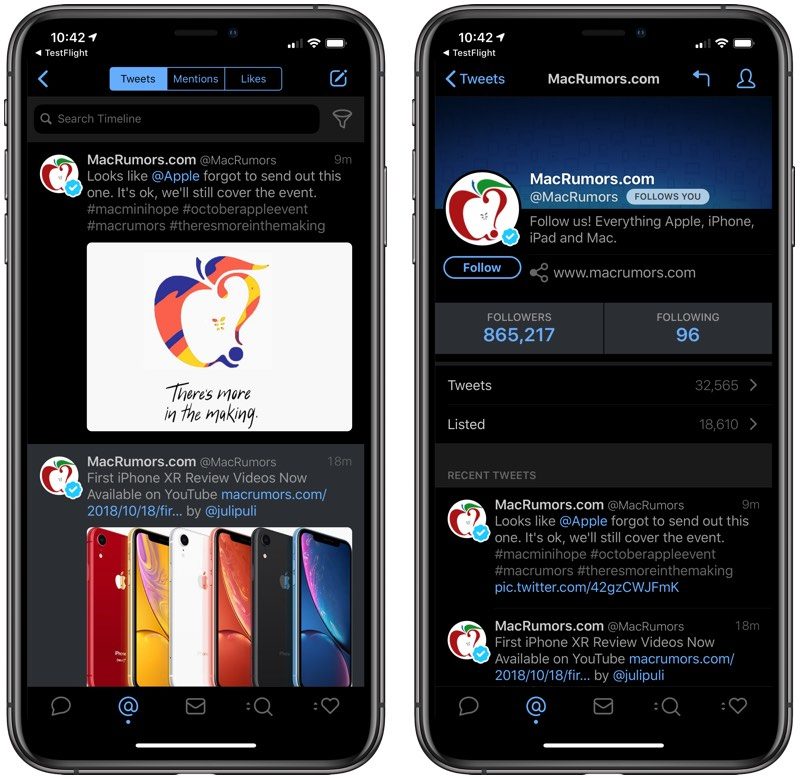
Built-in support for GIF service GIPHY adds a new GIF button to the compose window for quickly searching for and then adding a GIF to a tweet. Descriptions can be added to an image when creating a tweet, and Tapbots has added haptic feedback support.

Full release notes for the update are below:
– GIF support in compose view (Powered by Giphy).
– Redesigned profiles.
– Redesigned tweet status details.
– New iconography and app icon.
– Optimized dark theme for OLED displays.
– Support for haptic feedback.
– Auto video playback in the timeline (which can be disabled in the settings).
– Ability to add descriptions to images when composing.
Tweetbot can be downloaded from the App Store for $4.99. The new update is free for existing users. [Direct Link]
Tag: Tweetbot
Discuss this article in our forums
 AIVAnet