


Join us for a special live video version of the #ACPodcast on Oct 18 @ 11am
We’ll be live on October 18 at 8am PT / 11am ET / 4pm BST
The Android Central Podcast began in March 2010, long before Android was a household name. Back then, the site was run by a ragtag group of bloggers eager to tell the world about this incredible new mobile operating system, in an environment dominated by Motorola, HTC, BlackBerry and Apple. Things have changed a lot since then, and the crew that made up the first couple hundred episodes has long since dispersed. Well, save for a couple.
To celebrate 400 episodes of the best darn Android podcast in the world, we thought we’d go old school one last time — with a live video podcast hosted by the OG himself, Phil Nickinson.
Join us on October 18 at 8am PT / 11am ET / 4pm BST for an hour of classic #ACPodcast hijinks, featuring the original lineup of Phil Nickinson, Alex Dobie, Andrew Martonik, Russell Holly, and Jerry Hildenbrand. Plus a few special guests sprinkled throughout the hour.

Check back this weekend when the actual #ACPodcast400 launches with some more special content and a look back at the last couple of weeks of tech news.
Thanks for all the support over the years — we appreciate you.
-The Android Central Podcast team
Johns Hopkins’ lab-grown human retina could lead to big insights
Scientists from Johns Hopkins University have successfully grown human retina tissue from scratch in a lab. The work could help with the development of new therapeutics related to eye diseases. These lab-grown retinal cells won’t be used for transplants, however. Instead, they are being used by researchers to gain a better understanding of the way in which the color-detecting cells in the eye function.
“We believe that there are hundreds of different cell types in the human retina,” Robert Johnston, an assistant professor in the Department of Biology at Johns Hopkins, told Digital Trends. “What I wanted to do was to try to figure out more about the color-detecting cone cells.”
The retinas were grown from stem cells called retinal organoids. Growing organoids in a Petri dish in this way means that you do not have to directly study humans, and instead focus on model systems which function in the same way. Nonetheless, the growth process took place on the same timescale as human fetal development, meaning that anything that went wrong could have cost the researchers up to a year of patient waiting.
A day 361 organoid at 200x magnification. Johns Hopkins University
During the growth process, the retina’s blue-detecting cells were the first to grow. These were followed by the red-detecting cells, and finally the green-detecting ones. The researchers discovered that the release of thyroid hormone dictates whether cells become blue, red, or green detectors. The levels of this hormone are controlled by the eye tissue. Early on in the development of the retina, they hypothesize that thyroid hormone levels are low, since this is when blue cells are created. Later on, it gets higher to make the red and green cells. As a result, the team believes that children who are born with decreased thyroid hormone may be more prone to develop color blindness.
The work demonstrated that it is possible, through CRISPR gene editing, to make only blue or only red and green cells. The researchers hope to use this knowledge in the future to develop therapeutic applications that involve these color-detecting cells. In particular, they aim to use the scientific and technological breakthrough to help treat macular degeneration, the leading cause of vision loss.
A paper describing the research was recently published in the journal Science.
Editors’ Recommendations
- No, blue light from your cell phone won’t make you blind
- A new way to ‘freeze’ water could help transform organ preservation
- This CO2-sucking rock takes eons to form naturally. Now we can grow it in weeks
- The best movies on Netflix right now (October 2018)
- ‘Rogue medicine in a bathtub’: 4 experts on the vice and virtue of pharma hacking
How easy is it to set up LIFX with Google Home?

LIFX has a great app for controlling its smart bulbs, but turning on the lights and changing their colors is even easier with Google Assistant. Once connected, you’ll be able to use your voice to control your LIFX lights from your phone or Google Home — and don’t worry, setup is quick and easy.
Our top picks
- The best bulb: LIFX A19 ($60)
- The cheapest assistant: Google Home Mini ($49)
The Guide
First, connect your lights to LIFX
Download and launch the LIFX app.
Tap the plus button in the top right corner of the screen.
Tap Connect Light.

Tap your LIFX bulb in the list.
Enter your Wi-Fi network and password.
Wait for your bulb to connect, then name it and rejoice!
With your light bulb set up and connected to your LIFX account, it’s time to hop over to the Google Home app to finish the setup.
Linking LIFX to your Google account
Open the Google Home app.
Tap the Add button under your home group.
Tap Set up device.

Under Works with Google, tap Have something already set up?
Find and tap LIFX in the list of supported services.
Sign into your LIFX account.
Authorize Google to access LIFX.
Assign your bulb(s) to a room.

That’s it! With LIFX connected to your Google account, you should see your bulbs within the Google Home app. From here, you can tap the lightbulbs to toggle them on or off, or use Google Assistant to do more advanced tasks like changing the bulbs to specific colors.
Our top equipment picks
You don’t need a ton of hardware to make this all work — just a LIFX bulb and your favorite Google Assistant-powered device. Most people will be best suited with a Google Home Mini, the cheapest speaker in Google’s lineup, making it relatively affordable to set up multiple Google Homes around the house.
All you need to get smart, voice-controlled lighting is a LIFX bulb and a Google Assistant-powered speaker. We recommend the A19 bulb and the Google Home Mini, but there are plenty of other options. LIFX offers other lights like the BR30, which offers the exact same features in a floodlight form factor, and the LIFX Plus, which adds infrared lighting to the mix for augmenting night vision security cameras. Likewise, the Google Home, Home Max, and Home Hub all offer the same voice control as the Home Mini, but with larger, better-sounding speakers.
Smart lighting
LIFX A19

$60 at Amazon
The universal smart bulb
The LIFX A19 bulb fits into almost any standard lighting fixture and provides wireless control and millions of colors to choose from. You can buy a single bulb or buy in bulk to save money and light multiple rooms.
Smart assistant
Google Home Mini

$49 at Google
Google Assistant in a compact package
The Google Home Mini is a small Assistant-powered speaker that allows you to check the weather, play music, and of course, control your smart home. It won’t beat out Google’s larger speakers, but it still sounds surprisingly good for its size. It’s small enough to fit onto most shelves and can even be mounted to the wall with third-party accessories.
You can pre-load Red Dead Redemption 2 starting Friday, October 19

Rockstar’s near-guaranteed hit Red Dead Redemption 2 is preparing to hit Xbox and PlayStation servers everywhere this Friday to get you ready for the big launch day.
Red Dead Redemption 2 launches on October 26, 2018, and is available now for pre-order starting at $59.99. The game world is reportedly massive, with huge 4K assets to boot, which will put some serious pressure on your downloads and HDD storage space. To help you prepare, Rockstar will allow players across Xbox One and PlayStation 4 to begin pre-loading the game this Friday, at 12AM ET.
Additionally, Rockstar will drop the launch trailer for the game tomorrow at 10AM, which we’ll slip in here once it goes live.
Red Dead Redemption 2 is set at the dawn of the industrial age in a fictional reimagining of the Wild West. The game is a prequel to the original Red Dead Redemption, with character Dutch Van der Linde and John Marston both returning from the previous game.
Early previews of the game speak of an open world with unprecedented detail and interactivity, which, like Grand Theft Auto V before it, could redefine the very idea of “open world” once it launches. We’ll have to wait and see.
If you’ve already made up your mind, you can pre-order Red Dead Redemption 2 now at both Amazon and the PlayStation Store starting at $59.99, ready for launch on October 26, 2018.
See at Amazon
See at PlayStation Store
Here’s everything you need to know about the Huawei Mate 20 series
Huawei’s Mate family is bigger than ever this year.

Following up on last year’s Mate 10 series, Huawei’s cranking things up to, well, 20, with its all-new Huawei Mate 20 family. There are a total of four phones in this year’s lineup, but the two you’ll care about the most are the Mate 20 and Mate 20 Pro.
We’ve got a lot to dive into with this guide, so without further ado, here’s everything you need to know about the Huawei Mate 20 series!
Check out our hands-on coverage
As mentioned above, the Mate 20 and Mate 20 Pro are the biggest and most impressive handsets of this entire lineup. As such, we spent a good deal of time with both phones to get an idea for how they work and feel ahead of our full review.
The Mate 20 features an extremely small waterdrop-style notch with great specs across the board, but the real star of the show is the Mate 20 Pro. Its triple rear camera package is one of the most capable we’ve ever seen, it’s using Huawei’s own take on Face ID, and the display glass is curved over the sides to mimic something you’d find on a Samsung Galaxy or Note phone.
We need to reserve any final judgment for the final review, but right now, things are looking mighty good for Huawei.
Huawei Mate 20 + Mate 20 Pro hands-on preview: The phones that do everything
Here are the Mate 20 + Mate 20 Pro specs
Speaking of specs, both the Mate 20 and Mate 20 Pro have plenty of these to dive into.
Want a fast processor? The Kirin 980 is a best. Need lots of RAM? How’s 6GB sound?
Check out the full rundown here 👇
Huawei Mate 20 + Mate 20 Pro specifications
The Mate 20 Lite is the most affordable of the bunch
If you don’t want to spend a ton of cash on a new phone but still want the Huawei experience, the Mate 20 Lite should be at the very top of your radar.
Announced in late August during IFA 2018, the Huawei Mate 20 Lite comes equipped with a 6.3-inch Full HD display, Kirin 710 processor, dual 20MP + 2MP rear cameras, and a pretty solid 3,750 mAh battery.
The phone isn’t quite as impressive as what you’ll find with the Mate 20 Pro, but with a starting price of just £379, it offers a tremendous amount of value.
Huawei Mate 20 Lite launches in the UK: Kirin 710, quad cameras, big battery
And then there’s the ginormous Mate 20 X

Among all of the Mate 20 phones, perhaps the most eye-catching is the Mate 20 X.
This phone came as a complete surprise during Huawei’s announcement event for the Mate 20 and Mate 20 Pro, and its biggest standout feature is easily its ginormous 7.2-inch display.
The Mate 20 X also has the powerful Kirin 980 CPU, a ridiculous 5,000 mAh battery (the Note 9 has a 4,000 mAh pack, for comparison), and can be used with an optional gaming grip to essentially turn it into an Android-powered Nintendo Switch. This thing’s crazy.
Huawei announces the Mate 20 X — a phone with a 7.2-inch OLED display
The Mate 20 Pro’s camera package is insane

A big focus for the Mate 20 and Mate 20 Pro are the cameras, and for good reason. Both handsets have three rear cameras, but the combo on the Mate 20 Pro is what really has our attention.
The main camera is a wide-angle 40MP sensor with an 1/1.8 aperture. This is joined by a 3x telephoto 8MP camera, and unlike the P20 Pro, the Mate 20 Pro ditches a monochrome third sensor in favor of an ultra-wide 20MP one.
This combination of sensors should allow for some truly incredible photographs, potentially going on par or besting what you’ll find on the Google Pixel 3.
Huawei’s got two different notch styles

Although the Mate 20 Pro is the most powerful of all these phones, it actually has the biggest notch. Inside that notch is not only the front-facing camera, but also the earpiece and helpful sensors that allow Huawei’s take on Face ID to work.
The regular Mate 20 lacks those additional sensors, but as such, has a much smaller notch in the waterdrop style we’ve been seeing from some other OEMs.
The new colors are simply gorgeous

Huawei’s been dabbling with new and exciting colors for its past few smartphones, and with the Mate 20, that’s no different.
The Mate 20 and Mate 20 Pro are available in a total of four colors, including Black, Twilight, Midnight Blue, and Emerald. The Twilight color is the same one that was introduced on the P20 series earlier this year, but Midnight Blue and Emerald are brand-new and feature a subtle texture underneath the glass that helps reduce fingerprints and add a big of welcome grip.
A note on U.S. availability
If you follow the tech world, you’ll know that the U.S. government and Huawei aren’t on the best of terms. As such, you won’t see any of these phones sold on wireless carriers here in the States.
With that said, it’s likely Huawei will eventually bring the Mate 20 Pro to the country with a full U.S. warranty in an unlocked fashion for use on GSM carriers like AT&T and T-Mobile. Along with that, you should see international variants pop up at some point on Amazon for the Mate 20, Mate 20 Lite, and Mate 20 X.
Here’s when and where you can buy the phones
Interested in buying any of the new Mate 20 phones? Here’s what you need to know.
- Mate 20 Lite: Available for purchase now from Carphone Warehouse, Vodafone, and EE for £379.
- Mate 20 X: Available October 26 for €899.
- Mate 20: Pre-orders likely opening soon; starts at €899.
- Mate 20 Pro: Pre-orders likely opening soon; starts at €1049.
Updated October 17, 2018: Refreshed this guide now that all of the Mate 20 series has been revealed.
Mophie Launches New Powerstation USB-C 3XL for Charging Apple’s MacBooks
Mophie today announced the launch of the new Powerstation USB-C 3XL, which has been designed to charge Apple’s line of MacBook devices.
The fabric-covered Powerstation USB-C 3XL includes a 26,000mAh battery that Mophie says is able to provide a 12-inch MacBook with up to 18 hours of additional battery life. It is Mophie’s largest Powerstation to date.
Though designed to charge the MacBook at full speed, the 45W Powerstation USB-C 3XL can be used to provide a little additional juice for the more powerful MacBook Pro models. Battery life won’t go quite as far, though, nor will charging be as fast.
The Powerstation USB-C 3XL can also be used to fast charge an iPhone 8 or later with a USB-C to Lightning cable, and there is a built-in USB-A port for charging iOS devices and other accessories with a traditional USB-A to Lightning cable.
Mophie says the new Powerstation USB-C 3XL features Priority+ Charging that’s designed to send power to connected devices before charging the Powerstation when it’s plugged into a power source.
Mophie’s new Powerstation USB-C 3XL can be purchased from the Mophie website, from the Apple online store, or from Apple retail stores starting today, with the device priced at $199.95.
Tag: Mophie
Discuss this article in our forums
Poptel P10 Review: An ultra-rugged phone that’s just adequate
When you look at the lineup of smartphones, all you are likely to see are glass and metal sandwiches. These look absolutely phenomenal, but aren’t exactly the most rugged options on the market.
It seems that ruggedized phones have taken a back seat from most OEM’s. There are still a few options available, and the Poptel P10 is one of the latest to hit the scene.
Poptel P10 Specs
On the specs-side of things, there’s not really too much to write home about with the Poptel P10. We have a 5.5-inch display with a 2015-sequel resolution of 1280 x 640.
Under the hood, Poptel included the MediaTek Helio P23 chipset combined with 4GB of RAM and 64GB of storage. This is all powered by a respectable 3,600mAh battery that aims to get you through the day.
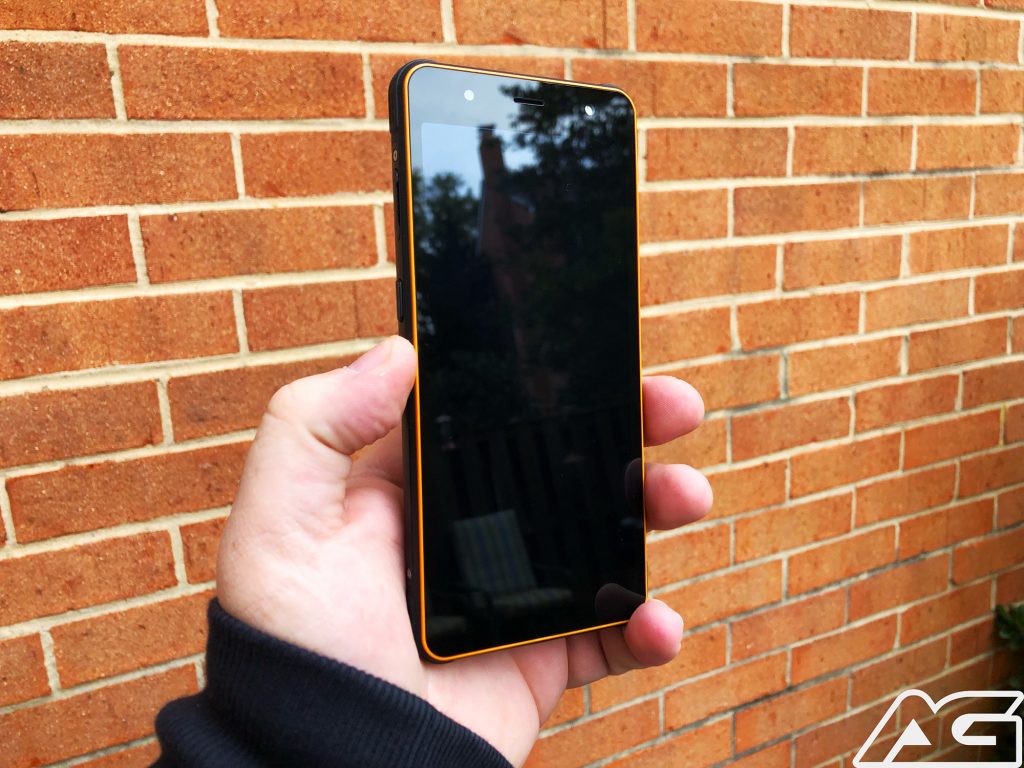
As for the cameras, again there isn’t much to write home about. There is a single 13MP sensor found on the back, along with an 8MP selfie camera. We’ll touch a bit more on these later, but they are pretty pedestrian for the budget market.
Some of the extras included is the rear-mounted fingerprint scanner, NFC, Bluetooth 4.1, and Android 8.1 Oreo. These are all things that we would expect to see from a budget handset, albeit a bit disappointing for the price tag.
Ruggedness
As you can tell from the spec sheet, the Poptel P10 isn’t really designed for spec-heads. Instead, it’s designed to be practically indestructible, regardless of what you throw at it.
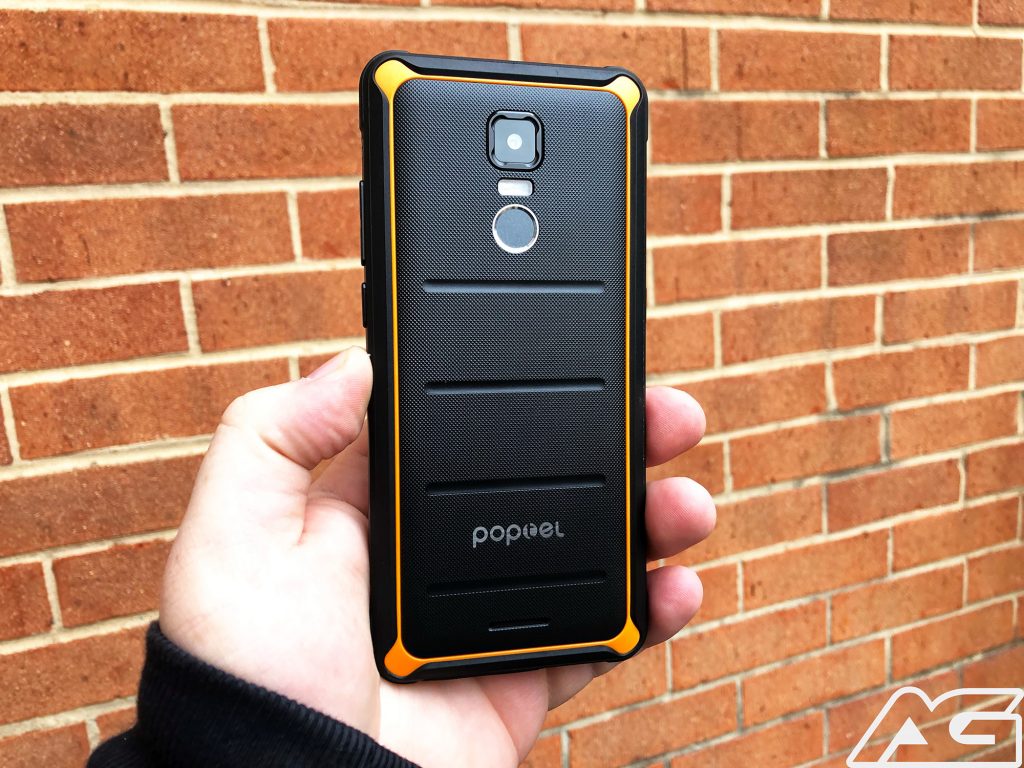
The P10 is IP68-rated, which means that the handset is waterproof in up to about 4 feet of water for half an hour. This also means that it is resistant to dust, sand, and just about anything else that would ruin those precious flagships.
In our testing, we had some accidental drops with the P10 and you can’t even tell. The rugged body provides shock-resistance and we didn’t even end up scratching the screen at all. That point alone sold me on someone picking up the device for a little one who needs a smartphone.
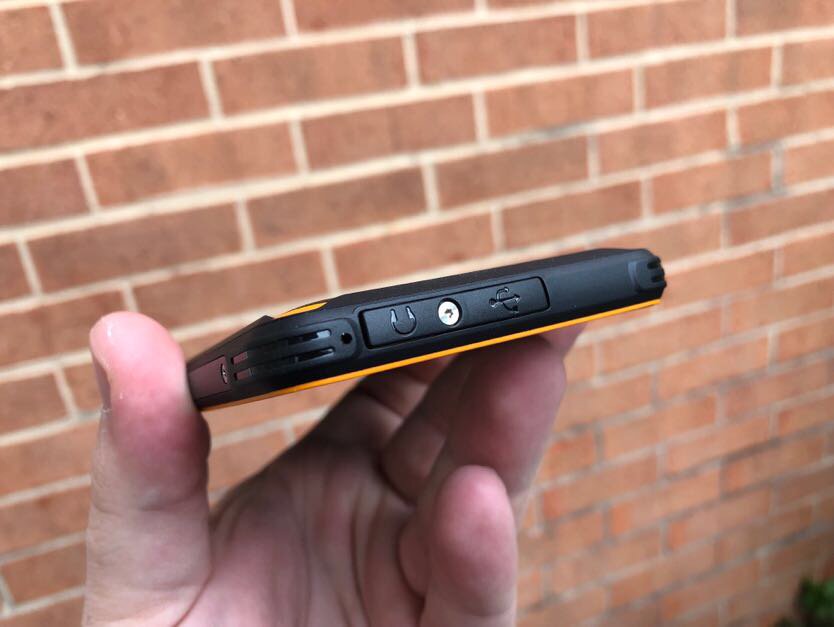
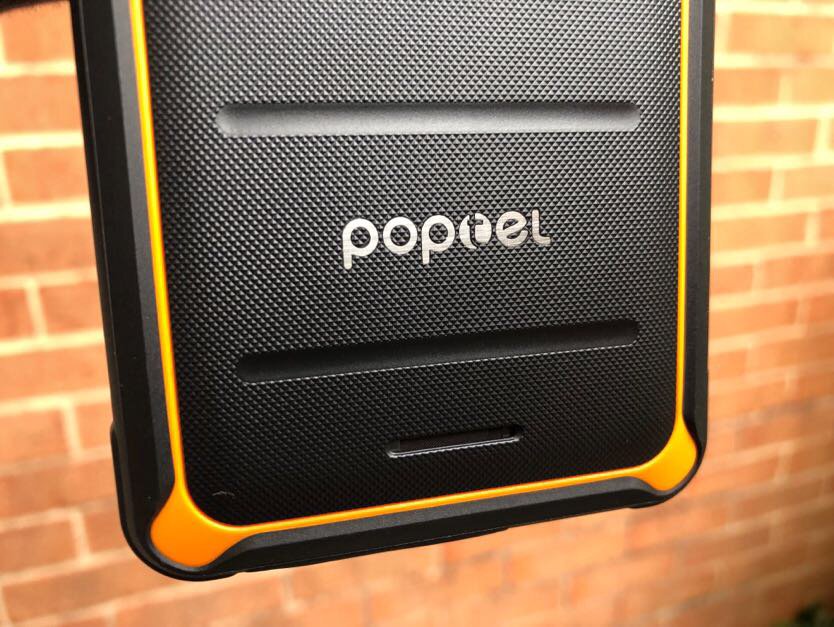
Aside from the frame, the body of the handset is also rugged, and sports an interesting texture. This allows for the phone to actually sit nicely in the hand, without feeling like it will slip out at any time.
On another note, it was pretty neat to see the different Torx screws placed around the device. These are not to be unscrewed or tinkered with, but added a nice touch that I didn’t think I would care about.
Performance
Now, it’s all fine and dandy that the P10 can withstand the elements, but how does it perform. In short, surprisingly well. I was heading into this review expecting lagginess and just an overall bad experience.
Removing the “flagship” mindset was tough at first, but once I did that, the P10 was impressive. Sure, we’re not getting Stock Android, but instead, a skinned version from Poptel.
This is adequate and doesn’t leave a bad taste in my mouth, but it’s not a good one either. Regardless, we have seen worse versions of skinned Android on devices that are priced much higher.
You will begin to experience some lag when trying to do any type of intense gaming, but that’s to be expected. If you just want to play some solitaire or other non-graphic-intensive games, then you’ll be just fine. Just don’t expect to be able to play Fortnite on the go with the P10.
On the battery side of things, we would have liked to see more. Sure, the LCD panel doesn’t draw a lot of power, but we didn’t see as much battery life as we expected. This may have something to do with power consumption from the Helio P23, but we would have liked to see Poptel push the limits with a bigger battery.
Finally, it’s important to make note that the P10 will only work GSM networks. So, if you’re on Verizon or Sprint, you’ll be left out to dry.
Camera
I almost skipped this section because of how disappointing it is. But it wouldn’t be a proper AndroidGuys review without at least touching on it.
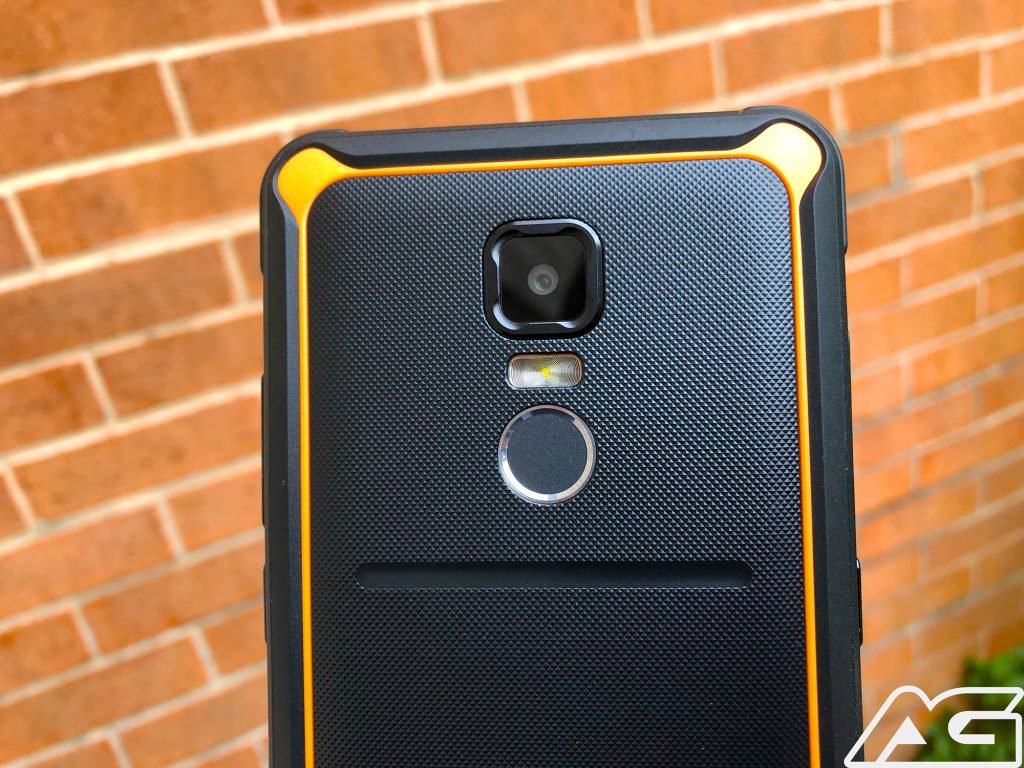
The cameras will do exactly what you think – Take potato pictures. If you need a work phone that takes pictures of various pieces of equipment, then it’ll work just fine.
However, if you need those high-quality pictures for your job, then you might want to look elsewhere. The P10 will get the job done (see the recurring theme?), but there are definitely noticeable sacrifices.
The camera software itself is actually refreshing to see, as there’s not much going on here. You are greeted with the shutter button and a few different modes, but there’s nothing super-crazy or insane.
Conclusion
All-in-all, the Poptel P10 is just an adequate smartphone with a pretty sweet rugged design. If you need a spare work phone that is able to withstand the elements while providing access to calls, messages, or emails, then you’ve come to the right place. If you are expecting an experience on par with the Moto G lineup, then you might want to take a step back.
Pricing for the Poptel P10 starts at $219.99 and is available in Black, Orange, Navy Blue, Green, and Gray. Currently, the handset is available from our friends over at GearBest and AliExpress and you can get one now.
Let us know what you think about the Poptel P10 and if you will be picking one up!
Healthy mice born from two genetic mothers using stem cells, gene editing
Leyun Wang
Healthy mice have been born with two genetic mothers and went on to bear healthy offspring of their own, according to a recent paper published by researchers at the Chinese Academy of Sciences. By using stem cells and gene editing, the researchers suggest that certain hurdles to same-sex parents bearing mammal offspring could be overcome. The research could pave the way for more advanced breeding methods in other mammals.
According to the researchers, the main motivation for their study was to examine why mammals — unlike reptiles, amphibians, and fish — can only reliably produce young with genetic parents from both genders.
“”We were interested in the question of why mammals can only undergo sexual reproduction,” Qi Zhou, a developmental biologist at the Chinese Academy of Sciences and senior author of the recent paper, said. “We have made several findings in the past by combining reproduction and regeneration, so we tried to find out whether more normal mice with two female parents, or even mice with two male parents, could be produced using haploid embryonic stem cells with gene deletions.”
Mammalian offspring that don’t get genetic material from both male and female parents often die or experience abnormal development, due to a mechanism called genome imprinting. That’s not the case for other animals such as reptiles, fish, and amphibians. Scientists have previously been able to create mice with two genetic mothers (bimaternal) by deleting certain genetic features, but those mice proved to not be viable, according to Zhou.
In the recent study, Zhou and his colleagues used stem cells that contained half the normal number of chromosomes, along with DNA from just one parent. They used more than 200 embryos to create 29 live mice, which they said were free from defects and grew to have babies of their own.
Using a similar but more complicated technique, the researchers also produced 12 mice with two genetic fathers, which only survived for 48 hours after birth. The researchers note that there are challenges in translating this work to other mammals but hope to expand their technique to more animals in the future.
“This research shows us what’s possible,” Wei Li, another of the paper’s senior authors, said. “We saw that the defects in bimaternal mice can be eliminated and that bipaternal reproduction barriers in mammals can also be crossed through imprinting modification. We also revealed some of the most important imprinted regions that hinder the development of mice with same-sex parents, which are also interesting for studying genomic imprinting and animal cloning.”
A paper detailing the study was published in the journal Cell Stem Cell.
Huawei thinks its Mate 20 X is better than the Nintendo Switch
Huawei
Nintendo dominated the portable gaming market for many, many years. Time and time again, companies have tried to come out with products that rival Nintendo’s handheld devices. While some competing products have succeeded (Sony PSP, for instance), none have been able to knock Nintendo off its throne. Chinese telecommunications company Huawei thinks it has a Nintendo Switch kingslayer in the Huawei Mate 20 X, a gaming phone that was revealed during a Huawei event.
During the surprise reveal, Huawei’s president made a rather bold proclamation, calling the Mate 20 X “the best portable gaming machine.” He proceeded to show the Mate 20 X and the Switch side by side to explain. You can watch the reveal event here (go to the 1 hour, 53 minute, 20 second mark to see and hear the comparison).
The Mate 20 X has a 7.2 inch OLED screen with 1080p resolution. That is better than the 6.2-inch 720p LCD screen the Switch boasts. The phone also has 6.67 hours of battery life. Huawei claimed the Switch only had 3.03 hours of battery life, which is mostly true for intensive games, but the Switch can get in the five-to-six-hour range when playing less elaborate games. The Mate 20 X also has an attachable gamepad (sold separately) that has a thumbstick and D-pad but no face buttons.
Based on the specs listed on Huawei’s site, the Mate 20 X is indeed more powerful than the average smartphone. Additionally, from a surface-level comparison, it has better specs than the Switch.
There are obvious downsides to the Mate 20 X though. First, its astronomical cost. It will go for just north of $1,000, which means it’s more than 300 percent more expensive than the $300 Switch. Of course, you also have to pay your monthly bill for text, calls, and data usage with the Mate 20 X.
Smartphones are inherently more expensive than dedicated gaming devices like the Switch. That’s a given, really. The real question here is the software. The Mate 20 X is an Android device, which means Android gaming. While there is no denying mobile games have evolved over the years to feature some truly great experiences, the potential library simply doesn’t compare to the first- and third-party options available on Switch.
Huawei’s strong statement about having the “best portable gaming machine” is naturally a marketing tactic, but the Switch should be safe here. Still, it will be interesting to see how the Mate 20 X performs. Smartphones specifically tailored toward gamers could become an actual threat down the line, provided that software support improves and prices drop.
Editors’ Recommendations
- Huawei Mate 20, Pro, and X: Everything you need to know
- Huawei Mate 20 hands-on review
- Huawei Mate 20 Lite hands-on review
- The Mate X folding ebike carries a 55-mile range with an affordable price tag
- Huawei Mate 20 Pro hands-on review
These are the best LG V40 ThinQ cases to stop unsightly damage
Julian Chokkattu/Digital Trends
There’s never been a better time to upgrade to one of LG’s phones. The new LG V40 ThinQ has been revealed and it’s a powerful beast with five camera lenses, a huge 6.4-inch OLED display, and some really strong entertainment credentials. As a modern flagship phone, it’s also fully embraced the introduction of glass as a premium material and that means the V40 feels and looks great.
But as anyone who played ball games near a window knows, glass is fragile and no amount of PVA can make it look normal again after the worst happens. So instead of glumly staring at a network of spiderweb cracks where your beautiful glass back used to be, why not take steps to prevent that from happening? Here are some of the best LG V40 ThinQ cases to keep your phone safe.
Spigen Liquid Crystal ($20)
Protection doesn’t have to mean shutting your phone away from admiring eyes. The V40 is beautiful, and it’s rocking the latest mobile style trends — why wouldn’t you want to show that off? This case from Spigen is completely clear, so your V40’s design shines through. It’s made from flexible but durable TPU, and the soft surface should aid grip, while the shock-absorbent material should also provide great protection against bumps and minor drops. If you’re looking for a case that will take more punishment then you might want to look at some larger rugged cases, but if it’s just daily wear and tear you need to worry about, Spigen’s Liquid Crystal case is a great choice.
Buy it now from:
Spigen Amazon
Tech21 Evo Check ($40)
Style and protection don’t always go together, but Tech21’s Evo Check case bucks that trend, offering a clear case with a distinctive style, that is also extremely protective. It’s made from TPU and incorporates FlexShock, a material Tech21 claims enhances the protective qualities of a gel case immeasurably — to the point where the Evo Check case can allegedly cope with drops from up to 12 feet. It’s adorned with a series of check marks that sit over the clear case back, and add a new style and appeal to your phone. It’s also extremely thin, adding barely any additional weight or thickness. On the minus side, it’s expensive but if you can afford it, it’s a great case.
Buy it now from:
Tech21
Speck Presidio Grip ($45)
Looking for something a bit tougher? Speck is one of the biggest names in protection, and it has been providing quality cases for years — so it’s good to see the Presidio Grip for the LG V40 ThinQ. It’s made from a combination of TPU and polycarbonate (PC), and together they offer a fantastic blend of softer, shock-absorption backed up by a strong and rigid backbone. It’s not a bad looker either, with distinctive ridges that serve as great decoration as well as boosting grip. It also comes with raised outer edges that protect the screen, ports, and camera lenses from resting on surfaces. The only issue is that it’s expensive but if you want some great protection you need to fork out.
Buy it now from:
Cases.com
VRS Designs Damda Glide ($35)
Wallet cases have gone through an evolution in the last few years and the Damda Glide is a great blend of rugged protection with the utility of a wallet case. It’s a dual- layer case made from TPU and PC for a blend of shock-absorption and rigid strength, so it should provide great protection. It’s got a slight hump on the back, but that’s because of its backpack system — slide open the back cover and you will find room to stash a couple of credit cards or some spare cash. It’s a great case to grab when you don’t want to take your wallet or purse. Despite this additional backpack, it’s still not overly large, and we think it provides excellent value for money.
Buy it now from:
VRS Designs
Otterbox Defender ($60)
Alright, how about some serious protection? Otterbox is well-known for making solid protective cases and the Defender case for the V40 is no different. The Defender uses three layers of polycarbonate and silicone to keep your phone safe from the worst drops, bangs, and scrapes. Otterbox’s Drop+ Protection means the Defender case has been proofed against more than 24 different tests over 238 hours. There are even port covers to stop dust and other particles from entering your phone’s most vulnerable areas. It’s rather expensive, but if you need the best possible protection for your phone while out and about, then look no further.
Buy it now from:
Cases.com
Editors’ Recommendations
- The best LG G7 ThinQ cases
- The best Pixel 3 XL cases to keep your notch in one piece
- The best Google Pixel 2 XL cases and covers
- Best Samsung Galaxy Note 9 cases
- LG V40 ThinQ vs. LG G7 ThinQ: Which LG flagship is right for you?
 AIVAnet