


Cops bust $1 million Apple Store robbery ring in California
Apple’s home state of California is cracking down on thieves who enter the tech giant’s stores during opening hours and snatch as many devices as possible before running off.
This week cops arrested and charged 17 people who allegedly took part in a string of robberies at Apple Stores across 19 of the state’s counties, the SF Gate reports.
Losses to Apple have been put at $1 million, with thieves making off with iPhones, MacBooks, iPads, Apple Watches, and pretty much anything else they could grab from the display tables.
The issue has become so serious that California Attorney General Xavier Beccera felt compelled to issue a statement about it on Thursday, September 27.
“Organized retail thefts cost California business owners millions and expose them to copycat criminals,” Beccera said in the statement. “Ultimately, consumers pay the cost of this merchandise hijacking. We will continue our work with local law enforcement authorities to extinguish this mob mentality and prosecute these criminals to hold them accountable.”
The arrests are the result of an investigation involving numerous law enforcement agencies across California. The precise number of Apple Store robberies hasn’t been disclosed, but a local news outlet counted at least 21 in the last five months throughout the state, with some stores hit multiple times.
The thieves’ modus operandi is crude, to say the least. Wearing hoodies to hide their faces from security cameras and witnesses, they enter an Apple Store in a large group, yank the products from the display tables, and run off. Such heists are often over in a matter of seconds.
Staff and customers are usually reluctant to get involved, though in August several brave shoppers did step in during a robbery by three people at an Apple Store in the city of Thousand Oaks, west of Los Angeles.
Two of the suspects were tackled to the ground where they were held till the police arrived. The third was picked up later by cops, who also arrested two more suspects inside what was reportedly a getaway car, bringing the total number of detentions in that particular incident to five.
Apple products are often the target of thieves as they can fetch high prices on the black market. But some recent robberies have been far more audacious than simply slinging on a hoodie and strolling into an Apple Store. Take this Mission Impossible-style raid that saw criminals rappel down on ropes to nab iPhones from a store, or this remarkably bold effort that saw a robber jump onto a truck as it sped along a highway before grabbing the Apple gear from the back without the driver even noticing.
Editors’ Recommendations
- Apple Store shoppers in California tackle suspects, thwart robbery
- A few seconds cost an Apple store $27,000 worth of stolen merchandise
- 3D-printed gun advocate extradited to Texas to face sex-assault charges
- Department of Justice asks judge to force Facebook to decrypt Messenger
- Apple announces new policies to aid law enforcement worldwide
Nokia 7.1 Plus leaks show off a gorgeously shiny copper model
Andy Boxall/Digital Trends
These last two years have seen the serious return of Nokia to the smartphone world, with the release of several smartphones of note — including the Nokia 6.1, a phone we were happy to proclaim as one of the best budget smartphones of 2018.
2018 also saw the release of the Nokia 7 Plus, a midrange device with a respectable amount of power, a good camera suite, and a beautiful 6-inch screen. While we enjoyed using it, it ultimately fell short of greatness. But rumors abound of a new Nokia device taking up the “7” mantle, and it seems that all is to be revealed soon. Here’s everything we know about the Nokia 7.1 Plus.
Design and display
While the Nokia 7 Plus’s design was a little underwhelming, the display was anything but, and we highlighted that phone’s excellent display as one of the phone’s strongest points. It seems that Nokia is looking to shore up some of those weaknesses, while hopefully holding onto those strengths, as photos of the Nokia 7.1 Plus have been spotted ahead of an official release.
The photos, apparently taken at a restaurant, show a large phone with two vertically stacked camera lenses, accompanied by an underslung fingerprint sensor. The phone seems to come in at least two color variants — named as copper and silver by some sources — and the lighting in the surrounding area shows that the phones will have a glossy, shiny finish. The copper color looks particularly impressive, with the light causing a color shift along the body. If these are truly images of the Nokia 7.1 Plus, then this phone could be a very attractive midrange smartphone.
Earlier leaks show off the front of the device, but the renders seem split between a device with a notch and a device without. Nokia Power User seems set that the device with a notch will be the Nokia 7.1 Plus, while the notch-less device will be the Nokia 7.1 — a split between notched and notch-less reminiscent of the supposed Pixel 3 phones.
However, it’s important to note that the leaksters are heavily split on this, and the notched device could be a potential Nokia 9 flagship instead. More rumors say that the Nokia 7.1 Plus will sport a 5.9-inch LCD display with a 2160 x 1080 resolution.
Specs
The Nokia 7.1 Plus looks set to be getting some upgrades over the Nokia 7 Plus, with many rumors pointing at the Snapdragon 710 taking up residence in Nokia’s new midrange handset. If true, this could potentially point to strong performance in the Nokia 7.1 Plus, thanks to the premium midrange chip.
No other specs have been revealed at this time, but it’s reasonable to expect that the 7.1 Plus will not come with specs lower than the 7 Plus — so expect at least 64GB of onboard memory and 4GB of RAM.
Camera
According to whispers, Zeiss has returned to work with Nokia again, tuning the dual-camera setup on the rear of the Nokia 7.1 Plus. However, there have been few other details released. Even less is known about the front-facing camera, though it’s assumed that there is only one.
Release date and price
There’s been little word on a possible reveal or release date for the Nokia 7.1 Plus, though rumors from the start of September pointed at a late October/early November date. Expect the phone to come in at a similar price point to the Nokia 7 Plus’s 350 British pounds (around $465). Like its predecessor, there’s been no word of a U.S. release yet.
Editors’ Recommendations
- The Nokia X5 is a budget phone with a premium glass body and a notch
- Nokia 6.1 Plus: Everything we know
- Moto G6 vs Nokia 7 Plus vs Honor 7X camera shootout
- Nokia 6.1 has Android One, takes funky ‘Bothie’ pictures, and is yours for $270
- Nokia 9 rumors suggest a strong 2018 for the reinvigorated company
Exclusive: BMW will offer up to 25 electrified vehicles by 2025, 12 will be EVs
Previous
Next
1 of 25

BMW

BMW
BMW
BMW
BMW
BMW

BMW
BMW

BMW
BMW Vision iNext Concept Art BMW
BMW Vision iNext Concept Art BMW

BMW Vision iNext Concept Art BMW

BMW Vision iNext Concept Art BMW
BMW Vision iNext Concept Art BMW

BMW Vision iNext Concept Art BMW
BMW Vision iNext Concept Art BMW
BMW Vision iNext Concept Art BMW

BMW Vision iNext Concept Art BMW

BMW Vision iNext Concept Art BMW

BMW Vision iNext Concept Art BMW
BMW
BMW
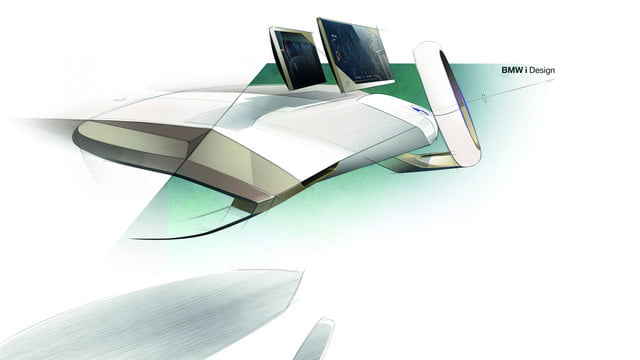
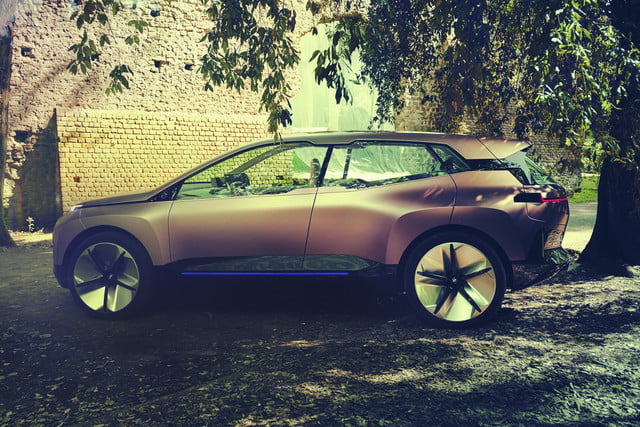
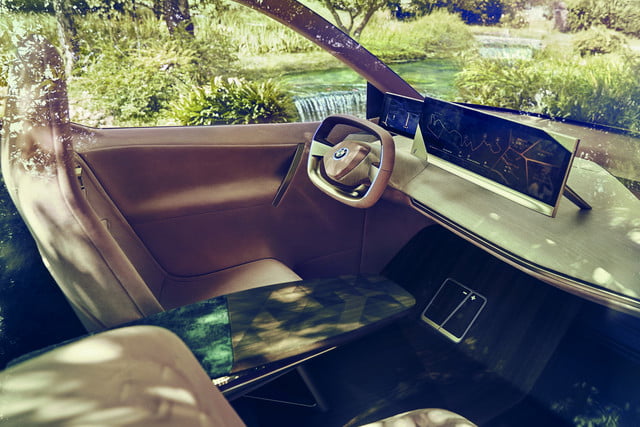
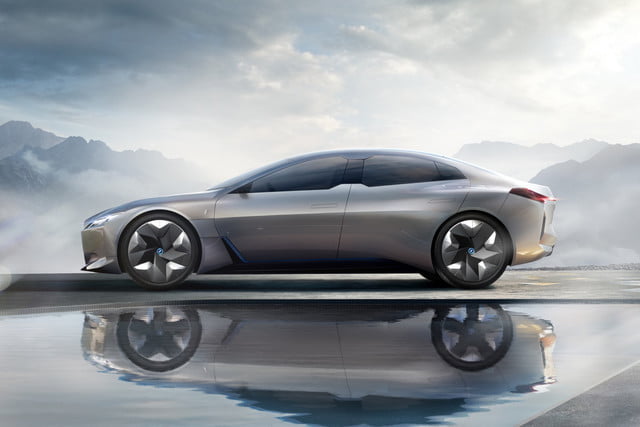
BMW is clearly on a march toward electrifying its entire lineup, doubling down particularly on its i brand, the company’s eco-friendly subdivision.
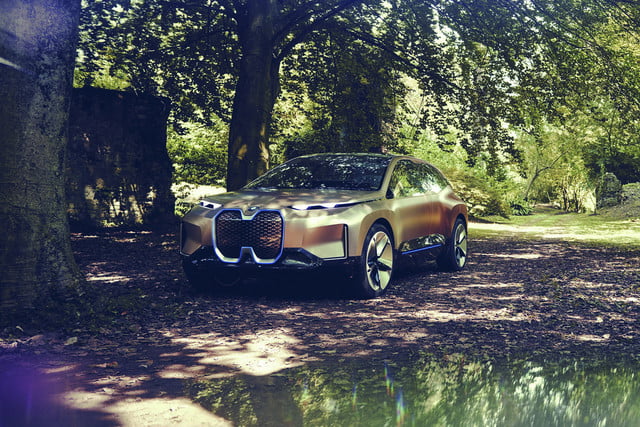
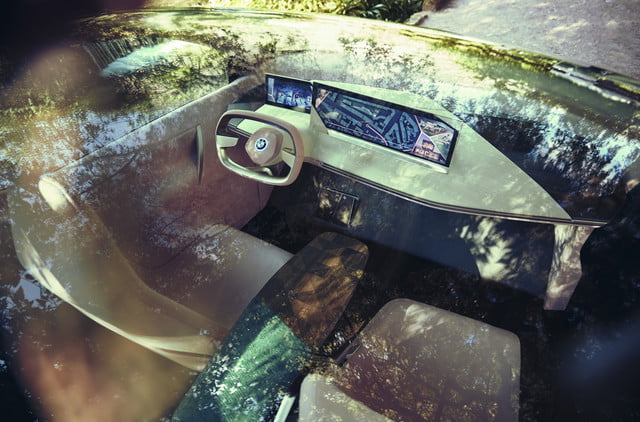
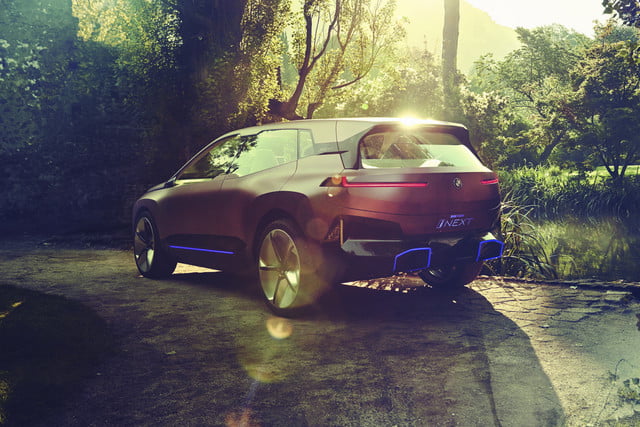
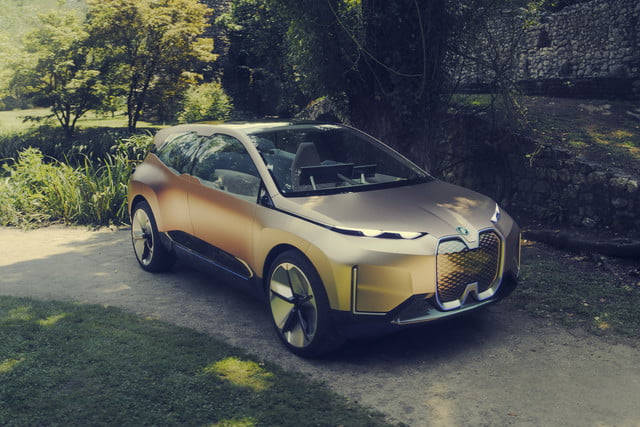
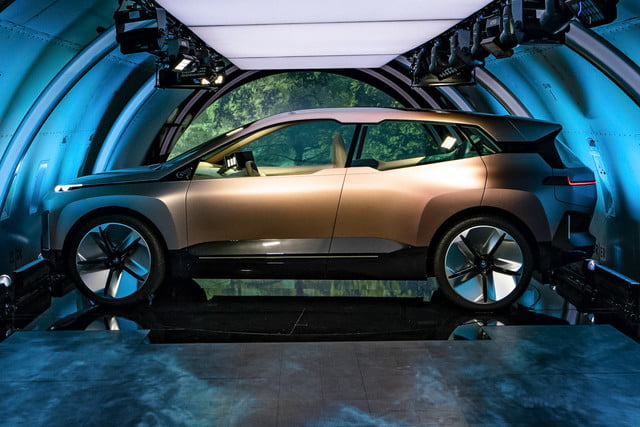
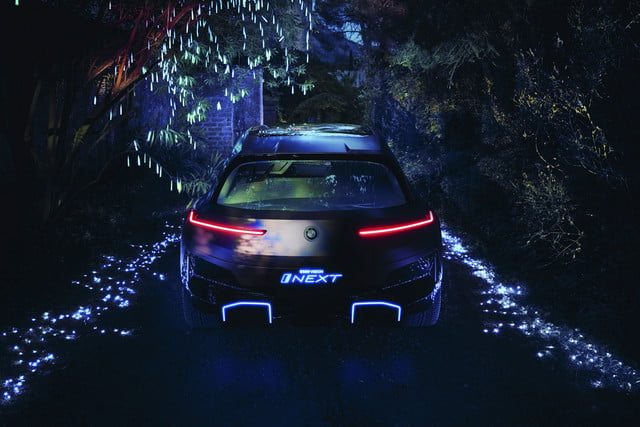
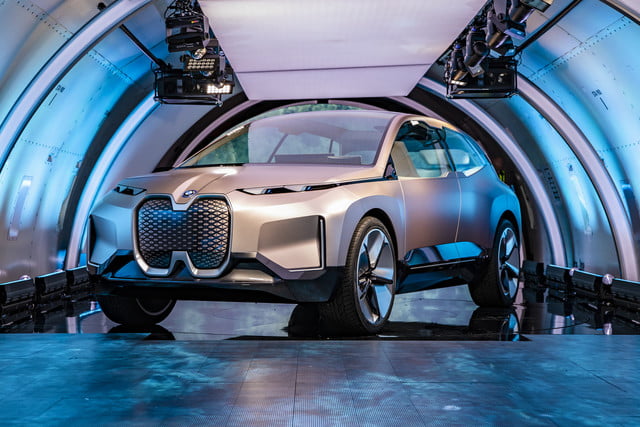
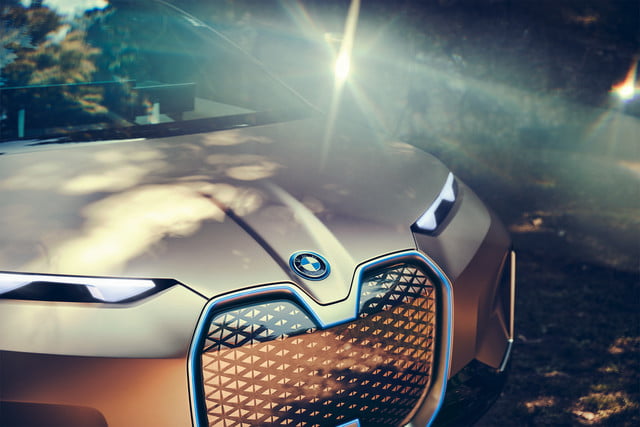
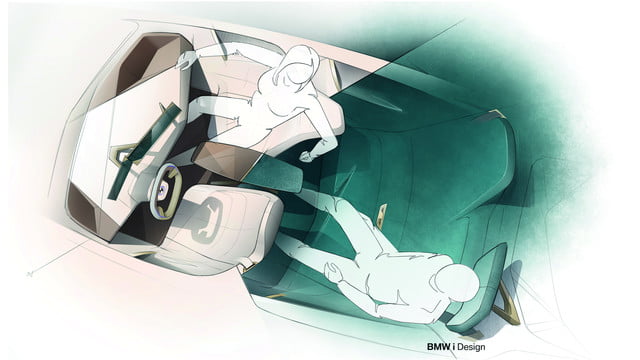
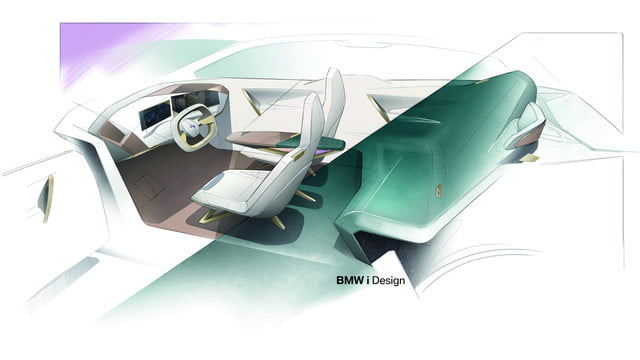
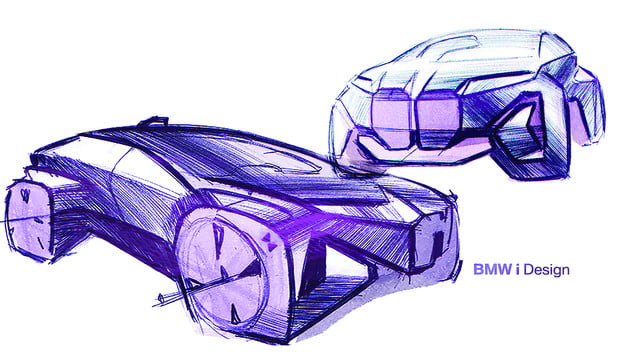
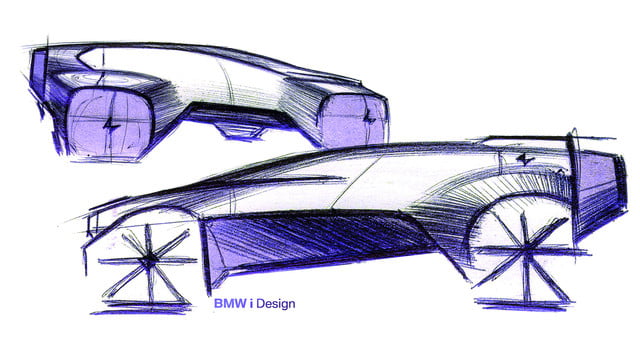
We were recently and vividly reminded of this with the Vision iNEXT Concept, which the company revealed not too long ago. Making a big spectacle of the occasion, BMW teamed up with Lufthansa Cargo to ship its one-off Vision iNEXT Concept to select cities in major markets around the world for journalists to get an up close and personal look. Earlier this month, we got an in-person look of the concept in New York.
Although BMW’s electrification initiative is quite clear, how many models the company plans to spawn out of this effort has been rather unclear. That was, until Klaus Frolich, BMW AG’s head of development, shed some light on the topic while introducing the iNEXT Concept to journalists in the belly of a Lufthansa Cargo Boeing 777F.
So far, BMW’s electrification efforts are yielding results, according to Frolich, who spoke of the brand’s recent success of selling more than 100,000 electrified vehicles to customers around the world.
Previous
Next
1 of 8
BMW i Vision Dynamics concept BMW USA
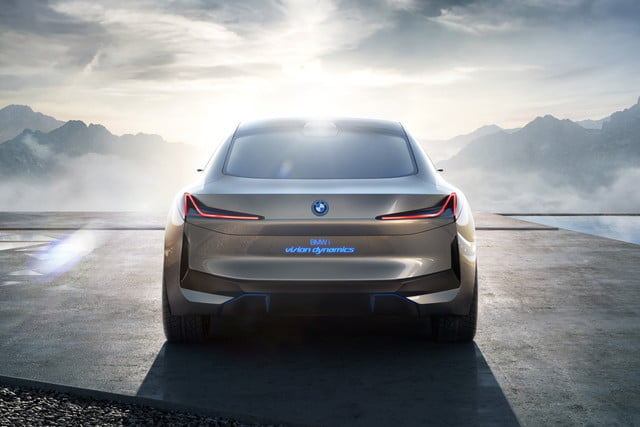
BMW i Vision Dynamics concept BMW USA

BMW i Vision Dynamics concept BMW USA

BMW i Vision Dynamics concept BMW USA
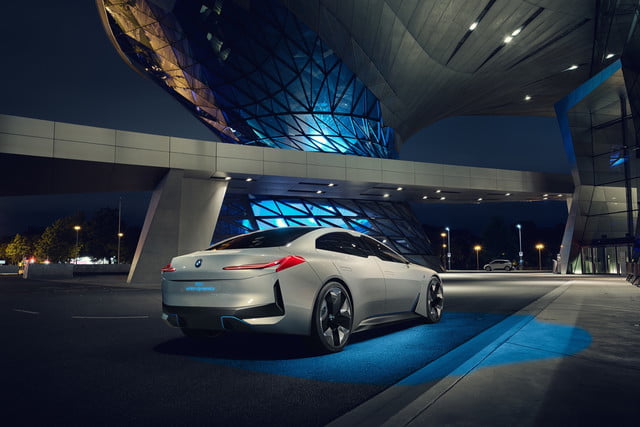
BMW i Vision Dynamics concept BMW USA

BMW i Vision Dynamics concept BMW USA
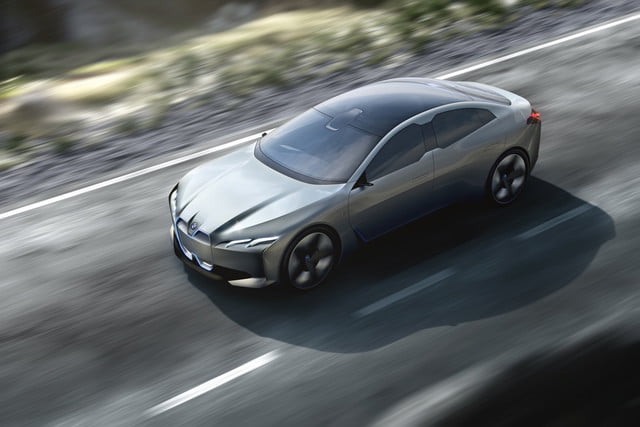
BMW i Vision Dynamics concept BMW USA
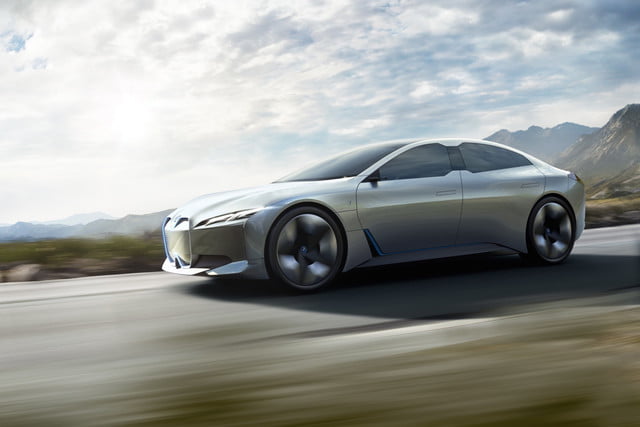
BMW i Vision Dynamics concept BMW USA
“You can see our initial efforts and investments are paying,” Frolich said. “In 2017, we sold already more than 100,000 electrified vehicles to customers. This year, it will be 140,000. As a result of the success of our strategy, now we are one of the leading providers of electrified vehicles worldwide.”
Despite the recent success however, the company isn’t showing any signs of slowing as Frolich finally shed some light on how many models we can expect from BMW’s electrification initiative.
“And, our model initiative is still speeding up,” he continued. “By 2025, we will offer 25 electrified vehicles, I have to say at least 12 of them will be fully electric. And we are just finishing up developing our fifth generation of our electric drivetrain and batteries.”
Frolich didn’t quite specify however what models will be electrified. But we do know the Vision iNEXT Concept is slated to make it to production in some form, which already accounts for one.
In addition to the new, fifth-generation electric drivetrain and battery technology, there’s a new platform, which will essentially underpin the company’s entire electric vehicle lineup. Further, the plan also includes offering hybrid and all-electric versions of some of its core models, providing buyers with flexible choices rather than confining the electric powertrains just to its i cars.
Editors’ Recommendations
- BMW teases its Vision iNEXT Concept ahead of global debut next week
- BMW M joins the hybrid gas-electric movement with its future cars
- The next-gen Volkswagen Beetle will morph into an electric four-door vehicle
- BMW USA’s stance on diesels still up in the air despite discontinuation claims
- Ford gives a peek at rear-end of its new, all-electric Mustang-inspired performance SUV
Apple Wins Appeal in Wisconsin Patent Lawsuit
Back in July 2017, U.S. District Judge William Conley ordered Apple to pay $506 million to the University of Wisconsin’s Alumni Research Foundation for infringing on a patent related to computer processing technology in the company’s A7, A8, and A8X chips. Conley had added $272 million on top of an existing $234 million in damages that a jury ordered Apple to pay in 2015, around when the lawsuit originated.
Today, Reuters reports that Apple has managed to persuade a federal appeals court to throw out at least part of the lawsuit, namely the $234 million in damages.
According to the U.S. Federal Circuit Court of Appeals, no reasonable juror could have been able to find infringement based on the evidence that was presented in the liability phase of the trial in 2015, leading to its decision. It’s unclear why the original $234 million damages award has been appealed, but without any mention of the $272 million extension being thrown out.
Apple Inc persuaded a federal appeals court on Friday to throw out a $234 million damages award in favor of the University of Wisconsin’s patent licensing arm for infringing the school’s patent on computer processing technology.
[The U.S. Federal Circuit Court of Appeals] said Apple deserved judgment as a matter of law in the case brought by the Wisconsin Alumni Research Foundation.
During the trial, the Wisconsin Alumni Research Foundation originally asked for damages worth $862 million, but lowered the request to around $400 million. The patent in question, titled “Table based data speculation circuit for parallel processing computer,” was originally granted in 1998 and covers a method for improving processor efficiency. It lists several current and former University of Wisconsin researchers as inventors.
Tags: patent, Patent lawsuits
Discuss this article in our forums
Front Camera Lens on Future iPhones Could Be Invisible With Special ‘Pure Black’ Coating
iPhone camera lens supplier Largan Precision is developing a special black coating for front-facing smartphone camera lenses, according to Jeff Pu, an analyst at Chinese investment firm GF Securities.
Pu’s research note, shared by Taiwanese publications Economic Daily News and MoneyDJ, claims that one or two smartphone makers could adopt the technology as early as 2020. Given that Largan already has a relationship with Apple, it is speculated that the special coating could be applied to future iPhones.
A translated version of the Economic Daily News report says the special coating would allow the front camera lens to “completely disappear.” A translation of the MoneyDJ report says the coating will be “pure black,” eliminating the “small spots” like those visible in the notch on the iPhone X and newer.
The front camera lens already blends into the notch pretty well on iPhones, but it is visible from certain angles and lighting conditions. The special coating would presumably make the lens completely invisible to the eye.
Apple design chief Jony Ive has long dreamed of an iPhone that resembles a single sheet of glass, and hiding the front camera lens would be yet another step towards that goal, even if it sounds like an insignificant change. This is the first time we’ve heard this rumor, however, so treat it with some skepticism.
Tags: Jeff Pu, 2020 iPhones
Discuss this article in our forums
Quantum computers could break encryption, so it’s going quantum too
(in)Secure is a weekly column that dives into the rapidly escalating topic of cybersecurity.
Recent breakthroughs have changed the question of quantum computing’s arrival from one of “if” to “when.” They’ll be able to accomplish certain task at a pace hundred or thousands of times better than classical computers which, in turn, will let us pursue solutions to questions that can’t be solved with modern methods.
Modern encryption is one of those questions. Currently protected by prime numbers that classical computers can’t possibly solve before the heat death of the universe, encryption could be busted wide open by the power of quantum.
Luckily, it’s a double-edged sword. Quantum physics can also be used to make encryption better, protecting data against both current and future threats. To find out how it works, and whether it’s practical today, we spoke with John Prisco, CEO and President of Quantum Xchange, the first fiber quantum network available in the United States.
Digital Trends: What makes quantum computers good at cracking conventional encryption?
John Prisco, President and CEO of Quantum Xchange: Because the quantum computer is not using bits that are either one or zero. In fact, they’re using photons that can be simultaneously ones and zeros. It’s just a massively parallel processing capability that a primary computer that we use today can’t do, because bits can only exist in either a one or zero state.
“The real goal is a quantum prime computer. And that’s one in which you could crack the key in 10 seconds.”
So, you know you always hear the comment about, “How fast the computer could read all the books and the stuff in the Library of Congress.” Well, that’s talked about in terms of reading each book serially. The way a quantum computer would read the books in the Library of Congress, would be to read all of them simultaneously.
With the latest RSA 2048 cypher, using conventional computers, it would take a billion billion years to brute force break that key. A quantum computer could do it in about 10 seconds.
When do you think quantum computers will become sophisticated enough to be a real threat to encryption?
There’s a concept called quantum supremacy. That’s not very interesting, even though it sounds like it is. It means when a quantum computer is more powerful than any conventional electronic computer. Google thought that they would have a quantum supremacy computer by the end of last year.
They say they are now going to have a quantum supremacy computer by the end of this year. So, when I talk about cracking RSA 2048 taking a billion billion years, a quantum supremacy computer might shorten that to 900 million billion years. That’s not such a great advance.
John Prisco, president and CEO of Quantum Xchange Quantum Xchange
The real goal is a quantum prime computer. And that’s one in which you could crack the key in 10 seconds. In terms of that, it’s considered to be about a 5 to 10-year event.
But I’m always quick to say that it’s almost irrelevant how long it’s going to take to get there. Nefarious actors are harvesting data all the time, and they’ll always do it, because it’s too easy to do. They’ll harvest data from the Office of Personnel Management the government, or the F-35 plans from Lockheed Martin. And they’ll sit on it until they have a quantum computer that can break the key and open the data.
” … You now have assurance that no one can unlock your data and read your data file.”
Let’s say you’re a Swiss bank, and you have a lot of customers who’d rather keep their identity private. So, you would really want to encrypt using quantum keys today, and not expose yourself to having their data harvested, and worry that somebody is going to have a quantum computer that can break it.
Quantum Xchange is built around the use of quantum keys. Can you explain how they work and that makes them harder to crack?
A quantum key is different than an RSA key in that it’s composed of photons. When you transmit the key from point A to Point B, the key goes along, and each photon we send along can be encoded with a one or zero.
If somebody tried to eavesdrop on that key, it turns out because of the Heisenberg Uncertainty Principle, that if anybody tries to eavesdrop on an optical particle like a proton, the quantum state changes and therefore the key no longer represents the key that will unlock the data.
Because you’re relying on a law of physics, which is as immutable as gravity, you now have assurance that no one can unlock your data and read your data file. The key can’t survive anybody touching it.
Your ‘trusted node’ system claims to solve range issues with quantum keys. Why is there a range issue, and how’ve you solved it?
One of the shortcomings of the quantum key distribution is that the best you can do is about 100 kilometers transmitting the key. That’s probably what has delayed the introduction of Quantum Key Distribution in the United States.
“For someone to break a quantum key, it requires extraordinary circumstances.”
What we’ve done is we’ve worked with Battelle Memorial Laboratories, and we’ve come up with a way to extend the distance a quantum key can travel. It can travel now an unlimited distance.
We’ve come up with a way to encode a quantum key within another quantum cage, and that allows us to keep transmitting multiple hundred kilometers at a time, and it doesn’t violate the uncertainty principle.
Quantum Xchange
Being able to get past this limitation has been critical to make this viable. It’s a big breakthrough, and it’s an enabler for this technology.
I noticed Quantum Xchange claims that it’s pioneering “unbreakable encryption.” How literally should we take that? Is this truly unbreakable, now and in the future?
When you make a bold claim like that you always have people that are going to challenge you, and cryptographers as a class of engineer, or scientist, are very good at challenging that comment.
“This isn’t technology that has sprung up overnight. It’s been running in Geneva for ten years … “
However, it does turn out that because we’re relying on a law of physics, that it is probably unbreakable. Now, is there a non-zero probability that somebody could break it? Yes. But we think it’s extremely unlikely. Literally, for someone to break a quantum key, it requires extraordinary circumstances.
Let’s say I send out a million photons, and you end up accepting 100,000 of them as being totally untampered. If you were a nefarious actor trying to intercept my quantum key, you’d have to guess correctly 900,000 times whether the photon was a one or zero.
Now mathematically, that’s doable. But in my world, and in the practical world, that’s impossible.
Is Quantum Xchange’s solution focused on deterring the threat of quantum computers only, or is it something that can be used for many scenarios?
The generic use case is to safeguard any critical information. It’s being used today in Geneva, by their government management of the elections, to transmit polling data using quantum key protection. It’s absolutely geared towards preventing hackers from stealing data. If quantum computers are the offense, quantum encryption is the defense.
This isn’t technology that has sprung up overnight. It’s been running in Geneva for ten years, it’s been running in Battelle’s labs for five years. We’re deploying it now in New York. This is equipment that works today, and it’s viable today.
Editors’ Recommendations
- Firefox Quantum review
- With Q#, Microsoft is throwing programmers the keys to quantum
- Microsoft provides free lessons for quantum computing basics
- The world’s first practical quantum computer has cash and a timeline
- Intel backs the U.S. government’s new bill for advancing quantum science
Overcast Podcast Player Gains New Siri Shortcuts and Apple Watch Complications
Overcast version 5.0.2 was released today, bringing additional Siri Shortcuts in iOS 12 and new Apple Watch complications to the popular third-party podcast player.
The new Apple Watch complications can be positioned on the central or corner positions of the Infograph watch face that features on Series 4 models, offering users another way to quickly launch the app from their wrist.
For fans of Siri Shortcuts, Overcast now supports three additional options. One lets you quickly enable or cancel the sleep timer, while the other two allow you to generate either standard or timestamped links for the podcast episode you’re currently listening to, making for easier sharing.
Elsewhere in this update, the Nitpicky Details menu includes an option to reduce the haptic level related to certain functions, and users now have more control over the Auto-Sync to Watch feature, with toggles available for playlists as well as individual episodes.
Lastly, this point update fixes a handful of bugs and crashes, and adds a one-tap preset for the previous interval to the sleep timer. Overcast 5.0.2 is available as a free ad-supported app for iPhone and iPad from the App Store. [Direct Link]
Tags: Overcast, Marco Arment
Discuss this article in our forums
The innovative Urmo hoverboard folds flat in just 2 seconds
Whether it’s an electric bike or a self-balancing electric scooter, one of the problems with new smart transportation technologies is that, as great as they are when you’re riding them, they can be difficult to store or carry when you’re not using them. That is a pain, regardless of if it’s due to your cramped apartment or because you want to use them to commute to and from work, but have to worry about the subway or storing them during the working day.
Fortunately, the makers of a new minimalist electric scooter “hoverboard” called Urmo have come up with a solution in the form of a clever folding design. When you’re riding it, it can deliver a good top speed of 9 mph, with a range of 12 miles. Decide to stow it, however, and it can fold flat it just a few short seconds.
“The folding mechanism is the key feature of the Urmo,” Felix Ballendat, co-founder of Urmo, told Digital Trends. “Just by lifting the handle, Urmo folds up automatically. This patent-pending mechanism is both simple and functional at the same time. The ingenuity is that the kinematic of the joints are designed in a way that there is no need of a locking mechanism when the vehicle is unfolded. To eliminate tolerances, we reduced the number of joints to a minimum and use premium materials such as carbon fiber and aluminum. Just two linkages underneath the vehicle assure the wheels are fixed upright when driving.”
Previous
Next
1 of 5


Development on the scooter started two-and-half years ago in a garage in Germany. Since then, four generations of the prototype have been built, and the team has expanded to include 10 people — including individuals who have worked for brands including Tesla, BMW, and Rimac, makers of the world’s first all-electric hypercar. The result is a stylish product, made of premium materials, but with an emphasis on convenience — from the large 14-inch wheels incapable of getting flat tires to the innovative folding mechanism to its impressively low weight of just 14 pounds. Steering is achieved either by leaning or using an optional handlebar.
The team plans to launch a crowdfunding campaign for the Urmo later this year, with prices starting at 999 euros ($1,164.) Should all go to plan, hopefully, our 2019 commute to the office should be a whole lot more satisfactory than our 2018 one.
Editors’ Recommendations
- Piaggio’s timeless Vespa gains connectivity as it goes electric
- This ebike has nearly twice the range of the Chevy Volt
- The Mate X folding ebike carries a 55-mile range with an affordable price tag
- Toyota’s 2nd-generation hydrogen fuel-cell semi truck in it for the short haul
- Georgia is paving the way for a high-tech, sustainable highway
SEC sues Tesla CEO Elon Musk for securities fraud
Tesla CEO Elon Musk’s tweeting about taking the company private, with “funding secured,” took investors and the company by surprise. On Thursday, September 27, the Securities and Exchange Commission (SEC) filed suit against Musk, charging him with securities fraud, according to court documents.
The SEC alleges that Musk made “false and misleading” statements on Twitter when he stated, “Am considering taking Tesla private at $400. Funding secured.”
Musk followed up the original tweet, saying “Shareholders could either to sell at 420 or hold shares & go private.”
Shareholders could either to sell at 420 or hold shares & go private
— Elon Musk (@elonmusk) August 7, 2018
The SEC also alleged Musk did not properly inform securities regulators of what were considered material events.
Musk stated later in the month that when he proposed the $420 per share price, he was confident the funding he referred to would materialize at that price after prior discussions with Saudi Arabia’s Public Invest Fund, according to CNBC.
The SEC’s complaint alleged:
Musk knew that he (1) had not agreed upon any terms for a going-private transaction with the Fund or any other funding source; (2) had no further substantive communications with representatives of the Fund beyond their 30 to 45 minute meeting on July 31; (3) had never discussed a going-private transaction at a share price of $420 with any potential funding source; (4) had not contacted any additional potential strategic investors to assess their interest in participating in a going-private transaction; (5) had not contacted existing Tesla shareholders to assess their interest in remaining invested in Tesla as a private company; (6) had not formally retained any legal or financial advisors to assist with a going-private transaction; (7) had not determined whether retail investors could remain invested in Tesla as a private company; (8) had not determined whether there were restrictions on illiquid holdings by Tesla’s institutional investors; and (9) had not determined what regulatory approvals would be required or whether they could be satisfied.
Other Tesla executives, including the Tesla head of Investor Relations, were not informed about Musk’s plan to take the company private or make a statement to that effect.
Tesla was not named in the SEC lawsuit, although CNBC reported that sources close to Tesla told the news outlet that the company expected to be sued.
If Musk is found guilty of the fraud charges, the SEC wants to bar him from serving any publicly traded company as an officer or director, CNBC reports.
Editors’ Recommendations
- Tesla board waits for Musk’s plan to go private as Saudi Arabia stays silent
- Tesla isn’t going private (but it had the funding to do so, Musk says)
- Elon Musk tweets about privatizing Tesla Motors, causes an investor frenzy
- 5 reasons why you shouldn’t be surprised Elon Musk smoked weed
- Tesla says dash cam feature using car’s built-in cameras is coming soon
Arrest Warrants Issued for 17 People in $1M California Apple Store Theft Ring
Authorities have issued arrest warrants for 17 people who were running an Apple Store theft ring across California, California Attorney General Xavier Becerra announced today.
The individuals involved robbed Apple retail stores in 19 different counties, including several in the Bay Area, where Apple’s headquarters are located. More than $1 million worth of Apple goods were stolen.
The robbers were known for wearing hoodies and storming Apple Stores in large groups to snatch up products that were on display “in a matter of seconds.”
Law enforcement agencies in Oakland and San Luis Obispo handled the investigation, but multiple law enforcement agencies across the state were involved in capturing the criminals. “The successful collaborative efforts of law enforcement has resulted in dismantling a large criminal ring,” said Oakland Police Chief Anne Kirkpatrick.
According to Attorney General Becerra, organized theft rings like the one apprehended this week “cost California business owners millions” and ultimately lead to consumers paying the cost.
Seven of those involved were arrested on Tuesday and booked into the Alameda County Jail, while another person is in custody in Sonoma County. The remaining nine suspects have yet to be arrested, but will be when located. Charges include plotting to commit grand theft against individuals.
Related Roundup: Apple Stores
Discuss this article in our forums
 AIVAnet