


LG’s new ‘Global Software Upgrade Center’ promises Oreo for the G6 by end of April, improved stability
Committing to faster software updates is always a good move.
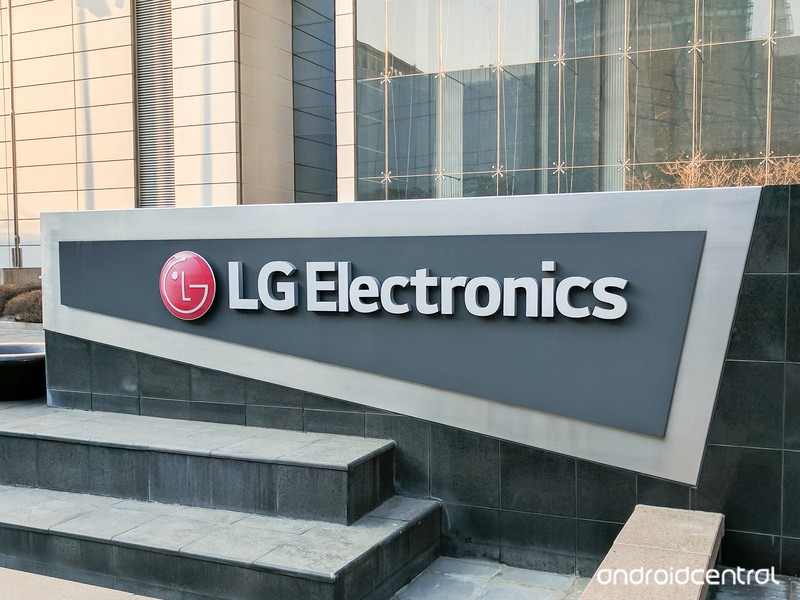
Ahead of the May 2 launch of the LG G7, the company has announced the opening of a new “Software Upgrade Center” at its headquarters in South Korea dedicated to improving the process of creating and releasing software updates for its smartphones. As the name would imply, the goal is pretty simple: “providing customers worldwide with faster, timelier, smartphone operating system and software updates.”
The rest of the announcement says all of the right things:
The Software Upgrade Center will not only be charged with developing and delivering regular OS updates for LG smartphones, it will also be responsible for ensuring a consistent user experience on LG devices by continuously testing the stability and compatibility between hardware and software after updates.
The creation of the center will enable LG to roll out OS updates faster in countries where LG smartphones are available to ensure that customers around the world receive the same level of quality service.
The only question, then, is how well it can execute on this plan.
Software updates haven’t been a strong suit for LG, exemplified by last year’s G6 still not having Oreo — that spotty update record exists despite the company’s history of both being a Nexus partner in the past and being one of the first to launch phones on multiple new versions of Android. LG’s devices have regularly struggled with getting consistent platform updates, let alone a steady flow of monthly security updates. The LG V30, which launched on Nougat in September, just started receiving Oreo on some carriers at the end of March.
A new center and dedicated software update team is great — actually getting regular updates is even better.l
LG has also regularly faced scrutiny over issues of software reliability over time, picking up a reputation for selling phones that bootloop and fail at a higher-than-normal rate. The Software Upgrade Center is also focused on things of this nature, being “responsible for ensuring a consistent user experience on LG devices by continuously testing the stability and compatibility between hardware and software after updates.”
The first order of duty for the new Software Upgrade Center is finishing and releasing the Oreo update for the G6, which LG says will happen by the end of April in South Korea followed by other markets. That gives a nice glimmer of hope to those who have held onto their G6 waiting for an update for several months now, but the real test will come in future updates after this Software Upgrade Center is up and running completely.
Saying that you have a new team dedicated to software updates and a center for them to work together is one thing; actually delivering those updates is another hurdle entirely, and the only thing people actually care about. Jo Seong-jin, CEO of LG Electronics, makes it clear that improving after-sales support is extremely important: “Stable and consistent upgrades will demonstrate to our customers that LG smartphones have long and reliable lifespans.” Let’s hope that holds true.
LG G6
- LG G6 review!
- LG G6 specs
- LG G6 vs. Google Pixel: The two best cameras right now
- Everything you need to know about the G6’s cameras
- LG forums
Verizon
Sprint
T-Mobile
AT&T
B&H
Dell was the bright spot in a lousy winter for PC shipments
Sorry, folks, those hopes of the PC market making a comeback were short-lived. Both Gartner and IDC estimate that computer shipments were down in the first quarter of 2018, ranging from barely under zero growth (IDC) to a drop of 1.4 percent (Gartner). While the exact numbers vary (Gartner includes more tablets in its data than IDC, but not Chromebooks), there are some common themes. In particular, Dell came to the industry’s rescue — it was one of the few bright spots in a market where rivals either saw sluggish growth or declined.
Both analyst teams determined that Dell’s shipments grew about 6.5 percent year-over-year, or significantly above behemoths like HP (4.3 percent under the best estimate). Simply speaking, its performance grew just about everywhere. Gartner credits it to strong business sales, but it didn’t hurt that Dell released big updates to home-oriented systems like the XPS 13 at the same time.
There’s also a consensus on the cause of the decline: Asia-Pacific. Shipments dropped sharply in the area, particularly in China where the government and large companies held off due to the National People’s Congress and the expected big shifts in priorities and workers. For that matter, it didn’t help that many companies were reluctant to update their PCs ahead of new Intel chips.
The future, meanwhile, is unclear. IDC saw hope in the rapidly burgeoning gaming PC industry as well as improved demand for Windows 10 PCs in business. However, we’ve seen this story before — analysts have a habit of being cautiously optimistic. Computer shipments haven’t seen significant growth for years, and that’s unlikely to change so long as smartphones dominate and years-old PCs are frequently good enough for people’s needs.

Source: Gartner, IDC
LG opens ‘Software Upgrade Center’ to accelerate Android updates
Despite repeated promises of change by Google and its various hardware partners, slow and spotty rollouts are still the rule rather than the exception when it comes to new versions of the Android operating system. LG’s latest plan to turn that around is a new facility at its R&D campus in South Korea called the Software Upgrade Center, which it said is dedicated to “providing customers worldwide with faster, timelier, smartphone operating system and software updates.” Its first task is to handle a rollout of Android Oreo for the current flagship G6 phone (current until the G7 launches in May) that will start in Korea later this month.
LG Electronics CEO Mr. Jo Seong-jin said in a statement that “Stable and consistent upgrades will demonstrate to our customers that LG smartphones have long and reliable lifespans.” Beyond initiatives like Project Treble, if LG can consistently keep its devices supported faster and through more iterations of the operating system, that might help raise its profile compared to the competition. But it has to deliver the goods first — and hopefully before Android P emerges from beta testing.
Source: LG
Apple Cuts HomePod Orders After Sales Prove to Be Lackluster
Apple’s HomePod hasn’t ended up selling as well as the company was hoping, leading it to cut orders with suppliers, reports Bloomberg.
In late March, nearly two month after the HomePod first became available for purchase, Apple reportedly lowered its sales forecasts and dropped some orders with Inventec, the company responsible for manufacturing the HomePod. HomePod inventory in retail locations is said to be “piling up” with some stores selling “fewer than 10 HomePods a day.”
Early analyst estimates based on strong pre-orders and initial sales figures suggested the HomePod would sell well and capture a solid portion of the smart speaker market, but Apple hasn’t managed to maintain sales momentum.
During the HomePod’s first 10 weeks of sales, it eked out 10 percent of the smart speaker market, compared with 73 percent for Amazon’s Echo devices and 14 percent for the Google Home, according to Slice Intelligence. Three weeks after the launch, weekly HomePod sales slipped to about 4 percent of the smart speaker category on average, the market research firm says.
Apple charges $349 for the HomePod, making the device more expensive than competing smart speakers from Amazon and other companies. Apple put a lot of effort into promoting the HomePod’s superior sound quality, but its high price tag and its inability to work natively with music services other than Apple Music have likely hurt its sales.
As Bloomberg points out, the HomePod’s February launch was delayed from an initial promised December launch, causing Apple to miss out on key holiday sales.
HomePod also continues to lack promised features like stereo pairing to pair two HomePods together and AirPlay 2 support for controlling the music on multiple HomePods located in different rooms of the house. There are hints of this functionality in iOS 11.4, so these options could be coming soon, but HomePod owners and prospective buyers are likely disappointed with the months-long wait for basic features.
Apple isn’t likely planning to give up on the HomePod despite its lackluster sales because it’s part of an audio accessory lineup that includes the AirPods and the upcoming rumored high-end over-ear headphones.
Loup Ventures analyst Gene Munster in February said he expects sales to pick up later in the year. He predicts Apple will sell a total of 7 million HomePods in 2018, with that number set to grow to 10.9 million in 2019.
Related Roundup: HomePodBuyer’s Guide: HomePod (Buy Now)
Discuss this article in our forums
AI stuntpeople could lead to more realistic video games
Video game developers often turn to motion capture when they want realistic character animations. Mocap isn’t very flexible, though, as it’s hard to adapt a canned animation to different body shapes, unusual terrain or an interruption from another character. Researchers might have a better solution: teach the characters to fend for themselves. They’ve developed a deep learning engine (DeepMimic) that has characters learning to imitate reference mocap animations or even hand-animated keyframes, effectively training them to become virtual stunt actors. The AI promises realistic motion with the kind of flexibility that’s difficult even with methods that blend scripted animations together.
At its heart, DeepMimic revolves around reinforcement training. The closer it gets to the reference material, the more positive reinforcement it receives. It’s a bit more complex than that, mind you. By randomizing the initial body state in a training situation, the training system teaches the character how to perform the intended action rather than whatever motion will reach the goal quickly (say, a backflip instead of hopping backwards).
And importantly, the technology is very generalized. You can teach it to kick or punch a specific target even if the original motion didn’t account for that, for example. DeepMimic is physics-based by its very nature, too, so it can adapt to different body shapes and interruptions like projectiles. So long as it’s technically possible to complete a movement in the first place, it’ll happen. The reference animations are merely the starting point.
The uses for video games are fairly self-evident. You could have characters that move and fight in convincing ways without having to either capture animations for every possible scenario or design the game world around the limited animations you can provide. There are possibilities beyond pure entertainment, to boot. You could use the same basic methodology for training robots to climb and jump obstacles before they’re placed in real-world situations, where the consequences of failure could be very costly.
Via: MIT Technology Review
Source: BAIR, Berkeley News
Apple Reminds Developers App Updates Must Support 64-Bit Starting June 2018, Warns Customers About Unoptimized Apps
Apple today reminded developers about upcoming changes being made to the Mac App Store. Starting on June 1, all new app updates submitted to the Mac App Store must support 64-bit.
Apple already requires new apps submitted to the Mac App Store to offer 64-bit support, a change that went into effect in January of 2018, so this upcoming policy shift will only affect older apps that have not yet implemented 64-bit support.
Along with the warning to developers, Apple says customers who are running the latest macOS 10.13.4 update will begin receiving warning messages when launching a 32-bit app for the first time to let them know that the app is not optimized for their Mac. According to TechCrunch, these warnings will start at midnight Pacific Time on April 12.
With the recent release of macOS High Sierra 10.13.4, the first time users launch an app that does not support 64-bit they will see an alert that the app is not optimized for their Mac.
As a reminder, new apps submitted to the Mac App Store must support 64-bit, and starting June 2018, app updates and existing apps must support 64-bit. If you distribute your apps outside the Mac App Store, we highly recommend distributing 64-bit binaries to make sure your users can continue to run your apps on future versions of macOS.
Apple used a similar warning system when phasing out 32-bit support on iOS before eventually ending support with iOS 11, and the company has said the same plan will be used as 32-bit Mac apps are phased out.
Apple first warned developers and consumers about the impending Mac App Store changes starting last June at the 2017 Worldwide Developers Conference. Apple is slowly ending support for 32-bit Mac apps and has said macOS High Sierra will be the “last macOS release to support 32-bit apps without compromises” and “all future Mac software will eventually be required to be 64-bit.”
Discuss this article in our forums
Apple’s Siri Learns New Jokes
Apple appears to have recently updated Siri on iPhone, iPad, Mac, and HomePod with a slew of new jokes to tell. Based on reports on Twitter and from MacRumors readers, the new jokes started rolling out earlier this month.
When you ask Siri a question like “tell me a joke” on an iOS device, Mac, or the HomePod, Siri has dozens of fresh responses to share with you.
- “What’s the difference between roast beef and pea soup? Anyone can roast beef.”
- “One night, I paid $20 to see Prince. But I partied like it was $19.99.”
- “I taught a wolf to meditate. Now he’s Aware Wolf.”
- “What do you call a labrador that becomes a magician? A labracadabrador.”
- “What do you call a talking dinosaur? Thesaurus.”
- “What do cats like to eat for breakfast? Mice Krispies.”
With the humorous new additions, Siri’s joke repertoire has expanded significantly, and you need to ask for jokes several times before hearing a repeat. Siri also appears to have new knock knock jokes, accessible by asking Siri “knock knock.”
Apple updates Siri on a regular basis with new content in an effort to instill the personal assistant with personality and expanded capabilities. In February of 2017, for example, Siri promoted the LEGO Batman Movie with a series of funny responses to the query “Hey Computer,” and when Pokémon Go was released, Siri was updated with several Pokémon-related responses.

Siri is often criticized for shortcomings in comparison to AI-based offerings from competing companies like Microsoft, Amazon, and Google, which is said to be due to Apple’s heavy focus on protecting user privacy.
Apple is aiming to make major improvements to Siri, however, and has recently hired former Google AI chief John Giannandrea and the team from Init.ai, a customer service startup focused on creating AI with natural language processing.
Tag: Siri
Discuss this article in our forums
Everything you need to know about Google Pay and Google Pay Send
Google just made online payments a whole lot easier. In February, the company announced it’s combining all of its different payment methods into one unified brand, called Google Pay. The Android Pay app is now being rebranded to Google Pay, and the Google Wallet app is now called Google Pay Send. Eventually, the Google Pay app will also have peer-to-peer transactions, allowing users to send and receive money.
Here is everything you need to know about Google Pay, including the places and banks that support it.
Support in the U.S.
All four major banks in the U.S. support Google Pay — that’s Chase Bank, Wells Fargo, Citibank, and Bank of America. Many smaller banks and credit unions now support Google Pay as well; if you’re unsure, check out the Google Pay support page to check if your bank is listed.
In addition to using your phone to make purchases, many major U.S. banks like Chase and Bank of America are installing cardless ATMs. For people with accounts at these banks its easy to use your NFC enabled Android phone to make withdrawals. Some banks are even going a step further and completely integrating Google Pay into their own apps.
In short, most banks that already support Apple Pay will back Google’s service since both use similar NFC technology for payments.
Other U.S. institutions, integrations
The latest new feature to come to Google Pay is support for the Las Vegas Monorail. According to Google, the new feature will allow users to buy tickets online through the Monorail site, then save them to Google Pay. Then, to get on the train simply wave the phone near the fare gate. Easy. You’ll also be able to see your recent trips, and get directions to the nearest Monorail station. Google says the feature will be rolling out to more public transportation services soon, but for now it’s limited to the Las Vegas Monorail.
MasterCard, Visa, American Express, and Discover support Google Pay. Sites that support Visa Checkout and Masterpass can handle Google Pay as well, thanks to a strategic partnership. You can use your fingerprint to confirm payments, and Visa Checkout and Masterpass customers can link their accounts to Google Pay as well.
Mobile banking app integration
Google Pay has also integrated with several banking apps around the world to make using the system almost seamless. Now, many customers will be able to add cards to Google Pay from their mobile banking apps at the tap of a button. Currently the number of banks that have in-app integration is limited and includes Bank of America, Discover, Bank of New Zealand, mBank, and USAA.
In-App and mobile web purchases
Although you’ll probably use Google Pay primarily in shops, it’s also useful for in-app purchases. When you’re about to purchase something in an app that supports the service, you’ll see a prompt appear for Google Pay. At the moment, Google has listed more than a dozen apps that support in-app purchases with Google Pay including Lyft, OpenTable, Hotel Tonight, Instacart, and Etsy. Most recently, more companies have signed on with Google Pay, at its launch, such as Airbnb, Postmates, Fandango, and Dice.
If you make purchases via the Chrome Browser app on your phone, you’re in luck. Google is adding support for Google Pay for certain sites, making the checkout process less of a hassle. It currently works with a handful of sites such as Groupon and 1-800-Flowers. The integration with Visa Checkout and Masterpass is sure to boost the number of sites that support Google Pay as well.
Qualcomm’s new chips aim to give security cameras A.I. smarts
Karlis Dambrans/Flickr
Processor manufacturer Qualcomm has launched two new chips aimed at making security cameras, drones, and robotic vacuums even smarter, thanks to on-board A.I. processing.
Specifically designed to aid IoT (internet of things) devices by taking advantage of so-called “edge computing,” both the QCS603 and QCS605 chips process as much data as possible inside the device itself. This saves time and data transfers, since data doesn’t necessarily need to be sent to a central cloud to be processed. Applications for these new chips include, but are not limited to, various security cameras, wearable cameras, smart displays, drones, and advanced robotics.
Since the requirements for a security camera are different from those for a smartphone camera, the 603 and 605 are specifically geared to a couple of different areas, according to Qualcomm’s vice president of product management for IoT, Seshu Madhavapeddy. Both chips needed to be able to handle extremely low-light situations — as low as 1 Lux, or as much light as you’ll typically see on a cloudless night from the full moon. Secondly — and especially in wearable cameras — it’s about being able to take consistently stable video that can be used to make videos, rather than taking a single blur-less snapshot. Both the 605 and the 603 are capable of handling these requirements.
It seems that both chips will be exceptionally gifted in terms of video. According to Madhavapeddy, the 605 will be capable of handling an excessively large amount of video at the same time — potentially handling a stream at 4K and 1080p, both at 60 frames-per-second. If you need more streams, then it’s capable of running multiple streams at the same time at lower resolutions. The 603 will be lower-powered, but will still be able to stream both a 4K and a 720p video feed at once, at 30fps.
But it’s the A.I. assistance that will likely become key to the flexibility of these chips. Both the 603 and the 605 come with the Snapdragon Neural Processing Engine (NPE) to aid with deep learning. While it’s probable that the actual A.I. learning will still be done in the cloud away from the device, the inclusion of the NPE in the chip will allow developers to quickly and easily port A.I. models created in other tools, and could — for instance — be used to automatically detect certain faces as in Horizon Robotic’s new camera.
Editors’ Recommendations
- The best Android Wear apps
- The best Wear OS apps
- Meet the Qualcomm Snapdragon 845, the power behind next-gen phones
- Pentax K-1 Mark II uses AI to help you get the perfect shot
- Latest Windows 10 Insider build makes it easier to control your GPUs
Judge says Samsung ‘rigged the deck, fixed the game’ with Galaxy
Samsung has been slammed by a federal judge for allegedly misleading consumers who purchased the Samsung Galaxy S4, by fraudulently misrepresenting the amount of power available in the device.
The statement came about as a result of a long-running legal dispute between the Korean tech giant and a class action lawsuit, headed by plaintiff Daniel Norcia. Back in 2011, Norcia filed a suit against Samsung, alleging that the capabilities of the Galaxy S4 flagship phone had been grossly misrepresented, and Samsung had used this to mislead customers into thinking the phone was more powerful than competitors’ phones. Parts of the lawsuit surrounding the available storage have since been dropped, but the courts have upheld Norcia’s complaint on the processing power of the phone.
According to the accusation, Samsung coded the Galaxy S4’s software to detect when specific benchmarking software was being used, and have it commit extra resources to its operation — effectively cheating the test and providing results that could not be replicated outside of the benchmarking app by a casual user. Since these benchmarks are commonly used in third-party reviews of the device, that alleged cheating led to a false impression of superior speed being made public.
“Samsung also knew that if it artificially boosted the performance of its devices when running benchmarking apps, reviewers and the public would falsely believe that the Galaxy S4 was similarly fast in real-world situations. In reality, the processors in the Galaxy S4 run at a lower speed and the artificial performance boost disappears when the devices are performing real-world tasks instead of running benchmarking apps” states Norcia’s complaint.
Samsung had previously attempted to move the case to arbitration court by arguing the Galaxy S4’s warranty specifically forbad class actions lawsuits being brought. Unfortunately for Samsung, an appeals court dismissed this claim on the basis that warranties do not impose anything on the buyer, especially when introduced after the sale.
Speaking in a previous hearing on the case, U.S. District Judge James Donato said: “Samsung rigged the deck, fixed the game; and as a result of that, consumers were misled about the speed of the phone.”
The case is due to be heard in front of a U.S. magistrate judge next week.
Editors’ Recommendations
- Samsung Galaxy S9 Plus review
- Meet the Qualcomm Snapdragon 845, the power behind next-gen phones
- Here’s everything we know about the upcoming Samsung Gear S4 smartwatch
- These are the best ‘Made for Samsung’ apps for your Galaxy phone
- Check out the best affordable Samsung phones for March 2018
 AIVAnet