


iMovie for Mac Updated With iPhone X Support for App Store Video Previews and Bug Fixes
Apple today released iMovie version 10.1.9 for macOS as a free update to its consumer video editing software on the desktop. It’s the first update to the app since shortly after macOS High Sierra was released.
iMovie 10.1.9 adds support for the iPhone X and additional iPad resolutions in relation to App Previews, the feature for creating short videos that appear alongside screenshots in App Store listings on iPhone and iPad.
The update also includes a range of bug fixes and stability improvements:
• Resolves an issue which could prevent logging into Facebook
• Resolves an issue in which HEVC video clips and HEIF photos could appear black in the viewer
• Resolves an issue in which the import date was used as the capture date when importing from certain SD cards or AVCHD cameras
• Resolves a playback issue with Sound Designer 2 files
• Resolves an issue in which iMovie could hang when quitting the app
• Resolves an issue in which opacity controls may disappear when using iMovie in German or Polish
• Fixes an issue that could prevent sending certain iMovie projects to Final Cut Pro
• Addresses an issue that could lead to slower media import from SD cards on iMac Pro
• Improves stability when working with Camtwist Studio
iMovie and the 10.1.9 update are available for free on the Mac App Store. The update may still be rolling out for some users.
iMovie for iOS has yet to be optimized for the iPhone X display.
Tag: iMovie
Discuss this article in our forums
iPhone With Triple-Lens Rear Camera Said to Be Introduced Next Year
At least one new iPhone with a triple-lens rear camera led by a 12-megapixel lens will be introduced in 2019, according to Taiwan’s Economic Daily News.
A very rough mockup of an iPhone X with a triple-lens rear camera
The report claims the camera will have a 6P lens design with 5x zoom, but it doesn’t specify whether that pertains to optical, digital, or hybrid zoom. The single-lens iPhone 8 has up to 5x digital zoom, while the dual-lens iPhone 8 Plus and iPhone X have up to 2x optical zoom and 10x digital zoom.
If the report proves to be accurate, then Apple will be following in the footsteps of Huawei and its new P20 Pro smartphone, which also has a three-lens rear camera system, including a primary 40-megapixel f/1.8 lens, a 20-megapixel f/1.6 monochrome lens, and an 8-megapixel f/2.4 telephoto lens with 3x optical zoom.
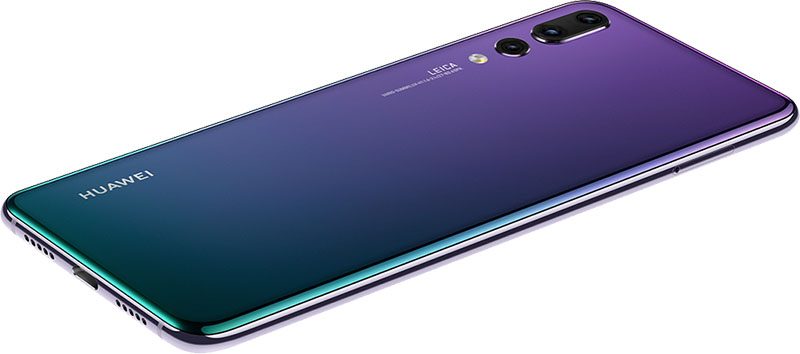 Huawei P20 Pro
A three-lens rear camera would provide a lot of advantages, including greatly improved low-light performance. In his P20 Pro review, The Verge’s Vlad Savov said Huawei’s new camera system is “superior to those on the Galaxy S9 and iPhone X,” though he noted that personal preference may sway that decision.
All in all, this rumor sets the stage for a third-generation iPhone X with an even better camera, and possibly 3x optical zoom, later next year. As far as this year is concerned, KGI Securities analyst Ming-Chi Kuo doesn’t expect many changes to the iPhone X’s current dual-lens rear camera system.
Tag: udn.com
Discuss this article in our forums
The Best Huawei P20 Pro cases
Is Huawei’s new P20 Pro the best smartphone not to be picked up by U.S. carriers? Maybe. All we know is it’s extremely powerful, and has a unique triple-lens, rear-facing camera system that’s as groundbreaking as it is weird. But none of the phone’s power will save its glass-and-metal construction if it decides to make a face-date with the sidewalk. There are many ways to lessen the chances of a broken phone, but not many are as easy and time-saving as buying a protective case.
But there are so many types of case out there — how do you know which one to pick? Never fear, we’ve found some of the best Huawei P20 Pro cases that you can buy to keep your phone looking great.
EasyAcc Anti-Slip Clear Gel Case ($8)
A great choice if you don’t want to obscure the looks of your phone, a clear gel case provides a basic level of protection. This case from EasyAcc does so with a covering of shock-absorbent TPU material that extends all the way around the edges of the device, includes tactile button covers, and extends slightly out from the screen to ensure your phone’s display doesn’t rest on any surfaces. It’s soft and flexible, aiding grip, and it protects well against scratches and other hazards. While it won’t provide the sort of protection you’ll see in bulkier cases, it still offers decent protection for the money you put down, and it’s a great choice if you prefer a design that doesn’t distract from your phone.
Buy one now from:
Amazon
Spigen Rugged Armor ($13)
One of the biggest names in protective cases, Spigen‘s cases are the choice of many, and it’s easy to see why. The Rugged Armor case is one of Spigen’s most beloved and widespread designs, and uses the shock-absorbing properties of TPU to protect your P20 Pro. An intricate spiderweb pattern on the inside of the case helps transfer energy away from your phone, while air cushions at each corner help to mitigate shocks against those most vulnerable areas. The case raises the display and camera lenses from the ground, keeping them scratch-free, while the carbon fiber-style panels at either end of the case give it a futuristic look. This is a great case that strikes a balance between protection and style.
Buy one now from:
Amazon
KuGi Ultra-Thin Wallet Case ($10)
If you’re looking for an elegant, businesslike case that protects your phone while still looking good, then this wallet case from KuGi has you covered. Durable and long-lasting PU leather protects your phone from every angle, thanks to the flip cover that protects your screen when not in use. An inner shell also helps to keep your phone in place and covers the sides, as well as acting as more direct protection when the phone is in use, or being used in the case’s landscape stand mode. The case also has a card slot on the cover’s inner lining with enough room for a credit card, making it perfect for short trips out without your wallet or purse.
Buy one now from:
Amazon
Yoodi Rugged Leather-Style Case ($9)
It’s not just leather wallet cases you need to keep an eye out for if you’re looking for a bit of class. The leather-style panel on the back of this case from Yoodi looks good and does the business, giving your fingers a grippy surface, as well as looking stylish. The bottom panel that imitates brushed metal finishes the look. Of course, it’s made of neither of these materials, not at this price — but our old friend TPU gives decent protection against most bumps, scratches, and drops, providing style and substance.
Buy one now from:
Amazon
Official Huawei Smart View Case ($24)
Who knows the P20 Pro as well as Huawei? The Smart View case has a minimalist design, and uses a polycarbonate (PC) shell that clips around the phone’s frame, as well as a front cover that protects the screen when not in use. The PC shell doesn’t fully cover the sides, which is definitely worth keeping in mind if you’re worried about scratches, and it’s hard, reducing shock-absorption. However, it will hold up well against more direct threats. It’s slim and lightweight, and it perfectly matches the P20 Pro’s design — but the real draw is the cover’s Smart View capabilities. When closed, the P20 Pro will display notifications, weather, and other details through a small see-through section of the cover, ensuring that you’re easily able to stay up-to-date without having to uncover your phone. It’s a neat trick, but do keep in mind that the protective qualities of this particular case might not be as strong as some other cases.
Buy one now from:
Mobile Fun Amazon
Editors’ Recommendations
- Protect your new phone with one of best Huawei P20 cases
- The best Galaxy S8 cases and covers to protect your device
- Don’t live on the edge, get one of the best Galaxy S7 Edge cases
- These are the best cases and covers for the Honor 9 Lite smartphone
- Add style and functionality with the best iPad Pro 9.7 cases
WWF Free Rivers app puts a virtual landscape on any flat surface
App Attack is a weekly series where we search the App Store and Google Play Store for the best apps of the week. Check out App Attack every Sunday for the latest.
The launch of Apple’s latest 9.7-inch iPad has spawned a variety of new educational apps. This week we have an app that allows you to learn more about the environment straight through your smartphone using augmented reality.
Presented at Apple’s Education event in Chicago, WWF Free Rivers Augmented Reality — available for iOS — places an entire landscape at your kitchen table (or wherever else you prefer). By simply pointing your camera at a flat surface, you’re able to explore an entire world of wildlife, people, and rivers.
After downloading the app, getting started is super simple. All you have to do is find a flat surface that’s well-lit in order for the program to recognize where you’re placing the landscape. The entire scene then appears on the table and you’re able to zoom in, move around, and learn all about nature.
As you discover all the elements, you can tap on each one to get more information. This includes anything from the actual bodies of water to the different animals and people. You’re able to follow along the “water’s journey” as you follow the story through your smartphone.
The interface is easy to navigate by swiping around and tapping on whatever you’d like. Whenever you want to learn about a specific element, a small bubble will appear that provides you with a brief description. By zooming in and moving your smartphone, you can explore all sides of the landscape.
With each scene, you’ll have a various amount of things to see — for instance, I had eight different parts that I could go through before completing the entire run. At the bottom of the app, there’s a counter that that keeps track of how many you’ve found throughout your time on the app. Once you’re done learning about a specific part, simply tap the check mark and the counter will go up.
As I tapped through each sight, I was able to gain insight on actual people — such as “Rice Farmer/Mother,” whose home in the delta becomes increasingly vulnerable when climate changes and sea rise. There’s also another “Farmer” who, in the dry season, plants along the river in the soil that the floods leave behind.
Aside from human figures, I was also able to learn about the historical importance of the rivers for people. For example, one part of the app brings you to the “Chief,” who explains how his ancestors have lived alongside the river for years, relying on the water for not only food, but also for its beauty.
When you continue on through the app, you get to learn more as you go. Other habitats include tropical jungles, the African Savannah, the South Asian deltas, and more. Within each one, you’ll also be able to learn about the river that flows through and how it affects each person and the wildlife around it.
Not only was the experience educational and interesting, but the graphics were great to look at as well. Regardless of whether you pointed it at the floor or a table, the landscapes looked bright and vivid on the display. While I tried it with a smartphone, the larger display on the iPad will only make it look more beautiful and immersive.
Editors’ Recommendations
- You can control this robot as it trawls the Chicago River picking up trash
- Cool camping gadgets for every outdoor adventure
- Everything you need to know about Google Assistant
- Here’s how to maximize battery life on the Samsung Galaxy S9 and S9 Plus
- Can’t quit Facebook? You can protect yourself without deleting your account
Four generations of iPhone go head-to-head in our app-launching drag race
Are the most recent iPhone models actually quicker than their last-gen counterparts? It’s a good question to ask, especially given just how important speed often is to consumers who are looking to pick up a new smartphone. We know the iPhone X and 8 Plus both pack faster CPUs, yes, but how do updated processor components translate into real-world performance? To answer these questions, we decided to run a speed test using the iPhone 6S Plus, iPhone 7 Plus, iPhone 8 Plus, and the iPhone X.
Basically, we opened a selection of apps and timed how long it took to launch said apps on each iPhone, allowing us to see which phone opens and renders apps the quickest. We also ran a similar test using a selection of graphically-intensive games, which require more processing power than your standard app.
The first apps we decided to launch were Twitter and Facebook. Surprisingly, the iPhone 7 Plus beat the iPhone X when it came to Twitter, followed by the 6S Plus and 8 Plus. The iPhone X beat the 8 Plus when launching Facebook, though, the 7 Plus and 6S Plus weren’t far behind.
Next, we took a look at YouTube. The 6S Plus was, oddly enough, the quickest to launch the app, followed by the 7 Plus and 8 Plus — which tied — and the iPhone X. When launching Google Maps, all four headsets showcased nearly identical performance, with the 7 Plus barely coming out on top. The 7 Plus was the slowest at opening Pokémon Go, however, and was easily bested by the 8 Plus, 6S Plus, and the X.
The results were also somewhat surprising when it came to Sonic Dash, which saw the 8 Plus on top, followed the 6S Plus, 7 Plus, and the X. The latter phone was the quickest when launching Super Mario Run, however, which makes far more sense given the device hit the market right before the holidays. The 8 Plus, 7 Plus, and the 6S Plus followed in suite.
Twitter
Facebook
YouTube
Google Maps
Pokémon Go
Sonic Dash
Super Mario Run
iPhone X
05:05
02:35
05:25
03:35
11:50
11:20
12:25
iPhone 8 Plus
06:10
03:10
04:50
03:40
09:25
08:00
12:30
iPhone 7 Plus
04:55
03:55
04:50
03:30
23:11
10:30
15:45
iPhone 6S Plus
05:40
04:00
04:45
03:35
11:35
09:25
15:55
Now, what do these results mean when it comes to the overall performance of these devices? Well, honestly, not much. It appears as though, despite the updated hardware that goes into each device, the latest iPhones are about as quick as the previous models. The differences in speed are negligible, at least when it comes to opening apps. This could change, however, if we were to run more taxing apps or games that put more strain on the processor.
Regardless, users shouldn’t expect much of a difference when it comes to firing up Facebook.
David Cogen — a regular contributor here at Digital Trends — runs TheUnlockr, a popular tech blog that focuses on tech news, tips and tricks, and the latest tech. You can also find him on Twitter discussing the latest tech trends.
Editors’ Recommendations
- Report reveals the iPhone 8 outsold the flagship iPhone X in the U.S. during Q4
- Leaked memo says Apple to announce red iPhone 8 and 8 Plus on April 9
- The 20 best iPhone 7 Plus cases to protect your Apple phone
- Apple iPhone X Plus: News, rumors, specs, and more
- Cover up with the best iPhone 8 Plus screen protectors
Snapchat brings back its popular reverse chronological order for Stories
dennizn/123RF
Snapchat’s redesign has been controversial, to say the least. A few months ago, the popular social media app made headlines after throwing users for a loop with its decision to show Stories in an algorithmically sorted feed, rather than chronological order. It appears that Snapchat is now listening to its users’ grievances, and is rolling back the redesign (at least for some users) and instead showing Snapchat Stories in reverse chronological order once again.
When Snapchat first offered up its new look, its CEO Evan Spiegel wrote in, “We are separating the social from the media, and taking an important step forward towards strengthening our relationships with our friends and our relationships with the media.” The idea was that Snapchat would offer its user base more personalized content. That idea, while well conceived, was not particularly well received by everyone.
Snapchat is now taking things back a bit. As originally reported by Techcrunch, some folks are now seeing the reverse chronological ordering of Stories both in the version of the app where there are separate Stories and Chat tabs, as well as the design where there is only Stories and All tabs.
The issue with reverse chronological ordering is that it automatically gives the advantage to users who are frequent Snapchat users. And the benefit to algorithmic sorting is that it has historically helped with social media platforms’ growth. For example, both Instagram and Twitter implemented this sorting technique, and Instagram has been touting that it has eclipsed Snapchat in terms of popularity among users. Indeed, after Snapchat implemented algorithmic sorting, the social media platform saw growth numbers increase.
Still, keeping the people satisfied is doubtless the priority when it comes to any platform’s strategy, and as Techcrunch noted, this most recent update seems to be extremely popular among users. But as most popular social media apps know, satisfying everyone for an extended period of time is nigh impossible, so soon, Snapchat may have to reconsider once again the way that it displays its stories. Until then, enjoy your reverse chronological feed – you never know how long you may have it.
Editors’ Recommendations
- Here is what users are saying about that new Snapchat redesign
- Social Feed: Fake tweets, more Facebook Stories, and required hashtags
- A million Snapchatters protest app redesign but CEO sticks by it
- Snapchat update abandons that white border on uploaded Stories photos
- Snapchat’s redesign lets you share public Stories outside of the app
Kindle or print? What readers choose depends on what they read
File this one under “What companies learn from my online behavior.”
A recent analysis of book-buying behavior turned up interesting differences in the books people choose based on the format in which they read them. Kindle readers don’t buy the same types of books as people who buy traditional print books, according to Thinknum.
Thinknum analyzed Amazon‘s top-selling Kindle and print books in March 2018. The results revealed that if you bought books in the Kindle ebook format, odds are you love thriller novels. If you were a print book buyer, however, you were more likely buying self-help books.
Thinknum’s Joshua Fruhlinger notes that some print book novels and self-help Kindle titles sold, but most book sales aligned with the predominant formats.
Top sellers in March for each category included Jordan B. Peterson’s 12 Rules for Life: An Antidote to Chaos for print books and Say You’re Sorry, a legal thriller by Melinda Leigh for Kindle titles.
Breaking down Amazon’s top ten best-sellers among Kindle ebooks in March, nine were novels. The single non-fiction exception on the Kindle best-selling list was Harold Schechter’s Hell’s Princess: The Mystery of Belle Gunness, Butcher of Men. Based on the book’s description, even though it’s not thriller fiction, the book is about as close to that genre as you can get:”The chilling true account of one of the twentieth century’s most prolific female serial killers.”
Amazon’s best-selling physical or print books in March, as reported by Thinknum, had greater diversity than the ebooks. The ten print-book best-sellers included four self-help titles, three works of fiction, two children’s books, and one reference work.
Explaining the variety of print book sales types, Fruhlinger suggested that parents buy print books with colorful pictures to show when they read to children. The single reference book, Player’s Handbook (Dungeons & Dragons), a role-playing game (RPG) player’s guide, is filled with full-color illustrations.
The reason self-help book buyers preferred print editions was not clear, particularly since they were all available in Kindle versions. Fruhlinger noted several of the top print self-help titles were recent releases that might have had discounted pre-order prices.
The bottom line from Fruhlinger’s study of the Thinknum data: “Kindle readers love fiction.”
Editors’ Recommendations
- What is HDR TV (and why should you care)?
- What is AirBnb? Here’s all you need to know about being a guest or host
- 10 annoying iPad Pro problems, and what to do about them
- What’s new on Netflix and what’s leaving in April 2018
- Here’s what’s new on HBO in April, and what’s going away
Elon Musk teases plan for a record-breaking Hyperloop speed test
Elon Musk is eyeing a speed test for the Hyperloop that, if successful, would push a prototype passenger vehicle to its fastest speed yet.
But the man who dreamed up the idea for whisking people between cities at speeds of around 700 mph admits the test could go horribly wrong and result in the vehicle becoming “shredded metal.” It’s a good job that the trial run will be unmanned, then.
Musk revealed the plan in a tweet on Sunday, April 8, telling his followers of an “upgraded SpaceX/Tesla Hyperloop speed test” that’s coming “soon.”
He said the attempt will involve pushing the pod “to reach half the speed of sound (and brake) within 1.2 km,” equal to three quarters of a mile. That means taking the pod to speeds of up to 383 mph.
A short while later, having apparently had a chance to reflect on his idea, Musk admitted that “this is kinda nutty for such a short distance, so could easily end up being shredded metal,” but said it was “exciting either way.”
This is kinda nutty for such a short distance, so could easily end up being shredded metal, but exciting either way
— Elon Musk (@elonmusk) April 8, 2018
If Musk can reach his 383 mph target speed without the pod disintegrating midway through, it will set a new Hyperloop speed record as engineers move steadily toward the 700 mph goal. Virgin’s Hyperloop One holds the current speed record for the system, set in December when its pod hit 240 mph on the world’s first full-scale Hyperloop test site in the Nevada desert.
Ryan Kelly, director of marketing for Hyperloop One, told Digital Trends shortly after the record-breaking effort that its test pod “performed as designed, handling high speeds and levitating in a vacuum tube depressurized to the equivalent of flying at 200,000 feet above sea level.”
Elon Musk first revealed his vision for a high-speed transportation system back in 2013. With his Tesla and SpaceX projects already taking up much of his time, the billionaire entrepreneur decided to step back from developing the system, instead encouraging other companies to lead the way. He has, however, been taking an active role in the development of the passenger pods, organizing events for student groups around the world to design and test their own vehicles.
The machine that’s set to embark on Musk’s proposed speed test is a “pusher” vehicle that helped to drive student pods without motors to high speeds during a contest last summer. In a test by itself, Musk said the vehicle reached 220 mph, adding at the time that with a few design changes it should be able to go much faster. Hopefully, we’ll soon see.
No date was set for the upcoming speed test, but we’ll be sure to update once we know more.
Editors’ Recommendations
- Boeing’s ‘son of Blackbird’ hypersonic plane is designed to hit 3,800 mph
- When you’re done riding the S1 ebike, fold it up and pop it in your backpack
- Tesla promises to implement safety changes after Redditor totals a Model 3
- With FCC approval, all systems are go for Starlink global internet
- Hold on to your butts: These are the fastest cars in the world
Airbus’s odd-looking BelugaXL aircraft is one step closer to its maiden flight
If you’ve ever seen one of Airbus’s “bloated” Beluga aircraft, you certainly won’t have forgotten about it.
Named after the Arctic whale for its similar appearance, the huge and rather odd-looking airplane has been in service for the last 20 years, flying large aircraft components — think fuselage sections, wings, and tails — from European suppliers to Airbus’s assembly plants in Toulouse, France and Hamburg, Germany.
Now the company is prepping the maiden flight of a new version of the Beluga, one even bigger than the five currently in service.
Called, appropriately enough, the BelugaXL, Airbus revealed in a recent tweet that it has now affixed the engines to the new plane as it gears up for its first-ever flight over Toulouse this summer.
And the engines are on ! Fully on track for a first flight this summer. #BelugaXL pic.twitter.com/fVg7A710jv
— Airbus (@Airbus) April 6, 2018
Airbus says the 184-foot-long plane combines outsized cargo-carrying capability with the speed and efficiency of its A300-600 airliner. The front of the Beluga opens up, allowing cargo to be loaded into the cavernous “bubble” space. The cockpit is placed lower than you’ll find it on an A300-600 to avoid having to disconnect electrical, hydraulic, and flight control systems each time cargo is loaded and unloaded.
The latest version of Airbus’s super-transporter can take 6 tons of extra cargo compared to the current BelugaXT, increasing the limit to 53 tons. It’s also 20 feet longer and 3 feet wider than its predecessor, allowing the company to make further efficiency improvements when it comes to moving large airplane parts. For example, the new design will be able to carry two Airbus A350 wings (instead of just one as with the current Beluga), as well as sections of the double-decker A380, currently the world’s largest passenger plane.
Up to now, many of the assembled sections used for the construction of the A380 are too large even for the current Beluga to carry. This forces upon Airbus a complex logistical operation involving road and sea transportation to ensure safe delivery of the components to Airbus’s facility in Toulouse for final assembly. This extraordinary video on the Smithsonian Channel shows the A380’s wings and fuselage being squeezed through the narrow streets of a French village on their way to the facility. The BelugaXL will change all that, and, of course, help to get the parts to the assembly site in a more timely fashion.
Boeing has an equivalent aircraft called the Dreamlifter that it uses to transport the wings of its 787 Dreamliner plane.
Following test flights that are set to start in the coming months, Airbus plans to build a total of five BelugaXL planes with the aim of putting them into service in mid-2019. The current fleet will be gradually retired through 2025, the company said.
Editors’ Recommendations
- The five longest flights in the world make New York to London feel like a hop
- Boeing 737 MAX 7 aircraft graces the skies for the first time
- Airbus Vahana pilotless air taxi prototype completes its first test flight
- Watch the world’s largest plane barrel down a runway
- Google co-founder’s self-flying taxi venture takes off in New Zealand
Apple expected to announce red iPhone 8 and iPhone 8 Plus Monday
Apple iPhone fans will be seeing red today, as Apple has announced special edition Product RED models for both the iPhone 8 and the iPhone 8 Plus that will be available to buy on April 13, with prices starting at $699.
Named iPhone 8 Product RED Special Edition and iPhone 8 Plus Product RED Special Edition, both models will have an attractive red back-glass panel with matching red aluminum banding, and a black frontage.
If you’re an iPhone X owner feeling left out by the sudden new additions to other parts of the iPhone range, you don’t have to be. Also announced alongside the new models was a Product RED iPhone X Leather Folio –created with specially tanned and finished European leather for a luxurious look and feel, Apple tells us — and available to keep your iPhone X safe as of April 10.
Founded in 2016 by U2’s Bono and Bobby Shriver from ONE Campaign, Product RED raises money to fight HIV/AIDS in eight African countries by licensing the group’s name to Apple and other companies. The eight countries in which Product RED proceeds are put to work are Ghana, Kenya, Lesotho, Rwanda, South Africa, Swaziland, Tanzania, and Zambia. Thanks to its long partnership with RED, Apple is the organization’s largest corporate donor, having raised $160 millions since joining forces back in 2006.
“Today’s announcement is further evidence of Apple’s leadership in and commitment to the AIDS fight since the beginning of (RED) in 2006,” said RED’s CEO, Deborah Dugan. “The more than $160 million Apple has donated in the last 11 years today equates to more than 800 million days of lifesaving ARV medication that prevents the transmission of HIV from mothers to their babies.”
The existence of this announcement was leaked not long before being made official, by a memo distributed to Virgin Mobile employees. The memo said Product RED edition iPhone 8 and iPhone 8 Plus stock would be added to the company inventory at the time of the Apple announcement, with a promise of an April 13 launch date. The memo also mentioned that customers would be able to pre-order the phones from Virgin from April 9 — but this has not yet been confirmed.
Last year Apple issued limited edition, ruby red iPhone 7 (RED) and iPhone 7 Plus (RED) smartphones in March as part of the company’s ongoing partnership with the Product RED nonprofit organization. When we checked out the iPhone 7 (RED) and iPhone 7 Plus (RED) units, the only misfire was the standard white bezel on the phone’s front — an element thankfully missing from this year’s black front panel.
Editors’ Recommendations
- Apple iPhone 8 review
- Nokia 8 Sirocco hands-on review
- Report reveals the iPhone 8 outsold the flagship iPhone X in the U.S. during Q4
- Cover up with the best iPhone 8 Plus screen protectors
- Check out the best iPhone 8 cases and covers you can buy so far
 AIVAnet