


Entry-level MacBooks may make an appearance in June at WWDC 2018
Apple’s developer conference in June is fast approaching, and the rumor mill keeps on churning about what the company plans to launch during 2018. One report indicates the company is working on an entry-level MacBook that will ship by the end of 2018’s second quarter. An “inexpensive” 9.7-inch iPad is also in the works for the second quarter along with new iPad Pro models targeting the second half of 2018.
Arriving sometime during the second quarter, Apple’s supposed entry-level MacBook will have the same price tag as the current MacBook Air models on the market, if not slightly lower. Apple originally set out to reduce the overall cost by dealing with a China-based display manufacturer, but Apple faced “issues” with the company and decided to rely on South Korea-based LG Display instead.
According to the report, the entry-level MacBooks will sport 13.3-inch amorphous silicon panels packing a 2,560 x 1,600 resolution, similar to what Apple offers on the 13.3-inch MacBook Pro. LG Display will begin supplying these panels in April, enabling the first batch of entry-level MacBooks to enter production by the end of May or at the beginning of June. Quanta Computer will handle 70 percent of Apple’s orders while Foxconn will deal with the remaining 30 percent.
Apple is reportedly targeting 6 million units of its entry-level MacBooks sold in 2018, but the company may only hit the 4-million mark due to the end cost. The current MacBook Air has a starting price of $999, which isn’t exactly super-expensive, but customers looking for an entry-level device can find Windows 10 solutions at a cheaper price. That said, Apple is targeting a starting price range between $799 and $899.
As for the “inexpensive” 9.7-inch iPad slated to arrive in the second quarter, it will be a refresh of the unit introduced in 2017 costing a mere $259. Apple’s upstream supply chain vendors are already shipping components for the refreshed tablet as well as for the upgraded iPad Pro targeting the second half of 2018.
News of Apple’s entry-level MacBook surfaced in January after sources said touch panel maker General Interface Solution (GIS) became an Apple supplier for MacBooks in the fourth quarter of 2017. After that report, KGI Securities analyst Ming-Chi Kuo speculated at the beginning of March that Apple would introduce an entry-level MacBook Air, increasing Apple’s MacBook sales year over year by up to 15 percent.
Reports also point to a mid-range 6.1-inch iPhone packing facial recognition for a price tag between $649 and $749 possibly this September. A more affordable HomePod is slated for the second half of 2018, too, with a price tag ranging between $150 and $200.
Unfortunately, these prices are all speculative based on supply chain information, and not etched in stone by Apple. We expect to hear more information in June during Apple’s developer conference.
Editors’ Recommendations
- Need a new tablet? Check out the best iPad deals for March 2018
- Apple may release a new, cheaper MacBook Air this year
- Lenovo ThinkPad X1 Carbon vs. Apple MacBook Pro 13
- Apple is ‘listening,’ but won’t release a major MacBook Pro upgrade this year
- Apple iPhone 11: News, rumors, specs, and more
President Trump preemptively blocks Broadcom’s Qualcomm takeover, citing national security concerns
This one is finally settled.
The seemingly never-ending saga of Broadcom’s attempted takeover of Qualcomm has all-but-ended, as President Trump today issued an order that the deal will not be allowed to go through under the assertion that it would be a threat to U.S. national security. Broadcom is primarily a Singapore-based company, but operates globally. Qualcomm and Broadcom have been dancing around the details of a potential merger or takeover for several months, but in recent weeks had clearly been nearing a deal as Broadcom finalizes moving its headquarters to the U.S.

There’s a ton of required legal-speak in here, but it’s very clear that the executive branch is not interested in this type of deal going through in any form, and no representatives of Broadcom are to be allowed to be on the Board of Directors at Qualcomm:
The proposed takeover of Qualcomm by [Broadcom] is prohibited, and any substantially equivalent merger, acquisition, or takeover, whether effected directly or indirectly, is also prohibited.
All 15 individuals listed as potential candidates on the Form of Blue Proxy Card filed by Broadcom and Broadcom Corporation with the Securities and Exchange Commission on February 20, 2018 (together, the Candidates), are hereby disqualified from standing for election as directors of Qualcomm. Qualcomm is prohibited from accepting the nomination of or votes for any of the Candidates.
[Broadcom] and Qualcomm shall immediately and permanently abandon the proposed takeover. Immediately upon completion of all steps necessary to terminate the proposed takeover of Qualcomm, the Purchaser and Qualcomm shall certify in writing to the Committee on Foreign Investment in the UnitedStates (CFIUS) that such termination has been effected in accordance with this order and that all steps necessary to fully and permanently abandon the proposed takeover of Qualcomm have been completed.
The decision to completely shut down this takeover before it happens comes just a couple of months after Huawei was effectively shut out from selling its latest smartphones, including the Mate 10 Pro, with U.S. carriers under pressure from the U.S. government. Further action has been taken to limit or completely eliminate the use of Huawei and ZTE equipment — both phones and network routers — by any U.S. government agency. Those actions were also taken in the name of “national security” concerns.
It can easily be argued (and I’m happy to make the argument, personally) that the Broadcom takeover of Qualcomm would not improve products or innovation in the wide variety of technologies that they both produce. The takeover could reduce competition and potentially jeopardize some of Qualcomm’s large U.S.-based operations, but none of those reasons are being cited as part of this order. Of all the reasons for this deal to be stopped, “national security” seems the least scrupulous.
Trump blocks Broadcom’s attempted takeover of Qualcomm (updated)
Broadcom’s hopes of acquiring Qualcomm might have been quashed for good. President Trump has issued an order blocking Broadcom’s proposed takeover and anything “substantially equivalent” to it over concerns that it might “impair the national security” of the country. The order also disqualifies all 15 of Broadcom’s proposed directors for Qualcomm. The move follows a letter from the Committee on Foreign Investment in the US warning the companies that it believed the takeover would pose too great a security risk.
If Broadcom bought Qualcomm, CFIUS argued, it would likely cut costs at the American company and weaken its ability to compete against Chinese rivals like Huawei. That, in turn, would let China dominate 5G wireless and leave Americans vulnerable. CFIUS also said that Broadcom defied an interim order requiring that it give a panel 5 business days’ notice before it took steps to officially relocate to the US.
We’ve asked both Broadcom and Qualcomm for comment, although Broadcom had previously said it was in “full compliance” with the temporary order.
To put it mildly, things aren’t looking good for Broadcom. There was a chance it could have escaped CFIUS’ scrutiny by claiming that the takeover fell outside of its jurisdiction, but that opportunity is gone now — as long as Trump’s order holds, the deal is off. While Qualcomm isn’t likely to complain much given that it repeatedly rejected Broadcom’s bids as undervalued, Broadcom now faces the prospect of having to either look at another acquisition target or accept that it will have to tackle 5G by itself.
Update: Not surprisingly, Broadcom said it’s “reviewing” the order and “strongly disagrees” that its would-be acquisition poses national security risks.
New: Full Text of Trump order blocking the merger of Qualcomm and Broadcom >> pic.twitter.com/hW9qpY3gVE
— Christina Wilkie (@christinawilkie) March 12, 2018
Source: Christina Wilkie (Twitter), CNBC
London Mayor: Tech companies aren’t above the law
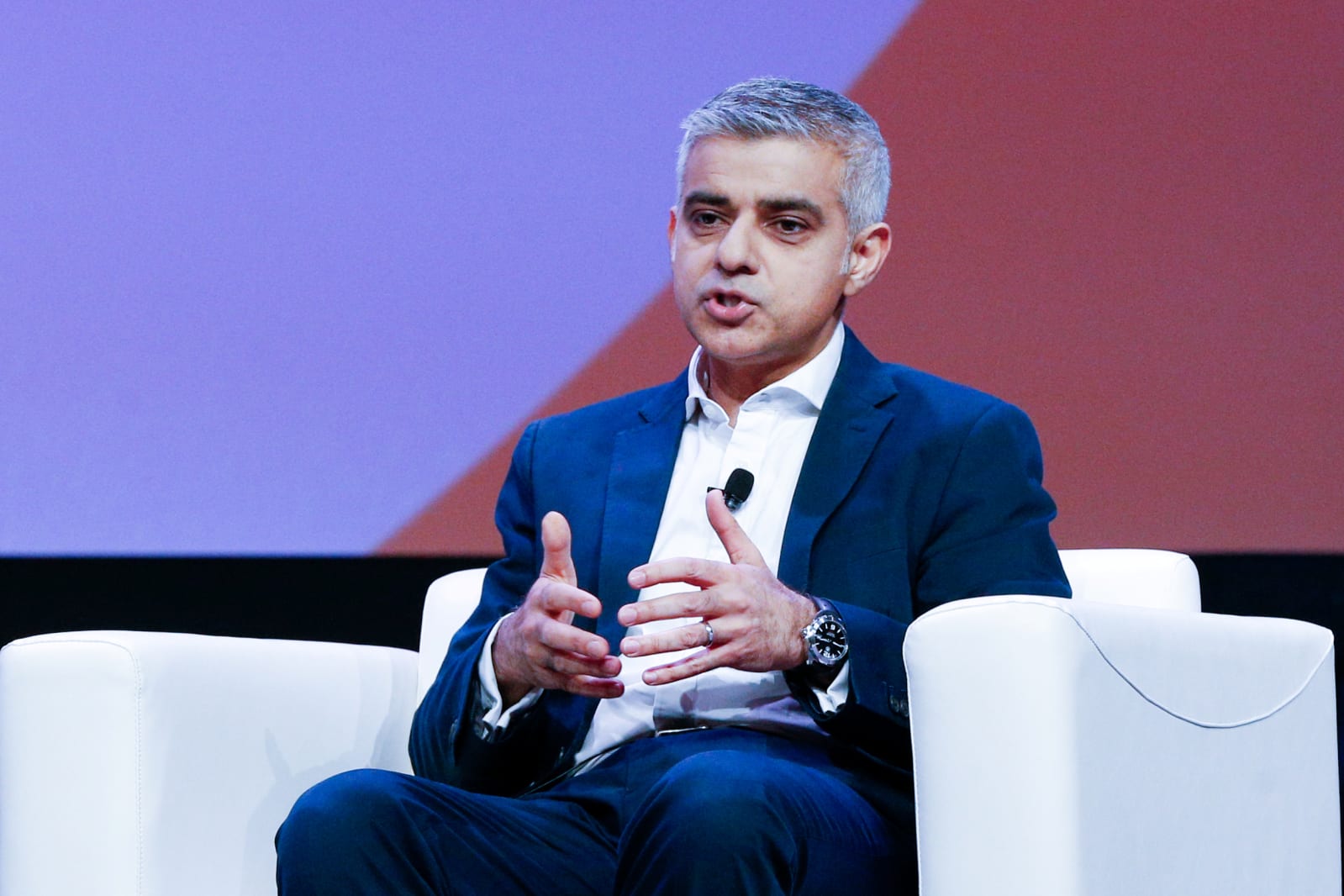
The Mayor of London, Sadiq Khan, kicked off his SXSW 2018 keynote with some jokes that sparked a deafening laugh and applause from the audience. He first talked about how he was shocked by the amount of hipsters here in Austin, Texas, followed by a comment that he’s excited to be on almost the same time zone as President Donald Trump. Just in case Number 45 decides to feud with him on Twitter. But Khan didn’t come to SXSW for his comedy, though his sense of humor was certainly appreciated by those in attendance. Once he got to his real message, London’s mayor mainly focused on discussing the impact of social media and technology as a whole on the world.
Khan called out Facebook, Twitter and YouTube for not doing enough to prevent the spread of fake news, hate speech, harassment and propaganda on their platforms. He leaned on his own experience, reading out abusive tweets he had received, and said that, with all the skills and resources these companies have at their disposal, they should be doing more to address the problems that make them toxic.
“Ultimately, there must be greater responsibility taken by some tech companies for the impact they’re having on the world,” Khan said. He added that he appreciates the way sites like Facebook and Twitter can connect users with loved ones and other like-minded people, but that it’s also important to not lose sight of how they’re being used to divide communities all across the globe.
He added that if Facebook, Twitter, YouTube and others don’t take this issue seriously, they could set themselves up to be regulated by governments everywhere. Khan pointed to a law Germany passed last year, which allows the country to fine social networks up to €50 million (around $62 million) if they fail to remove abusive posts within 24 hours. Khan said he hopes it doesn’t come to that, though, as he believes those type of laws hamper free speech rights.
Reuters
After his keynote, Khan sat down with Huffington Post Editor-in-Chief Lydia Polgreen and said one of the reasons that Uber has faced issues in London is because the company doesn’t want to respect the transportation laws in place. Khan said that Uber thinks that since it’s an app, it should be allowed to operate differently than other Transport for London entities. That said, he mentioned that Uber’s new CEO, Dara Khosrowshahi seems to be more open to working out the problems with the city — which wasn’t the case with the ousted Travis Kalanick.
“Crucially, no business or industry should ever consider itself above the local rules, or laws set by democratic processes,” Khan said. At the same time, though, he believes that governments shouldn’t slow down innovation. “How we deal [with this],” he said, “will be a defining challenge of the 21st century.”
Catch up on the latest news from SXSW 2018 right here.
Now MoviePass’ CEO says the app never tracked customers
A week after MoviePass CEO Mitch Lowe’s comments that “we watch how you drive home” came to light, the exec is walking back those words. In an interview with Variety, Lowe said “I said something completely inaccurate as far as what we are doing…We only locate customers when they use the app.” Now, the way Lowe describes the app matches its privacy policy, and the way its technology is explained in the company’s patent that he referenced during his original statement.
So, all good? Maybe, maybe not. While the service’s iOS app has been updated to remove an “unused” permission to access location all the time, the title of Lowe’s infamous presentation was “Data is the New Oil: How Will MoviePass Monetize It?” Even if it’s not tracking user’s location over an extended period of time yet, that’s certainly a possibility for the future, not to mention what’s possible when you combine that data with information from other clearinghouses. Remember, for many of the companies providing free or low-cost services, data greed is good.
Source: Variety
Trump Prohibits Broadcom’s Takeover of Qualcomm Due to National Security Concerns
United States President Donald Trump this afternoon issued an executive order blocking Broadcom from acquiring Qualcomm in a deal that would have been worth more than $117 billion, reports Bloomberg.
The president’s order came following a recommendation from the Committee on Foreign Investment (CFIUS) in the United States, despite Broadcom’s efforts to save the proposed transaction over the course of the last few weeks. U.S officials believed Broadcom’s acquisition of Qualcomm, which has been under investigation by the CFIUS, could threaten national security.
The CFIUS previously said that a Broadcom acquisition of Qualcomm could undermine Qualcomm’s leadership in 5G wireless technology, allowing China’s Huawei to become the dominant 5G provider in the world. Broadcom, a Singapore-based company, promised not to sell Qualcomm 5G assets, announced plans to redomicile in the United States, and pledged to invest billions in the United States, but that did not ease regulators’ concerns.
“There is credible evidence that leads me to believe that Broadcom Ltd.” by acquiring Qualcomm “might take action that threatens to impair the national security of the United States,” Trump said in the order released Monday evening in Washington.
Trump also said that “any substantially equivalent merger, acquisition, or takeover, whether effected directly or indirectly, is also prohibited.”
Broadcom first made an offer to acquire Qualcomm for $70 per share in cash and stock back in November of 2017, marking the proposal of the “largest technology acquisition ever, which Qualcomm turned down.
Qualcomm also turned down subsequent offers of $121 billion and $117 billion, and had not agreed to the acquisition at the time that it was blocked by Trump. Broadcom had been attempting to add merger-friendly individuals to Qualcomm’s board, but today’s order makes it clear that no merger or acquisition between the two companies will be allowed.
Broadcom may intend to fight the order as earlier today, the company said in a statement that U.S. national security concerns are not a risk as “Broadcom never plans to acquire Qualcomm before it completes redomiciliation.
Update: Broadcom released a statement following Trump’s order: “Broadcom is reviewing the Order. Broadcom strongly disagrees that its proposed acquisition of Qualcomm raises any national security concerns.”
Note: Due to the political nature of the discussion regarding this topic, the discussion thread is located in our Politics, Religion, Social Issues forum. All forum members and site visitors are welcome to read and follow the thread, but posting is limited to forum members with at least 100 posts.
Tags: Qualcomm, Broadcom
Discuss this article in our forums
Tesla raised its Supercharger rates across the US
Tesla has increased its Supercharging rates across the US, Electrek reports. And while most states’ prices increased by 20 to 40 percent, some experienced more substantial rises in costs. For example, California’s rates rose from 20 cents per kWh to 26 cents and New York’s rose from 19 cents per kWh to 24 cents, but Oregon’s rates doubled from 12 cents per kWh to 24 cents.
Those affected most by the changes will be Tesla 3 drivers because while Model S and X owners receive 400 kWh of Supercharger credits each year, Model 3 owners don’t. Tesla has been adding to its Supercharger network this past year, expanding into urban areas and building larger Supercharger stations. And as Model 3 production ramps up, its charging stations are likely to see more use.
Tesla told Electrek that even if it adjusts Supercharger prices, they’ll always be less expensive than gas. “We occasionally adjust rates to reflect current local electricity and usage. The overriding principle is that Supercharging will always remain significantly cheaper than gasoline, as we only aim to recover a portion of our costs while setting up a fair system for everyone,” said Tesla. “This will never be a profit center for Tesla.” You can check what Tesla’s Supercharger prices are in your region here.
Via: The Verge
Johns Hopkins scientists genetically engineer malaria-resistant mosquitoes
DanVostok/Getty Images
Mosquitoes are bad news when it comes to the spread of malaria, a deadly disease which kills hundreds of thousands of people each year. We previously covered a range of approaches to cracking down on this problem — ranging from apps which track disease-carrying mosquitoes by listening to their buzz to a plan to release genetically engineered killer mosquitoes to hunt down their disease-carrying wild counterparts.
Now researchers from Johns Hopkins Universtiy have another approach, and it involves CRISPR/Cas9 gene editing. Specifically, they engineered mosquitoes which are resistant to the malaria parasite, by deleting a gene called FREP1 which helps malaria survive in the mosquito’s gut.
“A major problem with malaria control is that it is a disease of the poor developing world and requires active compliance and participation by the endemic population,” George Dimopoulos, a professor at Johns Hopkins Bloomberg School of Public Health, told Digital Trends.
The issue with this is that active compliance and participation means people taking antimalarial drugs, removing larval breeding sites and using bed nets, all things which are not always possible in areas where resources are scarce. Johns Hopkins’ genetically modified (GM) mosquito, on the other hand, represents a suitable solution because it does not require any such active participation.
In trials involving the new FREP1-modified mosquito, the researchers demonstrated that the malaria parasite was unable to survive for long enough to mature to a stage at which it serves as a danger to humans. “The efficacy of parasite blocking in the GM mutant mosquitoes is such that it most likely would have an epidemiological impact if one could replace a natural wild type mosquito population with our GM mutants,” Dimopoulos continued.
Unfortunately, for now, there is a hitch in the plan: The GM mosquitoes develop slower than ordinary mosquitoes, are less likely to feed on blood, and lay fewer eggs. All of those things may sound good from a human perspective, but they also mean that the mosquitoes are less likely to pass on their genes — and would, therefore, wind up on the wrong side of natural selection.
“The problem is that these GM mutants have a fitness cost,” Dimopoulos said. “Current studies are addressing this issue, trying to find ways of making these mosquitoes as competitive as the wild type. One way of perhaps doing this is to inactivate the parasite-host factor, FREP1, in the adult female gut only, as opposed to the entire mosquito at all developmental stages. One can also integrate our strategy with a so-called gene-drive to more effectively drive the mutation into a mosquito population.”
Editors’ Recommendations
- Radius is a smart device that acts like a force field for mosquitoes
- With CRISPR, geneticists have a powerful new weapon in the battle against ALS
- Luxturna becomes first gene therapy approved to treat an inherited disease
- How ‘speed breeding’ will supercharge farming to save us from starvation
- Probiotics for plants? Here’s how AI-optimized bacteria could accelerate agriculture
This hearing aid will read your brain to help you understand what’s being said
Aminah Mohd Idris/EyeEm/Getty Images
One common complaint from people who wear a hearing aid is that, while they can hear speech, they are unable to make out its meaning. That is because, while the two things are related, hearing and understanding aren’t the same thing. A new technique developed by researchers from KU Leuven in Belgium, in collaboration with the University of Maryland, may offer an alternative solution, however.
They have developed an automatic test involving an EEG brain cap, in which scientists can look at a person’s brainwaves to see not only whether they have heard a particular sound, but whether they have actually understood it. The test involves using 64 electrodes to measure a patient’s brainwaves while they listen to a sentence. Based on the brain waveform response, this can then be used to reveal whether or not a patient understands what has been said to them.
“Our method is independent of the listener’s state of mind,” Jonas Vanthornhout, one of the researchers on the project, told Digital Trends. “Even if the listener doesn’t pay attention, we can measure speech understanding. We can do this because we directly measure speech understanding from the brain. We reconstruct the speech signals from your brainwaves. When the reconstruction succeeds, this means that you have understood the message. When the reconstruction fails, you didn’t understand the message. Our method will allow for a more accurate diagnosis of patients who cannot actively participate in a speech understanding test because they’re too young, for instance, or because they’re in a coma.”
At present, this is just a neat tech demo. However, as Vanthornhout suggests, long-term, this be used to create some fascinating consumer-facing products. Imagine, for example, smart hearing aids or cochlear implants which adjust their signal based on how well you are understanding a particular speaker. The technology could also decrease the screening time for hearing loss. In addition, we would be fascinated to see whether this has any application within education, to discover whether learners are understanding the words they hear in class. (Although apparently it can not be used to test a deep understanding of course material.)
“We are currently mapping the effects of attention on speech understanding,” Vanthornhout continued. “In order to make our method more clinically relevant, we are also validating it in a population of hearing aid users, cochlear implant users, and in multiple age groups. We are also investigating how the different parts of the brain contribute to speech understanding.”
A paper describing the work was recently published in the Journal of the Association for Research in Otolaryngology.
Editors’ Recommendations
- Miles of music: The 55 best songs about cars, driving, and road trips
- Step into the past with the best history podcasts of the present
- Digital Trends favorite movies of 2017
- My Medic’s rugged first-aid kit is a must-have for your outdoor adventures
- Forget bulky controllers. ‘Electronic skin’ may make it easier to interact in VR
Today’s best deals you won’t want to miss
Whether you’re looking for new tech gear or household items, we’ve got you covered.
We’ve got great discounts on the DJI Spark, SanDisk’s 200GB SD card, a robot vacuum from Eufy, and more! Don’t pass these up.
View the rest of the deals
If you want to know about the deals as soon as they are happening, you’ll want to follow Thrifter on Twitter, and sign up for the newsletter, because missing out on a great deal stinks!
 AIVAnet