


Honor 9 Lite review: Making a strong case to be the budget king

On balance, this is one of the finest budget phones around right now.
The quick take
Finally, a budget Honor phone that just about ticks every box. Previous offerings have usually been very good phones, but the omission of NFC, in particular, made them hard to recommend since it blocked off access to Google Pay.
The Honor 9 Lite isn’t exactly a trimmed down version of the Honor 9, with a tall aspect ratio display and four cameras. And unless you want more internal storage or a larger screen, the Honor 9 Lite is probably a better buy than the Honor 7X. At £199 in the UK, with hardware this good and Android 8.0 Oreo, this is arguably the budget phone to get right now.
The Good
- Excellent price
- Nice-looking display
- Decent battery life
- NFC so you can use Android Pay
- Android 8.0 Oreo
The Bad
- Micro-USB not USB-C
- Fingerprint magnet
- No wireless charging
- It slides off EVERYTHING
See at Honor
Honor 9 Lite Full review

High-end phones are exciting, but they’re also utterly predictable. Every year, the most expensive smartphones cram in more features, advanced cameras, better displays, more storage and so on. The cycle is never-ending.
Where smartphones are really exciting, at least to me, is in the budget sector. There’s no race to the bottom, but there is a race to see who can pack the most into a phone for less money. And the Honor 9 Lite has mostly cracked it.
Honor phones aren’t usually the top-tier price bracket, which is one of the things that attracts people to the brand the most. The ‘other’ name to come from the Huawei factories makes great phones, and in the case of the Honor 9 Lite, is one of the absolute best budget smartphones money can buy — if it’s available in your country.
About this review
I (Richard Devine) am writing this review after a week of using a UK Honor 9 Lite provided by Honor for testing purposes. Throughout the course of the review, the phone remained on Android 8.0 Oreo beneath EMUI 8.0.
Honor 9 Lite Hardware

| Operating System | EMUI 8.0 / Android 8.0 |
| Processor | Kirin 659 |
| RAM | 3GB |
| Storage | 32GBExpandable via microSD card |
| Display | 5.65-inch 2160 x 108018:9 aspect ratio2.5D curved glass |
| Main Camera | 13MP and 2MP dual-cameras |
| Front Camera | 13MP and 2MP dual-cameras |
| SIM Card | Dual SIM or nanoSIM + microSD |
| Battery | 3000mAh |
| Colors | Sapphire Blue, Midnight Black, and Glacier Gray |
| Ports | Micro USB, 3.5mm headphone jack |
| NFC | Yes |
| Fingerprint scanner | Yes |
| Price | £199 |
The Honor 9 Lite isn’t just a low-rent Honor 9 as the name might lead you to think. It’s also a curious title to give to a phone launching this long after the Honor 9. There is, however, one striking similarity: the shiny back.
Honor makes some of the most aesthetically pleasing smartphones on the market and the Honor 9 Lite carries its namesakes handsomeness with that ridiculously shiny, stunning sapphire blue back cover. Other colors are available, but the blue is the one to get. It looks incredible.

The trade-off is that while it looks so good, it’ll only do so as long as you keep it clean. If ever a phone was designed to show off your lovely fingerprints, it’s this one. You don’t ever need to worry about firing up the front camera if you need a mirror. Thankfully, the blue portions on the front are, well, normal. The other trade-off is that it’ll slide off any table you put it on.
The color envelopes the entire phone save for the camera cutouts, and the Honor logo squeezed on the front. Often, a manufacturer logo on the front of a phone is part of a huge bezel, but not so here. The Honor 9 Lite has a 5.65-inch, 2160 x 1080 FHD+ display at 18:9 aspect ratio. Or as Honor calls it, FullView. I’m not personally sold yet on these type of displays, but on a phone this size it makes total sense.

The Honor 9 Lite is a very light, compact phone, but one that still has a large display. It’s a similar story to the LG G6. This phone is only a smidge taller and wider than the Pixel 2, but with much more display to use. You’ll still need giant hands to successfully one-hand the whole thing, but you don’t need giant pockets to put it in (and you can at least swipe the fingerprint scanner to drop the notifications tray).
The fingerprint scanner is suitably brilliant, being a Huawei-made phone. Since the Ascend Mate 7, Huawei has packed some of the fastest, most accurate fingerprint sensors into its phones, and it’s no exception here.
The fingerprint scanner is suitably brilliant
You’ve also got a raft of additional features linked to it, such as the afore mentioned notification tray access, but you can also hold it to answer a call and use it as the shutter button in the camera app, for stopping alarms and to browse through your photos in the gallery app.
These little touches make interacting with some important aspects of the Honor 9 Lite much more enjoyable with one hand without needing to explicitly use the one-handed UI mode.

Speaking of the display, it’s very nice. The default color mode pops and has both vivid colors and fairly deep blacks. You get a built-in “eye comfort” mode which will warm everything up at a schedule of your choosing, and a “smart” resolution feature that’s designed to change the screen resolution to help you save power. I’m not convinced it makes much difference, but it’s there and you can use it. You might find more life from it than I do.
The display itself is top-notch but the front is still a little too reflective, which makes looking at something other than your own reflection a little tough in any lighting.
And ending the hardware tour on a song: The Honor 9 Lite has NFC. That sound is the angels singing. The Honor 7X and Honor 6A that came in 2017 (and the former of which is more expensive than this phone) do not have NFC so you can’t use Google Pay. Being able to pay for things with your phone shouldn’t be a premium feature, and finally, Honor saw the light.
Now all we need is for the budget sector to embrace USB-C.
Honor 9 Lite Software

In years past, we’d review a phone made by Huawei and have great things to say about the hardware, and then we’d get to the software and be banging our heads on a desk. Those days aren’t missed.
It’s still entirely true that EMUI will split opinions, especially among Android purists. It’s still bright and bold, the menu system is blindingly white and by default, there’s no app drawer out front. But you can add an app drawer in settings and there are a bunch of themes you can download from the Play Store to change everything else. I found one that mixes neon app icons with a dark theme throughout the phone’s UI, and it’s much nicer.
Honor has jumped to Android Oreo so you’re not starting out with one leg in the past.
The truth is also that EMUI just performs a lot better than it once did. The “WTF” moments are few and far between and it’s just plain fast. The Honor 9 Lite is running the latest EMUI 8.0 on top of Android 8.0 Oreo, which even though we’d expect on any new phone, is still pleasantly surprising on a budget model.
There are still parts of EMUI on this phone that could be better, and you still get a nagging notification at times that an app is running in the background. Android is OK with apps running in the background, go away.
EMUI as a whole isn’t massively changed in its latest form from other phones like the Honor 7X or even the Honor 6A, both of which were mostly the same as the Honor 9. Refinement is the key, and at least with the Honor 9 Lite you’re getting Oreo as well.
Honor 9 Lite Camera

Why have two cameras on your phone when you can have four? The Honor 9 Lite packs a pair of sensors on both sides of the phone, and in both cases the same 13MP + 2MP arrangement. Why is this important? Mostly because it allows the front facing camera to shoot in portrait mode, with Honor opting for a hardware solution to the problem.
The camera app is the same as you’d find on other Honor or Huawei phones, which is a very good thing because it is packed to the rafters with features. Moving photos, HDR, manual photo and video modes, light painting, filters, time lapse and ‘variable aperture’ are all present and correct. If you like to have control, you get plenty of it with the Honor 9 Lite.
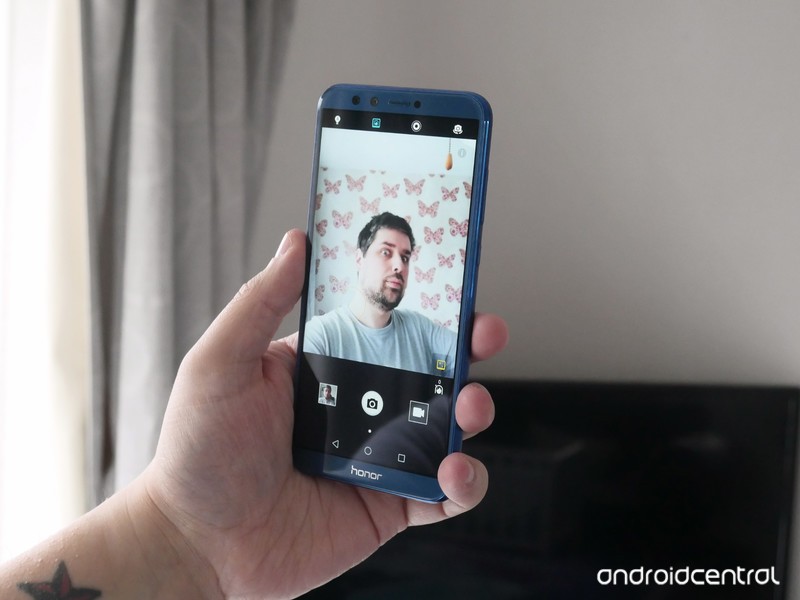
While portrait mode adds the bokeh effect to your pictures of peoples faces, the variable aperture feature allows the same thing for any photo and naturally, you have control over it, but it also allows you to shift the focus point of your photos after the fact.
There’s a selection of samples below along with just regular, every day shots, but there’s one thing I feel needs pointing out about the portrait mode: It isn’t very intuitive to use. On the Pixel 2, for example, you select portrait mode, take a photo, and you’re done. On the Honor 9 Lite you have to select portrait mode, then you have to realize you have to manually enable the bokeh effects. And adjust the “beauty” filters on the front camera because they’re all bundled together.
Portrait mode on left, no portrait mode on the right.
Did I try portrait mode a number of times, thinking it was pretty poor before I realized you had to tap on the screen to turn the bokeh on? Yes, yes I did. Why isn’t it just on? That’s the whole point of portrait mode.
The portrait mode effects are pretty consistent, but even though the Honor 9 Lite uses hardware not software, it doesn’t quite nail the edges of the subject. It’ll detect the face just fine but if you look closely around the edges of the subject, there’s some definite fuzziness.





I’ll leave you to make up your own mind on the quality, but for a £199 phone, I’m pretty happy. It isn’t going to challenge the very best phones from Huawei or anyone else, but for the most part it’s a strong enough shooter, though it does seem to struggle to get the exposure right sometimes. Hardware solutions for portrait mode means consistency and a solid result from both the front and rear cameras. Detail and color reproduction are pretty good and I particularly like the ultra snapshot feature.
As the father of two young kids, being able to double-press the volume down button to instantly launch the camera and take a photo in under a second is sometimes the difference between catching a moment and missing it entirely.
Honor 9 Lite Battery life

It’s no longer remarkable in any way that you can get through a full day comfortably on a single charge. It’s also not particularly shocking that you can go a decent chunk into the following day. I’d probably still recommend charging this phone at night, but you can happily hammer its 3000mAh battery all day and not have to worry about needing a charger before you go home.
Honor says the 9 Lite has “fifth generation smart battery saving technology” which sounds impressive. As I mentioned earlier, you still get an unnecessary notification from time to time of things running in the background, but whatever the techy reasons behind it, you’re getting good life from the Honor 9 Lite.
If you do want to try and squeeze as much life from it as you can, there’s not only a battery saver mode but an ultra battery saver mode, and a whole bunch of “optimizations” you can make to extend your battery life. Honestly, it’s 3000mAh, it’s plenty big enough. Just leave it alone, enjoy your phone and charge it when you go to bed.
Honor 9 Lite Bottom line
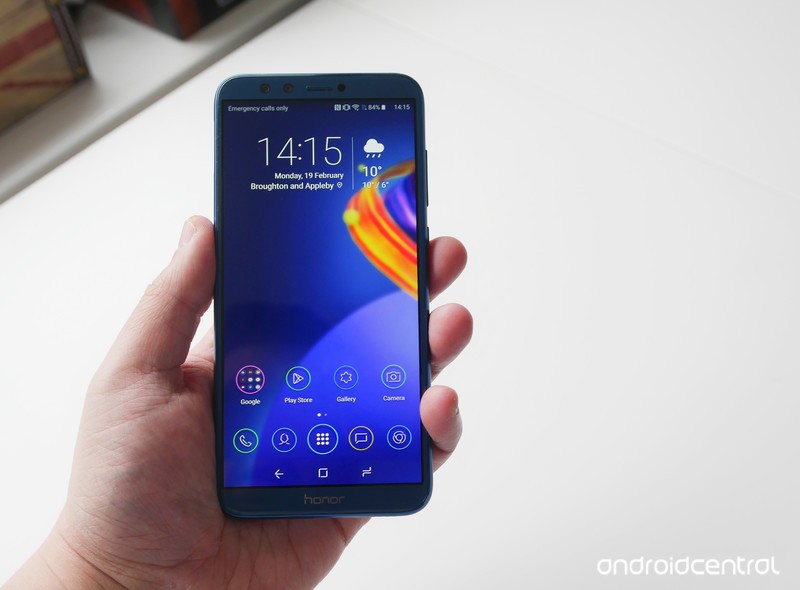
Is this the best phone you can buy for £199 right now? There’s a strong case to say yes. What you get in the Honor 9 Lite is a hardware experience comparable to more expensive, ‘flagship-class’ phones at a much lower price with a smooth, fast software experience and a strong camera wrapped up in a premium looking body. And I’m easily convinced that Honor’s Sapphire Blue is one of the best looking colors ever to grace a smartphone.
At £199 this phone might be untouchable right now
EMUI is still far from perfect, but in the Honor 9 Lite at least it comes atop Android 8.0 Oreo, so you’re not starting out with one leg in the past. And there’s no jankyness to speak of, which never used to be the case.
Quad-cameras may at first sound like a gimmick and something to look good on the box, but what it offers is that ever more important portrait mode through hardware. This means it’s reliable, produces a good quality effect and isn’t reliant on how good Huawei’s software boffins are at coding the effects.
What you get in the Honor 9 Lite is a very good phone for any price point. For £199, it’s perhaps untouchable right now.
See at Honor
The Galaxy S9 looks identical to the S8 because we’ve reached peak smartphone design

Flat, buttonless, and glass. Is this what we have asked for or the best Samsung can do?
We’ll soon be seeing the Galaxy S9 on a stage in Spain, surrounded by words like “thin” and “stylish” or “ergonomic” and “organic” or any of a long list of the regular buzzwords we always hear. And if the early looks we’ve seen from leaked press materials are correct (and come on, they are) those words are true. But we didn’t really need any leaks to know how the S9 will look overall — very thin with rounded corners, glass front and back, symmetrical in every way and a beveled edge with some fancy name to describe its geometry.
I can’t dismiss how a phone looks because a lot of people really care about it. Enough for Samsung to listen to them.
I’m the sort of person who isn’t very concerned with how my phone looks. I want to be able to use it with one hand, carry it without feeling it in my pocket, and have it do the things I need it to do without any fanfare or unnecessary fluff to get in my way. I’m pretty sure some people are the same and are only concerned with what a phone can do for them regardless how it looks on the outside. Unless it’s hideous or uncomfortable, we’re good with it.
But I have to judge how a phone looks for those people who care because that’s part of this job and people who are into how a phone looks deserve the same attention from me as people who think like I do. So I’ve been thinking: the Galaxy S9 looks a lot like the Galaxy S8, which looked a lot like the Galaxy S7 and the Galaxy S6.

Of course, there will be differences with camera lenses or fingerprint scanners and other small details. And where it counts — what the phone can do for all of us — we’ll see some of Samsung’s awesome and/or horrible ideas come into play. The Galaxy S9 will be an improvement over the Galaxy S8 even if it doesn’t look like it is. But when it comes to the design, we know what to expect, and that isn’t an accident. Samsung has decided this is the look it wants Galaxy phones to have, either because it can’t come up with a better design or, more likely, we don’t want anything else.
I’m leaning towards the latter here. Samsung can and would make a phone in the shape of a race car if it thought it would sell well. Tear away any ideas about design or innovation and you’ll find Samsung is like every other company making phones and really only wants to sell as many of them as it can because that’s what companies who stay in business do. We drive every decision Samsung makes. We have told Samsung we are finally happy with the way a smartphone is shaped and how it looks and that we’ll buy 50+ million of them if it makes them.
This isn’t only a Samsung thing. Look at Apple’s iPhone and you’ll see a very similar design. Same with Google’s Pixel or LG’s V30. Flat. Buttonless. Glass. I just look to Samsung because they are what drives the industry in you prefer an Android phone and they have been listening to feedback since the days of the Galaxy S II (remember when Roman Numerals were a thing?) morphed into the nature-inspired Galaxy S III and it was so popular the company was unable to make them fast enough.
The Galaxy S9 will probably set another new sales record, and that’s a look Samsung loves.
The Galaxy S9 looks like it will be a well-designed phone. It will be ergonomic and not dig into our hands or pockets because of squared corners or edges and the small changes from last year’s model will make it easier to use. It’s a good thing because it’s what we asked for not because Samsung can’t think of anything different or better. And Samsung will sell millions and millions of them.
Samsung Galaxy S9 and S9+
- Latest Galaxy S9 rumors and info!
- Samsung Galaxy S9 launch event set for Feb 25: ‘The camera. Reimagined.’
- The Galaxy A8+ gives us an early look at Galaxy S9 design cues
- Do you plan on getting the Samsung Galaxy S9?
- Join our Galaxy S9 forums
The Morning After: Mars 5K
Hey, good morning! You look fabulous.
This morning we’re serving up Apple updates, some information on Elon Musk’s next big tunnel plan and a check-in on a very long Martian road trip.
Small, but big.The Big Picture: A trapped atom is visible to the naked eye

This photo, Single Atom in an Ion Trap, just won the grand prize in the UK’s Engineering and Physical Sciences Research Council (EPSRC) science photo and imaging contest.
Get ’em while they’re hot.Apple updates all of its operating systems to fix app-crashing bug

Remember that single character message that’s capable of crashing chat apps on Apple devices? As promised, updates are now available for macOS, iOS, tvOS and watchOS that fix the issue and allow you to communicate using Telegu (a language native to India) in peace.
Not so boring this time.Elon Musk gets Hyperloop digging permit in Washington, DC
It’s preliminary, but this time he has it in writing.
Ages eight and up.Air Hogs’ Supernova packs motion controls in a kid-friendly drone

At this week’s Toy Fair, Spin Master is debuting its first motion-controlled Air Hogs model, the $40 Supernova. It’s not quite DJI’s Mavic Air, but it still has some sweet moves to show off in a kid-friendly form factor.
And revealed it before a fix is available.Google found another bug in Microsoft’s Edge browser

Google’s Project Zero team found a bug that would let hackers bypass the Edge browser’s security features and place malicious code within the memory of the target computer. It notified Microsoft of the issue 90 days ago and, following its policy, has now made its finding public. The only problem? Microsoft hasn’t put out a patch to fix the problem yet.
But wait, there’s more…
- The WyzeCam gets a smarter sequel that still costs only $20
- Samsung Galaxy S9 Plus dual cameras detailed in latest leaks
- What’s on TV: ‘Thor: Ragnarok,’ ‘Metal Gear’ and ‘Walking Dead’
- Hasbro’s first HasLab toy is a replica of Jabba the Hutt’s barge
- A new form of light could power next-gen quantum computers
- NASA’s Opportunity rover sees its 5,000th day on Mars
- Amazon backs Marie Curie biopic starring Rosamund Pike
The Morning After is a new daily newsletter from Engadget designed to help you fight off FOMO. Who knows what you’ll miss if you don’t Subscribe.
Craving even more? Like us on Facebook or Follow us on Twitter.
Have a suggestion on how we can improve The Morning After? Send us a note.
3D-printed smartphone microscope is good enough for scientists
Your smartphone could soon be a fully functional microscope capable of examining samples as small as 1/200th of a millimeter. Australian researchers have developed a clip-on device that requires no external light or power sources to produce a clear picture of microscopic organisms and cells from animals, plants and blood — and it can be made by anyone with a 3D printer, as the team is sharing the 3D printing files publicly.
Unlike other phone-based microscopes which use bulky LEDs and other power sources, the device works using internal illumination tunnels, which use light from the camera flash to illuminate the sample from behind. Lead developer Dr Anthony Orth said: “We’ve designed a simple mobile phone microscope that takes advantage of the integrated illumination available with nearly all smartphone cameras,” adding that the device can be used as “an inexpensive and portable tool for all types of onsite or remote-area monitoring.” The team anticipates the microscope being used to test water cleanliness, to detect disease and to analyze blood samples for parasites.
This isn’t the first time scientists have tried to turn smartphones into microscopes, but it’s comparatively the most successful. In 2016, Italian company Smart Micro Optics revealed its set of Blips lenses that could turn a phone’s camera into a digital microscope capable of magnifying up to 80 times, while 2013 saw a YouTuber demonstrate how it can be done using Plexiglas and a laser pointer.
Via: ZDNet
Source: Scientific Reports
Spotify might be building a smart speaker of its own
Spotify appears to be working a smart speaker that it says will be “category defining,” according to new job listings. “Spotify is on its way to creating its first physical products and set up an operational organization for manufacturing, supply chain, sales and marketing,” one ad states. So far, it has relied on other products like Google’s Assistant, Amazon Echo and Sonos:1 to stream its service. However, Apple recently launched its HomePod speaker with only native Apple Music support, showing Spotify’s need to take action on its own hardware.
The ads show that the new “operations manager,” “senior product manager: hardware production” and “project manager: hardware production and engineering,” would be handling manufacturing and supply for the new product. That suggests Spotify is ready to start manufacturing soon, as the Guardian points out.
Spotify is easily the most popular streaming app and works just fine on most hardware products. However, it’s impossible for Android users to stream it over the Apple’s HomePod (Mac and iOS users can do it via Apple’s proprietary AirPlay protocol). That eliminates a bit chunk of users from both Apple and Spotify’s ecosystems, depending on their loyalties.
If Spotify does release a smart speaker, it could support Alexa or Google Assistant, or both, like models from Sonos and others. The company is taking a bit of a risk of stepping on its partners’ toes, though it seems unlikely that anyone but Apple — which wants to promote its own streaming service — would block the app and its 70 million worldwide paid subscribers.
Via: The Guardian
Source: Spotify Jobs
Apple Files New Trademark Application for Classic ‘Rainbow’ Logo
Apple has applied for a new U.S. trademark for its famous multicolor logo for use on apparel, reports The Blast. The Apple filing was processed in December by the U.S. Patent and Trademark Office’s Trademark Reporting and Monitoring System (TRAM), and is now being considered for approval.
The description of the mark in the filing is of “an apple with a bite removed, with a detached leaf in green, and the apple divided into horizontal colored segments of the following colors (from top to bottom): green, yellow, orange, red, violet and blue”.
According to the application, the logo will be used for headgear, namely, hats and caps. Apple already sells t-shirts with the same logo emblazoned on the front at its Apple Park Visitor Center, so the filing likely relates to a possible extension of the existing clothing line, although there’s no saying whether Apple will actually use the trademark or just wants to protect it against unofficial use.
The classic multi-colored Apple logo was conceived by graphic designer Rob Janoff in 1977, but Steve Jobs axed the design when he returned to Apple in 1997 in favor of the monochromatic logo that continues to be used today.
 Janoff’s “rainbow Apple” was actually created as a more modern, albeit playful replacement for Apple’s first logo, which was designed in 1976 by Apple co-founder Ron Wayne. Sometimes referred to as Apple’s “fifth Beatle”, Wayne famously sold his stake in the company two weeks after it was founded.
Wayne was a fan of the ornate line-drawing style of Victorian illustrated fiction, and used Sir Isaac Newton as the company’s symbolic bellwether, an apple hanging precariously above his head. A quote from Wordsworth embellishes the baroque frame: “A mind forever voyaging through strange seas of thought, alone.”
Tag: trademark
Discuss this article in our forums
Samsung to Slash OLED Panel Production on ‘Weak Demand’ for iPhone X, Claims Nikkei
Samsung plans to slash its OLED panel output in response to Apple’s decision to cut production of iPhone X due to “weak demand”, the Nikkei Asian Review reported on Tuesday. Samsung will make OLED panels for 20 million fewer iPhones at its South Chungcheong plant in the January to March quarter, a lot lower than its original goal of supplying panels for 45 million to 50 million iPhones, according to the paper.
Samsung is said to have made a 13.5 trillion won ($12.6 billion) capital investment in anticipation of the originally expected number of OLED panel orders from Apple. The new target reportedly reduces plant production to roughly 60 percent of original forecasts, and Samsung’s display business is expected to suffer revenue declines for the first half of 2018. Samsung stock fell as much as 2.3 percent in morning trade, reported Reuters, while shares of some Japanese OLED component makers also declined.
Today’s report follows previous claims by Nikkei that “weak demand” for iPhone X has forced Apple to slash its production target by half in the three month period from January. However the claim doesn’t tally with Apple’s own results reported at its recent quarterly conference call earlier this month, and it’s unclear which supply chain sources the publication is relying on. Apple CEO Tim Cook has dismissed these types of reports in the past, suggesting that the company’s supply chain is very complex and that any singular data point is not a reliable indicator of what’s actually going on.
During its record financial results report for the first fiscal quarter of 2018 (which corresponds to the fourth calendar quarter of 2017), Cook said the iPhone X was the top-selling iPhone model every week since it had debuted in November. iPhone shipments were down 1.2 percent year-over-year compared to the year-ago quarter, but only because of an extra sales week last year – Apple’s growth was actually 21 percent year-over-year on an adjusted basis.
Related Roundup: 2018 iPhonesTag: nikkei.com
Discuss this article in our forums
Amazon will reward Prime members for shopping at Whole Foods
Amazon has announced that its Rewards Visa will now offer users the same level of reward when they shop at Whole Foods as they receive at Amazon itself. Eligible Prime members will now receive a flat five percent bonus on all purchases at Whole Foods, just as they do online. By comparison, shopping beyond Amazon’s universe will net you two percent back at restaurants, gas stations and drugstores, and a single percent elsewhere.
The key note here is that if you’re a Prime member, then you’ll receive the five percent bonus, for lesser mortals, the return is three percent. But as Amazon’s vast ecosystem of products and services begins to coalesce, users will have less reason not to sign up to Prime. And the more you succumb to that pull, the more time you’ll be spending inside Amazon’s benevolent embrace.
Source: Amazon (BusinessWire)
Xiaomi Redmi Note 5 Pro benchmarks: Putting the Snapdragon 636 to the test
The Redmi Note 5 Pro gives us a first look at Qualcomm’s Snapdragon 636 platform.

Xiaomi unveiled the Redmi Note 5 Pro earlier this week in India, and among its many highlights is the fact that the phone is the first to be powered by Qualcomm’s Snapdragon 636 platform. Like the Snapdragon 660, the Snapdragon 636 is built on the 14nm node and brings Kryo cores to the mid-range category, with the chipset featuring eight Kryo 260 cores in a 4 + 4 cluster.
The Kryo 260 leverages four semi-custom Cortex A73 cores clocked at 1.8GHz, along with four semi-custom Cortex A53 energy-efficient cores at 1.6GHz, Adreno 509 GPU, and Qualcomm’s X12 LTE modem with up to 600Mbps downlink. The Cortex A73 cores are some of the fastest available today, and as such the Redmi Note 5 Pro offers a noticeable uptick in performance over the likes of the Redmi Note 5 and other Xiaomi phones in the budget segment.
In fact, there isn’t a phone in the budget segment that comes close to the Redmi Note 5 Pro in terms of sheer performance, as we’ll see from the benchmarks. I compared the Redmi Note 5 Pro to the Redmi Note 5, which shares the same Snapdragon 625 platform as its predecessor. I also included scores from older devices, including the Snapdragon 650-based Redmi Note 3, which has two Cortex A72 cores.
The higher-performance Cortex A72 cores give the Snapdragon 650 a lead in CPU-intensive tasks, but the 28nm design doesn’t really offer the same levels of battery efficiency as the 14nm chipsets. And to provide an overview of just how competitive the Snapdragon 636 platform really is, I included benchmarks from the Snapdragon 835-based Mi 6, the Snapdragon 821-based Mi 5s, and the Snapdragon 820-based Mi 5. The Snapdragon 660-toting Mi Note 3 rounds off the list of devices included in the test, and it serves as a baseline for the results.
All seven devices are running MIUI, but the platform version is different — the Mi 5, Mi 5s, and Redmi Note 3 are on Android 6.0.1 Marshmallow, and the rest of the devices are on Android 7.1.1 Nougat.
Before we begin: The Redmi Note 5 Pro is currently running a beta build of MIUI 9 (9.2.2.0), and is slated to receive the stable update (9.2.4.0) shortly after it goes on sale. The particular beta build blocks a few benchmarks like Geekbench and GFXBench, so I’ll add those scores once the stable update hits my device.
Xiaomi Redmi Note 5 Pro benchmarks
AnTuTu
AnTuTu Benchmark v7.0.4
| Xiaomi Redmi Note 5 Pro (SD636) | 112649 |
| Xiaomi Mi Note 3 (SD660) | 139140 |
| Xiaomi Redmi Note 5 (SD625) | 77236 |
| Xiaomi Redmi Note 3 (SD650) | 90539 |
| Xiaomi Mi 6 (SD835) | 187793 |
| Xiaomi Mi 5s (SD821) | 157090 |
| Xiaomi Mi 5 (SD820) | 128339 |
AnTuTu Benchmark v7.0.4
| Xiaomi Redmi Note 5 Pro (SD636) | 55347 | 21162 | 29574 | 6566 |
| Xiaomi Mi Note 3 (SD660) | 65571 | 30348 | 35569 | 7652 |
| Xiaomi Redmi Note 5 (SD625) | 38270 | 12749 | 20432 | 5335 |
| Xiaomi Redmi Note 3 (SD650) | 43001 | 17452 | 25237 | 4849 |
| Xiaomi Mi 6 (SD835) | 63731 | 71994 | 42303 | 9765 |
| Xiaomi Mi 5s (SD821) | 53281 | 64072 | 32554 | 7183 |
| Xiaomi Mi 5 (SD820) | 48261 | 43162 | 30493 | 6423 |
Xiaomi faithful have been relying on AnTuTu for several years now to gauge the overall performance. The benchmark isn’t a reliable indicator of how good a device is to use on a day-to-day basis, but AnTuTu maintains a leaderboard that gives us an idea of where a particular phone ranks in the overall scheme of things.
With a score of 112649, the Redmi Note 5 Pro is miles ahead of any other device in the budget segment, with the Snapdragon 625-based Redmi Note 5 posting a score of 77236. The high score is down to the semi-custom Cortex A73 cores, which elevate the overall performance of the device.
Basemark
Basemark OS II
| Xiaomi Redmi Note 5 Pro (SD636) | 2020 | 1621 | 2351 | 4274 | 1023 |
| Xiaomi Mi Note 3 (SD660) | 2430 | 2296 | 3029 | 5083 | 987 |
| Xiaomi Redmi Note 5 (SD625) | 1259 | 1020 | 1022 | 3234 | 746 |
| Xiaomi Redmi Note 3 (SD650) | 1410 | 1547 | 1580 | 1946 | 831 |
| Xiaomi Mi 6 (SD835) | 3557 | 6227 | 3509 | 5712 | 1283 |
| Xiaomi Mi 5s (SD821) | 2323 | 4752 | 1628 | 3466 | 1086 |
| Xiaomi Mi 5 (SD820) | 2053 | 3956 | 1570 | 3050 | 939 |
Basemark OS II is a system-level benchmarking tool that gives a high-level overview of a device’s performance. The suite consists of an array of tests that gauge the system, internal and external memory, graphics, and web browsing performance.
Basemark Web 3.0
| Xiaomi Redmi Note 5 Pro (SD636) | 138.71 |
| Xiaomi Mi Note 3 (SD660) | 152.8 |
| Xiaomi Redmi Note 5 (SD625) | 98.81 |
| Xiaomi Redmi Note 3 (SD650) | 91.92 (without WebGL 2.0) |
| Xiaomi Mi 6 (SD835) | 239.92 |
| Xiaomi Mi 5s (SD821) | 116.86 (without WebGL 2.0) |
| Xiaomi Mi 5 (SD820) | 89.04 (without WebGL 2.0) |
Basemark Web 3.0 offers a set of over 20 web benchmarks that measure browser performance and graphics, including page load responsiveness, along with CSS, and HTML5 capabilities. Once again, we can see the Redmi Note 5 Pro holding its own next to the Mi Note 3.
Chrome
Google Octane 2.0
| Xiaomi Redmi Note 5 Pro (SD636) | 8647 |
| Xiaomi Mi Note 3 (SD660) | 8948 |
| Xiaomi Redmi Note 5 (SD625) | 4750 |
| Xiaomi Redmi Note 3 (SD650) | 9068 |
| Xiaomi Mi 6 (SD835) | 10727 |
| Xiaomi Mi 5s (SD821) | 9440 |
| Xiaomi Mi 5 (SD820) | 7974 |
JetStream 1.1
| Xiaomi Redmi Note 5 Pro (SD636) | 44.748 |
| Xiaomi Mi Note 3 (SD660) | 52.293 |
| Xiaomi Redmi Note 5 (SD625) | 25.845 |
| Xiaomi Redmi Note 3 (SD650) | 48.101 |
| Xiaomi Mi 6 (SD835) | 62.854 |
| Xiaomi Mi 5s (SD821) | 54.003 |
| Xiaomi Mi 5 (SD820) | 43.907 |
Kraken 1.1
| Xiaomi Redmi Note 5 Pro (SD636) | 4785.1 |
| Xiaomi Mi Note 3 (SD660) | 3586.4 |
| Xiaomi Redmi Note 5 (SD625) | 9897.6 |
| Xiaomi Redmi Note 3 (SD650) | 4706.4 |
| Xiaomi Mi 6 (SD835) | 3114.6 |
| Xiaomi Mi 5s (SD821) | 2630.4 |
| Xiaomi Mi 5 (SD820) | 3390.3 |
We’ve seen phones in this segment field increasingly powerful hardware over the last two years, and the Snapdragon 636 is a generational leap forward. Essentially, the Snapdragon 636 is an underclocked version of the Snapdragon 660 — the chipset offers massive gains over the outgoing Snapdragon 625, and should make budget phones that much more exciting.
With the Redmi Note 5 Pro priced at ₹13,999 ($215), Xiaomi is once again offering incredible value in this category. The phone will go up for sale in India starting February 22 on Flipkart, and is available in two variants — a model with 4GB of RAM and 64GB of storage for ₹13,999 ($215), and a version with 6GB of RAM and 64GB of internal memory for ₹16,999 ($260).
See at Flipkart
Swype is reportedly bidding the consumer keyboard biz farewell
It may be time to find a new go-to keyboard if you’re still using Swype after all these years. Swype parent company Nuance told XDA Developers that the development of Swype with Dragon Dictation for Android has been discontinued. No more future updates, no more new features — the keyboard is apparently dead. Further, the publication also found a post on Nuance’s ZenDesk from early February, announcing that the company is also killing Swype for iOS and that it’ll no longer be available on the App Store for download.
Nuance’s ZenDesk announcement matches what the company told a Redditor who complained about their keyboard crashing on Pixel 2 after a reboot. The user posted the company’s response on Reddit, which reads:
“However, we are sad to announce that Swype+Dragon for Android has faced end of development. Here is a statement from Swype Product Team:
Nuance will no longer be updating the Swype+Dragon keyboard for Android. We’re sorry to leave the direct-to-consumer keyboard business, but this change is necessary to allow us to concentrate on developing our AI solutions for sale directly to businesses.
We hope you enjoyed using Swype, we sure enjoyed working with the Swype community.”
It looks like Nuance is leaving the consumer keyboard business altogether and concentrating all its efforts on its AI technologies for businesses. Nuance already offers Dragon voice solutions for medical professionals with sufficient medical vocabulary to allow them to take accurate notes. It’s also looking to convince automakers to use Dragon as a voice assistant in vehicles. We’ve reached out to Nuance for confirmation and more details, and we’ll update this post when we hear back.
Source: XDA Developers, Android (Reddit), Nuance
 AIVAnet