


Apple Now Faces Over 60 Class Actions Over iPhone Slowdowns, Consolidation Likely Next Month
Apple’s legal battle against accusations that it intentionally slows down older iPhones to incentivize customers to upgrade to newer models will likely take place in one courtroom near the company’s headquarters in California.
The U.S. Judicial Panel on Multidistrict Litigation has disclosed that it will consider consolidating dozens of iPhone performance-related complaints filed against Apple during a hearing scheduled for Thursday, March 29 in Atlanta, Georgia, as is routine for similar cases filed across multiple states.
Apple currently faces 59 putative class actions across 16 district courts in the United States. The total includes 30 before Judge Edward J. Davila in the Northern District of California, where the lawsuits will likely be centralized given their overlapping claims, according to court documents obtained by MacRumors.
Apple faces similar class action lawsuits in at least six other countries, including one filed with the Ontario Superior Court of Justice in Canada on Friday, according to Toronto-based law firm Rochon Genova LLP.
The lawsuits have been mounting since late December, when Apple revealed that it throttles the maximum performance of some older iPhone models with chemically aged batteries when necessary in order to prevent the devices from unexpectedly shutting down. The so-called feature was introduced in iOS 10.2.1.
Apple initially didn’t mention the change in its iOS 10.2.1 release notes, and in a statement issued a month later, it still only mentioned vague “improvements” resulting in a significant reduction in unexpected shutdowns.
Apple only revealed exactly what the so-called “improvements” were after Primate Labs founder John Poole visualized that some iPhone 6s and iPhone 7 devices suddenly had lower benchmark scores starting with iOS 10.2.1 and iOS 11.2 respectively, despite operating at maximum performance on previous versions.
Apple apologized for its lack of communication in December, and reduced the price of battery replacements to $29 for iPhone 6 and newer through the end of 2018. Apple will also provide users with more visibility into the health of their iPhone’s battery in iOS 11.3, with the feature already available in beta.
Apple also emphatically denied any kind of planned obsolescence:
First and foremost, we have never — and would never — do anything to intentionally shorten the life of any Apple product, or degrade the user experience to drive customer upgrades. Our goal has always been to create products that our customers love, and making iPhones last as long as possible is an important part of that.
Keep in mind that Apple is not permanently or persistently slowing down older iPhones. Even if your iPhone is affected, the performance limitations only happen intermittently, and only when the device is completing demanding tasks.
MacRumors previously answered many frequently asked questions about Apple’s power management process, which can be disabled in iOS 11.3, or avoided by replacing your iPhone’s battery if necessary. Read our guide on how to get an iPhone’s battery replaced at an Apple Store or Apple Authorized Service Provider.
Tag: iPhone Slowdown
Discuss this article in our forums
Netflix is testing a navigation bar on Android
Netflix is looking to replace its slide-out menu with something much more visible and easier to access, based on the new user interface it’s releasing to beta testers. As Android Police has noted, the streaming platform has started testing a navigation bar at the bottom of the screen, completely getting rid of the hamburger menu you’d have to tap to get to the slide-out panel. The new design will make it easier to access your offline downloads and to see what’s coming soon. Netflix also moved the Search function from the upper right portion of the screen to the bottom bar, where it gets a bigger icon.
Last year, Netflix rolled out a server-side UI change that also gets rid of the slide-out menu. It wasn’t released as an official update, and it looks like random users are getting it whenever the company wants to install it on their devices. I personally received the UI change over 24 hours ago or so, and as you can see in the screenshots below, its navigation bar is not quite identical to the new one.

[Image credit: Android Police (left and middle) / Mariella Moon (right)]
The original UI change I received a day ago only had four icons in the navigation bar. It has since gotten the “Coming Soon” icon, but has retained My Profile that’s been replaced with the More hamburger menu in the new version. If you haven’t gotten a server-side update to your UI, your best bet is to join Netflix’s beta tester program or sideload the APK courtesy of Android Police.
Source: Android Police
The Galaxy S9 likely won’t support 4K HDR recording
At 6:30pm Central European Time, Qualcomm sent out a press release. The first paragraph of the statement was embedded in the email, saying “The Samsung Galaxy S9 and S9+ are powered by the Qualcomm Snapdragon 845 Mobile Platform, featuring Ultra HD Premium capture for cinema-quality video and Gigabit LTE for lightning-fast connectivity.” This morning, hours after that release went out, something’s changed. The words “Ultra HD Premium capture for cinema-quality video” have been replaced by “an immersive camera experience” on Qualcomm’s news portal and PRNewswire.
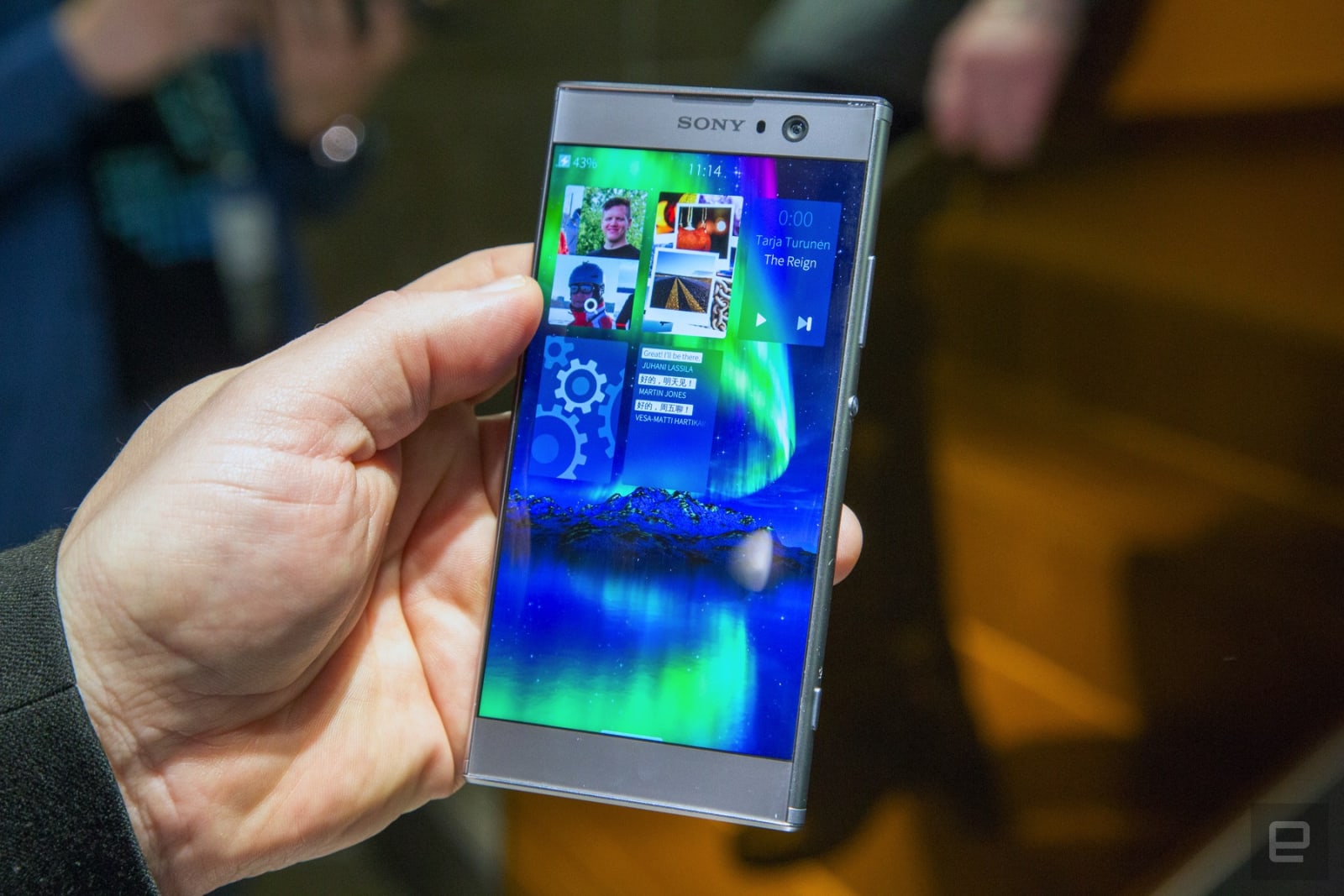
Meanwhile, Sony announced today that the new Xperia XZ2 is the first phone to record 4K HDR video, thanks to its Snapdragon 845 chipset. That means the Xperia beat the Galaxy to nab that title, although that probably doesn’t matter to the vast majority of people.
Samsung has added plenty of new features to the Galaxy S9’s cameras, but did not mention 4K HDR video capture, which is one of the highlights of Qualcomm’s latest premium chipset. The Galaxy phone maker did not respond to several attempts over a few days to get an answer as to whether that feature was supported by the S9 and S9+, although reps did address a few other queries.
Neither Samsung nor Qualcomm have officially commented on the absence of this feature, so for all we know, there could be other reasons behind the change in the news release. It’s rare that a company removes a key feature from its release, though, especially after the announcement is published.
Anshel Sag, associate analyst at Moor Insights and Strategy, believes that Samsung’s lack of comment indicates the feature is disabled. “Usually, Samsung will say something if it’s there,” he told Engadget. “The reason why they probably haven’t talked about it is they’re concerned about bringing up a feature that the chipset should have that they chose not to enable.” Moor Insights and Strategy provides consultancy services to “basically every semiconductor company,” including both Samsung and Qualcomm.
According to Sag, Samsung might not want to enable the Snapdragon 845’s 4K HDR recording feature to avoid deprecating one version of the phone over another. In the US, the S9 and S9+ will be powered by the Snapdragon 845, while models in Korea and some other markets pack Samsung’s own Exynos chips. “Samsung has a thing where if they can’t implement something across all their chipsets, then they won’t implement the feature on their phone,” Sag said. “They don’t want people running out and buying the Snapdragon of the phone like it happened before.”
Sag thinks it’s “a bit odd” that the S9 doesn’t have this capability but that the Xperia XZ2 does. “You could chalk it up to sensor technology and having experience with sensor technology,” he speculated. If you were hoping to use the Galaxy S9 to create high-quality HDR video, all signs indicate that you may not be able to do so.
Catch up on the latest news from MWC 2018 right here.
Facebook has big plans to bring internet to more people in rural areas
Over the past few years, Facebook has been rolling out several initiatives to bring free internet to people in underdeveloped areas all around the world. That includes things like Terragraph, a millimeter-wave wireless technology that not only serves connectivity but does so in speedy form — it runs on the same frequency as the one being tested by operators for proposed 5G cellular networks. Then there are others such as the Telecom Infra Project (TIP), a collaboration between tech industry firms to accelerate the development of internet infrastructure in rural areas. OpenCellular, meanwhile, is a low-power base station optimized for underserved regions across the globe. In order for all of these projects to be successful, though, Facebook can’t do it alone.
As such, the company announced at MWC 2018 new partnerships that can speed up the developments of these efforts. Jay Parikh, Facebook’s head of engineering and infrastructure, said during a panel in Barcelona that, China Unicom, Sprint, and Telenor are the latest carriers to join TIP and that the project has now grown to more than 500 members. That’s a great sign for Facebook, as it shows that many companies are invested in the fruition of systems like Terragraph and OpenCellular. Parikh also revealed that Telefonica, Vodacom, as well as BT, Nokia, and Cavium, are all working on open trials of OpenCellular in different parts of the world, including South America, Africa and the Highlands and Islands of Scotland.

A Terragraph station.
Parikh said that, as shown by these developments, Facebook’s goal is to remain committed to working closely with telecom networks and operators to help connect the 3.8 billion people who still can’t get online. He said the only way to accomplish that is for everyone in the industry to collaborate and take a comprehensive approach to drive the ecosystem faster, rather than trying to do it alone — or worse, not taking any action at all. And as the internet becomes a utility in large parts of the world, these efforts to assist unconnected and under-connected populations will just become more and more important.
“By working together as a community,” Parikh said, “we believe we can help operators build more robust and flexible networks necessary to meet new technology challenges and unlock new ways of connecting people.”
Catch up on the latest news from MWC 2018 right here.
Plex adds DVR scheduling to its Apple TV app
Halfway through 2017, Plex started offering live TV and DVR features for users willing to cough up $5 a month. They still needed a tuner of their own, to avoid any Aereo-like shenanigans, but it was still great for cord-cutters. Now, Plex is adding more features to the Apple TV app for its DVR system, enabling users to schedule recordings and view closed captions.
With warmer weather (hopefully) just around the corner, don’t miss out on your favorite shows while you’re frolicking outside. Along with watching #LiveTV, now you can also schedule recordings and use closed captioning on your Apple TV. #DVR https://t.co/SUNaGFr7oC pic.twitter.com/OjotROFpq1
— Plex (@plex) February 23, 2018
The selection of channels is, perhaps obviously, limited to the ones that your OTA antenna can pick up in your local area. But that should stretch as far as ABC, NBC, CBS, Fox, the CW and plenty of others, plus the ability to sync your shows for offline viewing. Earlier this month, Plex also pushed out timeshifting for the Xbox One and the Plex Web App, as well as closed captions for Roku players.
Source: Plex
Qualcomm’s simulated 5G tests show a 20x increase in download speeds over 4G
Qualcomm’s simulation tests in Frankfurt and San Francisco highlight 5G’s real-world potential.

Qualcomm is touting up its advances in the field of 5G, announcing last week that its upcoming 5G-enabled chipset will be built on Samsung’s 7nm node. At Mobile World Congress, Qualcomm is demonstrating the real-world potential of 5G by sharing findings of extensive network simulations it has conducted over the past several months.
Qualcomm conducted two simulations, one in Frankfurt and the other in San Francisco, leveraging existing cell sites in both locations. The Frankfurt simulation modeled a Non-Standalone (NSA) 5G NR network “operating on 100 MHz of 3.5GHz spectrum, with an underlying Gigabit LTE network operating across 5 LTE spectrum bands.” The California test, meanwhile, modeled a hypothetical NSA 5G NR network “operating in 800 MHz of 28 GHz mmWave spectrum, with an underlying Gigabit LTE network operating across 4 licensed LTE spectrum bands plus License Assisted Access (LAA) bands.”
Qualcomm is quoting heady increases in download speeds from the simulated test in Frankfurt, recording a massive 900% uptick over 4G, 12x increase in speeds for the “10th percentile” user, and a median streaming quality of 8K. Average download latency was also significantly reduced, from 116ms to 17ms:
- Browsing download speeds increasing from 56 Mbps for the median 4G user to more than 490 Mbps for the median 5G user, a gain of approximately 900 percent
- Approximately 7x faster responsiveness, with median browsing download latency reduced from 116ms to 17ms
- File download speeds of 100 Mbps for the 10th percentile 5G user, meaning that 90 percent of 5G users have download speeds of more than 100 Mbps. This is compared to 8 Mbps for the 10th percentile LTE user.
.- Median streaming video quality increasing from 2K/30 FPS/8-bit color for LTE users to 8K/120 FPS/10-bit color and beyond for 5G users.
The test in San Francisco yielded even better results, with Qualcomm noting a median download speed of a staggering 1.4Gbps, an uptick of 2000% from 4G. The rest of the statistics followed in the same vein:
- Browsing download speeds increasing from 71 Mbps for the median 4G user to 1.4 Gbps for the median 5G user in mmWave coverage, a gain of approximately 2000 percent
- Approximately 23x faster responsiveness, with median browsing download latency reduced from 115ms to 4.9ms
- File download speeds of more than 186 Mbps for 90 percent of 5G users, compared to 10 Mbps for LTE, a 1,826 percent gain. The median 5G file download speed was 442 Mbps.
- Median streaming video quality increasing from 2K/30 FPS/8-bit color for LTE users to 8K/120 FPS/10-bit color and beyond for 5G users.
With the simulated tests, Qualcomm is showing just how fast 5G is in real-world usage scenarios. Thus far, we’ve only seen metrics from controlled tests in labs, so the real-world simulations give us an early look at the 5G’s potential.
Qualcomm is working with 18 global operators to conduct 5G trials, and the vendor noted that over 20 leading device makers are turning to the Snapdragon X50 5G modem for their devices. With median download speeds surging over 1,000% from 4G, Qualcomm is envisaging a “whole host of new services and experiences” beyond browsing, downloading, and streaming.
The first wave of consumer products with Qualcomm’s 5G modem will be making their debut in the first half of 2019. Until then, we’ll have to make do with the X24 modem, which tops out at just 2Gbps.
How to declutter your phone with Google Files Go
Files Go is an elegant solution to a long-standing problem on Android.

Managing internal storage has always been a problem on Android, particularly on devices with limited storage. For instance, a phone with 16GB of storage has just over 10GB of usable space at best, with the rest of the storage taken up by the operating system itself. That doesn’t leave a whole lot of room for your apps, music, photos, videos, and games, and while there’s no shortage of cleaning and optimizations apps on the Play Store, most of them tend to be nothing more than conduits for malware.
Thankfully, Google is finally addressing the issue with Files Go, a storage management utility that’s designed for the Android Go platform. Android Go is a lightweight operating system that’s tailored for devices with 512MB to 1GB of RAM and 8GB of storage. The OS takes up less than half the install size as the full-fledged version of Android, and the bundled apps have also gone on a diet and take up a fraction of their usual space.
Even then, users will be left with around 5GB of storage, and this is where Files Go comes in handy. The app intelligently monitors the apps you use and files that have been downloaded to your device, and offers recommendations on content that can be deleted. It also has a nifty feature that automatically clears the cache, and Google built filters to target specific WhatsApp image forwards, which tend to clutter up a device over time.
Although Files Go has been designed to serve Android Go devices, the app itself is available to download for all devices on the Play Store. It comes in at just 4.4MB, and is a must-have if you’re using a phone with limited storage.
How to install Google Files Go
Open the Play Store from the app drawer or the home screen.
Search for Files Go.
Hit the Install button on the Files Go card.

How to get started with Google Files Go
After installing Files Go, you’ll need to give it usage access so it can monitor your app usage and offer suggestions for apps you can delete. Here’s how to get started with Files Go:
Open Files Go from the app drawer or home screen.
Hit the Continue button.
Give Files Go access to photos, media, and files by hitting the Allow button.

In the Find unused apps card, tap the Get started button.
Hit the Go to settings button.
Tap Files Go in the Apps with usage access screen.

Toggle the button next to Permit usage access.
Go back to the app to see cleanup suggestions. In the Temporary app files card, hit the Free up button to clear unused files.
Select the button next to All items and hit Clear.

One of Files Go’s strengths is its ability to find unused apps to free up space. Now that we’ve given the app access to monitor your phone usage, you’ll see periodic recommendations when it finds apps that you haven’t used in a long time. You’ll also get notifications to clear unused files or excessively large media content when you’re running low on storage.
Overall, Files Go is one of the most robust storage management apps available on the Play Store, and the fact that it’s made by Google means you don’t have to worry about dealing with malicious ads. In addition to clearing your cache, Files Go also has a straightforward file transfer service that works offline. If you’ve been using SHAREIt and are ready to make the switch to another service, you should give Files Go a try.
Download Files Go (free)
Nokia 7 Plus hands-on: A Pixel 2 XL for the frugal set

It may not be flashy, but this is a great phone.
Nokia’s new 8 Sirocco may be stealing the show, but it’s the lineup of less expensive phones that will be selling in big numbers. Anchoring the core mid-range spot in its lineup is the new Nokia 7 Plus, a €399 phone that doesn’t have the flair of higher-end phones but represents what Nokia is really good at right now.
And after spending some time with it here at MWC 2018, it really feels like it’s aimed at being a Google Pixel 2 XL for the frugal among us.
This is efficient, clean design with just a touch of style — Nokia, in a nutshell. The solid metal frame makes the phone sturdy, and the ceramic-like multi-coat paint job has just a subtle bit of texture to give you ample grip. Nokia says the thick paint let it have larger antennas because it could completely cover them with the textured finish in the end. The metal is polished up nicely with a great contrasting gold color, popping off of the white or black back.
I really wonder how much Nokia targeted the Pixel 2 XL here.
The texture is not unlike the Pixel 2 XL’s, and that’s a good thing. Similarly, the Nokia 7 Plus isn’t attempting to be super-thin or sleek, it’s just realistically sized and designed. It has a 6-inch 18:9 display with nicely curved glass over top and rounded corners on the display panel. The overall dimensions and weight are nearly the same as the Pixel 2 XL. The rear fingerprint sensor is easy to reach, right below the dual camera setup — which I unfortunately didn’t have enough time to test thoroughly, but you hope with a 12MP f/1.75 combo and Zeiss optics it’d at least hit the mark for the price point.
The phone looks great in both colors, though you’ll need to have a bit of a sense of style to really acclimate to that shiny metal. But aside from that, it feels really good as well. Large, weighty, solid. Function over form in many places.
The Nokia 7 Plus has a super-clean Android One take on Oreo, which should be plenty fast on this Snapdragon 660 processor and 4GB of RAM. The display is just 1080p as well, and with a big 3800mAh battery I wouldn’t be surprised if the battery life was fantastic.
Looking at everything the Nokia 7 Plus offers, it all makes you wonder how much it really targeted the Pixel 2 XL’s experience, if at all. Between the design similarities, overall shape and size, and software experience, this feels like a budget version of Google’s flagship — and based on who I’ve seen get excited about Nokia’s recent phones, that’s a great strategy.
Will you be upgrading to the Samsung Galaxy S9?
You know you want it.
After months of leaks and rumors, Samsung finally took the stage in Barcelona yesterday to officially unveil the all-new Galaxy S9 and Galaxy S9+. These are Samsung’s top two phones until the Note 9 makes its debut in the second half of the year, and each one packs a ton of features and upgrades over 2017’s Galaxy S8 series.

A lot of our forum members recently started talking about the Galaxy S9/S9+ and whether they’d be upgrading to them from their current phone, and this is what they had to say.
Ramon Castillo1
02-25-2018 01:29 PM“
Hell yeah. Much improvement to the camera that exceeds the Note 8 and much faster chip. However, most likely the Note 9 will focus on the screen (more resolution and dolby vision?) and fingerprint sensor under the screen. Samsung seems to focus on things on each line and they chose camera focus for the S9 line.
Reply
Philipmom
02-25-2018 04:30 PM“
I’m going to wait and see what’s happening with the note 9 and X then pick between the two. If the X is a folding phone I might pass since that really new tech can be sorta glitchy.
Reply
areyes163
02-25-2018 05:24 PM“
I’ll wait it out for the note 9 the note 9 will get everything the s9 has and added features. Plus I do use the s pen a lot so I’ll wait. It will be hard because I love new phones. We will see if I have the strength to wait it out lol.
Reply
Scott8881
02-25-2018 09:41 PM“
Low light camera on the S9+ is going to be so much better than my V30, and I’m finding it is such an important feature… my S7 Edge took better pics in low light than V30. Not even using the quad dac, so yes, I’m upgrading, can’t wait!
Reply
Now, we’d like to hear from you – Are you upgrading to the Galaxy S9?
Join the conversation in the forums
Samsung Galaxy S9 and S9+
- Hands-on with the Samsung Galaxy S9 and S9+
- Galaxy S9 and S9+: Everything you need to know!
- Complete Galaxy S9 and S9+ specs
- Galaxy S9 vs. iPhone X: Metal and glass sandwiches
- Galaxy S9 vs. Google Pixel 2: Which should you buy?
- Join our Galaxy S9 forums
Canon’s AI flash moves by itself to make portraits more flattering
Camera flashes aren’t normally the sexiest products, but Canon has made its Speedlite 470EX-AI a lot more interesting by using artificial intelligence. As photographers know, you’re better off bouncing a flash off a wall or ceiling to best flatter subjects, rather than pointing it directly at them. Figuring all that out can be a pain, however, which is where Canon’s “AI Bounce” tech comes in. By calculating the distance between the camera, ceiling and subject, it lets beginning photographers “utilize the ideal lighting and natural brightness of the room,” Canon explains.
The flash will adjust itself automatically, even if you move the camera, thanks to built-in motors at the base and hinge, and sensors in the front corner (as shown above). When you double-tap on the shutter release, the flash first points at the subject and the ceiling to calculate distances. It then sets itself to the ideal angle for the perfect bounce light on your subject. You do have to stick to that camera position, however, or the whole dance starts over again.
It can also operate semi-automatically, letting more experienced photographers store flash positions in memory, then recall them when needed. It includes an optical receiver, but lacks a radio transmitter if you need remote studio operations.
Lately, Canon has been accused of being stuck in the past with its camera tech compared to rivals like Sony and Fujitsu. However, this new flash features some pretty cool tech, and the new entry-level M50 is also a good sign for the future of its mirrorless lineup. The 470EX-AI arrives in April 2018 for $400, or £500 in the UK.
 AIVAnet