


HomePod Availability is Tightening Ahead of Friday’s Launch
HomePod supply is beginning to dwindle ahead of the speaker’s launch this Friday across the United States, United Kingdom, and Australia.
Apple Store pickup is now unavailable for the HomePod in all three countries, following several days of launch day availability, while delivery estimates for online orders of the speaker in Space Gray and White have been pushed back to February 12 in both Australia and the United Kingdom.
HomePod orders placed today on Apple’s online store are still estimated for delivery on February 9 in the United States, when limited quantities of the speaker will be made available to walk-in customers at select Apple Stores and resellers, including Best Buy, John Lewis, Harvey Norman, Telstra, and EE.
Apple still lists most orders in the “Preparing for Shipment” stage, but that should soon change to “Shipped” as Friday draws closer. As noted in our forums, some customers have already been able to obtain a UPS tracking number.
HomePod sales will long be a subject of debate, as Apple’s delivery estimates only serve as anecdotal evidence of exact supply and demand. We’ll likely never know for certain, as the speaker will be grouped under “Other Products” in Apple’s earnings results alongside products like the Apple TV and Apple Watch.
The embargo for HomePod reviews has just lifted this morning, with articles from The Verge, The Wall Street Journal, CNET, TechCrunch, iMore, and others. We’ll have a more in depth roundup to share shortly.
Related Roundup: HomePodBuyer’s Guide: HomePod (Buy Now)
Discuss this article in our forums
Snapchat redesign adds colorful text, while all users can mute specific chats
Snapchat’s Stories format, as well as several other features like augmented reality masks, have been widely imitated. But this time Snapchat could be the one doing the imitating. Snapchat recently confirmed that, for users already using the big redesign in the U.K., Australia, and Canada, new type designs are beginning to roll out. The update comes on the heels of Instagram’s Type Mode that allows users to add text photo-free to Stories.
When typing on a Snap, the update allows users to choose from the classic option, big text or a glow or rainbow effect, bringing more options into the way the text looks over that image. The update expands options inside the existing type tool.
Unlike Instagram’s version, there doesn’t appear to be a way to type without a photo. Instagram’s Type Mode only launched last week — though tests of the feature leaked prior to that — so Snap Inc. and Instagram could have been working on similar features simultaneously with only a few days between the launches.
Snapchat confirmed to TechCrunch that the new type options are rolling out, but only to users that already have access to the big redesign. Announced in 2017, the design overhaul attempts to make the app easier to understand for newbies as Snapchat tries to expand its user base. The update’s global rollout has been delayed, however, with the changes only available in Australia, Canada, and the U.K.
Another recent update is accessible to users that haven’t seen Snapchat’s new look yet — a Do Not Disturb mode for temporarily muting conversations. The feature rolled out a few weeks ago, but without any formal announcement and only gesture controls to access the tool, the feature has gone largely unnoticed. Users need to tap and hold on a friend or a group and tap settings to turn the mode on.
Snapchat says that the person on the other end of the Do Not Disturb won’t receive a notification that they have been silenced. Users can still go in and participate in the conversation, see Snaps and send them — they just won’t receive a notification for every new message.
Editors’ Recommendations
- Snapchat’s redesign lets you share public Stories outside of the app
- Snapchat’s risky redesign could debut in early December, anonymous source says
- Instagram users could soon cross-post Stories to WhatsApp
- New Facebook Messenger tool could let businesses broadcast mass chat messages
- Tired of the same face filters? Skype now uses A.I. to offer new suggestions
Hours before launch, SpaceX posts Falcon Heavy animation with Bowie soundtrack
We’re just hours away from SpaceX attempting the debut launch of its huge Falcon Heavy rocket, an event that’ll make it “the most powerful operational rocket by a factor of two,” as SpaceX CEO Elon Musk once pointed out.
A new video animation released on Monday shows how the SpaceX team would love the test launch to go, but as Musk has said on several occasions over the last year, there’s a good chance the whole thing could quite literally go up in smoke. Following the mother of all explosions, that is.
With Bowie’s Life on Mars (the mission is heading there, y’see) as its soundtrack, the animation begins with the almighty Falcon Heavy — essentially three Falcon 9 rockets strapped together — ready to launch at the Kennedy Space Center. Just before the 27 Merlin engines fire up, we glimpse the rocket’s Tesla Roadster payload (well, they wanted to send something) at the tip of the Heavy. Musk said he loves “the thought of a car drifting apparently endlessly through space and perhaps being discovered by an alien race millions of years in the future.”
With the countdown complete, the Heavy roars into life, generating 5 million pounds of thrust, equal to 18 Boeing 747 aircraft, as it lifts off the ground. As with the previous Falcon 9 launches, the Heavy’s boosters will return to Earth for reuse — part of SpaceX’s plan for lowering the cost of space travel.
The animation shows the two side boosters returning pretty much at the same time, landing back at the Kennedy Space Center. The center core, however, travels on further and so comes back a little later, touching down on a SpaceX drone ship in the Atlantic Ocean.
If all goes to plan with the second stage, “at max velocity the Roadster will travel 11 km/s (7mi/s) and travel 400 million km (250 million mi) from Earth,” passing Mars and entering into an orbit around the sun.
Musk’s private space company points out that despite the new rocket on this occasion carrying a car instead of a crew, the “Falcon Heavy was designed from the outset to carry humans into space and restores the possibility of flying missions with crew to the moon or Mars.”
So, fingers crossed for Tuesday’s much-anticipated mission. And here’s hoping Musk won’t have to add it to his rocket booster bloopers video.
The launch window is between 1:30 p.m. and 4:30 p.m. ET on February 6. Check out the live feed for something truly spectacular. Because it will be, whatever happens.
Editors’ Recommendations
- After delays, the SpaceX Falcon Heavy is set to launch on February 6
- SpaceX just fired its most powerful rocket ever. Next stop, a Tesla in space
- Elon Musk posts pics of huge Falcon Heavy rocket ahead of debut launch
- Elon Musk’s Tesla Roadster is ready for its long journey to Mars
- Watch live as SpaceX launches a Tesla into space aboard its biggest rocket ever
iPhones are now part of cops’ crime-fighting kit in New York City
The cops of New York City have a new crime-fighting tool — the iPhone.
Having finally decided that Windows-based phones aren’t the future, the New York Police Department is now in the process of ditching its Lumia handsets and replacing them with thousands of Apple-made devices.
The iPhones-for-cops plan was first revealed last summer, and this week the New York Daily News reported that the transition is now well and truly underway.
Officers have been dropping by an old police academy in Manhattan to swap their Lumia for an iPhone 7 or 7 Plus. With some 36,000 officers waiting to get their hands on the new phone, it’s clearly going to take some time to complete the changeover, though police in the Bronx and Staten Island are already getting to grips with their new device.
NYPD Deputy Commissioner for Information and Technology Jessica Tisch told the Daily News they’re giving out around 600 iPhones a day, adding that they’re seeing “a lot of excitement” among cops collecting their new handset.
New York’s finest are using their smartphones for a number of tasks, including filling out crime reports and receiving videos and surveillance pictures of wanted suspects. When responding to calls, the device also provides officers with any criminal history connected to an address, which may give them a better idea of what to expect when they arrive.
Officer Christopher Clampitt told the Daily News that these days, 911 dispatches often come over the phone before the department radio, adding that an alert to his 911 app last year helped him and his partner to reach a robbery that was in progress, enabling them to stop it and make an arrest. Clampitt said that if they’d waited for the radio, the response time would’ve been slower and the suspect could’ve escaped.
The police department won’t be forking out any extra cash for its new handsets as it’s defined as a hardware upgrade, according to the terms of its AT&T contract.
While the cops seemed happy with the way the Lumia 830 and 640 XL phones helped them with their daily duties, Microsoft last year ended support for the Windows Phone 8.1 operating system that powered them, prompting the NYPD to consider an alternative device.
Editors’ Recommendations
- Go ahead, have another! The best ridesharing apps help get you home safely
- Get your next home with the best apartment-finder apps
- The best (and worst) cities for keeping your New Year’s resolutions
- Facebook wants to be your go-to source for vetted local news
- Stay hidden in the elements with Master and Dynamic’s Greene Street headphones
Honor 9 Lite unveiled for UK, starts at just £199 for a quad-shooter

The Honor 9 Lite offers some impressive features at an affordable price.
Huawei has unveiled the Honor 9 Lite, the latest of its “Lite” series of phones, with a focus on photography at a low price point. Delivering a sleek, premium design in a budget package, the handset packs impressive features for the price, including an 18:9 full HD display, dual rear and front-facing cameras, and a premium glass finish.
The Honor 9 Lite is powered by the company’s own Kirin 659 chipset and 3GB RAM, with 32GB of internal storage. This accompanies the device’s 18:9 full HD edge-to-edge display, coming in at 5.65 inches. Dual rear and front-facing cameras are also onboard, at 13 MP and 2 MP respectively, with software improvements that follow. Other highlights include a 3,000 mAh battery, a rear fingerprint reader and Android 8.0 Oreo with EMUI 8.0.
The Honor 9 Lite comes with a premium finish, sporting a “mirror-like” glass design rivaling higher-end phones. This finish will be offered in Sapphire Blue, Midnight Black, and Glacier Gray variants. The device also retains the beloved 3.5 mm headphone jack, however at the trade-off of a Micro USB port.
The Honor 9 Lite starts at £199, available on February 9, 2018. The device will be available across various leading retailers, including Amazon, Argos, and Very.


Updated, February 6, 2018: New images obtained at the Honor 9 Lite launch event.
Chromebook vs. Android tablet: Which is best?

Sometimes, even the biggest smartphone isn’t big enough.
Mobile means more than just phones. Since the first Android tablet back in 2011, plenty of us have found that things, like watching videos or playing a game, can be better on a bigger display and there are some great tablet options to choose from, both cheap and expensive. Ask anyone with a Galaxy Tab S3 and they’ll tell you about the incredible display and how thin and light it is. Or talk to people who are still using the trusty Shield Tablet and they’ll let you know it’s dependable, great for gaming, and NVIDIA just keeps updating it and updating it.
The Best Android Tablet
But there is another way to have Android apps — the same apps as you would find on your phone or tablet — on a big screen. Google has doubled down on Chromebooks and after a sluggish start, pretty much every Chromebook you can buy new today will be able to install Android apps through Google Play. This makes a Chromebook a lot more attractive for many of us.
The Best Chromebook
But which should you choose if you want the big-screen experience from the apps you use now and the apps you’ll want to use? Form factor plays a part in your choice, but there are some other considerations, too.
Convertibles can feel clunky, but so are tablet keyboards

Soon some company will make a Chromebook with a detachable keyboard; it has to happen. In the meantime, most Chromebooks have a hinge system that allows you to fold the keyboard back under the display and use it as you would a tablet.
This works and also lets you stand your Chromebook like an easel for watching a video or sharing a presentation. But it’s not the most svelte-feeling experience you’ll ever find. Even the Pixelbook, which is paper thin and still nice and light when in “tablet mode” leaves you with an exposed keyboard on the back. A Chromebook will shut down the keyboard so you’re not pressing keys willy-nilly, but it doesn’t compare to a tablet when you’re holding it in your hands. And unless a case company gets really creative, it never will.

At the other end of the experience, using a tablet with a Bluetooth keyboard can often be frustrating. You have one more thing to charge, Bluetooth can be finicky and connection issues are common, and if you’re a fast typist you’ll quickly notice the intermittent input lag. The keys themselves won’t have the “action” of a laptop keyboard and there’s no trackpad. It’s obvious from the start that even the best tablet keyboard is an accessory, not part of the experience.
How you want to use your big-screen Android makes a lot of difference here. If you want something you can hold in your hands that’s super-thin and will be using it this way most of the time, a tablet might be a better choice. That’s how they are designed to be used, and a good keyboard folio or case will be there for the odd times when you need to do a lot of typing.
Android and Chrome is a software masterpiece

Android itself is mostly the same on a tablet and a Chromebook. Android apps designed for the home screen or the interface being the exception; icon packs, widgets, wallpaper apps, and the like aren’t available for a Chromebook because they won’t have anything to do. But you can find themes from the Chrome Store to spiffy up the desktop.
You’ll also run across apps that won’t work with your particular model because of hardware or software version. That goes for both tablets and Chromebooks and with well over a million apps in one place they will always be there. Other than these differences, apps look, work, and feel mostly the same.
A huge advantage for a Chromebook though is the web browser. Chrome OS has a fantastic desktop web browser. Even better than Chrome on Windows or a Mac. It’s fast, efficient, and there are thousands and thousands of extensions and apps that can plug into it.

It’s also completely siloed from any other app, which means there’s no way for an Android app from Google Play to get to the private data — passwords, credit card info, or anything else — you have stored in Chrome. Android apps run natively on a Chromebook, but they are in what’s called a “container” that can run independently from other parts of the software. This does have one drawback because for now, Android apps don’t have access to SD card data. that’s a solvable issue and we’re pretty sure Google is working on a way to securely share the SD card with Android apps. Once that happens, you’ll also be able to use an external hard drive or networked hard drive as SD storage for almost unlimited space.
So ask yourself, how important is the browser? If being on the web — and that includes things like the full interface for Facebook, YouTube, or Reddit — is important, the Chromebook is clearly superior when it comes to the software. You’ll be able to play the same games, use the same social apps or work apps, and have the whole web available instead of the mobile-optimized web. Until the internet catches up and optimizes everything for mobile, that’s a pretty big difference.
It’s all about how you use it

Android isn’t perfect on a big screen, and companies like Samsung have done what they can to make it better for their tablets, but for the most part, Android on a Chromebook gives you a better software experience than Android on a tablet.
Tablets were designed to be held and used, while a Chromebook is a laptop with a keyboard attached. That makes a difference if you plan to keep it in your hands while you’re doing your thing. Tablet makers have some nice keyboards you can pair, but they don’t offer the seamless experience a laptop will. And folding the screen over the keyboard can make a Chromebook into a tablet, but it’s usually thick, can be a little heavy, and you’re holding on to the keyboard around the back.
Decide how you’ll be using it and what you want to do with it, and the answer becomes obvious.
Chromebooks
- The best Chromebooks
- Should you buy a Chromebook?
- Google Play is coming to Chromebooks
- Acer Chromebook 14 review
- Join our Chromebook forums
PSA: The Galaxy Note 8’s S Pen won’t give you cancer
Seriously, people?
In early 2018, it’s hard to go about your life without hearing someone talk about “fake news.” This is something that’s mostly debated in the political realm, but it can also find its way into the tech world, too.

Most recently, user D13H4RD2L1V3 took to the Android Central forums to debunk a video that some of you have likely seen making its way around various sites. The video claims that the Samsung Galaxy Note 8’s S Pen can cause cancer as a result of electric signals, and this is nothing but 100% baloney.
As D13H4RD2L1V3 points out:
D13H4RD2L1V3
02-03-2018 08:14 AM“
So, you may or may not have seen a video where it is claimed that S Pen causes cancer due to the phone detecting the S Pen when it is close to the display, issuing concerns about radiation.
Well, let me debunk this.
First of all, all mobile communications devices produce a form of radiation that is considered to be non-ionizing. Compared to ionizing radiation, which can cause cancer when…
Reply
Following this, some of our other forum users responded with the following:
trucksmoveamerica#AC
02-03-2018 08:20 AM“
This is what happens when iPhone sales drop, fear advertising starts. You are correct, the signals are all around us all day long every day.
Reply
Mooncatt
02-03-2018 08:58 AM“
It may give you cancer… If you ate the S-pen, or some silly thing like that.
Reply
Rukbat
02-03-2018 12:50 PM“
1. Electromagnetic radiation is still radiation, but it’s the non-ionizing kind. (The light from a light bulb is more dangerous – it’s just that the amount is so small that a lifetime under a 100 Watt light bulb won’t even give you a tan.)
2. Non-ionizing radiation isn’t just a weaker form of radiation, it’s a different type of radiation. It’s like eating arsenic. Chemicals can kill you. …
Reply
Along with letting this serve as a reminder to be smart about where you get your news from, we’d also like to hear from you — What’s the craziest tech-related fake news you’ve come across?
Join the conversation in the forums!
Samsung Galaxy Note 8
- Galaxy Note 8 review
- Galaxy Note 8 vs. Galaxy S8+
- Which Note 8 color is best?
- Complete Galaxy Note 8 specs
- Join our Galaxy Note 8 forums
Verizon
AT&T
T-Mobile
Sprint
Best Buy
The Morning After: Intel attempts smartglasses
Hey, good morning! You look fabulous.
Good morning! Interested in a three-wheeled EV? How about a Han Solo origins movie? Ah, okay, how about Intel trying to make smart glasses a thing? We also take a closer look at how a US Paralympian designed Team USA’s snowboard prosthetics for this year’s Winter Olympics, while we get ready for the SpaceX Falcon Heavy launch planned for this afternoon.
A low-powered laser beams images into your eye.
Intel’s smart glasses are subtle enough that you might want to wear ’em

Intel has launched an impressively light, regular-looking set of smart glasses called Vaunt, confirming last week’s rumors. Seen by The Verge, they have plastic frames and weigh just under 50 grams, a bit more than regular eyeglasses but much less than Google Glass, for example. The electronics are crammed into the stems and control a very low-powered, class-one laser that shines a red, monochrome, low-fi image into your eye. Perhaps crucially, the glasses contain no camera, eliminating the big brother vibe from Glass and other smart glasses. Vaunt is mainly aimed at giving you relatively simple heads-up notifications. Intel says the glasses are more stealthy than a smartwatch, allowing you to check notifications while doing other activities. But would you want a pair?
He’s as overconfident as ever.
Solo: A ‘Star Wars Story’ trailer reveals Han’s roots

The troubled spin-off production finally manages a trailer.
From pro snowmobiler to Paralympic athlete.
A US Paralympian designed Team USA’s snowboard prosthetics

Mike Schultz was a professional snowmobile racer, but in 2008, his life’s course took a turn after a competition accident shattered his left knee and left him clinging to life. When his injuries began causing his kidneys to shut down, doctors decided to amputate the leg just above the knee.
“I spent a total of 13 days in the hospital and was able to get back home on Christmas Eve to a whole new world of challenges,” he explained. “Later that spring, after learning how to walk on my everyday prosthetic leg, I realized pretty quickly that I needed a plan B to get back into sports and the fun activities that I wanted to do.” That plan B turned out to be designing his own prosthetic leg — one purpose-built to handle the rigors of extreme sports — and starting a fabrication company, Biodapt, to produce it. Thus, the Moto Knee was created.
Jay Y. Lee was meant to spend five years in jail, however…Disgraced Samsung boss walks free from prison
The heir to South Korea’s largest company has avoided a lengthy spell in prison after a court suspended his sentence. Samsung vice chairman Jay Y. Lee was meant to spend five years behind bars after being found guilty of bribing public officials. Now, after spending close to a year in detention, he has been released and will spend the next four years on probation.
Lee was arrested as part of the corruption scandal that brought down South Korean President Park Geun-Hye, herself awaiting trial.
The nation is trying to battle a big uptick in road deaths.
France bans smartphone use in cars even when you pull over

Road deaths have been on the rise lately in France and with nothing much else to pin it on, authorities are going after scofflaw drivers who text or call. It’s now illegal to hold your phone on public roads even when you’re pulled over to the side, whether you’re blocking traffic or not. The high-court ruling means that taking what some consider to be a safe step — pulling over to talk on the phone — could still result in points and a fine of 135 euros.
The company just has to make more than one.
Sondors’ three-wheeled EV is affordable and stylish

Starting a new car company is tough. In fact, it’s nearly impossible. Then Tesla pulled it off. As we transition from the internal combustion engine to electrification, startups and even a few established players are taking a chance on EVs. Building a three-wheeled autocycle isn’t revolutionary, exactly. But making an EV starting at $10,000, with all the usual amenities, makes it a car worth watching. Plus, it looks spectacular. Three wheels, c’mon!
But wait, there’s more…
- ‘The Cloverfield Paradox’ would be doomed without Netflix
- SpaceX animation shows the ideal outcome for the Falcon Heavy launch
- Google flips on Pixel 2’s HDR+ feature for Instagram, Snapchat and more
- SpaceX’s Falcon Heavy launch gets a spacesuit-clad ‘Starman’
The Morning After is a new daily newsletter from Engadget designed to help you fight off FOMO. Who knows what you’ll miss if you don’t Subscribe.
Craving even more? Like us on Facebook or Follow us on Twitter.
Have a suggestion on how we can improve The Morning After? Send us a note.
Samsung’s dual camera ‘bokeh’ tricks are coming to budget phones
Dual-camera smartphones with improved low-light photos and fancy, defocused “bokeh” behind subjects are pretty new and until now, have been reserved for high-end smartphones. Showing how fast things can move nowadays, however, Samung has revealed a new “Isocell dual” camera module for lower-priced mobile phones. With built-in software and algorithms, they specifically allow two features: shooting in dim light, and blurring backgrounds to create “bokeh” after you’ve taken a photo.
Isocell Dual tech can be set up in a couple of different configurations, either for one feature or the other. For low-light shooting (LLS), Samsung marries its algorithms with a set of two 8-megapixel sensors, and for bokeh, uses a 13-megapixel and 5-megapixel image sensor set. According to an presentation last year, the modules can also enable optical smartphone zooming, but Samsung might be keeping that trick for its own smartphones.
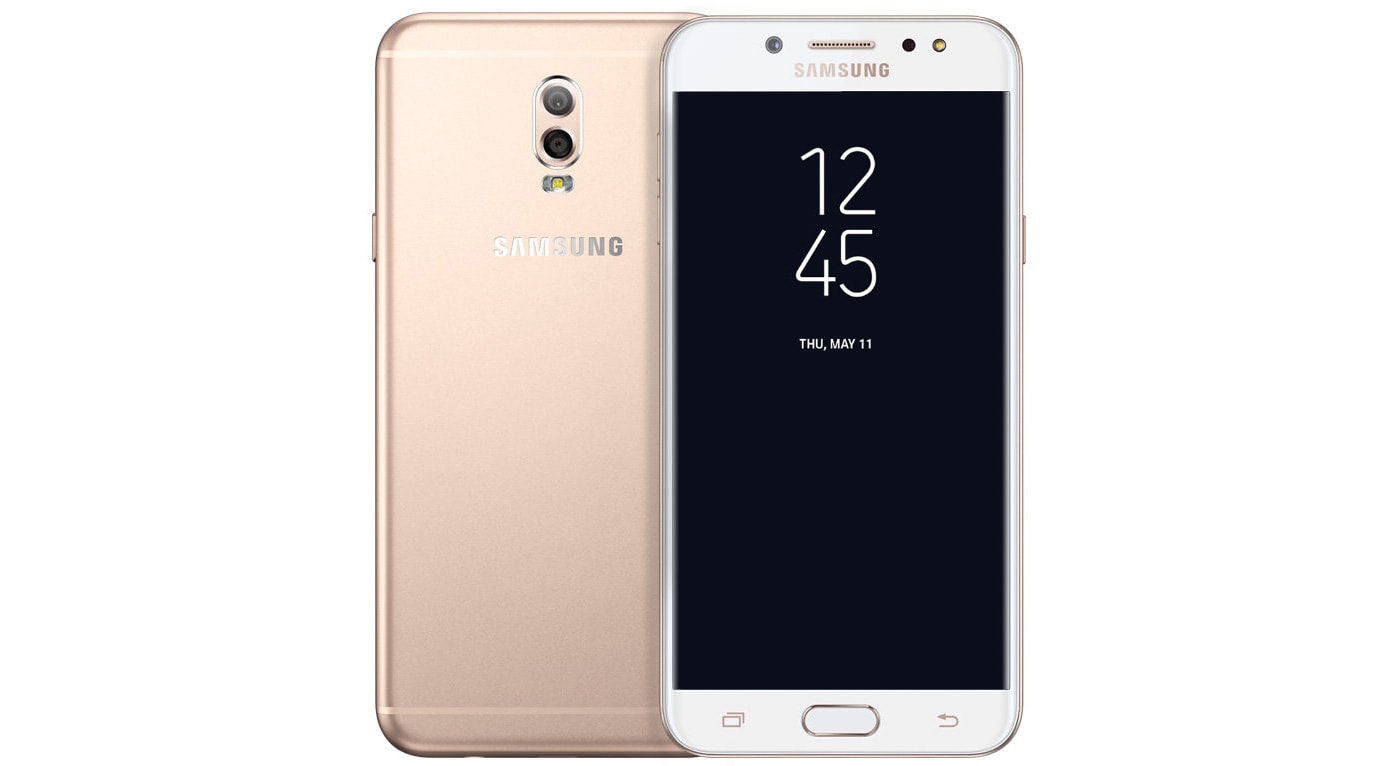
Samsung is offering the new module to other smartphone manufacturers, much as it does with its processors, memory and flash storage. Because it’s a complete solution, OEMs can integrate dual cameras without much difficulty, rather than enduring time-consuming and costly hardware and software optimization.
At the same time, it’s likely to integrate the tech in its own products, much as it did with the mid-range J7+ (above) sold in Asia. It could take while, but smartphones packing the tech from Samsung and others will likely start rolling out sometime this year.
Source: Samsung
NYPD Rolls Out iPhone 7 and 7 Plus Handsets to Manhattan Officers, Replacing Windows Phones
The New York Police Department is making good on a promise made last year to dole out iPhone handsets to its officers, replacing around 36,000 Windows Phones as part of a new hardware upgrade strategy, reports the New York Daily News.
The NYPD has been rolling out hundreds of the phones since Christmas to Manhattan cops, who can choose between iPhone 7 and iPhone 7 Plus models. The platform switch comes at no cost to the police department because the handsets are filed as upgrades under the agency’s contract with AT&T.
Image via New York Daily News
“We’ve been giving out about 600 phones a day,” said NYPD Deputy Commissioner for Information and Technology Jessica Tisch. “We’re seeing a lot of excitement.”
Police in the Bronx and Staten Island have already received their new phones, with officers in the Queens and Brooklyn boroughs next in line to make the switch to iOS.
Armed with Apple’s smartphones, the NYPD has seen its response times to critical crimes in progress drop by 14 percent, according to Tisch. The iPhones also allow cops to get videos and surveillance pictures of wanted suspects within minutes of a crime.
“I truly feel like it’s the ultimate tool to have as a patrol cop,” said Police Officer Christopher Clampitt. “We get to the location a lot quicker,” he said. “By the time the dispatcher puts out the job (on the radio) we’re already there.”
Before the rollout, NYPD’s smartphones of choice were Nokia’s Lumia 830 and Lumia 640 XL, released in October 2014 and March 2015 respectively. The discontinued devices run Windows Phone 8.1, which Microsoft ended support for in July 2017 to focus on its newer Windows 10 Mobile platform and cloud-based services.
In October 2014, New York City officials announced plans to roll out handheld devices to every NYPD officer for the first time ever, along with tablets for every patrol car. The $160 million initiative was part of a plan to bring the department into the 21st century.
Related Roundup: iPhone 7Tag: Windows PhoneBuyer’s Guide: iPhone 8 (Neutral)
Discuss this article in our forums

