


DJI creates no-fly zones for Winter Olympics to prevent rogue drone flights
In recent years, with every Olympics that comes around, drones become more of an issue for organizers.
Ownership of the remotely controlled flying machines continues to rise, but among the growing ranks of new pilots there are always going to be a few clods ruining it for the rest of us, flying their drone in places they shouldn’t and disrupting events as a result.
DJI, maker of popular consumer quadcopters such as the Phantom 4 Pro, Mavic Pro, and Spark, is taking steps to reduce the chances of one of its own machines causing trouble at the PyeongChang Winter Olympics, which will begin in South Korea this week.
Keen to protect its own reputation, as well as the safety of athletes and spectators attending the event, DJI has updated its drone software to include temporary no-fly zones around the venues throughout February’s sporting extravaganza. In other words, if you have a DJI-made drone, its propellers won’t even start turning if you try to fire it up near an Olympics site.
“The decision to implement temporary flight restrictions in PyeongChang … is intended to increase safety and security measures and will be in effect for the duration of the competitive events,” the company told Digital Trends in an email.
DJI chose the coordinates of the no-fly zones around the sporting venues by looking at the kind of distances aviation authorities insist upon for clearance from locations like airports.
“The temporary updates to DJI’s existing no-fly zone system are similar to those DJI has set up around other major events that have raised safety or national security concerns in the past,” the company said, citing U.S. political conventions, the Euro 2016 soccer tournament in France, and the 2016 G7 Summit in Japan as examples.
Other measures
Organizers at the Winter Games have additional measures in place should any drone owners flout flight bans and attempt to fly their device over crowds and spectators. As we learned earlier this week, security teams at the event have their own net-equipped drones on standby, ready to ensnare any flying machines spotted in no-fly zones. In more extreme cases where, say, a drone is seen carrying a suspicious item, a SWAT team could shoot it down. The use of signal-jamming guns could also be deployed, offering a controlled takeover of the drone for a safe landing.
In the U.S., the Federal Aviation Administration (FAA) has introduced regulations prohibiting drone flights at major sporting events, though clearly some people still feel a need to flout the ban. At the Super Bowl in recent years, the FAA has warned drone owners not to fly their machine within 36 miles of the stadium, threatening to down rogue drones “with deadly force” if they are considered to be a serious threat.
Editors’ Recommendations
- Drone-catching drones to bolster security at this week’s Winter Olympics
- Getting a drone for Christmas? Be sure to register it before you fly
- The drone database is back, and most owners must register their details
- Drone ban — FAA adds to the list of places where you can’t fly your bird
- SkyFire Consulting is helping firefighters use drones to save lives
The Nanocase uses graphene to make your iPhone’s battery last longer
Put this case on, and you’ll get better battery life from your iPhone. How’s that for a benefit? There’s also no extra battery involved, no massive bulky pack to carry around, and actually no need to change anything about your device at all. It’s called the Nanocase and it’s very unusual. It is the world’s first to use graphene — a material with many benefits, one being the ability to conduct heat 10 times more efficiently than copper, which improves heat dissipation, and therefore extends battery life by up to 20 percent.
That’s right, the graphene panel inside the case helps your phone work at its optimum temperature, rather than getting all hot and bothered under tough conditions. Temperature fluctuations affect battery life, therefore getting rid of any excess heat inside the phone quickly will help it work more efficiently, and last longer. That’s what the Nanocase does.
Because it doesn’t physically do anything to the battery inside your phone, the benefits apparently come when you work your phone hard, due to its ability to get heat out faster than other cases can. If your phone doesn’t get hot, it is unlikely to make much difference to the battery life, as it’s already working properly. However, if you’re a hardcore mobile gamer, shoot a lot of video, or do other power-intensive tasks with your phone inside a restrictive case, the Nanocase could help squeeze more out of the battery. Who doesn’t want that?
Work it hard
Does it work? It’s hard to say. We’ve been using the Nanocase on an Apple iPhone X for a week or so, and haven’t spotted any change under normal use. We’d noted battery percentages at the end of the day, and compared them to our usual case of choice, and neither stood out as good or bad. However, if you push your phone hard, you may see differences more readily.
The iPhone X has generally decent battery life, and doesn’t get that hot either; but we’re happy to keep the case on should the situation arise when it has the chance to work its magic. A reason for this is the Nanocase’s style. It’s covered in a pleasant soft touch material, is very slim and light, and has a sleek minimalist style.
If the battery benefits appeal, just don’t expect much drop protection, as the case is form fitting and thin, and doesn’t even extend over the edge of the screen. Graphene as a material may be strong, but this isn’t a rugged case that will protect your phone from damage in the event of a fall. The Nanocase will be available in the United States in the near future, but is currently sold in the United Kingdom for a reasonable 30 British pounds through Amazon, It’s available for the iPhone X, the iPhone 7, the iPhone 7 Plus, the iPhone 8, and the iPhone 8 Plus.
Editors’ Recommendations
- 9 amazing uses for graphene, from filtering seawater to smart paint
- Great balls of graphene: New Samsung tech could charge phones five times faster
- Graphene’s next trick? Creating foil-thin body armor that’s harder than diamonds
- Samsung Galaxy S9 models pop up in FCC listings; are CES debut rumors correct?
- Forget lithium-ion — this graphene-based power pack recharges insanely fast
Here’s the ‘last pic’ of Starman as he motors off into outer space
Bowie’s Starman may have been waiting in the sky, but not Elon’s. His is now hurtling toward Mars on a road trip like no other, following Tuesday’s successful launch of SpaceX’s Falcon Heavy rocket.
Elon Musk, who founded SpaceX in 2002 and heads up the private space company, posted the “last pic” of Starman (below) on Wednesday as the spacesuit-clad mannequin motored toward the Red Planet, and onward to the asteroid belt.
It’s a spectacular shot with Starman seated behind the wheel of Musk’s old Tesla Roadster, and Earth right there in the background.
Last pic of Starman in Roadster enroute to Mars orbit and then the Asteroid Belt
A post shared by Elon Musk (@elonmusk) on Feb 7, 2018 at 2:00pm PST
Starman wasn’t meant to go as far as the asteroid belt, but it seems he hit the gas too hard, sending the vehicle on a different trajectory to the one SpaceX had intended.
Musk confirmed as much in a tweet a few hours after his space company nailed its historic launch. “Third burn successful. Exceeded Mars orbit and kept going to the asteroid belt,” the CEO wrote.
That more distant course reduces the chances of Musk’s car drifting in space for “billions of years,” as he’d been hoping. It means that many months from now, the Roadster will be speeding into the asteroid belt where a crash or some other calamity appears highly likely. And Starman can forget calling the AAA for assistance.
Of course, there’s also a chance it won’t even make it that far, with space radiation taking its toll on the car’s bodywork and Starman’s body. After all, Musk said it’s just a regular Tesla Roadster and wasn’t “space hardened” in any way.
Starman is the star, man!
While there’s no doubting SpaceX’s awesome achievement on Tuesday — launching one of the most powerful rockets ever before spectacularly landing two of its boosters (we’ll skip over what happened to the third) — most people seem more interested in the rocket’s unusual payload.
The Starman stunt was an effort to grab the attention of people around the world and hopefully get them interested in space, Musk said at a press conference on Tuesday. He explained that most rocket launches are like “a block of concrete” with nothing to capture the imagination, and described his payload idea as “kinda silly and fun.” But he added that “silly and fun things are important.”
As the Roadster heads further away from Earth, the SpaceX team will continue to work on the development of its reusable rocket system, which paves the way for cheaper space travel and the prospect of manned missions to distant places. Perhaps along the same road as Starman.
Editors’ Recommendations
- ‘It’s still tripping me out’ — Elon Musk on Starman’s space adventure
- Prepare for liftoff! Here’s 7 crazy facts about the SpaceX Falcon Heavy rocket
- Musk’s Boring Company is ‘capping cap orders at 50,000 caps’
- Here’s everything you need to know about the SpaceX Falcon Heavy rocket
- Elon Musk’s Tesla Roadster is ready for its long journey to Mars
Qualcomm is working with these phone makers and carriers to deploy 5G by 2020
Qualcomm is on a mission to bring 5G to the world, and a major part of it is implementing 5G tech into the next-gen devices. The company today announced it has partnered with a whopping 19 device manufacturers, and all will be using the company’s new X50 5G-compatible modem in at least one of their 2019 devices. Other partnerships include carriers around the globe, which will also be using the X50 modem for 5G trials this year.
What all this means is as soon as next year, you could be enjoying super-fast 5G speeds on your phone — provided you’re in an area where 5G networks have started rolling out. All four major U.S. networks said they will begin rolling out 5G networks by the end of 2018, with nationwide access expected by 2020.
The X50 modem itself is capable of supporting data connections of up to a massive 5 gigabits per second. While it’s unlikely you’ll ever experience such a speed in the real world, we’re still looking at connections of at least hundreds of megabits per second — perhaps even a gigabit — which is a major improvement over speeds on a modern 4G LTE network.
So which companies are Qualcomm working with? Included in today’s announcement are the likes of HTC, LG, Sony, Oppo, and ZTE, and on a different occasion, Qualcomm and Samsung already announced a partnership that will see the two working together on the future of 5G. When it comes to carriers, the company is working with AT&T, Sprint, T-Mobile, and Verizon in the U.S., as well as other carriers around the world, like Australia’s Telstra and China Mobile.
There are some big names missing from the list. Apple is one example, though it’s unsurprising considering the tumultuous relationship between the two. Huawei is also not on the list of partners, which is understandable as the Chinese company has continued its focus on developing its own chips.
Qualcomm is in a good position in the race to 5G. The company has been working with most Android manufacturers for years now, and those partnerships will almost certainly continue into the next generation of chipsets and modems. We also expect Qualcomm to eventually announce a second-generation 5G modem, which will add backward compatibility for 4G networks. Devices that use the X50 modem, for example, still need another modem, like Qualcomm’s X20, to connect to 4G and 3G.
Editors’ Recommendations
- 5G is finally coming: AT&T to begin mobile 5G rollout in second half of 2018
- 5G to reach a billion people by 2023, with VR and AR firing up development
- Verizon gets serious about 5G, plans to launch in homes in 2018
- Nokia and DoCoMo enter partnership to supply Tokyo with 5G networks by 2020
- Gigabit LTE will give your current phone insane speeds. Here’s how it works
Xiaomi Redmi Note 5 will be exclusive to Flipkart in India, launch set for Feb. 14
Flipkart gets exclusive rights to sell Xiaomi’s upcoming budget phone in India.
Xiaomi is all set to unveil the Redmi Note 5 in India on February 14, and the device will be sold exclusively on Flipkart. The retailer took to social media — and set up a microsite to tease the upcoming launch, and the clues included within are the clearest hint yet that we’ll see the Redmi Note 5 and not the Redmi 5 series next week.
Thanks @gauravkapur. Looks like everyone is excited about @XiaomiIndia’s all-rounder that’s a 5/5. Tune in to Flipkart on 14th Feb, 12 noon to find out who it is. #WhoIsTheAllRounder https://t.co/KO6jyUWq46 pic.twitter.com/z5bDbJIH6n
— Flipkart (@Flipkart) February 8, 2018
The Redmi Note 5 is likely to feature an 18:9 display, along with a Snapdragon 630/636, dual rear cameras, and 4100mAh battery. Its predecessor was the best-selling device in the country last week, so there’s considerable excitement over the arrival of the Redmi Note 5.
Xiaomi Redmi Note 5: What we know so far
Although Xiaomi launched the Redmi Note 4 exclusively on Flipkart last year, the device made its way to other e-commerce sites as well as the Mi.com portal and thousands of retail stores across the country. With Xiaomi clearly pushing for a more aggressive offline strategy, we’ll likely see the same this year as well.
The launch event is scheduled for February 14, and I’ll be on the ground in New Delhi to bring you all the details from the announcement. In the meantime, here’s Xiaomi’s teaser for the upcoming budget phone:
Qualcomm gets 5G commitments from major carriers and phone makers, with a few exceptions
Qualcomm is preemptively boasting about its 5G advantages — because it can.
Qualcomm today announced that it has received intense interest from worldwide telecom operators and equipment manufacturers, including smartphone makers like LG and HTC, to test its burgeoning X50 5G platform, which is set to be released next year.

The move from LTE to 5G promises to bring enormous improvements to speed, capacity, and latency in the worlds of fixed and mobile wireless service. It also comes with sweeping changes to IoT, manufacturing, autonomous vehicles, and more, and dozens of companies that make devices and sell service have all committed to testing Qualcomm’s first 5G test platform, which has shrunk from briefcase-sized to phone-sized in under a year.
Almost every carrier and phone maker is preparing for 5G, but two of the biggest names aren’t doing it with Qualcomm’s help.
The commitments are separately in the sub-6Ghz and millimeter wave (mmWave) spectrum allotments, which feature heavily in 5G’s marketing for higher throughput. Higher frequencies, especially in the 28GHz and 39GHz mmWave blocks, can carry enormous amounts of data using very wide channels — up to 100MHz to begin with — to facilitate speeds up to 5Gbps, or roughly five times the total of today’s fastest LTE networks. But mmWave is limited in its propagation: its wavelengths are so narrow that the signals don’t travel more than a couple hundred feet, and don’t penetrate even the thinnest of walls. 5G will rely on a combination of low, mid, and high frequencies to achieve a balance of speed and ubiquitous connectivity.
Among the manufacturers committing to 5G testing are ASUS, Fujitsu, HMD Global/Nokia, HTC, Inseego/Novatel Wireless, LG, NetComm Wireless, NETGEAR, OPPO, Sharp, Sierra Wireless, Sony Mobile, Telit, Vivo, Wingtech, WNC, Xiaomi, and ZTE. In late December, Qualcomm hosted a tech summit in China to reinforce its relationship with the top Chinese phone makers, including OPPO, Vivo, and Xiaomi.
Notably, Samsung is not on the above list, despite Qualcomm and the Korean giant recently making amends after years of legal strife. It’s assumed that while Samsung will continue to use Qualcomm’s Snapdragon platforms and likely adopt its 5G solutions for those accompanying flagships, it is building its own cache of 5G products for the end market. Apple, too, which was recently rumored to be dropping Qualcomm’s modem solutions entirely for Intel’s starting with this year’s iPhones, is not on the list.
A number of large network providers are also testing Qualcomm’s X50 platform and how it coexists with their existing 4G LTE infrastructure, including AT&T, British Telecom, China Telecom, China Mobile, China Unicom, Deutsche Telekom, KDDI, KT Corporation, LG Uplus, NTT DOCOMO, Orange, Singtel, SK Telecom, Sprint, Telstra, TIM, Verizon, and Vodafone Group. All four U.S. networks have committed to deploying 5G in various states by 2019.
Prior to CES, the 3GPP, the worldwide standards body for wireless protocols, announced that the first 5G standard, Non-Standalone 5G, had been finalized and was ready to begin production. This latest announcement by Qualcomm is just the latest in what seems like hundreds of small steps towards finally bringing 5G to market next year.
Did NVIDIA do the right thing by holding back Oreo for the Shield TV?
Oreo’s “What’s Next” home screen is only missing one thing: developer support.
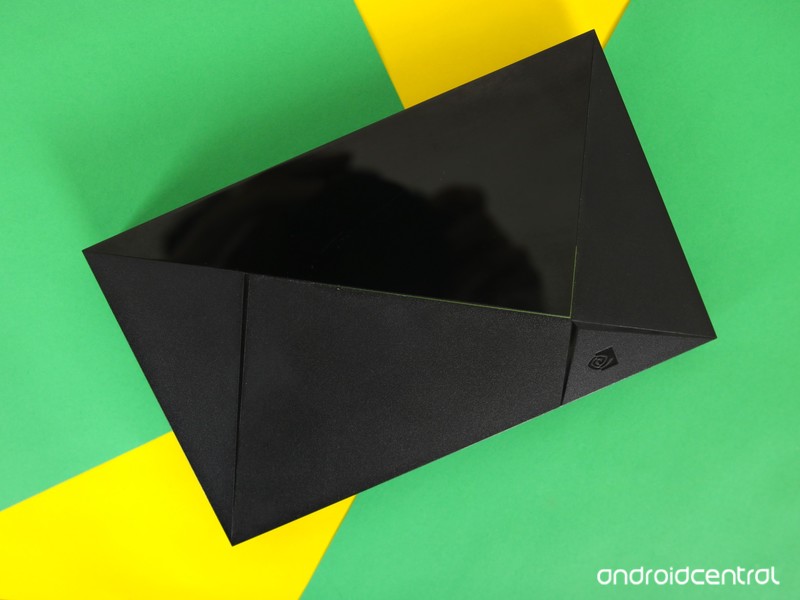
NVIDIA’s Shield TV is one of those rare things that are still “best in class” years after they were released. It has plenty of competition, but if you want the best multi-purpose set-top TV box you can get, it’s hard not to recommend the Shield TV. It has you covered whether you want to listen to music, watch a movie or show, or grab a controller and game the night away. I chalk that up to two things — the hardware inside it and the software support from NVIDIA. Considering that, as strange as it sounds NVIDIA is doing the right thing by holding back its Oreo update.
Smart TVs need to be able to show you what’s on that you’ll like; that’s where the smart part comes in.
I have a feeling that anyone familiar with the Shield TV who knows how and why this all started is going to agree. And the how and the why this started happen to be the important parts.
A quick refresher here. Back at CES 2018, NVIDIA’s director of Shield management, Chris Daniel, went on record saying that the product was still doing well, the U.S. retail market for it is going to be expanded, NVIDIA has plans to bring it to new countries in 2018, and that while NVIDIA certainly plans to bring Oreo to the Shield TV, there is no time frame and no rush. NVIDIA’s not happy with the interface and is working with Google to change whatever needs changing. That’s a pretty bold statement towards the company who built the actual software, but Daniels is right on and explains it all in one sentence.
If you release a whole new interface, and the apps aren’t supporting it, then we don’t feel like it’s a good launch for us, so we’re working hard on that.

That’s the Oreo interface for Android TV. Android TV is like Android Wear (except it’s good) or Chrome OS (but not that good) when it comes to vendor (that’d be the company who has its name printed on the package) customization. Google learned a valuable lesson with Android, namely that other companies will twist everything and anything until it no longer resembles the original, then fill the storage with crap apps and duplicates and whatever garbage the highest bidder wants them to put in there. While that helps companies sell $150 Android phones they never need to update, it also means the user interface is whatever that same company wants it to be.
Companies like NVIDIA can;t just change the user interface on an Android TV box.
The new “home screen” interface for Android TV, called the What’s Next interface by those that love it and built it, is pretty smart. Unlike your phone and the hundreds of apps installed that you can use for anything at any time, there are a few things most people do with Android on a television. Entertainment is the focus and using Google’s (sometimes) smart AI to expose a show or movie or anything you’ll want to see next is genius. Until it’s not.
Notice the screenshot above and you’ll see a pattern — it’s all Netflix. That’s great for Netflix, but what about HBO or NBC or Amazon (especially Amazon because the Shield TV has an exclusive and awesome Amazon streaming video app)? You could think it’s because there isn’t anything worth watching on any of those “networks” and maybe you’re right, but the reason is that their Android TV apps haven’t been updated to tie into the new interface. Even if your all-time favorite movie just finished and the 5-star-rated sequel (did anyone ever make a Strange Brew 2, eh?) is ready to stream from Amazon, you won’t see it listed as a recommendation because it can’t hook inside the screen you’re looking at. That’s just a bad user experience all around.
NVIDIA can’t change up the landing screen for Oreo so they are doing the best alternative in their eyes — not updating. And don’t think this is a cop-out. NVIDIA loves updating the Shield TV as much as you love getting the updates, which is why you see one almost every month. NVIDIA is doing this because they don’t want to wreck the UI on their TV box and make you hate it.
This can be fixed with the right people doing the fixing. And they are.
The good news is that they are working with Google to find a solution. Neither company can force developers to update their apps to support the Oreo interface, but they can get a bunch of smart people in the same room and figure something out. Chances are whatever the two companies come up with will be good for everyone — Google, NVIDIA, developers, and us. In the meantime, you can still use your Shield TV without working your way through individual app program guides or missing out on something you’ll wish you hadn’t.
And when nothing good is on, there’s always Borderlands 2.

NVIDIA Shield Android TV
- Read our Shield Android TV review
- The latest Shield Android TV news
- Shield vs. Shield Pro: Which should I buy?
- Join the forum discussion
- Complete Shield Android TV specs
Amazon
Do you still use a microSD card with your smartphone?
MicroSD card support is a rarity on smartphones in 2018, but plenty of people still use them.
Just a few years ago, any phone that was released without support for microSD card expansion was ridiculed for offering lesser functionality and often looked down upon. Fast forward to early 2018, and it’s been the norm for quite some time to have phones that just don’t offer this at all.

Smartphones that are released with 128GB and 256GB of internal storage help to mitigate the loss of microSD support, and as Android Central’s Andrew Martonik recently pointed out, it’s even possible to get by with just 64GB these days. Even so, there are still a ton of users that need to have this feature.
A few of our forum users recently got into a discussion about whether or not they still use/care about microSD functionality on phones, and these are a few of the responses:
chanchan05
02-03-2018 11:56 PM“
An old 16GB card. Basically the only thing in there are downloaded Spotify music on high quality. I’m looking to buy a 128GB card though. My tablet has a 32GB card full of books, so videos don’t fit anymore. Will probably just swap. I’m fine with 32GB internal memory for phone use, but that’s not enough for media. 16GB isn’t enough to download the music at extreme quality (320kbps).
I don’t…
Reply
andersmmg
02-04-2018 12:41 AM“
I have a 32 GB card in my phone, mostly used for media and I move some apps to it to free more space on the internal storage. I like to have a lot of apps so it’s easier to do stuff on the go without dealing with websites and stuff instead.
Reply
tickerguy
02-04-2018 08:52 AM“
I have a 128Gb card that holds my entire FLAC music library and a few MP4 movies. Without it there’s no way I could carry my music library, as nearly all of it is in FLAC rather than the more-compressed (and crappier-sounding) MP3 format. With the nice DAC in the V20, and good headphones, you can DEFINITELY hear the difference.
Reply
LuvMusic
02-05-2018 09:59 AM“
I use the 200gb card I got for free when I bought my V10. However, I have always used a card, if the device supported it, for music and other media. For example, when I travel, I download a couple of movies at home for backup entertainment and then I can watch them without streaming.
Also, the use of a card makes changing devices much easier. You don’t have to reinstall music (time…
Reply
Now, we’d like to pass the question on to you – Do you care about microSD support on phones?
Join the conversation in the forums!
Deal: Get 4 lines of unlimited data from Cricket, Boost Mobile, or Metro PCS for just $100 a month

Save big on unlimited data!
Any party of 4 — friends or family — can grab 4 lines of unlimited data from Cricket, Boost Mobile, or Metro PCS for just $100/month out the door. All the extra fees, taxes, and surcharges are included in the pricing. But that’s not all — choose 4 lines with Boost and get a 5th line FREE. Or if you opt to go with Metro PCS, you’ll get a full year of Amazon Prime at no extra charge.
Choose from any of these great deals:
Cricket: Cricket Unlimited 2 Plan
On this plan, you’ll get unlimited data on AT&T’s expansive network and coverage but note that the maximum data speed is 3Mbps which is fine for most basic internetting.
- Unlimited talk, text & data. After using 22GB of data, speeds may slow temporarily during times of high network congestion.
- Unlimited international text from the US to 180+ countries.
- Video streaming in Standard Definition, 480p+.
- 10GB of mobile hotspot (tethering) is available for an additional $10/mo.
- All in pricing. Taxes, surcharges, and fees are included.
See at Cricket
Boost Mobile: Boost Unlimited GIGS
In addition to 4G LTE unlimited data, you’ll also get unlimited music streaming and 8GB of mobile hotspot. Want more? Add a 5th line, and the price won’t budge. Yep. That’s 5 lines of unlimited data with Boost!
- Unlimited talk, text & data. After using 23GB of data, speeds may slow temporarily during times of high network congestion.
- Video streaming in Standard Definition, 480p+.
- 8GB of mobile hotspot (tethering) included.
- All in pricing. Taxes, surcharges, and fees are included.
See at Boost Mobile
Metro PCS
This plan not only offers unlimited talk, text & data on T-Mobile’s coast-to-coast network but also a free subscription to Amazon Prime.
- Unlimited talk, text & data. After using 35GB of data, speeds may slow temporarily during times of high network congestion
- Video streaming in Standard Definition, 480p
- 10GB of mobile hotspot (tethering) is available for an addition $10/mo
- All in pricing. Taxes, surcharges, and fees are included.
See at Metro PCS

TicWatch E mini-review: Affordable but awkward

A good smartwatch walks a knife’s edge, balancing form and function.
Without enough room for proper components, a smartwatch will die during the day or be so slow you wish it would die. Without the proper aesthetic, a smartwatch will look like some oversized toy on your wrist. A good smartwatch will slip once or twice in the balancing act, and unfortunately, the TicWatch E slips in the wrong places.
Feel the material
I was sent a TicWatch E after my TicHome mini review last year, and I have alternated between it and my personal LG Watch Style for the last several weeks. The TichWatch E comes in three colors — white, black, and yellow — with the white and yellow models sporting a clear plastic housing between the watch itself and the soft plastic band, and the black sporting a black housing. The bands, cheap though they are, are grippy, smooth, and felt quite nice — nicer than the stiff leather band my LG Watch Style came with. The clear plastic screams toy, and while plastic does stand up to the bangs and scuffs of life better than more polished metals.

The TicWatch E isn’t quite as ridiculously bulky as most sporty smartwatches, but you’re definitely going to have to work your sleeves to get them over the watch, as the hard angles of the watch tend to catch fabric tenaciously both when you try to sneak a peek at the face and when you try pull your sleeve down again and get back to work. The heart rate monitor at the bottom of the watch sits across from the POGO pin charging port, because in order to save costs, the TicWatch has skipped the convenience of wireless charging for a compact but still proprietary charging cable.
Under the hood

Using the watch once you get it free of your shirt sleeves is straightforward, though the home button sitting on the left side takes a little getting used to. The screen is big and bright; in fact, the TicWatch E, even on its lowest setting is too bright for Always-on mode at night. There’s no auto-brightness here, either, so be prepared to change brightnesses when you head out of doors. Thankfully, even with that bright screen, the battery can easily last one and a half to two days. The TicWatch is a tic slow, but it’s been hard to tell if that the actual system or just a screen that needs a bit more force to register taps than normal.

Having a watch with a heart rate sensor again has been nice, and at $128, the TicWatch E is certainly one of the cheaper options on the Android Wear market, but that comes at a price in performance and polish. The TicWatch E isn’t a bad smartwatch, but it’s not a great one either. It’s an okay smartwatch, and that’s not enough to justify the already low price tag.
If you just gotta have a heart rate sensor and like being able to use your watch as a wrist-mounted flashlight at night, this watch may work for you, but if you can, just wait until the LG Watch Style goes on sale. It won’t take long.
Android Wear
- Everything you need to know about Android Wear 2.0
- LG Watch Sport review
- LG Watch Style review
- These watches will get Android Wear 2.0
- Discuss Android Wear in the forums!

