


YouTube enables captions for live broadcasts
YouTube is making live broadcasts more accessible by giving creators the power to add real-time captions in the English language. They could provide their own if they plan to read off a script or have access to professional captioners that can feed their work to the platform. But YouTube live broadcasts tend to be unscripted and pretty interactive, so creators can also choose to depend on the platform’s live automatic speech recognition technology to auto-generate captions.
The feature was developed by product manager Liat Kaver, who’s deaf herself and was inspired by the lack of subtitles in her native language as a girl growing up in Costa Rica. She told us:
“I am deaf, so closed captions are indispensable to enjoying content. Today, finding live streams that are captioned is a challenge, which is why this project is so important to me. Our end goal is to make every video accessible, leveraging Google’s technology to achieve universal captioning.
I’m excited about bringing automatic captions to live streams, making them accessible to people that are deaf and hard of hearing, as well as to viewers watching without sound, when professional captions are not available.”
Twitch introduced live captioning back in 2016, but only for shows it produces — pretty understandable since the company chose to hire professional stenographers to manually type everything out. This feature will be available to a small percentage of YouTubers in the next few weeks and will roll out more broadly in the coming months. The platform is also planning to make it available in more languages in the future, which doesn’t come as a surprise given Kaver’s history.
In addition to live captioning, YouTube is introducing live chat replays. Readers who want to read the comment stream of a live broadcast they missed can now do so: It will appear beside the video and will play exactly like it did during the broadcast. Thankfully — hey, YouTube’s comment section isn’t exactly a friendly place — those who have zero interest in reading the chat can still hide it anytime.

Creators who love to travel can now also add location tags to their livestreams and uploaded videos. When viewers click on one, the results will show them more videos tagged with the same location. Finally, YouTubers can start making their streams more interactive by allowing Super Chats to trigger real events using using IFTTT. They can connect devices such as lights, pet feeders or even confetti cannons to the feature, so fans can trigger them and be part of the livestream, so long as they’re willing to pay for the experience.
Source: YouTube
Google Assistant now launches specific tasks in Android apps
Believe it or not, Google still isn’t done with its slew of Assistant upgrades this week. The AI helper can now use Actions to perform specific intents within other Android apps for those times when voice alone won’t cut it. If you need to see the parking pass you just booked, for instance, you can tap a button to go directly to that pass in the relevant Android app. The feature is rolling out over the next few weeks, and it’s accompanied by a few other Assistant improvements that should make life a little easier.
For one, Assistant can ask for your location in mid-conversation. If you want to get a lift to a place near your home, Google can supply the position on demand. Third-party apps can also cut out the introductory fluff if it’s not your first time using them through Assistant. And Actions now work in seven new languages, including Hindi, Indonesian, Thai, Dutch, Danish, Norwegian and Swedish.
These may seem like modest updates, but they could be vital. Google is determined to bring Assistant to as many Android phones as it can (95 percent of all compatible phones by the end of 2018), and that means accommodating as many countries as possible. And if you’re going to trust Assistant, it needs to fulfill as many expectations as possible — even if that means passing the baton to another app.
Source: Google Developers
Samsung Reveals FCC-Approved 5G Commercial Products Planned for Late 2018 Launch
Samsung today at Mobile World Congress revealed a new set of end-to-end 5G commercial solutions, which will launch later this year alongside Verizon’s first commercial 5G network in the United States.
The 5G fixed wireless access solutions include “commercial form-factor” 5G home routers for both indoor and outdoor use, and Samsung said it used its own in-house technology to create the first commercial ASIC-based 5G modems and millimeter wave RFICs, “enabling the design of compact access units and CPEs.”
The solutions also include a 5G Radio Access Network, and Samsung mentioned that each product has “already been proven through months of field trials in multiple markets.”
Samsung has developed the world’s first complete commercial 5G FWA solutions, which includes: commercial form-factor 5G home routers (CPEs) for both indoors and outdoors, 5G Radio Access Network (RAN) comprised of a radio access unit and virtualized RAN, a next-generation core, as well as AI-powered 3D radio frequency planning tools and services.
“At MWC 2018, Samsung plans to show how our homes, cars and cities can be transformed by building user-centric 5G networks” said Youngky Kim, President and Head of Networks Business at Samsung Electronics. “Since the beginning of our 5G research in 2012, Samsung stood firm among industry players to trust in the potentials of the millimeter wave spectrum. Our efforts towards advancing this technology will see the light this year, making 5G a reality and opening up new territories’ possibilities for consumers, operators and enterprises.”
On February 23 the Federal Communications Commission approved Samsung’s 5G access units, which the company said makes the devices the first 5G millimeter wave products in the world to be granted government regulatory approval. At MWC 2018, Samsung also plans to present its first 5G New Radio products supporting spectrum bands both below and above 6GHz, which will be compliant with the 3rd Generation Partnership Project’s Release 15 plan, delivering the first set of 5G standards for the industry.
All of Samsung’s product announcements today follow an announcement earlier in the year that confirmed the company will be providing Verizon with commercial 5G home routers and other devices to help fuel the carrier’s 5G network rollout. This is said to begin in Sacramento, California in the second half of 2018 and expand from there.
Besides Verizon, most other carriers have announced tests or plans to introduce a 5G network in the near future, including AT&T and T-Mobile. Late in January, a new report suggested that the United States federal government was looking into building a centralized 5G wireless network across the country, which would fundamentally alter the way that communications networks are implemented by having the government “rent access to carriers.”
For Apple, the first iPhone that could support 5G is believed to be coming through a partnership between Apple and Intel.
Tags: Samsung, 5G
Discuss this article in our forums
Apple Confirms Some Encrypted iCloud User Data is Stored on Google Cloud Platform
Apple has confirmed that Google Cloud Platform is one of at least two third-party services it relies upon for storing encrypted iCloud account data, which it notes doesn’t include any user-identifying information.
Apple made the disclosure in the latest version of its iOS Security Guide, which was updated last month. This particular change went unnoticed until it was reported by CNBC’s Jordan Novet earlier today.
The encrypted chunks of the file are stored, without any user-identifying information, using third-party storage services, such as S3 and Google Cloud Platform.
Previous versions of the iOS Security Guide mentioned Microsoft Azure, but Google Cloud Platform is now listed in its place. Apple also continues to rely on Amazon’s S3 web service for additional storage.
iCloud stores a user’s contacts, calendars, photos, documents, and more, and since each file is broken into chunks and encrypted with AES-128 and SHA-256 keys, storage on Google Cloud Platform shouldn’t be a security concern.
Apple reached a multi-million dollar deal with Google Cloud Platform in 2016, according to reports from CRN and the Financial Times.
Tag: Google Cloud Platform
Discuss this article in our forums
Vulkan Apps Now Compatible With macOS and iOS
Popular cross-platform 3D graphics and compute API Vulkan is gaining support for the Apple ecosystem, which means Mac and iOS developers will be able to build and run Vulkan apps on Apple devices.
Valve, LunarG, and The Brenwill Workshop, members of The Khronos Group consortium that developed Vulkan, have worked together with the Khronos Group Portability Initiative to allow Vulkan apps to be ported to Apple platforms.
The aim of Khronos Group’s Vulkan Portability Initiative is a universal subset of Vulkan 1.0 that is designed to run at native performance levels over Metal and DirectX 12 drivers. Metal and DirectX 12 are able to support almost all of Vulkan, with the exception of elements like triangle fans, separate stencil reference masks, Vulkan Event functionality, and a few other features.
Valve used Vulkan tools on macOS with Dota 2 and was able to achieve “significantly higher performance” than native OpenGL drivers.

An open source collection of tools, SDKs, and runtime libraries that enable Vulkan development and deployment on macOS and iOS is now available on the Portability Landing Page on the Khronos Group website. With Vulkan support for Mac and iOS devices, developers will be able to support multiple platforms while cutting down on porting and development costs.
“Running Vulkan applications on Apple platforms has been the number one request from developers and today’s release of the MoltenVK runtime and LunarG macOS SDK brings that capability to life,” said Neil Trevett, VP NVIDIA and Khronos Group President. “Developers are invited to download the open source Vulkan Portability tools today and provide feedback via Vulkan Ecosystem GitHub Issue. The Vulkan Portability Initiative will continue to strengthen the infrastructure and tooling around bringing Vulkan capabilities to multiple Metal and DX12 platforms – our long-term goal is to enable portable Vulkan code to be executed on any platform that developers care about.”
Starting today, a MoltenVK library from The Brenwill Workshop that translates Vulkan calls into Metal calls on macOS and iOS is being open sourced.
The open source LunarG Vulkan SDK for macOS is also available today on LunarXchange, enabling developers to build, run, and debug Vulkan applications on Mac. Going forward, LunarG plans to continue to evolve its Mac SDK to add additional tools and features.
More information on Vulkan support for Apple devices can be found on The Khronos Group website.
Discuss this article in our forums
Sony Reveals $280 ‘Xperia Ear Duo’ With Siri Support and ‘Dual Listening’ Tech to Combine Music With Environment
Sony today at Mobile World Congress revealed an upgraded version of its Xperia Ear earphones, called the Xperia Ear Duo. Sony previously showed the earphones in prototype form during last year’s MWC, but the company has now officially announced a price point of $280 and release date of May 2018 for its latest smart assistant earphones (via The Verge).
The main new addition to Sony’s earphones is the “Spatial Acoustic Conductor,” which Sony describes as a way to allow the sound generated behind the user’s ear by the unit’s driver “to be transmitted directly into the ear.” This way users will be able to hear their music while not being totally out of tune with noises coming in from their environment, which the company refers to as “Dual Listening.” As such, there is no toggle to turn off the feature and block out ambient sounds.
The Xperia Ear Duo doesn’t block the ear canal, so you can hear your music and the environment around you simultaneously. Even better, the volume automatically adjusts depending on your surroundings for an optimised audio experience.
The Spatial Acoustic Conductor, developed by our in-house technology incubator Future Lab Program™, allows the sound generated behind the ear by the unit´s driver to be transmitted directly into the ear. The specially designed ring supporter surrounds the ear canal so your music can blend seamlessly with sounds from your environment.
Similar to Apple’s AirPods, the Xperia Ear Duo earphones have multiple gesture controls that let users control music playback with taps. Additionally, Sony’s earphones recognize head movement and support head nods and shakes to accept or decline incoming calls.
The Xperia Ear Duo will support iOS and Android smartphone connections, and subsequently have Google Assistant and Siri integration for both types of users, with a single tap bringing up each voice assistant for traditional commands like starting music or reading texts. The assistants will also be able to read missed alerts from calendar, email, and other applications.
Additionally, Sony said the earphones last for about four hours on one charge, and will come with a carrying case that adds an additional three charges. When they go on sale in May, the Xperia Ear Duo will be available in black and gold color options. For more information on the earphones, check out Sony’s website.
Tag: Sony
Discuss this article in our forums
Apple Now Faces Over 60 Class Actions Over iPhone Slowdowns, Consolidation Likely Next Month
Apple’s legal battle against accusations that it intentionally slows down older iPhones to incentivize customers to upgrade to newer models will likely take place in one courtroom near the company’s headquarters in California.
The U.S. Judicial Panel on Multidistrict Litigation has disclosed that it will consider consolidating dozens of iPhone performance-related complaints filed against Apple during a hearing scheduled for Thursday, March 29 in Atlanta, Georgia, as is routine for similar cases filed across multiple states.
Apple currently faces 59 putative class actions across 16 district courts in the United States. The total includes 30 before Judge Edward J. Davila in the Northern District of California, where the lawsuits will likely be centralized given their overlapping claims, according to court documents obtained by MacRumors.
Apple faces similar class action lawsuits in at least six other countries, including one filed with the Ontario Superior Court of Justice in Canada on Friday, according to Toronto-based law firm Rochon Genova LLP.
The lawsuits have been mounting since late December, when Apple revealed that it throttles the maximum performance of some older iPhone models with chemically aged batteries when necessary in order to prevent the devices from unexpectedly shutting down. The so-called feature was introduced in iOS 10.2.1.
Apple initially didn’t mention the change in its iOS 10.2.1 release notes, and in a statement issued a month later, it still only mentioned vague “improvements” resulting in a significant reduction in unexpected shutdowns.
Apple only revealed exactly what the so-called “improvements” were after Primate Labs founder John Poole visualized that some iPhone 6s and iPhone 7 devices suddenly had lower benchmark scores starting with iOS 10.2.1 and iOS 11.2 respectively, despite operating at maximum performance on previous versions.
Apple apologized for its lack of communication in December, and reduced the price of battery replacements to $29 for iPhone 6 and newer through the end of 2018. Apple will also provide users with more visibility into the health of their iPhone’s battery in iOS 11.3, with the feature already available in beta.
Apple also emphatically denied any kind of planned obsolescence:
First and foremost, we have never — and would never — do anything to intentionally shorten the life of any Apple product, or degrade the user experience to drive customer upgrades. Our goal has always been to create products that our customers love, and making iPhones last as long as possible is an important part of that.
Keep in mind that Apple is not permanently or persistently slowing down older iPhones. Even if your iPhone is affected, the performance limitations only happen intermittently, and only when the device is completing demanding tasks.
MacRumors previously answered many frequently asked questions about Apple’s power management process, which can be disabled in iOS 11.3, or avoided by replacing your iPhone’s battery if necessary. Read our guide on how to get an iPhone’s battery replaced at an Apple Store or Apple Authorized Service Provider.
Tag: iPhone Slowdown
Discuss this article in our forums
Netflix is testing a navigation bar on Android
Netflix is looking to replace its slide-out menu with something much more visible and easier to access, based on the new user interface it’s releasing to beta testers. As Android Police has noted, the streaming platform has started testing a navigation bar at the bottom of the screen, completely getting rid of the hamburger menu you’d have to tap to get to the slide-out panel. The new design will make it easier to access your offline downloads and to see what’s coming soon. Netflix also moved the Search function from the upper right portion of the screen to the bottom bar, where it gets a bigger icon.
Last year, Netflix rolled out a server-side UI change that also gets rid of the slide-out menu. It wasn’t released as an official update, and it looks like random users are getting it whenever the company wants to install it on their devices. I personally received the UI change over 24 hours ago or so, and as you can see in the screenshots below, its navigation bar is not quite identical to the new one.

[Image credit: Android Police (left and middle) / Mariella Moon (right)]
The original UI change I received a day ago only had four icons in the navigation bar. It has since gotten the “Coming Soon” icon, but has retained My Profile that’s been replaced with the More hamburger menu in the new version. If you haven’t gotten a server-side update to your UI, your best bet is to join Netflix’s beta tester program or sideload the APK courtesy of Android Police.
Source: Android Police
The Galaxy S9 likely won’t support 4K HDR recording
At 6:30pm Central European Time, Qualcomm sent out a press release. The first paragraph of the statement was embedded in the email, saying “The Samsung Galaxy S9 and S9+ are powered by the Qualcomm Snapdragon 845 Mobile Platform, featuring Ultra HD Premium capture for cinema-quality video and Gigabit LTE for lightning-fast connectivity.” This morning, hours after that release went out, something’s changed. The words “Ultra HD Premium capture for cinema-quality video” have been replaced by “an immersive camera experience” on Qualcomm’s news portal and PRNewswire.
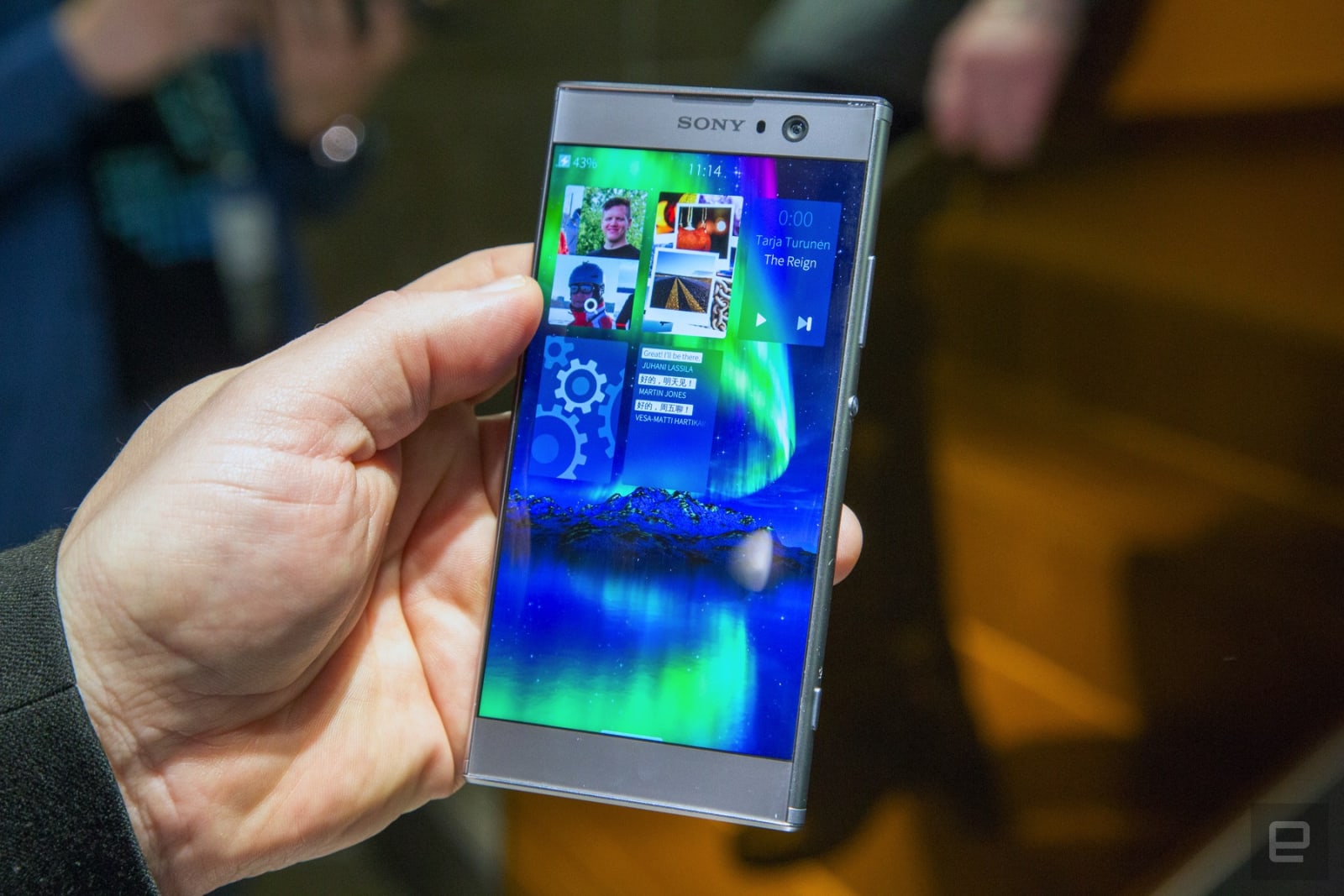
Meanwhile, Sony announced today that the new Xperia XZ2 is the first phone to record 4K HDR video, thanks to its Snapdragon 845 chipset. That means the Xperia beat the Galaxy to nab that title, although that probably doesn’t matter to the vast majority of people.
Samsung has added plenty of new features to the Galaxy S9’s cameras, but did not mention 4K HDR video capture, which is one of the highlights of Qualcomm’s latest premium chipset. The Galaxy phone maker did not respond to several attempts over a few days to get an answer as to whether that feature was supported by the S9 and S9+, although reps did address a few other queries.
Neither Samsung nor Qualcomm have officially commented on the absence of this feature, so for all we know, there could be other reasons behind the change in the news release. It’s rare that a company removes a key feature from its release, though, especially after the announcement is published.
Anshel Sag, associate analyst at Moor Insights and Strategy, believes that Samsung’s lack of comment indicates the feature is disabled. “Usually, Samsung will say something if it’s there,” he told Engadget. “The reason why they probably haven’t talked about it is they’re concerned about bringing up a feature that the chipset should have that they chose not to enable.” Moor Insights and Strategy provides consultancy services to “basically every semiconductor company,” including both Samsung and Qualcomm.
According to Sag, Samsung might not want to enable the Snapdragon 845’s 4K HDR recording feature to avoid deprecating one version of the phone over another. In the US, the S9 and S9+ will be powered by the Snapdragon 845, while models in Korea and some other markets pack Samsung’s own Exynos chips. “Samsung has a thing where if they can’t implement something across all their chipsets, then they won’t implement the feature on their phone,” Sag said. “They don’t want people running out and buying the Snapdragon of the phone like it happened before.”
Sag thinks it’s “a bit odd” that the S9 doesn’t have this capability but that the Xperia XZ2 does. “You could chalk it up to sensor technology and having experience with sensor technology,” he speculated. If you were hoping to use the Galaxy S9 to create high-quality HDR video, all signs indicate that you may not be able to do so.
Catch up on the latest news from MWC 2018 right here.
Facebook has big plans to bring internet to more people in rural areas
Over the past few years, Facebook has been rolling out several initiatives to bring free internet to people in underdeveloped areas all around the world. That includes things like Terragraph, a millimeter-wave wireless technology that not only serves connectivity but does so in speedy form — it runs on the same frequency as the one being tested by operators for proposed 5G cellular networks. Then there are others such as the Telecom Infra Project (TIP), a collaboration between tech industry firms to accelerate the development of internet infrastructure in rural areas. OpenCellular, meanwhile, is a low-power base station optimized for underserved regions across the globe. In order for all of these projects to be successful, though, Facebook can’t do it alone.
As such, the company announced at MWC 2018 new partnerships that can speed up the developments of these efforts. Jay Parikh, Facebook’s head of engineering and infrastructure, said during a panel in Barcelona that, China Unicom, Sprint, and Telenor are the latest carriers to join TIP and that the project has now grown to more than 500 members. That’s a great sign for Facebook, as it shows that many companies are invested in the fruition of systems like Terragraph and OpenCellular. Parikh also revealed that Telefonica, Vodacom, as well as BT, Nokia, and Cavium, are all working on open trials of OpenCellular in different parts of the world, including South America, Africa and the Highlands and Islands of Scotland.

A Terragraph station.
Parikh said that, as shown by these developments, Facebook’s goal is to remain committed to working closely with telecom networks and operators to help connect the 3.8 billion people who still can’t get online. He said the only way to accomplish that is for everyone in the industry to collaborate and take a comprehensive approach to drive the ecosystem faster, rather than trying to do it alone — or worse, not taking any action at all. And as the internet becomes a utility in large parts of the world, these efforts to assist unconnected and under-connected populations will just become more and more important.
“By working together as a community,” Parikh said, “we believe we can help operators build more robust and flexible networks necessary to meet new technology challenges and unlock new ways of connecting people.”
Catch up on the latest news from MWC 2018 right here.
 AIVAnet