


Buying a Galaxy S9? Here’s how to sell your old Galaxy phone
Julian Chokkattu/Digital Trends
If you’re tempted by the upcoming Samsung Galaxy S9, the S9 Plus, or another new smartphone then you will want to sell your old handset. Many used Samsung Galaxy smartphones change hands every day, but you need to plan properly if you want to secure the best price.
Whether you have a Galaxy S6, S7 Edge, or S8 to sell, the sooner you do it, the more cash you’re likely to make. Let’s take a closer look at how to sell your old Samsung Galaxy.
Sell it to others directly on Craigslist, eBay, etc
There is a roaring trade in used Samsung Galaxy smartphones on eBay, Craigslist, and other sites where you can sell your old handset directly to a private buyer. Prices are variable and it’s not as straightforward as some of your other options below, but this is potentially the most lucrative way to dispose of your old handset.
You can set your own asking price and potentially get a quick sale, but you should be prepared to deal with timewasters, spam, and a bit of hassle sending the phone or meeting up with someone to exchange it for cash.
Our recommended service in this category is Swappa, as it offers good protection for buyers and sellers. It’s completely free to list your Galaxy on Swappa, with a sale fee added to the price for potential buyers. Verification photos are reviewed by staff, and an IMEI check is performed to ensure that the handset isn’t stolen or blacklisted. You should include shipping costs in the price and be ready to ship within two days of receiving payment.
Trade it in for credit
If you don’t mind accepting gift certificates or credit, then you can trade your phone in online or in the store at a variety of places. Enter a few simple details into an online form or take it to a store and get a quick appraisal. If you’re happy with what is offered, then you can mail your phone off for free or hand it over. There are lots of options here, but Amazon, Walmart, GameStop, Verizon, and Best Buy are among the biggest.
Samsung also offers some type of trade-in deal for used devices, usually providing up to $350 in credit toward the purchase of a Galaxy S9 or S9 Plus depending on your old phone’s condition. It may be worth waiting until the Galaxy S9’s announcement on Sunday to see if this deal will be available.
Sell it to a company
There are a lot of companies dedicated to buying old electronics that will happily snap up your old Samsung Galaxy. You can enter details into an online form and get a quote in seconds, they often provide freepost packaging, and you get a payment by check or PayPal within a few days of sending your phone. Be honest about the condition of your phone when you apply for a quote, though, because they only pay out after a satisfactory inspection.
One of the biggest players in this category is Gazelle and it has a related service called ecoATM, which is an automated kiosk that you can put your old Galaxy into to get cash on the spot. You will find the kiosks in malls across the country. Other services worth checking out include Glyde, uSell, Decluttr, and Blazing Electronics.
How much your old Galaxy is worth
Finding the best price is all about doing some research. You can take a shortcut with an aggregator site like Flipsy but be aware that it doesn’t list every option out there. We’ve researched a few average prices for you, so you can see how much three different handsets might fetch if you were to sell them at the time of publishing. Be aware that prices fluctuate and tend to decline the older a handset gets. These prices are based on a fully working phone in good condition with the cable, charger, and box. These are cash offers unless otherwise stated. Remember that you also need to pay for packaging and postage with eBay and Swappa.
Used 32GB Galaxy S6 unlocked in good condition
Ted Kritsonis/Digital Trends
- Swappa: $210
- eBay: $133
- Glyde: $110
- Decluttr: $108
- Blazing Electronics: $108
- Gazelle: $80
- Amazon: $80 (gift card)
- Best Buy: $65 (gift card)
- GameStop: $60
- uSell: $58
Used 32GB Galaxy S7 Edge on Verizon in good condition
Jessica Lee Star/Digital Trends
- Swappa: $282
- Glyde: $228
- eBay: $220
- Blazing Electronics: $193
- Decluttr: $188
- uSell: $165
- Amazon: $155 (gift card)
- Gazelle: $155
- GameStop: $136
- Best Buy: $120 (gift card)
Used 64GB Galaxy S8 Plus on AT&T in good condition
- Swappa: $460
- eBay: $443
- Decluttr: $364
- Blazing Electronics: $343
- Best Buy: $275 (gift card)
- Amazon: $260 (gift card)
- Gazelle: $240
- GameStop: $240
Tips to take away
- Sell soon: The sooner you sell, the more you get. When a new Samsung Galaxy model is announced, lots of people rush to sell their old phones and raise cash to upgrade to the latest-and-greatest, so prices can plummet sharply. It’s based on supply and demand, but prices are sure to drop as time goes on. It’s worth noting that some websites will lock in your price, but still give you 30 days to send the Galaxy in.
- Do your homework: Shop around all the options for the best offer available. Sometimes a trade-in with your carrier might be worthwhile, or maybe you are willing to take less cash for the convenience of being able to get it immediately, but if you don’t do your research, then you won’t know what is a fair price.
- Completely wipe your phone before you sell it: You don’t want your old photos or other personal data falling into the wrong hands, so make sure you back up precious files and factory reset your phone. Don’t forget about Factory Reset Protection — you can find out everything you need to know in our guide to wiping your Android phone.
Editors’ Recommendations
- The Samsung Galaxy S9: Here’s everything we know
- Samsung registers ‘DeX Pad’ trademark, may launch accessory with Galaxy S9
- Samsung Galaxy S9 camera details come into focus ahead of MWC reveal
- Here are five features we’d like to see on the Samsung Galaxy S9
- How to buy the Samsung Galaxy Note 8, both unlocked and on every carrier
Top games for your Android phone
If you already own an Android Nougat 7.0 powered phone or if you upgraded to this version, you will realise that your phone actually works more efficient and battery consumption is much lower. This means you have more battery time to spare on a game or two. There are some casino games available at several online casinos including NetBet Casino that you can download and install on your Android phone. The following are our top picks that you have install on your phone.
25 in 1 Casino and sportsbook
25 in 1 is a huge game with tons of other games inside including baccarat, keno, roulette, video poker, blackjack, and jacks among others. The game is free to download but comes with an in-app purchase feature to help you add some more features according to your preference. The beauty of 25 in 1 casino and sportsbook is that you can even place bets on different sporting games you want.
Big Fish Casino
Big Fish is a freemium game is just like 25 in 1 Casino and sportsbook in that it comes with dozens of other games including roulette, blackjack, and Texas Hold em. Big Fish is largely popular due to its ridiculously high odds. You have the option of buying the tokens using an electronic wallet of your choice, you are not restricted to using the cad linked to your Google Account.
Blackjack 21 HD
This is the only pick on our list that is not a freemium. The purchase amount is $1.99 on the Play Store but once you start playing the game you will realise its money well spent. The biggest upside of this game is that it’s simple and perfect for an amateur trying to get to know his/her way around Blackjack. It’s just you, the dealer and the cards on a plain background and you have the option of turning on a help guide.
Casino Frenzy
Unlike other games already discussed here, Casino Frenzy is a single game without many other features or sub games. It is a combination of video poker and slots. This is a great game to play for those who like winning, during the base game, huge capital letters keep popping up on your screen reminding you that you have the possibility of winning after every few minutes. The game also has an hourly bonus, probably the reason why you are reminded of a win after every few minutes.
The hourly bonus falls to any player regardless of whether you are winning or not or whether you are at the first stage of play or in later advanced stages. The winnings including the hourly bonuses are not huge amounts but small regular amounts that you can use to purchase other game features in-play. The game is kind of a chalk and cheese for players in that those who love the game, really do love it and those who fail to understand it, they will fail to some due. The game however has some bug issues but that should not be much of a problem.
Tax time is a great time for your annual tech spring cleaning
Whether you’re passing it along to someone in need or sending it to the big recycle bin in the sky, now is the perfect time to weed any unused tech.
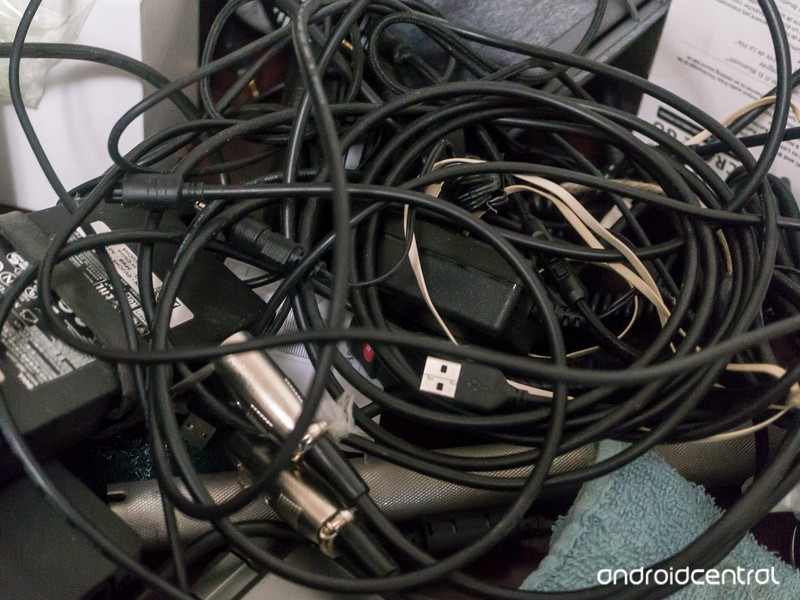 If you need a broken guitar cable or a 100-foot telephone cord, I have just the box of goodies for you.
It’s not hard to build up a big collection of tech gear that’s too good to just toss but not anything you’ll ever use again. Between phones and wearables and smart bulbs and A/V equipment and everything else that seems to find its way into our lives, those unused desk drawers or cube storage bins can get pretty full over time. And that’s just the hardware; when is the last time you went through your phone or computer and saw the apps and other software you haven’t used in a while? Yes, it’s not hard to build up a bunch of stuff at all.
The amount of both physical and digital junk that can build up in a year is surprising.
For the past few years, my wife and I have used tax time as a reminder to clear out all gear and the digital cobwebs that accumulate. Setting aside a specific time for it has made quite the difference, too. As I take a peek at my little space for things that need to go somewhere I see a lot of junk. Some of it is still in fine working condition and just not something I want or need any longer, and some of it is busted or torn apart because parts were scavenged, but it’s still all great junk. The packrat inside me really wants to keep it all, but because it’s that time of year I know I’m not going to.
I’m also looking through my phones and seeing apps I just wanted to try and haven’t used since I installed them, or apps for products that are in that pile of wonderful things that will be moving on. Digital junk can build up just as easily as physical junk can, and it takes just as much room only in a different way. I get vicious here; installing software is simple so I’m not afraid to uninstall it to get everything clean. I certainly don’t need the old Philips Hue app installed beside the new Philips Hue app or to-do lists from last May, but there’s a chance I might want to play this Hydraulic Press game again one day. Since it’s always going to be in my Google Play library I’m uninstalling it, too.
It’s usually easy to find someone who wants the good junk, it’s the other junk that is harder to deal with.
It’s actually kind of fun to go through it all. Not everything, mind you — I had a home server die and needed to look through the hard drives which means a lot tiny screws and unplugging of things — but going through and making sure I won’t ever need the parts to build a Raspberry Pi case is almost enjoyable. I just have to resist the temptation to keep any of it rather than pass it along to someone else who will never need it. That’s my rule: if any of the kids or their friends or whoever wants something from the pile, they have to take the box that it’s in. Saves me from having to sort it out into the right plastic bin at the recycling center.
The best part is knowing that you can pass things on to someone who will use them. A 128GB Galaxy S6 edge (in glorious gold) makes a great phone for someone who needs a phone and donating an old Mac Mini and a Windows 7 laptop to a local daycare makes me warm and fuzzy. Equally important, though not quite as warm or fuzzy, is getting rid of apps and accounts you’re not using instead of leaving them in place for someone else to try and use because that’s the world we live in. Any and every online account is ripe for the right person to come along and try to do unfriendly things. Better safe than sorry and all that.
Don’t forget your digital junk! Old accounts or apps aren’t a thing you should leave laying around for someone else to play with!
Do yourself a favor. Look inside that place where you put things you don’t want to throw away and go through the app drawer on your phone or the hard drives in your computer and do a little spring cleaning. You might be able to help out someone else, you’ll cut down on the clutter, and you’ll make room to get more stuff!
Everything I would do to improve the PlayStation VR
I love the PlayStation VR but it needs fixing. Here are some ideas.

Currently, my only room scale VR is the PlayStation VR and I really enjoy it. The price point and the availability of the hardware to run it make it an excellent choice for anyone who wants to start their VR journey. After all, 40 million people already have a PS4, and with the PSVR being as low as $199 in some sales you can see why 4 million people have made the leap.
As more people get into VR though, the glaring issues that the PSVR comes with may start to erode its lead. With the arrival of Windows Mixed Reality, as well as the already popular Rift and Vive headsets, people are starting to understand what is expected of room scale VR. Here are a few ways how PlayStation VR is falling behind and how they can potentially fix it.
Find it at Amazon
360 coverage

The biggest advantage that the Rifts and Vives of this world have is 360-degree tracking. Because they have light gates in up to four corners of the room they can create a much more immersive arena than the PSVR allows. When playing my PSVR games I stand with my legs touching my sofa behind me, after all, there is no need to have space behind me, I have no way to turn 360 only 180. This means in games such as Farpoint, Doom and even Rec Room you are unable to react as fast as people on other platforms having to use a button to spin you, creating a disconnect from the gameworld and sometimes, nausea.
For PSVR 2.0 Sony could fix this one of two ways, either light gates like Rift/Vive or, even simpler, another camera at the rear of the play area. Using a camera at the rear would mean adding some lights to the rear of the headset as well to allow the cameras to track better as you turn but would mean Sony wouldn’t need to create a whole new system, simply add to their existing one, keeping the costs down in the process.
More: How to locate and fix tracking issues for your PlayStation VR
Graphical Fidelity

Currently, even using the PS4 Pro, the graphical resolution on the PlayStation VR is poor. While most games have been tuned to account for the lower processing power some games, Monster of the Deep for example, show the graphics to be mediocre at best. I’m not sure how much this can be fixed by Sony, after all, I think it is a console power problem, not a headset problem, but I do think there are things that would help.
Increasing the resolution inside the headset would instantly make the games more enjoyable, reduce eye strain, and sharpen the graphical quality considerably. Where the Rift and Vive use one screen per eye, each with a resolution of 1080 x 1200 pixels, the PSVR only has a single screen at 1080 x 960, and you can feel the difference. The PSVR will need to push the resolution up if it wants to compete in a room scale world. With better screens being made almost daily and Sony having a screen division this shouldn’t be too difficult for them to accomplish and will go a long way to making the PSVR 2.0 a contender.
More: Try these great games for PlayStation VR for under $20
Processing Power

One of the biggest problems Sony have is the lack of processing power available in the PS4 or even the PS4 Pro. Without sufficient CPU or GPU power, the PlayStation VR will always lag behind. Short of creating an entirely new PS5, something I am sure they are working on, there isn’t a huge amount they can do to boost the power, but boost it they must, if they want to push the PSVR into the big leagues.
Perhaps a larger processing unit, one that sits underneath the PS4, would help? It could house a separate GPU specifically for the PSVR to draw on while adding a series of ports to charge all the controllers that come with owning a high-end VR headset. This is probably the most pie in the sky idea in this article as, chances are, the cost to make this would be so high they may as well just make a new console. There is, however, one more thing that would change the PSVR for the better instantly.
New Controllers

Every issue I have highlighted here pales into insignificance against the mess that is the Move Controller. Originally made as a quick fix to the “Wii Problem” the Move Controllers are basic to the point of being unusable. Lacking any kind of thumbstick or even basic D-Pad, the Move Controllers are woefully underprepared for the intricacies of the VR World. Don’t get me wrong, as far as basic controls go the Move sticks work, they just don’t allow you to truly explore your world.
Please improve the Move Controllers.
With games like Rec Room and Sparc requiring you to have more control of the motion of your hands and more accuracy in your movements the Move Controllers need a huge overhaul if they are to be used in PlayStation VR 2.0, from the shape of the wand to the placement of the buttons, everything needs to be remade. The latest iteration of the Move Controllers did nothing to fix any of the issues except one, they gave it a micro USB instead of a mini USB. Great.
If Sony were to only deal with one thing, let it be this. Please improve the Move Controllers. Everything else in this article is a wish list really, things I would love to see to elevate the PlayStation VR to new heights, but the upgrade to the Move Controllers is a must. With Crossplay becoming the norm in VR we must have a parity in the control systems. The graphical fidelity is not really a block to competing across platforms, games like Rec Room barely think about resolutions and the like, but not being to aim or move as quickly as someone in a Vive is, and will remain so until the Move Controllers are fixed.
Find the Move Controllers at Amazon
Fix it, Sony!
So there we are, my thoughts on what the next PlayStation VR needs to address to make it a true contender. Of course, my use of true contender is disingenuous really, as the Playstation VR is the undisputed king of VR sales, it beats every other headset combined and the reason for that is obvious, price. Price of the unit, at only $199 in sales for the headset and camera it’s impossible to beat, and even the price of the companion, a PS4 or PS4 Pro, is far easier to get a hold of than a VR Ready PC and chances are you own a PS4 already.
That doesn’t mean that Sony shouldn’t be looking at improving the PlayStation VR in their next version, they absolutely should. I love the PSVR and want to see it succeed even further than it has. But please, Sony, fix these darn controllers. Thanks.
How do you all feel about the PlayStation VR? do you agree with the issues here? let us know in the Comments.
PlayStation 4

- PS4 vs. PS4 Slim vs. PS4 Pro: Which should you buy?
- PlayStation VR Review
- Playing PS4 games through your phone is awesome
Amazon
Can legislation fix gaming’s loot box problem?
Last year’s gaming controversy has turned into this year’s legislative battleground. Fans were outraged when Star Wars: Battlefront II launched with buyable loot boxes that unbalanced multiplayer combat, and other games like Need For Speed: Payback and Destiny 2 had their own pay-to-win controversies. Eventually, loot boxes unsettled enough constituents to rile their representatives. Legislators in Hawaii, Washington and Illinois have introduced bills to either study loot boxes or restrict access to young players, but how effective will they be? What else can lawmakers do?
Hawaii state Rep. Chris Lee, a gamer himself (he favors the Battlefield series and Rockstar Games’ oeuvre), believes there’s plenty to do. The Democrat introduced four bills last month: Two (one introduced to state House and one to the Senate) would restrict loot boxes in Hawaii to those older than 21, while another pair would force companies to disclose the odds of winning potential game items. It’s not the strongest rebuke of the games industry he and his co-authors could have made, Lee told Engadget, but it’s a step in the right direction — and it will spur conversation.
The gaming industry has been challenged by legislators before. In the 1980s and ’90s, lawmakers panicked that the violence, drugs and sexuality in gaming was affecting youth. To avoid government regulation, the industry formed the Entertainment Software Rating Board (ESRB), which warded off legislative oversight. But this time around, the issue isn’t moral corruption — it’s whether these particular reward mechanisms are merely gambling in disguise, and if so, should they be in games kids can play? Bills are very public statements, and those proposed by Lee and other state lawmakers have cast doubt on the future of loot boxes as they exist now.
The ESRB has staunchly maintained that loot boxes aren’t gambling:
“While there’s an element of chance in these mechanics, the player is always guaranteed to receive in-game content (even if the player unfortunately receives something they don’t want). We think of it as a similar principle to collectible card games: Sometimes you’ll open a pack and get a brand new holographic card you’ve had your eye on for a while. But other times you’ll end up with a pack of cards you already have,” the ESRB told Kotaku late last year. We reached out to the ESRB for comment on the recently-proposed bills and didn’t receive a response at the time of writing.
Legislation isn’t the only tool lawmakers can use to effect change: Last week, US Sen. Maggie Hassan, a Democrat from New Hampshire, wrote a public letter to the ESRB urging it to take the loot-box issue more seriously, especially because children can easily access games with these mechanisms. Otherwise, as Hawaii’s Lee noted, connecting with different groups to raise awareness could provoke a response by, in this case, the gaming industry. His office has started talking with concerned lawmakers, community leaders, medical institutes, schools and other interested parties across the country.
Still, nothing captures America’s attention like potential new laws.
Bills proposed by other state lawmakers earlier this year have focused on whether loot-box mechanisms are gambling. Washington state Sen. Kevin Ranker, a Democrat, introduced one last month asking the state’s gambling commission to decide whether loot boxes qualify as games of chance. Separately, two Indiana state senators introduced a bill commissioning a study to determine the same, though it was effectively buried when it didn’t get a committee hearing.
Given that players often buy loot boxes with real money and receive randomized assortments of in-game items, there’s a case for considering this mechanism as gambling. If states decided they were, loot boxes would likely fall within the jurisdiction of statewide gambling commissions and be regulated just like any other pay-to-play game of chance.
The gaming industry has good reason to stamp out any loot box-gambling connection: Once states decide to regulate them as such, game studios will have to comply with each law and statute. They would have to switch off features for players in some regions and ensure compliance lest they run afoul of state authorities. This may be a big issue for titans of the industry like Activision-Blizzard, which has centralized loot boxes in many of its AAA games (Call of Duty: WWII, Destiny 2, Overwatch, Hearthstone) to drive up revenue. Smaller studios that can’t afford legal counsel but include loot boxes could suffer more if they violate state laws, according to Marc Whipple, an intellectual-property lawyer who frequently advises video-game companies.
“There’s an old saying, ‘You may not be interested in politics, but politics are interested in you.’ The same thing applies here: You may not be interested in gambling regulation, but gambling regulators are interested in you,” Whipple said in an interview with Engadget.
“Because gambling is seen as a privilege, not a right, if the gambling regulators believe that you are in their jurisdiction, if they have jurisdiction over you, they can do a lot of things to you that a lot of people probably don’t understand are possible … up to and including declaring your product an unlawful gambling device and issuing a warrant for your arrest,” Whipple said.
He should know — he worked as legal counsel for Incredible Technologies, the company behind Golden Tee Golf, a popular cabinet game that let players participate in online tournaments for cash prizes. To operate in myriad bars nationwide, the game had to obey each state’s gambling laws. In some cases, cabinets would have features removed to comply with particular statutes.
Game studios notoriously hide their loot boxes’ odds of winning specific items. (We can guess at Overwatch’s loot-drop percentages because Chinese law forced them to be revealed last year, though Blizzard managed to hide them a month later through a loophole).
Without pointing any fingers at anybody in the games industry, Whipple said, if you made a video slot machine and put it in a casino with the same kind of pay table used in most loot-box systems, “you would go to prison.” In other words, the odds in Vegas are better — because state law requires them to be.
It’s easy to get sucked into the ‘is it gambling?’ debate. But instead, Hawaii’s Lee aimed his bills at safeguarding kids and ensuring that everyone knows what they’re really paying for by requiring transparency in odds. It’s where he sees the argument going — not continuing to debate whether loot boxes are gambling, but asking departments of health and consumer-protection agencies about the consequences and impacts of loot boxes. Because game studios don’t release data about loot-box sales and use, we only have anecdotes about when individuals suffer from these mechanisms — and they are often tragic.
“There’s no question that for a portion of the population, there is vulnerability. And for an even larger portion of the population, there is risk of exploitation by algorithms specifically designed with no transparency and, increasingly, to take advantage of players based upon their actions that they’re not even aware of. When you think of it like that, it’s a very dangerous moment,” said Lee.
It’s dangerous because it’s an industry that knows what it’s doing. Lee explains: “It has employed psychologists and mental-health experts to use these mechanisms specifically to exploit human psychology as much as possible. … If the industry continues to deny or pretend that there’s a problem here, it will find itself ultimately in court in the same way that tobacco companies and oil companies denied the information that they knew all along.”

Considering the dysfunction in Washington, it’s doubtful that legislation on the issue will come from Congress in the near future. To date, the only member who has publicly acted over concern for loot boxes is New Hampshire’s Hassan.
“Sen. Hassan has already sent a letter to ESRB raising concerns about the harm loot boxes could have on young gamers and called on nominees to the Federal Trade Commission to commit to looking into the issue of loot boxes, which all four nominees agreed to do,” Eric Mee, Hassan’s deputy press secretary, told Engadget. “The senator is cautiously encouraged by the ESRB’s initial statement, but if the ESRB’s response is inadequate, she will work with her colleagues and consumers to consider additional steps.”
Mee told Engadget it’s too early to speculate whether there will be a congressional push for hearings or legislation. State legislatures are addressing loot boxes ahead of Congress because there are simply more lawmakers across the country than in Washington. They also have more room to tackle issues that hit closer to home, like questionable mechanisms in video games. Given that state lawmakers operate on different timelines for their legislative seasons, Lee believes other states may introduce their own bills later this year. His office has been talking with lawmakers from 30 other states who may be interested in doing so. Some are starting to collect data through their departments of health and other organizations but “because nobody but the industry has the data at this time, it might take a little bit to get there,” he said.
The one bright spot? Lee believes loot boxes are one of the rare issues that could inspire bipartisan support because it concerns a broad swath of constituents, from mental-health and education communities to parents and soccer moms. The issue might even expand beyond gaming: Without intervention, what’s to stop other industries from adopting their own chance-based content boxes?
Lee elaborates: “Imagine that model without any sort of oversight or regulation move into every aspect not only of gaming but of online services in general. Rather than a subscription to Spotify or buying a song through Apple, you can buy loot boxes full of albums. But you really aren’t going to know what you might get.”
‘Black Panther’ is amazing. Why are its CG models so terrible?
Black Panther is a refreshing answer to the increasingly stale world of superhero cinema. But there’s one glaring flaw throughout the film: its use of CG models to replace humans during action sequences. They’re weightless, ugly and, worst of all, incredibly distracting. You’d think that in the year 2018, following the recent glut of comic book films, visual effects (VFX) studios would have perfected the art of creating realistic CG humans. Instead, we appear to have peaked at Avatar in 2010. What gives?
It’s not just a matter of visual effects companies getting lazy. As movies have started to rely even more on complex VFX, the firms creating them are overworked, underpaid and, at times, literally fighting for survival, according to one person who has worked on several recent blockbusters (and who asked to remain anonymous due to the sensitivity of their work). That’s led to a decline in overall quality, even while some studios continue to push new boundaries, like WETA, with its work in the recent Planet of the Apes trilogy.

Big-budget films used to require between 500 and 1,000 VFX shots, but that number is now regularly between 1,000 and 2,000, according to VFX Movies’ comprehensive chart. For example, The Fellowship of the Ring had just 480 visual effects shots in 2001, while the recent Hobbit films each featured around 2,000. (That’s also a clear example of how more effects don’t necessarily lead to better-looking movies.) Some of the biggest blockbusters today, like Captain America: Civil War and Avengers: Age of Ultron, required an astounding 3,000 VFX shots. To get all of this work done, Hollywood studios regularly enlist a large number of firms for a single film. Around a dozen worked on Black Panther, while Thor: Ragnarok had more than 20 companies churning out visual effects.
“It takes enormous teams to put this [VFX work] together. It takes individuals with specific skills sets to do it,” the insider said. “Movie studios need so much work, and they’re only willing to pay so much. The VFX are accounting for a pretty serious chunk of these $100 to $200 million budgets, but even that isn’t enough to cover the sheer amount of shots.”
Many VFX firms today are in a race to the bottom. They’re trying to undercut rivals that might steal potential jobs and taking on an excessive amount of work, often without making a profit. Most of these firms also have to pitch their talents to Hollywood, which occasionally involves doing $20,000 to $80,000 worth of work up front for free. Sometimes they end up working on huge films at cost, in hopes that it’ll lead to more lucrative (and less demanding) commercial work.
As you can imagine, this has made life rough for VFX workers. “In an attempt to slash costs the vfx facilities have eliminated benefits such as sick days, health insurance, and retirement accounts,” writes Daniel Lay, the formerly anonymous activist blogger VFX Soldier, who’s worked at studios like Digital Domain and DreamWorks Animation. “Many are forced to work under illegal conditions with unpaid overtime and 1099 tax statuses where we are responsible for paying the employer’s portion of social security. The projects have become more volatile as the vfx facilities try to please the demands of the director put in place by the studio.”
The sorry state of this industry is best encapsulated in the story of Rhythm and Hues, the company behind the astounding effects in Ang Lee’s The Life of Pi. Rhythm and Hues ended up declaring bankruptcy just two weeks before winning an Academy Award for their work in 2013. Their acceptance speech is now infamous. As the firm’s visual effects supervisor, Bill Westenhofer, tried to address the issues facing his industry from the podium, he was drowned out by the theme from Jaws and his microphone was cut off. It seemed that Hollywood’s interest in VFX studios lasted less than 60 seconds. (The short documentary “Life After Pi” offers an inside look into what went wrong for Rhythm and Hues.)
“Nowadays, almost every shot in a blockbuster film has some CG element,” one Industrial Light and Magic (ILM) worker told us. (They also asked to remain anonymous.) “Direction can change almost on a daily basis, where artists are redoing their work multiple times just to hit the ever-changing vision.” Hollywood studios are also seeking cheaper labor, which forces VFX companies to open satellite offices in places like Canada, where the US dollar is worth more, and locations that offer significant tax breaks.
Given the hyper-competitive, high-pressure nature of the VFX world, it’s no surprise that we’re not seeing the best work from these studios. In Black Panther, there are two shots that are particularly disappointing: one in which the superhero flips over a car as it crashes beneath him, and another sequence where two CG characters punch each other as they fall. (The latter sequence feels like a nod to the excellent midair fight in Spider-Man 2, except it looks significantly worse.) The insider’s team (who didn’t work on those shots) was worried about these scenes when they caught glimpses of them in the film’s trailer. They had all the trademarks of bad CG modeling. Their team held out hope that the trailers were using early, unfinished renders, but unfortunately those problems remained in the final cut of the film. We’ve reached out to Disney for comment, and will report back if they respond.

Of course, Black Panther is just one example. The opening action sequence in Avengers: Age of Ultron is also plagued by terrible CG models, and the companies working on Justice League couldn’t even remove Henry Cavill’s mustache without making him look like a Ken doll. To make matters worse, that sloppy work was outdone by a $500 computer and AI learning “deepfake” software, which is also being used by amateurs to replace actors’ faces in films. (And of course, that has disturbing implications for porn.)
In most cases, the industry insider tells us, the issues come down to blending the digital effects with physical environments. Even the most incredibly detailed character models will feel a bit off if any of those elements are weak. Studios typically don’t have enough time to smooth out the rough edges, so they just have to submit what they’ve got. In many cases, this leads to incomplete work actually making it to theaters.
One “major” release last year had more than 100 VFX shots that needed fixing, the insider says. Those issues were eventually resolved for the home video release, something that’s becoming increasingly common. (And, no, the VFX companies aren’t paid extra for those fixes.) While you’d think that faster computers and rendering capabilities would help solve some of these problems, instead studios are using that extra horsepower to take on even more work.

Marvel Studios/Disney
It doesn’t help that movie studios are leaning even more on visual effects to fix issues in postproduction. “The idea that you can continue to refine and update whatever is done in a computer means there’s less of a need to commit to certain ideas and concepts,” the source says. This is both a blessing and a curse for everyone involved. Being able to fix minor issues is genuinely helpful, but it also leads to designers changing the look of suits and other elements late in production. That forces VFX firms to rush out updated work, with very little fine-tuning.
It’s not entirely doom and gloom, at least when it comes to the overall level of work across the industry, according to Lay (AKA VFXSoldier). “While I’ve warned about the bad conditions leading to a bad product in aggregate that hasn’t really shaken out,” he said in an email. “While conditions continue to be very difficult there continues to be very good VFX work being done in films and that’s probably a good indication why things haven’t changed… Even with these terrible conditions the professionals and facilities continue to soldier through the challenges and make a great product.”
So what can be done about the systemic issues facing the visual effects world? It’s a long shot, but our source suggests that plenty of issues could be solved if VFX studios unionized and worked together. That’s not something Hollywood wants, since it would probably end up making visual effects work cost more and take longer.
Visual effects firms should also explore newer technology, our ILM source suggested. “A lot of companies don’t have time or budget to develop their tools,” they said. “It seems like we just throw people at the problems instead of figuring out better ways to work. I’ve been dabbling in real time [rendering] with Unity and Unreal lately and it’s amazing. I think we’re not far off from doing VFX film work in a real-time environment, and when that happens the whole industry is in for a little shake-up.”
While Black Panther will certainly be remembered for breaking new ground, it’s also a fitting example of the issues facing the VFX industry today. A movie that gets so many things right, with the backing of the biggest movie studios in the world, can still fall victim to the crushing workflow of the visual effects industry. That’s not just embarrassing for the people involved — it’s a shame shared by all of Hollywood.
Happy Birthday to Steve Jobs and MacRumors
Former Apple CEO Steve Jobs, who co-founded Apple and was responsible for catapulting the company to wild success with products like the iPod and the iPhone, was born on February 24, 1955, and were he still alive, today would mark his 63rd birthday.
Jobs not only founded Apple alongside Steve Wozniak in 1976 and directed the future of technology with the development of some of the first personal computers, but he also brought Apple back from the brink of failure even after being ousted from the company he created.
Though he passed away in October of 2011 when he was just 56, Steve Jobs had a lasting impact on Apple’s culture. As current Apple CEO Tim Cook often says, Steve Jobs’ DNA — his taste, his thinking, his unwavering perfectionism, his dedication to hard work, and his lust for innovation — will “always be the foundation of Apple.”
Cook always honors Steve Jobs on his birthday, and will undoubtedly have some thoughts to share with us later today.
There are no Apple products — and few technology products — on the market that have not been influenced by Steve Jobs in some way, however small, and had we not had Jobs, the world might be a different place today. Millions of lives have been touched by Apple devices, including the lives of each one of us here at MacRumors and all of the readers who visit the site every day to see what’s new in the world of Apple.
MacRumors shares a birthday with Steve Jobs, and as of today, the site is turning 18. MacRumors was founded on February 24, 2000 by Arnold Kim, and what started out as a small side project has flourished and grown right alongside Apple into the best Apple news site on the web.
We here at MacRumors are grateful to all of our dedicated readers, community members, and volunteers, and we look forward bringing you Apple news and rumors for the next 18 years.
Tag: Steve Jobs
Discuss this article in our forums
Android P won’t get a ‘dark mode’ after all
There was a short-lived hysteria Friday when it seemed like Google would grant a longstanding request to add built-in “dark mode” theming on stock Android, similar to the tweak OnePlus adds. Unfortunately, the team updated its tracker to explain that there was a misunderstanding, and it’s not coming. For users who prefer custom themes they’ll still need to root and add third-party tools to do it, but that doesn’t mean nothing is happening.
As a post in the thread explains, what the Android team will change in its “P” release is a new toggle that makes it easier for developers to test a night mode (Twitter has one) in their apps. The function was already there, but now it’s easier to access in Settings, so more apps may take advantage and save a little eye strain or potentially even energy on OLED-screened phones.
Hi folks, you may remember me from the last three releases where it looked like Dark Mode was being added. Unfortunately, this bug was closed prematurely due to a miscommunication with the team that handles AOSP issues.
What we *have* added in a future Android release is a developer-facing setting (via Developer Options) to toggle the -night UI mode qualifier, which will make it easier for developers to create and test apps that implement night mode. This qualifier has been in the platform since Froyo (SDK 8) and globally modifiable via UiModeManager since Marshmallow (SDK 23); however, there was never an explicit toggle made available anywhere in Settings.
If it’s any consolation, we will also not be adding Hot Dog Mode (where all UI elements are yellow and red).
Source: Android Issue Tracker, 9to5Google
How to take a screenshot on a Google Pixel or Pixel 2 smartphone
Julian Chokkattu/Digital Trends
Need to capture the screen on your Google Pixel or Pixel 2 smartphone? Fortunately, taking a screenshot with the Pixel is very similar to doing so on other Android devices, and only takes a few seconds. Let’s walk through how to take a screenshot on a Google Pixel device.
Taking a screenshot with the Pixel
Let’s assume your Pixel is in your hand and turned on. Here’s what you need to do to take a quick screenshot.
Step 1: Navigate to the page or screen you want a screenshot of. It’s not necessary to close out of any other apps or webpages, just make sure that the Pixel is showing what you want to capture.
Step 2: On the right side of your Pixel phone, there is a power button and a larger, dual volume button. Press the Power button and the Volume Down portion of the volume button simultaneously. Hold them down for a couple seconds. It may take a little practice to get this right.
Step 3: You will notice a quick flicker, a sign that the screenshot has been taken. A screenshot icon screen will appear in the notification bar at the top, and if you swipe down, you should see a Screenshot captured notification to let you know that the process was successful.
Reviewing your screenshot
You’ll want to check your screenshot and see how it looks. When the notification pops up, you can swipe down to expand it. This will bring up the full screenshot so you can review it more carefully. You can choose to Share or Delete it directly from this notification.
Looking through all your screenshots
Julian Chokkattu/Digital Trends
If you’ve taken several screenshots or aren’t sure just how many screenshots are stored on your Pixel, there’s an easy way to check. Once you take a screenshot, the Pixel will automatically save the image, and will keep saving and storing any further screenshots.
Step 1: Find these screenshots by navigating to your Photos app, which should sport a colorful pinwheel logo. Once the app is open, select the three lines that indicate the Menu button.
Step 2: In the Menu, look for the option that says Device folders. One of the folders should be called Screenshots. This is where your Pixel deposits all the screenshots you take. You should be able to open this folder and view your screenshots, as well as delete or move them as you wish. To quickly share any particular screenshot, just select that screenshot and then choose the three-dot Share button.
Troubleshooting screenshots
Sometimes if you take a screenshot, you will get a message that says, “Couldn’t capture screenshot” or something similar to show it’s not working. Or perhaps you go over to your photo folder and find that the screenshot wasn’t saved properly. Here are a few things you can do try to get your screenshots working properly.
Check for updates: Sometimes updates create bugs with the screenshot process. Look for new updates that patch the issue.
Close your other apps: Sometimes another open app can interfere with a screenshot being saved. Make sure other apps are fully closed, then try again.
Check your storage: Is your Pixel storage getting a little full? The phone may be rejecting the image for that reason. Take a look in Settings > Storage to check. If that’s the problem, then go through your photos and delete what you can to free up some extra space, then try taking the screenshot again. You can also clear out your cache if you want.
Rename your screenshot folder: Just call it something basic, like “New Screenshots” or whatever works for you. It’s not clear why this works, but it looks like sometimes the Pixel can get confused about the right folder destination for screenshots, and renaming the folder helps to reset the process and clear up a bug.
Editors’ Recommendations
- How to fix a dead pixel
- Pixel 2 and Pixel 2 XL problems, and what to do about them
- The 20 best Google Pixel tips and tricks you need to know about
- Stay Pixel-perfect: Ten of the best Pixel 2 cases and covers
- Everything you need to know about the Google Pixel 2 and Pixel 2 XL
Amazon secures movie rights for Alafair Burke’s thriller ‘The Wife’
Amazon Studios is ramping up its efforts in the streaming space lately in a push to focus on bigger movies and television shows. The company hired NBC’s Jennifer Salke as its new head executive to take the place of the disgraced Roy Price, and has picked up some high-profile content, like Ian M. Banks’ well-regarded Culture novels for a television series. Now Amazon won the rights to Alafair Burke’s novel The Wife, which is heavily influenced by the current #MeToo zeitgeist.
According to Deadline, Amazon was one of five bidders for the novel, which is Burke’s 13th novel. She’s also set to write the movie script in a deal that reportedly reached seven figures. Burke is a graduate of Stanford Law, former prosecutor, a professor of criminal law and the daughter of crime novelist James Lee Burke. The Wife came out last month, and revolves around a woman named Angela Powell who finds out that her high-profile celebrity husband has been accused of sexual assault by more than one woman. When one accuser disappears, Powell must decide whether to stand by her man or take a closer look at the truth.
Source: Deadline
 AIVAnet