


Xiaomi Redmi Note 5 specs: 18:9 display, Snapdragon 625, and 4000mAh battery
Xiaomi is playing it safe with the Redmi Note 5, but there are a few upgrades to be excited about.

At a media event in New Delhi, Xiaomi introduced the Redmi Note 5 for the Indian market. The phone is a re-branded version of the Redmi 5 Plus, which made its debut in China last December.
The Redmi Note 5 shares the same internal hardware as its predecessor, including a Snapdragon 625 chipset, and 4GB of RAM with 64GB of storage. The biggest change is the 18:9 display, which has a resolution of 2160×1080. Xiaomi also introduced a 12MP camera at the back with larger 1.25um pixel size, and while the phone has the same 5MP front shooter as last year, it is now accompanied by an LED flash.
Xiaomi Redmi Note 5 specs
| Operating System | MIUI 9.2 based on Android 7.1.1 Nougat |
| Display | 5.99-inch 18:9 FHD+ (2160×1080) IPS LCD panel403ppi pixel density450nits maximum brightness |
| SoC | Octa-core Qualcomm Snapdragon 625 Eight Cortex A53 cores at 2.0GHz 14nm |
| GPU | Adreno 506 with Vulkan API, OpenCL 2.0, and OpenGL ES 3.1 650MHz |
| RAM | 3GB/4GB |
| Storage | 32GB/64GB microSD slot up to 128GB |
| Rear camera | 12MP with 1.25um pixel size and f/2.2 lensPDAF, LED flash 1080p video recording |
| Front shooter | 5MP with LED Selfie light1080p video recordingBeautify 3.0 |
| Connectivity | LTE with VoLTEWi-Fi 802.11 a/b/g/n, Bluetooth 4.1, GPS, GLONASS Micro-USB, 3.5mm audio jack, IR blaster |
| Networks | LTE: 1/3/5/40/41GSM: 2/3/5/8WCDMA: 1/2/5/8 |
| Battery | 4000mAh battery Fast charging (5V/2A) |
| Fingerprint | Rear fingerprint sensor |
| Dimensions | 158.5×75.45×8.05mm |
| Weight | 180g |
| Colors | Gold, Rose Gold, Blue, Black |
As the internal hardware is identical to what we saw last year with the Redmi Note 4, Xiaomi is launching the Redmi Note 5 at the same price point. That means the variant with 3GB of RAM and 32GB of storage will retail for just ₹9,999, and the model with 4GB of RAM and 64GB of storage set to cost ₹11,999 in the country.
If you’ve already bought the Redmi Note 4 last year and are looking for an upgrade, then the Redmi Note 5 Pro should be at the top of your list. The phone comes with the same 18:9 display and 4000mAh battery as the Redmi Note 5, but is powered by a faster Snapdragon 636 chipset and offers up to 6GB of RAM and 64GB of storage, all for just ₹16,999.
There’s also a version with 4GB of RAM and 64GB of storage that retails for ₹13,999. The Redmi Note 5 Pro also has a 20MP selfie camera with LED flash and 12MP + 5MP dual rear cameras. Hit up the links below for more on the Redmi Note 5 series in India, as well as the Mi TV 4:
- Xiaomi Redmi Note 5 review: The best just got better
- Xiaomi Redmi Note 5 Pro preview: Possibly the best budget phone of 2018
- Xiaomi Redmi Note 5 Pro vs. Redmi Note 5 vs. Redmi Note 4
- Xiaomi Mi TV 4 preview: The next big thing is here
Xiaomi Redmi Note 5 review: The best just got better
The Redmi Note 5 shares the same foundations as its predecessor, but introduces a few key upgrades for 2018.

Xiaomi had a landmark year in 2017, edging past Samsung to become the largest handset manufacturer in India. A lot of that momentum was down to the success of the Redmi Note 4, which was the best-selling phone in the subcontinent last year.
As such, there’s a lot riding on the Redmi Note 5. Before we get to the review, a little background on the naming convention. The Redmi Note 5 is identical to the Redmi 5 Plus, but because the Redmi Note series is more recognizable in India, Xiaomi is rebranding the phone in the country.
This isn’t the first time Xiaomi rebranded a device for the Indian market. Last year’s Redmi Y1 initially launched as the Redmi Note 5A in China, and the Android One-based Mi A1 was a rebrand of the Mi 5X.
Although the internal hardware is identical to last year’s Redmi Note 4, the Redmi Note 5 does have a few tricks up its sleeve. Let’s find out if the device has what it takes to further Xiaomi’s ambitions in 2018.

Xiaomi Redmi Note 5 Specs
| Operating System | MIUI 9.2 based on Android 7.1.1 Nougat |
| Display | 5.99-inch 18:9 FHD+ (2160×1080) IPS LCD panel403ppi pixel density450nits maximum brightness |
| SoC | Octa-core Qualcomm Snapdragon 625 Eight Cortex A53 cores at 2.0GHz 14nm |
| GPU | Adreno 506 with Vulkan API, OpenCL 2.0, and OpenGL ES 3.1 650MHz |
| RAM | 3GB/4GB |
| Storage | 32GB/64GB microSD slot up to 128GB |
| Rear camera | 12MP with 1.25um pixel size and f/2.2 lensPDAF, LED flash 1080p video recording |
| Front shooter | 5MP with LED light1080p video recordingBeautify 3.0 |
| Connectivity | LTE with VoLTEWi-Fi 802.11 a/b/g/n, Bluetooth 4.1, GPS, GLONASS Micro-USB, 3.5mm audio jack, IR blaster |
| Networks | LTE: 1/3/5/40/41GSM: 2/3/5/8WCDMA: 1/2/5/8 |
| Battery | 4000mAh battery Fast charging (5V/2A) |
| Fingerprint | Rear fingerprint sensor |
| Dimensions | 158.5×75.45×8.05mm |
| Weight | 180g |
| Colors | Gold, Rose Gold, Blue, Black |
About this review
I (Harish Jonnalagadda) am writing this review after using a combination of Redmi 5 Plus and Redmi Note 5 for over a month. I picked up the Redmi 5 Plus in January, and have been using the device for the last four weeks. With the Redmi Note 5 being just a rebrand of the Redmi 5 Plus, I’m comfortable sharing my thoughts on the device after using the Indian retail variant for just six days.
The Redmi Note 5 is running the latest global MIUI 9 build, which has Play Services built-in, whereas the Redmi 5 Plus is still on a Chinese version of MIUI. As such, I focused on the Redmi Note 5 when talking about the software. I tested both devices on Airtel and Jio’s 4G networks in Hyderabad, India.

Xiaomi Redmi Note 5 Hardware
At its core, the Redmi Note 5 is identical to its predecessor. The phone features a similar design aesthetic and is powered by the same Snapdragon 625 chipset.
Xiaomi cut down the number of storage variants to two, but they’re unchanged from last year: the base model now comes with 3GB of RAM and 32GB of storage, while the second variant offers 4GB of RAM and 64GB of storage.
The design itself hasn’t changed all that much either, and although the Redmi Note 5 has more pronounced curves at the back — leading to better in-hand feel — the overall aesthetic is similar to the Redmi Note 4. Once again, the top and bottom sections at the back are made out of plastic, with the rest of the body crafted out of metal. To Xiaomi’s credit, it’s hard to make out that the antenna inserts are plastic, as they have a metallic finish.
The rest of the design is identical — the single speaker is located at the bottom next to the Micro-USB charging port, and the headphone jack along with the IR blaster is located up top. I gave Xiaomi a pass last year for sticking with the Micro-USB port, but in 2018 there’s no excuse for the brand not to make the switch to USB-C.
Like its predecessor, the Redmi Note 5 features a hybrid SIM card tray, allowing you to either slot in two SIM cards or a SIM card and a microSD slot (up to 128GB).
There are two key areas that Xiaomi focused on with the Redmi Note 5: display and camera. The 18:9 FHD+ panel is a necessary change for 2018, and keeps the Redmi Note 5 competitive in this category.
Xiaomi has a strong track record when it comes to LCD displays, and the panel used in the Redmi Note 5 is one of its best yet. Colors are accurate out of the box, and you can tweak the color balance to your preferences from the settings. Sunlight legibility is also great, and I had no issue viewing the panel under harsh sunlight.
The two big changes in the Redmi Note 5 are the camera and display.
Because of the reduced bezels, Xiaomi had to get rid of hardware navigation buttons and instead switched to on-screen keys. That’s a welcome change for me as I can finally configure the position of the back and overview buttons from the settings. Xiaomi (like Samsung) put the back button to the right of the home key, so it’s great that the Redmi Note 5 comes with configurable on-screen navigation buttons.
As for everyday usage, the Snapdragon 625 is a well-known chipset at this point, delivering the ideal balance between performance and battery efficiency. It would’ve made more sense to go with the newer Snapdragon 630 as it comes with a higher-clocked Adreno 508 GPU, but Xiaomi is clearly playing it safe here.
Furthermore, Xiaomi has been optimizing the Snapdragon 625 for over a year now, so that could be the reason for wanting to stick with the older SoC. And even though it’s a few years old, the Snapdragon 625 is one of the best chipsets in this segment — you’re not going to see many lags or slowdowns in day-to-day usage.
While there isn’t a whole lot of difference when it comes to the external design, Xiaomi says it is undertaking stricter quality control measures on the Redmi Note 5, leading to tighter tolerances. That should lead to fewer issues as the device starts making its way to customers in the coming weeks.
Xiaomi mentions that all four color options of the device — black, gold, rose gold, and blue — should be available within a month of the phone’s debut. I caught a glimpse of the blue model last week, and if you’re looking for a device that grabs attention, blue is the color to go for.
Battery life

With a 4000mAh battery, the Redmi Note 5 has similar battery life as its predecessor. To put it in another way, the phone is once again a battery champion. You’ll easily get a day’s worth of usage under heavy load, and more often than not, you can eke out two days’ worth of usage from a full charge.
I routinely saw over eight hours’ of screen-on-time spread over two days on a single charge. Battery longevity was one of the main reasons for the Redmi Note 4’s success, and the Redmi Note 5 picks up where its predecessor left off.
As I mentioned before, my main issue when it comes to the battery is the lack of fast charging. Granted, with a 4000mAh battery under the hood, you’re not going to need to top up in the middle of the day, but it’s a glaring omission nonetheless.
The Mi Max 2 is the only device in Xiaomi’s budget portfolio to offer Quick Charge 3.0, and the company says it made the exception because of the huge 5300mAh battery. The 4000mAh unit on the Redmi Note 5 takes an agonizing two hours to fully charge, with the phone taking a half hour to go from zero to 30%.

Xiaomi Redmi Note 5 Software
As I said for the Galaxy A8+, it’s inexcusable for a phone launching in 2018 to not run Oreo out of the box.
Xiaomi isn’t the fastest at rolling out platform updates, and one of the reasons why the manufacturer takes its time is the sheer size and complexity of MIUI.
Xiaomi mentions that it is working on Oreo update plans, but there isn’t a timeline yet. Considering how slow the manufacturer was at rolling out Nougat to the Redmi Note 4 last year, there’s a long wait ahead.
Also, MIUI’s interface is in dire need of a visual refresh, with the smorgasbord of feature additions over the years making it feel bloated. Xiaomi took steps to speed up the interface in MIUI 9, and for the most part, the latest version of the ROM feels much more optimized.
MIUI 9 also introduced in-line replies from the notification window, two years after the feature debuted on AOSP. And while Xiaomi has gotten better at adding features to the interface, it’s clear that MIUI needs a redesign from the ground-up.
MIUI 9 needs a visual overhaul, but there isn’t another ROM that offers quite as many features.
On the subject of features, it is the sheer customizability of MIUI that makes it attractive to Xiaomi’s core audience. MIUI has over 300 million users worldwide, and that number has grown significantly over the course of the last 12 months. If you’ve never used MIUI before, there’s enough customizability on offer to change every facet of the interface.
Xiaomi paved the way for a lot of great features that made their way to other apps. The stock app — dubbed Messages — was the first to introduce a card-style layout for train tickets, with the feature developed for the Indian market. Microsoft’s SMS Organizer offers a similar feature-set, but it’s available on the Play Store.

It is features like the messaging app that make MIUI stand out. There are other small touches that add value to customers. The dialer, for instance, shows how many times your phone rang should you miss a call. The gallery has a built-in image editor that lets you remove background elements from photos with ease (and it does a great job at it).
It’d be great to see MIUI’s messaging client and other stock apps make its way to the Play Store, but according to Xiaomi India’s lead product manager Jai Mani, that isn’t possible right now as the service hooks into MIUI’s framework.

Xiaomi Redmi Note 5 Camera
The Redmi Note 5 has a 12MP camera with 1.25um pixels and an f/2.2 lens. If those specs look familiar, it’s because Xiaomi is reusing the same module that was featured in the primary camera of the Mi A1.
After using standalone camera modules for each device in 2016, Xiaomi started standardizing hardware in its budget portfolio last year, and as a result, a lot of the devices in this segment have ended up sharing components.
The camera app offers a variety of shooting modes and live filters to choose from, and toggles for easily switching from photo to video modes or from the front camera to the rear. HDR is turned off by default, and enabling it leads to a slight delay when saving photos to the gallery.


As for image quality, the Redmi Note 5 is identical to the Mi A1 — photos taken in daylight have a lot of detail, but the camera suffers when it comes to low-light shots. Images come out soft and full of noise, and colors look washed out as well.
That said, the camera is better than what we’ve seen on the Redmi Note 4, but it doesn’t warrant an upgrade if you’re already using last year’s phone.

Xiaomi Redmi Note 5 Bottom line
So little has changed from the Redmi Note 4 to the Redmi Note 5 that the latter could’ve been termed the Redmi Note 4 Prime instead. Xiaomi is decidedly playing things safe with the Redmi Note 5, and it’s easy to see why.
There really wasn’t a whole lot that was wrong with the Redmi Note 4, and by making a few key upgrades, Xioami is ensuring that the Redmi Note series stays relevant in 2018. And for those that are looking for the absolute best that a budget phone can deliver, there’s the Redmi Note 5 Pro.
Sure, there are a few drawbacks with the device — the design is stale, there’s no USB-C or fast charging, and you get Nougat out of the box — but the upgrades to the display and camera are enough to make it hold its ground in this category.
Upgrades to the display and camera are enough to make the Redmi Note 5 stay relevant.
Xiaomi knows how to play the budget segment more than any other manufacturer, and that’s one of the main reasons why it is currently leading the pack. The Redmi Note 5 costs less than its predecessor, with the 3GB version retailing for ₹9,999 and the 4GB variant with 64GB of RAM costing ₹11,999 in the country.
That’s a huge deal considering the competitive nature of the budget segment. It’s also a win-win for Xiaomi — customers won’t have to pay more to get their hands on the Redmi Note 5, and the manufacturer stands to make more revenue from each unit.
From the beginning, Xiaomi’s business model hinged on producing units in small batches, which meant that the company could net more profits from sales as component costs bottomed out over time. With the brand now selling the same hardware as last year’s model and reusing the camera hardware from the Mi A1, it’s bound to make more money selling the Redmi Note 5 from the get-go.

Should you buy it? Of course
The most important phone in India isn’t the Galaxy S flagship or the iPhone. It is the Redmi series, as this is the lineup that gets the most amount of attention, and increasingly, the majority of the sales. If you’re already using the Redmi Note 4, then it doesn’t make much sense to pick up the Redmi Note 5; you’re better served by the Redmi Note 5 Pro.
But with the Redmi Note 4 being phased out, the Redmi Note 5 is a shoe-in replacement, one that should be more than adequate for the millions of customers that will be lining up to get their hands on a new budget phone in 2018. When you consider the fact that the 3GB model is available for under ₹10,000 it becomes an easier decision.
There’s no question that the Redmi Note 5 will sell well; the only issue now is whether Xiaomi can meet the inevitable demand. That was a huge issue last time around with the Redmi Note 4, with the device unavailable for more than a few seconds every week, but with Xiaomi leading a renewed push into the offline segment, there should be more availability of the Redmi Note 5 in the initial launch window.
Xiaomi has also invested significant resources into local production, with all units of the Redmi Note 5 sold in the country locally assembled at its factories. That should also lead to faster turnaround times for new units.
If you’re looking for a no-nonsense device that offers the right mix of battery life and performance, you can’t go wrong with the Redmi Note 5.
See at Flipkart
And for the enthusiast users looking for the absolute best in this segment, there’s always the Redmi Note 5 Pro, which starts off at ₹13,999.
Xiaomi Redmi Note 5 Pro preview: Possibly the best budget phone of 2018
Xiaomi Redmi Note 5 Pro with Snapdragon 636 and 20MP front camera lands in India for ₹13,999
There’s now a Pro variant in the Redmi Note series, and it is fantastic.

Alongside the Redmi Note 5, Xiaomi introduced a Pro variant dubbed the Redmi Note 5 Pro. The phone has a lot of firsts going for it — it is the first phone to be powered by the Snapdragon 636, and the first in the Redmi Note seriers to offer 6GB of RAM and dual rear cameras.
It is also the first in this series to offer a 20MP front camera with an LED flash module. Xiaomi introduced its first phone with a selfie flash last year in the Redmi Y1, and with both the Redmi Note 5 and the Note 5 Pro featuring a similar flash module at the front, it looks like the feature is here to stay.
The design itself is identical to that of the Redmi Note 5, with the only major difference being the dual rear camera at the back. Unlike the Mi A1, the cameras are arrayed vertically, and jut out from the frame of the device.

As we’re on the subject of the Mi A1, the primary 12MP camera on the Redmi Note 5 Pro is also the same resolution at 12MP, but it is a newer sensor. The secondary 5MP shooter is used to create a depth effect, and enables portrait mode.
In terms of the internal hardware, this is the first time we’re seeing the Snapdragon 636 in action, and having used the Redmi Note 5 Pro for over five days, I can say that it is significantly faster than the Redmi Note 5. AnTuTu is a favorite among Xiaomi users, and in the synthetic benchmark the Redmi Note 5 Pro posted a score of 113,004, vastly outpacing Redmi Note 4’s 77,296.
- Xiaomi Redmi Note 5 Pro specs
- Xiaomi Redmi Note 5 Pro preview
The phone also has an 18:9 display with an FHD+ resolution of 2160×1080, which is identical to that of the standard Redmi Note 5. Other specs include a 4000mAh battery — also the same as the Redmi Note 5, microUSB charging port, IR blaster, and a 3.5mm jack.
The Redmi Note 5 Pro will be sold in two variants: a base model with 4GB of RAM and 64GB of storage for ₹13,999, and a variant with 6GB of RAM and 64GB of storage for ₹16,999.
The phone will go on sale later this month at Flipkart, and will be available at Mi Home stores across the country. The hardware on offer certainly makes it a worthwhile upgrade if you’re currently using the Redmi Note 4, and at just ₹2,000 more than the standard version of the Redmi Note 5, it’s a no-brainer if you’re in the market for a new device.
Looking for more details on Xiaomi’s latest products? We have you covered:
- Xiaomi Redmi Note 5 Pro preview: Possibly the best budget phone of 2018
- Xiaomi Redmi Note 5 review: The best just got better
- Xiaomi Redmi Note 5 Pro vs. Redmi Note 5 vs. Redmi Note 4
- Xiaomi Mi TV 4 preview: The next big thing is here
Will you be picking up the Redmi Note 5 Pro? Share your thoughts in the comments.
Xiaomi Redmi Note 5 Pro specs: Snapdragon 636, 6GB RAM, and 20MP front camera
The Redmi Note 5 Pro is the first phone to be powered by Qualcomm’s Snapdragon 636 platform.

With the Redmi Note 5 turning out to be an iterative upgrade, Xiaomi is rolling out a Pro variant aimed at enthusiast users. If you’ve been waiting to pick up a new budget phone, there’s plenty to like here.
The Redmi Note 5 Pro is the first device to be powered by the Snapdragon 626 mobile platform, which brings Kryo cores to the 6xx series. The phone is also the first to introduce dual rear cameras to the Redmi series. There’s a 12MP + 5MP camera configuration at the back, with the secondary sensor creating a depth effect for shots.
Here’s a rundown of the hardware powering the device:
Xiaomi Redmi Note 5 Pro specs
| Operating System | MIUI 9.2 based on Android 7.1.1 Nougat |
| Display | 5.99-inch 18:9 FHD+ (2160×1080) IPS LCD panel403ppi pixel density450nits maximum brightness |
| SoC | Octa-core Qualcomm Snapdragon 636 Eight Kryo 260 cores up to 1.8GHz 14nm |
| GPU | Adreno 509 |
| RAM | 4GB/6GB |
| Storage | 64GB/64GB microSD slot up to 128GB |
| Rear camera | 12MP with 1.25um pixel size and f/2.2 lens + 5MP with 1.12um pixel size and f/2,0 lensPDAF, LED flash 1080p video recording |
| Front shooter | 20MP with LED Selfie light 1080p video recording |
| Connectivity | LTE with VoLTEWi-Fi 802.11 a/b/g/n, Bluetooth 4.1, GPS, GLONASS Micro-USB, 3.5mm audio jack, IR blaster |
| Networks | LTE: 1/3/5/40/41GSM: 2/3/5/8WCDMA: 1/2/5/8 |
| Battery | 4000mAh battery Fast charging (5V/2A) |
| Fingerprint | Rear fingerprint sensor |
| Dimensions | 158.6 × 75.4 × 8.05mm |
| Weight | 181g |
| Colors | Gold, Rose Gold, Blue, Black |
The Redmi Note 5 Pro is set to go on sale starting later this month. There are two versions to choose from: a model with 4GB of RAM and 64GB of storage will retail for ₹13,999, and the version with 6GB of RAM and 64GB of storage will set you back ₹16,999.
You’ll be able to pick up the first two variants from Flipkart as well as Mi.com, as well as Mi Home stores and Xiaomi’s retail partners across India. The 6GB model will be making its debut at a later date in the country.
Want more? Take a look at our extended coverage of Xiaomi’s latest products:
- Xiaomi Redmi Note 5 review: The best just got better
- Xiaomi Redmi Note 5 Pro preview: Possibly the best budget phone of 2018
- Xiaomi Redmi Note 5 Pro vs. Redmi Note 5 vs. Redmi Note 4
- Xiaomi Mi TV 4 preview: The next big thing is here
Xiaomi Redmi Note 5 Pro preview: Possibly the best budget phone of 2018
Yes, the Redmi Note 5 Pro is that good.

Xiaomi played it safe with the Redmi Note 5, offering the same chipset and a design aesthetic that’s similar to the Redmi Note 4. Instead, the manufacturer is rolling out the Redmi Note 5 Pro for those looking to upgrade from last year’s device.
The Redmi Note 5 Pro is the first device to be powered by the Snapdragon 636. Xiaomi says that it worked closely with Qualcomm over the development of the chipset, leading to a noticeable uptick in performance over the Snapdragon 625-powered Redmi Note 5. The phone also features a dual rear camera setup, as well as a 20MP front camera with an LED flash module.
Xiaomi is touting software tuning as a key feature as a key differentiator for the front camera, with the Redmi Note 5 Pro also relying on artificial intelligence to automatically tweak settings based on your environment.
As for the design, the one major change from the Redmi Note 5 is the dual camera sensor at the back. Otherwise, the rest of the design is identical to the standard Redmi Note 5, which is in turn similar to that of the Redmi Note 4. The Redmi Note 4 itself was based on the Redmi Note 3, so we’re now looking at a third year of the same design, and it’s starting to look stale.
I’m not a big fan of the design of the rear camera module either. It looks like something that was bolted on at the last minute, and doesn’t really co-exist with the rest of the phone’s visual aesthetic.
Then there’s the fact that the Redmi Note 5 Pro has a Micro-USB charging port, which means you lose out on fast charging. With the device aimed at an enthusiast segment, it would’ve made more sense for Xiaomi to roll out USB-C and fast charging, even if that meant increasing the cost of the phone by a few thousand rupees.
What the Redmi Note 5 Pro does get right is the display — it is the same 18:9 panel as the standard Redmi Note 5, and it’s one of the best displays in this segment. The Snapdragon 636 chipset — which brings Qualcomm’s custom Kryo cores to the mid-range segment — is also a step up from what we’ve seen in this category over the course of the last year.
I’ll get into detailed benchmarks and the performance side of things in my review, but the Redmi Note 5 Pro manages to hit a score of 113,000 on AnTuTu without breaking a sweat. For context, the Redmi Note 5 with its Snapdragon 625 chipset is in the vicinity of 78,000. Synthetic benchmarks aren’t a true indicator of a device’s performance, but in the five days I’ve used the phone, it didn’t lag or slow down.
The Redmi Note 5 Pro has all the ingredients to be a budget powerhouse.
The Redmi Note 5 Pro is very well equipped elsewhere too — you can pick up a model with 6GB of RAM and 64GB of internal memory, and you get a 4000mAh battery that easily lasts a day and a half on a full charge. There’s also an IR blaster at the top, a 3.5mm jack, dual-band Wi-Fi, and Bluetooth 4.1.
Xiaomi is touting the camera capabilities of the phone, saying that the camera is the best it introduced in this segment. The 5MP shooter augments the primary sensor well, and does a decent job of adding depth to images. For what it costs, it is pretty great, and sets the bar high for other budget phones. And for videos, you get EIS.
The manufacturer is also stating that the front 20MP shooter is the best selfie camera in the budget segment, going so far as to say that it is as good as the front camera on the Pixel 2 XL. I’ll be putting those claims to the test in a post later this week, but for now, here’s a first look at the Redmi Note 5 Pro’s rear camera:


The Redmi Note 5 Pro misses out in a few areas — Xiaomi should have differentiated the product more with a revised design and included USB-C along with fast charging — but as an overall package, it is one of the best options available today.
The phone is going up for sale starting later this month, with the 4GB option with 64GB of storage for ₹13,999, and the 6GB variant with 64GB of storage for ₹16,999. The model with 4GB of RAM is available at launch, with the 6GB model going on sale at a later date.
Interested in knowing more about today’s launches? Read our extended coverage:
- Xiaomi Redmi Note 5 review: The best just got better
- Xiaomi Redmi Note 5 Pro vs. Redmi Note 5 vs. Redmi Note 4
- Xiaomi Mi TV 4 preview: The next big thing is here
Xiaomi Redmi Note 5 Pro vs. Redmi Note 5 vs. Redmi Note 4: What’s the difference?
With two new models in the Redmi Note series, it’s time to see how they stack up.

Xiaomi introduced two new models in the Redmi Note series today, with the Redmi Note 5 taking over from last year’s Redmi Note 4 and the Redmi Note 5 Pro aimed at enthusiast users. After overtaking Samsung to become the largest smartphone vendor in the country, Xiaomi is now looking to consolidate its position at the top.
The Redmi Note 5 shares the same hardware as its predecessor, with the main difference being the 18:9 display at the front. The Redmi Note 5 Pro, meanwhile, introduces a lot of firsts for the series — it is the first phone to be powered by Qualcomm’s Snapdragon 636 platform, the first with a dual rear camera configuration, and the first to feature a 20MP selfie camera. It’s time to see how the new arrivals stack up against the Redmi Note 4.
Xiaomi Redmi Note 5 Pro vs. Redmi Note 5 vs. Redmi Note 4
| Operating System | MIUI 9.2 based on Android 7.1.1 Nougat | MIUI 9.2 based on Android 7.1.1 Nougat | MIUI 9.2 based on Android 7.1.1 Nougat |
| Display | 5.99-inch 18:9 FHD+ (2160×1080) IPS LCD panel403ppi pixel density450nits maximum brightness | 5.99-inch 18:9 FHD+ (2160×1080) IPS LCD panel403ppi pixel density450nits maximum brightness | 5.5-inch 1080p (1920×1080) IPS LCD panel 401ppi pixel density |
| SoC | Octa-core Qualcomm Snapdragon 636 Eight Kryo 260 cores up to 1.8GHz 14nm | Octa-core Qualcomm Snapdragon 625 Eight Cortex A53 cores at 2.0GHz 14nm | Octa-core Qualcomm Snapdragon 625 Eight Cortex A53 cores at 2.0GHz 14nm |
| GPU | Adreno 509 | Adreno 506 | Adreno 506 |
| RAM | 4GB/6GB | 3GB/4GB | 2GB/3GB/4GB |
| Storage | 64GB/64GB microSD slot up to 128GB | 32GB/64GB microSD slot up to 128GB | 32GB/32GB/64GB microSD slot up to 128GB |
| Rear camera | 12MP with 1.25um pixel size and f/2.2 lens + 5MP with 1.12um pixel size and f/2,0 lensPDAF, LED flash 1080p video recording | 12MP with 1.25um pixel size and f/2.2 lensPDAF, LED flash 1080p video recording | 13MP with f/2.0 lens PDAF, LED flash 1080p video recording |
| Front shooter | 20MP with LED Selfie light 1080p video recording beautify 4.0 | 5MP with LED light1080p video recordingBeautify 3.0 | 5MP with f/2.0 lens 720p video recording |
| Connectivity | LTE with VoLTEWi-Fi 802.11 a/b/g/n, Bluetooth 4.1, GPS, GLONASS Micro-USB, 3.5mm audio jack, IR blaster | LTE with VoLTEWi-Fi 802.11 a/b/g/n, Bluetooth 4.1, GPS, GLONASS Micro-USB, 3.5mm audio jack, IR blaster | LTE with VoLTEWi-Fi 802.11 a/b/g/n, Bluetooth 4.1, GPS, GLONASS Micro-USB, 3.5mm audio jack, IR blaster |
| Networks | LTE: 1/3/5/40/41GSM: 2/3/5/8WCDMA: 1/2/5/8 | LTE: 1/3/5/40/41GSM: 2/3/5/8WCDMA: 1/2/5/8 | LTE: 1/3/5/40/41GSM: 2/3/5/8WCDMA: 1/2/5/8 |
| Battery | 4000mAh battery Fast charging (5V/2A) | 4000mAh battery Fast charging (5V/2A) | 4100mAh battery Fast charging (5V/2A) |
| Fingerprint | Rear fingerprint sensor | Rear fingerprint sensor | Rear fingerprint sensor |
| Dimensions | 158.6 × 75.4 × 8.05mm | 158.5×75.45×8.05mm | 151 x 76 x 8.3mm |
| Weight | 181g | 180g | 175g |
| Colors | Gold, Rose Gold, Blue, Black | Gold, Rose Gold, Blue, Black | Gold, Dark Grey, Matte Black |

As you can make out from the specs, the Redmi Note 5 Pro is the more interesting of the two devices Xiaomi introduced in the country. The phone will be sold in two variants: a model with 4GB of RAM and 64GB of storage for ₹13,999, and another variant with 6GB of RAM and 64GB of internal storage for ₹16,999.
Meanwhile, the Redmi Note 5 is slotting in at the same price bracket as the Redmi Note 4, with the 3GB version offering 32GB of storage retailing for ₹9,999 and the 4GB model with 64GB of storage available for ₹11,999.
Interested in knowing more about Xiaomi’s latest products? Hit up the links below to take a look at our coverage:
- Xiaomi Redmi Note 5 review: The best just got better
- Xiaomi Redmi Note 5 Pro preview: Possibly the best budget phone of 2018
- Xiaomi Mi TV 4 preview
Xiaomi Mi TV 4 with 55-inch 4K HDR panel makes its way to India for ₹39,999
Xiaomi fans have been clamoring to see the Mi TV in India for a few years now. That moment is finally here.
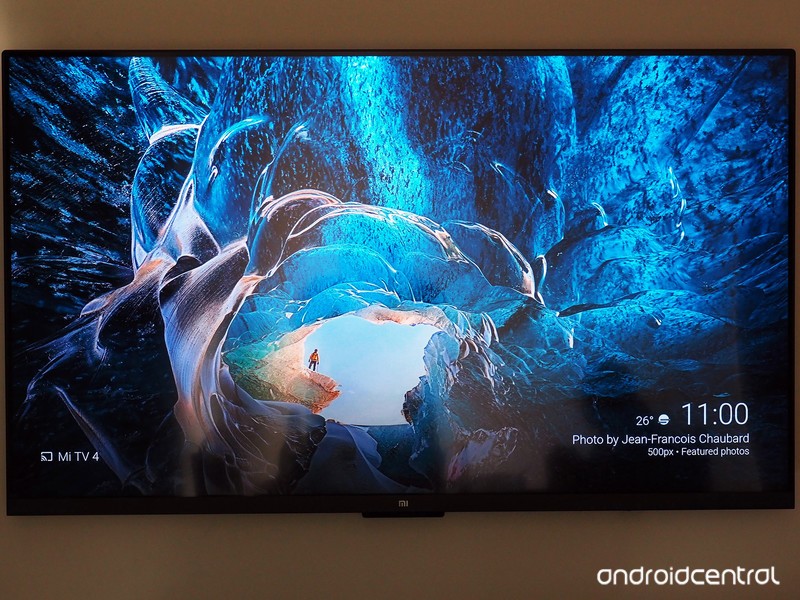
Xiaomi introduced the Redmi Note 5 and the Redmi Note 5 Pro in India today, but the brand isn’t done just yet: it is also launching the Mi TV 4 in the country. There’s been considerable interest in Xiaomi’s Mi TV range from its Indian fans for some time now, and the introduction of the Mi TV 4 marks the first time the brand rolled out its TVs outside its home market.
There’s plenty to like in the Mi TV 4 — it features a 4K panel with HDR10, and has an angular design with a minimum thickness of just 4.9mm. You get Wi-Fi ac as well as Bluetooth 4.0, so you can hook up your wireless audio gear or connect a keyboard and mouse to the TV. Other specs include an Amlogic T968 chipset, 2GB of RAM and 8GB of internal storage, three HDMI ports, two USB ports, along with Ethernet, S/PDIF, and RCA connectors.
Xiaomi has also invested significant resources into customizing the user interface for the Indian market. Dubbed PatchWall, the interface serves up content recommendations based on your viewing habits.
The recommendations engine is powered by Bangalore-based startup Sensara and leverages machine learning to tailor personalized suggestions. Dubbed Sensy, the service learns your usage habits over time and suggests programs relevant to your interests. There’s also the ability to search TV shows and movies playing on your set-top box, a nifty feature considering the sheer breadth of programming available today.
Xiaomi Mi TV 4 preview: The next big thing is here
The Mi TV 4 also hooks into OTT service providers like Hotstar, Voot, Sony LIV, Hungama Play, and ALTBalaji, and while Prime Video isn’t available just yet, Xiaomi says that the streaming service should be live on the platform in a few weeks’ time. YouTube and Netflix are also missing from the platform at launch.
There’s no shortage of content, however, as the total programming from the services comes to around 500,000 hours. Around 80% of it is free, making it much more accessible to those yet to make the switch to paid OTT services.
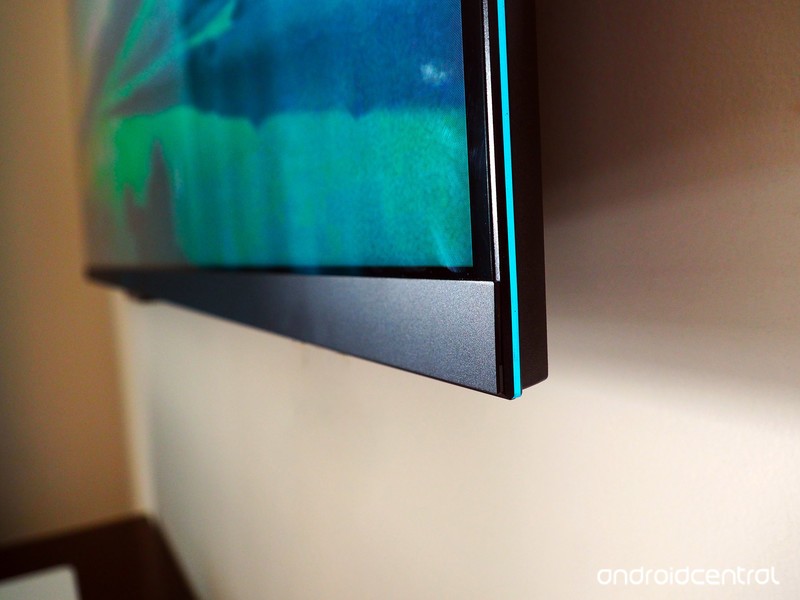
The best thing about the Mi TV 4 is the pricing — the TV will be available for just ₹39,999 in India. That’s incredible when you consider the design, build quality, and the sheer amount of features on offer.
Want more? Hit up the links below to read more about Xiaomi’s latest launches:
- Xiaomi Mi TV 4 preview: The next big thing is here
- Xiaomi Redmi Note 5 review: The best just got better
- Xiaomi Redmi Note 5 Pro preview: Possibly the best budget phone of 2018
Xiaomi Mi TV 4 preview: The next big thing is here
With the Mi TV 4, Xiaomi is looking to do to the TV segment what it did to phones: turn the entire category on its head.

Back in 2015, I walked into a Xiaomi service center to get a busted Mi 4 fixed. That was my first run-in with the Mi TV. It was a brand-new Mi TV 2 that the service center imported from China to showcase Xiaomi’s portfolio. When asked if it would launch in India, all I got in return was a noncommittal, “Soon.”
I wasn’t alone in my enthusiasm for the Mi TV. Xiaomi fans in the country have been clamoring for the TV range to make its debut for a few years now, going as far as to create a petition addressed to Xiaomi co-founder and head of its TV business Chuan Wang to bring the products to India.
Two and a half years later, Xiaomi has formally launched the Mi TV in India. It is a momentous occasion for the brand as India is the first market outside of China to receive its TV range.
The first TV that is making its debut in the country is the 55-inch variant of the Mi TV 4. Before we delve in, a quick look at some of the highlights of Mi TV 4: it offers 4K, HDR10, and runs Xiaomi’s PatchWall interface that leverages AI to serve content recommendations. The TV itself isn’t all that bad to look at either — with a thickness of just 4.9mm, it is one of the sleekest TVs around. The best part? It costs just ₹39,999 in the country.

It’s not a uniform 4.9mm thin, as the bottom third of the TV that houses the components goes up to 39mm. Still, the overall design and build quality of the Mi TV 4 is several notches above what you get in this segment. Heck, there’s brushed metal at the back of the thing, and when was the last time you looked at the back of a TV?
The unit is powered by a 64-bit Amlogic T968 chipset with four 1.8GHz Cortex A53 cores, along with 2GB of RAM and 8GB of internal storage. There’s also Wi-Fi ac and Bluetooth 4.0, giving you the ability to hook up your keyboard and mouse or wireless audio gear to the TV.
In terms of connectivity, you get three HDMI ports (including an ARC port), one USB 3.0, and a USB 2.0 port. They’re located to the left of the device and are clearly labeled so you can find them with ease. At the bottom, you get an Ethernet port, along with S/PDIF, and older TV antenna and RCA connectors. Again, these are also labeled so you can find the correct port without having to dig around in the back.
Usually when we’re talking about a TV, the hardware gets all the focus. That isn’t the case with the Mi TV 4, as the amount of time and effort Xiaomi invested in customizing the interface is unheard of in the Indian market. The PatchWall interface highlights content relevant to your interests — the home screen is broken into several sections, and you can easily navigate to your desired category.
The home tab shows recommendations, what’s new and trending, as well as TV inputs and apps. The VIP section is where you’ll find paid services, and there’s also dedicated tabs for movies, TV shows, sports, and kid-friendly programming.
In India, Xiaomi is teaming up with Bangalore-based Sensara to tailor recommendations. If you’re not familiar with the startup, Sensara offers a smart remote called Sensy that lets you control your TV through voice commands.
If you’re using a Xiaomi phone that has an IR blaster, you can directly download Sensy’s smart remote app and get started. Otherwise, you can pick up the Sensy Home from Amazon and hook it up to your TV. Essentially, you’re relying on infrared to change channels on the TV.
The hardware is just one part of the story here; where Sensy excels at is its recommendation engine. Available via the app (and now the Mi TV 4), Sensy leverages machine learning to serve content suggestions as soon as you hook up your set-top box to the TV. For instance, if you’ve just seen the latest Thor movie, it will suggest other superhero-based movies, and the engine continually analyzes your usage patterns to deliver personalized recommendations.
The interface you get with set-top boxes hasn’t changed in over a decade, and this is where Sensy’s collaboration with Xiaomi makes a difference on the Mi TV 4. Sensy works with all DTH providers in India, and its pièce de résistance is that you can search through all the channels on your DTH provider for content — both regional and international.
PatchWall is particularly interesting as it directly integrates content from your set-top box, so you get to see all the available programming options on hand without having to switch to another interface.
You can even search by a particular actor, director, or category, and set up reminders for your favorite programs. Essentially, if you’re looking for the most effective way to consume the wealth of programming available from your DTH provider or OTT service, the Mi TV 4 is the best way to do it. There hasn’t been anything close to universal search in India, and the feature is what makes the Mi TV 4 stand out.
The Mi TV 4 is a paradigm shift for how Indians consume television.
For those that have cut the cord and are looking for OTT providers, Xiaomi has tied up with the likes of Hotstar, Voot, Sony LIV, Hungama Play, ALT Balaji, and others. There are a few big names missing from the service at launch — there’s no way to access Prime Video — but Xiaomi has mentioned that it is close to signing a deal. YouTube is also missing from the Mi TV 4, as is Netflix.
In total, there’s about 500,000 hours of content available on the Mi TV 4, with around 80% of it available for free. It’ll take you around 57 years to go through all the programming available.
The initial focus with Mi TV 4 seems to be all about bringing the set-top box interface to the 21st century. Nine out of ten folks buying it would be more than satisfied with the connectivity options available. For those that have cut the cord, there’s always the option to hook up the TV to a Chromecast or Fire TV Stick.
After-sales service is a bigger worry when you’re talking about a product like a TV, and it looks like Xiaomi invested a lot of resources in getting this right. The installation crew that came to my house were knowledgeable about the product, and were able to affix the TV onto a wall in a matter of minutes.

I’ve been using the TV for just over three days now, so I’ll reserve judgement on the panel quality in my review. As far as initial impressions go, it’s easy to see that Xiaomi put a lot of thought into tailoring the experience for Indian customers. PatchWall combined with Sensy’s recommendation engine turbocharges your TV viewing experience, and finally makes it easy to see what’s actually on the air without having to go through your set-top box’s clunky interface.
As for when you’ll be able to get your hands on one, the Mi TV 4 is going up for sale starting later this week for ₹39,999. You’ll be able to purchase the TV from Mi.com as well as Mi Home stores.
Sure, there are key services like YouTube that are missing from the platform, and this is an area that Xiaomi needs to address. But for ₹39,999, there isn’t a TV that comes close to delivering the sheer value that you get with the Mi TV 4. As it did with phones, it looks like Xiaomi is on its way to disrupting the TV segment.
The Mi TV 4 isn’t the only product Xiaomi launched in India, so hit up the links below to take a look at our extended coverage of the Redmi Note 5 and its more powerful sibling, the Redmi Note 5 Pro:
- Xiaomi Redmi Note 5 review: The best just got better
- Xiaomi Redmi Note 5 Pro preview: Possibly the best budget phone of 2018
- Xiaomi Redmi Note 5 Pro vs. Redmi Note 5 vs. Redmi Note 4
Watch Starman and its Tesla get swallowed by the darkness of space
Starman is drifting farther and farther away from us, that a lot of the telescopes that have been tracking its journey will soon no longer be able to see it. The Virtual Telescope Project, which has been keeping an eye on the spacefarer and its trusty Tesla from the time they left the planet aboard the first Falcon Heavy launch, is bidding the duo goodbye by live streaming their trajectory one last time. VTP gives people a way to access several robotic telescopes in real time over the internet — the images of Starman and its Tesla zooming across the sky, in particular, were and will be provided by the Tenagra Observatories in Arizona.
Take note, however, that you won’t be seeing the spacesuit-clad mannequin up close like this:
Last pic of Starman in Roadster enroute to Mars orbit and then the Asteroid Belt
A post shared by Elon Musk (@elonmusk) on Feb 7, 2018 at 2:00pm PST
The batteries that powered the system that captured Starman’s close-up videos already died 12 hours after SpaceX’s Falcon Heavy ferried it outside the Earth’s atmosphere. Instead, you’ll see a bright dot moving through lots of other brighter dots, like this:

[Image credit: Virtual Space Telescope / Tenagra Observatories]
Hey, Starman is already on its way to Mars orbit and then the Asteroid Belt — that’s the best view we can get. Virtual Telescope Project’s live broadcast begins at 4:15 AM PT / 7:15 AM ET today, February 14th. Just go to the project’s web tv page if you want to watch the astro-mannequin get swallowed by the darkness of deep space.
Via: CNET
Source: Virtual Telescope Project
Flipboard Founder Claims Apple News is ‘a Product Living in the Past’
Apple’s mobile news platform has been accused of “living in the past” by the co-founder and head of rival news curation service Flipboard. The comments were made at Tuesday’s Code Media event in California, where Flipboard CEO Mike McCue participated in an onstage Q&A regarding the future of content curation in the digital mobile space.
Now in its eighth year, the Flipboard iOS app organizes online articles into a more conducive reading format for mobile devices, and reaches around 100 million users a month. Comparatively, major rival Apple News – which Apple began shipping with iOS 9 – has at least 70 million monthly users.
“When you’re an entrepreneur and you’re competing with Apple, that’s a pretty big deal,” said McCue. “They’re a partner and a competitor at the same time.” McCue then went on to criticize Apple’s mobile news platform for its lack of human curation.
“Apple News as a product is living in the past. There’s no social sharing capability, no curation happening — it’s algorithmic,” McCue said, adding: “It’s another format that publishers have to adopt.”
McCue also picked holes in Apple’s walled garden approach to online content, comparing Flipboard’s ad-friendly platform to Apple News’s “closed ecosystem”, which McCue called “a big deal for publishers”. The suggestion here is that Flipboard benefits publishers by regularly redirecting readers to the publisher’s site, where more ads are shown, whereas Apple News keeps users within the app’s native display format with its attendant ad restrictions.
Despite the latter approach, Apple News does offer a built-in advertising platform that allows publishers to earn 100 percent of the revenue from the content they publish, or 70 percent of revenue from iAds inventory sold by Apple. The Apple News Format also lets publishers create custom editorial layouts geared towards their individual brands, allowing content to be viewed by millions of iPhone and iPad users in the way the publishers intended.
Tags: Apple News, Flipboard
Discuss this article in our forums
 AIVAnet