


Buying a used phone? Beware of this common scam no one wants to talk about
Maybe your phone is scratched up, the battery won’t hold a charge anymore, or you’re just plain sick of it. Whatever the reason, you start to shop around for a new phone, but all your budget will allow is a bland, mid-range device. So you hop online to see what kind of bargain you can pick up second hand. Someone is selling last year’s flagship iPhone or Samsung Galaxy, barely used, at a drastically lower price. You pounce and secure yourself a shiny new smartphone at a steal.
The phone arrives in a couple of days, as described, and you pat yourself on the back for your bargain-hunting skills. But you can’t activate it. Or maybe you use it for a month or so, and then it gets blocked. Upon further investigation, you realize your new phone has been reported lost or stolen. The seller won’t respond to your messages. To make matters worse, no one wants to help you – not your carrier, not the website you bought on, not even the police.
The used phone scam is frighteningly simple.
We’re sorry to say, you’ve fallen victim to a horrifyingly common used phone scam. A quick Google search reveals countless threads on forums across the world going back years, where victims appeal for help because they bought a phone that turned out to be blacklisted and unusable. Read through them and you’ll see the vast majority don’t have a happy ending. The victim typically has to eat the loss, with no prospect of getting their money back.
The used phone scam is particularly pernicious, because it doesn’t rely on a victim’s gullibility, and it’s not as well-known as something like the white van speaker scam. Everything appears to be perfectly legitimate right up to the point your new phone gets blocked. If it has happened to you, sadly there’s nothing we can do to help you, but read on if you want to learn more about the scam and how to avoid it in future.
How it works
The used phone scam is frighteningly simple. Perpetrators range from criminal gangs to insurance scammers to the morally dubious down on their luck. In some cases, the phone you’ve bought will actually be stolen. The thieves who snatched $370,000 worth of new iPhone X handsets, for example, likely tried to sell them as quickly as possible, before the phones were blocked.
Sometimes the scammer will be selling a new phone they legitimately got, probably as a contract upgrade, but then claim for it on insurance. That way they can sell the phone for cash and double their money when they claim it has been lost or stolen.
Justin Sullivan/Getty Images
Another possible scenario is the seller got the handset legitimately as a contract upgrade or as part of a new contract, sold the handset to you, and then defaulted on the monthly payments. They got the cash from you, for a phone they didn’t yet own, and then stopped paying for it, leaving you with a blocked device.
The phone can be reported lost or stolen within a few days or it could be three months later. The result is the same – you end up with a blocked phone.
The nightmare part of this scenario for victims of the scam is that there’s no way for you to get the phone unblocked. Only the person who reported the phone lost or stolen can get it unblocked, and even then, it usually takes a few days, weeks, or even months.
How to avoid the used phone scam
There’s a lot of conflicting advice out there about best practices for selling and buying smartphones, so it can be a real minefield. While you can take steps to reduce your risks, it’s difficult to ensure you’re completely protected when you buy a phone from a private individual you don’t know.
“Before you buy a phone, you want to get as much information as possible,” David Dillard, managing director at Recipero (part of the Callcredit Information Group), told Digital Trends. “Do more homework upfront, and don’t take unnecessary risks.”
“Before you buy a phone, you want to get as much information as possible”
Recipero runs a service called CheckMEND where you can pay $1 to find out about the history of a phone. This is currently the most comprehensive service around to check on a phone’s history. It will tell you if a phone has been blacklisted or blocked with a carrier, but it also draws on data from law enforcement, the insurance industry, various retailers, and other sources.
“We aggregate multiple data sets and let the consumer make their own decision,” Dillard said.
You can find out if a phone has been reported lost or stolen for free using the Cellular Telecommunications and Internet Association (CTIA) stolen phone checker, but it relies on the Groupe Spéciale Mobile Association (GSMA) for data, which comes from participating operators worldwide. It doesn’t factor in some of the sources CheckMEND can access.
“There’s a danger of false positives,” Dillard said. “You could use the CTIA phone checker and find it’s green, then the phone gets reported stolen three days later, and now you have a blacklisted phone that’s stolen property.”
CheckMEND is used to support the police and help provide accurate information to help convict criminals. Read the latest news story on how CheckMEND helped convict a mobile phone fraudster. https://t.co/FmFpKuf49Q
— CheckMEND (@CheckMEND) January 23, 2018
CheckMEND also tracks things like inventory in transit and enterprise devices out on lease. If thieves steal from an existing inventory, there’s a delay between the device being stolen, people noticing that it’s gone, and then reporting it stolen. That delay is often long enough to sell a device. Or if someone sells you a device that has outstanding finance on it, you can’t tell that from the CTIA blacklist check.
But for all its sophistication, sadly, the CheckMEND system isn’t a cast iron guarantee of safety either.
The trouble with IMEI numbers
Every phone has a unique International Mobile Equipment Identity (IMEI) number. It’s easy to check your IMEI number. When you report a phone lost or stolen, the IMEI number is blacklisted, so cell service is blocked on that device.
To run a CTIA stolen phone check, or get a CheckMEND report, you need to have the IMEI number of the device. The idea is that a prospective buyer can ask the seller for the IMEI number and then run a check on it, allowing them to buy with confidence. But then criminals started using IMEI numbers to clone phones and run new kinds of scams.
“If you buy second-hand from a retailer, make sure they have a good return policy.”
It used to be quite common to post IMEI numbers on sales listings. But if you look online today, in countless forums, you’ll see people asking if it’s okay to post an IMEI number, usually followed by numerous comments warning about the risk of cloning. It all sounds a bit paranoid.
“I heard about the paranoia, so I did a test,” says Dillard. “I placed a phone up for sale in an online marketplace, published the IMEI in the listing, and within 72 hours it was used in a commission fraud.”
A wireless employee took the IMEI and activated the device for the commission money and it took David approximately three months to have it restored once it was blacklisted.
“Never publish your IMEI on the web,” he said. “If you’re going through a trusted network and the buyer calls or messages privately and wants to check the IMEI; that’s probably okay; use your intuition. But never put it on the web, like in an eBay or Craigslist listing.”
Genevieve Poblano/Digital Trends
Another scam that’s proving very tough to combat is “credit muling”. A criminal persuades someone to activate multiple lines with a carrier and take several phones. They pay the “mule” a tempting sum for their time and trouble and tell them to cancel the contracts in a month. Meanwhile the criminal sells the phones, all with clean IMEIs, through eBay, Craigslist or wherever and makes a tidy profit.
When the mule tries to cancel the contract, they find out that they can’t without returning the phones or paying a hefty cancellation fee and they’re on the hook for the full amount. The buyer only finds out 45 to 60 days later when the payment is defaulted, and their new phone gets blocked.
In this kind of scenario, even if you got a CheckMEND report beforehand, you’re still going to be out of pocket with little recourse. You have a certified report that the phone wasn’t stolen when you took ownership, so you’ve done your due diligence, but it’s not going to be much use unless the cops subsequently catch the criminal, and that’s a lot easier said than done.
While some sellers, perhaps understandably, won’t share IMEI numbers, you can always ask them to get a CheckMEND report to prove the device they’re selling is legitimate.
What else can you do?
“You’ve got to know who you’re buying from, so you have recourse if something goes wrong” Dillard said. “If you buy second-hand from a retailer, make sure they have a good return policy.”
Most places offer a 30-day returns policy. With PayPal, you have 45 days to dispute. We recommend making purchases with a credit card, as you can dispute charges if the phone ends up being blocked. If you buy in cash from a stranger you met through Craigslist, then there’s really nothing much you can do. It’s a gamble.
GameStop, Gazelle, and Sprint all use the CheckMEND system, so at the time of purchase, you can be sure that the phone you’re buying isn’t blocked. However, as we’ve discussed, that’s no guarantee it won’t be blocked down the line.
The top three carriers in the U.S., AT&T, Verizon, and T-Mobile all rely upon the GSMA system. We contacted all three, but they either didn’t reply or declined to be interviewed for this piece. We also reached out to the CTIA, as well as Gazelle and Swappa, but have yet to hear back.
It appears this is a major problem, and no one wants to be held accountable. An industry-wide effort to pool resources and share data on phone status in real time would undoubtedly reduce the risk for the phone-buying public. It’s something CheckMEND is trying to work towards, but unless everyone buys in, it’s never going to give people purchasing used phones 100 percent confidence, and the scams will continue.
Editors’ Recommendations
- How to check your IMEI number on an iPhone, Android, or other phone
- How to find a lost phone, whether it’s Android, iPhone, or any other kind
- The best used cars you can buy for under $15,000
- Need a new ride? Here are the best used car sites on the web
- Looking for online privacy and security? Here are the best VPNs for Android
Latest Xiaomi teaser suggests the Mi TV is finally coming to India
Xiaomi may finally launch the Mi TV in India.
Xiaomi is all set to launch the Redmi Note 5 in India on February 14, and it now looks like the manufacturer may unveil its TV in the country as well. If a new teaser shared by Xiaomi on Twitter is any indication, the Mi TV will make its way outside of China for the first time.
Mi fans! Is it a bird? Is it a plane? #WhatIsThatSomething wonderful is about to happen this Valentine’s Day. Stay tuned!Register now for the live stream – https://t.co/l4bdUpyerC pic.twitter.com/99ODzuVHML
— Mi India (@XiaomiIndia) February 12, 2018
The Mi TV 4 made its debut early last year, and is available in 49-, 55-, and 65-inch variants in China. Coming in at just 4.9mm, the Mi TV 4 is one of the sleekest around. There’s also the Mi TV 4A series, which is available in 43-,49-, 50-, 55-, and 65-inch versions.

The Mi TV 4 features a 4K panel along with HDR10, and comes with Xiaomi’s PatchWall UI, which relies on AI to serve up recommendations based on your viewing preferences. Like the rest of Xiaomi’s products, the Mi TV 4 offers great vale for money, with the 49-inch version starting out at just $500.
It’ll be interesting to see which TV Xiaomi brings to India, and at what price point. I’ll be on the ground in New Delhi in a few days’ time to bring you all the details from the event, so stay tuned.
In the meantime, what do you guys think is a decent price for the TV? Let me know in the comments below.
On Valentine’s Day, remember that Google doesn’t care if your significant other uses an iPhone
Personal interactions shouldn’t be limited by smartphone platforms.
Ahead of Valentine’s Day, a few of us here at Android Central were thinking about how we keep our digital lives in sync with our significant others and family members. We all have different apps and services for shared files, photos, notes, calendars and to-do lists — but one thing we kept coming back to was that using Google apps and services is a great way to keep your digital lives in sync, even when you have an Android and your significant other uses an iPhone.
When it comes to these critical parts of our daily lives, Apple’s apps and services just aren’t an option unless both of you are using iPhones. That’s rather upsetting, isn’t it?

When I look at how my girlfriend and I keep things in sync, I realize it’s all about Google. Part of that is, of course, because I write about Android and Google for a living and therefore have more exposure to it. But beyond that, when I think about it, it’s actually just the best way to keep everything together and portable between platforms.

We’re still using Hangouts between Android phones, iPhones, PCs and Macs for our daily communications. (And hey, if you don’t need the computer side of it you can even download Allo for iOS). We have a shared shopping list in Google Keep for our weekly groceries. Google Photos lets us have shared albums, and automatically identifies and shares pictures of one another. We can both use the Google Home app to configure our Google Home speakers to work with our individual accounts.
There are more general features like email and calendars that can be handled with third-party services well across devices, and of course there are other shopping list apps and chat apps — I’m not trying to claim that Google is the only way to do this. But what’s clear is that Apple decidedly is not an option. Anything that’s designed to keep two people synced up across an Android and an iPhone just can’t come from Apple itself. By design.
Being able to interact together on Google’s services is far more appealing than being alone on Apple’s.
Now obviously there are countless versions of this story. Apple doesn’t make it easy (or in many cases, possible at all) to use its services on other platforms, cutting down opportunities for staying in sync. But in this particularly love-filled time of the year, it becomes extra apparent that Apple only really cares about creating meaningful interactions between people when they both use iPhones and Apple’s services. And that’s rather upsetting. It’s a time when Google’s “Be together. Not the same.” campaign has a particularly strong meaning.
I appreciate Apple’s design. I use a MacBook Pro every single day. I even like some of Apple’s services. But I don’t get to use them, even if I wanted to, because (aside from Apple Music) they just don’t work with my Android phone. This has a knock-on effect: not only do I not get to experience Apple’s cloud services, neither does my girlfriend — because using Apple’s apps and services would mean not being able to share with me. And no matter how nice and elegant it may be over there, being able to interact together on Google’s services is far more appealing than being alone on Apple’s.
Google Pixel 2 and Pixel 2 XL
- Pixel 2 FAQ: Everything you need to know!
- Google Pixel 2 and 2 XL review: The new standard
- Google Pixel 2 specs
- Google Pixel 2 vs. Pixel 2 XL: What’s the difference?
- Join our Pixel 2 forums
Best Buy
Verizon
Google Store
Project Fi
The Morning After: Cryptocurrency’s security problem
Hey, good morning! You look fabulous.
Welcome back! Over the weekend, you may have missed the cost of Apple HomePod repairs (they’re not cheap) and more shaky security around crytocurrencies. We’ve also got the best coffee equipment you should have in your life — which is well-timed, as I’ve had two weeks off the stuff, and I’m very, very ready to reacquaint myself with a cortado or two.
Friends might not panic if your phone dies.
Google Maps may let you share your battery-life status

Want to know if someone made it home safely but didn’t know if they had enough battery life to stay in touch all the way? You might not fret quite so much about it in the future. Code spotted in a Google Maps beta for Android hints at sharing your remaining battery life alongside your location. You’d only get a generic range but this could be helpful if a friend’s phone is running low on their way home from a night out. The code also alludes to sharing your mass-transit trips with others, including the exact time you arrive at a given stop.
It’s an excessive but intriguing exploration of digital consciousness.
‘Altered Carbon’ is more than just a ‘Blade Runner’ ripoff

Altered Carbon is the very definition of a guilty pleasure. The show, adapted by Laeta Kalogridis from Richard Morgan’s novel, isn’t exactly well written. And, like most Netflix joints, it goes on for way too long. But it’s gorgeous, it’s filled with charismatic actors and its cyberpunk aesthetic feels like a ’90s anime brought to life. (That’s a good thing — to Devindra Hardawar, at least.) Altered Carbon is simply a lot of fun. And while it owes an obvious debt to Blade Runner, our senior editor was surprised that underneath the ultraviolence and gratuitous Cinemax-esque sex scenes, it’s also an intriguing exploration of where digital consciousness could take us.
You’ll want to get AppleCare if you think an accident might happen.
HomePod repairs cost nearly as much as a new speaker

If you’re getting a HomePod, be sure to place it somewhere safe… depending on what you break, it might be expensive to get a fix. Apple has updated its support pages to reveal that an out-of-warranty HomePod repair will cost $279 (£269). Throw in the shipping fee ($20 US or £13) for a mail-in repair and you’re not far off the price of a brand new smart speaker. This is one of those times where the AppleCare extended warranty ($78 (£68) if you include the incident fee) might be warranted if you’re clumsy or have particularly speaker-curious kids. The HomePod, at least, is a static gadget where most control is done without touching the thing. Placing it out of reach sounds like the wisest option.
It’s the second time a crypto exchange lost a massive amount this year — and it’s only February.
Italian cryptocurrency exchange BitGrail loses $170 million
One of the biggest problems with cryptocurrency exchanges is they’re a juicy, enticing target for high-tech criminals. Case in point: Italian exchange BitGrail, which lost $170 million worth of Nano tokens, a little-known digital coin previously called RaiBlocks. BitGrail is the second exchange that lost a massive amount of money this year — and it’s only February — following Tokyo-based Coincheck, which lost between $400 and $534 million worth of coins in a cyberattack on its internet-connected wallet back in January.
But wait, there’s more…
- Kendrick Lamar bans all cameras during his latest tour
- ‘Monsters Inc’ is the next Pixar world coming to ‘Kingdom Hearts 3’
- The best espresso machine, grinder and accessories for beginners
The Morning After is a new daily newsletter from Engadget designed to help you fight off FOMO. Who knows what you’ll miss if you don’t Subscribe.
Craving even more? Like us on Facebook or Follow us on Twitter.
Have a suggestion on how we can improve The Morning After? Send us a note.
Qualcomm’s flagship Snapdragon 845 is a graphics powerhouse
Qualcomm recently let journalists benchmark the upcoming Snapdragon 845 on its own reference smartphone, and the results look promising for the Galaxy S9 and other new devices. On the one hand, CPU improvements were merely incremental, despite a switch to new ARM Cortex designs. On the other, Qualcomm’s new Adreno 630 GPU performed impressively, especially considering the power draw, putting rivals like Samsung and Huawei on notice. “There is need for more radical change to keep up with Qualcomm,” said Anandtech.
The Adreno 630 provides a one-two-three punch for the Snapdragon 845, offering 30 percent better performance and 2.5 times faster display output, all with 30 percent estimated power reduction. While no one was able to test the power draw, the chip pretty much smoked all rivals on most benchmarks. “Qualcomm current generations of SoCs are simply unmatched and the gap is so wide that I do not expect upcoming rival solutions to be able to catch up this year,” Anandtech said.
The one phone that did best it in a couple of graphics tests from GFXBench was Apple’s iPhone X. And when it comes to an overall score, the iPhone X with its A11 Bionic processor still blow away the Snapdragon 845 by a good 15 percent on Geekbench’s tests, Tech Advisor noted. It did gain a slight edge over its the iPhone X on Antutu’s combined tests, however. On the Android side, however, Qualcomm’s new chip is over 20 percent faster than its rivals.
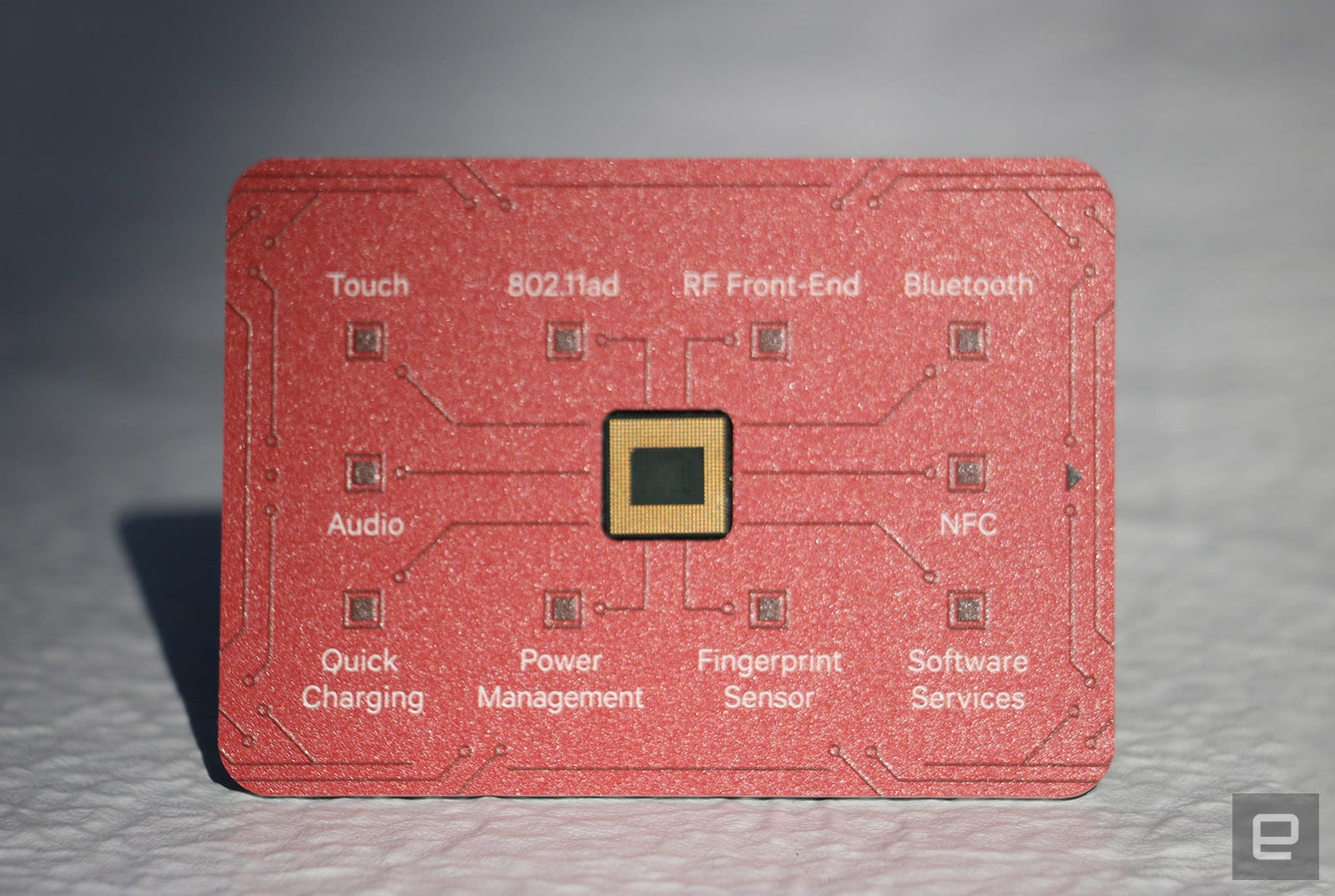
The mixed results show there’s more to performance than benchmarks. Another component of the Snapdragon 845 is the new X20 cellular modem, which can handle 1.2 Gbps speeds, a boon to users lucky enough to have Gigabit LTE. It’s also got other new components like 802.11ad WiFi, quick charging and a fingerprint sensor. The way handset makers implement all those features will be key to a smartphone’s performance and user experience.
We’ll soon know more about that part. Samsung is schedule to unveil its Galaxy S9 flagship on February 25th, and a host of models from rivals like LG, Moto, Nokia, LG and Google should arrive soon after. At that point, you’ll see the benchmarks that matter a lot more than Qualcomm’s.
Source: XDA Developers, Android Police
Apple Will Repair HomePod Power Cables For $29, But Warns They ‘Should Not Be Removed’
While a Reddit user recently demonstrated that the HomePod’s power cable can technically be disconnected from the speaker by pulling on it with a lot of force, Apple warns that it should not be removed, according to an internal document distributed to Apple Stores and Apple Authorized Service Providers.
Apple’s internal HomePod Service Readiness Guide, obtained by MacRumors, states that detaching the HomePod’s power cable could potentially cause damage to the speaker’s internal components or to the cable itself:
The HomePod includes a built-in power cable that should not be removed.
In the rare instance that the cable is detached or damaged, do not attempt to remove or plug it back into HomePod. If the cable is removed or impaired, damage could have occurred to the cable or the internal components of HomePod.
If a HomePod’s power cable is damaged due to an unintentional reason, such as a dog chewing on it, Apple notes the cable can be mailed to one of its repair centers and fixed for a flat-rate out-of-warranty fee of $29 plus tax in the United States, £25 including VAT in the UK, and $39 including GST in Australia.
Out-of-warranty essentially means that the flat-rate cable repair fee is available to any customer at any time. The affected HomePod does not need to be within Apple’s limited one-year warranty period, nor is AppleCare+ required.
The only requirement is that the HomePod passes Apple’s visual-mechanical inspection, which checks for other external or internal damage. If the HomePod does not pass, but is still eligible for repair, then the only option is a whole-speaker replacement for $279 in the United States, £268 in the UK, and $399 in Australia.
A whole-speaker replacement is also required for mostly any other kind of damage, unless a customer purchases AppleCare+ for HomePod.
AppleCare+ extends a HomePod’s hardware coverage to two years from its original purchase date, and adds up to two incidents of accidental damage coverage, each subject to a service fee of $39 in the United States, £29 in the United Kingdom, and $55 in Australia, plus the upfront cost of the plan.
If your HomePod requires service, the process can be initiated by contacting Apple Support, booking a Genius Bar appointment at an Apple Store, or visiting an Apple Authorized Service Provider.
Related Roundup: HomePodBuyer’s Guide: HomePod (Buy Now)
Discuss this article in our forums
Audiophile Review: HomePod ‘Sounds Better’ Than $999 KEF X300A Digital Hi-Fi Speakers
HomePod reviews from the tech press came thick and fast last week, and while the smart speaker’s sound quality was consistently praised, most reviews were based on subjective assessments and didn’t take into account professional-grade output measurements. Early on Monday, however, Reddit user WinterCharm posted exhaustive audio performance testing results for HomePod to the Reddit audiophile community.
Using specialized equipment and a controlled testing environment, the review features in-depth analysis of the smart speaker’s output when compared to a pair of $999 KEF X300A digital hi-fi monitors, representing a “meticulously set up audiophile grade speaker versus a tiny little HomePod that claims to do room correction on its own”.
As expected, WinterCharm criticized the HomePod for its AirPlay-only output limitation and Siri’s often-lackluster performance as a virtual assistant, but the speaker’s audio quality appraisal was a different story. Interested readers can check out all the details and technical minutiae here, but in short, WinterCharm offered the following summary after a battery of exhaustive tests.
I am speechless. The HomePod actually sounds better than the KEF X300A. If you’re new to the Audiophile world, KEF is a very well respected and much loved speaker company. I actually deleted my very first measurements and re-checked everything because they were so good, I thought I’d made an error. Apple has managed to extract peak performance from a pint sized speaker, a feat that deserves a standing ovation. The HomePod is 100% an Audiophile grade Speaker.
Do you agree with WinterCharm’s review? Let us know in the comments. And make sure to check out our HomePod roundup if you’re new to HomePod or planning to purchase one — it’s got everything you need to know about HomePod along with a running list of our HomePod how tos.
#Apple #HomePod “…deserves a standing ovation” https://t.co/KHlyQ7cPbL
— Philip Schiller (@pschiller) February 12, 2018
Related Roundup: HomePodBuyer’s Guide: HomePod (Buy Now)
Discuss this article in our forums
Google Maps may let you share your battery life status
Ever wanted to know if someone made it home safely, but didn’t know if they had enough battery life to stay in touch along the way? You might not fret quite so much about it in the future. Android Police has spotted code in a Google Maps beta for Android that hints at sharing your remaining battery life alongside your location. You’d only get a generic range (likely because charge levels can change minute-to-minute), but this could be helpful if a friend’s phone is running low on their way home from a night out.
Appropriately, the Maps code also alludes to sharing your mass transit trips with others, including the exact time you arrive at a given stop. There would also be shortcuts for favorite stations, potentially to influence Maps’ directions.
It could be a while before you see these updates in an app you can use, assuming they show up at all. Hidden code like this can persist across multiple releases and might get cut if it’s not ready or doesn’t work as expected. However, the combination suggests that Google wants to do a lot more with location sharing than it has in the past — it’d offer better insight into what you’re actually doing.
Source: Android Police
Play giant-sized ‘Pong’ by shuffling your feet
You may have seen attempts at real-world Pong before, but rarely have they been so… athletic. Moment Factory has created GRiD, a Pong variant that uses a LiDAR sensor (the same tech as in self-driving cars) to create an enormous, 40-by-60 foot playing field where the paddle only moves when you and a partner shuffle your feet together. You could get quite the workout if the teams are evenly matched, and that’s before the game adds wrinkles like surprise acceleration or an extra ball.
The aim was to bring back the social dimension of games you might remember from the glory days of arcades, when you’d play with strangers that exist as more than an online nickname. GRiD takes it a step further by placing the game in the real world.
Moment Factory describes this as the first “prototype” in a series of arcade-related projects. You probably won’t see it made widely available, at least not until there’s some refinement. All the same, this illustrates just how public gaming experiences can work without requiring VR or other technologies that take you out of the real world.
Via: Prosthetic Knowledge, Gizmodo
Source: Moment Factory, Vimeo
We benchmarked the Snapdragon 845 — here’s why none of the numbers matter
These are the numbers that run your phone.
When Qualcomm launches a new processor (ahem, “mobile platform”), we take notice. The new Snapdragon 845 will be the go-to choice in just about every high-end phone in 2018 (and even into early 2019), just like the Snapdragon 835, 821 and 820 were previously.
The nerds among us use the opportunity of a new chip release to try and quantify just how much “better” it is, in an attempt to determine what to expect in terms of performance when devices launch with the processor. And that means running benchmarks. I had the opportunity to use a Qualcomm Reference Device running a Snapdragon 845, and put it through a full slate of benchmarks over the course of a couple hours. I saw lots of big numbers, and now I can tell you why none of them matter.

Alright, so the benchmarks. You’ll see the 12 I ran here, ranging through several different types that push the CPU, GPU, and memory. The top set are on-device apps, while the last four are web browser-based. As a whole, they do a pretty good job of showing how the Snapdragon 845, running in ideal conditions on a reference device with no other software, can perform. For a couple extra data points, this reference device has a 2560×1440 resolution LCD and 6GB of RAM. Here are my benchmark results:
| AnTuTu | Total: 259180CPU: 87938GPU: 107103UX: 56409MEM: 7730 |
| Geekbench | Single core: 2481Multicore: 8452 |
| GFXBench 4.0 1080 Manhattan 3.1 | 61 fps |
| GFXBench 4.0 1080 Manhattan 3.0 | 84 fps |
| GFXBench 4.0 T-Rex | 151 fps |
| GFXBench 4.0 Car Chase | 35 fps |
| 3DMark Slingshot – Unlimited ES 3.1 | Total: 4871Graphics test 1: 32.1 fpsGraphics test 2: 18.9 fps |
| 3DMark Slingshot – Unlimited ES 3.0 | Total: 5930Graphics test 1: 42.7 fpsGraphics test 2: 26.9 fps |
| Kraken (Chrome) | 2422 (lower is better) |
| Octane (Chrome) | 16086 |
| Sunspider (Chrome) | 448.5 (lower is better) |
| Jetstream (Chrome) | 85.97 |
I’m intentionally not showing you benchmarks from other devices here for comparison. If you’re someone who pays attention to benchmarks you’ll know all of these tests, what the numbers mean and how they rank compared to other processors. I’m also not providing reference numbers because none of these numbers really matters or can be translated into being “good” or “bad” for your actual experience of using a phone with a Snapdragon 845 in it.
Qualcomm, which provided the reference device for benchmarking in the first place, even agrees with me.

The nomenclature of calling these “processors” will live on for some time, but you start to understand why Qualcomm wants to shift its branding to “Snapdragon 845 mobile platform” when you consider everything this SoC offers beyond just a CPU. The Snapdragon 845, of course, has an octa-core CPU and a powerful GPU — but it also has a secure processing unit, a super-advanced LTE modem, an image signal processor, two different audio subsystems and its own memory. This isn’t just a “processor” anymore, and that’s exactly why even Qualcomm is starting to care less and less about these benchmark numbers.
Qualcomm Snapdragon 845: Everything you need to know
Through that whole slate of benchmarks that I did, they at best covered the performance of the CPU, GPU, and on-board memory. Some only touched the CPU and GPU. Others were reliant on the applications themselves utilizing the SoC in the right way. None of them was running in a real-world environment on a phone with extra software and user-generated data. And that’s why these benchmarks no longer give a realistic view of what the Snapdragon 845 will offer consumers when they go to buy a Galaxy S9 or any other flagship in 2018.

The true evaluation of the Snapdragon 845 will come when we get our hands on retail devices.
The true evaluation of the Snapdragon 845 will come when we get our hands on retail devices that use it — presumably, the Galaxy S9 will be the first. Then we’ll see how well the manufacturer’s software has been optimized for it, how the ISP processes image data, how fast the LTE data speeds are in the real world, and perhaps most importantly how little power the Snapdragon 845 uses in the process. Qualcomm’s own research shows that consumers put lots of value on battery life, and making its chips more efficient while keeping the same or higher performance has been a massive emphasis in the last few generations because of it.
So little of the daily experience of using a modern smartphone is defined by how well that phone can perform a benchmark, and hearing one of the leading companies making these chips admit it tells you all you need to know. Seeing a reference device and getting to experience the Snapdragon 845 before anyone in public has an opportunity to is amazing, particularly for a smartphone nerd like myself. But seeing it get to work making hundreds of millions of phones in the next year do everything regular people want (and more) is far more exciting.
Based on everything I’ve learned about the Snapdragon 845 and Qualcomm’s commitment to creating great chips, it’s well-equipped to do just that.
Samsung Galaxy S9 and S9+
- Latest Galaxy S9 rumors and info!
- Samsung Galaxy S9 launch event set for Feb 25: ‘The camera. Reimagined.’
- The Galaxy A8+ gives us an early look at Galaxy S9 design cues
- Do you plan on getting the Samsung Galaxy S9?
- Join our Galaxy S9 forums
 AIVAnet