


Google releases new winter sports-themed AR Stickers
There’s also an update for the Blocks sticker pack.

Although it may not be as feature-rich as something like the Galaxy S8, Google’s Pixel 2 still has a few neat software tricks up its sleeve to ensure you’re never at a loss for entertainment. AR Stickers finally came to it and the first-gen Pixel in mid-December, and they’ve quickly turned into a favorite time-killer of mine.
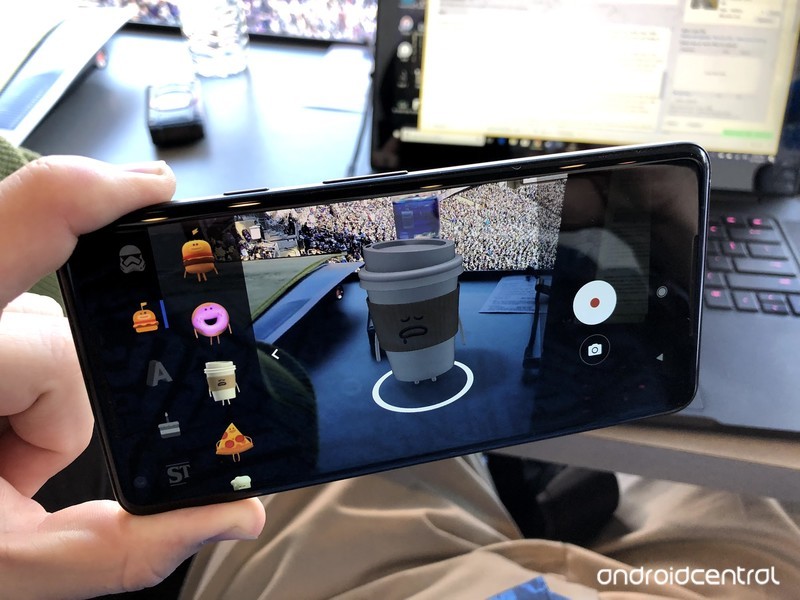
The first update for AR Stickers since its initial release is here, and with it comes even more AR goodness to add to your photos and videos.
Most notably with this update is the addition of the Winter Sports pack. This is here to coincide with the 2018 Winter Olympics, and it adds a polar bear in winter clothing, a hockey player, figure skater, snowman, and more.
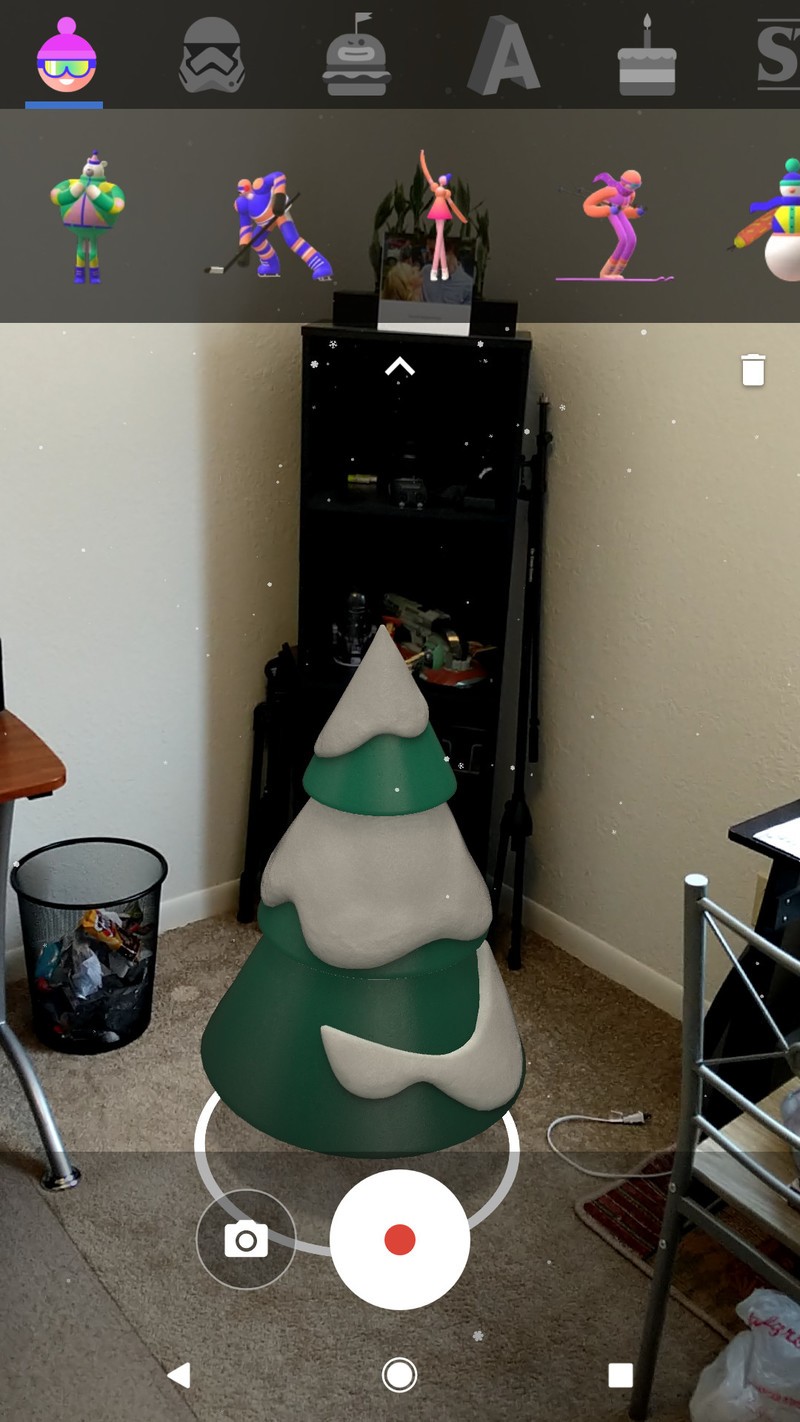
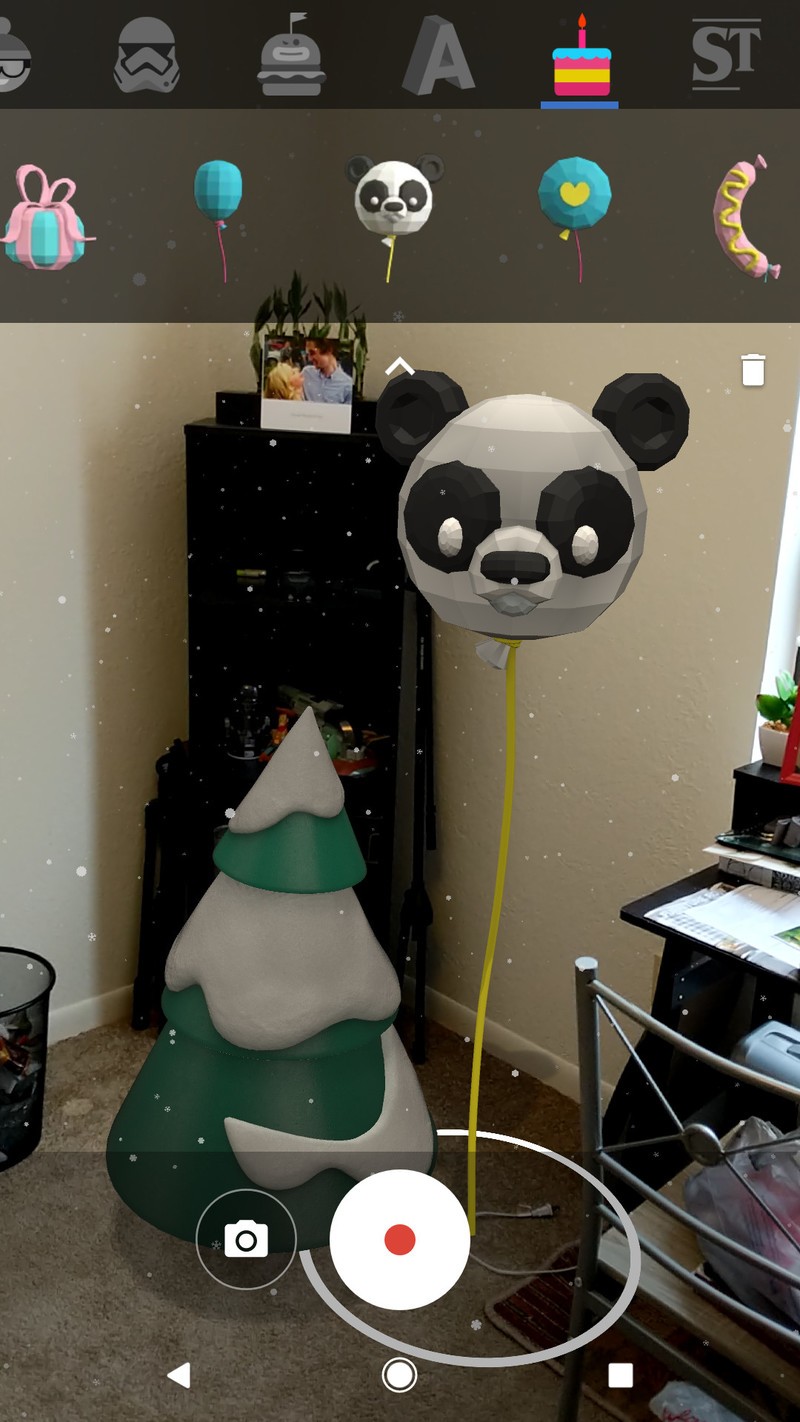
Also new is an update to the existing Blocks pack. With this, you’ll find a new microphone sticker and additional types of balloons (such as a hotdog and panda one).
Once you update the main AR Stickers app to v1.1, you’ll see options to download the Winter Sports pack and update Blocks.
AR stickers and new user interface come to Google’s Motion Stills
Why is it so hard to ‘root’ a smartphone?

If a phone is just a tiny computer, why is it so hard to be the admin?
Rooting, bootloader unlocking, jailbreaking; it has many different descriptions but they all mean the same thing when it comes to smartphones. It’s how you open the phone’s software bootloader so that you can load unofficial software.
Android users have it easier than most (which may not be a great thing all the time) because changing the Linux permission model that Android uses is as easy as placing one very small file in the system folder. But for many phones, it’s still not very easy, and that’s by design.
To get them out of the way, there are a handful of phones from companies like Google, HTC, Motorola and other lesser-known brands that let you unlock the bootloader without resorting to any chicanery. Going through the Android settings, you make the switch, agree that you know the risks, and from that point forward your phone will try to load whatever software is in the right place on the bootable partition. There are some side-effects, like Android Pay not working, but the phone is yours to install whatever you want and placing that particular file is now an option. Not an easy option, but an option.
More: Best Phones for Rooting and Modding
Other phones don’t work this way, choosing instead to only load a signed and trusted version of the operating system from the factory it’s supposed to come from. Part of the reason is user (that’d be you and me) privacy and security. It’s impossible to hide personal data from a user with root privileges, whether that user is a real person or another piece of software that wants all your stuff. While it’d be great if the companies making our phones only thought about our privacy, but other reasons phones are locked up have nothing to do with you or me and are just as important (if not more) to those very companies.
Your phone company hates it

Take a trip in the Android Wayback machine and visit 2010 with me. The T-Mobile G1 was the coolest new phone, ran Android, and almost took an entire cellular network down.
Android back then had an app called G Chat. It was the predecessor to Hangouts and every Android phone (which was really only one) had it installed. Back then Google didn’t have much of a relationship with carriers and it seems like very little if any testing was done on how G Chat would affect T-Mobile’s shiny and new fast 3G network. The app would spam packets of data almost non-stop, which was awesome for users who wanted a really fast messenger client but literally crashed T-Mobile in cities like Chicago and Washington, D.C. It was a small bug, but had a big impact.
Cell networks are fragile things. So are some of the people in charge of them.
While users with root privileges didn’t cause this, it did make carriers worried about having Android phones on their networks. Phones from HTC, Motorola, and Samsung were being released and nobody wanted a repeat, so carriers started “rigorously testing” and eventually requiring approval for Android phones on their networks. Part of that was a guarantee that users wouldn’t be able to go back in and change the way things worked, which meant the software had to be locked down so these types of settings weren’t able to be fiddled with.
Fast forward to today, and carriers are equally worried that someone might be “stealing” data by using it to tether a laptop or a tablet instead of using it directly from their phone, changing APN settings to get a higher priority, or even change settings so that SMS and MMS messages can be sent for free even if they aren’t part of your ancient data plan that you should have probably changed by now.
Carriers have to worry about their network because if it breaks too often customers will look elsewhere. We all know the honor system will never be an option when there’s a way to get more than you’ve paid for, so locking down settings and permissions is a result. It also means that the carrier gets to decide which of its apps you can uninstall or change, and pre-installed apps can mean a lot of money for them.
Chip makers hate it just as much

The company who made your phone only made parts of it. Things like processors or modems or even storage devices are bought in bulk and used in the final assembly. Even Samsung, who manufactures many of the individual parts in a lot of smartphones, uses parts from companies like Qualcomm or Broadcom or Toshiba and even LG.
These companies are afraid you’ll be able to muck around with the firmware they own and want your phone locked up tight.
There is a lot of money tied up in a company’s IP and they want to protect it.
Most people wouldn’t try to do something like alter a GPU driver, even if they could. But most is not the same as all, and tech companies are famous for doing everything they can to safeguard their intellectual property. If you get in there and crack some bytecode to reverse engineer a change, you might also be able to see how they do the things they do. There is a lot of competition among tech companies and if you did know exactly how one of them was able to do something they patented, other companies would be more than happy to talk to you about it and maybe even exchange some money or goods for that helpful information.
Knowing exactly how something works makes it very easy to do the same exact thing with enough tiny changes that you won’t have to pay royalties. Tech companies love royalties, which can often mean a lot more income than selling products can. It’s something they all want to protect, so they do things like not give license to distribute files and have things like software bootloaders hardened and encrypted.
Even Google doesn’t love it

Since the Nexus One, every “official” Google phone has been easy to bootloader unlock. Google gives you the tools to do it, gives you the instructions to do it, and doesn’t end your warranty once you’ve done it. But they would rather you not do it, too.
Android gets a bad reputation it doesn’t deserve. (it’s the users, not the software!)
Rooted phones can cause a lot of trouble. Trouble makes headlines when it’s serious enough or popular enough. Companies like Netflix were hesitant to release their software for use with Android because they were afraid of “trouble” in the form of us all stealing movies that were optimized for a tiny screen and buffering over a cell connection instead of the full bitrate file that every computer on the planet has access to. That’s as silly of a notion as it sounds, but it’s true because Android had a bit of a reputation as being that thing hackers used in the basement to ruin the planet or something.
Google gives Android away because their first goal is to have as many eyeballs on the internet and looking at Google ads as possible. That means Android needs to stay crazy popular, which means it needs apps like Netflix. Nobody at Google cares if you root your phone and hex edit a single player game so you can have all the coins or a million lives. they do care about people who would hack Netflix, but more importantly, they care that Netflix thinks people with Android phones will hack them. Google wants Netflix to love Android as much as you and I do.
Your privacy is part of it, too

Everyone here at Android Central wants you to have a good time with your phone but also be able to keep private things private and secured. That means we’re not very keen on rooting a phone being a trivial thing that anyone can do without knowing the risks. Google, Samsung, Motorola, LG and every other name attached to Android at any level feels the same way.
Everyone deserves privacy and some need a little help.
Corporations need to protect their bank account, but most of the time people running them and working for them want you to love using their products just as much if not more. After everything needed to protect investments and profit is done, they want you to think their product is safe to use. For Toyota, that means making a Prius or Corolla that won’t randomly accelerate. For ZTE that means making a phone that’s very hard for malware to crack into.
Some people just shouldn’t have a rooted phone. We all know at least one of those people. To protect them means things are going to be hard for you, too. We may not like the reasons why it’s so hard to root a phone, but we should be glad that the companies involved care about our privacy, even a little.
Every PlayStation VR game with HOTAS support
If you’re going to fly in VR, you might as well go all in and pick up a HOTAS.

In much the same way that racing wheels with pedals make driving games in VR feel a lot more realistic, flight games in VR are improved dramatically when you add a Hands On Throttle And Stick (or HOTAS) controller. These controllers allow you to really punch the throttle forward when you want to accelerate, or quickly flip your ship around when fighting in space. You can do these things with a normal controller, but if a game supports HOTAS controllers the difference in how that experience feels in VR is quickly evident.
You can get a HOTAS controller for the PlayStation 4 for fairly cheap, but not every game supports this hardware. Here’s a quick list of the PlayStation VR games offering HOTAS support now, planning to offer support later, or launching later this year with support planned out of the box.
Not sure which HOTAS you want for PlayStation VR? We’ve got you covered!
Games you can play right now
There are a couple of PlayStation VR games you can buy right now, plug in your HOTAS controller, and everything will just work.
Eve: Valkyrie

The first epic space combat game for PlayStation VR has a lot of experience with HOTAS controllers, and adding one to this game makes space combat feel incredible.
See at Amazon
StarBlood Arena

More combat focused than space flight focused, this game is all about arena combat and lightning reflexes. A HOTAS controller could be the difference between victory and defeat in online multiplayer.
See at Amazon
Games promising HOTAS support later
Space Rift

This game already exists for PlayStation VR, but HOTAS support was promised several months ago as a priority feature to be added “soon”. Granted “soon” was said on Aug 2, 2016 and we’re still waiting.
See at PlayStation Store
Ace Combat 7
This franchise has a long history of quality flight experiences in both classic and modern combat planes. Ace Combat 7 was suppoed to release with HOTAS support late 2018, but we have had no word on that yet.
See at Amazon
Games coming later this year
War Thunder

Built to be an epic World War II flight combat game, there’s a lot of reason to be excited about this experience. HOTAS support has been added to Steams versaion, and the game has gotten that much more immersive. Now we’re just waiting for War Thunder to realease for PSVR so we can play it here too!
Thoughts?
Which HOTAS experience do you most like in your PlayStation VR? Sound off in the comments!
PlayStation 4

- PS4 vs. PS4 Slim vs. PS4 Pro: Which should you buy?
- PlayStation VR Review
- Playing PS4 games through your phone is awesome
Amazon
This $13 Kobra OBD-II reader tells your phone all about your car
You know when mechanics charge you $75 to tell you you need air in your tire? Figure it out for yourself.
Kobra’s Wi-Fi OBD-II car code reader and scanner is down to $13.29 with code ALUA3DVB on Amazon. This is the best price we’ve ever seen on it. The last deal we shared on it was about five months ago and that was a little over a dollar more expensive than the current deal above.

Kobra’s car reader can connect to your phone via Wi-Fi and is compatible with iOS, Android, and sure, for the one or two of you still holding on, even Windows phones. Once connected, you can unlock all the information on your car’s performance. It also supports several available apps, like DashCommand for iOS and Torque Pro for Android. Kobra also promises a one-year money-back guarantee if you aren’t happy with it.
Kobra has a couple other readers on sale. This OBD-II scanner works via Bluetooth but only on Android and Windows phones. Get it for $8.42 from $12.95 with code 4SMI89DJ. It’s a little more convenient if you are on one of those platforms.
If you don’t need all the smartphone data collection and Bluetooth connections and just want a simple plug-and-play code reader, this Kobra scanner is down to $13.87 from $18.49 with code 6AYGQKGA.
You can also go for the Automatic Pro OBD-II car reader on sale for $109.99. This thing comes with 3G connectivity and tons of fantastic diagnostic tools that make it worth the upgrade.
See on Amazon
Viacom says its streaming service will launch this year
Yesterday, Viacom CFO Wade Davis said during an earnings call that the company is planning to launch its own streaming service this year, TechCrunch reports. Davis said that while withholding much of its content from other streaming services has reduced the revenue it could have collected, it also allowed the company to go forward with its own service. “In terms of the amount of content that it’s going to have, it’s going to have tens of thousands of hours of content that cut across the library we have on a global basis,” said Davis. “And it’s important to note one of the reasons that we are able to do this is that we’ve chosen to curtail the amount of content that we license into third-party [business to consumer] experiences.”
There’s no word yet on exactly what will make up that tens of thousands of hours of content, but Davis said, “You should assume that we are really putting all of Viacom’s assets against this.” Viacom’s holdings include MTV, Comedy Central, BET, Nickelodeon and CMT. There have been multiple reports that Viacom is considering a merger with CBS, and while it’s not at all certain the merger will actually happen, it would be interesting to see what would happen to Viacom’s ad-supported streaming service and CBS’ All Access subscription service if it did.
Viacom plans to launch its service by September and says it won’t be intended for cord cutters. Instead, Viacom sees it as more of a complement to a cable TV subscription.
Via: TechCrunch
Source: Seeking Alpha
Facebook will invest tens of millions in community leaders
At its Communities Summit in Europe today, Facebook launched its Communities Leadership Program, an initiative meant to “invest in people building communities.” The social network has pledged “tens of millions of dollars,” including up to $10 million in grants that will fund initiatives proposed by individual awardees. Up to five people will be selected for residencies, while up to 100 will be chosen for a fellowship program. Residents will get up to $1 million for their proposals, while fellows will receive up to $50,000 for specific community initiatives.
The company will also expand its Community Leadership Circles program, which is like a Meetup for local members of the neighborhood, as well as add more people to its Groups for Power Admins. It’s not clear whether you have to have started a group on Facebook to be eligible for the grants, but the company’s statement does say it wants to “empower leaders from around the world who are building communities through the Facebook family of apps and services.” This could be a way to draw people to the social network, which has seen its daily active user number fall from 185 million to 184 million recently.
Facebook’s been rolling out fund-raising tools for its users for awhile now, as part of an attempt to do more “social good.” Today’s announcement clearly folds into that, and while it is a good public relations move, it’s nice to see the company set aside a part of its record $12.97 billion in revenue for charitable ventures.
If you have a good cause or community initiative you want to fund, Facebook’s already accepting applications for the residency or fellowship. Apply here.
Source: Facebook
Razer suspends ‘Paid to Play’ rewards over negative feedback
Last March, Razer put forth a way to earn points that could be redeemed for the company’s peripherals like keyboards and mice. All you needed to do was to launch games via Razer’s Cortex desktop software and play up to five hours of eligible games each day. Unfortunately, this “Paid to Play” initiative is now at an end, at least temporarily. Razer will suspend the program beginning on March 1, based on what the company calls negative feedback from the community.
It’s unclear what specific complaints Razer is responding to, though one forum member hints that people were re-selling gear earned with the virtual zSilver currency on Ebay.
The virtual currency itself isn’t going away, though. You can still earn zSilver if you grab Razer gear using zGold (another virtual currency that you buy with real money), actively contribute on Razer Insider, log in daily on Razer Cortex, sync your Steam account with Cortex: Deals and subscribe to the deals newsletters. The suspension of the Paid to Play program may continue indefinitely if the company cannot “develop ways to make it rewarding and beneficial for all,” wrote the Razer forum administrator.
Source: Razer
Logan Paul hasn’t learned his lesson
Logan Paul, the YouTube star who came under fire recently after posting a video of a corpse, is at the center of yet another controversy. This time around, Paul is facing backlash for uploading a video in which he’s seen shooting two lifeless rats with a Taser gun. As if that wasn’t enough, in a now deleted tweet, he joined the Tide Pods internet challenge, suggesting he’d eat one of the detergent capsules for every retweet he got. Perhaps that’s just his sense of humor, but Paul should have known that everything he does from now on will be heavily scrutinized.
Yet somehow he thought it would be a good idea to show his viewers a display of animal cruelty and to promote edible chemicals. This comes only about a week after Paul’s first public interview since the issue with his “Suicide Forest” video in January, which he subsequently took down and apologized for in a second video. Paul went on ABC’s Good Morning America and told host Michael Strahan he was just “a good guy who made a bad decision.” But Paul’s latest actions show he hasn’t learned his lesson.
You could argue that he was probably joking when he said he would eat Tide Pods in exchange for retweets, but since his core audience is made up of teenagers and younger kids, Paul has the power to influence them to do the same. So why would he want to open even a remote possibility of someone mimicking him and potentially harming themselves?
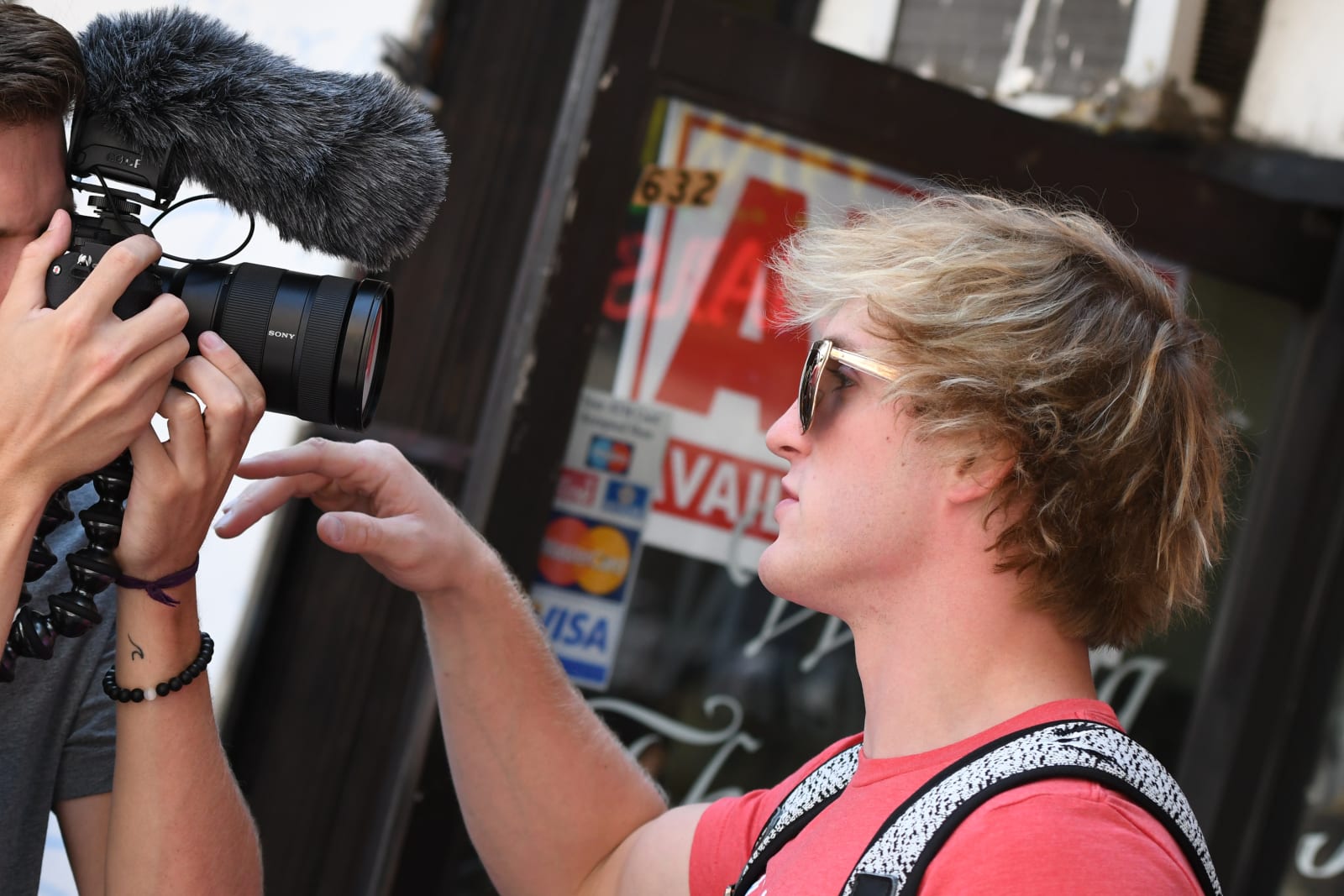
Also, while tasing a dead rat may have seemed innocent to him, promoting any act of animal cruelty will always be frowned upon by the general public and animal right organizations — regardless of the perception of rodents. “How many chances does Logan Paul get?” PETA’s senior VP Lisa Lange said in a statement. “PETA finds it repulsive that this ‘internet personality’ with millions of impressionable young followers has not learned the lesson that there is sadness, not humor, in the death of others. This sort of content has no place on YouTube or anywhere else, as it could desensitize young people to cruelty to animals, so PETA is calling on the platform to remove it.”
Paul’s actions have also prompted an online petition that calls for his YouTube channel to be deleted. It has collected more than half a million signatures so far.
The video in question, which we’ve embedded below, is still live on YouTube. YouTube did not provide us a clear answer about whether it plans to remove it, but earlier today the company announced that it is temporarily suspending Paul’s ad revenue on his videos as a result of his recent behavior. “After careful consideration, we have decided to temporarily suspend ads on Logan Paul’s YouTube channels,” a YouTube spokesperson said in a statement. “This is not a decision we made lightly, however, we believe he has exhibited a pattern of behavior in his videos that makes his channel not only unsuitable for advertisers, but also potentially damaging to the broader creator community.”
By taking this step, along with ending his Google Preferred ad deal, YouTube is sending a strong message to Paul. And it could very well mark the beginning of the end of his YouTube career — at least if he wants to keep making ad money. For context, it is estimated that his “Logan Paul Vlogs” channel earns him between $40,000 and $600,000 per month, based on research from analytics site SocialBlade. That said, Paul could theoretically make his own revenue by advertising products from brands in his videos, though it’s unclear how many of them would want to be associated with him right now.
Paul also has his “Maverick by Logan Paul” clothing line, but he’s dealing with some issues there as well. Maverick Apparel LLC, which makes outdoor gear, sent him a cease-and-desist letter last month, threatening to sue for $4 million. “Over these past months, Maverick Apparel has noticed a rapid and significant decline in its sales, reputation and goodwill of the Maverick Apparel brand as a direct result of your repulsive, abhorrent and mutton-headed conduct,” the letter sent to Paul reads. “In choosing to promulgate yourself and your maw-wallop across social media and champion yourself as an object of ridicule, hatred and contempt, you have simultaneously infected and injured the good name of Maverick Apparel.”

Logan Paul’s Maverick merchandise.
Mistakes are part of the human experience: Everyone makes them, and most people use the lessons learned to (hopefully) become better people. Unfortunately, it doesn’t look as though Paul is changing for the better, despite his promises to do so. But he’s going to have to at some point, at least if he wants to maintain the success he had achieved before the suicide forest video went viral. If he doesn’t, YouTube and others are going to keep closing their doors on him. YouTube’s latest punishment may be temporary, but if Paul keeps this up, his channel could eventually be terminated.
The thing is, what made him popular in the first place was his quirky, juvenile persona, so his behavior shouldn’t surprise anyone. According to YouTube, it believes that his latest videos make him unsuitable for brands. What’s more, the platform now considers his content to be potentially damaging for the YouTube community. This suggests that YouTube isn’t afraid to turn its back on one of its most popular stars, one with more than 16 million subscribers. That’s a lot of ad money YouTube is leaving on the table.
Logan Paul’s chances are running out, and he managed to get another strike only three videos in after his monthlong YouTube sabbatical. At this point, though, it’s not a matter of if he’ll screw up again, but when. And that also may happen sooner than you think.
Images: Getty
Facebook patents tech to determine social class
We’ve got great news this week for nation-state employees tasked with using social media to spark a class war in previously stable democracies! Facebook is patenting technology to decide if its users are upper, middle or working class — without even using the usual marker for social class: an individual’s income (the patent considers this a benefit).
Facebook’s patent plan for “Socioeconomic Group Classification Based on User Features” uses different data sources and qualifiers to determine whether a user is “working class,” “middle class,” or “upper class.” It uses things like a user’s home ownership status, education, number of gadgets owned, and how much they use the internet, among other factors. If you have one gadget and don’t use the internet much, in Facebook’s eyes you’re probably a poor person.
Facebook’s application says the algorithm is intended for use by “third parties to increase awareness about products or services to online system users.” Examples given include corporations and charities.
The patent essentially tells us that Facebook intends to add class to its advertising preferences. You know, the ones that until very recently allowed advertisers to filter by race and ethnicity, which they dragged their feet about fixing, and still hovers in the realm of “temporarily disabled.”
The patent’s illustrations tells us a story. It’s a tale of upper-class employees indoctrinated, sheltered, and inoculated from outside thinking. Facebook has been literally sitting there going “what does it mean to be middle class”, defining it themselves, and getting excited about who they can sell class information to.
I love it when a company tells us more about itself like this. “Working class” is at the bottom of its graphs. Its idea of “middle class” is a homeowner in the cash-soaked city of Palo Alto; its artwork suggests that home ownership in San Jose is surely a lower-class indicator. Af if to say, who would buy a home there?
Facebook has *no* idea what “middle class” means, apparently: pic.twitter.com/GK1drH0Q53
— Stephen Canon (@stephentyrone) February 4, 2018
Looking at the patent’s details, I can also imagine how this sets Facebook up to assign particular locations (like restaurants) or objects (brand names or items) to a socioeconomic class.
Meaning, it’s not a stretch to think that Facebook will be able to decide from check-ins which restaurants, phones, and brands of shoes, are “lower class.”
Oops — I meant to write “working class.” Really.
Open season on opportunity hoarding
Leave it to Facebook to race ahead of Black Mirror. In light of Facebook’s recent announcement to focus on more “concrete local issues” it’s not too hard to imagine how this could be used to keep working class renters out of a particular neighborhood, to facilitate predatory lending, or make sure that lower classes don’t see your dating service ads.
This is not a new problem; Facebook is just ‘improving’ it. After reading the 2014 White House report on data, privacy, algorithms, and discrimination, Google engineer Jeremy Kun wrote:
Here’s a not-so-imaginary example of the problem. A bank wants people to take loans with high interest rates, and it also serves ads for these loans. A modern idea is to use an algorithm to decide, based on the sliver of known information about a user visiting a website, which advertisement to present that gives the largest chance of the user clicking on it.
The bank then makes a tasty little ad offering much-needed money for little up front, and the algorithm takes over. Target the lower class, the working class — which are often people of color, too — because data shows poor people (those least in a position to take high-interest loans) are more likely than the general population to be so desperate that they’ll take on a bad loan.
Kun explains, “So an algorithm that is ‘just’ trying to maximize clickthrough may also be targeting black people, de facto denying them opportunities for fair loans.”
According to Kun, under US law, a practice can be considered discriminatory “even in the absence of intent.” In comments he added:
E.g. if people in poorer neighborhoods are disproportionately shown ads for predatory loans because an algorithm decided it has higher clickthrough. They have fewer chances for a fair loan treatment because they aren’t exposed to normal loan offers. Is that direct or indirect? In either case, it’s illegal. Even if a practice is not racist by intention, it can have an disproportionate adverse impact on a particular racial class, and so it’s still considered illegal.
Facebook’s algorithm may not be making illegal decisions, but it is absolutely facilitating humans to do so. Welcoming them to it, actually. Not that Facebook lets the law deter them from making a buck. I mean, c’mon.
It’s not too hard to think of ways Russia’s state-sponsored propaganda trolls will use this new feature either.
Stay classy, Facebook
Well, you’re saying, it’s just an updated version of Facebook’s patent to help lenders discriminate against borrowers based on social connections, isn’t it? Which was the inspiration for the parody app, “Unfriend the Poors.” And maybe now isn’t such a ridiculous idea after all in a reality where you’ll probably want to unfriend your mom to raise your credit score before you click on that Facebook ad.
It’s hard to keep writing these things off like some sort of idealistic upper class privilege gone awry in a company that surely has tricked some good people into working there, but whose culture and rulebook defends holocaust denial as free speech. A company that is failing to curb a proliferation of users who advocate for, and until recently bought ads that endorse, soft-peddled ethnic cleansing. Just another of Facebook’s naive evils cross-fading into another.
Facebook tells us that it considers itself a moral company. But we know. We know that Facebook upsets the moral order because it continues to act perilously, without impunity.
So what have we learned this week? We’ve learned that the working class that actually exists isn’t anything like the fantasies and prejudices of affluent, sheltered Facebook employees. Like the ones who’ve been hoarding buildings in working-class San Francisco neighborhoods, putting local small business owners out of business.
And if they wanted to escape those fantasies and prejudices to find out what we’re all really experiencing, their best bet would be to quit their jobs at Facebook and to go get actual working-class jobs (and be subjected to the other side of the Facebook experience as well).
It may not give them an actual clue. But at least we wouldn’t have to put up with them destroying democracy and its foundational principle of equality anymore.
Image: benstevens via Getty Images
Facebook adds Elizabeth Olsen dramedy to its growing video lineup
Facebook will soon be home to a half-hour dramedy series starring Elizabeth Olsen, Deadline reports. The show is currently untitled, but was formerly known as Widow, and is thought to be about a young widow who’s reconnecting with people from her past while she deals with the loss of her husband. It was created by Kit Steinkellner (Z: The Beginning of Everything) and Switched at Birth creator Lizzy Weiss will serve as showrunner.
Facebook Watch has quite a bit of sports content, both games and reality shows with pro athletes, but Facebook said last year that it was willing to spend $1 billion on original programming in 2018. So far, the company has announced a Kerry Washington-produced drama called Five Points and a show called Sacred Lies produced by two of the people behind True Blood. Olsen is another substantial get for Facebook, which is looking to compete with other platforms like Netflix and Hulu. “I couldn’t be prouder of the group we have brought together for this show,” Olsen told Deadline. “Kit’s story has been near and dear to me for years and I can’t wait to share our dark, funny, and complicated show with the world.”
Facebook has ordered 10 episodes of the series though there’s no word yet on when it might air.
Via: Deadline
 AIVAnet