


Amazon is getting rid of lock screen ads from its Prime Exclusive phones
Current Prime Exclusive phones will receive an update that removes lock screen ads.
Amazon offers exciting discounts on a variety of phones via its Prime Exclusive program in exchange for lock screen ads, but that’s changing. Starting tomorrow, February 7, Prime Exclusive phones will no longer feature ads, and Amazon has mentioned that it will roll out a software update for current phones that will get rid of the ads.

Amazon stated that the move was to enable fast unlock methods like facial recognition and fingerprint sensors:
As smartphone technology has evolved, we also want to evolve the Prime Exclusive Phone experience to ensure customers can easily use features such as the phone’s mobile unlock technologies like facial recognition and fingerprint sensors, as well as be able to personalize device lockscreens with photos or wallpapers.
With ads no longer taking over the lock screen, Prime Exclusive users will be able to set customized wallpapers as well. To compensate for the removal of ads, the devices will be pre-installed with Amazon’s apps, including Prime Video, Prime Music, Prime Photos, and an Amazon widget.
And while the devices will still be discounted from their list price, Amazon has said that it will increase the prices of all current phones in the Prime Exclusive portfolio by $20.
Considering the Prime Exclusive program counts the likes of the LG G6, the Moto G5, and the Nokia 6, there’s plenty of great choices if you’re in the market for a new phone. And the fact that you no longer have to deal with lock screen ads makes it a much more enticing option.
See at Amazon
Amazon pulls lock screen ads from discounted Prime phones
Amazon’s Prime Exclusive phones are decent bargains over their regular counterparts, but there has always been a catch: your lock screen becomes a billboard. It doesn’t really feel like your phone with those ads and offers. You won’t have to put up with that marketing for much longer, however. Amazon will sell its Prime-only phones without lock screen ads as of February 7th, and it’s pushing an update this week that will strip the promos from existing phones. Amazon’s app shortcuts will still be front and center once you’ve unlocked your phone, but you can always remove those if you don’t care for Kindle books or Prime Video. Those who paid to remove ads can get refunds.
The company explains this as a reflection of technological reality. Now that many phones have face recognition and fingerprint readers, Amazon wants to be sure those features work well. Ads that hijack your lock screen can sometimes preclude that. The company also touts the ability to personalize your screen as a motivating factor, although many would have argued that has been important from the outset.
Unfortunately, there’s a gotcha involved — Amazon is raising the price of every Prime Exclusive phone by $20. They should still represent discounts over the regular price, but they won’t necessarily be the sweet deals you’re used to. With that said, this could be a worthwhile sacrifice if you’re tired of receiving sales pitches every time you text a friend. For the most part, you’re now getting a garden variety smartphone that just happens to cost less than usual.
Source: Amazon
Apple’s Shazam acquisition faces scrutiny from European Commission
While Discovery Communications and Scripps Networks got good news from the European Commission today, Apple and Shazam weren’t so lucky. In December, Apple confirmed that it purchased Shazam for an undisclosed amount believed to be in the range of $400 million. But today the European Commission said that upon request by a number of European nations, it would be assessing the deal. The proposed acquisition wasn’t large enough to require evaluation by the EC directly, but Austrian laws required the companies to seek regulatory clearance there. A European Union provision allows EU countries to ask the EC to look at proposed mergers, and Austria did just that. Iceland, Italy, France, Norway, Spain and Sweden then signed onto that request.
In a statement, the EC said, “The European Commission has accepted a request from Austria, France, Iceland, Italy, Norway, Spain and Sweden to assess under the EU Merger Regulation the proposed acquisition of Shazam by Apple. The Commission considers the transaction may threaten to adversely affect competition in the European Economic Area.”
Apple will now have to get approval from the EC, which can decide to clear the deal outright, approve with conditions or move forward with a full investigation into the proposed acquisition.
Source: European Commission
iOS 11.3 Beta 2 Introduces New ‘Battery Health’ Feature
The iOS 11.3 beta 2 update, seeded to developers this morning, introduces a new “Battery Health” feature that’s designed to provide iOS users with more information about their batteries.
Located in the Battery section of the Settings app, the new Battery Health feature tells you the maximum capacity of your battery and whether or not it is operating at peak capacity.
On the iPhone X, there is no promised toggle to turn off the throttling feature that causes iPhones with degraded batteries to run more slowly, so it’s possible this feature is designed to only show up on devices that are impacted by throttling. We’re installing the beta on older devices and will update if we see the power management toggle.
Apple promised it would introduce much more detailed battery health features in iOS 11.3, and Apple will likely continue to refine and update its Battery Health feature over the course of the beta testing period.
Related Roundup: iOS 11
Discuss this article in our forums
You can’t buy an ethical smartphone today
Any ethical, non-🍏 📱 recommendations?
It all started with a WhatsApp message from my friend, an environmental campaigner who runs a large government sustainability project. She’s the most ethical person I know and has always worked hard to push me, and others, into making a more positive impact on the world. Always ahead of the curve, she steered me clear of products containing palm oil, as well as carbon-intensive manufacturing and sweatshop labor.
That day, she wanted my opinion on what smartphone she should buy, but this time requested an ethical device. Until now, she’s been an HTC loyalist, but wanted to explore the options for something better and more respectable. My default response was the Fairphone 2, which is produced in small quantities by a Dutch startup, but I began to wonder — that can’t be the only phone you can buy with a clear conscience, can it?
My friend explained she wanted to trust that companies are “not being dicks in relation to materials, processes, supply chain, working standards and the ability to repair.” “Most people aren’t supply-chain experts, so there’ll be all sorts of impacts we’re not in a position to know about.” Her approach generally follows the tenets of ethical consumerism, the practice of buying products which are “ethically produced, and / or not harmful to the environment, or society.”
“[Smartphones have] so many components from different countries, which all have their own challenges regarding fairness.”
By voting with your wallet, it’s thought that consumers can affect systemic improvement by shopping with companies that do the right thing. Throughout the 1990s, companies like Nike were at the center of a movement tasked with reducing sweatshop labor in the fashion industry.
Critics of the practice point out that, even decades later, labor abuses still occur at Nike factories, and its former CEO has used his fortune to fight political causes designed to improve people’s quality of life. Either way, it’s hard to buy ethically because there are so many issues to take into account when buying any product.
Ensuring your food or clothes are ethical is difficult, but nothing compared to consumer electronics. “It’s one of the most globalized products you can imagine.” Fabian Huhne is Fairphone’s public engagement manager and press officer. “[Smartphones have] so many components from different countries, which all have their own challenges regarding fairness.”
Devices vary, but your average smartphone may use more than 60 different metals. Many of them are rare earth metals, so-called because they’re available in smaller quantities than many other metals, if not genuinely rare.
Often, these substances are found in conflict zones, such as the Democratic Republic of Congo. Both there and in the surrounding region, the proceeds from mining, which often uses child and/or slave labor, have been used to finance its brutal civil war. Since 2014, the US Dodd-Frank Act has stipulated that companies must disclose if its products use materials from conflict zones.
Greenpeace’s Gary Cook, who analyzes the IT sector for the NGO, agrees that supply chains are spectacularly complex. He’s also seen that some companies are “recognizing they have to start taking control of their supply chain.” This may have been prompted by press coverage, such as the recent revelations from Apple supplier Catcher Technology, and that when such stories break, they have “brand implications” which can harm a company’s brand and reputation.

‘Anarchist Sonic,’ a meme critical of ethical consumption. – Unknown
Labor issues are often at the heart of the most controversial stories concerning the technology industry. In January, Bloomberg exposed working conditions at the Catcher Technology Company factory in China, which makes iPhone casings. It revealed that some workers had to stand for 10 hours a day in a noxious, potentially toxic, environment without proper safety equipment.
This also included some laborers working without earplugs in rooms where the noise levels reached 80 decibels. Employees operating machines where coolant and metallic particles were flying reportedly lacked access to goggles. Even worse, the workers had to sleep in unclean dormitories that lacked hot water and basic washing facilities.
Apple denied the charges, telling Bloomberg that it had not found evidence of improper practices, but that it would also send an additional team of auditors to examine the complex for violations. An unnamed spokesperson said the company “remains dedicated to doing all [it] can to protect the workers in [its] supply chain.” It’s not the first (second, or third) time that Apple has been singled out with coverage of labor practices in its supply chain. In 2010, a spate of suicides at Foxconn / Hon Hai Precision Industry — Apple’s key manufacturing partner — received international attention.
At the end of last year, Foxconn was accused of illegally employing 17-to-19-year-old students to work overtime to help build the iPhone X. The interns said they were made to work an 11-hour day assembling the flagship device, in violation of Chinese law. Subsequently, Apple and Foxconn admitted to Reuters that a number of students had worked overtime but said that it was voluntary. The iPhone maker sent additional employees to deal with the fallout and ensure rules were being followed and affirmed its commitment to protect its workers.
A 2013 video from China Labor Watch
Apple, with its high profits and strong brand, is often the easiest target for ethics campaigners, but its labor practices are hardly unique. Foxconn, the supplier associated with all these issues, is used as a contract manufacturer by Sony, Nintendo, Amazon, Toshiba, Motorola, Huawei, Dell, HP, Acer, BlackBerry and many more.
If you thought that Samsung may be a better choice, think again. Back in 2016, the company was accused of poisoning its own workers. Around 200 employees have either died or been stricken with serious illness after working on a Samsung production line. These individuals were diagnosed with leukemia, lymphoma and MS, despite being in their late 20s or early 30s. Samsung has denied the accusations, telling BBC News that the safety of its workers is its highest priority, but the company has since allowed inspectors inside its facilities. In addition, one of the employees who passed away was awarded compensation by a South Korean appeals court.
China Labor Watch, a non-profit that examines working conditions, has also found instances of child labor on Samsung lines. In 2012, a supplier was found employing children as young as 14 — who had their pay docked when they were unable to work due to an injury. The company has since outlined a code of conduct for its supplier responsibility practices, which includes a commitment to banning child labor, paying a minimum wage and a ban on inhumane treatment. In 2015, China Labor Watch was still finding failings in facilities used by Samsung to produce its devices.
If you’re on the hunt for a smartphone that isn’t produced with the sort of intensive labor that most of us would wince at, chances are you’re not going to be satisfied. Even smaller companies, like Fairphone, with its public commitment to offering a better deal, struggle with the systemic problems of the industry. Its handset is manufactured in Shenzhen, but as Huhne explains, “if you want to change the industry, you have to go where it is.” He says suppliers are often surprised when Fairphone reps ask how they could improve working conditions in partnership.

Fairphone 2 (Jamie Rigg / Engadget)
The work of NGOs like Greenpeace, China Labor Watch and others are, in Huhne’s mind, “essential.” He feels it’s important for companies to work with them, since they’re already “on the ground” in some of these crucial regions. There’s also the issue of where any organization chooses to focus its priorities: What’s more important, conflict materials, sustainability or labor issues? “Just looking at how complex and vast international supply chains are, we had to make a decision on where to focus first.”
Smartphones, and consumer technology more generally, don’t just have the potential to harm the people building them. There is also the enormous environmental damage caused in the handsets’ production, through resource extraction, intensive manufacturing and transport. “If you’re wanting to buy a[n ethical] phone right now, your choices are limited,” says Greenpeace’s Gary Cook, “and Fairphone has done the most in terms of current manufacturers.”
The organization found there’s plenty of environmental blood that can be laid at the door of the smartphone. In the last decade, production of the devices has consumed nearly 968TWh, enough to power India for a year. In 2017, smartphones, and related products, made 50 metric tons of e-waste — discarded smart devices and their accessories — and it’s only going to get worse.
Recently, Greenpeace launched a campaign to expose Samsung’s use of coal-fired power plants. The organization believes that the company, “despite all its PR talk,” only uses one percent renewable energy. It’s a comparison that makes Apple seem positively virtuous, given its longstanding commitment to reach 100 percent renewables.
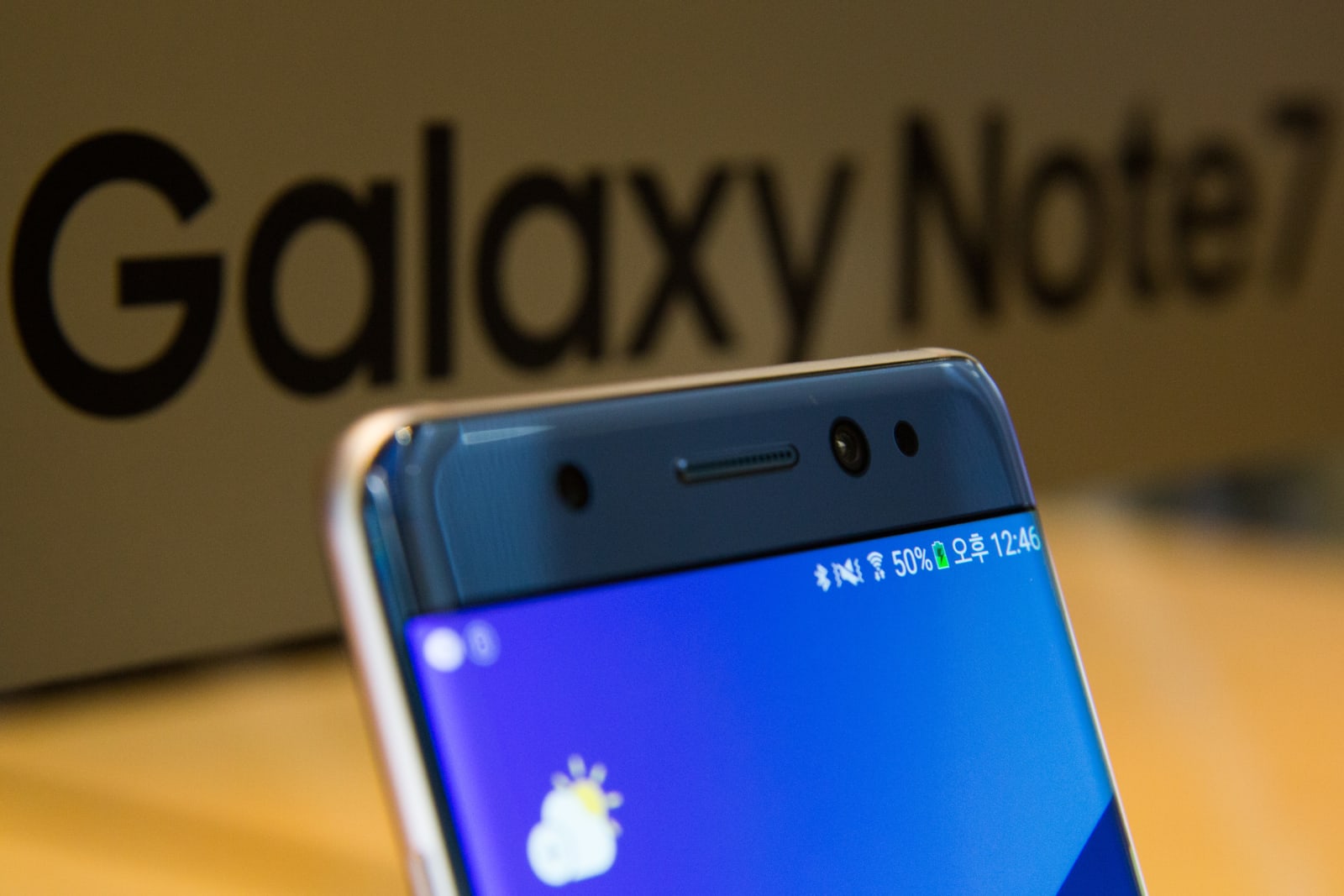
The NGO also took Samsung to task in the wake of the Galaxy Note 7 crisis, in which faulty batteries caused the devices to explode. If the Note 7 hadn’t been built as a wholly-integrated device, but instead came with removable batteries, the cost to resolve the problem would have been significantly smaller. Integrated batteries are often the part that fails first, prompting phone users to opt for an upgrade when a replacement would work just as well. Failure to address this is a lesson that Apple is learning right now, to its chagrin.
Repairability and modularity can help users increase a device’s lifespan, save money and preserve precious resources. But it’s not easy to do, and often people ditch a perfectly-functional phone because of a single failing component. Not to mention that it plays into the gripes surrounding “planned obsolescence,” and the theory that companies deliberately build devices that break after two years.
Mark Schaffer formerly managed environmental programs at Dell. He was responsible for pushing the company to adopt EPEAT (Electronic Product Environmental Assessment Tool) standards. Now, he runs an independent consultancy, Shaffer Environmental, and last year, penned a report on environmental standards for Repair.org. Schaffer believes that US electronics standards, which are meant to push manufacturers to do better, have now failed.

Glue is the cheap, lazy way to make a thin device with a seamless exterior
Samantha Lionheart, iFixit
“Standards of the past have pushed manufacturers toward more recycled plastics, fewer hazardous materials, smarter end-of-life management and better energy efficiency,” he says. But these days, the power and influence of these companies mean that they can “effectively resist leadership standards.” He believes that targets are now “too easy for manufacturers to achieve,” making them meaningless. Greenpeace’s Gary Cook agrees, saying the situation is “not as progressive as it once was.”
Meanwhile, there’s iFixit, which publishes a chart of smartphones ranked by their repairability. Unsurprisingly, Fairphone 2 tops the list, and sadly the rest of the top five is filled out with older devices, like Motorola’s Droid Bionic and Atrix 4G (both 2011). The current run of flagship devices from from Google (6/10), Apple (6/10) and Samsung (4/10) demonstrate somewhat less commitment to repairability.
Schaffer points out that while many advances in sustainability have been made, new devices often feature “difficult to recycle batteries [and] non-upgradeable storage.” More worryingly is the presence of those rare earth metals that “are virtually impossible to recover in the current electronics recycling infrastructure.” One solution would be to push for increased repairability and better durability for the latest devices. But, as the Schaffer report says, manufacturers have “consistently opposed stronger reuse and repair criteria,” although we couldn’t possibly wonder why.
“Glue is the cheap, lazy way to make a thin device with a seamless exterior,” explains iFixit’s lead teardown engineer, Samantha Lionheart. Glue is the enemy of repairability, but it does help companies make slim, unibody and waterproof devices en masse. In addition, Lionheart says that “the advent of wireless charging” means “there are a lot of glass backs that can only really be attached with an adhesive.” Lionheart cites the LG G5 as evidence that there are better ways to do things, since it uses a “stiffer battery case to enable easy removal and provide structural support.” But, “ultimately, manufacturers don’t often take repair or rework into consideration, sometimes to their massive detriment — like the Note 7.”
EPEAT, a green electronics standard based on the IEEE 1680 framework, helped supercharge environmental standards back in 2006. EPEAT grades consumer electronic products against 1680, awarding a bronze, silver and gold ranking. The regime includes mandates on recycled plastic, manufacturer recycling programs and a reduction on the use of hazardous materials. The latter category has helped drive down the use of poisonous substances like lead, cadmium and mercury in countless consumer devices.
But Schaffer’s report is critical of EPEAT’s leadership role, citing the moment when Apple released the 2012 MacBook Pro with Retina Display as its death-knell. The laptop shipped with a variety of non-upgradeable parts, a glued-in battery and a proprietary non-user-replaceable SSD. Despite this, the device was awarded gold certification, and in Schaffer’s eyes “effectively gutted the modularity criteria in the standard.”
Perhaps surprisingly, Nancy Gillis, CEO of the Green Electronics Council — which administers the EPEAT label — agrees that things need to change. She says the Schaffer report helped crystallize internal discussions over reform. Part of this is because EPEAT’s success is bound up with IEEE 1680, giving its administrators less wiggle-room to make judgment calls.
Before the fires (SeongJoon Cho/Bloomberg via Getty Images)
Gillis, who took up her leadership position at the GEC in 2016 believes that the issue, right now, is with standards development itself. It can take the better part of a decade to produce a new standard, and it’s a laborious process of negotiation between the industry, its regulators and relevant stakeholders. “Because these standards-development processes are taking four, five, six years,” she explains that some smaller stakeholders “don’t have the financial wherewithal to continue.” Specifically, smaller IT companies, security experts and environmental advisors who lack the time and resources to remain involved. Gillis believes that this results in the standards’ development becoming unbalanced in favor of larger manufacturers.
It seems that big manufacturers have carte blanche to define their devices as environmentally friendly. Not only do they set the bar, but they know just how to slide their products through without causing any controversy. But that may not be the situation forever. The GEC is pushing for a much faster standards-development process, one that will take no longer than 22 months. Crucially, however, the new standards will, for the first time, “address the environmental and social impact associated with that product category.”
Other industries, from paper products (FSC) through to food (Fairtrade) have already adopted labeling schemes that inform consumers about making better choices. Each one can only be used if the company involved meets certain criteria concerning ethics, sustainability, minimum pricing and workers’ rights. In Germany, there’s even a general-purpose eco label (Der Blaue Engel), which covers any product deemed to be friendly to the environment.
“You have working conditions, you have environmental issues, you have problems with recycling,” says Fairphone’s Huhne, “it’s very difficult for a single label to capture that.” Greenpeace’s Gary Cook is also sceptical about the need for labels, saying that “we don’t have time to go through a process of ‘let’s create an eco label that says this product is climate-friendly.” The GEC’s Gillis disagrees saying that “complexity of the supply chain is challenging, but the complexity of addressing environmental aspects was challenging, too.”
Right now, it’s impossible to buy a smartphone you can be certain was produced entirely ethically. Any label on the packaging wouldn’t stand a chance of explaining the litany of factors that go into its construction. The problem is bigger than one company, NGO or trade policy, and will require everyone’s effort to make things better.
“Fairphone isn’t 100 percent fair,” says Fabian Huhne, “and we can’t solve everything at the same time.” But he’s optimistic: “If the industry moves in [a more positive] direction, it’s going to get a lot easier,” but it requires “transparency and knowledge.” Armed with that, hopefully consumers in the future can pressure the industry to get ever closer to the ideal.
The Green Electronics Council’s Gillis feels that the biggest change comes from purchasers, and the bigger the purchasers, the more weight their voices have. It’s why big business and institutional purchasers have a chance to take a leadership role here and push for better conditions. Your individual smartphone purchase may not make a dent in the industry, but you may be able to influence others. A mobile network, for instance, buys millions of devices each year, and certainly wouldn’t want to be seen to condone sweatshop labor. Maybe it’s worth making a couple of phone calls.
Two men charged with bank fraud following ‘jackpotting’ heist
A Connecticut court has charged two men with bank fraud after they allegedly stole thousands of dollars through ATM jackpotting. While a relatively new scheme in the US, jackpotting has been a problem in Asia, Europe and Mexico for years and involves loading up ATMs with malware and forcing them to release their cash contents. The two men are said to have dressed up as ATM technicians and accessed a Citizens Bank ATM in Cromwell, Connecticut in late January. Police found them near the ATM with tools and electronic devices believed to be required for jackpotting as well as $9,000 in $20 bills.
Last month, security researcher Brian Krebs wrote about jackpotting coming to the US, noting in a follow-up post that a handful of individuals had been arrested last November for allegedly carrying out a string of jackpotting heists in Colorado, Wyoming and Utah. It appears that ATMs running outdated Windows software are the main targets. Along with the Cromwell jackpotting theft, law enforcement officials and ATM manufacturers have been looking into attacks in two other Connecticut cities as well as Providence, Rhode Island.
The two men — a Massachusetts resident and a Spanish national — face a maximum of 30 years in prison.
Via: The Verge
Source: DOJ
People aren’t happy with the BBC’s big weather redesign
Today, the BBC is launching a major redesign of its popular weather forecast services — and some Brits are furious. It all started in 2015 when the broadcaster announced it was ditching the Met Office and looking for a new provider of accurate weather data. MeteoGroup was eventually crowned the winner and work began to overhaul the technical architecture underpinning the BBC’s much-loved TV bulletins, mobile apps and website. The new web and mobile designs were rolled out to “some users” last month and the reaction was overwhelmingly negative. On a blog post written by the BBC’s Michael Burnett, one user commented: “You seemed to have ruined what was a superb site with a wealth of information.”
The BBC has gone ahead with the overhaul, however. The new system was shown on TV for the first time today, and everyone will see the new app and website sometime “this week.” The broadcaster, of course, is keen to emphasise what it sees as improvements: the design is now “contemporary” and “consistent” across all BBC platforms, and there’s “more realistic mapping” that presenters can choose to augment with different data depending on the medium. The redesign also means the BBC can show up to 14 days of hourly broadcasts online and a seven-day forecast on TV and radio. The weather app has new features too, including the “chance of precipitation” and what the temperature “feels like.”
The BBC published a second blog post today — this time by Liz Howell, head of BBC weather — explaining the changes. Unsurprisingly, the comments underneath are just as negative as the 1,000-odd posted in January. Many believe that it’s “less user friendly” and “a huge step backwards.” The Met Office, meanwhile, is quietly gloating. In its own blog post, the organisation said “it is not surprising that the public are puzzled” by the BBC’s decision to switch to Meteogroup. The broadcaster will, however, continue to report severe weather warnings issued by the Met Office. Otherwise, it seems the British public will just have to get used to the changes, or look elsewhere for their daily fix of weather information.

Source: Meteogroup
PS4 Pro will make more games look better on older TVs
The next PlayStation 4 firmware update will make the PS4 Pro a lot more like the Xbox One X. No, I don’t mean the patch will malevolently shrink the breadth of Sony’s first-party games lineup next time the console is in sleep mode, either. Instead, software version 5.50 adds a supersampling mode to the PS4 Pro.
On the Xbox One X, that translates to higher frame-rates, improved visual clarity and more detailed graphics on select titles when the console is connected to a 1080p TV. Here’s how Sony describes the situation on PS4 Pro: “Certain games already have the ‘supersampling’ benefits as part of their ‘PS4 Pro Enhanced’ feature set, but this new mode can enhance the experience for those games that don’t already have the feature.”
Just hop into the system settings menu to activate it and you should be good to go.
There are a handful of other new features that every PlayStation owner will benefit from as well. Once the software goes live for everyone, you’ll finally be able to change your PS4 wallpaper to an image from a USB stick, and do the same to customize a tournament or Team page.
A few changes are coming to music playback too. Music controls for Spotify, the media player and USB music player apps are coming to the quick menu. More than that, some PS Now games will let you listen to your own tunes while streaming a classic title from Sony’s servers.
There are a few other quality of life additions, like better organization for the game library and child play-time limits in the “Keiji” update, too. Xbox One added play limits last year with the Creators Update, and the One X hardware has been supersampling games since last November. Outside of a few games like Horizon: Zero Dawn, PS4 Pro owners without a 4K TV on the other hand, have been left in a lurch in terms of supersampling since the system was released in late 2016. Reset Era has a list of games that purportedly support supersampling.
It’s a little strange seeing Sony follow Microsoft’s lead considering how far behind the Xbox One is in sales, of course. But, maybe, that means we’ll see a PS4 Pro with an Ultra HD Blu-ray drive in it announced this year. We can hope, right?
Source: PlayStation Blog
‘Shadow of the Colossus’ remake is missing something vital
Warning: This article contains major spoilers for Shadow of the Colossus.
Shadow of Colossus on the PlayStation 4 has everything you’d expect in a modern game. Its sharp graphics are are a huge step above the original PlayStation 2 title, which was released in 2005. There’s support for HDR and, if you own a PlayStation 4 Pro, you even have the option of 4K rendering. At last, there’s a console capable of handling the scope of Fumito Ueda’s grand vision.
And yet, it also feels as if we’ve lost something. The hazy beauty of the game’s mysterious world has all but disappeared, replaced with higher resolution graphics that almost seem too sharp, erasing some of the mystery. And it’s not as if we’re lacking in open world games with huge worlds where you fight giant creatures. Shadow of the Colossus is still a towering achievement, one you should definitely play it if you missed out on prior releases. But this remake simply isn’t the same.
On the one hand, that’s inevitable. Only purists would want to play the PS2 version of the game today, since that involves digging up an old console and suffering through an old-school 480p resolution. While you can stream the PS3 re-release on PlayStation Now, it’s also not the same experience as the original, thanks to slightly improved graphics. Playing the first game in 2005 felt almost impossible — as if there was too much grandeur for the PlayStation 2 to handle. That’s what made it easy to overlook the choppy framerate, the sometimes low draw distance and the quirky (and infuriating) gameplay mechanics.
The remake still captures the unique sense of melancholy from the original — it’s clear this isn’t a Zelda game. You slowly trot through a vast landscape on your horse, and it’s revealed that you’re carrying the dead body of a girl. Based on how you gingerly place her upon a sun-kissed stone pedestal, it’s someone you care about. Instead of vowing to save the world, you agree to give up a bit of your soul to save her. As you travel the land and hunt down the colossi, it becomes increasingly obvious that the real monster is you. They’re just peacefully going about their lives. You’re the intruder murdering them for your own selfish desires.

Devindra Hardawar/Engadget
No other game has managed to deliver the same experience. I won’t go too much into its ending, but needless to say, it’s not what you’d expect. While most titles let you walk off into the sunset triumphantly, in Shadow of the Colossus you’re meant to reckon with the decisions you’ve made. The sheer weight of which make the Dark Souls games seem like a stroll through a botanical garden.
Perhaps it’s too much to expect a remake to live up to our nostalgia. This version of the game was developed by Bluepoint Productions, without the oversight of Ueda and the original design team. Instead of working within the limitations of an underpowered console, their goal was to make the game shine as much as possible on newer hardware.

Sony
That’s not necessarily a bad thing, though. Riding my horse Agro through the revamped overworld was a more rewarding experience simply because everything looked better. And the developers also fine-tuned some of more annoying gameplay elements. It’s easier to hop on Agro, as well as hang onto enemies thanks to an improved control scheme. Aiming your bow is also much more accurate, and you can save anywhere, instead of just at shrines.
As someone who cares about accurate game preservation, I would have loved to see a way to play the remake alongside the original. The ability to quickly flip between the new and old graphics, similar to the Halo 2 Anniversary release, would likely involve more work than Sony is willing to put in to a $40 release. At the very least, it would have been nice if the original game was a part of the package. We know Sony has a PS2 emulator available for the PS4, after all. For now, we’ll have to make do with the streaming PlayStation Now PS3 release.

Sony
So how do you remake a classic? Very carefully, as this version of Shadow of the Colossus demonstrates. As I revisited familiar lands and killed beautiful beasts once again, I was reminded that games, perhaps more than any other medium, are a product of their times. What was once groundbreaking could be considered dull and unplayable just a few years later. If you missed out on Shadow of the Colossus the first time around, it’ll be tough to understand just how much of an impact it had. Still, it remains a completely unique experience 15 years later.
China’s smartphone market shrinks for the first time in 9 years
For a while, it seemed like the Chinese smartphone market was an infinite growth machine. Companies would have rough patches, but the overall field would always be on the up and up. Well, those days are over. IDC estimates that Chinese smartphone shipments declined 4.9 percent in 2017 — the first drop since 2009. The analyst firm pinned it primarily on “minor upgrades” to Chinese phones that weren’t enough to spur a wave of new buyers. We’d add that the market is maturing. Much of the rapid growth from past years was sparked by a burgeoning Chinese middle class buying its first smartphones. Many of the people who could afford smartphones have them, and they aren’t always in a rush to upgrade.
Not that the biggest phone makers are necessarily complaining. The drop mainly applied to smaller brands, whose shipments plunged 31 percent — the top five (Huawei, Oppo, Vivo, Xiaomi and Apple) saw their numbers either dip only slightly or go up. The juggernaut of the bunch, Huawei, saw its shipments climb nearly 19 percent thanks to a range that covers everything from the lower end (like its Honor line) to high-end hardware like the Mate 10 Pro. And Xiaomi, despite past troubles, saw its shipments jump a staggering 32.6 percent. When big companies suffered, it was usually due to inaccessible lineups. Vivo shifted away from low-end models in 2017, while Apple’s premium range limited its real success to “tier 1” cities like Beijing or Shanghai.
If there’s a consolation prize, it’s that high-end phones were having a field day last year. Apple dominated the space above $600, and Huawei’s slice of that market jumped from 2 percent at the end of 2016 to 8 percent a year later. BBK’s Oppo and Vivo badges may have taken a bruising in terms of sheer numbers, but their shift away from lower-end phones helped them make more money overall. The question is whether or not that’s a viable strategy in the long run. While targeting luxury buyers can be lucrative, there are only so many of them to go around in a country where the average worker brings in just over $10,000 per year. Those companies that care about more affordable devices will still have to court budget buyers if they want to thrive in China.

Via: Financial Times
Source: IDC
 AIVAnet