


iMac Pro Appears to Include A10 Fusion Chip for Always-On ‘Hey Siri’
According to some digging into Apple’s “BridgeOS 2.0” code and macOS this weekend by Jonathan Levin, Steven Troughton-Smith, and Guilherme Rambo, the upcoming iMac Pro appears to feature an A10 Fusion chip with 512 MB of RAM. While the full functionality of the A10 chip isn’t yet known, it appears the chip will enable support for “Hey Siri” functionality, potentially even when the iMac Pro is turned off.
As noted by Troughton-Smith, the A10 will manage the booting process and security for the iMac Pro, and with hooks into system audio, he theorized that the chip might support always-on “Hey Siri.”
Confirmed: “Hey, Siri” is coming to the Mac pic.twitter.com/Dw9bRAzbxD
— Guilherme Rambo (@_inside) November 18, 2017
The “Hey Siri” theory was quickly confirmed by Rambo, who shared both a boot chime for BridgeOS and the setup process for “Hey Siri” discovered within macOS.
BridgeOS has a boot chime sound pic.twitter.com/ofupY9RZt8
— Guilherme Rambo (@_inside) November 18, 2017
Rumors of ARM-based chips being included in Macs have been circulating for some time, and with the T1 chip appearing in the MacBook Pro to drive the Touch Bar last year, the rumor began coming to fruition. The T1 was just the first step in the process, however, with Bloomberg reporting in February that a custom “T310” ARM-based Mac chip similar to the T1 could be included in future Macs and take on some additional functionality such as handling “Power Nap” low-power mode functionality.
In June, Pike’s Universum reported that the upcoming iMac Pro will include a Secure Enclave, suggesting the machine would indeed include an ARM-based coprocessor as on the MacBook Pro.
Unveiled at WWDC in June, the iMac Pro is scheduled to launch next month, but Apple has yet to give a specific launch date for the high-end desktop that will start at $4999.
Related Roundup: iMac Pro
Discuss this article in our forums
Razer Phone vs. LG V30: Can Razer topple a smartphone giant?
Razer has thrown a gauntlet down to the rest of the smartphone market with the Razer Phone. It’s a media-consuming beast of a device with stereo speakers, 8GB of RAM, and a buttery smooth display that has to be seen to be believed. But how does Razer’s monster stack up against the competition? LG’s V30 is a stylish, powerful Android smartphone with some serious video shooting skills. We took the LG V30 and the Razer Phone and pitted them against each other to see which phone came out on top.
Specs
Razer Phone
LG V30
Size
158.5 x 77.7 x 8 mm (6.24 x 3.06 x 0.31 inches)
151.7 x 75.4 x 7.4 mm (5.97 x 2.97 x 0.29 inches)
Weight
197 grams (6.95 ounces)
158 grams (5.57 ounces)
Screen
5.7-inch 120 Hz Ultramotion IGZO IPS LCD display
6-inch P-OLED display
Resolution
2,560 x 1,440 pixels (514 ppi)
2,880 x 1,440 pixels (537 pixels per inch)
OS
Android 7.1.1 Nougat
Android 7.1.2 Nougat
Storage
64GB
64GB, 128GB (on the V30 Plus)
MicroSD card slot
Yes
Yes, up to 256 GB
NFC support
Yes
Yes
Processor
Snapdragon 835 with Adreno 540
Snapdragon 835 with Adreno 540
RAM
8GB
4GB
Connectivity
GSM, UMTS, HSPA, TD-SCDMA, LTE, TDD LTE, 802.11 a/b/g/n/ac Wi-Fi
GSM, CDMA, HSPA, EVDO, LTE, 802.11a/b/g/n/ac Wi-Fi
Camera
Dual 12 MP rear (f/1.75 wide angle & f/2.6 zoom), 8 MP front
Dual 16MP and 13MP wide angle rear, 5MP wide angle front
Video
Up to 4K at 30 fps
Up to 4K at 30fps, 1080p at 30fps, 720p at 120fps
Bluetooth
Yes, version 4.2
Yes, version 5.0
Audio
Dual front-facing speakers, no headphone jack
Bottom-firing speaker, headphone jack
Fingerprint sensor
Yes
Yes
Other sensors
Accelerometer, gyro, proximity, compass
Accelerometer, compass, gyroscope, proximity
Water resistant
No
Yes, IP68 rated
Battery
4,000mAh
Qualcomm QuickCharge 4.0+
3,300mAh
Fast charging, wireless charging (Qi standard)
Charging port
USB-C
USB-C
Marketplace
Google Play Store
Google Play Store
Colors
Black
Cloud Silver, Moroccan Blue
Availability
Razer
Sprint, Verizon, AT&T, T-Mobile
Price
$700
$800
DT review
Hands-on review
4 out of 5 stars
You’re going to see a lot of similarities between these two phones in terms of processing power, as both the LG V30 and the Razer Phone come with the Snapdragon 835. We’ve seen this processor powering multiple flagship phones this year, including the Pixel 2, the Samsung Galaxy S8, and the Galaxy Note 8. It’s a very powerful chip, one of the best in the world, and we expect to see similar performance from the LG V30 and Razer Phone, with any real differences in processing power being negligible. It is notable that the Razer Phone contains a lot more RAM than the V30 — a staggering 8GB against the 4GB in the V30 — but as we like to remind you, the jury is still out on how much impact RAM has on on a smartphone’s performance, so while the extra RAM scores Razer some extra points, it’s not as big a deal as the numbers might suggest.
The LG V30 pulls ahead when we start to compare internal storage. Again, both have space for a MicroSD card, expanding available storage, but it’s nice regardless that LG offers the choice between a 64GB and a 128GB model (on the V30 Plus) for initial internal storage. The Razer Phone only comes with a 64GB option, which seems small for a phone aimed toward mobile gamers and avid media consumers.
The LG V30 gets more points for the inclusion of a headphone jack — which is missing on the Razer Phone. Puzzlingly, the Razer Phone also lacks the upgraded Bluetooth 5.0 you’ll find in the V30. Since the Razer Phone doesn’t include a 3.5mm jack, you’d expect Bluetooth 5.0’s improved signal strength and features to be a must-have to make up for the missing functionality, and the lack of it is strange. LG doubles down on audio quality with Quad DAC and AptX included in the V30, but the Razer Phone’s stereo speakers and DAC-enabled USB Type-C to 3.5mm headphone jack adapter put up a good fight.
It’s a tough call between the two, and with the extra RAM included, we expect that the Razer Phone will be the slightly superior performer. However, we also anticipate that the difference will be so slight as to not really be noticeable, and the V30’s headphone jack, upgraded Bluetooth, and better range of storage options hand LG the win here.
Winner: LG V30
Design and display
Julian Chokkattu/Digital Trends
The trend for minimizing bezels has given us some of the most beautiful smartphones we’ve ever seen. LG is no stranger to this trend, and the LG V30 shows off a gorgeous 6-inch 18:9 screen with tiny bezels around the edges. A larger forehead and chin are present, but they’re so small that you’ll forget they’re there. The OLED display showcases LG’s usual great performance, with vibrant colors and dark, inky blacks. Flip over the phone and you’re greeted with more smooth glass, mounted on a metal frame. LG has put the V30’s glass through rigorous testing, but we still recommend a case to ensure it stays beautiful.
By contrast, the Razer Phone is a throwback to an earlier time. Chunkier bezels abound, and the design is close to that of a Sony Xperia, with hard, angular corners and straight lines. Still, we don’t mind a different design from time to time, and it does mean that the display is flanked by a pair of seriously impressive stereo speakers. The display itself is a 5.7-inch IPS LED, and it outputs a good-looking image, even if it’s never going to match the clarity and color of the OLED screen on the V30. But you need to see the Razer Phone in action to really understand its true strength — a 120Hz Ultramotion screen refreshes at twice the usual rate of smartphone screens, giving motion on the Razer Phone a smooth quality you don’t find in many devices (the iPad Pro may have been the last we saw). It adds an extra “wow” element to an already smooth phone, and really cements Razer’s drive for the mobile gaming market.
The rest of the Razer Phone is aluminum, and while it’s nice to handle that reassuring metal again, glass feels so much more premium in 2017. That said, you don’t have to worry so much about your phone’s body smashing during use, so at least the Razer Phone has that over the LG V30. But what it doesn’t have is water-resistance. There’s no water-resistance at all in the Razer Phone, which feels like a misstep when compared with the LG V30’s IP68 rating.
All in all, each of these phones has a lot to offer. While the Razer Phone’s 120Hz display is a stunning piece of technology, and we have a soft spot for the chunky look, it just can’t compete with the futuristic style of the LG V30. Pair the V30’s amazing looks with the stunning and massive 6-inch OLED display, as well as the water resistance, and you can forgive the fragile nature of the glass covering.
Winner: LG V30
Camera
Julian Chokkattu/Digital Trends
This one’s a bit more clear cut. While the camera hardware on the Razer Phone is respectable — two 12-megapixel (MP) lenses, one with a 2x optical zoom, and the other a wide-angle lens — we have our doubts about the strength of the software, which is rather bare-bones. The front snapper is similarly standard — 8MP is a good selfie taker, but there’s nothing special about it. It’s clear that Razer’s focus isn’t on the strength of the camera. That said, Razer has promised updates to add features to the camera and make certain aspects clearer.
The LG V30, on the other hand, has a stunning pair of lenses mounted on the back of the phone — a 16-megapixel and a 13-megapixel lens. The 16-megapixel lens has an aperture size of f/1.6 (setting a smartphone record on release), giving a huge amount of light to the sensor, while the 13-megapixel lens is concerned with taking wide-angle shots of up to 120 degrees. It’s an incredible combination that we haven’t really seen from other manufacturers. Amazingly, LG’s focus isn’t even on still photos — it’s on video. The LG V30 has great capabilities as a camera, coming with 15 “Cine Effects,” which dynamically alter the color balance and look of the shot to match your chosen filter. We won’t go into greater detail here, but you can check out our LG V30 review if you’re interested in knowing more.
The answer here should be pretty clear — the LG V30 wins again.
Winner: LG V30
Battery life and charging
Julian Chokkattu/Digital Trends
The Razer Phone comes with a huge 4,000mAh battery to fuel that incredible 120Hz display. But that display is a power hog, and while we haven’t done detailed tests yet, we expect that the Razer Phone will manage to make it through the day on a full charge. There’s no wireless charging here, thanks to the aluminum body, but the phone is the first to ship with Qualcomm’s QuickCharge 4.0+ technology, which Razer has said can charge the battery from zero to 50 percent within 35 minutes. Given the capacity of the battery, that’s quite an impressive feat.
The LG V30 is no slouch either, with a 3,300mAh battery. While it falls short of the pure numbers of the Razer Phone, the battery life on the V30 is very impressive. Tests during our LG V30 review showed the battery to be capable of well over a day’s worth of usage, consistently ending a work day with just under 50 percent battery life remaining. Wireless charging is available, and QuickCharge 3.0, while an older product than the upgraded version on the Razer Phone, is still capable of charging the phone with blinding speed.
The LG V30 has stronger battery life, as well as the option for wireless charging, and that scores it the win.
Winner: LG V30
Software
Julian Chokkattu/Digital Trends
The LG V30 is running Android 7.1.2 Nougat, overlaid with LG’s own customized skin. It’s not bad looking, but it’s never been one of our favorites. It’s got some fun additions to it that might catch your fancy, such as the ability to set Smart Settings that detect when you’re home and change the sound profile accordingly. You’ve been able to get this sort of functionality from third-party apps like IFTTT for a while, but it’s nice to see it baked into LG’s software. The “Floating Bar” is another of these — replacing the secondary display from earlier V-series phones. It’s not quite as good as the secondary display was, but it does give the option to quickly access apps that you don’t want on your home page. There’s no Android 8.0 Oreo update for the V30 yet, and LG hasn’t yet shared when it can be expected to arrive.
The Razer Phone is also running Android Nougat, and much of your initial experience will be of stock Android. There’s a reason for that — Razer has seen fit to not include any bloatware with its phone, trusting in stock Android to deliver the goods. It does — your experience is buttery smooth, as you’d expect. But there’s also a reason we said “initial experience” above — Razer has included Nova Launcher Prime as a part of the OS, giving the user the plethora of customization options offered by one of the best Android launchers on the market. It’s stunning how much flexibility Nova Launcher gives you, with the ability to mimic Android 8.0 Oreo from the Pixel 2, or set up your very own way of scrolling through your app drawer, or increasing the number of icons present on the home page. Like the V30, there’s no sign of Android 8.0 Oreo on the Razer Phone yet, though promises of early 2018 have been made.
Both phones have the ability to access virtual reality apps, though the V30 has the edge with Google Daydream integration. That said, we haven’t seen much from Daydream, so it doesn’t win LG many points.
We’ve got to hand it to the Razer Phone here. We love stock Android, and pairing it with the optional customization from Nova Launcher Prime is a dream come true.
Winner: Razer Phone
Price and availability
The Razer Phone is currently up for pre-order on Razer’s site for $700, and it will also be available from the Microsoft Store and Amazon when it releases November 17. It will be sold unlocked, so you’ll be able to put it on any supported network — though Sprint and Verizon customers will be disappointed by the lack of support for their networks.
The LG V30 starts at $800 for the 64GB, with prices increasing to $912 for the V30+ from Sprint, or $950 from Best Buy. You don’t need to worry about the phone not working on your network, as all the major carriers are offering it, but $950 for the V30+ is a very significant amount of cash, and one that could make you think twice about your purchase. Still, $800 for the 64GB model of the LG V30 is reasonable enough, and we think the V30 offers enough to justify the extra $100.
Winner: LG V30
Overall winner: LG V30
The Razer Phone is shaping up to be a great phone, with a super-smooth 120Hz display, an almost nostalgic design, some incredible speakers, and all the power you’d expect from a 2017 flagship. If you’re looking for a phone that will double as a media center, you could certainly do worse than Razer’s new beast.
But it’s a testament to how good of an all-rounder the LG V30 is that it beats the Razer Phone so thoroughly. LG has done an amazing job in making the V30 the phone it is, from the stunning OLED display, to the futuristic and gorgeous glass-and-metal design, to the excellent camera, which is one of our favorites for taking wide-angle images and video. LG has put together a staggeringly good phone, making it impossible for the Razer Phone to beat it pound for pound.
Editors’ Recommendations
- Razer Phone vs. iPhone X: Android newcomer takes on Apple’s finest
- Razer Phone hands-on review
- Razer Phone vs. Samsung Galaxy Note 8: A new challenger approaches
- Android flagship throwdown: Razer Phone vs. Google Pixel 2 XL
- The Razer Phone, with its Snapdragon 835 and 8GB of RAM, is finally here
The Orbital Reflector, launching in 2018, is the world’s first space sculpture
Artist Trevor Paglen plans to launch “the first satellite to exist purely as an artistic gesture” into low-Earth orbit in 2018. The cosmic creation, called the Orbital Reflector, has no mission at all other than for people to look at it. It’s partially sponsored by the Nevada Museum of Art and will be visible from the surface of the Earth. “This is making a piece of abstract art on a rocket. By doing that you encourage people to look at it and think about the heavens,” Paglen told the Las Vegas Review-Journal.
Paglen is a geographer and artist who was awarded a 2017 MacArthur Foundation fellowship (a “genius grant”) and will have an exhibit at the Smithsonian Institution next year. As he notes on his Kickstarter page for the project, “the Orbital Reflector is a satellite that will have no commercial, military, or scientific purpose. Instead, it will be a public sculpture, visible from the ground without a telescope — a satellite that belongs to everyone.”
The sculpture is created with thin, light, Mylar-like sheets, and it will be sent 350 miles into the heavens on top of a SpaceX Falcon 9 rocket aboard a small satellite known as a CubeSat. It’s tentatively scheduled for launch from Vandenberg Air Force Base next spring. Once deployed, the Orbital Reflector will inflate and circle the globe once every three hours until it dies a fiery death upon reentry into the atmosphere in approximately two months.
The balloon will reflect light back to Earth, making it visible with the naked eye. Paglen plans to partner with the sky-watching app Star Walk 2 to let observers know when it will be visible in their location. You’ll also be able to track the satellite as it passes overhead from their website at orbitalreflector.com.
The normally staid and analytical scientists working on the project are excited to participate in something so inspirational. “It’s different than anything I’ve ever worked on,” said aerospace engineer Mark Caviezel. “Being artistic, it’s a lot cooler than a lot of satellites, and it’s refreshing that in our uptight kind of way, we can sort of let our hair down on this.”
Paglen’s earlier space project was “The Last Pictures,” a collection of images from Earth launched into orbit in 2012. He said his inspiration for this latest endeavor goes back to Echo 1 and 2, NASA’s earliest communication satellites from the early 1960s launched in response to Sputnik. He hopes the Orbital Reflector causes people to gaze up to the heavens and consider their place in the universe.
“We humans have always looked to the sky as a sounding board for asking big questions about ourselves: Who are we? Where did we come from? Where are we going?”
Editors’ Recommendations
- Good to the last drop? NASA could use astronaut pee to make tools, food
- ‘How not to land an orbital rocket booster’ – Elon Musk shares blooper video
- Weird junk-seeking spacecrafts could soon ‘bag up’ our space debris
- Next-gen lunar station will be built by United States and Russia
- Here’s everything you need to know about SpaceX Starlink
Ben Heck’s Xbox One X teardown

There’s no greater feeling than tearing into the latest and greatest games console, cracking open the case, breaking the warranty and staring at its spinning, sparkly, electronic innards. This week, Ben takes apart the Xbox One X, comparing it to previous iterations while giving his usual quips over its design changes. Do you prefer Microsoft’s mechanical and electrical design? Or are you a bigger fan of Sony’s lineup? Let us know over on the element14 Community.
Awesome tech you can’t buy yet: Snow scooters and fully automatic toothbrushes
At any given moment, there are approximately a zillion different crowdfunding campaigns happening on the web. Take a stroll through Kickstarter or Indiegogo and you’ll find no shortage of weird, useless, and downright stupid projects out there – alongside some real gems. We’ve cut through the fidget spinners and janky iPhone cases to round up the most unusual, ambitious, and exciting new crowdfunding projects out there this week. That said, keep in mind that any crowdfunding project — even the best intentioned — can fail, so do your homework before cutting a check for the gadget of your dreams.
BoxLock Home — anti-porch pirate padlock
Amazon recently rolled out a new program called Amazon Key — a service that allows delivery people to enter your house and place packages inside, where they’re safe from so-called “porch pirates,” otherwise known as assholes that steal stuff that is left on your doorstep. The only problem with Amazon’s approach? Well, you have to give delivery people access to the inside of your house — which raises obvious concerns for most of us. But what if there was a way to protect your parcels from thieves without giving strangers access to your house?
That’s exactly what the BoxLock Home aims to achieve. The device is essentially an internet-connected, app-enabled padlock that’s equipped with a barcode scanner. You’ll need to provide your own lock box, but after that, it’s outrageously simple to use. Upon arrival, your delivery person simply lifts the lock and uses it to scan the package they’re hoping to deliver. So long as the package is legit, and scheduled for delivery on that day, BoxLock will unlock — thereby allowing the delivery person to place it inside your box, and re-lock the padlock to secure it. Check out the video for details.
Somnox — robotic pillow
Ever had trouble getting to sleep at night? You’re not alone. Millions of people across the globe suffer from some form of sleep deprivation, and a large percentage of the population reports difficulty falling asleep. For most, the answer is sleeping pills or other pharmaceuticals that knock you out for the night. But what if you could achieve the same effect without putting unnecessary chemicals in your body? Well, that’s exactly what Somnox aims to do. It’s a soft, pillow-like robot that lulls you to sleep with rhythmic breathing and calming sounds.
“Our company was started in the robotics institute of the University of Technology Delft,” Julian Jagtenberg, one of the Netherlands-based founders of Somnox, told Digital Trends’ Luke Dormehl in an interview. “As four robotics engineers, we wanted to create a soft robot that could solve a personal issue: That of sleep deprivation.”
Jagtenberg said the team started by looking at ways to solve the problem, but most of them seemed to involve medication — sometimes with addictive side effects. “This was the moment the Somnox sleep robot was born,” he said.
Luminoodle Task — flexible utility light
A couple of years ago, a startup by the name of Power Practical launched a ridiculously successful Kickstarter campaign for a versatile string of LED lights called the Luminoodle. About a year after that initial launch, the company returned to Kickstarter with a refresh, offering two new Luminoodles that were brighter and more colorful than ever before. But Power Practical isn’t stopping there. This week, the company took to Kickstarter to launch yet another noodle-like LED utility light — and this one is the brightest and most versatile yet.
The Luminoodle Task, as it’s called, is “an ultra-thin, bendable, 3,600-lumen work light that wraps, magnets, and snakes where you need it most.” Unlike its predecessors, the Task light is equipped with magnets on either end, as well as a pair of oversized loops, making it a breeze to hang, secure, and reposition on the fly. It’s basically the most flexible, portable work light ever.
“We designed the Luminoodle Task to bend to your will, tack on to any metal surface, pack up small and easy, and fill any room with natural-looking, feel-good light,” the creators explain on Kickstarter.
Unico — ultrafast tooth brushing device
Tired of all the squeezing, scrubbing, spitting, rinsing, gargling, and flossing required to keep your pearly whites clean? For decades now, your only recourse from this mildly laborious task has been the electric toothbrush. But while these automatically oscillating tooth scrubbers are definitely a step in the right direction, they still don’t remove all the tediousness and time consumption from the act of brushing your teeth. What if there was a way to get the same job done, achieve the same level of cleanliness, and do it in a fraction of the time?
Enter the Unico brush, the first fully automatic toothbrush that (allegedly) finishes the job in just three seconds, giving you more time to do … well, anything else. Here’s how it works. The device itself is essentially a big, bristly mouthpiece. You start by placing it in your mouth and switching it on, at which point it oscillates at a high frequency and scrubs your pearly whites with an array of moving bristles. While this happens, micro-channels built into the mouthpiece deliver toothpaste directly to where it’s needed. The whole process allegedly takes just three seconds, with claims that it cleans your teeth just as thoroughly as normal brushing.
Snow White — snow scooter
What do you get when you mix a snowboard, a mountain bike, and a Razor scooter? We don’t know the answer to that question — but we assume that if such an unholy union were consummated, the resulting offspring would probably look a lot like this ridiculous contraption from Gravity Scooters. It’s basically the most tricked-out snow scooter you’ve ever laid eyes on.
With big handlebars, a wide standing platform, and a low learning curve, “Snow-White instantly let’s you enjoy the amazing feeling of skiing, snowboarding and being on a board without having previous experience of skiing or riding a bike.”
“We have created a snow kit that can be mounted on a mountain scooter of Gravity Scooters brand,” Judith Garcia, managing director of Gravity Scooter, told Digital Trends in an interview. “With our snow scooter, you can surf the mountains or you can practice mushing [by tying your dogs to it and using] it as if it were a sled.”
In the offseason, it’s also possible to convert the Snow White into a road scooter by swapping the skis out for wheels.
Editors’ Recommendations
- The Snow White scooter is easily the coolest way to travel this winter
- Awesome tech you can’t buy yet: Secret key vaults, ice ballers, yogurt makers
- Keep the whole family dancing and brushing for 2 minutes with Benjamin Brush
- Awesome tech you can’t buy yet: Instant prints from your phone, snake fences
- Ditch waxing your skis forever with DPS Skis’ new Phantom wax treatment
Awesome tech you can’t buy yet: Snow scooters and fully automatic toothbrushes
At any given moment, there are approximately a zillion different crowdfunding campaigns happening on the web. Take a stroll through Kickstarter or Indiegogo and you’ll find no shortage of weird, useless, and downright stupid projects out there – alongside some real gems. We’ve cut through the fidget spinners and janky iPhone cases to round up the most unusual, ambitious, and exciting new crowdfunding projects out there this week. That said, keep in mind that any crowdfunding project — even the best intentioned — can fail, so do your homework before cutting a check for the gadget of your dreams.
BoxLock Home — anti-porch pirate padlock
Amazon recently rolled out a new program called Amazon Key — a service that allows delivery people to enter your house and place packages inside, where they’re safe from so-called “porch pirates,” otherwise known as assholes that steal stuff that is left on your doorstep. The only problem with Amazon’s approach? Well, you have to give delivery people access to the inside of your house — which raises obvious concerns for most of us. But what if there was a way to protect your parcels from thieves without giving strangers access to your house?
That’s exactly what the BoxLock Home aims to achieve. The device is essentially an internet-connected, app-enabled padlock that’s equipped with a barcode scanner. You’ll need to provide your own lock box, but after that, it’s outrageously simple to use. Upon arrival, your delivery person simply lifts the lock and uses it to scan the package they’re hoping to deliver. So long as the package is legit, and scheduled for delivery on that day, BoxLock will unlock — thereby allowing the delivery person to place it inside your box, and re-lock the padlock to secure it. Check out the video for details.
Somnox — robotic pillow
Ever had trouble getting to sleep at night? You’re not alone. Millions of people across the globe suffer from some form of sleep deprivation, and a large percentage of the population reports difficulty falling asleep. For most, the answer is sleeping pills or other pharmaceuticals that knock you out for the night. But what if you could achieve the same effect without putting unnecessary chemicals in your body? Well, that’s exactly what Somnox aims to do. It’s a soft, pillow-like robot that lulls you to sleep with rhythmic breathing and calming sounds.
“Our company was started in the robotics institute of the University of Technology Delft,” Julian Jagtenberg, one of the Netherlands-based founders of Somnox, told Digital Trends’ Luke Dormehl in an interview. “As four robotics engineers, we wanted to create a soft robot that could solve a personal issue: That of sleep deprivation.”
Jagtenberg said the team started by looking at ways to solve the problem, but most of them seemed to involve medication — sometimes with addictive side effects. “This was the moment the Somnox sleep robot was born,” he said.
Luminoodle Task — flexible utility light
A couple of years ago, a startup by the name of Power Practical launched a ridiculously successful Kickstarter campaign for a versatile string of LED lights called the Luminoodle. About a year after that initial launch, the company returned to Kickstarter with a refresh, offering two new Luminoodles that were brighter and more colorful than ever before. But Power Practical isn’t stopping there. This week, the company took to Kickstarter to launch yet another noodle-like LED utility light — and this one is the brightest and most versatile yet.
The Luminoodle Task, as it’s called, is “an ultra-thin, bendable, 3,600-lumen work light that wraps, magnets, and snakes where you need it most.” Unlike its predecessors, the Task light is equipped with magnets on either end, as well as a pair of oversized loops, making it a breeze to hang, secure, and reposition on the fly. It’s basically the most flexible, portable work light ever.
“We designed the Luminoodle Task to bend to your will, tack on to any metal surface, pack up small and easy, and fill any room with natural-looking, feel-good light,” the creators explain on Kickstarter.
Unico — ultrafast tooth brushing device
Tired of all the squeezing, scrubbing, spitting, rinsing, gargling, and flossing required to keep your pearly whites clean? For decades now, your only recourse from this mildly laborious task has been the electric toothbrush. But while these automatically oscillating tooth scrubbers are definitely a step in the right direction, they still don’t remove all the tediousness and time consumption from the act of brushing your teeth. What if there was a way to get the same job done, achieve the same level of cleanliness, and do it in a fraction of the time?
Enter the Unico brush, the first fully automatic toothbrush that (allegedly) finishes the job in just three seconds, giving you more time to do … well, anything else. Here’s how it works. The device itself is essentially a big, bristly mouthpiece. You start by placing it in your mouth and switching it on, at which point it oscillates at a high frequency and scrubs your pearly whites with an array of moving bristles. While this happens, micro-channels built into the mouthpiece deliver toothpaste directly to where it’s needed. The whole process allegedly takes just three seconds, with claims that it cleans your teeth just as thoroughly as normal brushing.
Snow White — snow scooter
What do you get when you mix a snowboard, a mountain bike, and a Razor scooter? We don’t know the answer to that question — but we assume that if such an unholy union were consummated, the resulting offspring would probably look a lot like this ridiculous contraption from Gravity Scooters. It’s basically the most tricked-out snow scooter you’ve ever laid eyes on.
With big handlebars, a wide standing platform, and a low learning curve, “Snow-White instantly let’s you enjoy the amazing feeling of skiing, snowboarding and being on a board without having previous experience of skiing or riding a bike.”
“We have created a snow kit that can be mounted on a mountain scooter of Gravity Scooters brand,” Judith Garcia, managing director of Gravity Scooter, told Digital Trends in an interview. “With our snow scooter, you can surf the mountains or you can practice mushing [by tying your dogs to it and using] it as if it were a sled.”
In the offseason, it’s also possible to convert the Snow White into a road scooter by swapping the skis out for wheels.
Editors’ Recommendations
- The Snow White scooter is easily the coolest way to travel this winter
- Awesome tech you can’t buy yet: Secret key vaults, ice ballers, yogurt makers
- Keep the whole family dancing and brushing for 2 minutes with Benjamin Brush
- Awesome tech you can’t buy yet: Instant prints from your phone, snake fences
- Ditch waxing your skis forever with DPS Skis’ new Phantom wax treatment
Top 5 Apps for Your Drone Technologies
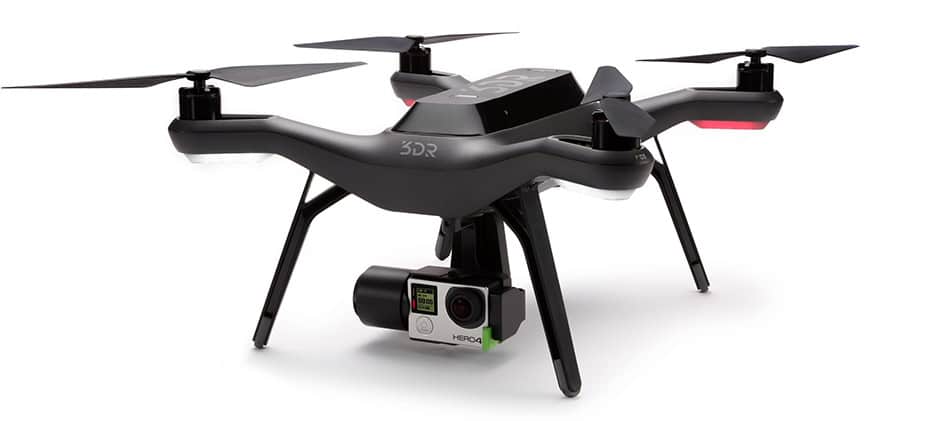
Are you interested in the world of drone and drone technologies? Have you wondered what the best apps are that you can use in conjunction with your drone? While flying your drone with a remote is cool, using an app can make the experience even better.
From being able to capture amazing videos and photos, to allowing others to operate your camera while you are using it, the technology is expanding and ever growing. It can be hard to keep up with the latest technology, but we try! Below, we will show you the top 5 apps that we have found to be useful with drone technologies, so you can enhance your fun outdoors.
Hover
If you are looking for an app that will help you find not only good weather, but giving great launching points to take off. Hover takes information from a database of no-fly zones as well as live weather information. With the live weather information, the app can also give you a tracking of how the weather will change over coming hours. This helps you determine when you should fly and for how long.
The detail that this app offers is amazing, and you can safely fly in areas, knowing they are open fly zones. You can operate this app with your drone simply and designate how high you want your drone to fly and when to capture the imagery or beauty of nature. Overall, you won’t be disappointed when pairing this app with your new drone.
This app works surprisingly well and is simple to operate. You can even check your flight logs. It is a must-have app for both drones and UAV piloting. You get a flight readiness indicator too as well as a news feed to keep you updated. Find Hover on both Android and Apple products.
Autopilot
Great for spy drones and regular drones, the Autopilot app that works with various brands to expand the versatility of your experience. You can move the camera in several ways and even track objects with it. It offers a smooth way to take amazing shots and video.
You will definitely feel like a professional while using this app with your drone. The imagery is amazing and you can use either the autonomous or semi-autonomous modes of flight. You can also use control sequences!
This app also takes in more information as you fly your drone, and you can use this information in many ways, including technical issues and locating certain problems. Overall, this is a great app that is detailed and can be found at the Apple store.
Parrot Flight Plan
If you purchased a Parrot drone, you get access to the free app called FreeFlight Pro. This gives you the basics of flying the drone, using the controls and giving you previews of the images. However, you can upgrade to the Parrot Flight Plan for just $20 and get more function out of it.
Not only can you plan a flight with this app but you can send it to the drone and it will automatically fly that path. You control how high you want the drone to fly and find waypoints so that the drone can complete the flight path.
With this version, you can control the camera and when you want to record video. You can create flights and save flight plans, too. Find this app at the Apple store and it is updated regularly to keep your app up to date.
GoPro Passenger
When you are out using your GoPro Karma drone, you can use the app for it called GoPro Passenger. This allows other people to view the video you are taking that is attached to your new drone. As if that isn’t cool enough, the person viewing your video can control the camera by zooming, panning and tilting the camera just like a pilot.
So, if you go on vacation and climb a mountain, your friends can watch you succeed, in real time, and can also control the camera so they can take in the beauty around you as you share your adventures with them! You can find this app on both the Android and Apple store. Your friends will love you for it.
Pix4D
If you are looking for more out of a drone app, then Pix4D might be for you! Using photogrammetry, you can create a 3D model from an image that is 2D, like your drone videos! The app creates a path for your drone to fly, and then it uploads the video and all data to the Pix4D server.
The Pix4D app seems to take your regular drone and make it seem professional with the mapping tools. It’s great that it captures images by itself, as well as other data such as multi-spectral, thermal and RGB information. This helps you get the best mapping and 3D models for your drone.
Keep in mind that this app will not work with all drones, so you should check to see if yours is compatible. However, it is a free app that works well and gives you top-notch software.
Now you can have an image of something that your drone flew over, which can stand as a memory or piece of art for your home. All you need is a drone, 3D printer and this app to engage more with drone technologies! You can find this app for both Apple and Android devices.
Conclusion
So that’s it! You now have the top 5 apps that can work in conjunction with your phone to enhance your drone adventures! There is new technology coming out all of the time, but with these apps you can feel like you are in the future now, with all of the great enhancements! Now that you know a few things about drones and using apps, we hope these can be helpful to you on your next adventure!
About Author:
Jack is a true drone passionate and he focused his education on this amazing field. Thus, he graduated the Drone/UAV Pilot Training Certificate program and now he’s a member of the Association for Unmanned Vehicle Systems International. His main purpose right now is to find and develop new features and help others discover the wonderful experience of flying a drone. For this, he is the main editor and content creator at MyDroneLab Blog where you can find everything you want to know about drones.
UK budget will clear the way for self-driving cars
The UK doesn’t want to sit by the wayside while the US, Japan and other countries streamline the adoption of self-driving cars. The country’s finance ministry has revealed that its upcoming budget (due on November 22nd) will include measures intended to spurt the adoption of self-driving and electric cars. There will be rule changes that let automakers test vehicles on public roads without an operator on standby, and a £400 million (about $529 million) fund to help companies establish charging station networks. Officials will also offer £100 million ($132 million) in incentives to lower the cost of buying an EV.
There are a few other tech-related budget measures, such as £160 million ($211 million) for 5G networks, £100 million for computer science teachers, £76 million ($100 million) for skill development and £75 million ($99 million) for the UK’s budding AI industry.
The budget contributions may be necessary given the UK’s ambitious goals. Finance minister Philip Hammond wants self-driving cars to roam British streets as soon as 2020 — that’s not a lot of lead time when companies like Nissan only recently started conducting public tests. And while EV funding isn’t new (that was present in the Spring Budget, for instance), but the additional money could help create the infrastructure needed to keep autonomous vehicles running. There’s no guarantee that any of these measures will put the UK ahead of the curve on driverless tech, but it should at least keep the nation from falling behind.
Source: Reuters
One of Tesla’s first Semi truck buyers is a Canadian grocery chain
Tesla only just unveiled its Semi electric truck, but it’s already lining up honest-to-goodness customers — and we don’t just mean for testing, either. Canadian grocery chain Loblaws has pre-ordered 25 of the giant EVs to haul food to its stores across the country. That’s a larger purchase than Walmart (which ordered 15 for its test), and no small commitment when Tesla hasn’t even revealed the (likely high) price. It may seem odd for Tesla to score one of its most important orders beyond the US, but it makes more sense knowing Loblaws’ strategy.
The supermarket giant recently committed to a 30 percent reduction in its overall carbon footprint by 2030, and it sees electric trucks playing an important role. It estimates that pulling diesel from its vehicles would be the equivalent of pulling 20,000 cars from the road. Tesla’s Semi would clearly help toward that goal, and it might be a better option than existing electric trucks (like one Loblaws bought from BYD) if it lives up to claims of faster trips and greater safety.
This is very unlikely to be Tesla’s largest order, but it gives a sense of who its early customers are likely to be: well-heeled companies that have plenty of cargo to transport and pressure to fulfill environmental commitments. The real challenge comes after that: Tesla will have to persuade companies that either don’t have a huge budget or are only interested in how electric trucks will affect their bottom line. Tesla has anticipated that to some extent (it’s promising $200,000 in fuel savings for every 1 million miles), but success is far from guaranteed.
Via: TechCrunch
Source: Financial Post
Pentagon left public intelligence gathering data on exposed server
Even intelligence gatherers aren’t immune to making mistakes that leave data wide open. Researchers at UpGuard have revealed that the US military’s Central Command and Pacific Command left “at least” 1.8 billion collected internet posts exposed on a misconfigured Amazon Web Services S3 server. Some of the data goes as far back as 2009. There doesn’t appear to be any private content in the mix, and it’s not clear that malicious intruders accessed it before the Department of Defense locked things down on October 1st (after notification from UpGuard). However, the exposure still raises concerns about both the government’s approach to security and the kind of information it’s collecting.
A large part of the data includes content that you’d expect the military to scrape, such as news articles and social network posts relating to ISIS as well as politics from hotbeds like Iraq and Pakistan. Some of it included social posts from Americans, however, and the discussions included relatively innocuous subjects like American music stars and the Pope. That raises questions about what criteria triggered the data collection (certain keywords, for example) and whether or not its search is overly broad. While it can be important to cast a wide net, this could hurt more than it helps.
And of course, the misconfiguration suggests that officials weren’t diligent in keeping information secure. It might have been public data, but a hostile country could have studied the information to see what the US military was looking for and taken steps to keep its public material under the radar.
The good news: this could be less common going forward. Amazon recently added indicators and other measures to make it patently clear that S3 server data is publicly accessible. Even so, the incident suggests that intelligence collectors may need to rethink their security policies to make sure this kind of exposure can’t happen again.
Via: CNN, PCMag
Source: UpGuard
 AIVAnet