


VW taps Google’s quantum computers to help develop EV batteries
Quantum computing is all the rage lately, with companies large and small looking for ways to create the technology and then use it to solve a range of issues. Microsoft has a new coding language for quantum computers, Intel has created a test chip for the new tech and scientists are looking for ways to use corkscrew light beams for future practical quantum computing applications. Now Volkswagon and Google are teaming up for comprehensive research in the field, looking to use quantum computers and AI to create better EV batteries, something that Toyota is also pursuing.
The two companies also want to work on traffic optimization (a key development for an autonomous-automobile future) and new machine learning processes. The announcement was made at a 2017 Web Summit in Lisbon, and said that Volkswagen specialists in San Francisco and Munich will work with Google’s universal quantum computers.
“Quantum computing technology opens up new dimensions and represents the fast-track for future-oriented topics,” said Volkswagon’s CIO Martin Hofmann in a statement. “We at Volkswagen want to be among the first to use quantum computing for corporate processes as soon as this technology is commercially available. Thanks to our cooperation with Google, we have taken a major step towards this goal.”
Via: 9to5Google
Source: Volkswagen
Facebook’s revenge porn prevention test has users upload photos
The Australian government and Facebook have teamed up in the fight against revenge porn. As the Australian Broadcasting Corporation reports, alongside Australia’s Office of the eSafety Commissioner, Facebook has launched a pilot program aimed at not just curtailing the spread of revenge porn once it begins, but preventing it altogether.
In April, Facebook announced that it had developed a set of tools that could help stop the spread of sensitive images once they were reported through its site. If the subject of those images told Facebook that the photos had been shared without their permission, Facebook’s image-recognition technology would then spot those images if someone attempted to share them again, essentially preventing them from being reposted to Facebook or Instagram or shared repeatedly through Messenger. Now, Facebook is using that technology for prevention in the hopes of stopping those images from being posted on Facebook-owned platforms in the first place.
Australia is the first country to test this new system and here’s how it works. If you were worried that someone may post intimate photos of you online, you would first let the Office of the eSafety Commissioner know. After filling out a report and answering a few of the office’s questions, the office would then notify Facebook of the report. Then, and here’s the part that might surprise you, you’d be asked to send the images in question to yourself through Facebook messenger. Facebook’s technology would then kick in and block any images it recognized as duplicates of the ones you sent yourself.
“They’re not storing the image, they’re storing the link and using artificial intelligence and other photo-matching technologies,” eSafety Commissioner Julie Inman Grant told the ABC. “So if somebody tried to upload that same image, which would have the same digital footprint or hash value, it will be prevented from being uploaded.”
Combating revenge porn has been a focus of Australia’s eSafety Commissioner, whose office just last month launched a national portal to help victims of revenge porn. And while Australia is the first to test Facebook’s program, the company has said it’s looking to test it in other countries as well. According to Mashable, the US, UK and Canada are the pilot program’s next stops.
How easy it will be for determined individuals to beat Facebook’s system will remain to be seen and while some might question how safe it is to deliberately upload their own intimate photos to Facebook Messenger, Grant is confident in the system’s security. “We have a great deal of comfort that they have chose the most secure route … we want to empower people to be able to protect themselves and take action, we don’t want to make them vulnerable,” she said.
Via: The Verge
Source: ABC
Renault’s self-driving car can avoid obstacles like pro drivers
The Renault Group announced today that its autonomous vehicle control system can avoid obstacles just as well as professional test drivers. The company said that in designing the system, it was actually inspired by these drivers’ abilities and used them as a sort of benchmark as to what level its technology should be performing.
“Despite popular belief, the reality is that human beings are pretty amazing drivers, with less than one fatality per 100,000,000 kilometers in most developed countries,” Simon Hougard, director of the Renault Open Innovation Lab, wrote in a Medium post. “Reaching and exceeding that benchmark is essential to improve safety and realize our dreams of autonomous cars, providing more productivity during our morning commutes and robo-vehicle services in city centers.”
The technology is a result of Renault’s collaboration with Stanford University Dynamic Design Lab Director Chris Gerdes, who’s also a former US Department of Transportation Chief Innovation Officer, and Renault says it will help with its goal to be one of the first companies to bring “mind off” technology to the public. At what speeds the system can maintain that accuracy isn’t quite clear, but a demo that TechCrunch was able to take part in was working at speeds below 30 mph. The avoidance capabilities were tested in Renault’s autonomous Zoe prototype — dubbed Callie — and you can check them out in the video below.
Successfully avoiding objects will be a necessary feature of any autonomous system and while the slew of companies working on bringing their own versions to the market are all tackling that problem, some have found some surprises during the process. For example, Volvo recently discovered that its self-driving cars get tripped up by kangaroos and their hopping.
Renault says it’s still working on the system but that it should be useful in the 15 Renault vehicles and 40 Renault-Nissan-Mitsubishi Alliance vehicles with autonomous technology that it hopes to have on the market by 2022.
Source: Renault (1), (2)
Navya puts its self-driving shuttle tech in an autonomous taxi
Uber and Lyft have been racing to apply autonomous technology to their ridesharing platforms, but Navya might have beat them in the race for the first self-driving taxi. Today, the company announced its Autonom Cab vehicle, which is built to haul up to six people around cities without a driver.
The Autonom Cab is essentially a smaller, higher-speed version of Navya’s self-driving shuttles that have been roaming around the University of Michigan and will start plying Las Vegas’ roads tomorrow. While those drive at around 15 miles per hour, the Autonom Cab will zip around city streets at an average of 30 mph, carting people to and from their destinations. And just like the shuttles, the Cab doesn’t have a driving wheel or pedals, meaning it’s built to be level 5 autonomous and require no human input to move.
Navya’s just introducing a new vehicle, not a service; They’re leaving all the ridesharing infrastructure heavy lifting to companies that want to buy the Autonom Cab. But given the inroads Navya has already made in University of Michigan and Las Vegas, they could get their new self-driving taxi on more US streets.
Source: Business Wire
Israeli company claims Apple copied its dual-camera tech
Whatever you think of your dual-camera iPhone, there’s one company that’s less than thrilled. Israeli startup Corephotonics is suing Apple for allegedly infringing on patented technology with the cameras in the iPhone 7 Plus and 8 Plus (it’s likely none too pleased about the iPhone X, for that matter). Corephotonics says it pitched Apple about a potential alliance, only to be shot down and see Apple implement dual cameras on its own. The plaintiff company even claims that Apple boasted it could infringe on patents without fear. Apple’s negotiator said it would take “years and millions of dollars” before the iPhone maker would have to pay if it did infringe, according to Corephotonics’ version of events.
We’ve asked Apple for comment and will let you know if it can provide its take on the situation.
The case may be more complicated than it seems at first. Apple has its own dual camera patents, so it’s clearly been exploring the idea. Corephotonics may need to show that Apple couldn’t have developed the iPhone’s dual cameras independently. Also, it may have to demonstrate that negotiations played out as described. There have been more than a few lawsuits where plaintiffs swore they’d informed tech giants about patents — Corephotonics’ detailed account of this is uncommon, but the court will likely want more tangible proof.
The one certainty is that this isn’t a fly-by-night lawsuit. Corephotonics got into dual camera technology relatively early, and it has worked with big-name partners like Samsung Electro-Mechanics and OmniVision. Whatever the truth, Apple can’t brush this off.
Source: Reuters
Taylor Swift’s Upcoming Album Won’t Be Immediately Available on Apple Music and Other Streaming Services
Taylor Swift’s new album “reputation” will not be available on streaming music services like Apple Music for at least a week after it launches, reports Bloomberg.
Swift’s representatives began notifying streaming music services about the upcoming limitation this week. The album reportedly will not be available for streaming during the first week of sales, and companies are still negotiating to determine when exactly it might be made available.
“reputation” will be available for purchase in retail stores and online stores like iTunes starting on Friday, November 10. If there is a one week waiting period, it could become available on Apple Music starting on November 17.
Swift has been an outspoken streaming music critic, and back in 2015, she wrote a letter to Apple Music executives lambasting the service for initially refusing to pay royalties to artists during the three-month free trial period.
Apple changed its policies following her comments, leading to a closer relationship between Swift and the Apple Music team. For a time, Apple Music had exclusive rights to Swift’s music catalog after she refused to make her music available on Spotify because of its free ad-supported tier.
“I think there should be an inherent value placed on art,” she said at the time. Swift later reversed course and allowed her music on non-Apple Music services. With her refusal to release her new album on streaming music services at launch, Swift joins other artists like Adele who have made similar decisions. Adele’s “25” was not available on streaming services for months after it launched.
At the current time, several singles from the new album, including “Look What You Made Me Do,” “Gorgeous,” “Ready For It?” and “Call It What You Want.” The full 15-track album can be pre-ordered on iTunes for $13.99.
Tag: Apple Music
Discuss this article in our forums
iPhone X Camera Overview: Portrait Lighting, Video Improvements, Front-Facing Portraits and More
With each new iPhone, Apple introduces significant camera improvements, a practice that has established the iPhone as one of the most popular cameras for photography on sites like Flickr.
The iPhone X, as Apple’s new flagship device, is no exception. It features new hardware and new features that have established it as the best iPhone camera to date, on par with dedicated point and shoot devices and even DSLRs in some modes. With the iPhone X now widely available, we spent some time with the iPhone X’s rear and front-facing cameras to see just what they can do.
Subscribe to the MacRumors YouTube channel for more videos.
There’s an all new rear camera in the iPhone X, with two lenses arranged in a vertical orientation, a first for an iPhone. Apple chose a vertical orientation because of space constraints and design changes that required more available surface area for the front-facing TrueDepth camera.
The rear camera has a standard f/1.8 12-megapixel wide-angle lens that’s paired with an f/2.4 12-megapixel telephoto lens. Sensors in both lenses have been improved, and the lower aperture of the telephoto lens means it’s able to let in a lot more light for sharper images in poor lighting conditions.

In addition to sensor improvements, Apple has introduced a new color filter for more vibrant photos, and there’s a new Apple-designed image signal processor that can detect elements in a scene for faster autofocusing and optimization of scene elements before an image is even captured.
Both rear lenses support optical image stabilization for the first time, for better photo quality in all lighting conditions, and better than ever portraits when using Portrait Mode.

There’s also a new front-facing camera system, the TrueDepth camera, which is what powers Face ID with its dot projector and infrared camera and sensors. There’s also a high-quality f/2.2 7-megapixel camera built into the TrueDepth system for taking selfies.
With the TrueDepth camera, the front-facing camera in the iPhone X now supports Portrait Mode right alongside the rear camera, so you can create Portrait Mode selfies with an artfully blurred background. Both the front and rear-facing cameras also work with the new Portrait Lighting feature for dynamically adjusting the lighting in a photo.
Photo taking isn’t the only improvement in the iPhone X. The rear-facing camera supports 4K video capture at 60 frames per second and 1080p slo-mo video at up to 240 frames per second, both significant improvements over previous-generation devices. New video stabilization techniques, the aforementioned larger sensor, and the new image signal processor all go a long way towards improving video quality.
Along with this detailed look at the iPhone X’s camera, we’re going to be sharing a lot more iPhone X content over the course of the coming week, so make sure to stay tuned to MacRumors.com and subscribe to our YouTube channel if you haven’t done so already.
Related Roundup: iPhone XBuyer’s Guide: iPhone X (Buy Now)
Discuss this article in our forums
Apple Releases Second Beta of macOS High Sierra 10.13.2 for Public Beta Testers
Apple this afternoon released the second beta of an upcoming macOS High Sierra 10.13.2 update to public beta testers for testing purposes, one week after releasing the first public beta and more than a month after releasing the High Sierra operating system. The second public beta of macOS High Sierra is identical to the second developer beta provided to developers earlier this week.
Beta testers who have signed up for Apple’s beta testing program will be able to download the new macOS High Sierra beta through the Software Update mechanism in the Mac App Store.
Those who want to be a part of Apple’s beta testing program can sign up to participate through the beta testing website, which gives users access to iOS, macOS, and tvOS betas.
macOS High Sierra 10.13.2 appears to focus primarily on bug fixes, performance improvements, security enhancements, and other under-the-hood updates. No major outward-facing features were found in the first two developer betas.
The previous update, macOS High Sierra 10.13.1, addressed a serious WPA 2 vulnerability and introduced new emoji.
Related Roundup: macOS High Sierra
Discuss this article in our forums
iPhone X Case Review Roundup 2: Casetify, Caudabe, and Incipio
Apple’s new iPhone X brings the first major design overhaul in years, so I’m taking a look at a wide range of iPhone X cases from different manufacturers to see what’s available. This is my second review roundup post, which covers Casetify, Caudabe, and Incipio.
My first review roundup on cases from Twelve South, Nomad, Speck, and Apple can be found here, and in the coming days, I’ll have additional review roundups that highlight many other cases.
For all of my reviews, I’m looking at the general usability of iPhone X cases. Extreme drop tests and in-depth testing aren’t covered because those factors are less important than how a case works on an average day, and it’s often fairly easy to tell from design how protective a case is going to be.
Factors like bulk, button accessibility, grip, thickness, and appearance are what I focused on. With the removal of the Home button, button presses are more important, and there are a surprising number of cases out there that make the buttons a lot more tedious to press.
All of the cases in today’s review roundup support wireless charging and I’ve confirmed that each one works with a Qi wireless charger I have on hand.
Casetify
Casetify offers a huge selection of cases for the iPhone X, some of which are customizable and some of which are more standard case designs.
I’m a fan of Casetify’s customizable cases, and I’ve ordered them several times in the past. They’re essentially clear cases that you can add your own images to, or choose one of hundreds of designs from artists.
There are three base customizable cases: the Snap Case ($35), the Impact Case ($45), and the Glitter Case ($45), which has a layer of liquid-filled glitter inside of it.
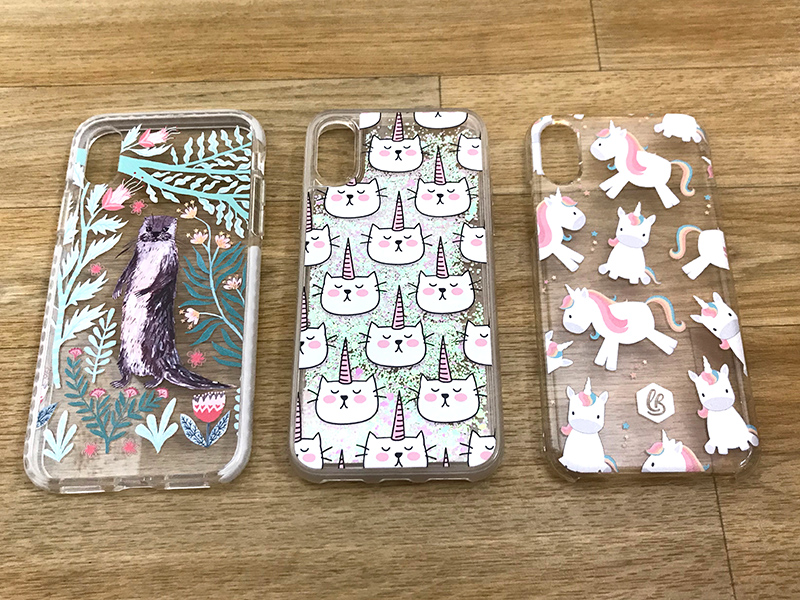 From left to right: Impact Case, Glitter Case, Snap Case
All of these are clear, hard plastic cases that snap onto the iPhone, but the Snap Case is a simple little shell that leaves the bottom and side buttons exposed, while the Impact Case and the Glitter Case cover all of the buttons and offer protection for the bottom of the phone.
The Snap Case is the most minimal of the three customizable case options, while the Impact Case is somewhat bulkier. The Glitter Case is the thickest of the bunch because it needs dual layers for the layer of liquid glitter to float around. It looks neat, but it adds a lot of bulk. Glitter and Impact both cover the buttons but leave them usable and easy to press, and all three cases have a bit of a lip that comes up to protect the display.
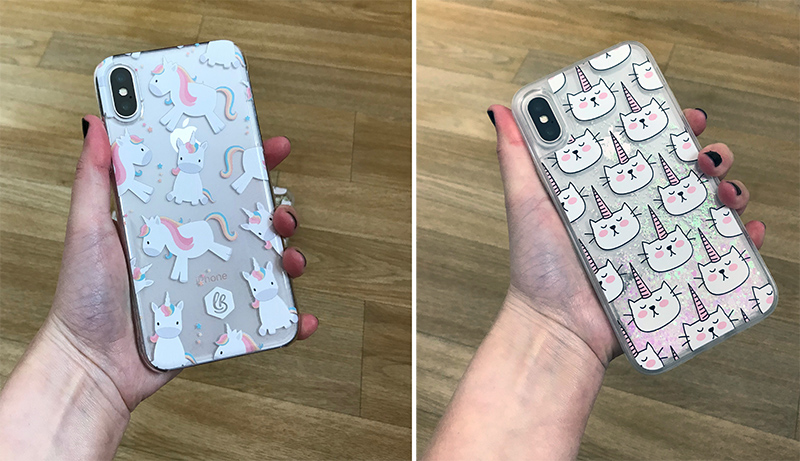
Casetify’s customizable cases are great because (with the exception of the Glitter Case) they’re lightweight, add a decent amount of protection, and look however you want them to look. I love the look of the glitter in the Glitter Case, and while it adds a little too much rear thickness to the iPhone X for my taste, I’m still going to use it.
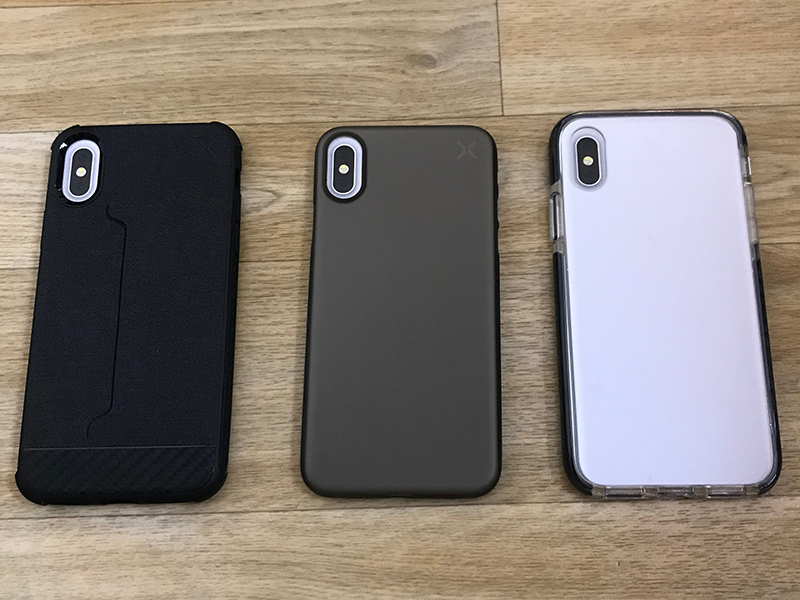 From left to right: Essential Woven, Essential Skin, Essential Impact
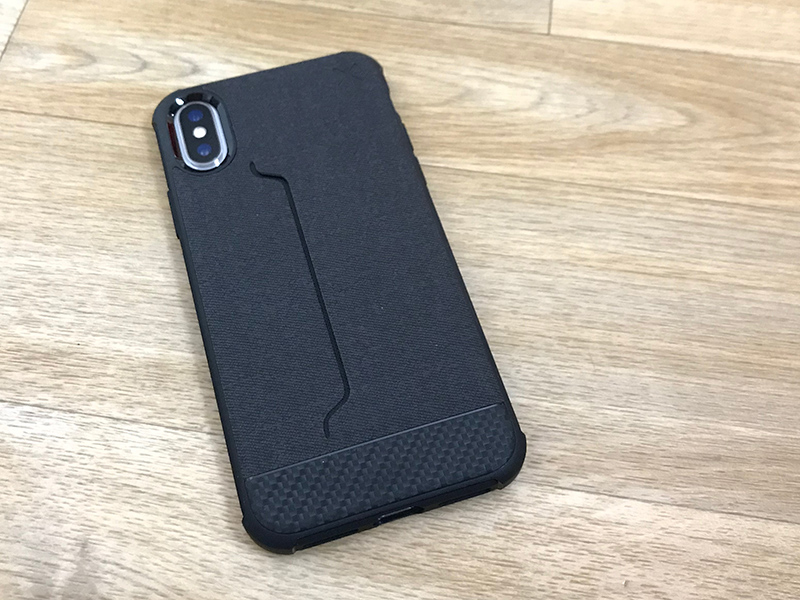
Casetify also makes non-customizable cases, several of which are sleek and stylish. The Essential Snap ($28) is a lightweight, hard shell case that has a rough texture that’s easy to grip. Darker cases pair the best with the iPhone X’s black front bezels, and the black rubber rim of this case paired with the fabric back looks great. This case isn’t as thick as some of the others I’ve tested, but it’s going to keep the iPhone X safe from scratches and minor drops.
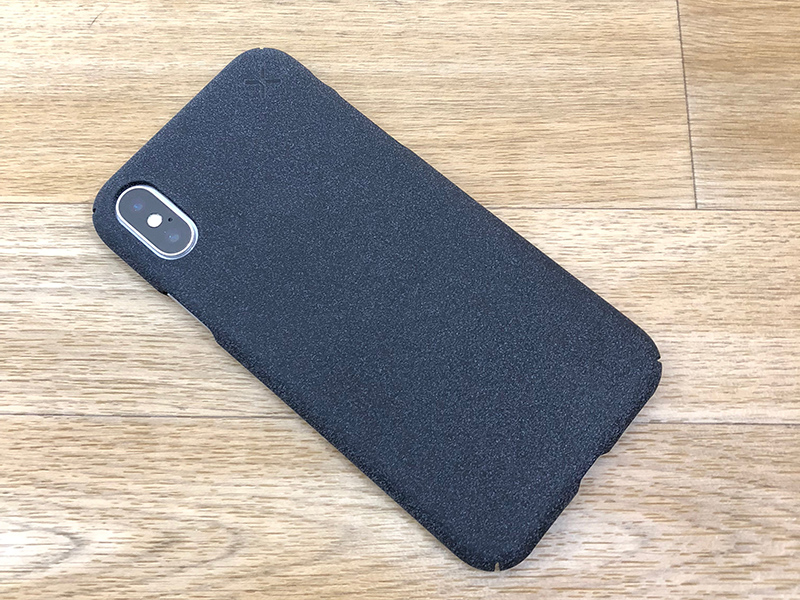 Essential Snap
The Essential Woven Card Case ($40) is similar in design to the Essential Snap, but it features a slit on the back that can hold a few cards and it has a rubber rim. The Essential Impact ($45) is a clear case with a hard plastic back and flexible, shock absorbing rubber edges, and like the rest of the Essential Cases, it has a lip that protects the display.
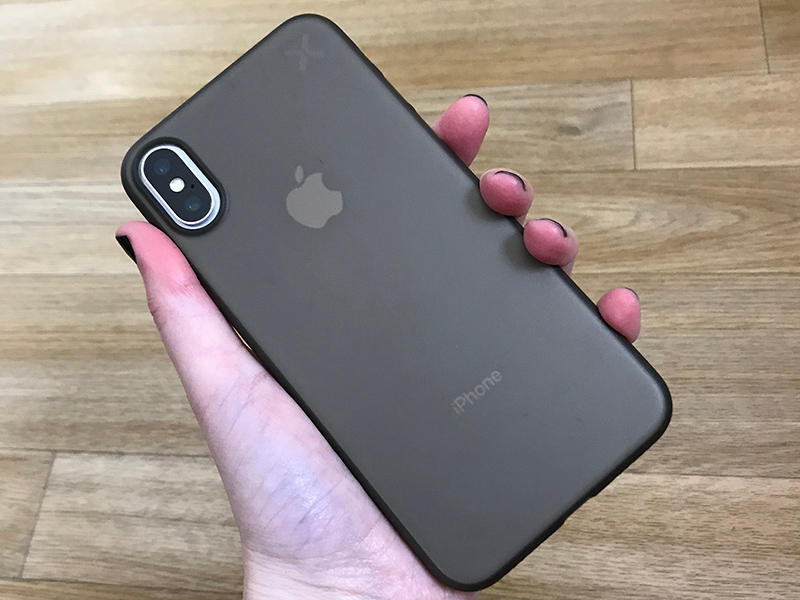
Casetify’s final case is the Essential Skin ($25). The Skin is a super slim plastic-style ~0.3mm case that’s similar to other cases sold by several brands. It offers only scratch protection and isn’t going to do much if you drop your phone. It also doesn’t have any display protection.
Incipio
Incipio is a well-established iPhone case maker with several options for the iPhone X, and all of the cases I tested are relatively slim but seem to offer a decent amount of protection. Each case wraps all the way around the iPhone X, covering the buttons and the bottom of the device, and they all come up over the screen just a bit to protect the display when face down. It’s worth noting that most of these Incipio cases have prominent branding in the form of a large Incipio logo on the back of most of the cases.
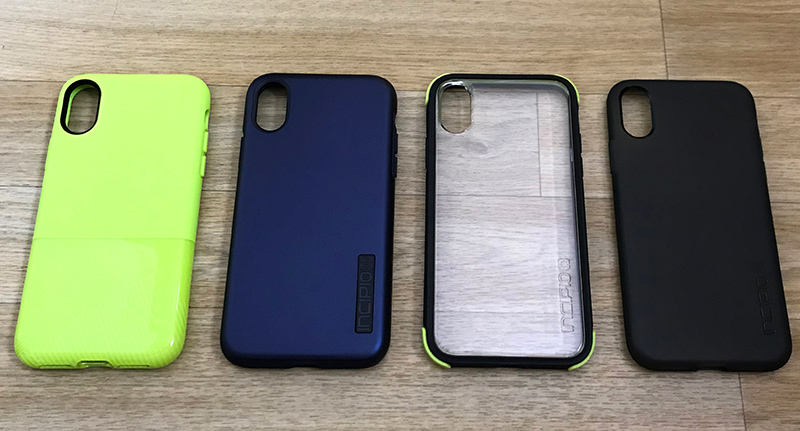 From left to right: NGP Sport, DualPro, Reprieve Sport, and Siliskin
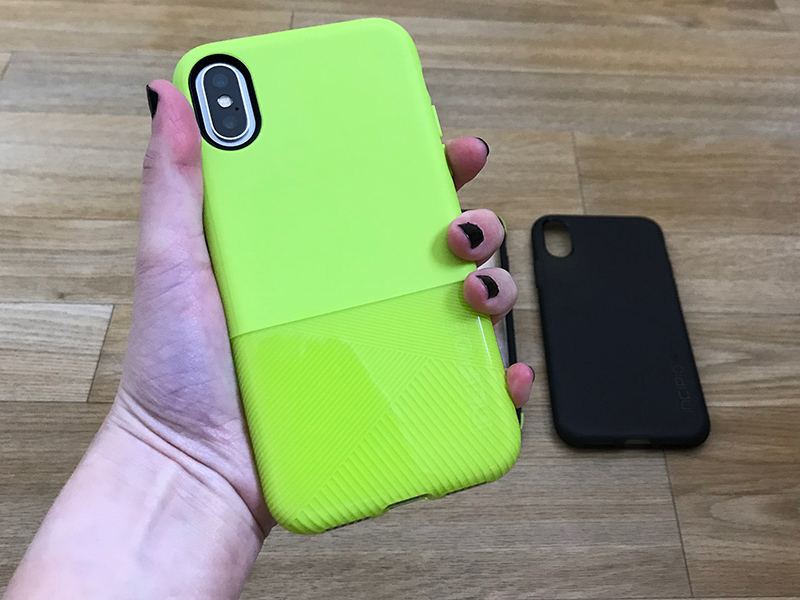
The NGP Sport ($29.99) is made from a soft, malleable material available in several bright colors. I much prefer soft cases to hard shell cases because they’re easier to get off and feel better able to absorb shock when dropped on the ground. The NGP Sport has nice soft buttons that are easy to press. It’s a bit thicker than the Apple Silicone case (as a point of reference) but it’s not adding too much bulk to the phone, and it has a nice two-texture design. The material it’s made from is smooth and untextured for the most part, so it’s a bit hard to grip.
The Reprieve Sport ($39.99) is a hard plastic clear case with rubber that wraps around the sides and extra reinforcement at the corners. It’s about as thick as the NGP Sport, but the clear back is nice because it lets the design of the iPhone X shine through. I like the reinforced corners paired with an extra thick lip around the display, as both make this case feel more protective than the average iPhone case. I’m not a huge fan of the color combo, but Incipio offers several options.
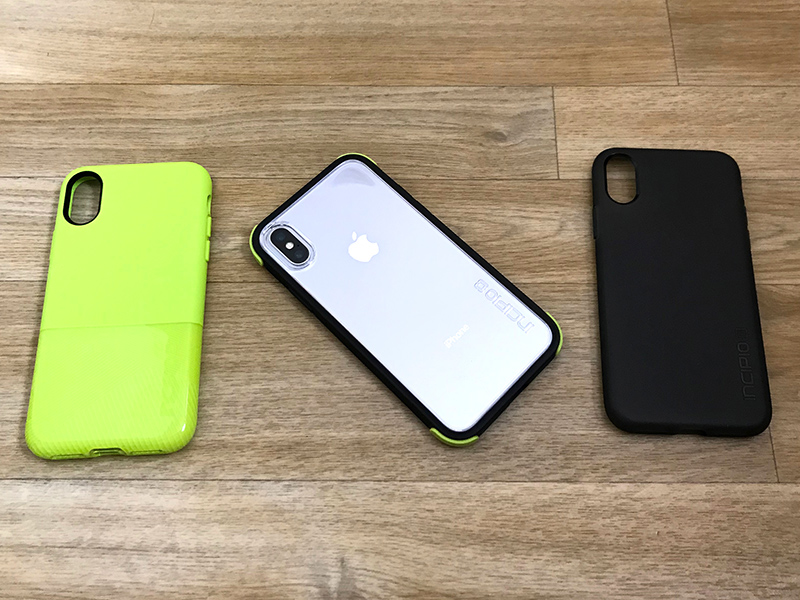 From left to right: NGP Sport, Reprieve Sport, Siliskin
The Siliskin ($29.99) may be my favorite case from Incipio. It’s made from a malleable rubber material that’s thin but still offers some light protection. It’s not going to be as protective as something like the Reprieve Sport, but it’s almost unnoticeable on the phone, adds a good amount of grip, is designed in such a way to leave the buttons easy to press, and is just plain nice to hold.
The DualPro ($29.99) is one of the most protective cases that Incipio makes. It has a two layered design that pairs a thin, flexible internal case with a hard outer shell, which is nice because it’s versatile. If you want, you can remove the outer shell to have a thinner case, snapping it back on when you need additional protection. The inner case is not quite as slim as the Siliskin, but it’s close, and paired with the outer shell, it’s the thickest of Incipio’s offerings.
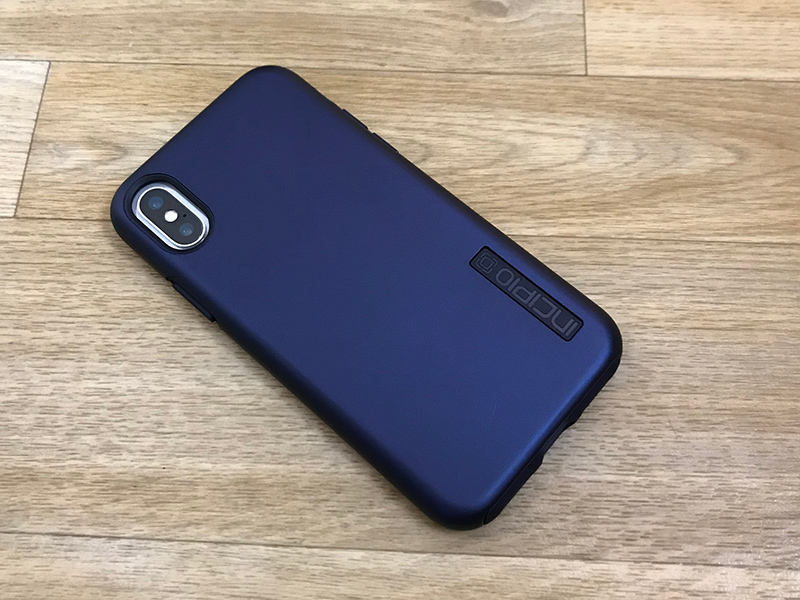
When I say thick, though, it’s still worth noting that it’s fairly slim – this doesn’t add a huge amount of bulk and seems to be a nice compromise between thickness and protection. Buttons are a little bit harder to press because they’re covered, and I do wish the material offered more grip, but it’s a nice case.
Caudabe
Caudabe seems to specialize in cases with a minimal design, something that will appeal to people looking for slim cases with muted colors and nearly invisible branding.
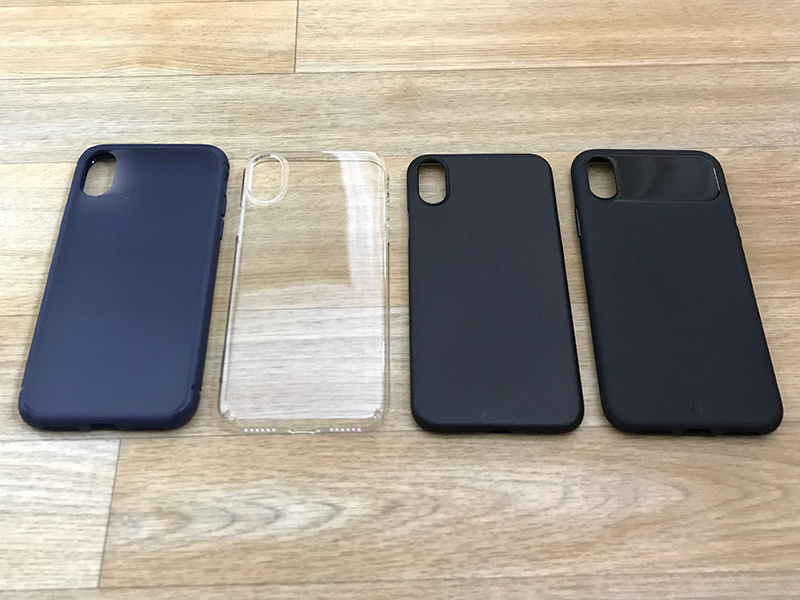 From left to right: Synthesis, Lucid Clear, Veil XT, and Sheath
The Lucid Clear ($24.99) is a plain, slim clear case made of hard plastic that’s the best option I’ve seen if you want something unobtrusive that’s going to offer a small amount of protection without obscuring the design of the iPhone X. It has a raised lip to keep the display of the iPhone X from touching a surface when face down, and it leaves buttons exposed so they’re easy to press.
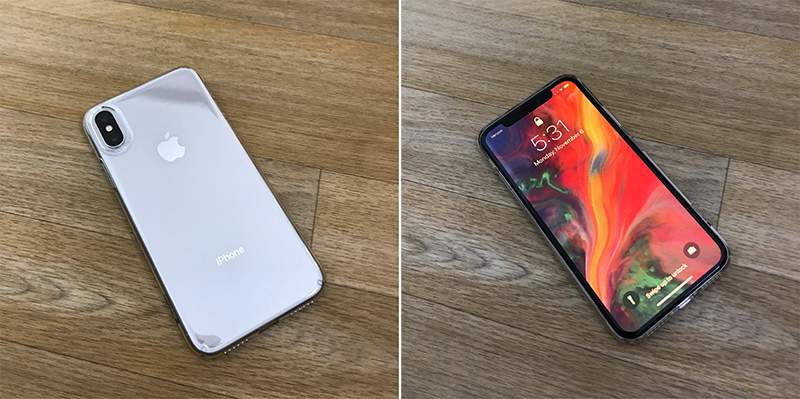
The Veil XT ($19.95) is a super slim 0.35mm plastic case that’s going to protect from scratches but not drops. It’s identical to the Essential Skin from Casetify, but cheaper, and it’s worth noting that several other companies also make cases like this. These types of cases are the absolute thinnest you’ll find because they’re made of plastic not much thicker than a sheet of paper.
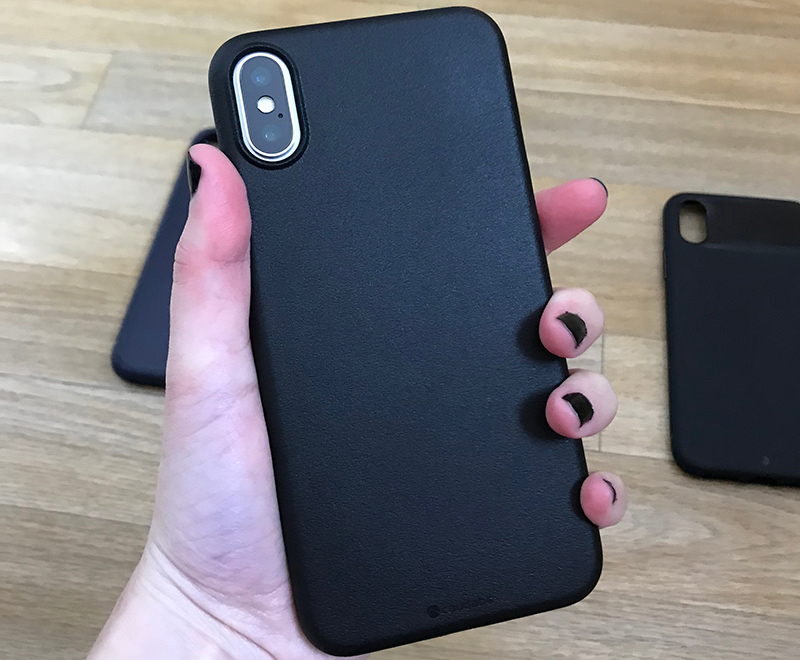
The Sheath ($24.95) is a plain black case that’s made from a flexible rubber material. It covers the volume and power buttons, but since it’s such a malleable material, it doesn’t impede their functionality. It has a little bit of a raised lip and offers protection all the way around the phone, and it’s actually not too much thicker than the Veil XT. This is a good compromise if you want thin but with a little more protection than you’ll get with the ultra thin cases. This is one of my favorite cases of the bunch because it’s thin without being so thin that it offers no benefits.
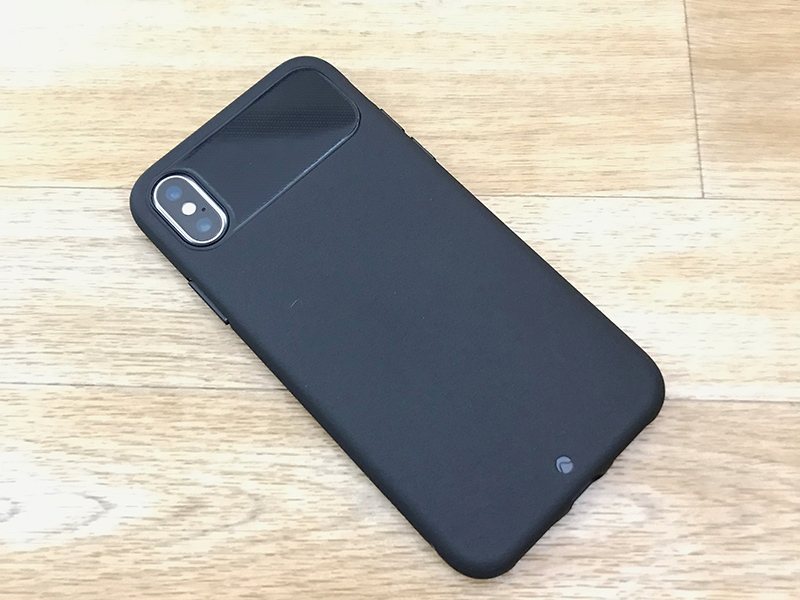
The Synthesis ($29.95) is Caudabe’s thickest, most expensive case. Comparatively, I’d say this is about the same thickness as the Apple Silicone case. It’s still fairly slim, as far as cases go, and the hard plastic material it’s made from wraps around the iPhone X and covers the buttons. This case suffers from a problem that plagues many cases with hard plastic — the buttons are hard to press. It doesn’t have much shock absorption, but the hard back and the plastic lip seem like they’ll offer decent protection from minor drops. The hard plastic material is, however, hard to hold onto because it has no texturing.
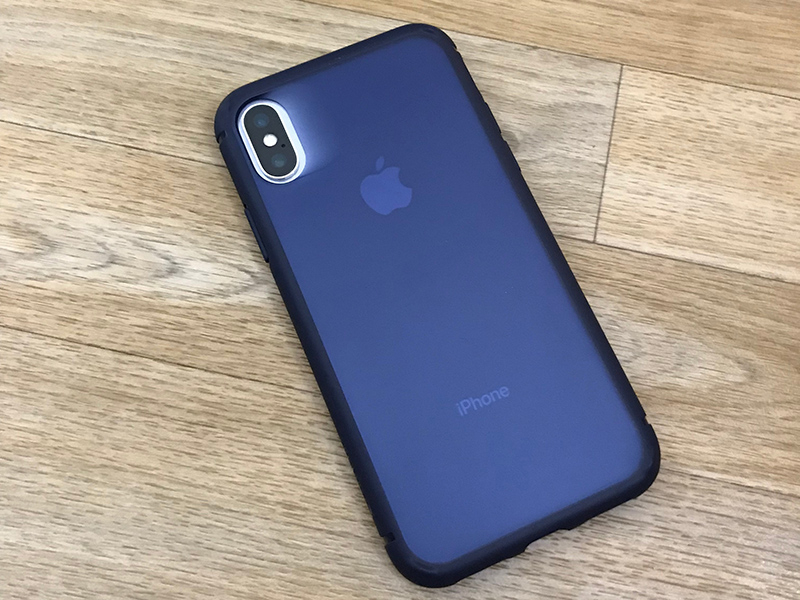
Bottom Line
These manufacturers all produce cases that are fairly minimal, and I was a fan of a lot of these. I’ve never dropped a phone, so I tend to prefer cases that are thin and lightly protective, and if you’re the same way, give Caudabe’s Sheath and Incipio’s Siliskin a look. I loved both of these.
If you only need scratch protection, Casetify’s Essential Skin and Caudabe’s Veil XT are some of the thinnest iPhone cases on the market, but there’s no real protection from drops. The most stylish of this bunch definitely goes to Casetify’s Essential Snap, which is as slim as the Siliskin but made from a more rigid, textured material that looks sharp and is easy to grip.
For thicker cases that offer more protection without being overly bulky, Incipio’s Sport XT and Caudabe’s Synthesis are worth checking out, and for customization, Casetify is a must.
Since this was a brief look at the cases available from several different companies, I’m happy to provide additional photos and answer questions about any of the cases listed down in the forums. I’ll be covering additional cases from companies like Nodus, X-Doria, MagBak, Spigen, Otterbox, Peel, and more in roundups that will be shared later this week and next week.
Note: Caudabe, Casetify, and Incipio provided MacRumors with iPhone X cases for the purpose of this review. No other compensation was received.
Discuss this article in our forums
Snapchat plans a big redesign to attract more users
Rounding up the collection of tech companies releasing performance results this quarter is new kid on the (trading) block Snap Inc. According to its third-ever public earnings report, Snap continues to add daily active users (DAU) at a relatively slow growth rate of 3 percent. That translates to 4.5 million new users for the app, bringing the total number to 178 million. That’s a far cry from the 800 million DAU on Instagram, which saw 100 million new users in less than half a year.
In the company’s prepared statement accompanying the results, CEO Evan Spiegel admitted that “we grew our Daily Active Users at a lower rate than we would have liked”. He added that “this can be partially attributed to our decision to report our Daily Active Users as an average over the entire quarter, where a strong September was offset by the more modest months of July and August.” Still, the company wants to focus on driving user growth in 2018.
To attract more Android users, the company is rebuilding its Android app to optimize performance. Having seen more Android users joining after improving performance in that app, Spiegel said in the statement “we wish we had done this sooner.” The new version of the Android app will be launching in select markets before a wider rollout, although the company hasn’t disclosed a timeframe for this.
It’s also redesigning Snapchat overall in response to feedback that the app is “difficult to understand or hard to use.” The redesign will focus on a few areas, including updating “streaming architecture for Story playback” so that you no longer have to download an entire video file before initiating playback. This could make it faster to start playing a clip, but could potentially lead to buffer delays due to spotty signals.

Snap also wants to reach people in what it calls “Rest of World markets” that don’t have as speedy or affordable internet access as more-established regions. It is exploring “partnerships with select wireless carriers who can help us to provide our service at a lower cost to our community.”
Part of the redesign also involves tweaking the content section of its app to feature the many original shows and news programs that tend to be hidden away. The company hasn’t shared details on what this will look like, but said that “there is a big opportunity to surface some of this content in a personalized and more relevant way, while still maintaining the exploratory nature of our service.” It’s likely that shows will be served up to users based on their viewing or sharing habits.
Snap also said it will open up its Lens Studio tool to let more people create AR filters, just as it gave the public access to Geofilters before.
In the last quarter, Snap has added filters and more ad tools to its app, formed a mobile-only studio with NBC, launched AR art installations and sold dancing hotdog costumes on Amazon. The latter is a strangely appropriate second foray into selling physical products, following the company’s video-recording Spectacles.
The company didn’t mention either product in its report this quarter, aside from a mention of the $39.9 million inventory charges related to Spectacles. This was “primarily related to excess inventory reserves and inventory purchase commitment cancellation charges.” Once the initial hype was over, it seems people just aren’t buying Spectacles anymore.
Source: Snap Inc
 AIVAnet