


Apple Nixes Elvis Presley Biopic Series From The Weinstein Company Amid Scandal
Apple has opted not to move forward with an Elvis Presley biopic series produced by The Weinstein Company following a sexual harassment scandal involving founder Harvey Weinstein, reports The Hollywood Reporter.
The Apple Music project with The Weinstein Company was in the early stages of production, and would have seen Apple airing a 10-part Elvis biopic. It was reportedly one of four music-related projects that Apple had in the works with The Weinstein Company, with the others set to feature Michael Jackson, Primce, and Frank Sinatra.
Apple first established the deal with The Weinstein Company ahead of the June hiring of Sony executives Jamie Erlicht and Zack Van Amburg, and the Elvis biopic was the only one of the four projects that was nearing development.
The Elvis series was first announced in September of 2016, but at that time, Apple’s involvement was not known. It was developed alongside the Presley estate, with the estate offering access to the entire Elvis Presley music catalog, cars, clothing, and Elvis’ Graceland home.
Apple’s decision to end the project comes following a Thursday report from The New York Times that detailed the decades-long sexual harassment history of founder Harvey Weinstein. Weinstein was fired from The Weinstein Company over the weekend, and sources have told The Hollywood Reporter that the company will change its name shortly.
(Image via Elvis.com)
Note: Due to the political nature of the discussion regarding this topic, the discussion thread is located in our Politics, Religion, Social Issues forum. All forum members and site visitors are welcome to read and follow the thread, but posting is limited to forum members with at least 100 posts.
Tag: Apple Music
Discuss this article in our forums
Apple Working on Fix for Reachability Bug in iOS 11
Apple is working on a fix for a Reachability bug that prevents the new iOS 11 Cover Screen with Notifications from being accessible from the middle of the iPhone’s display, Apple engineering chief Craig Federighi told a MacRumors reader this afternoon.
In an email to Federighi, MacRumors reader Michael asked the following question:
Ever since iOS 11 was released as a beta, the ability to invoke the Notification Center from the middle of the screen during reachability was removed. This was an incredibly useful feature as one didn’t have to awkwardly try to take ones’ thumb all the way back to the top even though reachability was invoked—defeating the whole purpose of it for one crucial task.
If this was done by design I fail to see the purpose or any benefit whatsoever to its removal. If it’s a bug, I hope Apple can get around to finally fixing this mistake/oversight.
Federighi replied to Michael’s email with a short “We are fixing it” note, confirming that the issue will be addressed in a future version of iOS 11.
Reachability, accessible by tapping (not pressing) twice on the Home button, is designed to bring down the entire top portion of the iPhone’s display so it is within thumb’s reach for one-handed access to all of an iPhone’s apps.
The iOS 11 Reachability bug has not been well publicized, but a few readers on the MacRumors forum have previously complained about it.
In iOS 10, when the Reachability gesture was used, a swipe down at the middle of the screen just above the app line brought down the Notification Center. In iOS 11, the Notification Center and the Lock Screen have been merged into one, so a swipe down in the middle of the iPhone’s display should bring down the Lock Screen Cover Sheet to display a user’s Notifications, but it doesn’t work.
To access Cover Sheet Notifications in iOS 11, users need to swipe down from the very top of the iPhone’s screen, meaning there’s no way to access Notifications one-handed through Reachability at the current time.
It’s not clear when the Reachability fix will be implemented, but it is not available in iOS 11.1 beta 2, which was released this morning. Today’s update did, however, bring back the 3D Touch App Switcher, another feature that iOS users have been missing.
Related Roundup: iOS 11
Discuss this article in our forums
Mophie Powerstation USB-C XXL review: 19,500mAh of battery for phones and laptops
We’re celebrating ten years of AndroidGuys with a ton of giveaways!
With more and more devices coming with USB Type-C ports, it becomes increasingly valuable to have a charger or power bank with support. Not only are most new Android phones standardized with USB-C, so are a lot of laptops, tablets, and other gadgets.
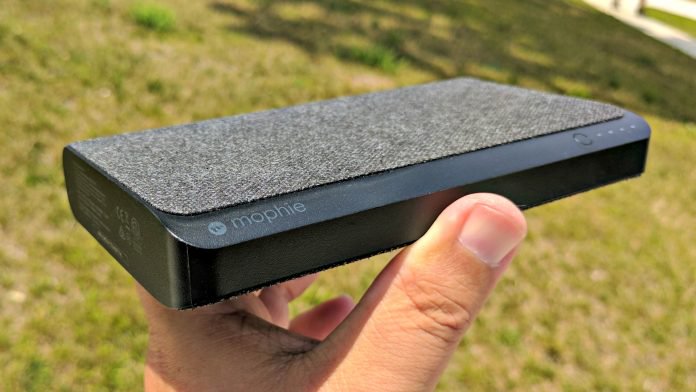
One of the newest portable batteries on the market, the Mophie Powerstation USB-C XXL, is designed to power not only phones and other mobile devices, but even a MacBook. That fact is front and center in its marketing; it’s only found in Apple stores, Apple.com, and on Mophie’s website.
Priced $150, it’s a high-capacity battery that can fill an average phone six or more times over. The 19,500mAh unit is strong enough to fully charge a 12-inch MacBook and most of the way for a MacBook Pro.
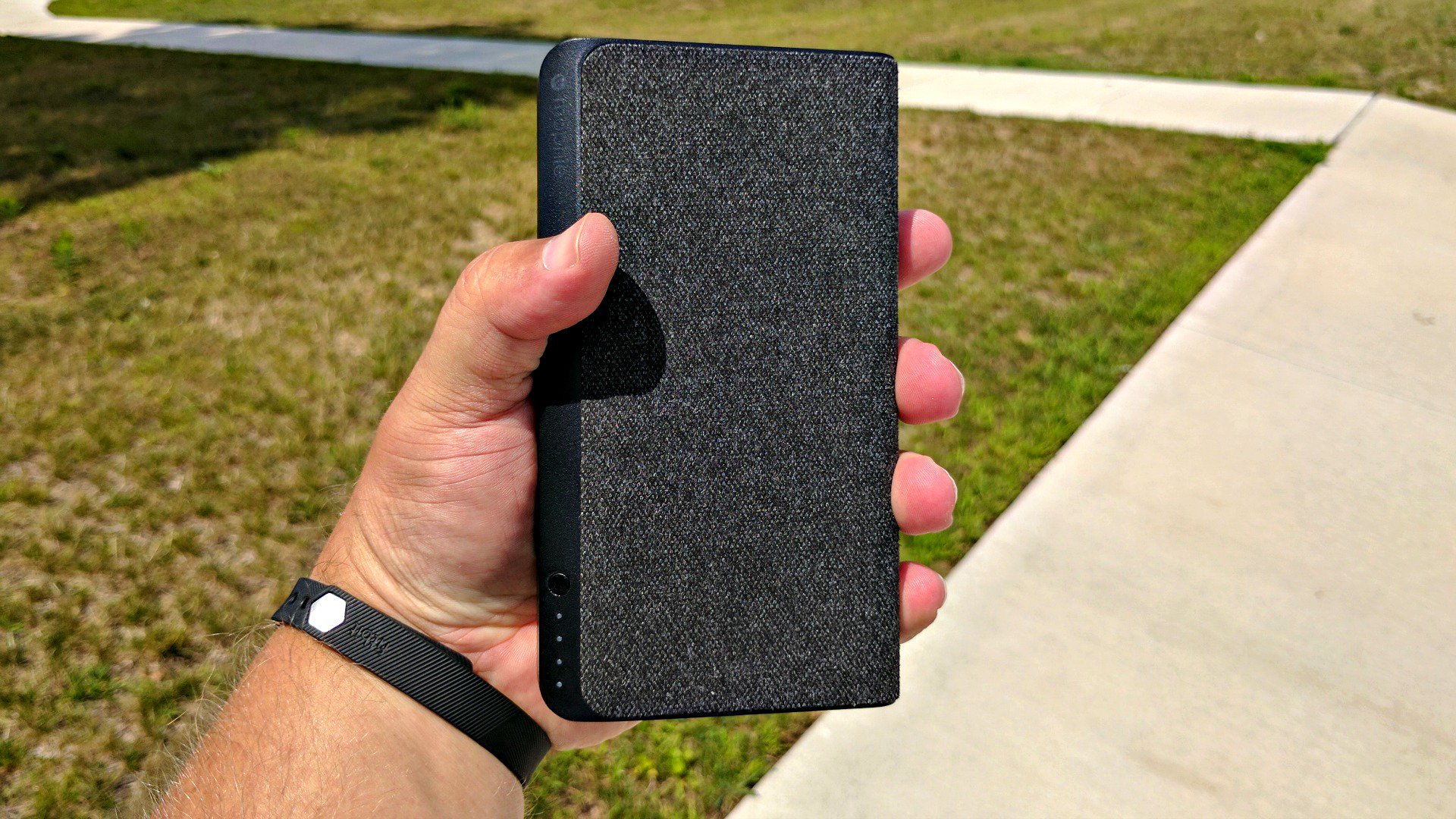
We’ve played with one of these chargers over the last few weeks and have come to appreciate not only its juice, but the aesthetics, too. See, Mophie has wrapped this one in a soft fabric that feels great in hand, Moreover, it looks great, and has a blackish-grey that classes up anything in comes in contact with.
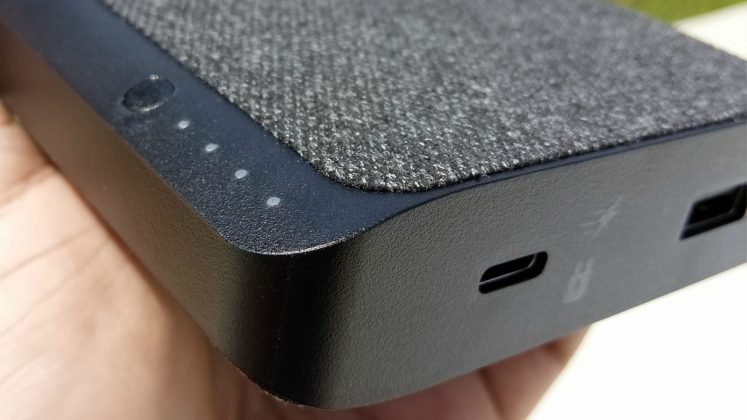
In addition to the USB-C port, the Mophie unit also houses a standard USB-A port and supports simultaneous dual charging. Also, it allows for fast charging of laptop batteries at up to 30 Watts, with the USB-A port handling 5-Watt charging.
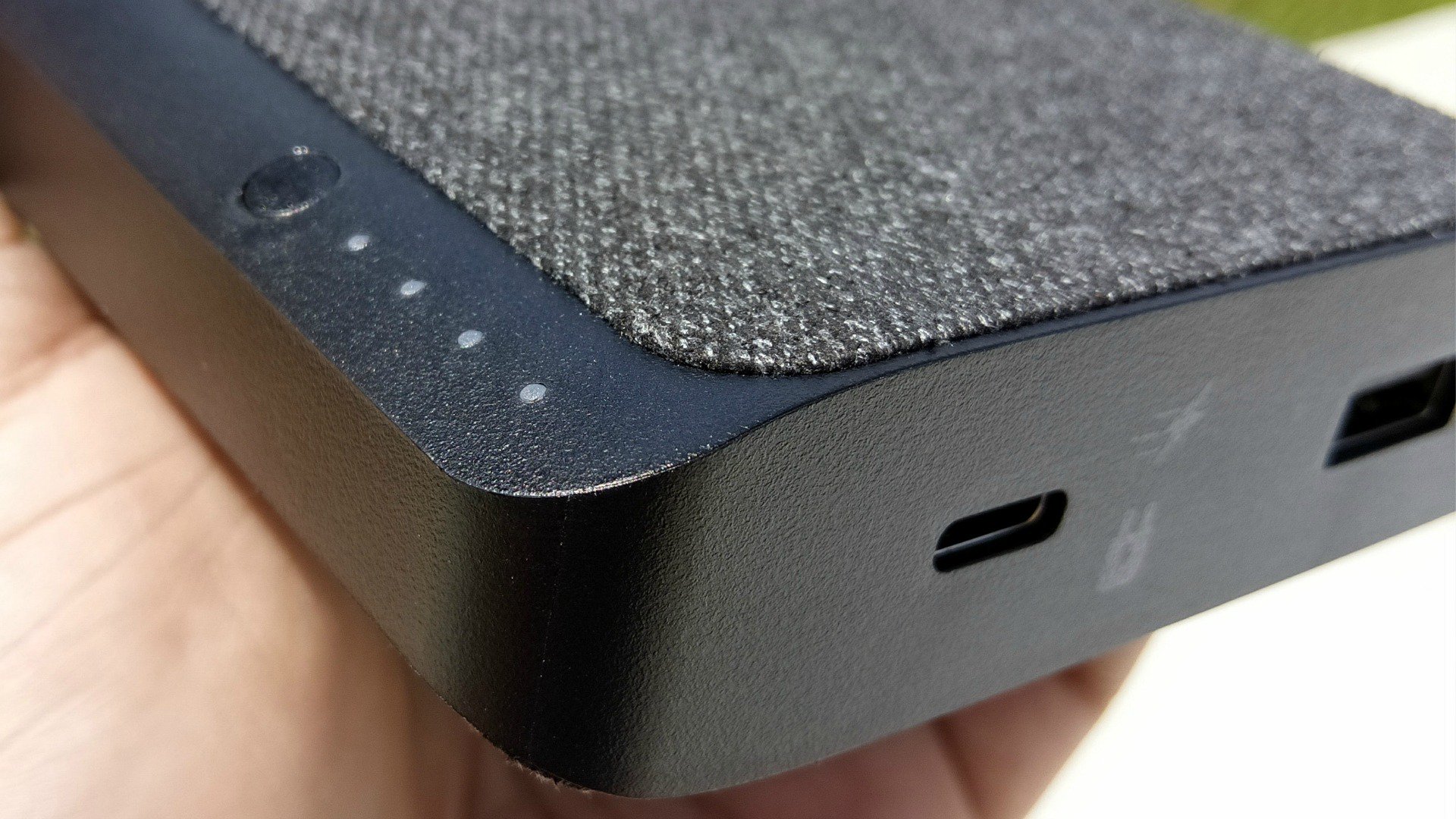
Stand the charger up on its side and you’ll find it has four small indicator lights. These allow an at-a-glance view at how much battery is left inside. Our experience with typical phones puts about two full phone charges in for every 25% light. If you’ve got a flagship model with a 3,000mAh battery or higher, you’ll get about three charges for every two lights.
According to Mophie, the Powerstation can be recharged in as few as three hours when used with 29W USB-C power adapters. Included in the box are two cables: USB-C to USB-C and USB-C to USB-A.
We liked were the ability to press and hold the button to switch the USB port to power input when charging from a computer. More importantly, though, we were fans of the
Priority+ Charging which is essentially pass-through charging that sends juice to your device first, recharging the Powerstation (USB-A port only) secondarily.
1 of 6
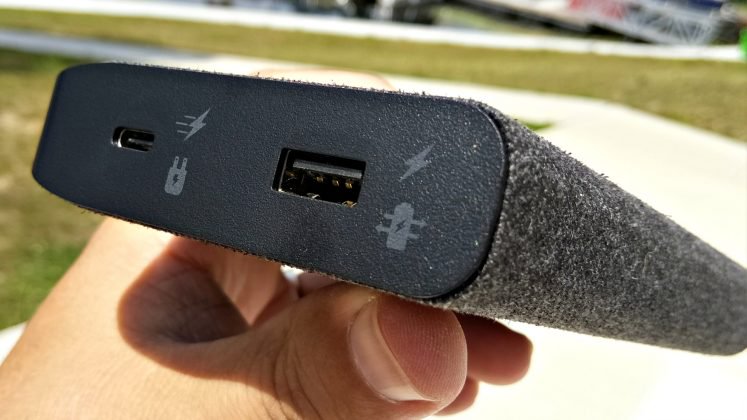
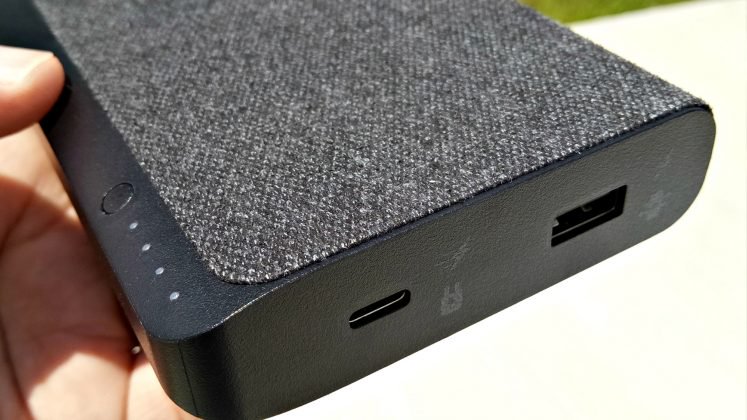
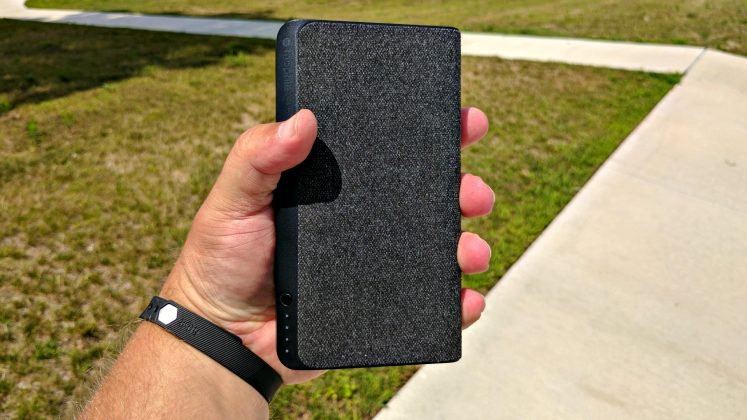
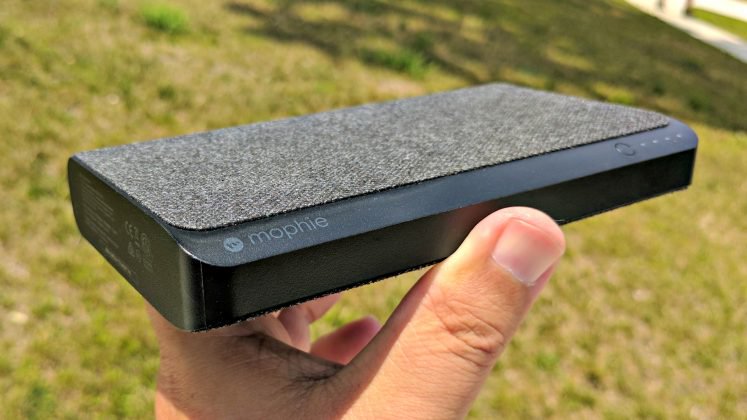
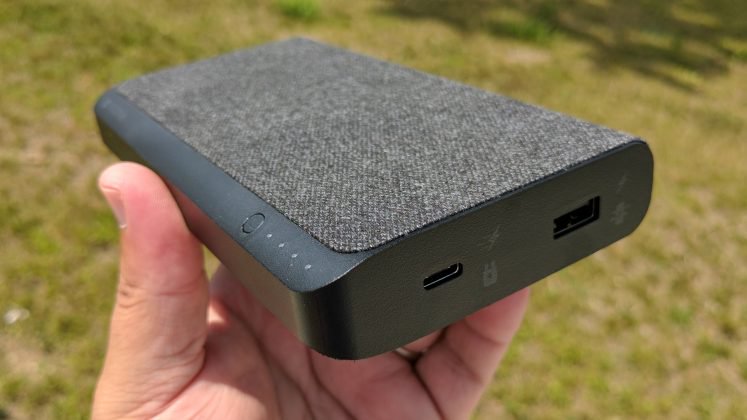
At $150 the Mophie Powerstation USB-C XXL doesn’t come cheap. But, when you think beyond having this as a backup for your phone, it becomes more valuable. It’s not all that heavy and fits nicely in a bag. There’s no reason not to buy one of these if you live in a house with a growing number of Type-C products. The fabric is a nice touch, too, and dresses things up.
Afghanistan will soon have free mobile access to Wikipedia
Afghanistan has been rapidly improving its technological infrastructure since the Taliban was ousted in 2001. A group of film historians in the country recently digitized films that had been saved from destruction during Taliban rule. An all-girl robotics team fought a recent travel ban and finally got the chance to compete in the US. And in 2010, the country moved ahead with plans for national electronic ID cards. Now, thanks to a partnership between regional provider Roshan and the Wikimedia Foundation, people in Afghanistan will get free access to Wikipedia via their phones for the next year.
According to the Independent, the Wikipedia Zero initiative is set to launch in the region later this month. It will give anyone in Afghanistan full access to Wikipedia including search and editing abilities. The access will not count towards users’ data plans, either. Considering that Roshan just added 4G service last month, this is a big step forward. Wikipedia Zero has been providing free access around the globe since August of 2012, and has since added more than 60 operators in 50 other countries to the list.
“At Roshan, we are proud to have been leading the efforts to increase access to information,” deputy CEO of Roshan, Altaf Ladak, said in a statement. “The partnership with the Wikimedia Foundation expands the frontier of access to information and knowledge, especially for Afghanistan’s youth who make up almost two-thirds of the population.”
Source: Independent
iPad Pro could be Apple’s next device to use Face ID
It’s safe to assume that the face recognition system in the iPhone X will eventually reach other devices, but which ones are next in line? KGI’s Ming-Chi Kuo might have an idea. The historically accurate analyst expects the next generation of the iPad Pro to adopt the TrueDepth camera and, by extension, Face ID. This would unify the experience across Apple’s mobile devices, the analyst says, and would spur developers knowing that they could use face recognition across multiple Apple devices, not just one handset. The new iPads would ship sometime in Apple’s fiscal 2018, which ends in September of next year.
There’s another question to be answered: if this happens, will the Touch ID fingerprint reader go away? It’s not so clear. Apple clearly took advantage of eliminating the home button to expand the iPhone X’s screen size, but that’s not as necessary on devices that already have large displays. Also, Apple has typically kept larger bezels on the iPad due to its size — you need at least some space for your thumbs on a device that you can’t easily hold in one hand. We’d add that it could complicate multitasking, since Apple already uses an upward swipe on the iPad’s bottom edge to bring up the app dock. How would you handle that while also using a swipe to go to the home screen?
Whatever happens, it would make sense for the iPad Pro to get face recognition. Apple has made a habit of bringing relatively new features to its higher-end iPads (such as upgraded displays and the Smart Connector), and TrueDepth might be one more reason to spring for a Pro instead of sticking to the base model. And if Apple is going to continue pushing augmented reality, it’ll want tablets that particularly well-suited to the task regardless of the camera you’re using.
Source: 9to5Mac
New medical superglue seals large wounds almost instantly, prevents scars
Why it matters to you
New superglue sealant could be quicker than stitches, and permit a prettier end result.
When repairing damaged organs and tissues, surgeons will often use staples or sutures. Skin glue can also sometimes be employed, but this is only for the most superficial of wounds. Until now, that is. That’s because a team of researchers from the U.S. and Australia have developed a new hyperelastic type of surgical superglue, called MeTro, which could be used as an alternative to staples or sutures — minus the scarring risk.
“We have developed a material based on natural proteins that is both sticky and elastic,” Ali Khademhosseini, an associate faculty member at Harvard’s Wyss Institute for Biologically Inspired Engineering, told Digital Trends. “The protein is based on elastin, which is normally expressed in elastic tissues in our body, such as lung and vessels, and provides the tissue with mechanical resilience and elasticity. This material can be used in surgical applications to seal incisions, such as in the case of sealing air leaks after resection of lung tumor. Since the material is both strong and elastic, it can be used in applications that previously required sutures. Also the material can degrade as the tissue is formed.”
MeTro has so far been demonstrated in studies with rats, where it was able to help close up incisions in arteries, as well as punctures in lungs. It has additionally been demonstrated in pig lungs, where it was used to seal up wounds even when the lungs were repeatedly inflating and deflating. “We have shown that the material can be used in large animal models,” Khademhosseini continued. “The next step would be to try to develop a clinical trial where it can be used in humans. This would require a significant level of funding and potentially commercial partnership.”
Extrapolated to humans, Khademhosseini said that MeTro could be utilized for closing incisions after surgery. It could also potentially be used to treat serious internal wounds on site in scenarios like major car accidents or war zones.
In addition to Harvard University, other institutions involved in the research included Northeastern University, Boston’s Beth Israel Deaconess Medical Center (BIDMC), and the University of Sydney in Australia. A paper describing the research was recently published in the journal Science Translational Medicine.
Security firm says Equifax made it far too easy to access salary and job data
Why it matters to you
If you thought that Equifax’s recent data breach was the only thing to worry about, guess again.
One of the more notorious data breaches in 2017 was the Equifax hack that exposed the private information of roughly 145 million Americans. The Equifax breach is particularly troublesome because of the company’s status as a central clearinghouse for some of the most sensitive information that’s stored online. Now, it appears that the company’s lax security extends beyond basic security and may have made salary and employment information far too easy to access.
The news comes via KrebsonSecurity, which broke the story on October 8, 2017. Apparently, Equifax TALX, a service that is used for automatic verification of income and employment history data that’s used when someone applies for a loan, has utilized authentication procedures that are far too easy to bypass. Simply put, accessing the data is far too easy for anyone with access to information — such as social security numbers and dates of birth — that has been readily available for many people thanks to past data breaches.
The TALX system should only be accessible by credentialed companies such as banks and employers. As KrebsonSecurity discovered, however, many accounts can be accessed merely by entering an employer name and a complete or partial social security number. Then, the PIN that’s requested is in a majority of cases just a date of birth in easily guessed formats. Once validated, some very juicy information is available, including salary and employment history that dates back a decade or more.
Even the system’s advance authentication can be bypassed if the TALX customer failed to fully populate all the relevant information, and in many cases, detailed instructions on how to complete the authentication forms is available online. That makes it far too easy for nefarious parties to guess at how to successfully authenticate and gain access to the system.
If you’re concerned about your information being made accessible to unauthorized parties, then KrebsonSecurity provides a way to help safeguard your data:
“Fortunately, you can reduce the likelihood that an acquaintance, co-worker, stalker or anyone else can do this by claiming your own account, changing the PIN, and selecting a half-dozen security questions and answers. As always, it’s best not to answer these questions truthfully, but to input answers that only you will know and that can’t be found using social networking sites or other public data sources.”
As KrebsonSecurity notes in an update, Equifax has taken the TALX portal down for scheduled maintenance. It’s unknown whether that’s purely coincidental or if it’s in response to the story that was published yesterday. In addition, some commenters on the original story indicated that additional steps are being added that should help, although the data is still too easily accessible for anyone who’s willing to do the necessary research.
These photos show off the Google Pixel 2’s camera in all its glory
Why it matters to you
If you’re looking for a phone with a great camera, these shots prove that the Google Pixel 2 could be the phone for you.
The original Google Pixel and Google Pixel were both highly praised for their cameras, and it looks like the new Google Pixel 2 and Pixel 2 XL will be no different. In fact, camera benchmarking site DxOMark has given the cameras in the two new phones the highest rating for a smartphone camera ever — which is no small feat.
Of course, nothing beats real-world use — and we now have some of our first real-world photos of the Google Pixel 2’s camera in action. No surprises here — they look pretty good. The photos were taken by Google employee Isaac Reynolds, so take them with a grain of salt, but Reynolds does claim that the photos are unedited, which is good news.
The Pixel 2’s camera is pretty full-featured and offers all the tricks you would expect from a high-end camera. offers a 12.2-megapixel sensor with an f/1.8 aperture and both optical image stabilization and electronic stabilization. It also boasts dual-pixel phase-detection autofocus to keep those shots nice and crisp.
The photo gallery itself shows off almost 40 shots from the Pixel’s camera, including in a pretty wide variety of lighting conditions and settings. As a report from 9to5Google notes, the photos were clearly taken during testing, as some of them date back as far as July, proving that Google has been working on the camera in this phone for quite some time. That work really seems to have paid off.
You might already know that the Pixel does not have a dual camera, but that doesn’t mean it’s not capable of a decent portrait mode — in fact, as the photos demonstrate, the camera produces a pretty nice bokeh effect in portrait shots thanks to a combination of machine learning and dual-pixel technology.
We also get a pretty good look at Google’s motion stabilization technology, thanks to a video posted in the gallery. It seems as though the stabilization has only gotten better since the original Google Pixel. The video shows an unstabilized and a stabilized video side by side, and the results are pretty impressive.
The Google Pixel 2 and Google Pixel 2 XL are both available for purchase now, and you can check out our buying guide to figure out where to get them for yourself.
Waste your time like you mean it by following the best Instagram accounts
In 2012, Facebook purchased Instagram, then a promising photo-sharing app, for a cool $1 billion dollars. In just a few years the app had swelled to more than 700 million users and a value of approximately $50 billion. (Talk about return on investment.) Based on data recently released by the photo-sharing app, individuals somehow manage to spend nearly 30 minutes a day perusing Instagram. While this time could be presumably spent doing something more productive, the app certainly does have its merits. In fact, based on the inherent photographic documentation and location data, a team of researchers with Cornell University recently claimed Instagram could be a useful anthropological tool.
While this may be true, the majority of us simply use to the platform in search of the dankest memes, cat photos, and epic fails. Nonetheless, with each post, share, and elusive like, we are still technically doing our part to make sure this truly wonderful chapter in our species’ devolution is properly indexed. That said, from mouthwatering #foodporn posts to the Internet-famous pets of the Instaverse, here are the best Instagram accounts to help you more aptly waste your own time … in the name of science, of course.
Food
Unless you’re sadly part of the Soylent movement, most of us can appreciate a good nom. That said, with more than 130 million #foodporn posts, foodie culture is alive and well on Instagram. From Aziz Ansari‘s tour de tastes and Lorde’s purported secret onion ring review account, to the delightfully straightforward Hot Girls Eating Pizza, there are plenty of options to choose from.
Tasting Table
While Tasting Table may not be the choicest option for foodies with dietary restrictions, the red-blooded omnivorous among us will drool over the peanut-doused African chicken, grilled cheese donuts, and eggs Benedict hosed in hollandaise. Hell, sometimes, you’re just in the mood for a damn plate o’ bacon. Don’t worry, Tasting Table has you covered there, too.
Food Baby NY
Food Baby NY works with a rather basic albeit wonderful premise: Glamour shots of the choicest food in New York City alongside a cute baby. Go ahead and follow and watch Food Baby take a bite out of the Big Apple one nom at a time. While most of us were probably gargling down stringed something or others when we were Food Baby’s age, she conversely seemingly spends most of her time harming kimchees waffle fries, cavatelli, and vanilla custard doughnuts like there’s no tomorrow. Food Baby is all of us, all of the time. Never grow up, Food Baby.
Food with Michel
Food Envy is very real and Michel will make you feel a certain way with his brimming buckets of chicken and waffles, mac and cheese bread bowls, and smoldering hunks of sauced meats. Go on with your bad self, Michel, but please keep posting.
Vegan Fat Kid
We haven’t forgotten about those who are vegan, and Vegan Fat Kid is one of the more popular #foodporn Instagram feeds out there. Witness some of the best food stories, bomb tostadas, awe-worthy gansitos as VFK eats through Los Angeles.
These amazing science fair projects make your potato battery look prehistoric
Thanks in part to the fact that information is so readily available online, kids today are smarter than ever before. Sure, quick access to distractions like Snapchat and Angry Birds aren’t helping, but games and tools like Minecraft, Tynker, and Parrot are letting kids use their creativity to explore problem solving in ways no other generation has.
But their prowess for problem solving doesn’t stop at the computer. The projects kids make at science fairs nowadays easily beat out the smelly potato batteries and homemade volcanoes you remember making when you were their age. From flying robots to a Lego spacecraft, these are some of our favorite science fair projects.
Lego Loki Launcher
Sisters Kimberly and Rebecca Yeung had one simple mission: Launch their cat into space. Kimberly and Rebecca were only nine and eleven-years-old at the time, but they were able to successfully launch their spacecraft 78,000 feet into the air with a GoPro and tracking devices attached so they could analyze the data and take in the view from (near) space. Lego Loki Launcher was able to take flight with a weather balloon, and once it popped at its peak, a parachute deployed and the craft came back down a mile of its launch site.
Their project caught the attention of President Obama, and it was featured at the final White House Science Fair in 2016. And don’t worry, they didn’t actually send their cat into space, just a picture of him, along with a lego R2D2.
Wearable sensors for Alzheimer patients
Kenneth Shinozuka’s grandpa is one of more than 5 million Americans who suffer from Alzheimer’s. Even though his grandpa lives with him and his family, it was still difficult to notice when he would get out of his bed and wander around, and potentially hurt himself.
So at 15, Shinozuka did something about it. He built a slim sensor for his grandpa to wear on his heel, and every time he stepped out of bed his family would be alerted on their phones via the app he developed. Shinozuka’s work earned him honors at the Google Science Fair, a $50,000 scholarship, and the Scientific American Science in Action Award.
Robots that fly and avoid danger
Fruit flies suck, but Mihir Garimella loves them. Probably because they helped inspire his flying robot design and win him top honors in the 13-14 age category at the Google Science Fair in 2014.
After months of coding and tinkering with sensors, Garimella developed a lightweight sensor module and attached it to a small drone body that he built. Just like a fly, Garimella’s robot can avoid dangers, and he’s hoping that future improvements to his design will allow his robot to be used for rescue missions in unpredictable environments like collapsed buildings.
A robot to clean New York’s subways
High school friends Amro Halwah, Stephen Mwingria, and Si Ya Ni, used to always be late to class.
They’d always be late because they had to take the New York subway to get to school, and the system was always delayed because of rubbish fires in the tunnels. The three of them decided enough was enough, and with the help of a grant from MIT, they built a 100-pound robot that moves on rails and vacuums up debris in the tunnels, so that no more fires could ignite. Their robot isn’t used by subways yet, but it was featured at the White House Science Fair.
Help ambulances move through traffic
Traffic is a nuisance to us, but for ambulances it’s life or death. Viney Kumar realized this after he visited India when he was 14 years old and saw an ambulance stuck in traffic for nearly an hour. It upset Kumar that there wasn’t a better way for ambulances to travel, so he decided to do something about it.
When he went back home to Australia, he started work on a transmitter to alert drivers of when an ambulance is nearby. By installing his transmitter in an ambulance, drivers with Kumar’s app will be alerted when an emergency vehicle is within 800 and 500 meters. This gives drivers 67 seconds to respond to an ambulance, which is way better than the current average of 14 seconds. Kumar’s amazing project won at the Google Science Fair for his age group, and he’s hoping that companies like Google and Apple will consider putting his technology in the dashboards they’re building for cars.
 AIVAnet