


Broadcom’s ultra-accurate GPS chip to be used in smartphones as early as 2018
Why it matters to you
Broadcom’s new chip could make your smartphone’s GPS tracker more than 10 times more accurate as soon as next year.
Today’s GPS technology is ubiquitous, but it’s not always completely accurate — we’ve all experienced annoying moments where the maps app on our smartphones hasn’t quite been able to determine where we are. Now, chip manufacturer Broadcom has announced that big improvements are inbound.
Broadcom took to the Institute of Navigation GNSS+ conference in Portland, Oregon, this week to announce that it is manufacturing the first mass-market chip that’s capable of working with a new form of highly precise global navigation signals, according to a report from IEEE Spectrum. While current devices can generally be located with a margin for error of around 5 meters, these new chips will be accurate to within 30 centimeters.
The chip, dubbed the BCM47755, brings about other improvements. It’s not as badly impacted by interference from skyscrapers and other concrete structures in urban areas, and it reportedly consumes just half as much power as today’s crop of chips.
All global navigation satellite systems that are currently in use utilize a signal known as L1 to communicate the satellite’s location, the time, and a signature pattern used as an identifier. The BCM47755 uses this signal to lock onto the satellite, but then takes advantage of a newer, more sophisticated signal called the L5 to home in on the device’s exact location.
L5 signals are already in use, but typically in industrial applications such as vehicles and equipment used to find gas and oil reserves. Broadcom’s BCM47755 marks the first time that this technology is being applied in a mass-market chip.
Up until now, there haven’t been a huge number of L5 satellites in orbit, so there hasn’t been any rush for Broadcom to dive into offering this kind of hardware. Smartphones haven’t been powerful enough to be compatible — something that the manufacturer managed to work around by implementing a power-efficient manufacturing process, a new radio architecture, and a power-saving dual-core sensor hub.
Broadcom’s chips are reportedly set to be utilized in several smartphones that are scheduled to hit the market in 2018, but the company hasn’t yet mentioned any particular manufacturers or models that will feature the BCM47755.
Photos of Samsung’s upcoming mixed reality headset leak on Twitter
Why it matters to you
With Microsoft’s Windows Mixed Reality ecosystem, companies like Dell and Samsung are able to jump right into the VR race, and giving the VR market some much-needed competition.
Proving yet again that every product will inevitably be leaked well in advance of its release, photos of Samsung’s mixed reality headset showed up on Twitter. According to the photos, leaked by Twitter user WalkingCat, the headset could be a strong competitor to the HTC Vive and Oculus Rift which currently dominate the PC VR space.
Samsung Windows Mixed Reality headset pic.twitter.com/pOelleMpew
— WalkingCat (@h0x0d) September 26, 2017
As you can see from the photos, the Samsung mixed reality headset borrows heavily from the design language popularized by the HTC Vive and Oculus Rift. The touch controllers appear to be either based on the Windows Mixed Reality controllers or that is exactly what they are.
A company like Samsung learning from pioneers in the PC VR space means we might finally see some real competition. As part of Microsoft’s Windows Mixed Reality ecosystem, the Samsung headset will likely borrow technology used in the enterprise-oriented Hololens.
Since we don’t see any external sensors here, it’s likely the Samsung headset will use the Hololens’ version of inside-out tracking, so it knows which way you’re facing without requiring external input — unlike the current-gen Oculus and Vive, which are reliant on the placement of sensors which track your movement and location.
Concrete details about the Samsung mixed reality headset are slim — it’s not even clear if these images are mockups or production images of a product we will see unveiled in the near future. It’s likely that the headset itself, if it exists in this form or another, will share a number of similarities with Dell’s mixed reality headset which is also part of the Windows Mixed Reality ecosystem.
The Dell Mixed Reality headset, aptly named the Dell Visor, features inside-out tracking, and it also has two front-facing sensors which could be used to create the eponymous mixed reality environment. It’s an important detail because the Samsung headset also appears to have sensors in roughly the same locations.
We don’t know much about what Windows Mixed Reality will actually do for most people, but the similarities between these two headsets seem to give us a peek behind the curtain at what we might expect from the upcoming Windows ecosystem.
Material Design UI and new features coming soon to Gmail on web
Gmail on the web will soon get upgraded with a new UI, Smart Replies, email snoozing, and more.
Back in May, Google hosted a NEXT Live EMEA event to talk about new features coming to Google Cloud and G Suite. A lot of information was spewed out at the event, and one announcement that slipped under our radar has to do with a few new additions that are coming to Gmail.
First thing’s first, the most noticeable upgrade for Gmail that was shown off is a brand-new Material Design overhaul for its user interface on the web. Gmail doesn’t necessarily look bad in its current form, but it is a great departure from the Material Design aesthetic that’s slowly working its way across all of Google’s other services.

In a screenshot of the new Gmail interface shown off at Google NEXT, we can see that the entire UI is considerably cleaner and much more minimalistic. The tabs of black text on the left-hand side have been replaced by more visually appealing icons, the Social and Promotions tabs are gone, and there’s also handy options for quickly accessing your Contacts and Tasks.
Along with the new look, Google also announced a couple of new features that are coming to Gmail — including Smart Reply, smart groupings, and the ability to snooze emails. Smart Reply automatically populates possible replies that Google thinks you’d want to send, smart groupings automatically bundle emails into certain categories, and snooze allows you to hide/snooze emails until a certain time or when you arrive at a specific place. Both smart groupings and snoozing emails have been available in Inbox since its debut, and it’s nice to see these features make their way to Google’s primary email client.

There’s currently no word as to when these updates will be fully rolled out to Gmail, but we certainly hope that they arrive sooner rather than later.
Deal: OnePlus 5 now comes with free Bullets V2 earphones for a limited time
The OnePlus 5 now comes with a free pair of Bullets V2 earphones, but only until September 30.
Despite its overhyped camera and familiar design, the OnePlus 5 is still one of the best values in smartphones right now. As if the device didn’t already offer enough bang for your buck, OnePlus is now bundling a free pair of its Bullets V2 earphones with the purchase of its latest flagship killer.
The OnePlus Bullets V2 aren’t the greatest earphones ever made, but even at their regular price of $19.95, they follow the OnePlus 5’s theme of offering a lot of value for the money you spend. OnePlus partnered with German audio company LOFO when designing the Bullets V2, and as such, the Bullets V2 offer professional tuning to kick out deep bass, pleasing treble, and a smooth midrange for all of your tunes.

Add this together with a super lightweight design at just 2-grams, anti-allergy silicon tips, inline audio controls, flat tangle-free cord, and a sleek design for earbuds themselves, and you’re looking at a pretty awesome freebie.
You can get the Bullets V2 for free between now and Saturday, September 30, and if you want to take advantage of this deal, you’ll need to order the 8GB RAM/128GB storage OnePlus 5 variant for $539.
See at OnePlus
OnePlus 5
- Complete OnePlus 5 review
- OnePlus 5 specs
- Which OnePlus 5 model should you buy?
- Camera comparison: OnePlus 5 vs. Galaxy S8
- The latest OnePlus 5 news
- Join the discussion in the forums
OnePlus
Amazon
The LG V30 has an amazing camera, but it won’t make you a great photographer

7,000 miles from home is no place to realize that you’re a bad photographer with no real knowledge of photography.
Five years ago, I was flown to Seoul to cover the launch of a brand new smartphone line. Business class, on Korean Air. In my gear bag was a brand new, full-frame DSLR. It cost well over $1,000 and was a pretty big step up from the prosumer model I’d been using pretty well until then.
Taking smartphone pictures isn’t the same as being a photographer. At all.
It was my first trip to Asia, I was riding in style (though 14-hour flights are 14-hour flights no matter which end of the airplane you’re in), and I had some hot new (to me) gear in the bag to work with.
I then proceeded to take some of the worst pictures of my career while on deadline. Blurry. Dark. Dark and blurry. Or blurry and blown out. I had no idea what happened. So I went back and took more pictures. They were slightly less horrible.
My better, more expensive camera let me down. Or, rather, I’d let it down.
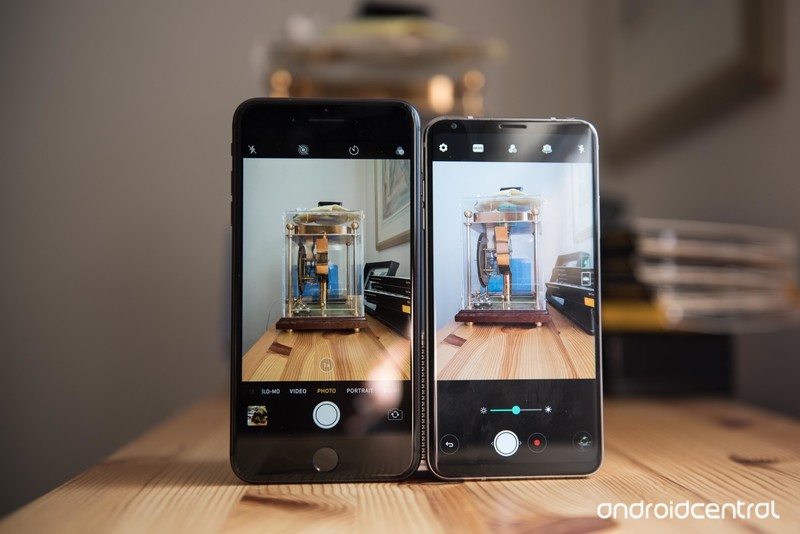
We’ve seen plenty of headlines the past few years — and especially the past few weeks with the LG V30 and now the iPhone 8 — about how you can take “professional” photos with a smartphone. It wasn’t true years ago, and not still not true now, and for one simple reason:
You can fly 7,000 miles with a fancy $2,000 camera and still take shitty pictures. I proved it.
I was reminded of this by my Verge pal Dan Seifert as a tangent to a pretty good tweet storm.
the base of it all is you need to know Photographic Principles if you’re really going to get great shots. the phone can’t make up for that.
— trying my best (@dcseifert) September 22, 2017
It’s that simple.
Smartphone cameras have gotten exponentially better over the years. My first child was born in 2006. The second in 2010. And looking back at those pictures versus what I can take today, well, you’ll see the difference.

Larger sensors let in more light. Better lenses and optical image stabilization help make things look better, too. The algorithms companies use to process photos have gotten better and better — and we’re just at the cusp of letting artificial intelligence do a lot of the heavy lifting, which is going to open up a whole new world of features and improvements.
But that absolutely does not mean that the person on the other end of the camera doesn’t matter. Far from it.
Take a photography class. Even your most basic phone pic will be better for it.
For one, a lot of the hot new features — such as the “Cine Log” styles — are left to the “manual” mode in the camera. Maybe you’re the type of mobile photographer who’ll stop what you’re doing to hop into manual mode and set up everything just so. And in that case, you’re a better mobile photographer than I — and I’m willing to bet better than most folks out there.
But as Dan explains in that tweetstorm, it’s about more than automatic settings and filters. It’s about composition. And lighting. (It’s almost always about lighting.) And so much more.

You can have all the tools in the world at your disposal. And they definitely can help you take better pictures on a daily basis.
But there’s absolutely no substitute for having some basic knowledge of photography, whether you’re using a smartphone or full-frame DSLR.
That’s a lesson I wish I’d known back in 2012 in Korea.
LG V30
- LG V30 review: The no-BS flagship
- Top LG V30 camera features
- Full LG V30 specs
- LG V30 vs. G6 vs. GS8
- The V30 is the first phone to support 600MHz spectrum
- Join our LG V30 forums
Free up your outlets with this $33 Aukey power strip
This trash can-looking power strip gives you access to plenty of ports and outlets for all your charging needs!
The Aukey vertical power strip with 12 outlets and 6 USB ports is down to $33.19 with code AUKEYPS4 on Amazon. It has a street price of $40 and hasn’t sold lower than that through a direct price drop.

As far as power strips go, this is one fancy-looking doodad. I love the look of it. It’s a power strip you wouldn’t be embarrassed to keep up on your desktop, and it gives you easy access to 6 USB ports along with the regular outlets. If you have a bunch of phones, tablets, and little things that need charging, this would be great for you.
Features include:
- Consolidate your power supply – 12 AC outlets and 6 USB ports meet all your power requirements
- AiPower Adaptive Charging Technology – Tuned to provide the safest maximum recharge rate for all your USB-powered devices, up to 2.4A per port (6A total max)
- Column design provides more space and convenient angles to easily plug in all your electronic and electrical devices
- Built-in safeguards protect your devices against excessive current, overheating, and overcharging
All Aukey devices come with a two-year warranty.
See on Amazon
More from Thrifter:
- 8 weird things you probably have in your house that sell on eBay
- How to save money when driving
For more great deals be sure to check out our friends at Thrifter now!
How to use App Pair on the Galaxy Note 8

Just one change can save you time every single day.
Samsung didn’t change a whole lot about the software experience in the Galaxy Note 8 compared to the Galaxy S8+, but it did add a couple of useful tricks. One of them is “App Pair,” a feature that lets you open directly into a multi window session with two apps of your choosing, saving you multiple taps to launch a pairing that you access regularly.
Here’s how to get it done and upgrade your multi window productivity in an instant.
In order to use App Pair, you’ll have to enable your Edge Screen if you’re not already. You can edit the panels of your Edge Screen independently of using App Pair — so long as you have the Apps Edge panel enabled, you’re good.
Swipe in from the edge of your screen to reveal the Apps Edge.
Tap on an empty Apps Edge space (denoted by a + sign).
Tap create app pair in the top-right corner.
Tap the two apps you wish to link from the list of multi window apps and tap done.
- Use the “switch” button to choose which app goes on the top and bottom when you launch the pair.
-
Note: Not all apps are available in multi window mode.

You can add, remove or rearrange any selection of single apps and App Pairs in the Apps Edge at any time — it only takes a minute. With your App Pairs set up, you may end up using multi window even more!
The only hope we have for App Pair is that it makes its way back to the Galaxy S8 and S8+ in a future software update, because this feature isn’t only beneficial on the Note 8’s 6.3-inch screen. It saves you taps and time on a phone of any size!
Samsung Galaxy Note 8
- Galaxy Note 8 review
- Complete Galaxy Note 8 specs
- Galaxy Note 8 vs. Galaxy Note 5
- Which Note 8 color is best?
- Join our Galaxy Note 8 forums
Verizon
AT&T
T-Mobile
Sprint
Best Buy
Showtime websites used visitors’ browsers to mine cryptocurrency
Over the weekend, visitors to Showtime’s website or its streaming site ShowtimeAnytime might have noticed their computers slowing down a bit. That’s because someone slipped in some JavaScript into the sites that caused them to siphon off processing time from users’ browsers in order to mine the cryptocurrency Monero. The Register reports that the software took up as much as 60 percent of visitors’ CPU capacity.
It’s unclear who introduced the JavaScript into the websites — it could’ve been a hacker, it could’ve been Showtime or its parent company CBS, though the latter seems less likely. But the Monero-mining scripts were written by a company called Coinhive, which provides this kind of code so that webmasters can choose to generate some revenue without having to resort to ads. The Pirate Bay did this recently. Coinhive told The Register, “We can’t give out any specific information about the account owner as per our privacy terms. We don’t know much about these keys or the user they belong to anyway.”
The mining code is now gone from the websites and Showtime doesn’t seem to want to talk about the incident. As for Coinhive, which seems to be perturbed by websites using its code without letting users know and a little irritated that it’s now being blocked by adblockers, said on its website that it’s working towards making its script opt-in, a move that would hopefully circumvent both issues. And in theory, prevent others from sneaking it into someone else’s website.
Source: The Register
Giphy taps Google AI tech to help you find the right GIF
Giphy’s collection is a good way to find the right GIF to express your feelings… up until you’re tracking down that one elusive GIF that’s improperly tagged. The company has a clever solution, though: make AI technology look through the GIFs itself. It’s implementing Google machine learning that combs through the animated image files looking for caption text. If you’re trying to find the “where are the turtles” quote from The Office, you’ll actually see GIFs related to that quote — not every vaguely turtle-related picture under the Sun.
Notably, the new system (developed by an intern, Bethany) prioritizes captions over its source description. Giphy does take care to prevent this from overriding common searches, though. Looking for “happy birthday” won’t suddenly turn up every celebratory movie scene.
To no one’s surprise, the new feature had a dramatic influence when put to the test in the summer. Many more people were clicking through to GIFs when they searched for phrases (32 percent more for “never give up never surrender,” for example). In other words, visitors are actually getting the GIFs they looked for. That’s rather important for a company whose business revolves around originals and cutting deals with media creators, and it increases the odds that you’ll come back.
Uber Adding Feature to Let Drivers Provide More Rider Feedback
Uber today introduced a new feature for its iOS app that allows drivers to provide feedback when giving a rider a rating of less than five stars.
As outlined by The Verge, drivers are now asked “what went wrong” when providing a four star rating or lower. Drivers can then choose from reasons like wait time, patience, number of riders, attitude, wanted a new route, or other.
Riders who get two of the same rating tags in a 30 day period will receive a notification letting them know about the low ratings and the reason why.
Uber is also changing the way its UberPool service works in an effort to make the feature less stressful for drivers. UberPool allows passengers to choose a cheaper fare, but it’s a shared ride with the potential for several passenger pickups.
For UberPool rides, drivers will now receive an additional flat fare for each passenger picked up, and Uber says it is planning to pay much of the added cost for the trips through a service fee reduction. Riders will not pay more for a trip even if there are additional pickups.
Uber in June launched a “180 Days of Change” initiative designed to improve working conditions for its drivers and bolster its public image, and today’s changes are part of that effort. Uber has been introducing new driver features since then, starting with a long-desired in-app tipping option.
Tag: Uber
Discuss this article in our forums
 AIVAnet