


The NBA’s big esports push begins in May 2018
The line between esports and traditional sports is blurring, and organizations like the National Basketball Association are looking to stay ahead of the curve. Seventeen teams from the NBA will be part of the upcoming 2K League, a competition it created in partnership with Take-Two Interactive, the developer of the popular NBA 2K series. And that league is going to have its first season next May, NBA 2K League Managing Director Brendan Donohue revealed to Engadget in a recent interview.
He also said that participating NBA teams will begin drafting their esports players in mid-March 2018, with tryouts taking place a month before that. Once each franchise selects the five people who are going to represent it, they’ll be official members of their respective organizations in April. Yes, that means they will get a proper contract and sponsorship deals, just as NBA players do.

NBA Commissioner Adam Silver and Take-Two CEO Strauss Zelnick
Since being announced in February, the NBA 2K League (initially known as the NBA 2K eLeague) has piqued the interest of both fans of professional gaming and conventional sports. That’s mostly because this is the first league where esports squads are owned by professional sports organization such as the Cleveland Cavaliers and Golden State Warriors, two of the teams that will play in the 2K League. Traditionally, ownerships of esports teams are by firms like Cloud9, which fields players Rocket League, League of Legends and Call of Duty and other gaming tournaments.
Along with the Cavs and Warriors, the rest of the teams in the first season of the 2K League include the Boston Celtics, Dallas Mavericks, Detroit Pistons, Indiana Pacers, Memphis Grizzlies, Miami Heat, Milwaukee Bucks, New York Knicks, Orlando Magic, Philadelphia 76ers, Portland Trail Blazers, Sacramento Kings, Toronto Raptors, Utah Jazz and Washington Wizards.
Donohue said that aside from these, there “four or five” others that have already reached out with interest in being part of the second year. There are 30 NBA teams total, and some of the notable absences from the 2K League include the Chicago Bulls, Los Angeles Lakers and San Antonio Spurs, three of the most decorated franchises in league history. “We would expect to expand pretty quickly,” he said.
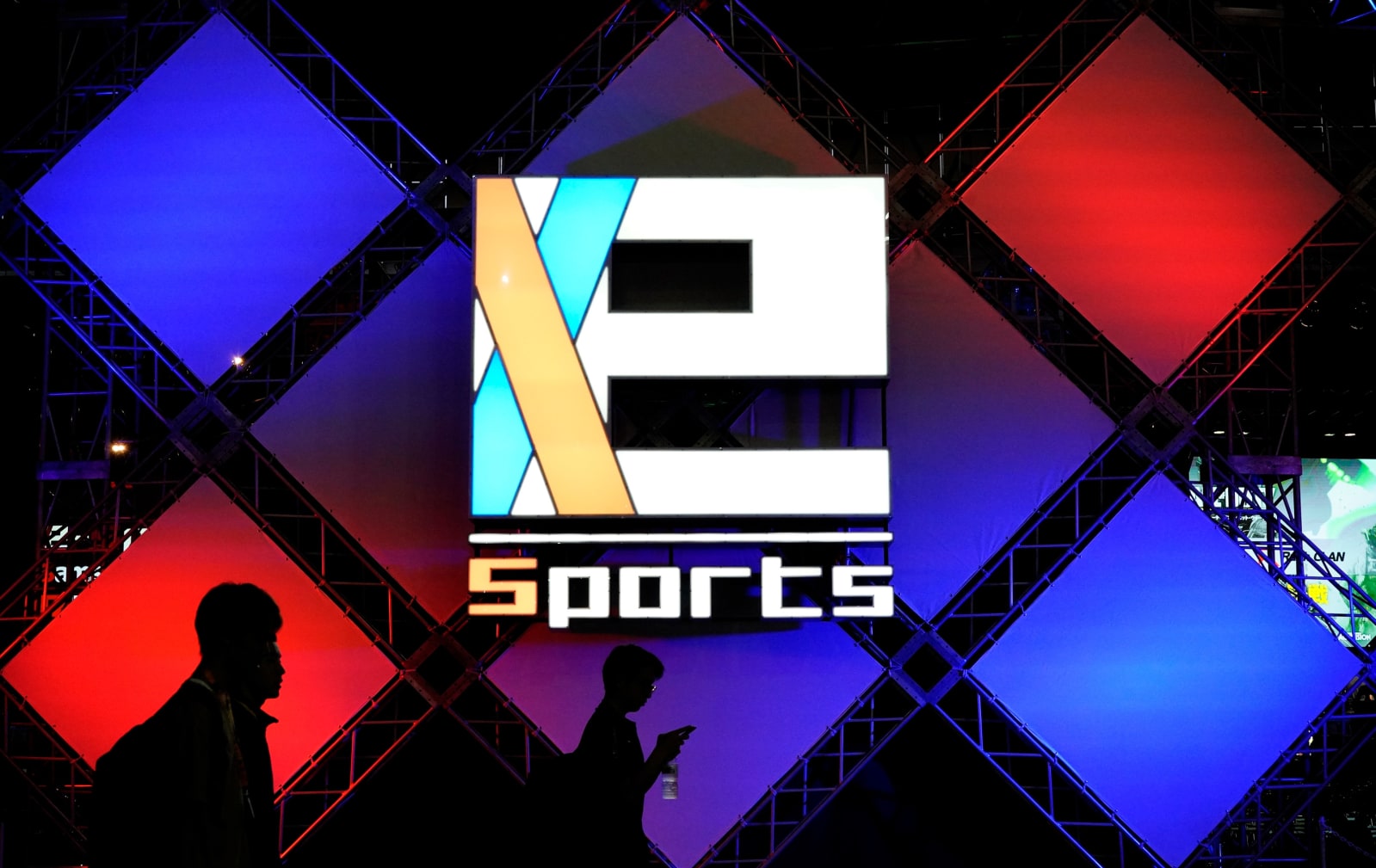
Until that happens, though, Donahue said the NBA is focused on ironing out a few more key details. For starters, the league and its partner, Take-Two Interactive, are still trying to determine how the tryout process will work and whether official games are going to be played on PC, PlayStation or Xbox. They’ve also yet to lock down where people will be able to watch the 2K League.
Donahue said media rights are still being worked out, but the idea is to have studios on the East and West Coasts that broadcast or stream the games. It’ll be interesting to see if the NBA strikes a deal with a platform like Twitch or one of the many TV networks trying to take esports into the mainstream. ESPN, NBC and TBS could all make a move, though it’s also worth keeping in mind that the NBA has its own TV network, NBA TV.
One thing is certain: The NBA 2K League is taking shape rather quickly, especially when you consider that it was unveiled a few months ago.

Physical prowess, at least the way it’s necessary on an NBA court, will no longer be necessary
NBA Commissioner Adam Silver
NBA Commissioner Adam Silver said at the 2017 All-Star Weekend in New Orleans, “Physical prowess, at least the way it’s necessary on an NBA court, will no longer be necessary. It may be a different kind of physical prowess in terms of reflexes and your ability to move your thumbs very quickly, but these athletes can be any shape or size, and any age, and from anywhere.” Donohue echoed that statement, noting that it’s in the NBA’s DNA to make its properties inclusive and that’s the intention with the 2K League as well.
There’s no word yet on if there’s going to be an age restriction for players being drafted into the 2K League. But Donohue said that male or female, the only thing that will matter come tryouts will be whether you’re one of the best 85 NBA 2K18 players in the world. If you think you have what it takes, then you better pick up that controller and start practicing now. Who knows, maybe you can live your dream of being the next Michael Jordan — even if you’ll have an avatar on a digital court to thank for it.
Google will reportedly spin off shopping service after antitrust fine
Google is reportedly splitting off its price-comparison shopping service after getting fined for a record-setting $2.8 billion by the EU after a legal battle over antitrust practices. The internet titan appealed the decision, but will comply with the EU court’s order to allow competing shopping services access to the page-topping ad slots at the top of search results, sources told Bloomberg.
The EU’s seven-year investigation found that users searching for products on Google Shopping were shown the company’s own links over competitors’ in the coveted ad slots at the top of the page, despite Google’s being less relevant. The internet titan has until tomorrow, September 28th, to comply with the court’s order to allow other companies to bid on those ad slots on an even playing field, without Google subsidizing its own bids with its ad money. Splitting off Google Shopping into a standalone unit will illustrate that.
Google is expected to announce its full plans for its Shopping entity tomorrow to make the deadline; If it fails to comply, the EU court could fine Google up to five percent of its daily revenue. But the company will continue appealing the court’s decision.
Via: The Verge
Source: Bloomberg
Apple, Alphabet and Fitbit test FDA fast track for health apps
A few of the tech giants you know are about to get fast-track approval for their digital health efforts. The US Food and Drug Administration has named the companies involved in a recently-instituted “pre-certification” program that determines whether or not they meet baseline quality standards for health software. Apple, Fitbit, Samsung and Alphabet’s Verily are among the firms that will help the FDA set the benchmarks and decide just how much information companies need to send if they’ve been pre-cleared. Depending on how the program fares, companies may get to send less information or even avoid certifying certain apps altogether.
The FDA vows to detail progress as the pilot goes forward, including a workshop slated for January 2018. And yes, it’ll accept feedback from both industry groups and the public.
If pre-certification goes forward, it could lead to health apps and features reaching the US sooner than they might if they had to go through a product-focused approval process. That’s potentially great for technological progress. With that said, there are concerns: will the standards be high enough that smaller, less scrutinized companies won’t abuse them? And what happens if a pre-certified company bungles an app down the line? The pilot project may well settle these questions, but there’s no guarantee it will avoid significant problems down the road.
Source: FDA
You can get a refund on Oculus Rift and Gear VR games and apps
Buying games and apps digitally is less risky when there’s a solid refund policy in place. Apple offers refunds for purchases through its iTunes app store and Microsoft has a self-service system. PC distribution portal Steam allows for refunds within 14 days of purchase if you’ve played a game for two hours or less. Now virtual reality company Oculus has made it clear that you can get a refund for an app or game purchased digitally for the Rift or Gear VR.
Oculus adheres to the same timeline as Steam does, offering a full refund through Oculus “for any reason” if you request it within 14 days of purchase and haven’t played more than two hours. If your initial, automated request is denied, Oculus offers an appeal through its Customer Support. You can return apps, games and “experiences” you buy from the Oculus Store for either Gear VR or Rift, but not movies, bundles or content that came in a bundle. You also cannot get refunds for in-app purchases like DLC. Oculus claims refund requests shouldn’t take more than five days to review, verify and process your refund request. You will lose access to the app while that process is in effect, though.
Via: Gamasutra
Source: Oculus
Airbnb reportedly wants to offer apartment rentals in Florida
For a service that began as a simple house-sharing service, Airbnb has definitely expanded to include some interesting, if off-target, promotional initiatives. The company recently stepped into the restaurant reservation space, and has even offered up Sarah Jessica Parker as a shoe shopping partner. According to a new report at The Information, Airbnb is looking to take a step even further with company-branded apartments in Florida.
According to The Information, Airbnb is working with a real estate developer in southern Florida, Newgard Development Group, to design a new apartment building as a proof of concept near Orlando in Kissimmee, right next to all those theme parks. Airbnb won’t own or even contribute to the development costs, said one person familiar with the matter. Another source said that this is only one of many experiments that Airbnb is using to expand its brand to more places.
The idea, say The Information ‘s sources, is to pull in younger renters who work part-time in Orlando, but want to make money by subletting rooms or apartments (via Airbnb) when they aren’t in town. Airbnb, the developer and the main apartment tenants would split the revenue earned from such an arrangement. It sounds like this could bring Airbnb one step closer to becoming like a hotel chain, notes The Information. Marriott already works with developers in this way, not owning the buildings or land, but by providing a standard of hospitality and the use of its brand name.
We’ve reached out to Airbnb for comment on this matter and will update when we hear back.
Source: The Information
Twitter experiments with doubling its character limit
Over the past couple of years, Twitter has slowly chipped away at its 140-character constraint. It removed @replies from the limit earlier this year, and exempted photos, videos and quotes from it last year. Now, it’s ready to push those character restrictions once again. The company announced today that it’s going to experiment with expanding its 140-character limit to a whopping 280, at least to users whose language is anything other than Japanese, Chinese or Korean. The reason for doing so, according to Twitter, is that you can say much more in certain languages than others.

In a blog post, Product Manager Aliza Rosen said that those who use certain East Asian languages on Twitter don’t suffer the same restraints as English-speaking users. “We see that a small percent of tweets sent in Japanese have 140 characters (only 0.4 percent). But in English, a much higher percentage of tweets have 140 characters (9 percent). Most Japanese tweets are 15 characters while most English tweets are 34.” This 140-character limit, she says, is a cause of frustration for English users, but not Japanese users, because of the difference in language.
So in the interest of making it easier for everyone to use Twitter, the company is testing out the aforementioned 280-character limit to a small group of people. Again, this will only impact users whose language is not Japanese, Chinese or Korean. Rosen says in the blog post that it hopes to collect data and gather feedback about the test before it finally rolls out the 280-character limit on a wider scale.

“We understand since many of you have been tweeting for years, there may be an emotional attachment to 140 characters — we felt it, too,” says Rosen in the blog post. “But we tried this, saw the power of what it will do, and fell in love with this new, still brief, constraint.”
280 characters is certainly a big leap from 140 — it’s twice the number, after all — but it’s much less than the 10,000 character limit that was rumored last year. By comparison, 280 doesn’t seem that bad. It appears that, at least for now, the company is sticking to the Twitter-means-brevity script that has been with it from the very beginning. Those hoping for an edit button, however, will remain disappointed.
Apple Joins FDA Pilot Program for Faster Approval of Digital Health Tools
The Food and Drug Administration today announced that it has selected nine companies to join its voluntary Pre-Cert pilot program, which is designed to foster innovation through the creation of a less restrictive regulatory framework that will lead to faster acceptance of health-related software and, in some cases, products.
Companies accepted to the program include Apple, Fitbit, Johnson & Johnson, Pear Therapeutics, Phosphorus, Roche, Samsung, Tidepool, and Verily.
With its program, the FDA is aiming to create a more tailored approach toward digital health technology by looking at the software developer rather than the product to establish a firm-based pre-certification program for these digital health tools. The companies accepted to the program will be reviewed for software design, validation, and maintenance and to determine if they meet the FDA’s quality standards for pre-certification.
Companies who have been pre-certified may be able to submit less information to the FDA before marketing a new digital health tool, speeding up the approval of new services and technologies. The FDA is also considering allowing pre-certified companies to avoid submitting products for premarket review in some situations.
As part of the program, Apple will provide the FDA with access to the measures it use to develop, test, and maintain software products. Apple has agreed to allow visits from FDA staff and offer information about its quality management system.
“Our method for regulating digital health products must recognize the unique and iterative characteristics of these products,” said Dr. Gottlieb. “We need to modernize our regulatory framework so that it matches the kind of innovation we’re being asked to evaluate, and helps foster beneficial technology while ensuring that consumers have access to high-quality, safe and effective digital health devices. These pilot participants will help the agency shape a better and more agile approach toward digital health technology that focuses on the software developer rather than an individual product.”
For Apple, this program could be a major boon as it has several digital health-related tools like Health, CareKit, and ResearchKit, and FDA approval is likely one of the major roadblocks to releasing new health-related products that are rumored to be in the works, such as some kind of device for monitoring blood glucose.
Apple CEO Tim Cook has said that Apple does not want to put the Apple Watch through the FDA approval process, but should the program go well, Apple may also have fewer regulations to contend with when it comes to the future of the Apple Watch, which could allow for new, more advanced health-monitoring capabilities.
Tags: HealthKit, FDA, CareKit
Discuss this article in our forums
MacRumors is Looking for a New Full-Time Video Producer!
As many of you know, MacRumors has a YouTube channel that’s been steadily growing over the course of the past few years, and we’re searching for a new full-time video producer who can help us take our channel to the next level.
If you’re familiar with making YouTube videos, love Apple products and know a lot about them, have an engaging and upbeat personality, and have a wealth of ideas on intriguing and fun ways to highlight Apple-related news, this could be the job for you.
This is a work from home position, and we’re looking for someone who already has video equipment on hand and knows how to use it to make videos of the caliber that are already on MacRumors’ YouTube channel.
The right person will be able to produce videos, star in those videos, and come up with ideas for videos in collaboration with our editorial team.
We are looking for a full-time video producer, and while the job will typically require traditional full-time hours, after-hours work is necessary on occasion for breaking news, Apple events, and major software releases. Travel to events like CES may also be required every so often.
If this sounds like it might be a good fit for you, we’d love to hear from you! Please email us at jobs@macrumors.com with details about you and some examples of video content you’ve created, and we’ll get back to you with more information about the position. An already-existing YouTube channel and experience creating Apple-related tech videos is a huge plus!
Note: Comments have been disabled for this post.
Discuss this article in our forums
Get an Exclusive 15% Discount on RAVPower’s Qi Mat, $100 Off New iPad Pros, and More in Latest Deals
There’s a notable sale on Apple devices going on this week at Best Buy, offering those on the hunt for new MacBooks, MacBook Pros, and iPads the chance to save between $100 and $350 on Apple’s devices.
The largest selection of devices marked down is the mid 2017 iPad Pro in both 10.5- and 12.9-inch versions, all Wi-Fi only. The cheapest model is the 10.5-inch iPad Pro with 64GB at $549.99, down from $649.99; the 256GB version is $699.99, down from $799.99; and the 512GB version is $899.99, down from $999.99. For the 12.9-inch iPad Pro, you can grab the 64GB at $699.99, the 256GB at $849.99, and the 512GB at $1,049.99, all with similar $100 discounts and in Silver, Gold, and Space Gray colorways.
If you’re looking for a new Mac to run macOS High Sierra — which just launched yesterday — Best Buy has taken up to $150 off the latest MacBook Pro with Touch Bar models in both 13-inch and 15-inch sizes, which Apple refreshed at WWDC in June. Sale prices start at $1,649.99 for the 13-inch MacBook Pro and 256GB flash storage, down from $1,799.99; the 512GB version is also on sale for $1,849.99, down from $1,999.99.
There are also discounts on the 15-inch MacBook Pro, the newest 21.5-inch and 27-inch iMacs, and between $200 and $300 off the older 9.7-inch iPad with Wi-Fi and cellular. Check out our full Deals Roundup for more information on the Best Buy sale.
In other deals news, we’re continuing to keep an eye out on discounts for some of the best Qi inductive wireless charging pads, which iPhone 8 and iPhone 8 Plus users can use right now to charge their smartphones. Prices and availability have fluctuated since we made our original roundup, but as of today here’s a list of some of the cheapest accessories from reliable third-party companies:

-
Choetech T511 7.5W Qi Wireless Charging Pad – $12.99 at Amazon, down from $20.00
-
Aukey Qi Wireless Charger – $19.99 at Amazon
-
Seneo QI Wireless Charger – $24.99 at Amazon, down from $39.99
-
Satechi Fast Wireless Charger – $24.99 at Amazon, down from $29.99
-
Spigen Essential Wireless Charging Pad – $25.99 at Amazon, down from $34.99
-
Samsung Qi Wireless Charging Stand (Black) – $31.49 at Amazon, down from ~$39.99
For a discount on a charging mat that supports the iPhone 8 and upcoming iPhone X, RAVPower has given MacRumors readers the chance to get exclusive savings on its Qi wireless charging pad. When purchased on Amazon, you can get 15 percent off the $49.99 accessory, marking it down to $42.49, by using the promo code Rumors15 during checkout. This discount expires October 15.
Anyone looking for quality audio editing software should also check out Rogue Amoeba’s 15-year anniversary sale, which is running this week and ends Saturday, September 30. All of Rogue Amoeba’s apps are marked down by 15 percent during this period, and through a special scratch-off you have the chance to boost your discount by 1.33x, 1.67x, 2x, 3x, or 4x. Some of the company’s Mac apps include Audio Hijack, Fission, Airfoil, and more.

Head over to our Deals Roundup for more of the latest discounts occurring this week, including 50 percent off JBL’s Pulse 2 Bluetooth speaker at Amazon, ongoing sales on Apple Watch Series 2 models at B&H Photo, and more.
Note: MacRumors is an affiliate partner with some of these vendors
Related Roundup: Apple Deals
Discuss this article in our forums
iOS 11 Installed on 25% of Devices One Week After Launch
One week after being released to the public, iOS 11 is installed on 25.28 percent of iOS devices, according to data collected by analytics company Mixpanel.
Over the course of the last week, iOS 11 adoption has expanded by just 15 percent, as 10 percent of people already had the update installed 24 hours after launch. With iOS 11 adoption growing, iOS 10 is now installed on 67.83 percent of devices, while 6.89 percent of devices continue to run an earlier version of iOS.
iOS 11 adoption rates are much slower than iOS 10 adoption rates during the same time period last year. A little under a week after iOS 10 launched, it was already on 34 percent of devices.
The iOS 11 update has not been affected by installation issues like iOS 10 was, but there have been some reports of app slowdowns and performance drops, which could potentially be holding people back from installing until a later date.
Apple also delayed several key iOS 11 features, including peer-to-peer Apple Pay and iCloud storage for iMessages, another reason that some users might not yet be inspired to download new software.
Apple this morning released the first update to iOS 11, iOS 11.0.1, which includes a fix for a significant email bug that was affecting customers who used Microsoft email services.
Though iOS 11 adoption is slow, it wildly outpaces the adoption rates of new Android software. Android Oreo, released in August, isn’t even listed on the Android Developer site, while Android Nougat, the previous-generation version of Android, is only installed on a total of 15.8% of devices.

The majority of Android devices continue to run Android Marshmallow and Lollipop, software that’s now two to three years old.
Related Roundup: iOS 11
Discuss this article in our forums
 AIVAnet