


Pi takes wireless charging to new level, can power your iPhone from a foot away
Why it matters to you
If you’re looking for a truly wireless way to charge your iPhone, the Pi may be your best bet.
For the most part, wireless charging standards like Qi are a bit of a misnomer — they aren’t “wireless” in the sense that they require a plugged-in charger. But with Pi, a new charging technology developed by Massachusetts Institute of Technology graduates, there’s no need to plop your phone on a pad.
Here’s how it works: Pi comes in the form of a cone-shaped base station and sits in an area where you’d typically charge your phone, like a kitchen counter or a bedside tablet. Charging your iPhone or Android phone is as simple as plugging it into a Pi-compatible charging case and placing it within a foot of the Pi, which can charge multiple devices at once. Up to four phones will charge at full speed (10W), with additional devices charging at a lower speed.
Future phones like the iPhone 8 won’t need Pi’s cases. They’ll charge as soon as they’re in range.
Pi uses electromagnetic charging technology — resonant induction, the same technique used in Qi — that’s been “proven safe” at the power levels needed to charge smartphones, tablets, wireless earbuds, and other portable electronics. It took Lixin Shi, an MIT Ph.D., and John MacDonald, a physician-turned-MBA-student at MIT’s Sloan School of Management, three and a half years of research to develop Pi’s magnetic field-reshaping components.
“Creating this technology required solving one of the most difficult mathematical problems in electromagnetics, and that’s why no one has done it before,” MacDonald said. “Power is the final frontier in a truly wireless world.”
Wireless charging at a distance isn’t new. Ossia, a Redmond, Washington-based startup founded in 2013, has demonstrated charging stations that use RF waves to transfer power in excess of 30 feet. And Energous, which took on a $10 million funding round toward the end of 2016, uses a similar technique to send power to wireless receivers.
But Shi contends that Pi’s magnetic field technology is better suited to the phones, tablets, and devices people use every day.
“Magnetic fields are the best way to send meaningful energy to phones, tablets, and other portable electronics,” Shi, Pi’s chief technology officer and co-founder, said. “The hard part was figuring out how to make magnetic charging more flexible, multi-device, and extend its useful range. It took over a year to complete the mathematical proof that makes it all possible.”
Pi is available for pre-order from the company’s website. It’s expected to ship sometime in 2018 for “under $200,” but customers who reserve one early get $50 off the purchase price.
Pi takes wireless charging to new level, can power your iPhone from a foot away
Why it matters to you
If you’re looking for a truly wireless way to charge your iPhone, the Pi may be your best bet.
For the most part, wireless charging standards like Qi are a bit of a misnomer — they aren’t “wireless” in the sense that they require a plugged-in charger. But with Pi, a new charging technology developed by Massachusetts Institute of Technology graduates, there’s no need to plop your phone on a pad.
Here’s how it works: Pi comes in the form of a cone-shaped base station and sits in an area where you’d typically charge your phone, like a kitchen counter or a bedside tablet. Charging your iPhone or Android phone is as simple as plugging it into a Pi-compatible charging case and placing it within a foot of the Pi, which can charge multiple devices at once. Up to four phones will charge at full speed (10W), with additional devices charging at a lower speed.
Future phones like the iPhone 8 won’t need Pi’s cases. They’ll charge as soon as they’re in range.
Pi uses electromagnetic charging technology — resonant induction, the same technique used in Qi — that’s been “proven safe” at the power levels needed to charge smartphones, tablets, wireless earbuds, and other portable electronics. It took Lixin Shi, an MIT Ph.D., and John MacDonald, a physician-turned-MBA-student at MIT’s Sloan School of Management, three and a half years of research to develop Pi’s magnetic field-reshaping components.
“Creating this technology required solving one of the most difficult mathematical problems in electromagnetics, and that’s why no one has done it before,” MacDonald said. “Power is the final frontier in a truly wireless world.”
Wireless charging at a distance isn’t new. Ossia, a Redmond, Washington-based startup founded in 2013, has demonstrated charging stations that use RF waves to transfer power in excess of 30 feet. And Energous, which took on a $10 million funding round toward the end of 2016, uses a similar technique to send power to wireless receivers.
But Shi contends that Pi’s magnetic field technology is better suited to the phones, tablets, and devices people use every day.
“Magnetic fields are the best way to send meaningful energy to phones, tablets, and other portable electronics,” Shi, Pi’s chief technology officer and co-founder, said. “The hard part was figuring out how to make magnetic charging more flexible, multi-device, and extend its useful range. It took over a year to complete the mathematical proof that makes it all possible.”
Pi is available for pre-order from the company’s website. It’s expected to ship sometime in 2018 for “under $200,” but customers who reserve one early get $50 off the purchase price.
Here’s how to download music from Youtube and listen on any device
Looking to rip some music from YouTube, but leave the video behind? There are dozens of different YouTube ripper services out there, and while many of them will get the job done, the ones we’ll cover in this tutorial are arguably the most simple and user-friendly of the bunch. Keep reading to learn how to download music from YouTube in just a handful of easy steps.
Before we get started though, it’s important we add a little disclaimer. Much like we stated in our How to Download a Youtube Video guide, downloading Youtube videos, or in this case, ripping their audio, is in breach of Youtube’s terms of use. That means Google could ditch your account over it, if it found out and decided to take action.
ListenToYoutube – Web tool
There are a number of online tools for ripping the audio from Youtube videos, but ListenToYoutube is our personal favorite. It has a clean and simple interface, and its on-site instructions are easy to follow.
The only caveat is that there are a few advertising pop-ups as you click through, so be wary of new windows opening when you click the various buttons for converting your chosen video.
Step One: Copy the video URL from your browser’s address bar.
Step Two: Open a new tab and go to listentoyoutube.com. Paste your YouTube URL into the field labeled “Paste your YouTube URL here” and click Go.
Step Three: Wait for the video to convert.
Step Four: Hit “Click here to get your download link”.
Step Five: Click the “Download MP3” button and you’re done!
4K Video Downloader – Desktop application
Online services are great at downloading and converting Youtube videos, but if they’re down for whatever reason, you’re then left trying to find an alternative. Desktop applications don’t have that problem, and our favorite of them all is 4K Video Downloader. Although its name might suggest otherwise, this tool isn’t just for downloading high-quality videos, it can also be used for ripping audio from them too.
It won’t work with Youtube’s live-streaming service, but if you want to learn how to download music from Youtube with a desktop tool, here’s how.
Step 1: Download and install 4K Video Downloader from the official site. Don’t worry about the premium, paid-for versions — you don’t need their features and the free version works just as well.
Step 2: Copy your chosen video’s URL from your browser window and then click the “Paste Link” button — with the “+” icon — in the top-left hand corner of the 4K Video Downloader window.
Step 3: You’ll then be presented with a few options. Click “Download video” and from the resulting drop-down menu, select “Extract Audio.” You can choose a format if you would rather convert it to an M4A or OGG file and its quality based on your own preferences. The bottom bar also lets you choose its download name and location.
Step 4: When ready, click the “Extract” button in the bottom right-hand corner to begin.
Step 5: The progress bar that appears will give you various information like download speed and estimated time remaining. When complete, you can right click, or use the three-dot menu-link on the right-hand side, to open the file’s location, or play it from your preferred player. The video’s audio is now ripped, and you can do with it what you will.
Now that you’re a pro at ripping and converting Youtube videos, if you have any videos you’ve already downloaded or own yourself that you’d like to rip the audio from, read our guide for the best MP4 to MP3 converters.
Updated 09/18/2017 by Jon Martindale – Updated style for current standard and added 4K Video Downloader option.
This $35 Lego Star Wars Advent Calendar reveals a new piece every day
This is what you get when you combine the three most powerful forces in the universe: Lego, Star Wars, and Christmas. The Lego Star Wars Advent Calendar set is in-stock for $34.76 at Amazon. This kit released for $40 on September 1, and these tend to sell out as Christmas Time approaches since the mix of Star Wars and reindeer makes it the perfect holiday toy. So you should probably get it now before you’re hunting it down for thrice the price on eBay.

Lego updates this kit yearly, and this one includes a snowboarding BB-8 and Kylo Ren. You can see in this link from 2015 how the pieces have changed over the years.
- Vehicles include The Ghost, The Phantom, Stormtrooper transport, Rey’s speeder, Millennium Falcon, Snow speeder, Kylo Ren’s Command Shuttle, Y-wing, TIE Striker, Hover tank, AT-ST
- Features 7 minifigures plus a fun holiday-themed figure
- Open a door every day to reveal 24 different LEGO Star Wars themed gifts
- Collect all the gifts and play out your own epic LEGO Star Wars adventures
- Also includes a foldout playmat with Jakku, star killer base and deep space play scenes
Not that it helps your decision, but I love this line in the description:
“This holiday gift is perfect for Rebels, Sith Lords, Scavengers and any other life form, and includes 7 minifigures and a BB-8 figure.”
See at Amazon
More from Thrifter:
- 8 weird things you probably have in your house that sell on eBay
- How to save money when driving
For more great deals be sure to check out our friends at Thrifter now!
Stay charged with this 10050mAh USB-C/QC 3.0 Power Bank for $12
There’s no reason for you to be without a way to charge your phone wherever you are. Lumsing’s USB-C Power Bank is available for $11.99 when you enter promo code 7NHCPEY2 at checkout to save $9 off its average selling price. This device is available in Gold and Silver.

This 10050mAh power bank has both a USB Type-A and a USB Type-C port, and features Quick Charge 3.0 and 2.0 compatibility to speed up your charge times. There are even LED lights to let you know how much of the battery is left.
Lumsing’s product is lightweight and compact making it easy to store in your pocket, backpack, glove compartment or elsewhere without much hassle. It has an Intelligent Charging System to keep your device safe from overheating and overcharging.
This device also comes with a one-year warranty.
See at Amazon
More from Thrifter:
- 5 free travel apps to help you save big on hotel stays
- Save money during your Disney vacation with these magical tips!
For more great deals be sure to check out our friends at Thrifter now!
T-Mobile raising unlimited throttling limit to 50GB per month

T-Mobile is set to make its unlimited plan a bit more attractive.
After introducing free Netflix to all customers on its T-Mobile ONE unlimited family plan, the carrier is set to take another action that is sure to impress its user base while enticing customers from other carriers.
Starting September 20, T-Mobile is set to raise its “fair usage threshold,” also known as its data prioritization limit, to 50GB from 32GB. The company had already raised its threshold from 23GB to 30GB, and then again to 32GB, earlier this year, so T-Mobile’s network can clearly handle to extra load.

While we don’t have all the details just yet, it’s clear that T-Mobile is trying to move as many of its legacy customers over to T-Mobile ONE as quickly as possible. CEO John Legere said in a conference call after the recent Netflix announcement that “T-Mobile is in the business of selling T-Mobile ONE plans,” as opposed to trying to bundle other types of vertically integrated content like AT&T’s DirecTV and Verizon’s Go90.
Thanks Anonymous!
Which unlimited plan should you buy?

Pepe the Frog creator battles the ‘alt-right’ through copyright law
Pepe the Frog creator Matt Furie has long been unhappy with how the “alt-right” hijacked his friendly amphibian for hateful memes, going so far as to declare their uses “illegal” and to kill off the character in a symbolic gesture. And now, he’s fulfilling that promise to fight back. Furie has sent cease-and-desist notices to multiple “alt-right” personalities (including racist Richard Spencer, conspiracy theorist Mike Cernovich and Reddit’s r/the_Donald community), and he’s issuing Digital Millennium Copyright Act takedown requests to pull infringing content from sites like Amazon, Google, Reddit and Twitter.
In a discussion with Motherboard, attorney Louis Tompros notes that some of these requests have already been successful. Amazon has pulled books that were clearly profiting from Pepe without permission, while Google yanked an Android app that used Pepe for achievements (Apple doesn’t allow the use of Pepe in apps). The trickier part is getting individuals like Cernovich and Spencer to comply. After all, they’ve wrapped many of their messages in Pepe memes (Spencer even uses the frog as his podcast mascot). Tompros says his team is ready to file lawsuits if people ignore the cease-and-desist notices, but he’s hoping it won’t come to that.
The campaign is bound to rile a lot of people, and not just “alt-right” supporters (Furie and his lawyers know they could be targets of coordinated harassment and threats). Furie would be wielding his digital copyright power in part to express his opinion, much as Campo Santo used the DMCA to object to PewDiePie’s racist outburst. However, it’s likely that Furie has a solid legal standing here. There’s no question that the “alt-right” is copying and modifying his art without consent, sometimes while directly profiting from it. Like it or not, it could simply be a matter of time before Furie gets the upper hand.
Source: Motherboard
Verizon cutoffs mark an uncertain future for rural customers
Last week, some Verizon customers in rural areas received unexpected news. The carrier would be terminating their service as of October 17th because they were using a “significant amount of data while roaming off the Verizon Wireless network.” These users were roaming because their “primary place of use” was outside the company’s service area.
Verizon says it sent notifications to about 8,500 customers (19,000 affected lines) in 13 states this month to inform them of the disconnections. According to the carrier, “the roaming costs generated by the affected lines exceed what these consumers pay us each month.” In layman’s terms, that means it’s actually costing Verizon money to keep those customers.
This is the second wave of similar disconnections in recent months. In June, the carrier told Ars Technica that it terminated service for “a small group” of customers who were using “a vast amount” of data in rural regions. According to Ars Technica, those people appeared to be supported by Verizon’s LTE in Rural Areas (LRA) program, where the national carrier partners with smaller regional companies to provide service in areas where it doesn’t have towers.
Those affected by this new wave of disconnections have a little more than a month to find a new service provider, which may not be an easy feat. Finding a local carrier who has comparable plans or coverage to Verizon could prove challenging.
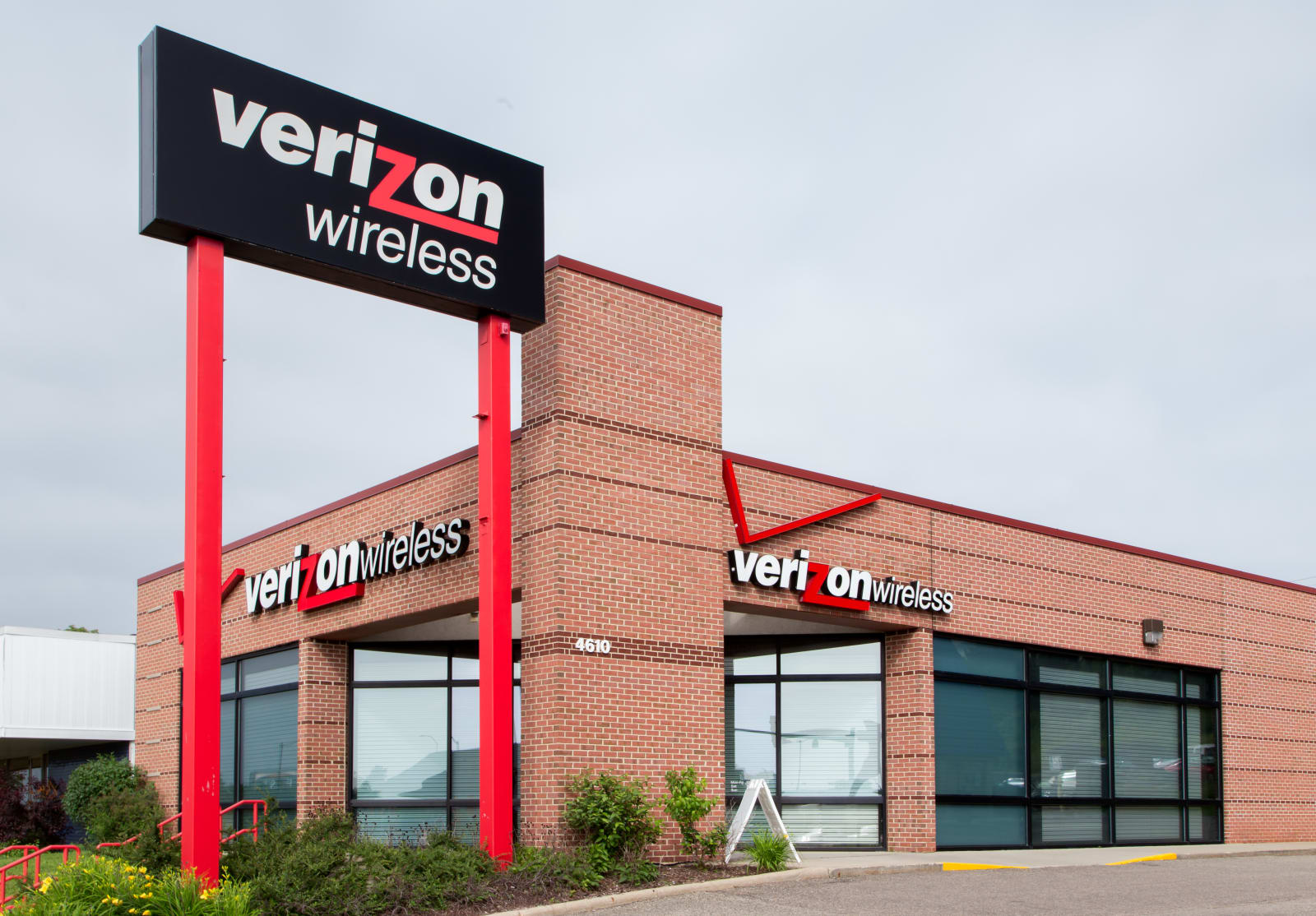
As for those in rural areas who remain Verizon customers, the company says it is “absolutely not abandoning” them. The company’s spokesperson, Kelly Crummey, told Engadget, “Many current customers in this area have lines which do not rack up roaming charges that are higher than what they pay us each month.” She added: “We have a long history of serving rural markets and care about the people in these communities.”
Until you start costing the company money, it seems. Verizon also has a habit of terminating (or threatening to end) service for data hogs. In January, the carrier asked those who were using more than 200GB of data a month on grandfathered unlimited lines to move to a new metered plan or face disconnection.
From a business perspective, it’s easy to see why Verizon had to take steps to cut its losses. In fact, it’s written into the company’s customer agreement that it may change prices or any other terms of the agreement “at any time.” It’s pretty standard language for contracts with a big company, but those on the receiving end of the termination notice most likely got a rude shock.
Instead of being presented options for a different plan or being warned to cut down on usage, folks came home to a sobering letter basically saying they were no longer welcome on the Verizon network (unless they moved within the carrier’s coverage area, anyway).
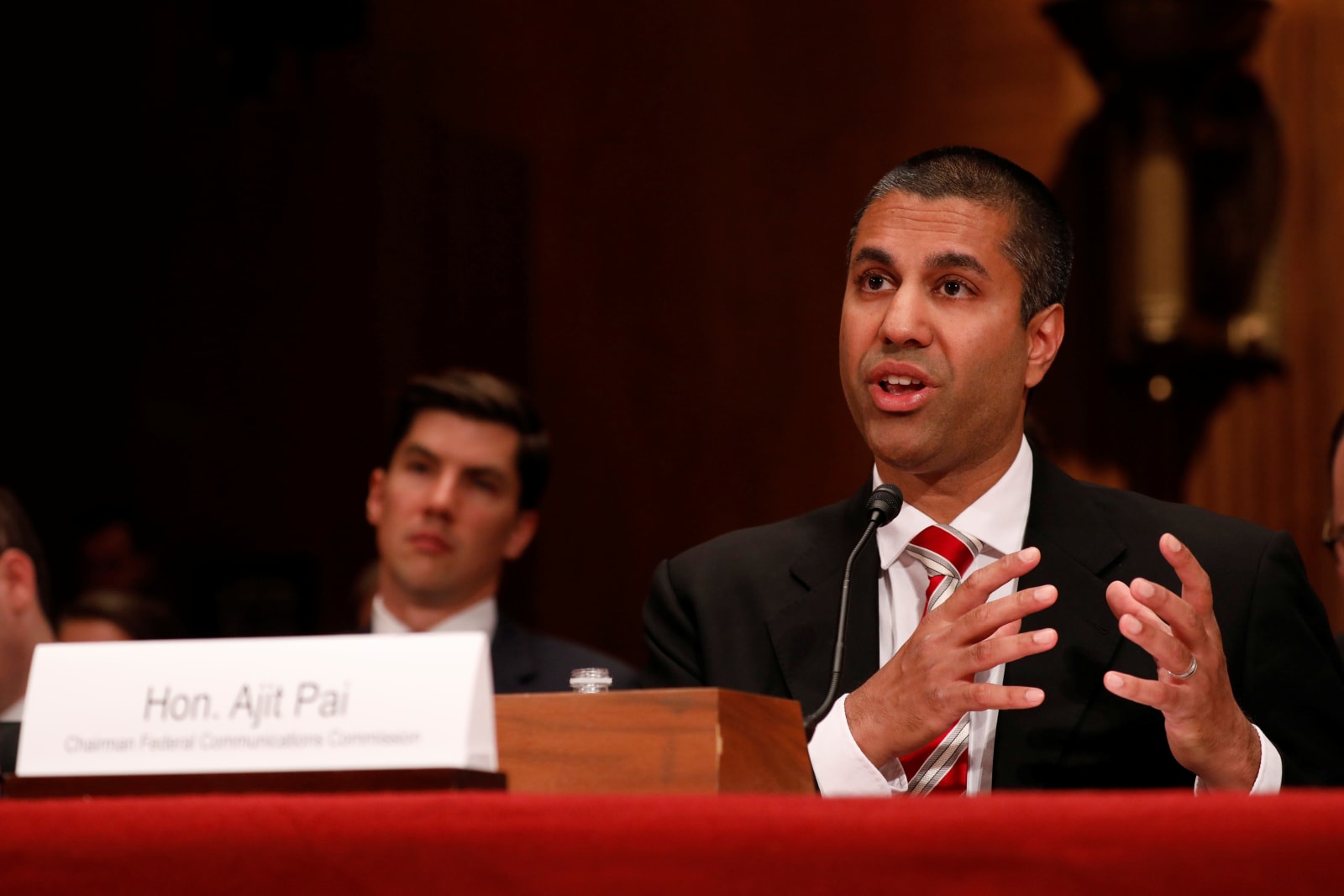
Those who live in rural areas and depend on mobile networks for their internet connections have more to worry about. Last month, the FCC, led by the new chairman, Ajit Pai, started the process of changing the definition of broadband, which would allow the inclusion of mobile networks if the proposal goes through. The new specs would also drop the speed requirement from 25Mbps down and 3Mbps up to 10Mbps and 1Mbps respectively. That means if the proposal gets passed, service providers can slow down your broadband connections if they so desire while still complying with FCC requirements.
On the other hand, President Trump has said he will include a provision for rural broadband expansion in his $1 trillion infrastructure proposal. But of course, if the definition of broadband changes before that happens, the type of infrastructure that will be built in rural areas could be different than what it would need to be to meet current standards.
The inquiry in question is still in the public comment and reply stage until September 22nd. Where the commission will land on this issue isn’t clear yet, but the FCC under Trump has moved ahead on unpopular changes in the past. Such changes benefit powerful organizations like Verizon, and do little to help the average consumer or protect principles of fairness like net neutrality.
Facebook moderators were reportedly not prepared to catch Russian ads
Facebook’s admission that Russian-linked advertisers spent $100,000 on ads leading up to and after the 2016 presidential election has led to serious questions about their effects. But how did they make it through the social network’s filters? Four anonymous advertisement monitors explained to The Verge that, as contractors handling hundreds to thousands of ad parts per day, they weren’t adequately prepared to screen the propaganda and keep it off the site.
Three of the four workers were at Facebook during the June 2015 to May 2017 time frame during which these ads hit the social network. According to them, each used screening software to evaluate specific portions of an advertisement queued up for review, perhaps vetting images or text segments but never looking at the whole ad. The workers typed in key codes to tag each segment with descriptors, which enabled them to quickly but not critically sift through material, the anonymous sources told The Verge. They were on the lookout for sexually explicit or violent material as well as scams, not subtle attempts to influence the election.
Or, as one worker told The Verge, “They weren’t screening for, like, propaganda or anything.” They were looking more for marketing attempts capitalizing on fear to sell products, not change opinions.
The Russian-backed ads had some criteria that could’ve potentially raised red flags among reviewers, but the massive volume of advertisements flowing in daily meant there was room for the ones in question to sneak by. An algorithm was also used to screen ads, which the workers were constantly training, they told The Verge; Conceivably, it could have approved all the Russian-backed content.
We’ve reached out to Facebook for comment and will include it when we hear back.
Source: The Verge
Pi can wirelessly charge your phone from a short distance
Despite Apple finally releasing phones with wireless charging, the technology has actually been around for several years. And the fact is, charging via a pad is still kind of a pain — you can’t really use them when they’re being charged and you either need a charging pad for every device or one ginormous pad for all of your devices. There have been other companies that promise long-range wireless power before — Energous’ WattUp says it can charge devices up to 15 feet away — but these products have yet to come to market. A new startup called Pi, however, aims to offer a wireless charging solution that is somewhere in between.
The device is called, well, Pi, and the company says it’s the first-ever contactless wireless charging product to make it to market. It’s shaped like a lampshade, or a cone with its tip cut off. It uses resonant induction, which is the same tech that Qi uses, but with a special beam forming algorithm that lets them shape and direct magnetic fields around the device. That means that instead of needing to put your phone directly on it, you can just put your phone NEXT to it.

In a demonstration on stage at TechCrunch Disrupt, Macdonald and his business partner Lixin Shi, showed that you could bring a phone within a foot of the Pi in order for it to start charging. He says that you can move the device in whatever direction around the Pi, and in different orientations, and it’ll still work. Then he added a second phone, a third, and a fourth, and they all started to charge. The tech applies to iPhones, Galaxy phones and even a large iPad, as long as they have the appropriate magnetic charging case. If the phone already has wireless charging built-in — like the new iPhones, for example — then a case is not required.
According to Macdonald, you can charge up to four phones at full speed if they’re all 12-inches or so away from the Pi. Once you add more phones, it’ll slow down slightly, but they’ll still get well above the one watt required to turn on the charging circuit. Shi says that the maximum output right now is 20 watts, but it’s theoretically possible to increase the power by integrating components with a higher power rating, which might be able to accommodate laptops in the future.
Right now, Macdonald and Shi plans on selling the Pi charger as a standalone product, but they’re also talking to partners about possibly integrating the technology in other devices. One possibility is in smart speakers like Google Home or the Amazon Echo. Since the speakers are already supposed to be at the center of your home, integrating a charging tech into them makes sense.
As for pricing, well, they don’t have that just yet. But Macdonald promises that it will be well under $200 when it does ship. And if you want, you can go to the company’s website right now to reserve your own Pi. The first 314 people — get it? — will get a $50 discount code.
Source: Pi
 AIVAnet