


AI assistants will soon recognize and respond to the emotion in your voice
Why it matters to you
AI that can understand how you’re feeling based on the emotion in your voice will open up whole new areas of personalization.
You know when people say that it’s not what you say, but how you say it that matters? Well, very soon that could become a part of smart assistants such as Amazon’s Alexa or Apple’s Siri. At least, it could if these companies decide to use new technology developed by emotion tracking artificial intelligence company Affectiva.
Affectiva’s work has previously focused on identifying emotion in images by observing the way that a person’s face changes when they express particular sentiments. Affectiva’s latest technology builds on that premise through the creation of a cloud-based application program interface (API) that is able to detect emotion in speech. Developed using the power of deep learning technology, the smart tech is capable of observing changes in tone, volume, speed, and voice quality and using this to recognize emotions like anger, laughter, and arousal in recorded speech.
“The addition of Emotion AI for speech builds on Affectiva’s existing emotion recognition technology for facial expressions, making us the first AI company to allow for a person’s emotions to be measured across face and speech,” Rana el Kaliouby, co-founder and CEO of Affectiva, told Digital Trends. “This is all part of a larger vision that we have. People sense and express emotion in many different ways: Through facial expressions, voice, and gestures. We’ve set out to develop multi-modal Emotion AI that can detect emotion the way humans do from multiple communication channels. The launch of Emotion AI for speech takes us one step closer.”
Affectiva developed its voice recognition system by collecting naturalistic speech data from a variety of sources, including commercially available databases. This data was then labeled by human experts for the occurrence of what the company calls “emotion events.” These human generated labels were used to train and validate the team’s deep learning models, so that over time it grew to understand how certain shifts in a person’s voice might indicate a particular emotion.
It’s smart stuff from a technology perspective but, like the best technology, it also has the possibility of helping users on a practical basis. One specific application could include car navigation systems that are able to hear a driver start to experience road rage, and react to prevent them from making a rash driving decision. It could similarly be used to allow automated assistants to change their approach when they hear anger or frustration from a user — or to learn what kind of responses elicit the best reactions and repeat these strategies.
Apple iPhone X vs. Samsung Galaxy Note 8: The $1,000 question
If you’ve got serious cash to spend on a top-of-the-line handset and you want the very best, you’ll soon have two options — and they’re both very special. Apple’s iPhone X is the biggest leap forward the company has taken in smartphone design since, well, it designed the modern smartphone. Meanwhile, Samsung’s Galaxy Note 8 is a return to form for our favorite supersized phablet.
There’s so much to like about both these flagships, but they’re also very different. The iPhone X lacks a fingerprint sensor, but can be unlocked with three-dimensional facial recognition. The Galaxy Note 8 has one, but it’s on the back, and its front-facing camera can’t match Apple’s depth-sensing tricks. Conversely, the Note 8 has its iconic multifunctional S Pen stylus, and the iPhone doesn’t have anything of the sort. You get the idea.
In this specs comparison, we’ll run through all the strengths and weaknesses to determine an overall winner. For a deeper dive into both phones, check our iPhone X hands-on review and Galaxy Note 8 review.
Specs
iPhone X
Samsung Galaxy Note 8
Size
143.6 x 70.9 x 7.7 mm (5.65 x 2.79 x 0.30 inches)
162.5 x 74.8 x 8.6 mm (6.40 x 2.95 x 0.34 inches)
Weight
174 grams (6.14 ounces)
195 grams (6.88 ounces)
Screen
5.8-inch OLED Super Retina HD display
6.3-inch Super AMOLED
Resolution
2436 x 1125 pixels (458 ppi)
2960 x 1440 (522 ppi)
OS
iOS 11
Android 7.1.1 Nougat
Storage
64GB, 256GB
64GB (U.S.) 128, 256GB (International)
MicroSD card slot
No
Yes
NFC support
Yes (Apple Pay only)
Yes
Processor
A11 Bionic with 64-bit architecture, M10 motion co-processor
Qualcomm Snapdragon 835 (U.S.), Samsung Exynos 8895 (international)
RAM
Coming soon
6GB
Connectivity
4G LTE, GSM, CDMA, HSPA+, 802.11a/b/g/n/ac Wi-Fi
LTE, GSM, CDMA, HSPA, EVDO, 802.11a/b/g/n/ac Wi-Fi
Camera
Dual 12MP rear (both with OIS), 7MP True Depth front
Dual 12 MP rear (both with OIS), 8MP front
Video
Up to 4K at 60fps, 1080p at 240fps
Up to 4K at 30fps, 720p at 240fps
Bluetooth
Yes, version 5.0
Yes, version 5.0
Fingerprint sensor
No, Face ID
Yes
Other sensors
Barometer, 3-axis gyro, accelerometer, proximity sensor, ambient light sensor
Accelerometer, barometer, gyro, geomagnetic, heart rate, proximity, iris, pressure
Water resistant
Yes, IP67 rated
Yes, IP68 rated
Battery
Capacity coming soon
21 hours of talk time, 12 hours of internet, 13 hours of video playback, and up to 60 hours of audio playback
Fast charging offers up to 50 percent charge in 30 minutes, wireless charging (Qi standard)
3,300mAh
22 hours of talk time, 13 hours of internet, 16 hours of video playback, and up to 74 hours of audio playback
Fast charging, wireless charging (Qi standard)
Charging port
Lightning
USB-C
Marketplace
Apple App Store
Google Play Store
Colors
Silver, Space Gray
Midnight Black, Orchid Gray
Availability
AT&T, Verizon, Sprint, T-Mobile, Apple
AT&T, Verizon, Sprint, T-Mobile, Unlocked
Price
$1,000
$930
DT review
Hands-on review
4 out of 5 stars
Apple calls the A11 Bionic chipset inside the iPhone X “the most powerful and smartest” ever placed in a smartphone. While we can’t quantify that claim at the moment, there’s no doubting it’s pretty high on the list. The A11 Bionic contains six cores — two for high performance and four for high efficiency — as well as a graphics processing unit that is 30 percent faster than the one in the iPhone 7’s A10 Fusion chip.
All that extra muscle is sure to help the iPhone X deliver class-leading augmented reality functionality, and drives Apple’s Face ID technology and TrueDepth camera system. As far as RAM is concerned, Apple doesn’t traditionally reveal those numbers, and has a habit of getting more performance out of less onboard memory than its Android-powered counterparts.
The Galaxy Note 8, conversely, utilizes Qualcomm’s Snapdragon 835 processor, with an impressive 6GB of RAM. It’s a chip that has delivered smooth and consistent performance across a variety of flagship Android handsets, from HTC’s U11 to the OnePlus 5, and works wonders here as well. Having all that memory at the system’s disposal certainly helps things, and makes the Galaxy Note 8 one of the most powerful devices running Google’s platform sold in the United States.
Both the iPhone X and Note 8 come with 64GB of storage as standard, but only the Note 8 features a MicroSD slot for extra room. Both also offer 256GB for more money, though Samsung only sells higher capacity models outside the U.S. No matter which device you choose, you’ll get Bluetooth 5.0 — the latest version of the wireless protocol offering improved range — as well as NFC for tap-and-pay transactions. The Note 8 is also compatible with legacy terminals through Samsung Pay’s exclusive MST technology.
Winner: Tie
Display, design, and durability
These phones couldn’t look or feel more different, and that’s immediately apparent the second you encounter them for the first time. The iPhone X’s display follows the countours of the device. Calling it bezel-less would be stretch — there’s actually quite a pronounced black border to the screen, as well as that controversial notch housing the camera system and earpiece — but there’s no question it’s one of the most futuristic smartphone designs we’ve seen in some time.
Around back, the new iPhone is clad in glass, to allow for wireless charging, and features vertically stacked dual cameras. The sides are fashioned from stainless steel, and look remarkably shiny compared to the matte aluminum of previous generations. Also unlike those older iPhones, you won’t find a home button or Touch ID anywhere on the handset. It’s a big change for sure, and while it makes the phone look so much better overall, we can’t help but feel disappointed that fingerprint recognition won’t make it to the iPhone X’s gorgeous 5.8-inch 2436 x 1125 OLED display.
Then again, Samsung’s solution is hardly perfect. With no room for the sensor on the face of the phone, it’s been relocated to the right of the dual cameras around back — just like the Galaxy S8. Not everyone loves rear-mounted fingerprint sensors, but a more central placement would have been unquestionably better than what Samsung has been doing as of late. Reaching across the lenses is an excellent way to smudge them, and the Note 8’s larger form factor only makes the whole experience more awkward.
In terms of overall design, thankfully the story is a bit more positive. The Note 8 has been called a super-sized Galaxy S8 in terms of its looks, and that’s not a totally unfair claim. That said, the Galaxy S8 is a great piece of kit — with a headphone jack, no less — and if it were going up against any other device, it’d probably win. The Note 8 packs a 6.3-inch 2960 x 1440 AMOLED panel into a body that is compact for its size, but simply can’t compare to the iPhone’s tighter configuration.
In terms of durability, both phones are primarily made of glass and water resistant. The iPhone X is rated at IP67 — good to withstand a meter’s depth for 30 minutes — while the Note 8 fares a bit better at IP68, which offers an additional half-meter of submersion.
Winner: iPhone X
Battery life and charging
While we don’t have hard numbers on the iPhone X’s battery capacity, Apple says you can expect up to 21 hours of talk time. That’s two hours more than what the iPhone 7 Plus offered. What’s more, you’ll be able to charge it wirelessly, because the iPhone X supports the open Qi standard used by many other phone manufacturers. Apple says the iPhone X will charge faster, too. A high-speed wall adapter packaged with the device will get you up to 50 percent in 30 minutes.
The Galaxy Note 8 also features wireless and fast charging, and because we’ve tested it, we know exactly what to expect. In reviewing the Note 8, we managed to use about 60 percent of juice from unplugging in the morning to about 7 p.m., with moderate usage. That’s solid longevity from a 3,300mAh battery, and if you’re careful, you could even manage a day and a half.
We won’t know for sure how the iPhone X compares until we get it in our hands; for that reason, this one ends in a tie.
Winner: Tie
Cameras
Jeremy Kaplan/Digital Trends
The camera setups on these phones are surprisingly similar. Both the iPhone X and Galaxy Note 8 feature dual 12-megapixel sensors, combining wide-angle and telephoto lenses. The iPhone X’s are rated at f/1.8 and f/2.4 aperture, respectively, while the Note 8’s are f/1.7 and f/2.4. Each lens on these phones is supported with optical image stabilization, to help diminish blurry shots.
Both allow you to take portrait-style photos with backround bokeh, although the iPhone allows you to manipulate the light source of these shots as well, with a new feature called Portrait Lighting. The iPhone X can achieve this through its front cameras as well, thanks to Apple’s new True Depth system. Meanwhile, the Note 8 features an 8-megapixel shooter for selfies.
When taking stills, you’re likely to get fantastic results with either camera. But the iPhone X can do a bit more once you get to filming. While the Note 8 can only manage 4K recording at 30 frames per second and slow-motion 240fps at 720p, Apple’s flagship can handle 4K at 60fps and 240fps at 1080p.
But there’s one camera-related feature in the iPhone X we haven’t discussed yet, and it’s one everyone has been talking about: Face ID. You can unlock your iPhone X simply by looking at it — it’s designed to be that simple. And while Samsung is using iris scanning for authentication in the Note 8, that’s a system that’s simply easier to fool, and less secure. We’re not sure we’d take either over using our thumbs quite yet, but going forward, depth-aware imaging figures to be a major breakthrough. You can even use the iPhone X to transform your words and expressions to an animated emoji in real time, with a feature Apple calls Animoji.
Winner: iPhone X
Software
Julian Chokkattu/Digital Trends
Out of the box, the iPhone X will come with iOS 11. It’s the latest version of Apple’s mobile operating system, and it features an all-new App Store, redesigned Notifications Center and Control Center, and a bunch more small improvements. The Galaxy Note 8 ships with Android 7.1.1 Nougat, and while it’s not the latest version, 8.0 Oreo should arrive early in 2018.
There’s no use comparing iOS and Android — both platforms are excellent in their own right, and choosing is really just a matter of preference. However, there are a couple tools and features you’ll only find in one or the other. The most obvious is Samsung’s S Pen.
The Note 8’s stylus makes it a powerful tool for jotting down ideas, and some quick doodling. It’s more advanced than you’d expect, though, being able to register 4,096 levels of pressure. The phablet’s always-on screen also means you can take notes without having to wake the phone first — a very useful software tweak. Hold the pen over text you’re reading, and it will even translate on the fly or magnify that area of the screen, if you wish.
Another feature new to the Note 8, called App Pair, allows you to join certain apps together so you can launch them both at once. Open a pair and both apps will immediately display in split-window mode. If you often find yourself multitasking, it could be a useful addition. There’s also the DeX Station — an optional dock that transforms your Note 8 into a desktop computer.
When you get away from the iPhone’s camera innovations, there’s not a whole lot dramatically new on the software front. The Note 8 delivers a totally unique input method not available on most other phones, and so it takes the victory here.
Winner: Galaxy Note 8
Pricing and availability
Julian Chokkattu/Digital Trends
The iPhone X launches on November 3, with pre-orders beginning a week earlier, on October 27. The Galaxy Note 8 is available for pre-order now, and begins shipping September 15.
Either way you go here, you’re spending a lot of money. But at a starting price of $1,000, the iPhone 8 crosses a threshold most high-end smartphones had been able to comfortably avoid until now. The Galaxy Note 8 begins at $930 — just $70 less — though Samsung is much more generous with add-ons and promotions. If you buy a Note 8 direct from the company now, you can land a Gear 360 camera or a 128GB memory card and wireless charging stand. To get an iPhone X with a similar amount of storage, you’d have to spend over $200 more.
Samsung will award you up to $300 credit if you trade in an eligible Galaxy S, iPhone, Google Pixel, or LG device. Many carriers are offering deals for users to upgrade from older iPhones to the X, but if you currently have an Android phone, it may not qualify under the terms.
Curiously, Apple’s website does not indicate the option of a SIM-free, unlocked model — whereas Samsung is offering exactly that for customers who wish to stay off-contract. The Note 8 offers so many more purchasing and trade-in options, as well as opportunities to save, making it much easier to buy.
Winner: Galaxy Note 8
Overall winner: Tie
It’s as tough a call as they come. The Galaxy Note 8 is a great smartphone, and the iPhone X, by all indications, looks to be just as stellar. But each carries its own compromises, and in the end, they cancel out each others’ flaws.
You can’t go wrong either way. The Samsung is excellent if you’re looking for the most versatility, need to multitask, and have a penchant for writing things down. If you want to be at the bleeding edge of design, imaging, and augmented reality, Apple’s latest is likely your bag. Just remember, however you lean, our buying guides for both the iPhone X and Galaxy Note 8 will show you the cheapest way to get your hands on one.
Bring your animated avatar to the real world with Snapchat’s Bitmoji feature
Why it matters to you
Want your Bitmoji to live in an animated world? Snapchat wants to help you.
Picturing a better version of yourself in a better place just got a whole lot easier. That is, if your better version of yourself is an animated sticker. It’s all thanks to the combination of Snapchat’s World Lens feature and Bitmoji, which allows millennials and disenchanted humans everywhere create avatars of themselves and place them in various surroundings.
First launched nearly two years ago, Snapchat Lenses allow users to create digital representations of themselves and have them interact with the world around them. Whether you want to become an animal, a TV show character, or drag rainbow clouds across the sky, the world is your oyster thanks to this popular feature. And now, Snapchat is including Bitmoji in the fun.
If you’re not familiar, Bitmoji allows you to turn yourself into an emoji (because when you have giant cheeks and bug eyes, suddenly, everything becomes better). Thus far, unfortunately, Bitmoji has existed largely in a 2D space. Thanks to Snapchat, for the first time, users can add another dimension to their avatars. “Bitmoji World Lenses put a playful and quirky spin on life’s everyday moments by depicting them as humorous dramatizations — either gone swimmingly or sideways — like a mini-play in the Lens carousel that’s as fun to play with as it is to send to friends,” Snapchat noted in a release.
So how do you take advantage of your 3D Bitmoji creations in Snapchat? Simply tap your rear-facing Snapchat camera screen in order to access the new Lenses in the Lens carousel. Then, point your Snap camera at any surface, place your Bitmoji, and get to animating the world around you. Of course, you can scale, move, or walk around any 3D experience you create. The 3D Bitmojis can be found in the Lens carousel next to face and World Lenses, and when you’re done animating for the moment, you can send your masterpiece to your Snapchat friends or post it to your Story.
This is by no means the first time that Snapchat has introduced a Bitmoji integration. Snapchat notes, “Our community creates and often use them daily as a personal extension of themselves in the digital world.” The newest feature will be made available today to Snapchat users around the world (though naturally, to take advantage, you will have to have a Bitmoji created and have your app linked to Snapchat).
Disconnect from your phone with some stylish smart jewelry from Ela
Why it matters to you
Put down your phone and pay attention to the world around you with the connected bracelet from Ela.
Nobody likes a codependent relationship, but alas, we all seem to be in one with our phones. Really, we’ve become bad company, constantly checking a tiny rectangular screen for communication from someone other than the person sitting next to us, eternally refreshing a mailbox that we hope stays empty. But now, there’s a new piece of jewelry that may just save your relationship with everyone else. Meet Ela, a stylish bracelet that’s meant to help you disconnect from your smartphone without disconnecting from the world.
Think of Ela as a way to reassert your independence. The stylish pieces from the smart jewelry line allow you to decide which notifications are actually important, and deserving of your attention. Any one of the bracelets will allow you to prioritize alerts from your most important contacts, and customize each alert with a color glow and discreet vibration. You’re granted up to eight custom alerts from up to 15 people in your address book, which means you’ll stay available and plugged in, without being totally distracted by your phone.
The Ela also doubles as a health tracker, featuring live updated step tracking, as well as robust health data integrations with both Apple HealthKit and Google Health.
Setup promises to be relatively straightforward — simply download the app, visit the Ela website, and follow the provided instructions to pair your smart bracelet. The jewelry line comes in a variety of styles, but all of Ela’s center stones are made of Italian marble quartz paired with LED technology for a subtle soft illumination effect. And depending on the band style you select, your bracelet could be comprised of stainless steel, 18K gold plate, rhodium plate, or fine-quality leather.
The smart bracelet’s battery is said to last two to three days on a single charge, and while you don’t have to take off the Ela every time you wash your hands, the wearable is not waterproof, which means you can’t go swimming or into the shower with your bracelet on. You’ll also need to remain relatively close to your smartphone for the Ela to work — any more than 25 feet and you may not be connected. Ela is available at independent retailers across the nation and at Macys.com, with styles starting at $195.
Pick up two of these ultra-strong USB-C to USB-A charging cables from $11
Amazon has two-packs of Anker’s PowerLine+ USB-C to USB-A 2.0 cables discounted by up to 25% off currently. You can grab two 3ft cables in red or black for $10.49 when you enter promo code ANKB8265. If you would rather have two 6ft cables instead, use code B8266EDM to pick them up in red for just $12.79. Separately, just one of these cables would normally cost you around $10.

Anker’s PowerLine+ cable is beloved for several reasons, including the durability of the double-braided nylon exterior, its support of high speed charging and reinforced stress points to protect from daily wear and tear. PowerLine+ cables are up to five times stronger than conventional cables… meaning these ones will likely last you much longer than others you’ve had.
The single Powerline+ USB-C to USB-A cable has an awesome 4.6 out of 5-star rating on Amazon.
See at Amazon
More from Thrifter:
- 8 Weird Things You Probably Have in Your House that Sell On Ebay
- Use Sugru for cost-effective and easy DIY fixes around the house
For more great deals on tech, gadgets, home goods and more, be sure to check out our friends at Thrifter now!
Video: LG V30 initial review
LG has frequently struggled to compete against local rival Samsung. Even the genuinely good LG G6, released earlier this year, struggled to move the needle when pitted against the Galaxy S8.
But now there’s the LG V30, a new flagship phone for late 2017 that serves as a successor to last year’s (very different) LG V20. But you’ll find no removable battery, chunky bezels or bulky metal unibody here. In fact, the V20 is as much a successor to the G6 as any other LG phone, and it continues the no-nonsense approach of that device, while also bringing the upgrades we expect something in the V series: high-quality audio, great cameras, and unique new video features.
After a couple of weeks with a pre-production LG V30 — note, this isn’t quite a retail-ready phone just yet — we’re bringing you our first impressions in video form. Check out the video above, and be sure to subscribe so you don’t miss our updated impressions once we’ve got final V30 hardware in-hand!
- Android Central on YouTube
- LG V30 initial review
- LG V30 specs
Grab a OnePlus 5 in the UK and get £30 for accessories!

If you’ve been considering picking up a shiny new OnePlus 5 in the UK, we’ve got a sweet deal for you. For a limited time, Android Central users can grab £30 worth of OnePlus 5 accessories free when purchasing a new device from oneplus.net by using the code ACdiscount2017 at checkout.
See at OnePlus
The OnePlus 5 is available in four variants, with 64GB models priced at £449 and 128GB models for £499
Available models include:
- Slate Gray – 6GB RAM / 64GB Storage
- Soft Gold – 6GB RAM / 64GB Storage
- Midnight Black – 8GB RAM / 128GB Storage
- Slate Gray – 8GB RAM / 128GB Storage
Available accessories for the OnePlus 5 include:
-
OnePlus 5 Protective Case (From £17.95)

-
The Dash Power Bundle (£27)

-
OnePlus Never Settle T-shirt (£19)

-
Karbon Bumper Case (£27.95)

-
OtterBox Case (£27.95)

-
3D Tempered Glass Screen Protector (£17.95)

Just add the accessory of your choice to your cart and use the code ACdiscount2017 to receive up to £30 off your order.
See at OnePlus
OnePlus 5
- Complete OnePlus 5 review
- OnePlus 5 specs
- Which OnePlus 5 model should you buy?
- Camera comparison: OnePlus 5 vs. Galaxy S8
- The latest OnePlus 5 news
- Join the discussion in the forums
OnePlus
Amazon
Motorola announces Oreo updates: Moto Z and Moto G5 lines, starting this fall
These are the phones Motorola is committing to updating to Android 8.0.
Motorola has had a … mixed history with software updates. On one hand it’s often been super-quick to get the latest version of Android out to some phones, and on the other it has abandoned lower-end phones far sooner than expected. Today, it announced which of its phones will get the update to Android 8.0 Oreo.
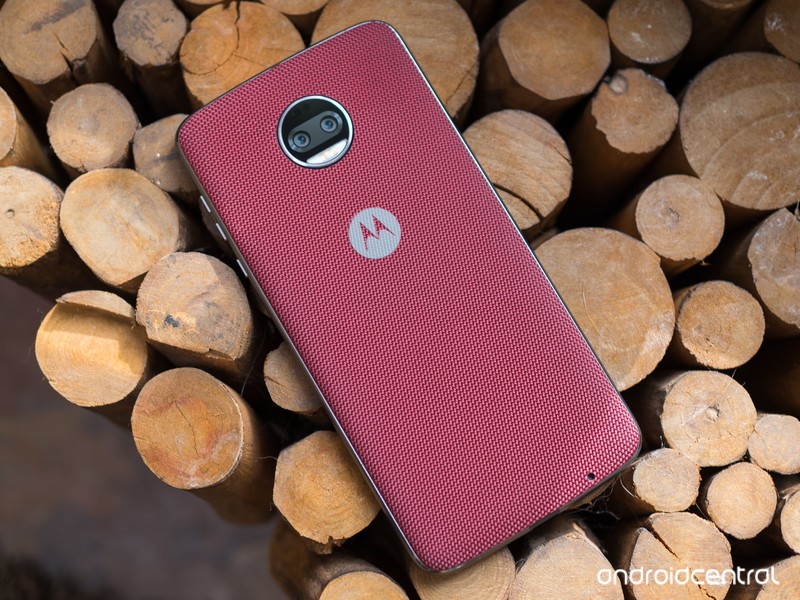
Starting “this fall,” Motorola will roll out the Oreo update to:
- Moto Z
- Moto Z Droid
- Moto Z Force Droid
- Moto Z Play
- Moto Z Play Droid
- Moto Z2 Play
- Moto Z2 Force
- Moto X4
- Moto G5
- Moto G5 Plus
- Moto G5S
- Moto G5S Plus
Aside from reaffirming just how ridiculous the naming convention is for Motorola’s phones, a few things stand out. First, it’s great to see that the flagship Moto Z line, now over a year old, is definitely making the jump to Oreo. Also, it’s not surprising to see the latest phones in the Moto G lineup also making the jump — but hey, sometimes you never know with Motorola.
Then there are a couple notable omissions here: what about the Moto E4 series, which launched this year? Sure phones like the Moto E4 retail for just $129, and are already on sale well under that mark, but it’s a phone that launched in June 2017 and it isn’t confirmed for an Oreo update. And how about last year’s Moto G4 lineup — perhaps not every model, but maybe the high-end Moto G4 Plus, at least? Nothing confirmed right now.
That’s not to say that Motorola couldn’t roll out those updates later, perhaps in the first few months of 2018 as so many other manufacturers will, but this isn’t necessarily giving us tons of confidence that it’ll happen.
Android Oreo
- Android Oreo review!
- Everything new in Android Oreo
- How to get Android Oreo on your Pixel or Nexus
- Oreo will make you love notifications again
- Will my phone get Android Oreo?
- Join the Discussion
Nine of Cassini’s most exciting discoveries about Saturn
Saturn is something of a solar system unto itself (minus the requisite sun). It’s surrounded by 53 confirmed moons and another 9 “moonlets,” tiny worlds that are among the most exotic and diverse we’ve seen in this neck of the galaxy. For as much as we could see from our Earth-based telescopes, it was only by getting up close and personal with the system’s second largest planet — by sending a $3.4 billion science machine hurtling 8.88 million miles across interplanetary space — that we were able to truly observe Saturn.
And it’s a good thing we did because the scientific discoveries have been near-constant in the 11 years since Cassini left home. We’ve seen the surface of Titan and watched its liquid methane flow, fall like rain into massive hydrocarbon seas. We saw the tiny icy moon of Enceladus reveal its 101 geysers which shoot hundreds of pounds of water ice and molecular hydrogen into space from a subsurface ocean. Think of the life we’ll find in there! And above all, the Cassini mission helped us better understand the atmosphere and global mechanisms of Saturn itself. Here are nine of the most exciting scientific discoveries the Cassini mission brought about.
NSA once spied on your *NSYNC downloads from Kazaa
A nostalgic new cache of Edward Snowden files shows the National Security Agency (NSA) has been snooping online for a lot longer than you may think. While you were listening to Enya on your state-of-the-art iPod, the agency was looking into peer-to-peer encryption sites like Napster, Limewire and Kazaa, according to a report by The Intercept. Its crowning achievement was to crack the encryption used by at least two sites, Kazaa and eDonkey, exposing search queries and shared files.
The NSA wasn’t doing this because they cared about intellectual property or for the lulz, but rather because the baddies it wanted to spy on were using the services. “By searching our collection databases, it is clear that many targets are using popular file sharing applications. But if they are merely sharing the latest release of their favorite pop star, this traffic is of dubious value (no offense to Britney Spears intended),” an NSA researcher actually wrote.
After cracking the encryption on some sites, the NSA discovered it could find certain information like “email addresses, country codes, user names, location of the downloaded files and a list of recent searches.” They also found “somewhat surprising” files besides movie or music, though didn’t specify which (perhaps Goatse).
Later on, the NSA and UK agencies started hacking BitTorrent and other torrent sites. In one case, the GCHQ shared information about a pedophile ring with London’s Met police and could search out users sharing files with “jihad” in the filename on eMule, in another instance.
The new revelations are mostly of academic interest, but show that the NSA and other agencies cut their teeth on early 2000s file-sharing sites. The sophistication has increased exponentially since then, to the point where US spy agencies can’t even keep their own hacking tools contained.
Via: Torrent Freaks
Source: The Intercept
 AIVAnet