


50 New Features in iPhone X
Apple has officially introduced the iPhone X, its new flagship smartphone with dozens of new features. It won’t be available until November 3, but here’s a preview of 50 changes and improvements coming.
Design
Glass: iPhone X’s front and back are all glass, with a strengthening layer that is 50 percent deeper. Apple said a seven-layer ink process allows for precise hues and opacity, and a reflective optical layer enhances the colors. An oleophobic coating helps reduce smudges and fingerprints.
Stainless steel frame: A surgical-grade stainless steel band wraps around the edges of the iPhone X. It is an Apple-designed alloy.
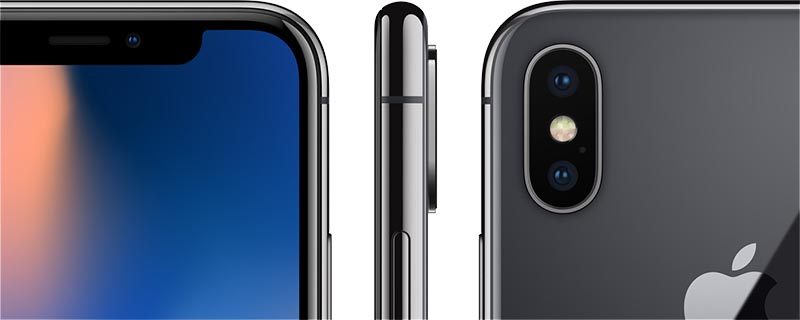
All-screen: iPhone X has a nearly edge to edge display with only a tiny notch at the top for the TrueDepth camera system. Thin bezels surround the display, and the Home button has been removed.
Side button: Apple lengthened the Lock button and renamed it the Side button on iPhone X. Double tap it to invoke Siri.
New accelerometer
New gyroscope
Super Retina HD Display
5.8-inch display: The largest iPhone display ever. Nevertheless, the all-screen design allows it to be between an iPhone 8 and iPhone 8 Plus in both size and weight. For that reason, the iPhone X is the best choice for a smartphone with the maximum display size vs. one-handed usability.
OLED: iPhone X is the first iPhone with an OLED display, which has benefits such as improved color accuracy, high contrast ratio, and true blacks.

True Tone: iPhone X automatically adapts the color and intensity of the display to match the color temperature of the light in its surrounding environment. If you are standing in a dimly lit room with incandescent light bulbs, for example, the display would appear warmer and yellower. If you are standing outside on a cloudy day, the display would appear cooler and bluer.
HDR: iPhone X has a true High Dynamic Range display. You can watch movies and shows in Dolby Vision and HDR10.
2436×1125 pixels: iPhone X has the highest resolution iPhone display ever. 458 pixels per inch.
1,000,000:1 contrast ratio
Tap to Wake
Front Camera
TrueDepth: The front camera system consists of an infrared camera, flood illuminator, proximity sensor, ambient light sensor, earpiece speaker, microphone, 7-megapixel camera, and a dot projector. It is used for Face ID facial recognition, Portrait Mode selfies, and Animoji.
Face ID: Apple replaced Touch ID with Face ID on iPhone X. Simply raise the device, look at it, and swipe up on the screen to unlock the device or authenticate your identity for Apple Pay. Apple said there’s a one in a million chance the facial recognition system could be duped by a stranger.
Portrait Mode selfies: Portrait Mode is supported on the iPhone X’s front-facing camera via the TrueDepth system.

Animoji: Animoji are Apple’s new set of emoji-style characters that animate based on an iPhone user’s facial expression. Animoji take advantage of the iPhone X’s new TrueDepth camera system, which features several new 3D sensors to detect your facial expressions in real time.
Rear Camera
Larger and faster 12-megapixel sensors
Vertically-aligned dual lenses

Dual optical image stabilization: iPhone X has optical image stabilization for both the wide-angle and telephoto lenses.
Quad-LED True Tone flash with Slow Sync: Slow Sync combines a slow shutter speed with a short strobe pulse. It helps in low light when you want a brighter foreground subject with a properly exposed background. The flash’s illumination is up to two times more uniform, helping to reduce hot spots.
Improved image signal processor: Apple says its image signal processor detects elements in the scene—like people, motion, and lighting conditions—to optimize photos even before you take them. It also delivers advanced pixel processing, wide color capture, faster autofocus, and better HDR photos.
Apple-designed video encoder: Real-time image processing with HEVC compression for reduced file sizes.
4K video recording at 60 FPS
1080p slo-mo video recording at 240 FPS

Improved video stabilization
Larger ƒ/2.4 aperture for telephoto lens: iPhone X’s telephoto lens has a larger ƒ/2.4 aperture, which affects exposure and depth of field. By comparison, the telephoto lens on iPhone 7 Plus has a ƒ/2.8 aperture.
Better low-light zoom
Improved Portrait Mode
Portrait Lighting: Apple says Portrait Lighting uses sophisticated algorithms to calculate how your facial features interact with light. Then it uses that data to create lighting effects, such as Natural Light, Studio Light, Contour Light, Stage Light, and Stage Light Mono.
Calibrated for augmented reality
Deeper pixels
Power
Wireless charging: iPhone X supports wireless charging based on the Qi standard. The device can charge by being placed on an inductive charging pad, such as Apple’s upcoming AirPower mat or third-party options from accessory makers such as Mophie, Belkin, and Incipio.

Fast charging: iPhone X is “fast-charge capable,” which means the device can be charged to 50 percent battery life in 30 minutes using Apple’s 29W, 61W, or 87W USB-C Power Adapters, sold separately and included with any 12-inch MacBook and 2016 or later MacBook Pro models.
Longer battery life: Up to two hours longer than iPhone 7.
Performance
A11 Bionic: Apple’s latest chip has two performance cores that are 25 percent faster, and four high-efficiency cores that are 70 percent faster, than the A10 chip in iPhone 7 and iPhone 7 Plus.
M11 motion coprocessor

Neural engine: Apple says the neural engine in its A11 Bionic chip is a dual-core design that recognizes people, places, and objects. It processes machine learning tasks at up to 600 billion operations per second as the driving force behind new features like Face ID and Animoji.
Faster Apple-designed GPU: Apple says its new three‑core graphics processor, part of the A11 Bionic chip, is up to 30 percent faster than the A10 Fusion chip in iPhone 7 and iPhone 7 Plus.
Wireless
NFC with reader mode: Apple recently introduced Core NFC, a new iOS 11 framework that enables apps to detect Near Field Communication tags.
Bluetooth 5.0: Bluetooth 5.0 offers four times the range, two times the speed, and eight times the broadcast message capacity compared to Bluetooth 4.2.
Location
Galileo support: Galileo is Europe’s Global Satellite Navigation System (GNSS), an alternative to the Global Positioning System (GPS) system owned by the United States government.
QZSS support: Quasi-Zenith Satellite System is a satellite-based augmentation system for the Global Positioning System (GPS) that is receivable within Japan.
iOS 11 on iPhone X
Simplified status bar: Clock on the left. Wi-Fi strength, cellular bars, and battery life indicator on the right.

Double-tap Side button for Siri
Press the Side button + Volume Up to take a screenshot
Swipe up to close apps
Swipe up and pause to view multitasking screen
iPad-like dock design

Selfie Scenes in Clips: When using Clips with an iPhone X, there’s a new “Selfie Scenes” feature that will use the TrueDepth front-facing camera on the device to immerse users in a selection of 360-degree animated landscapes.iPhone X can be ordered starting Friday, October 27, with in-store availability in limited quantities starting Friday, November 3.
The device is available in 64GB and 256GB storage capacities for $999 and $1,149 respectively in the United States. Prices vary elsewhere.
Related Roundup: iPhone X
Discuss this article in our forums
Google Teases Upcoming Pixel 2 Event, Aimed at Those Who Are ‘Thinking About Changing Phones’
Google has launched a new advertising campaign and teaser website for its upcoming “Pixel 2” smartphone. The site teases visitors with an October 4 event date, aimed at anyone who might be “thinking about changing phones” (via TechCrunch). The page presents no other information, and asks for the user’s email address to stay up-to-date with alerts regarding breaking news ahead of the October 4 event.
Since the original Pixel smartphone debuted in October of last year (it was actually announced on the exact same date in 2016), a similar date was expected for the new version of Google’s smartphone. Rumors about the Pixel 2 have been spreading over the summer in the lead-up to its launch, with current predictions aimed at a smartphone with a Snapdragon 835 or 836 chipset, 4GB of RAM, “squeezable” sides to perform different functions, and IP68 water and dust resistance.
The Google Pixel 2 will also come in standard and “XL” versions, similar to the first generation (launched in 5-inch and 5.5-inch sizes). The XL is rumored to have premium features, however, including a larger 6-inch display with “very narrow” bezels, which the smaller device will lack and reportedly appear similar to the 2016 design. There’s a chance other Google devices, like a new Chromebook and “Google Home mini,” will appear at the same event.
 The current lineup of Pixel Phone devices
Google’s tease comes two days after Apple revealed the iPhone 8, iPhone 8 Plus, and iPhone X, which have enticed many users who are ready to upgrade their smartphones — the customers that Google is likely aiming at with its new Pixel 2 campaign. If the rumored specs become true, compared to the iPhone X the Pixel 2 will have slightly better RAM (4GB vs 3GB), water resistance (IP68 vs IP67), and screen size (6-inch vs 5.8-inch).
Tags: Google, Google Pixel
Discuss this article in our forums
A dozen companies could have built the iPhone X. Why did they wait for Apple?
“Over the past decade, we’ve pushed forth with innovation, after innovation, after innovation,” Apple CEO Tim Cook said as he described the 10-year history of the iPhone in Apple’s brand-new Steve Jobs theater, at its new Apple Park headquarters in California. He’s right. More than any other company, Apple has defined the modern smartphone. It pulled the rug out from companies like BlackBerry and Nokia in 2007, and has added new features like clockwork each year. That brings us to 2017 and the iPhone X, a phone that scans your face, wirelessly charges, and has a screen that curves around every inch of its own glossy, glass face.
Apple’s magic sauce is that it doesn’t let competition get under its skin.
As Cook boldly declared that the iPhone X will define the next decade of smartphones, I realized that’s not just bluster. He’s probably right. For a decade now, Apple has pushed forth with “innovation after innovation after innovation,” mostly unopposed. It’s difficult to imagine this changing in the next 10 years. Anything can happen, but no other smartphone company currently looks poised to dethrone Apple anytime soon. When you think about it, that’s sad.
Apple’s magic sauce is that it doesn’t let competition get under its skin. It’s choosey about the tech innovations it picks for its devices, and artfully creates use cases for all of them.
But as expertly crafted as Apple products are, the company also has slow, predictable annual release cycles (or longer) that competitors can rely on to try and gain an edge, and it often waits two or more years to unveil a truly new product design. On paper, winning over Apple users looks easy; yet no company seems able to do it. Instead of Android phone makers speeding up Apple, it has slowed the rest of them down. The whole industry now follows its slow, plodding pace of innovation. Why can’t any of them rise to the challenge?
Samsung could have made the iPhone X
Take Samsung, for example. Why didn’t Samsung, Apple’s biggest smartphone competitor, debut the first completely edge-to-edge screen on one of its Galaxy phones? It had the technology. Samsung is the company manufacturing Apple’s new OLED iPhone X screen, which curves and takes up the entire front face of the phone. Somehow, it hasn’t yet pulled off this trick on its own phones. It got close with the Galaxy S8 and Note 8, likely because it knew what direction Apple was headed, but no cigar. (Andy Rubin’s Essential phone was also a near miss – it had a cut out up top, but just didn’t go far enough.)
Samsung Galaxy Note 8 (Photo: Julian Chokkattu/Digital Trends)
Apple’s screen gives you an actual ‘wow’ moment when you look at it. It appears magical. The edges on the iPhone X screen are so rounded that they look like science fiction, and the curved cutout for the camera up top only enhances the effect. Apple has shattered the notion that phone screens must be perfectly rectangular. But it’s not like the technology for edge-to-edge screens is new. Hell, we were reviewing Sharp phones in 2014 with similar “bezel-less” technology. Apple just shaved off the corners, but by going that extra distance – by boldly taking it to the limit — it really set itself apart.
Samsung has taken it to the limit too, at times. Its biggest successes have come from lucky bold stances it took and stuck with, like its curved edge screens or the Galaxy Note line, which made big phones desirable. The Note led to enough market push that even Apple had to react to it. Sadly, Samsung doesn’t stick to its guns. It has its moments, but its focus and discipline wavers. Competition gets under Samsung’s skin. It is often noncommittal and flippant with its phone innovations, or relentlessly shotguns them out, not putting its true weight behind ideas. It often follows, rarely leads.
And yes, a company like Samsung can actually beat Apple to the market and still be a follower. Many phone makers study the many rumors that pop up online, and in the corporate and manufacturing worlds there are even more backchannels for companies to find out what Apple has cooking, months or years before those products hit shelves. But beating Apple to market doesn’t work unless you also make a much better, different product. That’s where competitors struggle. You likely can’t beat Apple by mimicking its design choices.
Apple creates fun reasons for features to exist
Let’s go back to the iPhone X again. It shouldn’t be the phone that makes facial recognition a thing on smartphones. Samsung also debuted an ‘Iris Scanner’ last year, but it didn’t put its weight behind the feature or perfect it enough to make it essential. Samsung’s Galaxy S8 Iris Scanner is easily fooled by a simple photograph. Apple is making it look silly by rolling out a version that’s actually secure. In its presentation, it showed how much thought it put into the feature by specifically spelling out how photographs, masks, and other tricks won’t fool its 3D depth-sensing Face ID. The proof is in the pudding, as they say, but judging from Apple’s track record, Face ID will probably work as advertised.
The tech has been floating around for years, yet no one else spent the time to nail it.
Facial recognition tech has floated around for years, yet no one else spent the time to nail it. All Apple had to do was present it onstage like it’s a big deal and show us how it makes the iPhone more secure and easier to use. Now even I can’t wait to use it. As a bonus, Apple even added facial-tracking Animojis. Yet another small delight that came from Face ID.
Apple played the same game with Touch ID fingerprint sensors in 2013. Fingerprint sensors fluttered around in laptops and some phones, like the Moto Atrix and old Windows Mobile devices, for years. Apple made them essential by stuffing one into the iPhone 5S and every iPhone/iPad since. It gave the tech two thought-out purposes (unlocking and buying things) and integrated it deeply into the iPhone, just as it’s done with Face ID. Within a month of Touch ID debuting, HTC had a phone with a crappier, insecure fingerprint sensor, and Samsung sloppily added the feature to its next flagship phone (the Galaxy S5). Somehow, neither of them took the time to make it work for their users.
The iPhone X also added wireless charging, a ‘meh’ feature Samsung and select phone makers have included for years, but it’s upping the ante, releasing a single wireless charging pad that you can plop a couple iPhones and Apple Watches down on, eliminating the mess of cords you may have on your nightstand or desk.
Finally, look back at the double rear cameras that debuted on the iPhone 7 Plus — another feature many devices have. LG at least tried to make its dual cameras useful by enabling wide angle shots, but only Apple thought to include a beautiful, simple background blurring ‘bokeh’ effect for portraits and use the second camera to let users 2x optical zoom. There is now a real benefit to the camera on the iPhone 7 Plus, and a story to tell. It’s sad that only Apple succeeded in giving that second camera meaning and purpose.
All Apple does is give these technologies useful, thought-out purposes. Why is that such a hard thing for competitors to pick up on?
A graveyard of good ideas
Apple’s competitors have given up on many promising ideas because they didn’t boost quarterly profits fast enough or work out immediately. Modular phone designs, LG’s G5 mods and “Friends,” HTC’s amazing Boomsound speakers, Nokia’s incredible 41-megapixel camera … these are just a few game-changing features that sunk because they weren’t part of a fantastic overall package or weren’t given a use case where they could shine.
Apple is the only company that seems able to introduce new device categories, too. Despite years of effort, Google failed with its Glass eyewear and augmented reality (it’s now trying again). Now Apple seems poised to jump in and make it a feature people actually want with iOS 11.
You could fill a graveyard with all the tablets and smartwatches that tried to compete with the iPad and Apple Watch. Android makers knew Apple was making a watch for four years before it came out, and began releasing them more than a year before it, yet they still struggle to showcase the appeal of a smartwatch. Meanwhile, Apple’s Watch is now the top selling wristwatch in the world.
Did Apple have to be the first major tech company to introduce fully wireless, working earbuds (AirPods)? The tech was there, but only Apple put in the time to make it work and focus on it. It was even willing to eliminate its own audio jack on the iPhone 7 to push this, and other innovations, forward – despite blowback from its own users. And it’s stuck with its decision. There are no audio jacks on the iPhone 8 or iPhone X phones this year. That commitment has given it an 85 percent market share in the growing wireless headphone market a year later, and hasn’t impacted iPhone sales much, if at all.
It’s baffling that no iPhone competitors have figured out a long-term vision strong enough to give Apple a run for its money.
Companies can beat Apple, if they stop playing by its rules
Apple isn’t invincible. There are cracks in its armor. Just look at Spotify, which is the reason Apple Music exists, or Amazon’s Echo smart speaker, which has become so popular that Apple plans to counter it with a late-to-the-game HomePod speaker. Amazon’s Alexa voice assistant is slowly becoming ubiquitous while Siri, the smart assistant that started it all, is fading away, directionless. With Alexa, Amazon pulled an Apple, and we’re all winning because of it. Apple is likely working on much-needed upgrades to its voice assistant in response, which will benefit everyone.
Amazon’s Alexa voice assistant is slowly becoming ubiquitous while Siri, the smart assistant that started it all, is fading away, directionless.
Amazon is quickly becoming a powerful voice in devices, and is beginning to shape the smart home of the future. It’s not wasting time kicking rocks around, waiting for Apple to do it first. It’s showing leadership, commitment, and vision. (Let’s just hope it thinks through its next Fire Phone, should it get the urge to try again.) Roku is another great company that has pushed forward its vision while Apple has neglected the Apple TV, which just got its first update in two years.
When he was done showing off the iPhone X, Tim Cook also quoted a Wayne Gretzky motto Steve Jobs loved to repeat: “I skate to where the puck is going to be, not where it has been.” Apple has long followed this motto, but it skates a lot harder and a lot faster when it’s on the ice with skilled players. In the mobile space, it hardly needs to think about the puck, because it’s already scoring most of the goals.
I look forward to the day when more of Apple’s rivals start skating to where the puck is going to be, and push that puck of innovation their own direction.
‘How not to land an orbital rocket booster’ – Elon Musk shares blooper video
Why it matters to you
The video shows us just how far Elon Musk and his SpaceX team have come with the development of their reusable rocket system.
“Failure is an option here,” SpaceX CEO Elon Musk said in an interview in 2005, adding, “If things are not failing, you are not innovating enough.”
In the years that followed, as his team of crack engineers endeavored to perfect its reusable rocket system, we saw boosters not only flying off course, but also blowing up in mid-air, landing in a fireball, and exploding on the launchpad. You name the calamity, and the calamity pretty much happened. For Musk, failure isn’t only an option, it’s a downright necessity.
In a tongue-in-cheek nod to those fiery failures, the billionaire entrepreneur on Thursday posted a blooper video (below) showing, as he describes it, “The sordid history of how the SpaceX Falcon 9, the first fully reusable, orbit-class booster rocket, eventually managed to land in one piece and stay that way.”
The sordid history of how the @SpaceX Falcon 9, the first fully reusable, orbit-class booster rocket, eventually managed to land in one piece and stay that way … maybe Falcon realized it still loved us or finally read the instructions…
A post shared by Elon Musk (@elonmusk) on Sep 14, 2017 at 12:21am PDT
Titled “How not to land an orbital rocket booster,” the video is a 60-second string of spectacular disasters set to Sousa’s Liberty Bell March, better known by many as the Monty Python theme tune.
Some of the extremely expensive mishaps featured in the video include a “hard impact on ocean”; an engine sensor failure resulting in a dramatic mid-air explosion; and a loss of balance where the rocket landed before toppling over and blowing up.
There’s also a clip showing Elon Musk nonchalantly inspecting the smoldering wreckage of a mangled Falcon 9 with the caption, “Rocket is fine? It’s just a scratch.” And another showing a fireball as the rocket came down too hard, with the accompanying comment, “Well, technically it did land … just not in one piece.”
If all of SpaceX’s launches and landings were still ending in disaster, it would’ve been someone other than Musk posting a blooper video like this. But because the team’s tireless efforts over the years have resulted in major successes, Musk is happy to share his company’s ongoing story with some humor mixed in.
After its first successful launch and landing in December, 2015, SpaceX is moving toward perfecting its system, enabling it to reuse boosters for repeat missions to drastically reduce the cost of space travel. And with Musk insisting that failure is an option as he continues to innovate, we’ll likely get to enjoy a few more of his blooper videos in the years to come.
The Morning After: Thursday, September 14th 2017
We made it past hump day. Two to go. We’ve now had time to mull over Apple’s big iPhone announcements and the results are… inconclusive. Maybe you should get the iPhone X. No, you should get the iPhone 8. It just depends. There’s also more tone-deaf ideas from Silicon Valley, and a sudden torrent of Nintendo news.
The Impossible Project is dead, long live Polaroid Originals.
The original instant camera is back.

Sure, you have Instagram now, but there’s nothing like snapping a picture and watching it develop on real film before your eyes. After a decade of trying to revive Polaroid photography, the Impossible Project has renamed itself Polaroid Originals and launched its second device, this $100 OneStep 2. It’s paying homage to the original Polaroid OneStep from 1977.
Decisions, decisions.
When there’s the iPhone X, why bother with the iPhone 8?

Apple, now that was courage. Announcing a pair of phones, then knocking them figuratively off the table to reveal the iPhone of the future — which will launch a month later. What’s an iPhone faithful supposed to do? Buy the iPhone X. No, wait. Buy the iPhone 8.
Mark your calendar.
Tesla’s electric truck will be revealed October 26th
Part of Elon Musk’s master plan is rolling out an all-electric big rig, and we’ll find out the details next month. Rumors have us expecting 200- to 300-mile range, and possibly autonomous capabilities that could revolutionize trucking. We’ll be first in line for a test ride.
Have they heard of Amazon Prime Now?
Bodega’s tone-deaf vending service won’t kill real bodegas
Just as Juicero exited stage left, Bodega stepped in to represent everything people love to hate about Silicon Valley startups. After Fast Company presented its glorified vending machine as an attempt to make your corner store obsolete, a wave of outrage followed, forcing an apologetic response from its founders. Of course, a critical look at the company’s business plan suggests that even with internet connectivity, computer vision and machine learning, it’s unlikely to succeed.
But wait, there’s more…
Watch SpaceX blow up a lot of rockets while trying to land them
During the early days of SpaceX’s rocket landing attempts failure was definitely an option, so instead getting depressed, Elon Musk embraced it. Knowing that everyone loves a good (harmless) explosion, he just released a full-on fail highlight reel of the early attempts, set to the Monty Python theme and accompanied by Arnold-like quips. “It’s just a scratch,” he said, after one booster was deliberately blown to pieces due to an engine sensor failure.
You can reminisce to all the greatest hits of those early days. That includes a last-minute fin failure due to a lack of hydraulic fluid (“technically it did land… but not in one piece”), throttle valve “stiction” followed by a painfully slow topple (“Look, that’s not an explosion, it’s just a ‘rapid unscheduled disassembly (RUD)’”), landing leg collapse (“entropy… is such a lonely word”), a landing burn failure (“the course of true love never did run smooth”), and the final barge failure, when the booster ran out of propellant (‘#$@&%*?!^&^%^$!,” I think).
The video ends with the first successful pad landing and first successful droneship landing so we don’t finish with a bad taste in our mouths. In a tweet (below), Elon Musk recalls the “long road to re-usability of Falcon 9 primary boost stage,” and adds that “when upper stage & fairing also reusable, costs will drop by a factor > 100.”
Over a year has passed since the disastrous pad explosion that halted SpaceX flights for the better part of three months. Since then, the Falcon 9 has been flying at a breakneck pace (13 missions), and has landed its booster successfully in 10 consecutive attempts, including several with recycled boosters. WIth the video, Musk was no doubt using his mathematically-oriented mind to follow the formula: Comedy = tragedy + time.
Long road to reusabity of Falcon 9 primary boost stage…When upper stage & fairing also reusable, costs will drop by a factor >100. pic.twitter.com/WyTAQ3T9EP
— Elon Musk (@elonmusk) September 14, 2017
Source: Elon Musk (Instagram)
Fox’s takeover of Sky referred to the UK’s competition regulator
It’s now been a full year since 21st Century Fox first confirmed its interest in buying out Sky. In that time, the deal has been referred to and cleared by the European Commission, scrutinised by communications regulator Ofcom and discussed numerous times in parliament without a firm approval or denial. The decision has now been pushed back even further after Culture Secretary Karen Bradley announced today that the merger will be passed to the the Competition and Markets Authority (CMA) as part of a formal six-month review.
In a statement, the Culture Secretary said that the CMA will focus on “the genuine commitment to broadcasting standards as well as media plurality grounds.” Fox already owns 39% of Sky but announced in December last year that it launching a fresh bid to acquire the rest of the company.
Less than 48 hours earlier, Bradley had updated MPs on her findings — including 30,000 “representations” that produced evidence against a Fox-Sky merger — and hinted that she would defer the case to the CMA in order to identify whether the newly-formed mega corporation “might operate against the specified public interests.”
In Ofcom’s public interest report, concerns were raised over whether Fox had the necessary compliance procedures in place for the broadcast of Fox News in the UK. Other parties had also argued that Fox would “Foxify” its own news outlets outside of the US if the deal went ahead. Fox acted quickly by pulling the channel from UK screens at the end of August.
Because neither Fox or Sky had made their own “substantive representations” against the referral, the CMA will now be given 24 weeks (around six months) to conduct its own investigation into the buyout. It can’t approve or deny the deal, but only help Bradley reach her final conclusion. “We note the swift decision to now refer this to the CMA and will continue to engage constructively in this process,” Sky said in a brief statement.
Source: Department for Digital, Culture, Media & Sport (Gov.uk)
Daimler eyes super-fast electric vehicle charging
Daimler, parent company of Mercedes-Benz (and others) is pushing to get the majority of its vehicles to run on electricity. But there’s still the issue of slow battery charging times that needs to be overcome if users are going to abandon gas. Which is why Daimler is throwing some of its cash towards Israeli startup StoreDot, which is working on a way to fully charge an EV in just five minutes.
The company has raised $60 million in investment, with other partners including Chelsea FC owner Roman Abramovitch and Samsung. Although it’s the latter that’s more interesting, since it’s a company that knows a thing or two about the need for stable fast-charging batteries. StoreDot will spend the cash on developing FlashBattery, its replacement for Lithium Ion tech that will offer 300 miles of range on a single charge.
It’s hoped that, in the not-too distant future, FlashBatteries will be built into production EVs at source as a modern-day replacement for existing power-storage tech. The fact that Daimler’s backing the project makes that a little bit more likely, since the pair can develop automotive-friendly solutions together. Not to mention that it’s just one of several outlandish ideas that Daimler has written checks to of late, including the Volocopter drone taxi.
Jaybird Announces RUN True Wireless Headphones With Charging Case for $180
Sport headphone company Jaybird today announced two new pairs of wireless headphones, including its first pair of truly wireless Bluetooth earbuds.
The Jaybird RUN True Wireless Headphones feature a four-hour battery life and come with a pocket-sized charging case providing an additional eight hours, for a total of 12 hours of battery life on the go, while a five-minute charge gives around one hour of play time.
Jaybird says the buds have a “double hydrophobic nano coating” that protects them from sweat and water damage. There’s a single button on both earpieces that takes calls, starts and stops music, skips tracks, and activates Siri. The buds are also designed for one-ear use, allowing runners to stay more aware of their surroundings.
The Jaybird mobile app lets users adjust the sound signature of the earbuds in the lows, miss, and highs, and includes a Find My Buds feature if they go missing. The app also supports sharing of Spotify running-themed playlists with other Jaybird users.
At $180, the Jaybird RUN headphones are pricier than Apple’s AirPods ($159) and come in two colors: Drift, which has white and silver metal accents, and Jet, which is black with silver metal accents.

The company’s second new pair of headphones are basically a redesign of its miniscule Freedom buds and still have a wire that connects them behind the neck, but the Freedom 2 are said to have an improved fit and greater comfort, with double the battery life (up to eight hours) and water resistance.
The Freedom 2 headphones cost $149, and along with the new RUN earbuds should be available in stores in October, with pre-orders beginning today over on BestBuy, Amazon, and the Jaybird website.
Tags: AirPods, Jaybird
Discuss this article in our forums
iPhone 8 and 8 Plus Have Smaller Batteries Than iPhone 7 Models, But Similar Battery Life
Apple’s new iPhone 8 and iPhone 8 Plus have smaller batteries than the iPhone 7 and iPhone 7 Plus, respectively, according to details discovered today on China’s official communications certification board.
The TENAA listings were highlighted by mobile leaker Steve Hemmerstoffer in a tweet, revealing that the iPhone 8 comes with a 1,821mAh battery, while the iPhone 8 Plus has a 2,675mAh battery.
For those how cares about, Tenaa just confirmed #iPhone8 and #iPhone8Plus comes with 2GB and 3GB of RAM, reveals 1821mAh and 2675mAh battery pic.twitter.com/NnIvYkVuAk
— Steve H. (@OnLeaks) September 14, 2017
If the TENAA listing is correct, the iPhone 8 line-up therefore features smaller batteries than last year’s flagship Apple smartphones. In comparison, the iPhone 7 and iPhone 7 Plus feature 1,960mAh and 2,900mAh batteries, respectively.
Be that as it may, Apple claims its iPhone 8 devices offer “about the same” battery life as the iPhone 7 and iPhone 7 Plus when it comes to internet use, talk time, and audio and video playback over wireless.
It looks as if Apple has been able to eke out near identical battery life out of smaller batteries in the iPhone 8 devices thanks to the company’s new high performance A11 Bionic processor, which Apple claims is more power efficient than previous chipsets.
The smaller batteries also boast support for wireless Qi charging and a new fast-charge capability, which means the iPhone 8 and iPhone 8 Plus can be charged to 50 percent battery life in 30 minutes using Apple’s 29W, 61W, or 87W USB-C Power Adapters (sold separately and included with Apple’s latest MacBook and MacBook Pro models).
In addition to the battery details, the TENAA listings also appear to confirm the iPhone 8 has 2GB of RAM and the iPhone 8 Plus packs 3GB of RAM, as previously reported.
We’ll have to wait for the inevitable device teardowns for conclusive evidence about these specs. The new smartphones will be available to pre-order from September 15, with the devices launching on September 22. Prices start from $699 for the iPhone 8 and $799 for the iPhone 8 Plus.
Related Roundups: iPhone 7, iPhone 8
Discuss this article in our forums
 AIVAnet