


Wannabe screenwriters: Maybe don’t tweet your movie idea
If Twitter existed in the ’70s and Sylvester Stallone used it, he may have ended up a nobody while someone like Burt Reynolds starred in Rocky. A judge dismissed a lawsuit by little-known actor Jarrett Alexander, over an idea he tweeted to Stallone in 2012 about the concept for a movie he called Creed. However, the court ruled there’s no proof Stallone or director Ryan Coogler ever saw the tweets, and even if they did, never agreed to anything with Alexander.
Alexander’s title, Creed, and story about the rise of Apollo Creed’s son certainly line up with parts of the film. However, Coogler said he independently came up with the the film, and the plot is substantially different. For instance, Alexander’s concept had the younger Creed taking on Russian baddie Ivan Drago’s offspring in a mixed martial arts storyline.
Alexander wrote a script, copyrighted it and created a fairly elaborate pitch reel using scenes and characters from earlier films, then posted it on “creedmovie.com.” He claimed that Stallone, a Twitter user with 2.6 million followers, “must have seen his copyrighted materials and ideas,” because Alexander (who has 79 followers) submitted links to his Twitter handle and website, the lawsuit states. He did so, he said, “with the understanding, derived from long-standing industry custom, that he would be compensated if the Creed concept was used.”
Happy Birthday, @RealSlyStallone! Let’s make CREED happen! http://t.co/txoH0Ifldt (cc: @thealexanderj)
— Jarrett Alexander (@TheAlexanderJ) July 6, 2013
However, the judge noted that the “long-standing industry custom,” since a 1956 case is actually to secure an agreement before disclosing your idea, or producers can essentially feel free to steal it. “It strains reason that defendants ‘accepted’ plaintiff’s order to enter a contract … from a unilateral tweet and from Plaintiff disseminating his Creed idea on the internet,” Judge Ronald S.W. Lew said.
Furthermore, the judge said there’s no way for Alexander to prove that Stallone or anybody else saw the tweet, since no one involved ever replied to it. “The Court will not allow a breach of implied contract claim to proceed on … tweets to a popular celebrity social media account which were never responded to,” he said.
The case was watched with interest by the legal community, as it touches on both contract and copyright law and ties in new-fangled social media, to boot. Ironically, lawyers for the filmmakers argued that it was Alexander who was violating copyright law by creating an “unauthorized derivative work,” i.e., his concept for a sequel, using characters and clips from old Rocky movies.
Source: Variety
4K Apple TV Could Feature A10X Fusion Chip and 3GB of RAM
Apple’s upcoming fifth-generation 4K Apple TV will be powered by an A10X Fusion chip and 3GB of RAM, according to details unearthed in the device’s firmware.
Developer Steve Troughton-Smith made the claim this morning in a tweet, after going through code in the final software builds that were at the center of a major Apple leak over the weekend.
Apple’s current fourth-generation Apple TV, originally released in 2015, runs on an A8 chip coupled with 2GB of RAM. But the boost in performance provided by the A10 series – which also powers the latest iPad Pro models – suggests Apple could see a bigger role for its next set-top box, possibly expanding beyond 4K content.
On the other hand, Troughton-Smith believes Apple may have chosen the A10X Fusion processor to play 4K content at 60 frames per second, which would make sense given that the iPhone X is expected to record 4K video at 60fps.
Even if that is the primary reason for including such a powerful chip in the next Apple TV, users can expect significant performance gains across the board, while tvOS game developers will be rubbing their hands together at the prospect of leveraging the processor’s power to create immersive 3D experiences to rival modern console titles.
…I guess three cores would make it the A10X Fusion. Correction!
— Steve T-S (@stroughtonsmith) September 11, 2017
The 3GB of RAM would bring the extra working memory needed to stream 4K HDR content, which is expected to become available both in the iTunes Store and from third-party content providers, but the additional RAM may also factor into any role the Apple TV has in Apple’s augmented reality future plans.
The ARKit developer framework is already turning out to be a major feature of Apple’s upcoming iPhone 8 and iPhone X devices, which are set to be announced on Tuesday alongside a new Apple TV and Apple Watch, during a media event at the Steve Jobs Theater in Apple Park, Cupertino. Several details about Apple’s iPhone X have already been found in the iOS 11 GM, including information on Face ID setup, Animoji, the split status bar, the A11 processor, and the device’s design.
Related Roundups: Apple TV, tvOS 10
Tag: tvOS
Buyer’s Guide: Apple TV (Don’t Buy)
Discuss this article in our forums
Xiaomi’s $500 Mi Mix 2 is now official with razor-thin bezels, global LTE bands
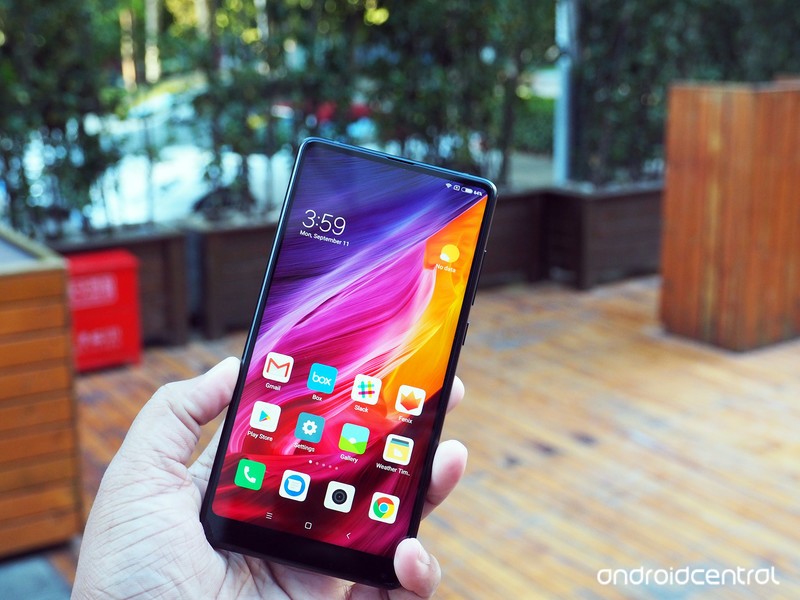
Xiaomi will make the Mi Mix 2 available in global markets.
Xiaomi took the smartphone segment by surprise with the Mi Mix last year, and this year’s offering builds on that bezel-less foundation. The Mi Mix 2 features a similar design as its predecessor, and a smaller 5.99-inch screen means you’ll be able to use the phone one-handed without any issues. A marquee feature this time around is the inclusion of global LTE bands, which makes the Mi Mix 2 compatible with carriers around the world.
The Mi Mix set the standard for bezel-less phones thanks to a 91.3% screen-to-body ratio, and Xiaomi has managed to once again offer a similar ratio this time around. There are subtle changes on the design front — the phone has curves on all four sides, and the ceramic back has smooth curves where it meets the aluminum mid-frame.
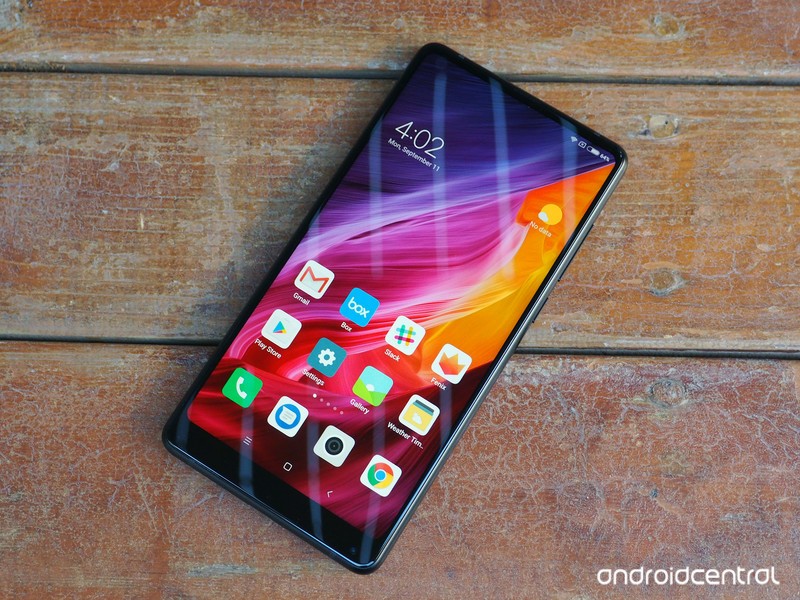
Aside from that, you get a familiar experience as that of the Mi Mix: the lack of any sensors at the top makes the display that much more immersive, and the ceramic body makes the phone stand out.
Like its predecessor, the Mi Mix 2 has an ultrasound proximity sensor and a camera sensor that’s tucked away to the corner of the bottom bezel. What’s new is a standard earpiece located just above the display, with Xiaomi moving away from the piezoelectric motor it used last time around. Xiaomi has integrated antenna bands at the top and bottom of the phone, and like the Mi 6, the Mi Mix 2 does away with the 3.5mm jack.
Specs include a Snapdragon 835, 5.99-inch 2160 x 1080 FHD+ display, 6GB of LPDDR4X RAM, storage configurations of 64GB, 128GB, and 256GB (all with UFS 2.1 storage), 12MP camera at the back along with a 5MP front shooter, and a 3400mAh battery with Quick Charge 3.0. On the software front, the phone is running MIUI 9 based on Android 7.1.1 Nougat.
- Xiaomi Mi Mix 2 specs
- Xiaomi Mi Mix 2: In pictures
While the phone isn’t going to be available in the U.S., it does come with LTE bands for most major carriers in the country, making it a viable candidate if you’re looking to import from China. In total, the Mi Mix 2 has 24 LTE bands, including TDD-LTE bands 34/38/39/40/41 and FDD-LTE bands 1/2/3/4/5/7/8/12/13/17/18/19/20/25/26/27/28/29/30.
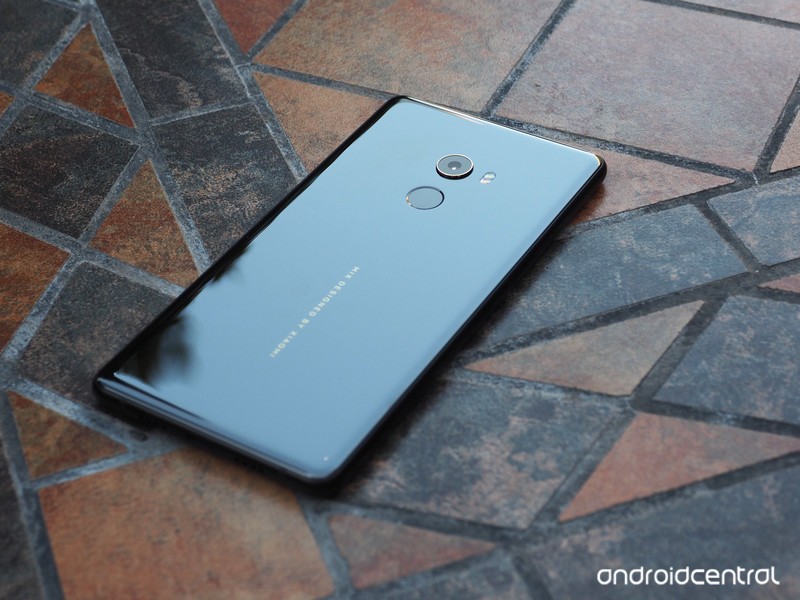
We’ll know more about global availabilty in the coming weeks, but for now, the Mi Mix 2 will go up for sale in China for ¥3,299 ($505) for the standard model with 64GB storage. The model with 128GB storage will retail for ¥3,599 ($550), and the version with 256GB storage will be sold for ¥3,999 ($610). You’ll have to shell out ¥4,699 for the special edition with the ceramic unibody. The ceramic model has a seamless finish, and comes with 8GB of RAM and 128GB storage.
What do you guys think of the Mi Mix 2? Share your thoughts in the comments below.
Xiaomi Mi Mix 2: In pictures

The Mi Mix 2 looks gorgeous from all angles.
The Mi Mix 2 is now official, and there’s plenty to like about the device. The phone builds on the bezel-less design of last year’s Mi Mix, with Xiaomi reducing the screen size to make the phone more conducive to one-handed usage. The Mi Mix 2 is going to be one of the best phones of the year, at least in markets it’ll be on sale. Take a look at what’s on offer:


The Mi Mix 2 will be coming to most global markets that Xiaomi currently has a presence in, but as of now, there’s no mention of when the phone will be going on sale outside of China. In the meantime, let us know what you think of Xiaomi’s latest flagship in the comments below.
Xiaomi Mi Mix 2 specs: Snapdragon 835, 6GB RAM, and 43 LTE bands

Xiaomi’s latest bezel-less phone has top-notch specs.
Xiaomi unveiled the Mi Mix 2 at a media event in Beijing, with the phone featuring top-of-the-line specs coupled with an evocative design that sees minimal bezels at the top.
The Mi Mix 2 has a 2160 x 1080 FHD+ panel with virtually no borders, with the camera sensor located on the bottom bezel. The phone is powered by the 10nm Snapdragon 835, and the standard model offers 6GB of RAM along with storage options of 64GB, 128GB, and 256GB.
This time around, Xiaomi is adding global LTE bands, making the Mi Mix 2 compatible with networks around the world. Here’s a look at the detailed specs on offer with the phone:
| Operating System | MIUI 9Android 7.1.1 Nougat |
| Display | 5.9-inch 18:9 IPS LCD 2160 x 1080 (403ppi)Sunlight modeReading mode |
| Processor | Qualcomm Snapdragon 8352.45GHz octa-core Kryo 28010nm FinFET |
| GPU | Adreno 540 |
| RAM | 6GB LPDDR4X (8GB LPDDR4X special edition) |
| Storage | 64GB/128GB/256GB UFS 2.1 flash storage (128GB special edition) |
| Expandable | No |
| Battery | 3400mAh |
| Charging | USB-CQuick Charge 3.0 (9V/2A) |
| Rear Camera | 12MP (Sony IMX 386) f/2.0, 1.25-micron pixels4-axis OIS, two-tone flash, PDAF4K@30fps, 1080p@30fps, 720p@120fps |
| Front Camera | 5MP1080p video<Beautify mode |
| Connectivity | Wi-Fi 802.11 ac MU MIMO, 2×2 MIMO LTE with VoLTE, Bluetooth 5.0GPS/AGPS/GLONASS/BeiDou |
| Network bands | FDD-LTE: Band 1/2/3/4/5/7/8/12/13/17/18/19/20/25/26/27/28/29/30TDD-LTE: Band 34/38/39/40/41TD-SCDMA: Band 34/39WCDMA: Band 1/2/3/4/5/6/8/9/19CDMA EVDO: BC0, BC1, BC6, BC10GSM: Band 2/3/5/8 |
| Security | One-touch fingerprint sensor at the back |
| SIM | Dual nano-SIM slot |
| Dimensions | 151.8 x 75.5 x 7.7mm185g |
Xiaomi is also rolling out a special edition of the Mi Mix 2 made out of a ceramic unibody chassis that is slightly narrower than the regular variant. The all-ceramic version of the Mi Mix 2 has dimensions of 150.5 x 74.6 x 7.7mm, and the weight is marginally higher at 187g.
Would you be interested in picking up the Mi Mix 2? Let us know in the comments below.
Waymo simulation is teaching self-driving cars invaluable skills
Last month, Alphabet offered up its first proper look at Carcraft. The simulation is a virtual home away from home (the real world) for Waymo’s self-driving vehicles. Here, you’ll find a replica of every real-world mile the autonomous cars have driven. And, each day, Waymo’s 25,000-strong fleet of Chrysler Pacificas traverse 8 million of these simulated miles. That’s according to the company’s latest blog post, which further breaks down its software. By honing in on a traffic signal in a particularly busy intersection, Waymo demonstrates how Carcraft can teach its connected vehicles to envision an exhaustive amount of scenarios (including hazards). In turn, the cars can then practice the manoeuvres that will help them safely navigate these situations in the real world.
First up, the company uses its custom-built sensors (found on top of its vehicles) to digitize a road. In this case, it’s focussing on a five-lane intersection in Mesa, Arizona – – complete with identical dimensions, lanes, curbs, and traffic lights. Its software can then drive this small stretch of tarmac thousands of times over. Now, it knows “to inch forward at the flashing yellow signal, and slot in after oncoming traffic.”

That’s not all. To make its cars even smarter, Waymo’s simulation takes one turn and throws thousands of variable situations in the mix. Everything from the speed of oncoming cars and the timing of traffic lights can be manipulated to prepare its vehicles for real-world conditions. On top of that, Waymo also changes the original street scene, by adding in cars, pedestrians and cyclists that may not have been present in the original capture. This process, known as “fuzzing,” can even simulate motorbikes splitting a lane, or joggers zig-zagging across the street. The end goal, however, remains the same: To get the cars ready for the chaos of the real world.
Once a virtual car learns a new trick, it can share it with the remainder of Waymo’s fleet. To ensure the vehicles have got the skills down, the company doubles up with real-world driving and its test track.
Waymo writes: “One of the key advantages of simulation is that you can focus on the most interesting interactions — flashing yellow signals, wrong-way drivers, or nimble pedestrians and cyclists — rather than monotonous highway miles.”
Source: Waymo (Medium)
Hurricane Harvey victims offered free Pixel phone repairs
Hurricane Harvey has been described by officials as “one of the largest disasters America has ever faced.” As Houston residents measure the damage wreaked by the tropical storm, Google is doing its little bit to help. The tech giant is teaming up with uBreakiFix to offer free repairs of its flagship Pixel phones to those in the Houston area affected by the hurricane.
Unlike some other Android handsets, the Pixel and Pixel XL aren’t waterproof, which means they were likely impacted by the deluge. But so were a lot of items, with insurers warning the cost of the damage could amount to $100 billion. When you’re staring down a list of costly replacements (or a lot of home insurance wrangling) a quick and free phone fix is definitely a plus. After all, just a cracked Pixel screen can set you back $130. Therefore, it’s a nice gesture on Google’s part.
The offer runs until 30 September at the following uBreakiFix locations:
- The Heights
- Rice Village
- Pearland
- Pasadena
- West Chase
- Sugar Land
- Webster
Source: uBreakiFix
Is the $449 Monster Superstar Ravebox Bluetooth speaker the ultimate party speaker? (Review)

If you’re looking for a little bit more premium of a device than the standard $20 Bluetooth speaker on Amazon, you might want to check out the Monster Superstar Ravebox. You probably know the company Monster even though you don’t realize it. It’s the company that makes the premium HDMI cables, but what a lot of people don’t realize is that it makes an entire host of high-end Bluetooth speakers, earbuds, headphones, battery banks, and other cables.
The Monster Superstar Ravebox is at the highest-end of the price spectrum for Bluetooth speakers. In fact, I don’t think I’ve ever seen another portable speaker at the $449.95 MSRP of the Superstar Ravebox. The only thing close is the Fluance Fi70 which is a stationary speaker, but like the Fi70, the Ravebox puts out an insane audio experience. It’s easily the loudest speaker I’ve ever heard and will be perfect as the main audio source for a large outdoor gathering.

The Ravebox gets pretty loud and bass is extremely well represented. The only thing keeping this thing from vibrating off the table is its very noticeable heft. Highs, mids, and lows are all pleasing and well represented. There’s no muddy bass or screeching highs to be worried about like in some other big Bluetooth speakers. If you’re going to be expected to pay something crazy like $449.95 for a Bluetooth speaker then it’s going to need extremely high audio quality and Monster checked the box there.
Another area where Monster can hang its hat is build quality. This thing is an absolute tank. It’s heavy as all get-out (16 lbs), but the handle on top helps for portability. It would be damn near impossible to carry it around with the handle due to how long and heavy it is. The hard plastic is great for long-term durability and keeping the speaker lighter than it could’ve otherwise been.

The Ravebox comes rated at IPx5 which means it’s water resistant. Monster claims it will perform wonderfully even in a torrential rainstorm but I’m not sure I’d risk something this expensive without a true IP68 rating. If you do break your speaker through water damage or some other fault of your own, Monster offers a one-time replacement for orders placed from its website. That’s a pretty excellent hidden feature.
Water resistance is almost a requirement at this price point as leaving out any essential features when asking a premium price would be assinine. It also comes with a gigantic disco ball on the end which is not essential, but it is amazing.

The light that comes from the “kaleidoscope of sight and sound” as Monster describes it, pulses to the beat of your music. If you’re listening to pounding and pulsing EDM, the light is going to be harsh and abrasive like you might find at a rave. If you’re listening to more chill music, you’re going to get a smooth and soothing light show. It really adds to the experience but it’s not the killer feature that Monster might make it out to be. It’s nice to have and my five-year-old loves it, but it’s just a party trick.

While Monster may have killed it in audio and build quality, I think there are improvements that can be made. First off, this thing is made for parties with the light show and massive sound, where’s our mic for karaoke? This seems like such an obvious addition that it could be a huge marketing advantage over other speakers.
Additionally, the Bluetooth connection is something that I believe should be worked on for future revisions. You get the standard 30 or so feet of range, but if you put anything between your phone and the speaker, like say a wall, you’re in for some trouble. It didn’t reliably cut out for me, but there were some drops. When you’re controlling the entertainment for a big outdoor party, that can be a killer.
I almost overlooked that there were no play, pause, and advance track buttons on the Ravebox. I suppose I never use them so I didn’t notice at first, but this seems like a weird omission. Monster is trying to market the Superstar Ravebox as the spiritual successor to the boom boxes of old, but when I think of those boom boxes, I think of switches and sliders and things sticking out from the face. It’s the complete opposite here.

The biggest issue, for me anyway, is the price. This is an amazing speaker and is definitely one of the best on the market, but are you going to pay $450 for a Bluetooth speaker? If you have the money, I say go for it but I think it’s out of reach for most people. Hilariously, Monster is financing for the Superstar Ravebox for only $28 a month on its website. Financing a Bluetooth speaker is something I hadn’t ever really considered before.
If you’re interested in picking up the Monster Superstar Ravebox, head on over to Monster’s website or Amazon.
Intel focuses its WiGig efforts on wireless VR
Don’t count on finding multi-gigabit WiFi in your laptop in the near future. Intel has announced that it’s discontinuing virtually all of its current WiGig hardware by the end of 2017, including antennas and controllers. Instead, the focus is on using the technology for wireless VR — don’t worry, Intel knows you hate tripping over cords. The news is unfortunate if you’re a fan of WiGig’s potential, but it’s understandable given the practical reality.
WiGig relies on the 60GHz band to send data as quickly as 8Gbps. While that’s extremely fast (multiple times faster than the 1.3Gbps you usually see), the ultra-high frequencies prevent it from penetrating walls or working effectively beyond 30 feet — it’s in no way a replacement for conventional WiFi. To date, you’ve been most likely to find WiGig in wireless laptop docks and other niche peripherals, much as you did when Wireless USB was relatively trendy.
This doesn’t mean that you’ll have to go without faster WiFi. The industry’s next big push is for 802.11ax, which promises much more throughput than existing 802.11ac WiFi and should cope better with crowded airwaves. However, it’s evident that WiGig doesn’t have much of a future outside of VR. Its drawbacks prevented it from getting widespread adoption, and there’s not much reason to support it when a powerhouse like Intel won’t make it widely available.
Source: AnandTech
Kodi fights trademark trolls trying to charge for its media app
Kodi doesn’t just have to worry about add-ons and devices that give it a reputation as a piracy haven. The media center app developer has revealed that it’s battling “trademark trolls” who’ve registered the Kodi name as their own and are using that mark to profit from software that’s supposed to be free to distribute. The culprits may charge you to host Kodi on a website, for example, or make you buy their Kodi boxes instead of others. And this isn’t a theoretical worry, either.
The team points to the example of Geoff Gavora, who registered the Kodi trademark in Canada and promptly used that to boot devices off of the country’s local Amazon store. Now, anyone who wants to buy a Kodi box from Amazon in Canada has to either spring for Gavora’s hardware or hope that someone is willing to pay him a fee to make their own. You don’t have to turn to Amazon if you want to buy or build a Kodi box, but this still limits your choices.
The Kodi developers aren’t embroiled in any lawsuits “so far,” and they note that a few trademark holders gave up their claims under the pressure of existing piracy lawsuits. However, the Kodi crew is starting to fight back. While it’s not actively planning lawsuits, it’s trying to both raise awareness of trolling and threatening to take “legal action” if it has no choice but to assert the free nature of its software. Will trademark hogs take the threat seriously? Not necessarily, but they can’t say they weren’t warned. And if nothing else, this is a reminder that open source idealism only matters so long as everyone respects the concept — and that may mean dragging people into court.
Source: Kodi
 AIVAnet