


Take a deep dive into Python with this boot camp bundle!
Python is one of the most popular programming languages out there thanks to a fast edit-test-debug cycle and wide versatility. Jumping into Python from a beginner’s standpoint isn’t exactly easy, as there are many routes you can take. The training required to become a Python expert is also generally quite expensive.
Become a Python master and save over 90% with this bundle! Learn more
What if there was a bundle of courses that included teaching for beginners as well as advanced users? What if, instead of paying over $800, you could pay under $50 and have access to the bundle for lifetime access?
Right now, Android Central Digital Offers has a great deal on the Python Programming Bootcamp 2.0, which includes eight courses that will take you from amateur to expert. Instead of paying the regular price of $1,293, you’ll pay just $50. That’s over 90 percent off!

Included in this bundle are hundreds of lectures in the following nine courses:
- Fast Track Python for Newbies
- Learn Python Image Processing by Making Instagram-Style Filters
- Create a Raspberry Pi Smart Security Camera with Python
- Master Data Visualization with Python
- The Complete Python Programming Boot Camp: Beginner to Advanced
- Learn Python with 70+ Exercises
- Python Programming for Beginners: Learn Python in One Day
- Machine Learning with Python
- Python for Finance: Investment Fundamentals & Data Analytic
Learn how to code with Python! Learn more
Even if you’re a complete beginner to Python, this bundle has what’s needed to become a true expert. At over 90 percent off, there’s no better time to get started on a new career. Don’t wait too long; this deal won’t last forever.
Brace yourself for winter with these Game of Thrones wallpapers
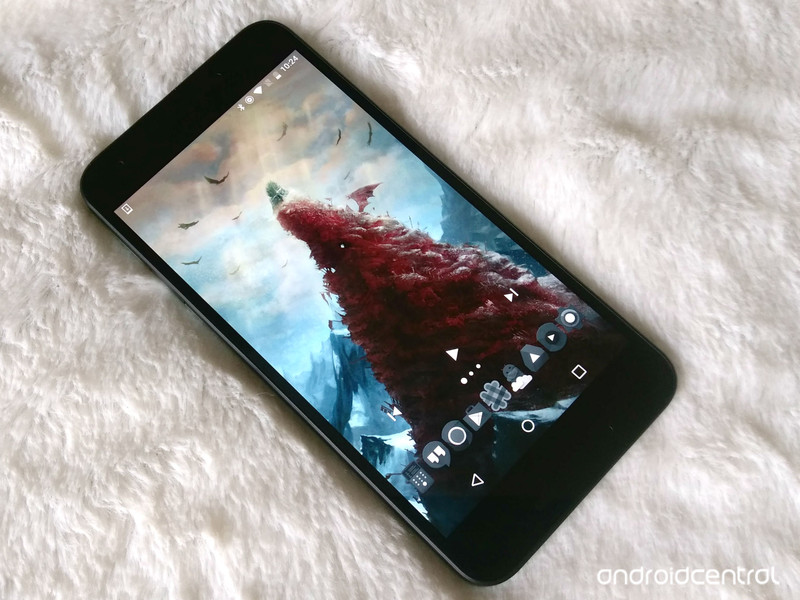
Winter has come.
Game of Thrones season 7 is upon us, and we all know what that means! Another few months of shocked gasps, heartbreaking storylines, and SO much death. Whether you’ve been along since season 1 (which feels like a lifetime ago now), or you hopped on the banddragon later on, it’s time to break out the popcorn and get ready to rumble! But before the new season and all its drama comes, let’s deck our phones in some Game of Thrones glory!

A number of things come to mind in this beautifully macabre scene. It’s lonely at the top. The road to the top stomps over a lot of bodies. But mostly to my mind what comes to mind is blood. That’s a whole lot of blood. Like put-the-Red-Wedding-to-shame whole lot of blood.
Winter Has Come by James Bousema

The Iron Throne is the subject for a lot of wallpapers, but this surprisingly simple symmetric wallpaper pulls me in somehow. And this DeviantArt user has a whole gallery of poster-type wallpapers for us to showcase our House pride with.
Iron Throne by jjfwh

Another series of wallpapers with German-style crests on parchment backgrounds stirs something within me. I dunno if it’s just how I was trained by Harry Potter or if it’s the helmets atop each crest (look at the Magneto-style helmet for House Martell!!), but if you’ve got to wear a House crest into battle — or work, more often work — it’s hard to go wrong with these beauties, originally from Reddit.
The Old Houses of Westeros

While deer are not my favorite animals, the ones used in the iconography for Baratheon house are just the most majestic animals on the show (and that quite possibly includes the dragons). And this illustration of a Baratheon stag, quite possibly with magical powers judging by the aura surrounding it and its glowing white eyes, is the most majestic I’ve come across yet. I look in those glowing eyes and I’ve never believed harder in OURS IS THE FURY.
Baratheons by Looksnookem

“You know nothing, Jon Snow.”
This may be one of the most quoted lines of the decade, and even if a lot has happened to the now King of the North since then, it’s still a quote that will forever be tied to one of Game of Thrones’ most recognized and loved characters. We’re a far cry from these woods now, and while Winter has finally come, this wallpaper will forever be a masterpiece. This mostly monochromatic piece uses a few splashes of red in some most dramatic and beautiful way possible; I can feel the murderous intent in those blood red eyes!
Amazon Prime Exclusive: Should you sell your lock screen?
How far would you go to save money on your smartphone? If you said “far enough to sell space on my lock screen for ads,” then you probably don’t care that Amazon Prime Exclusive lacks the flagship-grade smartphones your tech geek friends always gush about. The Moto E4 and IDOL 5 are hardly the most exciting devices on the block, after all. That said, the Nokia 6 is a hotly anticipated piece of kit if all of your review requests are any indication, and its arrival on Amazon Prime Exclusive coincides with its official U.S. debut.
Couple that with a $50 savings off the retail price in exchange for a few ads, and Amazon Prime Exclusive might just tempt the affordable smartphone crowd — assuming they’re already Amazon Prime members, of course. For all the other caveats (and cool bits), click on through to MrMobile’s test drive of Amazon Prime Exclusive!
Featured Products
- Prime Exclusive Phones
- Nokia 6
- Alcatel Idol 5S
- Moto E4
Stay social, my friends
- YouTube
- The Web
- Snapchat
LG V30: Our wishlist for the next LG flagship
In a year of comebacks, the LG V30 could be the phone maker’s best handset to date. Here’s what we’re hoping to see when it finally breaks cover.
We don’t know a whole lot about the LG V30 just yet. (That’ll likely change in the run up to release, as more details inevitably leak out online.) But for the time being, all we have is a collection of CAD renders and some vague details around its rough proportions — expect a 6-inch screen and standard 2017 flagship specs.

1. A serious wide-angle camera
LG’s wide-angle camera is one of the G6’s best features, letting you capture dramatic shots with a fuller field of view. But there is one major downside: With its lack of optical stabilization, small pixels and f.2/4 aperture, the wide-angle camera just isn’t great in low light. In fact, even in daylight shots, fine details tend to get stripped away, particularly around the edge of the frame.
LG has the chance to make its wide-angle camera as good as its main shooter.
So, with Samsung reportedly including two OIS-equipped cameras in the Note 8, the time would be right for LG to pull out all the stops, with a wide-angle lens that’s on par (or at least close) to the main shooter. Doing so would raise the cost of the phone (to be expected for a higher-end model) and likely add a camera bump (which we’re already seeing in the current crop of V30 leaks). Nevertheless, the improvement in image quality would surely be worth it.
I also want to see what LG can do when it’s not hamstrung by a main camera with small 1.1-micron pixels. The LG G6’s camera takes great photos, but it’s way slower than the likes of the Galaxy S8 and HTC U11, which use sensors with larger pixels.
With the extra budget afforded by a true flagship phone, I’m eager to see what LG can achieve in both the V30’s cameras.

2. Phablet-class battery life
Nobody’s expecting the V30 to bring back the removable battery. Because of this, and the fact that the V30 is going to be a good deal larger than the G6, LG has an opportunity to excel in battery life. Samsung’s need to include an S Pen in the Note 8 has reportedly limited that device to a 3,300mAh cell, which basically guarantees inferior battery life compared to the Galaxy S8+.
With no S Pen taking up room inside the chassis, LG’s new phone has a chance to outlast the Note 8.
LG has no such limitations in the V30, and so the extra size of the phone gives it the chance to push battery life as a major feature. Considering LG managed to cram a 3,300mAh cell into the G6, we’d expect a figure somewhere north of that for the new model. And given the exceptional efficiency we’ve been seeing from Snapdragon 835 phones in recent months, a 3,500 or 3,600mAh cell could go a very long way indeed.
3. No more weird regional differences
It’s time for equality among LG phones, with the same feature set wherever you buy. That’s a given for the majority of Android handsets, but the G6 found itself in the odd position of having major features like the Quad DAC, 64GB of storage and wireless charging missing in some regions.
To confuse matters further, there was no single G6 SKU with all of these features — at least not until the announcement of the G6+ many months later.
With a meatier flagship like the V30, there’s no excuse for LG’s various regional offices to be allowed to lop off major features. Wherever in the world you buy it, the phone needs to ship with at least 64GB of storage, wireless charging and whatever fancy audio stuff LG and its partners have developed.

4. Android 8.0 out of the box
The LG V20 arrived at just the right time to be one of the first handsets with Android 7.0 Nougat — though some of its thunder was stolen by the Google Pixel. This year, with similar timings expected for the stable release of Android 8.0, we’re hoping LG is able to get in on the ground floor with the new version of Android.
Another ‘first’ with Android O would be a big win for LG.
Again, this would give it a small but important advantage over the Note 8, which is expected to ship with Android 7.1.1, while also giving the new phone all the battery life and performance benefits offered by Android O. With 8.0 out of the box, whichever battery capacity LG opts for should go even further.
5. A fresh direction for software
LG’s UX 6.0 looks fine and all, but it’s clear the UX conversation has moved on since the company’s last major visual refresh in 2016. Samsung has brought us a fresh, futuristic aesthetic on the Galaxy S8. Others like OnePlus have shown how best to build on the look and feel of vanilla Android. Even Huawei is finally making progress.
LG’s latest UX is solid, but feels incomplete.
So it’s time for LG to finally do away with the bits of legacy UI that’ve been sticking around for the past couple of years, and, from the ground up, show what really great mobile software should look and feel like in late 2017. The 2:1 split-screen visual style it pioneered on the G6 is a great starting point, but it feels incomplete, and has too many weird holdovers from ancient LG handsets.
So with the next LG flagship, we’re hoping to see what LG can do to build out the latest version of Android with unique, complementary visual flair.
What do you want to see in LG’s new flagship phone? Share your hopes (and fears) down in the comments!
Galaxy Note 8 to launch next month, perhaps as early as August 23
We could be just over a month away from the Note 8.
Samsung’s new top-end stylus-wielding smartphone, the Galaxy Note 8, could launch as early as August 23. While the specific date is still more speculation at this point, The Investor out of South Korea has confirmation from a Samsung executive that a launch by the end of August is absolutely the plan.

The late-August launch would line up well with the last two Note launches, though it also conflicts with some reports pointing to Samsung holding off the launch until the first couple weeks of September. This could simply be a misunderstanding of the time frame, as it’s likely an August 23 launch wouldn’t see the phone hit stores until at least a week later in September.
A late-August announcement and early-September retail launch makes sense.
It would also mean that once again Samsung would launch its latest Galaxy Note outside of the IFA trade show in Berlin, which starts on September 1, showing that the top-end phone has outgrown being a small act at a larger show. Particularly when rebounding from the Galaxy Note 7, we can expect Samsung to go all-out this year.
The Galaxy S8 and S8+ have already been out in the market for nearly three months, and another Note hitting the market should have the desired effect of bumping the entire “Galaxy” brand to head into the holiday season. We don’t yet have a clear picture of everything Samsung will unveil with the Note 8, but early leaks point to a larger version of the Galaxy S8+’s design with an upgraded dual camera and new S Pen features.
Best accessories for the Samsung Galaxy S8

The Galaxy S8 is a big deal on its own, but it’s even better with some fantastic accessories. Here are some of the best you can find!
A phone, naked, is just a phone. A phone, accessorized, is a… well, it’s a phone with a bunch of awesome stuff connected to it. From cases to battery packs to chargers, camera add-ons and other cool stuff, here’s what you need to know.
Samsung Clear View Standing Cover

A case that doubles as a kickstand isn’t anything new, but Samsung’s Clear View Standing Cover does it right. Not only does the folio case protect the screen when not in use, but the cover is translucent, so you can see and interact with the phone while it’s docked to answer calls and see notifications. When you want to watch some sweet music videos on the train home, the cover opens up and docks to a kickstand. Perfect.
See at Amazon
Spigen cases

Spigen is always on point with its lineup of cases for the latest smartphone releases, and it’s rolled out a full line for the Samsung Galaxy S8 and S8+.
If you’ve tried and loved one of their cases before, you’ll be able to find the style that’s right for you.
A deep dive into Spigen’s Galaxy S8 case lineup
See at Amazon
Samsung Wireless Charger Convertible

Samsung has completely revamped its wireless charger for the Galaxy S8 and it’s pretty great.
The plush pad can charge the Galaxy S8 or S8+ wireless from pretty much any position, but the beauty of this new charger is in the name: you can prop up the phone on a desk to charge vertically, allowing you to peer at (and get distracted by) the Galaxy S8’s awesome new always-on display while you work. It’s really simple to change positions, and in either orientation the phone charges fast — almost as quickly as it would when plugged in.
And if you’re not all that interested in a convertible charger, last year’s fast wireless charger can be had for a steal over at Amazon.
See at Amazon
Anker PowerCore+ 21000

Your Galaxy S8 already comes with a pretty big battery, but if you’re the type to carry a backpack wherever you go, putting this slim, lightweight Anker PowerCore+ 21000 pack in there is a pretty good idea.
The charger comes with two USB-A ports and a dual-direction USB-C port for charging your phone and the charger itself. Genius! And because there’s so much room in the battery, it should top up your Galaxy S8 five or six times without needing to be topped up itself.
See at Amazon
Mophie Juice Pack

If a battery charging case is more your thing, Mophie has you covered. The Juice Pack line has been powering Galaxy devices for years, and this year’s model is slimmer and more intelligent than ever.
The Juice Pack plugs into your Galaxy S8’s USB-C port to top it up with 2950mAh of additional juice, and the case itself, like the phone, charges wirelessly using Qi technology, so you can use the same wireless charging pad you do for your phone.
See at Amazon
Gear VR w/ new Controller

If you’ve never tried Samsung Gear VR before, you’re in for a real treat. Samsung partnered up with Oculus to provide one of the best mobile VR experiences you’ll find, with compelling games to play alone or with friends, tons of streaming video apps and VR exclusive experiences, along with its own functional social media platform.
Making things all the sweeter is the inclusion of the new touch controller, meaning you won’t need to hold your hand up to the headset like you’re Cyclops from the X-Men.
Everything you need to know about Samsung Gear VR
See at Amazon
Samsung Gear S3 smartwatch

The Gear S3 doesn’t get enough love. It’s an amazing smartwatch with tons of features that work really well with the Galaxy S8. And, if you’re running it with Samsung’s latest smartphone, you get things like Samsung Pay, which isn’t available on other devices.
But more than that, Samsung has created a relatively affordable, long-lasting and feature-filled smartwach in the Gear S3, and one that, unlike most Android Wear products, will last more than a day on a charge.
See at Amazon
Which accessories have caught your eye so far?
What are your go-to accessories for a new phone? Anything you’ll be picking up for your new Samsung Galaxy S8? Let us know in the comments!
Samsung Galaxy S8 and S8+
- Galaxy S8 and S8+ review!
- Galaxy S8 and S8+ specs
- Everything you need to know about the Galaxy S8’s cameras
- Get to know Samsung Bixby
- Join our Galaxy S8 forums
Verizon
AT&T
T-Mobile
Sprint
Unlocked
Apple tosses in free Beats headphones for students buying Macs, iPads
Apple has offered student discounts on its hardware and services for awhile now, but now it’s taking that further. In an effort to make its gear even more ubiquitous on campus, Apple will throw in a pair of Beats headphones with Mac and iPad Pro purchases from now until September 25th, full details here (PDF).
Which ones? The recent Solo3 wireless on-ear, Powerbeats 3 wireless or BeatsX. If you’re trying to maximize your freebie, the Solo3 are your best option given their $300 pricetag. The Powerbeats come in at $100 cheaper if you’re looking for something a little lower profile and the BeatsX are available if you want a more traditional earbud. The offer extends to faculty, staff and students who are at the K – 12 level as well as those at colleges and universities.
Want to see how the whole Beats and Apple deal came to be? Check out HBO’s The Defiant Ones documentary about Jimmy Iovine and Dr. Dre. All four episodes are streaming now on HBO Go/Now and it’s definitely worth checking out — especially if you’re a music nerd.
Via: The Verge
Source: Apple (1), (2) (PDF)
Apple Seeds Second Beta of macOS High Sierra to Public Beta Testers
Apple today seeded the second public beta of an upcoming macOS High Sierra update to public beta testers, two weeks after releasing the first public beta. The second public beta of macOS High Sierra corresponds with the third developer beta, provided to developers earlier this week.
Beta testers who have signed up for Apple’s beta testing program are able to download the second macOS High Sierra beta through the Software Update mechanism in the Mac App Store after the proper profile has been installed.
Those who want to be a part of Apple’s beta testing program can sign up to participate through the beta testing website, which gives users access to iOS, macOS, and tvOS betas. For instructions on how to install the public beta, check out our how to, and make sure to make a backup before giving the software a try. Don’t install the beta on a main machine, as betas are notoriously unstable. High Sierra runs on all machines that support Sierra.
The macOS High Sierra update is designed to improve and refine the existing macOS Sierra operating system. Along with a new, more efficient file system (APFS) designed for modern storage, the update introduces Metal 2, the next-generation version of Apple’s Metal graphics API with support for machine learning, external GPUs, and VR content creation.
Subscribe to the MacRumors YouTube channel for more videos.
High Efficiency Video Encoding (HEVC aka H.265) is coming in High Sierra, and many of the existing apps are being updated. Photos features a new persistent side view and editing tools for Curves, Selective Color, and Live Photos, while Siri is gaining a more natural voice and support for more music-related commands.
Safari offers a new autoplay blocking feature for videos and Intelligent Tracking Prevention to protect your privacy, while Mail storage is being optimized to take up 35 percent less space. iMessages can now be stored in iCloud, and there are new iCloud Drive file sharing options and new iCloud storage family plans.
For a full overview of the new features you can expect to see when macOS High Sierra is released in the fall, make sure to check out our full macOS High Sierra roundup.
Related Roundup: macOS High Sierra
Discuss this article in our forums
Vizio sues LeEco in the wake of their failed $2 billion deal
This time last year we heard the surprising Hollywood announcement that Chinese company LeEco would acquire Vizio in a deal worth $2 billion. Unfortunately, like so many of LeEco’s recent plans, that arrangement never went through, with the two companies formally calling things off in April. Now, the Orange County Business Journal reports that Vizio has filed two separate lawsuits against LeEco, accusing the company of making false claims while arranging the acquisition. One lawsuit, filed in US District Court in LA seeks $60 million in damages, while another filed with the Superior Court of the State of California-County of Orange in Santa Ana seeks $50 million, plus other relief.
Complaint 12: Plaintiff is informed and believes, and based thereon alleges, that unbeknownst to it, at the time that $2BB Financial Wherewithal Representations were made, Global Holding and its far-flung corporate empire had begun to collapse due to their severe cash flow and financial problems, and that they desperately needed to either obtain the instant financial stability, credibility and resources that a merger with VIZIO would bring, or at least to create a widespread and dramatic public impression of their own financial health and well-being to grow or continue in business that would come with the announcement of such an intended merger.
Complaint 13: Plaintiff is informed and believes, and based thereon alleges, that Global Holding and/or various of its subsidiary or affiliated corporate entities then concocted a secret plan at or about that time to (a) use a publicly announced intended merger with VIZIO to gain or try to obtain access to VIZIO’s large corporate customers and key decision makers thereat for their own purposes and by means of confidential customer information that had been developed by VIZIO at substantial cost, time and expense, and (b) create a false widespread public impression of their own financial health during the Serious Negotiations Period and beyond, with Defendants making the $2BB Financial Wherewithal Representations to further that secret plan, and intending to induce Plaintiff to enter into such a merger agreement and provide LeEco with access to VIZIO’s confidential customer information, including contact information, account history, purchasing needs or requirements, contract terms, and the like
Variety has posted a copy of the Santa Ana court filing, which makes the claim that LeEco’s representatives knew it was not financially healthy enough to pull off the $2 billion purchase. As a result, the lawsuit alleges LeEco’s true aim was to create a false impression of its financial health, as well as gain access to its corporate customers, decision makers and “confidential customer information that had been developed by Vizio.” It’s unclear whether that last bit refers to the Inscape automated content recognition and viewer tracking scheme that the FCC slapped Vizio’s wrist over earlier this year, but clearly, the two companies have some issues to work out.
Now, Vizio claims that LeEco only paid $40 million of an arranged $100 million termination fee, and used the promise of a joint venture/app deal to try and get out of paying the rest. Lately, the news around LeEco has focused on how much money it’s losing, a Chinese court froze its assets and its automaker affiliate Faraday Future has canceled plans for a Las Vegas plant.
Source: Orange County Business Journal
High-tech solutions top the list in the fight against eye disease
“The eyes are the window to the soul,” the adage goes, but these days our eyes could be better compared to our ethernet connection to the world. According to a 2006 study conducted by the University of Pennsylvania, the human retina is capable of transmitting 10 million bits of information per second. But for as potent as our visual capabilities are, there’s a whole lot that can go wrong with the human eye. Cataracts, glaucoma and age-related macular degeneration (AMD) are three of the leading causes of blindness the world over. Though we may not have robotic ocular prosthetics just yet, a number of recent ophthalmological advancements will help keep the blinds over those windows from being lowered.
Cataracts are the single leading cause of blindness worldwide, afflicting roughly 42 percent of the global population, including more than 22 million Americans. The disease, which causes cloudy patches to form on the eye’s normally clear lens, can require surgery if left untreated. That’s why Google’s DeepMind AI division has teamed with the UK’s National Health Service (NHS) and Moorfields Eye Hospital to train a neural network that will help doctors diagnose early stage cataracts.
The neural network is being trained on a million anonymized optical coherence tomography (OCT) scans (think of a sonogram, but using light instead of sound waves) in the hopes it will eventually be able to supplement human doctors’ analyses, increasing both the efficiency and accuracy of individual diagnoses.
“OCT has totally revolutionized the field of ophthalmology. It’s an imaging system for translucent structures that utilizes coherent light,” Dr. Julie Schallhorn, an assistant professor of ophthalmology at UC San Francisco, said. “It was first described in 1998 and it gives near-cell resolution of the cornea, retina and optic nerve.
“The optic nerve is only about 200 microns thick, but you can see every cell in it. It’s given us a much-improved understanding of the pathogenesis of diseases and also their response to treatments.” The new iteration of OCT also measures the phase-shift of refracted light, allowing doctors to resolve images down to the capillary level and observe the internal structures in unprecedented detail.

“We’re great at correcting refractive errors in the eyes so we can give you good vision far away pretty reliably, or up close pretty reliably,” Schallhorn continued. “But the act of shifting focus from distance to near requires different optical powers inside the eye. The way the eye handles this when you’re young is through a process called ‘accommodation.’” There’s a muscle that contracts and changes the shape of the lens to help you focus on close objects. When you get older, even before you typically develop cataracts, the lens will stiffen and reduce the eye’s ability to change its shape.
“The lenses that we have been putting in during cataract surgery are not able to mimic that [shapeshifting] ability, so people have to wind up wearing reading glasses,” Schallhorn said. There’s a lot of work in the field to find solutions for this issue and help restore the eye’s accommodation.
There are two front-runners for that: Accommodating lenses, which use the same ciliary muscle to shift focus, and multifocal lenses, which work just like your parents’ multifocal reading glasses except that they sit directly on the eye itself. The multifocals have been on the market for about a decade, though their design and construction has been refined over that time.
To ensure the lenses that doctors are implanting are just as accurate as the diseased ones they’re removing, surgeons are beginning to use optiwave refractive analysis. Traditionally, doctors relied on measurements taken before the surgery to know how to shape the replacement lenses and combined those with nomograms to estimate how powerful the new lens should be.
The key word there is “estimate.” “They especially have problems in patients who have already had refractive surgery like LASIK,” Schallhorn explained. The ORA system, however, performs a wavefront measurement of the cornea after the cataract has been removed to help surgeons more accurately pick the right replacement lens for the job.
Corneal inlays are also being used. These devices resemble miniature contact lenses but sit in a pocket on the cornea that’s been etched out with a LASIK laser to mimic the process of accommodation and provide a greater depth of focus. They essentially serve the same function as camera apertures. The Kamra lens from AcuFocus and the Raindrop Near Vision Inlay from Revision Optics are the only inlays approved by the FDA for use in the US.
Glaucoma afflicts more than 70 million people annually. This disease causes fluid pressure within the eye to gradually increase, eventually damaging the optic nerve that carries electrical signals from the eye to the brain. Normally, detecting the early stages of glaucoma requires a comprehensive eye exam by a trained medical professional — folks who are often in short supply in rural and underserved communities. However, the Cambridge Consultants’ Viewi headset allows anyone to diagnose the disease — so long as they have a smartphone and 10 minutes to spare.
The Viewi works much like the Daydream View, wherein the phone provides the processing power for a VR headset shell — except, of course, that instead of watching 360 degree YouTube videos, the screen displays the flashing light patterns used to test for glaucoma. The results are reportedly good enough to share with you eye doctor and take only about five minutes per eye. Best of all, the procedure costs only about $25, which makes it ideal for use in developing nations.
And while there is no known cure for glaucoma, a team of researchers from Stanford University may soon have one. Last July, the team managed to partially restore the vision of mice suffering from a glaucoma-like condition.
Normally, when light hits your eye, specialized cells in the retina convert that light into electrical signals. These signals are then transmitted via retinal ganglion cells, whose long appendages run along the optic nerve and spread out to various parts of the brain’s visual-processing bits. But if the optic nerve or the ganglion cells have been damaged through injury or illness, they stay damaged. They won’t just grow back like your olfactory sensory nerve.
However, the Stanford team found that subjecting mice to a few weeks of high-contrast visual stimulation after giving them drugs to reactivate the mTOR pathway, which has been shown to instigate new growth in ganglion cells, resulted in “substantial numbers” of new axons. The results are promising, though the team will need to further boost the rate and scope of axon growth before the technique can be applied to humans.
Researchers from Japan have recently taken this idea of cajoling the retina into healing itself and applied it to age-related macular degeneration cases. AMD primarily affects people aged 60 and over (hence the name). It slowly kills cells in the macula, the part of the eye that processes sharp detail, and causes the central focal point of their field of vision to deteriorate, leaving only the peripheral.
The research team from Kyoto University and the RIKEN Center for Developmental Biology first took a skin sample from a human donor, then converted it into induced pluripotent stem (IPS) cells. These IPS cells are effectively blank slates and can be coerced into redeveloping into any kind of cell you need. By injecting these cells into the back of the patient’s eye, they should regrow into retinal cells.
In March of this year, the team implanted a batch of these cells into a Japanese sexagenarian who suffers from AMD in the hope that the stem cells would take hold and halt, if not begin to reverse, the damage to his macula. The team has not yet been able to measure the efficacy of this treatment but, should it work out, the researchers will look into creating a stem-cell bank where patients could immediately obtain IPS cells for their treatment rather than wait months for donor samples to be converted.
And while there isn’t a reliable treatment for dry-AMD, wherein fatty protein deposits damage the Bruchs membrane, a potent solution for wet-AMD, which involves blood leaking into the eyeball, has been discovered in a most unlikely place: cancer medication. “Genentech started developing a new drug when an ophthalmologist in Florida just decided to inject the commercially available drug into patients eyes,” Schallhorn explained.
“Generally this is not a great idea because sometimes things will go terribly wrong,” she continued, “but this worked super-well. It basically stops and reverses the growth of these blood vessels.” The only problem is that the drugs don’t last, requiring patients to receive injections into their eyeballs every four to eight weeks. Genentech and other pharma companies are working to reformulate the drug — or at least develop a mechanical “reservoir” — so it has to be injected only once or twice a year.
Stem-cell treatments like those used in the Kyoto University trial have already proved potentially effective against a wide range of genomic diseases, so why shouldn’t it work on the rare genetic condition known as choroideremia? This disease is caused by a single faulty gene and primarily affects young men. Similar to AMD, choroideremia causes light-sensitive cells at the back of the eye to slowly wither and die, resulting in partial to complete blindness.
In April of 2016, a team of researchers from Oxford University performed an experimental surgery on a 24-year-old man suffering from the disease. They first injected a small amount of liquid into the back of the eye to lift a section of the retina away from the interior cellular wall. The team then injected functional copies of the gene into that same cavity, replacing the faulty copies and not only halting the process of cellular death but actually restoring a bit of the patient’s vision.
Gene therapy may be “surely the most efficient way of treating a disease,” lead author of the study, Oxford professor Robert MacLaren, told BBC News, but its widespread use is still a number of years away. Until then, good old-fashioned gadgetry will have to suffice. Take the Argus II, for example.
The Argus II bionic eye from Second Sight has been in circulation since 2013, when the FDA approved its use in treating retinitis pigmentosa. It has since gotten the go-ahead for use with AMD in 2015. The system leverages a wireless implant which sits on the retina and receives image data from an external camera that’s mounted on a pair of glasses. The implant converts that data into an electrical signal which stimulates the remaining retinal cells to generate a visual image.
The Argus isn’t the only implantable eyepiece. French startup Pixium Vision developed a similar system, the IRIS II, back in 2015 and implanted it in a person last November after receiving clearance from the European Union. The company is already in talks with the FDA to bring its IRIS II successor, a miniaturized wireless subretinal photovoltaic implant called PRIMA, to US clinical trials by the end of this year.
Ultimately, the goal is to be able to replace a damaged or diseased eye entirely, if necessary, using a robotic prosthetic. However, there are still a number of technological hurdles that must be overcome before that happens, as Schallhorn explained.
“The big thing that’s holding us back from a fully functional artificial eye is that we need to find a way to interface with the optic nerve and the brain in a way that we transmit signals,” she said. “That’s the same problem we’re facing with prosthetic limbs right now. But there are a lot of smart people in the field working on that, and I’m sure they’ll come up with something soon.”
 AIVAnet