


Nintendo SNES Classic Mini confirmed: Release date, pre-order details, price, games and more
After the incredible success of its miniature, remade NES console, Nintendo has announced a follow-up; this time based on the much-loved Super Nintendo Entertainment System, or SNES for short.
A Nintendo Classic Mini: SNES will be available later this year and we’ll be queuing for one, that’s for sure.
- See Nintendo Classic Mini: SNES on Amazon UK
- See it on GAME for £79.99
Here’s everything we know about the machine and a list of the confirmed games that will come pre-installed. We’ll also update you when pre-orders go live.
SNES Classic Mini: The background
Nintendo released a miniature version of its first household games console in November last year and it sold out almost immediately. The Nintendo Classic Mini: Nintendo Entertainment System (Famicom in Japan) was priced at £50 in the UK and came with 30 Nintendo games pre-installed. An included controller, shaped like the one that came with the 80s original, was included in the box and an optional second could be added for two-player games.
Apart from its size, the NES Classic Mini also included an HDMI port to connect it to a TV and clever picture upscaling technologies to ensure the 8-bit games looked good, even when expanded to fit a 55-inch or more.
Unfortunately, because it was extremely popular, gamers who didn’t manage to pre-order one prior to release were unlikely to get one for the original price. They still fetch anywhere up to £250 each on reseller sites such as eBay – five times the original retail price. Nintendo has also confirmed that it has no plans to manufacture new units in any territory.
That was more than likely because it is concentrating on a sequel instead. Like the NES was followed by the SNES in the early 90s, so too will the Classic Mini version.
The Nintendo Classic Mini: Super Nintendo Entertainment System, or SNES Classic Mini for short, will be a smaller, self-contained version of one of the greatest games consoles of all time. It’ll come with 21 games pre-installed including, for the first time, the previously un-released Star Fox 2.
The European version looks like the EU SNES released in the 80s, while the US and Japanese versions will also ape their regional variants.
All versions come with two wired controllers.
- Can’t buy a NES Classic Mini? How to build your own retro console for just £50
Nintendo
SNES Classic Mini: Release date
Although it was expected that we’d hear about the SNES Classic Mini at E3 2017, Nintendo waited a couple of weeks after the show finished to officially announce the new machine.
The SNES Classic Mini will be available in UK and US from 29 September 2017.
SNES Classic Mini: Pre-order details
Some retailers started taking pre-orders on the evening of the announcement, Monday 25 June. However, with stock levels currently unknown, they soon “sold out”. It’s worth checking though just in case they relist.
- Pre order now at GAME for £79.99
- Pre-order now at Amazon.co.uk
Alternatively, you can wait until Nintendo opens its own doors for pre-orders. And to keep informed as to when that might be, you can currently pre-register your interest on the official Nintendo.co.uk website here. The US Nintendo website states that “retailer info” is “coming soon”.
SNES Classic Mini: Price
We’re still also waiting for the confirmed UK price of the SNES Classic Mini, but it is priced at $79.99 in the States – a little more expensive than the NES Mini last year.
Some retailers who posted their pre-order pages early have listed UK prices, but they are sporadic.
Game listed the SNES Classic Mini at £79.99. Smyths Toys has it listed at £69.99. And ShopTo has it priced at £84.85. We suspect, of those, the most likely correct price is £79.99.
The extra cost (over the NES Classic Mini, which was £49.99 at launch) is due to two controllers being bundled with the system this time around. You had to buy a second separately for the NES Classic Mini.
SNES Classic Mini: Games list
The NES Classic Mini featured 30 games (although you could add more by hacking the machine), all accessible through a smart, easy-to-use scrollable menu system. You could also pause a game, return to the menu and pick it up again later.
The SNES Classic Mini will feature 21 games. As previously stated, Star Fox 2 has never been released before.
Here is a complete list including extra details on some of our favourites:
- Contra III: The Alien Wars
- Donkey Kong Country
- EarthBound
- Final Fantasy III
- F-ZERO
- Kirby Super Star
- Kirby’s Dream Course
- The Legend of Zelda: A Link to the Past
- Mega Man X
- Secret of Mana
- Star Fox
- Star Fox 2
- Street Fighter II Turbo: Hyper Fighting
- Super Castlevania IV
- Super Ghouls ’n Ghosts
- Super Mario Kart
- Super Mario RPG: Legend of the Seven Stars
- Super Mario World
- Super Metroid
- Super Punch-Out!!
- Yoshi’s Island
The games highlights…
Super Mario World
Nintendo
The crown jewel in the Super Nintendo era, Super Mario World was the 2D platformer that set a very high bar few others managed to match. For many, it was the game that convinced them to buy a SNES over the rival Sega Mega Drive.
Super Mario Kart
Nintendo
Changed co-operative racing forever. The original Super Mario Kart still holds its own today as a party game guaranteed to cause a giggle or two.
The Legend of Zelda: A Link to the Past
Nintendo
As top-down RPGs go, A Link to the Past is one of the very best. It might ot have the fancy graphics of the Switch masterpiece of today, but it retains the spirit and scope.
Super Metroid
Nintendo
A sideways-scrolling shooter/platformer of the highest quality. It’s often been included in lists of the greatest games of all-time.
Donkey Kong Country
Nintendo
Rare’s attempt at a 2D platformer feels very different to the Mario games. It uses more chunky, clay-like characters and some clever gameplay tropes to deliver something fresh and fiendishly difficult.
Yoshi’s island
Nintendo
Sometimes called Super Mario World 2 but isn’t really – it’s actually a prequel to the SNES Mario classic. It also features a baby Mario riding on the back of his dinosaur chum Yoshi.
F-Zero
Nintendo
To be honest, we never really liked F-Zero that much but as a forerunner to WipEout and games like it, this needs to be included.
Star Fox
Nintendo
Graphically impressive and complex for its time, this 3D space shooter is still our favourite Star Fox game ever.
WSJ: Sprint is discussing a new deal with Charter/Comcast
Not that long ago, there was a report that the on again/off again merger talks between T-Mobile and Sprint had resumed, but tonight the Wall Street Journal reports they’re on hold. That’s apparently due to Sprint negotiating exclusively with the combined unit of Charter and Comcast. An unlikely result could be an acquisition of the fourth largest wireless carrier, or the two cable companies could invest in it to help improve the company’s network, which they could then use to offer their wireless services instead of Verizon.
As the various types of networks — phone, cable, satellite and wireless — become and/or acquire each other, the competition is intensifying. Comcast, for example, is now primarily an internet service provider, and the WSJ points out that if it wants to offer wireless or video services to customers outside its cable footprint, it could need a new deal. However things may shake out, their time to talk extends through late July, so expect some poolside (or, inside where there’s air conditioning-side) updates soon.
Source: Wall Street Journal
Tech Hunters: Feeling the need for speed with the Sinclair C5
Sometimes, technology can be too far ahead of its time. That’s the excuse many people will give for the Sinclair C5 electric tricycle, which appeared 30 years before car makers like Tesla and Nissan made us believe in an EV future.
Launched in 1985 by Sir Clive Sinclair, the C5 featured a injection-moulded polypropylene shell and a chassis developed by Lotus. Its on-board battery could deliver up to 19 miles of range and propel the tricycle to a whopping top speed of 15 miles per hour. Front-mounted handlebars allowed the rider to steer as they reclined.
At launch, the Sinclair C5 received mixed reviews. Some saw it as the future of personal transport, while other dismissed it as a toy. At £399 (£1180 in today’s money), the rideable certainly wasn’t cheap, especially for a vehicle that required its owner to pedal when they wanted to go uphill. Its low profile also made it difficult to see oncoming traffic and it didn’t require a license or a helmet, meaning anyone over the age of 14 could operate one on Britain’s roads.
About six months after launch, Sinclar ran into difficulties and production of the C5 stopped, leaving a large number of vehicles unsold. Still, a lot of people still have a fondness for the battery-powered pedalling machine, like Vicky who shows Julia Hardy the need for speed round Blackpool in the diminutive motor.
Tech Hunters is a 10-part video series that uncovers the devices we were once obsessed with, looking at how they disrupted the tech industry, and what they’re worth today. From the pocket pet obsession with the original Tamagotchi, to mix-tapes and Sony Walkman, Tech Hunters explores the audio, visual, interactive and transport innovations that have shaped today’s culture.
Amazon Echo Smart Speakers Gain Room-to-Room Intercom Feature
Amazon is releasing a software update for its Echo range of smart speakers that enables households with multiple Echos to use them as room-to-room intercoms (via TechCrunch).
Once the new feature is set up, users are able to select a speaker in a specific room and communicate with it one-to-one – to call the kids to dinner from the kitchen Echo, for example.
To enable the function, users must first give a distinctive name (such as a room) to each Echo in their household and enable the Drop-In feature using the Alexa app.
The intercom system works through household groups created during the setup process, meaning it’s not limited to speakers on the same Wi-Fi, so it’s possible to communicate with Echo-owning friends or relatives in a different area code, for instance. Users can also use the feature away from home using the Alexa app.
The Drop-In feature first appeared on Amazon’s new Echo Show with integrated display, with some reviewers finding the video aspect a little intrusive. Similarly, there doesn’t seem to be a way to block the intercom audio on the standard Echo range, so it’s worth keeping this in mind before enabling it.
The update is rolling out to the Echo family of speakers this week.
Tag: Amazon Echo
Discuss this article in our forums
Amazon and Whole Foods: A New Era for ECommerce?
Amazon’s recent acquisition of high-end food vendor Whole Foods has sent shockwaves through the ecommerce world. It’s a bold move for the online retailer, and some experts have expressed doubts as to whether it will prove to be a wise one. More than one economist has suggested that Amazon have bitten off more than they can chew.
The Final Mile
In particular, skeptics point to “the final mile” – the last crucial steps between the actual supplier and the customer. Groceries aren’t the same as electronics, books or music. If a customer’s new iPad is held up for a couple of days at the warehouse, that’s a minor delay and will probably not affect the purchaser’s experience. If a gallon of milk gets held up, it’s no longer saleable. More to the point, the customer is likely to make their purchase elsewhere – not just on this occasion, but in future. The theoretical convenience of Amazon’s online ordering is offset by the logistical problems of supplying perishable goods.
Stiff Competition
Another issue is that many stores already offer online grocery shopping, and have proven very effective at providing this kind of service. In the US — perhaps Amazon’s largest potential market — Walmart has invested significantly in its online grocery shopping services. Amazon faces stiff competition from Instacart, an online shopping service that works closely with local stores to supply same-day deliveries to meet its customers’ needs. Amazon will need to replicate and supersede this established and thriving service in order to compete.
Other experts, however, take a more positive view. Kenneth Sanford, an expert in data science and an adjunct professor at Boston College, argues that the acquisition of Whole Foods puts Amazon in an unparalleled position to leverage its mastery of data collection and interpretation to provide unique new kinds of ecommerce experiences to its users. Amazon already has a staggering amount of user data to draw on – especially since the advent of its digital assistant, Alexa. By pooling this information with the extensive consumer data held by Whole Foods, Amazon can anticipate customers’ needs and step in to fulfill them.
Small-scale ecommerce entrepreneurs should observe the unfolding situation with interest. While not everyone can hope to be the next Jeff Bezos, there are likely to be lessons for us all in the ways that Amazon navigates its new market role.
OnePlus CEO claims the company doesn’t know how to overclock
OnePlus CEO talks about the OnePlus 5’s benchmark scores, retail pricing, and lack of water resistance.
OnePlus came under fire last week after it was revealed that the OnePlus 5 was manipulating benchmarks to gain a favorable score on synthetic benchmarking apps like GeekBench. The company’s co-founder Carl Pei responded to the issue, stating that when running a benchmark, the phone “performs the same as when running resource intensive apps.”
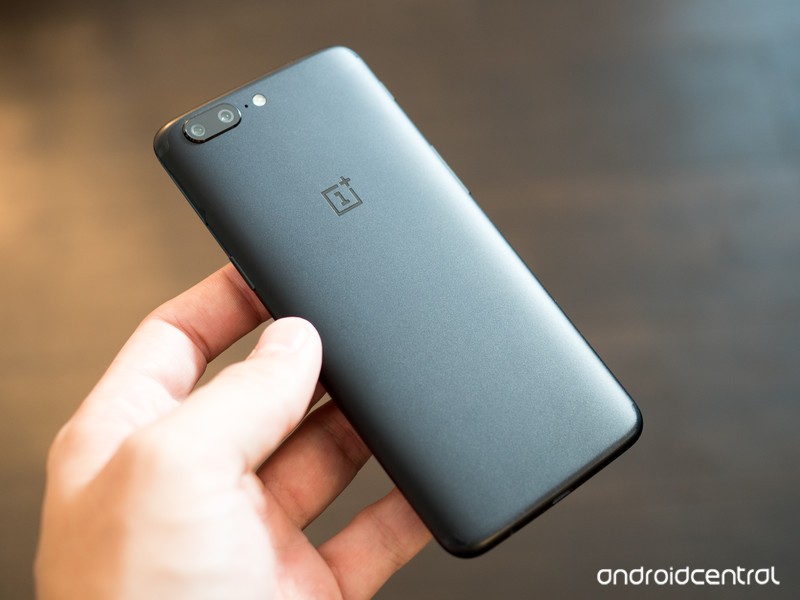
Meanwhile, in an interview with The Indian Express, OnePlus CEO Pete Lau took a different approach, noting that effective heat dissipation influences the CPU performance:
If there is heating the performance of the CPU will not reach the maximum. We only try to tap the full potential of the CPU. We don’t even know how to overclock.
For a company that obsesses over specs (you don’t need 8GB RAM on a phone), Lau said that giving customers the best experience is what matters when asked about the lack of a QHD panel on the OnePlus 5:
We don’t play around with specs, we just want to give our customers the best experience.
Talking about the dual camera in the OnePlus 5, Lau said that the tech will continue to get better as the company rolls out updates:
In OnePlus 5, the 16MP + 20MP combination provides the best possible images. Technology around the camera will continue to progress and I expect more improvement.
As for the price hike, OnePlus had to factor in the increasing costs of its retail packaging:
Across the industry the inputs costs have gone up from CPU to memory, and we are using an 8GB RAM in this phone. Even the cost of the box has gone up now.
Lau also said that waterproofing the OnePlus 5 would’ve made the device thicker and heavier, with the exec noting that the feature isn’t a “big consumer requirement.” He also stated that the OnePlus 5 has a certain degree of water resistance. It’s likely the company isn’t advertising the same as that would lead to the OnePlus 5 being eligible for water damage under warranty.
OnePlus certainly isn’t having an easy time marketing its latest phone, which is going up for sale globally later today. After the first sales event, company claimed that the OnePlus 5 was its “fastest-selling device ever,” but hasn’t provided statistics on how many units it sold.
What are your thoughts on the OnePlus 5? Will you be picking up the phone once it goes on sale?
OnePlus 5
- Complete OnePlus 5 review
- OnePlus 5 specs
- Which OnePlus 5 model should you buy?
- Camera comparison: OnePlus 5 vs. Galaxy S8
- The latest OnePlus 5 news
- Join the discussion in the forums
OnePlus
T-Mobile bolsters speeds with unlicensed LTE rollout
T-Mobile is launching support for unlicensed spectrum to bolster download speeds in smartphones and tablets on its network.
T-Mobile has announced the first rollout of its unlicensed LTE strategy in the U.S., which lets carriers attach themselves to spectrum in the 5GHz range that is traditionally used for Wi-Fi signals.
T-Mobile is the first national wireless provider to make LTE-U available to customers. LTE-U uses publicly available 5 GHz airwaves to bolster existing LTE capacity and give a speed boost to what is already America’s fastest, most advanced 4G LTE network. T-Mobile LTE-U is live in select locations in Bellevue, WA; Brooklyn, NY; Dearborn, MI; Las Vegas, NV; Richardson, TX; and Simi Valley, CA, with more rolling out later this year.
The idea behind LTE-U is quite simple: the spectrum used by Wi-Fi standards, typically 2.4GHz and 5GHz, are not “controlled” the same way that cellular airwaves are overseen by the FCC, since companies don’t have to purchase access to them. That leaves practically any company or product to claim a stake in those signals, including cellular companies after the FCC certified LTE-U equipment back in February.
T-Mobile has been testing LTE-U for some time, using it to augment, not replace, existing licensed bands. LTE-U bands combine with licensed spectrum in compatible phones to seamlessly increase throughput using carrier aggregation.
Another standard, License Assisted Access, is another form of the LTE-Advanced standard technically under the auspices of LTE-U, but uses a much more rigid set of guidelines to achieve greater speeds. LAA is still in testing, and even T-Mobile isn’t ready to issue wide support for the burgeoning standard just yet, but the potential implications are huge given that, according to Ericsson, there are hundreds of megahertz of unused, unlicensed 5GHz spectrum that, with the use of small cells and other precise equipment, can increase speeds over 150Mbps. T-Mobile claims that in its initial public tests of LAA in the Los Angeles area, it “showed blazing 741 Mbps download speeds using 80 MHz of aggregated spectrum.”
Expect to hear more from T-Mobile about its LTE-U and LAA strategies in the coming months — especially in relation to how far behind AT&T and Verizon are in achieving the same thing.
The best unlimited data plan in the U.S.

Volvo is working with NVIDIA to develop self-driving car tech by 2021
With virtually every major car manufacturer dumping R&D money into the field, it looks like autonomous vehicles are going to be a thing whether we want them to or not. Early Tuesday morning NVIDIA and Volvo announced that they are redoubling their self-driving system efforts by teaming with a number of other companies to develop and distribute a proprietary autonomous AI platform by the start of the next decade.
First off, Volvo has gone in halfsies with Autoliv to create a new software development subsidiary called Zenuity. Volvo and NVIDIA have announced that they’re teaming up with Zenuity to develop the next generation of self-driving vehicle systems which will be built on NVIDIA’s Drive PX AI module.
This is the same module that Tesla already uses and which both Audi and Toyota have begun developing on. The system stitches together data from its camera and radar inputs, then compares what it senses to a known high-definition map to automatically plot a safe course around oncoming obstacles. Volvo hopes to have its production vehicles using these self-driving systems available for sale by 2021.

NVIDIA also announced that it will be working with ZF and Hella, a pair of big name parts suppliers from Germany that produce vehicular camera and sensor systems, to develop a non-exclusive autonomous steering system. What’s more, NVIDIA hopes that integrating additional autonomous safety features like automatic braking will help increase the scores of AI-equipped vehicles taking the DOT’s New Car Assessment Program (NCAP) crash test safety certification.
This technology will help more than individual drivers. An increasing numbers of vehicles trading data with each other as they travel, why not have them talk to the infrastructure around them as well. “We’ll be able to project traffic patterns,” Danny Shapiro, Senior Director of Automotive at NVIDIA, said during a recent media briefing call. “We’ll be able to protect areas of potential congestion and really work with infrastructure, vehicles and navigation systems to optimize traffic flow and ultimately reduce congestion.”
“Looking through social media or websites or transit schedules, we’ll be able to detect trends and see what’s happening in communities and help people plan their journeys,” he added.
You only have to log into NBC’s app once across Apple devices
It’s much easier to fire up This is US and SNL on iPhones and iPads now that NBC’s iOS app finally works with Apple’s single sign-on (SSO). You simply have to activate the feature on your device by going to Settings > TV Provider and typing in your cable TV credentials to log into all the apps you have that support it. This update will sound even better if you have an Apple TV, since the network’s tvOS application worked with SSO from the start.
See, the feature syncs across devices, as long as they use the same Apple ID. That means you only need to log in once on your phone, tablet or streaming box to access NBC’s streamable shows on all of them. Neat trick, right? Unfortunately, you can only use the feature right now if you’re in the US, since it involves collaborating pay TV companies. To see what apps have SSO support, head over to the App Store, select the Featured tab and find the icon that shows your cable provider’s logo.
Source: iTunes
Augmented reality studio castAR reportedly closes its doors
When Jeri Ellsworth and Rick Johnson left their engineering posts at Valve, they took their augmented reality research with them and built an ambitious company called castAR. They had big plans, including the general release of their AR glasses later this year. For a while, they also had the money to make them happen. Unfortunately, things might not have gone well for the duo: According to Polygon, the company has closed its doors and laid off around 70 people from its Palo Alto and Salt Lake City offices.
That studio served as the home base for the Disney Infinity and Eat Sleep Play game developers who joined the company last year to work on AR software. Apparently, the employees only found out that the company is folding at a meeting on the evening of June 26th. Everything was liquidated, and only a core group of employees remain to get things sorted out, so they can sell their existing technology.
castAR started as a campaign on Kickstarter, where it raised over $1 million. A year later, it shipped an early design of its mixed reality glasses (with camera for input and projector to display 3D images onto a surface) to its backers. It secured $15 million in funding from Andy Rubin’s Playground around that time, but Polygon says the hardware startup incubator refused to continue funding the company last week. Since it also failed to get other investors to commit, the company had no choice but to shutter.
castAR hasn’t made an official announcement yet — its website still says it’s launching in 2017 — but we’ve reached out for confirmation. One of its game developers retweeted Polygon’s article, though, a couple of hours after announcing that he got laid off.
https://t.co/zk3qURPmD8 I had a wonderful time here and met many smart talented people. I will cherish these memories forever… 🙁
— Baqir Shah (@bakershah) June 27, 2017
Source: Polygon
 AIVAnet