


Sony plans to revive its vinyl record production
Sony was late to the vinyl resurgence with a new turntable of its own, and it’s going to be later yet with its effort to jump back into pressing records. Nikkei reports that thanks to demand, the perpetually tardy tech company will first start putting Japanese music (and some modern hits) to wax, with production starting next March. In fact, the company has already outfitted a recording studio with a press so it can produce masters in situ. If there’s a roadblock, it’s that Sony is apparently having a hard time finding engineers to help guide the pressing process.
The move comes after Sony killed off its record production in 1989, seven years after it dove head first into compact discs. But given that CDs sales have been perpetually declining for the past few years, and the increase in record sales, it makes sense that Sony would refocus its efforts. And hey, if that means it’ll be easier to buy music from Sony artists on vinyl, that’s a win for everyone.
Via: AFP
Source: Nikkei
Classic Cartoon Streaming Service ‘Boomerang’ Expands to Apple TV
In April, classic cartoon network Boomerang was announced as a new spin-off streaming service of its own, after initially being offered as a cable channel by Time Warner. Boomerang mentioned at the time that an Apple TV app was coming sometime in the future, and this week that app has debuted on the tvOS App Store, bringing classic shows like Wacky Races, Yogi Bear, and Scooby-Doo to Apple TV.
Just like the iOS app, Boomerang on Apple TV will allow subscribers of the $4.99/month service access to more than 5,000 titles across movies and TV shows from Hanna-Barbera, Looney Tunes and MGM animation catalogs. New and exclusive shows are also on the service, and every week it adds new episodes to both modern and classic shows.
Boomerang is THE place to watch all your favorite cartoons to your heart’s content, on demand and ad free. Enjoy classic shows and new originals you can’t get anywhere else. Your Boomerang subscription allows you to control the viewing experience in a kid-friendly environment with your whole family with no TV package required.
The library is only part of the fun! New episodes of new original shows or classics from the vault are added every week. Get new episodes of New Looney Tunes, Bunnicula, Be Cool Scooby Doo, Tom and Jerry and more, plus brand new shows coming later this year! Enjoy full seasons of old favorites from Bugs Bunny, Daffy Duck and all the favorite cartoons you love.
In celebration of Boomerang’s first original series, called Dorothy and the Wizard of Oz, the company is offering a 30-day free trial to all Kansas-based users who sign up beginning today, June 29, through July 4. Otherwise, Boomerang costs $4.99/month, and there’s also a $39.99/year alternative.
Related Roundups: Apple TV, tvOS 10
Tag: Boomerang
Buyer’s Guide: Apple TV (Don’t Buy)
Discuss this article in our forums
Tony Fadell Talks Original iPhone’s Business Model ‘Disaster’, Amazon Echo, and Self-Driving Cars
iPod father Tony Fadell has been making the rounds in the days ahead of the anniversary of the first iPhone’s launch, which is today, June 29. In two new interviews with Bloomberg Businessweek and Reuters shared today, Fadell continued reminiscing about Apple history by discussing the iPhone’s “disaster” of a business model over the first year, his view on how the Amazon Echo compares to Apple’s creation of the iPod, and his doubt of the self-driving automobile industry.
After a little over one year on the market, Apple had sold ten million iPhones, but Fadell recalled an initially bumpy road for sales of the company’s first smartphone. Apple reduced the price of the iPhone during its first holiday season by $200, which is said to have been a factor in helping the company reach its goal of ten million iPhones sold, achieved in October 2008.
Image via Bloomberg Businessweek
Apple has sold more than 1 billion iPhones since June 29, 2007, but the first iPhone, which launched without an App Store and was restricted to the AT&T Inc network (T.N), was limited compared to today’s version. After sluggish initial sales, Apple slashed the price to spur holiday sales that year.
“The business model for year one of the iPhone was a disaster,” Tony Fadell, one of the Apple developers of the device, told Reuters in an interview on Wednesday. “We pivoted and figured it out in year two.”
When looking towards the future, Fadell sees the emerging space of the smart home speaker as an area of huge potential. The former Apple executive argued that only Amazon could have launched the first successful intelligent speaker, Echo, because, “Out of the companies you mentioned—Apple, Google, and Amazon—which ones would you most trust to listen to you all the time? There are very few people who don’t trust Amazon.”
He went on to compare the creation of Echo to the iPod and Apple’s history of being late to a product category, but attempting to make their entry into the category the best possible option for customers.
I think it’s similar to when Apple came to me and “Let’s do the iPod,” except it wasn’t an iPod yet. We said, “Look at all these shitty MP3 players. I think we can do this better.” I give Amazon credit for it. They weren’t the first home assistant. We at Nest were building one, and there were a couple of startups on Kickstarter and Indiegogo doing this.
But Amazon went, “Oh, maybe we can make a real version of it. Some other company came up with a prototype, and now let’s put our flavor on it.” For Amazon, it’s like a perfect way to take a consumer who already loves them and make ordering stuff frictionless.
In regards to many technology companies joining in on the self-driving automobile craze, Fadell is less enthusiastic about the future. He warned, “Don’t believe the hype” surrounding automatic driving systems — which Apple is readily working on — and self-driving vehicles, because the technology that will get them to compete with modern vehicles is “a lot further off than people are telling you.”
Don’t believe the hype. There are going to be demos, and they’ll get better and better, but to get to the point where you’re going to buy one that can run at a speed that you’re accustomed to—55 miles or 100 kilometers per hour—that’s a lot further off than people are telling you.
I think the car world is going to look pretty similar to what it looks like today. There are new brands, like Tesla and some Chinese brands, that could be challengers in the decade after that, but this isn’t something that is going to happen as quickly as the mobile phone industry changed with the release of the iPhone. Phones get turned over every 18 months. It takes much longer with cars. And with cars, we’re talking about laws changing and police having to adjust to them. It’s a lot harder than rolling out a 3G network and getting people to change phones.
While the interviews covered many non-iPhone topics, Fadell still looked back upon his time with late Apple CEO Steve Jobs and recognized how important the creation of the iPhone was for Apple and all of its customers. “Being able to democratize computing and communication across the entire world is absolutely astounding to me,” Fadell told Reuters. “It warms my heart because that’s something Steve tried to do with the Apple II and the Mac, which was the computer for the rest of us. It’s finally here, 30 years later.”
For a deep dive into the history of the iPhone, check out the MacRumors tenth anniversary post for Apple’s original smartphone.
Tag: Tony Fadell
Discuss this article in our forums
Alpine Debuts First Aftermarket Wireless CarPlay Receiver
Alpine today announced the launch of its latest CarPlay receiver, the iLX-107. While Alpine has released several CarPlay receivers in the past, and, the iLX-107 is unique because it is the first aftermarket CarPlay receiver that comes equipped with support for wireless connectivity.
The iLX-107 features a 7-inch VGA display with a capacitive touch screen, a shallow, mech-less body that allows it to fit into most vehicles, support for a range of accessories, and integration with steering wheel controls and a rear view camera.
According to Alpine, connecting an iPhone to the iLX-107 is simple, with just a few setup steps involved. The system uses 5GHz WiFi to connect to an iPhone when in the car.
The iLX-107 gives you the luxury of simply getting and going. It allows you to seamlessly access your iPhone on your vehicle’s touchscreen without having to connect a cable every time you get in. Set up is as easy as pairing the wireless Apple CarPlay unit from your iPhone or simply connecting the lightning cable for the first time. Once you go through the extremely easy initial set up, the iLX-107 will automatically connect to the most frequently paired iPhone each time the vehicle is started. The connection “just works” and allows you to get in the car and go without having to stop to take your phone out of your purse or pocket.
Wireless CarPlay functionality was first introduced in 2015, but no wireless infotainment system was available until late 2016, when it was added to the 2017 BMW 5 Series Sedan. Most CarPlay systems, both native and aftermarket, require users to connect an iPhone to a vehicle using a Lightning cable that plugs into a standard USB port.
Alpine is pricing the iLX-107 at $900, making it one of the company’s more expensive receivers. It is available starting today at dealers across the country, with Alpine offering a tool on its website to locate a dealer that can install the system.
Related Roundup: CarPlay
Discuss this article in our forums
Apple Pay Now Widely Accepted at Yankee Stadium, Coors Field, Comerica Park and Two Other MLB Ballparks
Fans of the Colorado Rockies, Detroit Tigers, Kansas City Royals, Los Angeles Angels of Anaheim, and New York Yankees are now able to use Apple Pay either for the first time or in many more places at each team’s respective stadium.
Los Angeles company Appetite today announced it has launched its modern point-of-sale solution at four Major League Baseball stadiums, including Angel Stadium in Anaheim, Comerica Park in Detroit, Coors Field in Denver, Kauffman Stadium in Kansas City, and Yankee Stadium in New York City.
While some of the ballparks already accepted Apple Pay to a limited extent, Appetite’s technology extends Apple Pay widely to concession stands, team merchandise stores, and other new areas. The NFC-enabled terminals also support other EMV-based payment options such as Chip-and-PIN cards and Masterpass.

Appetize said wait staff will also be using its iPad mini-based handheld point-of-sale solution for in-seat ordering and delivery.
A spokesperson for Appetize told MacRumors that most of the ballparks were previously using legacy point-of-sale systems, primarily with swipe-only functionality for credit and debit cards. Kauffman Stadium did widely accept Apple Pay at concession stands during the 2014 World Series in partnership with MasterCard.
Appetize had already installed its solution at Dodger Stadium in Los Angeles, Fenway Park in Boston, and Citi Field in New York City.
Related Roundup: Apple Pay
Tag: MLB
Discuss this article in our forums
Hands-on with the Moto Z2 Play
The Moto Z Play impressed us last year for many reasons, and much of that had to do with its striking balance of a well-rounded feature set and affordable price point. Rather than waiting a full year for a proper refresh cycle, Motorola decided to take the wraps off the device’s successor, the Moto Z2 Play, just a few weeks ago. We’ve spent a short amount of time with the device so far, and we’re excited to share with you our first look at Motorola’s latest mid-ranger.
The design of the Moto Z2 Play is more akin to a flagship of sorts – mainly because of its ultra-slim chassis and sturdy aluminum unibody frame. It feels substantially better than last year’s model. However, since the device is designed with Moto Mods in mind, it doesn’t stray too far from the familiar design language we’ve seen countless times from other Motorola phones. Still, the Z2 Play looks like it was meticulously crafted and can easily stand toe-to-toe with other flagship designs out there.


The headphone jack is back again, even though the Z2 Play sports a thinner body than its predecessor
One reason why last year’s Moto Z Play was able to somewhat outshine its higher-end siblings was because it featured a 3.5 mm headphone jack. And you know what? It’s back again, even though it now sports a thinner body than its predecessor. Another notable design change here with the Moto Z2 Play is found with its fingerprint sensor, which is now more oval in shape and recessed. Beyond that, the phone has access to the slew of Moto Mods that have been released – turning it into a portable projector, music boombox, versatile long-zoom camera, and much more!
Related Articles 
Moto Z Play Droid review
August 31, 2016 
Moto Z and Moto Z Force (DROID) review
July 21, 2016
If you need a refresher, we’ve attached the full list of Moto Z2 Play specs below:
| Display | 5.5-inch Super AMOLED 1920 x 1080 resolution 401 ppi |
| Processor | 2.2 GHz octa-core Qualcomm Snapdragon 626 |
| GPU | Adreno 506 |
| RAM | 3/4 GB LPDDR3 |
| Storage | 32/64 GB |
| MicroSD | Yes, up to 2 TB UHS-I |
| Cameras | Rear: 12 MP Dual Autofocus Pixel sensor, 1.4 μm, ƒ/1.7 aperture, laser autofocus, phase detection autofocus, dual LED flash
Front: 5MP sensor, 1.4 μm, ƒ/2.2 aperture, wide-angle lens |
| Battery | 3,000 mAh Non removable TurboPower charging for up to 8 hours of use in 15 minutes (50% charge in 30 minutes) |
| Water resistance | Water repellant nano-coating |
| Connectivity | Moto Mods connector USB Type-C port with USB 3.1 support 3.5 mm headset port Bluetooth 4.2 LE + EDR Wi-Fi 802.11 a/b/g/n 2.4 GHz + 5 GHz NFC |
| Sensors | Fingerprint sensor Accelerometer Ambient light Gyroscope Magnetometer Proximity Ultrasonic |
| Network | CDMA (850, 1900 MHz) GSM/GPRS/EDGE (850, 900, 1800, 1900 MHz) UMTS/HSPA+ (850, 900, 1700, 1900, 2100 MHz) 4G LTE (B1, 2, 3, 4, 5, 7, 8, 12, 13, 17, 20, 25, 26, 28, 29, 30, 38, 41, 66) |
| SIM | Nano |
| Software | Android 7.1.1 Nougat |
| Dimensions and weight | 76.2 x 156.2 x 5.99 mm 145 g |
If you remember, last year’s model offered exceptional battery life thanks to its 3,510 mAh cell. The Moto Z2 Play’s skinnier chassis means the company needed to make some sacrifices in terms of battery capacity, with the Z2 Play now sporting a much smaller 3,000 mAh unit. Who knows how this is going to impact the phone’s longevity, but if that’s a concern, the quick solution that’s available here is to pick up the new Turbopower Pack Moto Mod, which snaps onto the back of the phone and features an equally spacious 3,490 mAh battery. And if you prefer wireless charging, there’s a Moto Mod for that too – so the options are endless here.
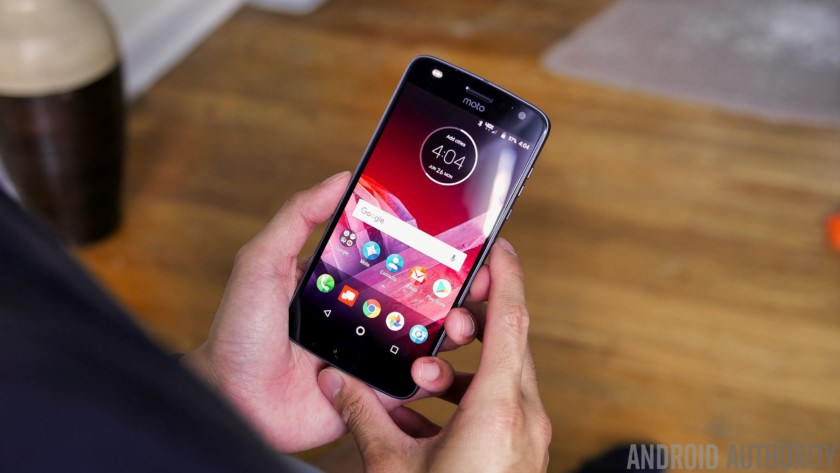
The 5.5-inch 1080p AMOLED display won’t raise too many eyebrows, but we’re happy to report that it does feature some eye-catching qualities so far. Details are sharp, colors are vibrant, and viewing angles maintain solid clarity. The only question we have is how it’ll perform under the scrutiny of the sun when it’s outdoors.
We’ve been quite happy with the 1080p AMOLED display thus far
Under the hood lies a Qualcomm Snapdragon 626 processor with 3 GB of RAM, which enables it to respond with a fair amount of finesse. Out of the box, it should suffice for most consumers when it comes to the usual processes, but it’s questionable when it comes to gaming performance – since chips of this caliber don’t produce the same fluid performances seen in other flagships.
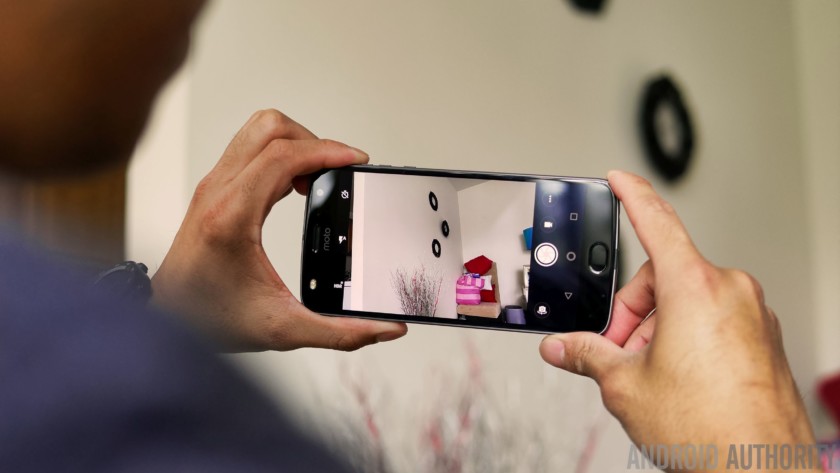
As far as cameras are concerned, the Z2 Play sports a 12-megapixel dual-autofocus pixel rear camera with an f/1.7 aperture lens, laser autofocus, phase detection auto focus, CCT dual-LED flash, and up to 4K video recording. Meanwhile, the front-facing camera stands in at 5 megapixels and features a wide-angle f/2.2 lens and a CCT dual-LED flash.
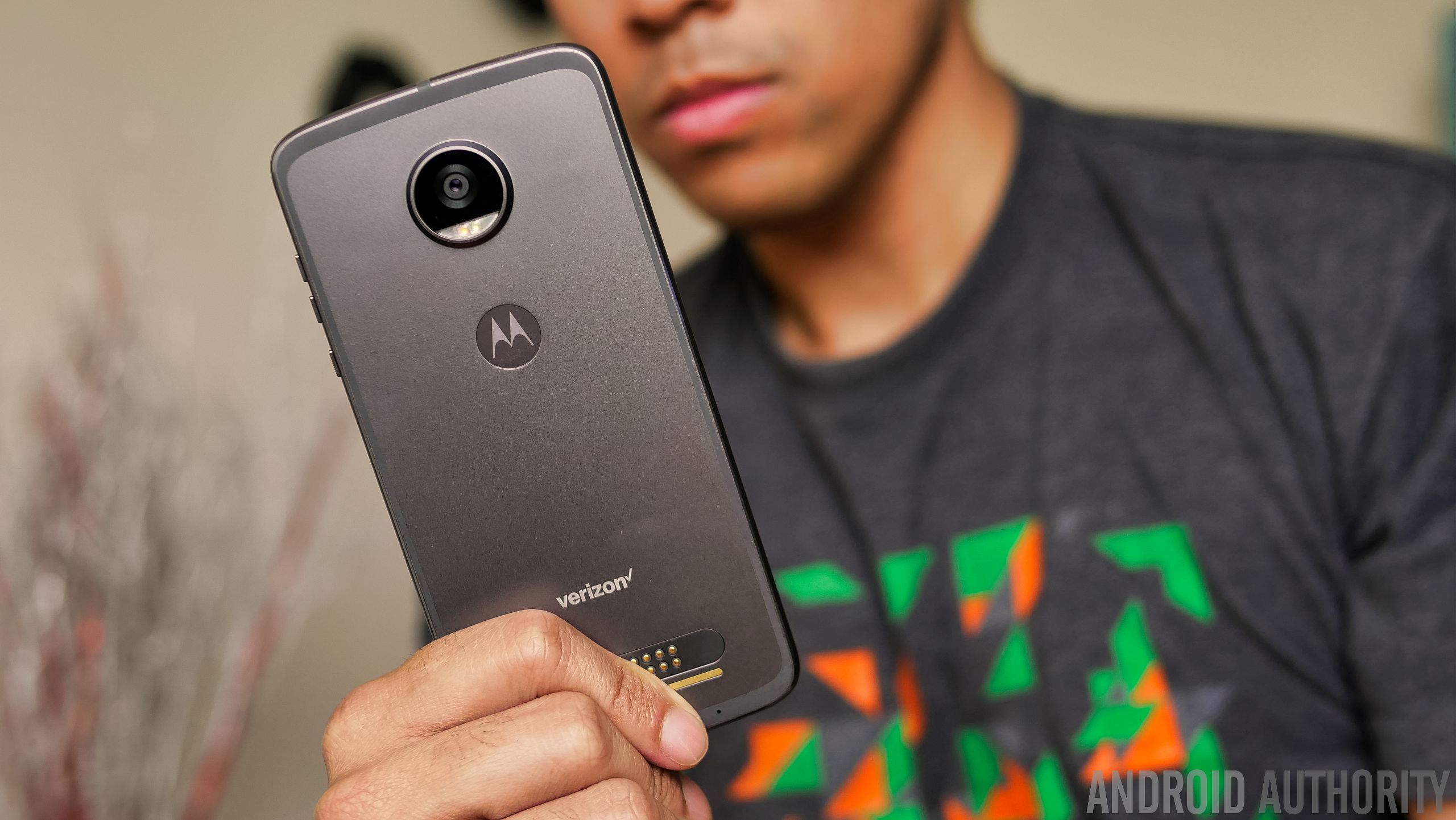
Those interested in what the Moto Z2 Play has to offer will need to be directed towards Verizon Wireless in the US, since the carrier has an exclusive on it… at least for now. However, an unlocked version of the phone will go on sale later in the summer for $499, which is a $50 increase from last year’s starting price. Indeed, the pricing is a bit high considering it’s in the mid-range category, so it’ll be intriguing to see if that’ll have a huge impact on consumers’ decisions.
Get it now from Verizon
Check it out at Motorola.com
Stay tuned for our full review, which will arrive in the next couple weeks!
Scientists are testing a Photonic Fence that fights mosquitos with lasers
Why it matters to you
No one likes mosquitos. Shooting them with lasers is not only cool, it’s effective.
Almost everyone in the world agrees that mosquitos are terrible. They aren’t just pests that leave itchy bug bites, they also carry the chance of being infected with malaria. Current traps and zappers have existed for awhile, but they also kill many good bugs. Instead, Seattle-based Intellectual Ventures Lab have created the Photonic Fence, a device that will only kill the pests.
The Photonic Fence uses cameras and other optics to scan for pests within 100 meters of the device. Bugs are identified by a combination of shape, velocity, acceleration, and wing-beat frequency. Once the machine determines that a bug is a pest, it shoots out a laser, killing the insect within 25 milliseconds. The company states that the Fence can kill up to 20 insects per second, covering an area up to 30 meters wide and 3 meters high.
According to The Wall Street Journal, development began during a brainstorming session in 2007. Just one year later, the team had already killed its first mosquito using a handheld laser. The project began as a way to combat the millions of malaria cases worldwide and the hundreds of thousands of malaria deaths. Existing drugs, insecticides, and bed nets have curbed the spread and kept the epidemic in check, but conquering the disease requires more.
IV Lab’s approach is to break the malaria transmission cycle at its source. By training a laser to identify the discriminating characteristics of a mosquito. The Photonic Fence delivers enough photonic energy to kill or incapacitate the mosquito before it reaches the age where it can infect a healthy host.
The result is a new way to control the mosquito population without affecting the local ecology such as butterflies and bumblebees. It can even determine the difference between male and female mosquitoes since only the females bite humans.
Testing began this summer in Florida inside a screened house full of mosquitoes. If this test proves successful, the device will be used on one wall of the house to fight against wild mosquitoes. According to Technology Review, IT Lab hopes to have a model with a longer, 100-meter range by next year.
Zapping mosquitoes with lasers isn’t the only solution scientists have come up with. Others have found success in bright light pulses or even turning them all into males.
Moto Z2 Play Android smartphone review
Research Center:
Moto Z2 Play
Motorola’s sleeper hit last year wasn’t the well-advertised Moto Z Force, but the Moto Z Play: A sub-$450 smartphone with solid performance and excellent battery life. This year’s successor, the Moto Z2 Play, hits the same strong notes with some internal upgrades, but at a slightly higher price. Is it worth it? Find out in our Moto Z2 Play review.
Industrial design, easy-to-use Moto Mods
The original Moto Z Play looked industrial, and the largely unchanged design of the Moto Z2 Play keeps that aesthetic. It takes a step backward, though, with a two-tone rear that makes it seem as though there’s too much going on. The sleek, black color also disappears in favor of gray and gold options — we’re not fans (blue and black are available in certain markets).
Button placements remain the same, with the volume rocker on the right edge, above the power button. Unlike the flagship Moto Z series, the Z2 and the Z Play retain the headphone jack on the bottom, next to the USB Type-C charging port. On the front, the only difference from last year’s Moto Z Play is the front flash and the fingerprint sensor, which looks more oval than square.
Julian Chokkattu/Digital Trends
Julian Chokkattu/Digital Trends
Julian Chokkattu/Digital Trends
Julian Chokkattu/Digital Trends
The 5.5-inch AMOLED screen has a 1,920 × 1,080 pixel resolution, and it looks great. Colors are vibrant and fairly accurate, and the screen looks sharp. Sure, there’s a lot of unused space around the display, but one of the first things you’ll notice about the Moto Z2 Play is how it’s so thin and light. Motorola has shaved off 1.01mm from the predecessor, making it impressively thin at just 5.99mm. That has also cut down on weight by 20 grams. Sadly, you’re still stuck with a massive camera bump on the rear — the phone won’t sit flat on a surface.
Fortunately, since the Moto Z2 Play still supports Motorola’s Moto Mods, you can magnetically snap a case or cover on the back to mask the rear design and make the camera flush. All of Motorola’s “Z” devices are modular — there’s a 16-pin connector on the back, and you magnetically snap “Moto Mods” to add features. There’s the JBL Soundboost mod, which basically adds a large speaker to your phone; the Hasselblad camera mod, which turns the phone into a point-and-shoot; or you can go for simpler mods like stylistic covers, or battery packs.
We think Motorola’s modular system is great, and it’s an incredibly user-friendly experience. The mods that were released last year worked almost flawlessly, though the covers sometimes have a slightly visible gap. Our main problem with the Mods? They’re too expensive. The JBL SoundBoost is $80, the Incipio Power Pack starts at $64, the Incipio vehicle dock is $65, the Mophie juice pack is $80, and the Hasselblad mod and the projector are both $300 each. The ecosystem is pricey.
We still really like using the phone without a mod because it’s so delightfully thin, but we’re glad Motorola is going strong with development of these Moto Mods.
Good performance, near stock Android
The Moto Z2 Play crushes everyday tasks like email, messaging, web browsing, and social media. It’s thanks to Qualcomm’s Snapdragon 626 processor, but the 3GB of RAM certainly helps. We didn’t encounter any issues while running through apps, navigating through the home screen and settings, or even when we used the split-screen mode to multitask between two apps.
Performance wasn’t flawless, however. While most games such as Breakneck and Sup performed without a hitch, we did see some performance dips in some graphics-intensive games like Batman — The Telltale Series. Here are some benchmark scores our Moto Z2 Play review unit received:
- AnTuTu: 66,687
- Geekbench 4 Compute: 3,183
- 3DMark Sling Shot Extreme: 464
For comparison, the $750 Samsung Galaxy S8’s AnTuTu score is 155,253, the $400 ZTE Axon 7 scored 142,672, and the $230 Moto G5 Plus scored 63,190. Benchmarks scores aren’t the be-all and end-all of performance, and again, we have yet to run into issues with performance outside of intensive games.
The lack of visual modifications to Android 7.1.1 Nougat likely improves performance — the software experience is very similar to stock Android, or the experience you’ll find on the Google Pixel. The minor differences are mostly improvements, like Moto Actions. These give you gesture shortcuts like starting the camera with a double twist; or chopping the phone in air twice to trigger the flash quickly. You can also make the phone stop ringing when you pick it up, or turn on “One Button Nav” to use the fingerprint sensor as your main navigation, instead of the on-screen Android icons.
One of the first things you’ll notice about the Moto Z2 Play is how it’s so thin and light.
Moto Display offers an ambient lock screen that fades in notifications to save power, and it can also remove harmful blue light from your phone before bedtime.
One of our favorite features is Moto Voice — it’s been around for some time, but the voice assistant is a little more targeted in what it can do. It’s like what Samsung’s trying to do with Bixby, but on a smaller scale. There’s no need for a traditional trigger word, like “OK Google,” so you can just say, “Show me Chrome,” and the Chrome icon will pop up at the top of the screen. Swipe it down, and the app will open. This works with any app installed on your phone, and you can also say a few other phrases like, “Show me my calendar,” and “show me the weather.” It may not work if you’re in a somewhat noisy environment, but it can be super helpful if you’re driving. It also said the phrase was secure and tied to my voice, but a coworker was able to trigger it by simply mimicking my voice.
There’s also a Verizon app called AppFlash that opens when you swipe right on the home screen — it’s essentially mimicking Google Now, and thankfully you can turn it off for Google’s solution instead. Google Assistant is also present, allowing you to control your supported smart home devices, and more.
The software experience is great on the Moto Z2 Play. If you’re an avid gamer, you may want to opt for a more powerful device like the OnePlus 5.
Camera struggles in low-light
In broad daylight, the Moto Z2 Play takes great photographs with its 12-megapixel rear camera. As you can see in some of the photos we took, images are detailed and have accurate colors. There’s even a well-designed Pro mode, in case you want to have more control over the camera.
We did notice some slight shutter lag, so occasionally — even in broad daylight — the camera did take a blurry shot when we moved a little. There’s no optical image stabilization to mitigate this, so just keep in mind you’ll want to be very still when taking photos. This is worse in low-light situations, as a lot of photos end up slightly blurry. If they’re not blurry, there’s plenty of noise. It’s certainly a capable camera, but it may not always be reliable.
The front-facing 5-megapixel camera is standard, and there’s a flash to help all you selfie-lovers. There’s also a beautification mode here, which removes blemishes on your face.
Great battery life
One of the best features of the original Moto Z Play is its battery life — it gave us nearly two full days of use. While the Moto Z2 Play’s battery is certainly better than most smartphones on the market, it’s sadly not as good as its predecessor. It’s easy to see why — Motorola made the decision to go for a thinner phone, while cutting the battery capacity from 3,510mAh to 3,000mAh. We would have preferred a longer-lasting battery over thinness.
But again, that’s not to say the Moto Z2 Play doesn’t endure. It will most definitely give you more than a full day of use, and at least two days with light usage. With heavy usage, we began the day with a full charge, and by 6 p.m. it was around 45 percent.
The Moto Z2 Play also makes use of Motorola’s TurboPower fast-charging technology. In fifteen minutes of charging, our device went from 30 percent to 47 percent. It won’t beat OnePlus’ Dash Charge technology, but it’s still plenty fast.
Warranty, price, and availability
Motorola offers a standard one-year limited warranty from the date of purchase. It covers defects from the manufacturing process, but you won’t be covered for any damage from accidental drops, or dips in water.
Only the Verizon model of the Moto Z2 Play is available now from both Verizon and Motorola’s websites. It will be in Verizon stores starting July 6, and it costs $17 per month for 24 months, or you can buy the phone outright without a payment plan for $408. Early buyers will get a JBL Soundboost 2 speaker for free, which would otherwise cost $80. On another carrier? Don’t worry — Motorola said the Z2 Play will also be available unlocked from its website later this summer, though at a higher price of $500.
Our Take
The Moto Z2 Play’s strong points are excellent battery life and fun mods you can use to enhance your smartphone. It’s the phone to get if you’re on Verizon, but Motorola may be asking a little too much with a $500 price tag for the unlocked version.
Is there a better alternative?
Yes. The OnePlus 5 is a no-brainer as it offers superior performance, a better camera, and an equal if not better software experience — all for the comparable price of $480. The only issue is it’s only compatible with GSM networks, so it won’t work on Verizon or Sprint’s network.
Moto Z2 Play Compared To
OnePlus 5
Huawei Nova 2 Plus
ZTE Blade V8 Pro
Xiaomi Redmi Note 4X
Lenovo Moto Z
Meizu M3 Note
Oppo F1 Plus
LG G4
Asus ZenFone 2
Nexus 6
HTC One Remix
Huawei Ascend Mate 2
LG G3
LG Lucid 2
Samsung Galaxy Note 2
There’s also last year’s ZTE Axon 7, which you can get for less than the original $400 asking price. It’s likely still more powerful since it uses the Snapdragon 820 processor, but what the Moto Z2 Play has on these phones is far better battery life.
How long will it last?
Motorola supports its devices for two years or less, sadly. Expect an update to the next Android version, but we can’t say for sure if it will get Android P. The company has also not fully committed to issuing monthly security updates for all of its devices, so you should be wary. The current security update is from May 1.
The Moto Z2 Play is susceptible to water damage, but thankfully there’s no glass on the rear, so it’s less fragile than phones like the Galaxy S8. Still, we’d recommend getting a case.
Should you buy it?
Yes. If you’re on the Verizon network, or if battery life is the most important aspect of a smartphone for you, the Moto Z2 Play is a good buy — even more so if you like some of the Moto Mods. If you’re on a GSM network, though, we strongly recommend going for the OnePlus 5.
AMD’s Ryzen Pro desktop chips aimed at highly compute-intensive workplaces
Why it matters to you
You will soon have another option besides Intel for your commercial-grade professional workstation.
AMD is in the middle of rolling out some significant new advancements across its entire product line. Its Ryzen CPUs based on the new Zen architecture are challenging Intel’s best processors, and AMD’s Vega Frontier Edition GPUs are now available with even faster Radeon Vega consumer gaming GPUs coming later this year.
AMD hasn’t forgotten about the high-end market commercial, however, with its AMD Epyc family of server processors offering extremely powerful options for the data center. Now, AMD is following up on Epyc with its announcement of the new Ryzen Pro desktop chips aimed squarely at highly compute-intensive workplaces.
Ryzen Pro utilizes the Zen architecture to enhance its Ryzen line to meet the needs of enterprise-class applications and multitasking workflows. AMD is promising up to 52 percent better computer performance over the previous generation of CPUs, while the Ryzen 7 Pro 1700 will outperform competing solutions like Intel’s Core i7-7700 by up to 62 percent.
The Ryzen Pro lineup will come in six configurations:
Product Line
Model
Cores
Threads
Boost Clock (GHz)
Base Clock (GHz)
TDP (Watts)
Ryzen 7 Pro
1700X
8
16
3.8
3.4
95
Ryzen 7 Pro
1700
8
16
3.7
3.0
65
Ryzen 5 Pro
1600
6
12
3.6
3.2
65
Ryzen 5 Pro
1500
4
8
3.7
3.5
65
Ryzen 3 Pro
1300
4
4
3.7
3.5
65
Ryzen 3 Pro
1200
4
4
3.4
3.1
65
According to AMD, each Ryzen Pro CPU will significantly outperform the relevant Intel alternative. The Ryzen 5 Pro 1600, for example, will be 8 percent faster in PCMark10, 39 percent faster in Geekbench, and 92 percent faster in Cinebench R15 than the Intel Core i5-7500.
In addition, AMD is packing Ryzen Pro full of its most important enterprise features, aiming at providing the most manageable, reliable, robust, and secure platform available. AMD SenseMI will provide its usual enhancements, including Precision Boost for precision tuning in 25MHz increments, Extended Frequency Range (XFR) support for automatic increase in processor clock speeds when system and processor cooling is sufficient, and Neural Net Prediction, Smart Prefetch, and Pure Power functionality.
Security is the major enhancement in Ryzen Pro aimed at the enterprise. All Ryzen Pro CPUs will benefit from the following AMD security technologies:
- Transparent Secure Memory Encryption: DRAM encryption is provided independent of the OS and application without needing any software modification and with a low performance impact.
- Secure Boot Process: Industry Standard Secure Boot secures the system before threats can attack via Industry Standard Secure Boot BIOS protection.
- Trusted Applications: fTPM enabled with TMP 2.0 support, this feature provides for secure storage and trusted applications processing with real-time intrusion detection.
- Secure Production Environment: Hardware, firmware, BIOS, and configurations are tested and confirmed prior to shipment, with security starting on the assembly line at the moment of production.
AMD is also promising the highest level of reliability, with 18-month image stability, 24-month processor availability, commercial-grade, high-yield wafers, and industry-leading DASH manageability. Along with a Commercial Limited Warranty, the Ryzen Pro is certified for the enterprise.
Ryzen Pro will be available worldwide in the second half of 2017. AMD will be making Ryzen Pro mobile CPUs available in the first half of 2018.
The history of the iPhone: Charting 10 years of milestones
Ten years ago today, Apple released the very first iPhone. While it is difficult to overstate the significance of what Steve Jobs and company achieved a decade later, it is easy to lose sight of precisely how far we’ve come.
The first iPhone lacked 3G connectivity and didn’t have an App Store. It had a rear camera, but didn’t allow sending images via text messages. Multitasking wasn’t a thing, and that’s to say nothing of how infamously buggy, unreliable, and incomplete the product was when Jobs first demoed it in front of a MacWorld audience in 2007. The entire mobile industry was a different place, too. Cingular Wireless was still around, and the leading smartphones of the day came from the likes of Nokia, BlackBerry, Palm, and Motorola, sporting QWERTY keyboards nearly as large as their screens.
To commemorate the 10th anniversary, we’ve compiled a list of milestones that have accompanied every iPhone release – all the way from that very first iteration all those years ago, to last year’s iPhone 7 and 7 Plus. For an added bonus, we’ve also included links to Apple’s site from right after many of these phones were announced, through the help of the Internet Archive Wayback Machine.
iPhone (2007)
There are so many features the original iPhone introduced, but you can pare down the major advancements to two: Multi-touch, and iOS. While the iPhone wasn’t the first phone to launch with a capacitive touch screen – LG’s Prada beat it to the market by a handful of weeks – it handled scrolling and gestures far better than anything that had come before. As a result, navigation was not only quicker, but much more intuitive.
Meanwhile, iOS served as the perfect partner for the breakthrough interface, giving rise to a modern, high-resolution operating system that was built to handle everything from music playback to widescreen web browsing entirely through touch. While iOS continues to evolve year after year, the look, feel, and behavior established here have long endured the test of time.
Snapshot on Internet Archive
iPhone 3G (2008)
You could make the case that the iPhone 3G was the most important iteration ever released in the product line, and that’s down to another two additions: 3G data and the App Store. Yes, web browsing and sending emails were technically possible over GPRS and EDGE on the original iPhone, but painfully slow download speeds meant you’d want to avoid it in favor of Wi-Fi at all costs. The inclusion of 3G made it possible to have a desktop-like browsing experience on the go – a major breakthrough back in 2008 that would become even more critical thanks to the release of the App Store.
While the App Store made its way to the original iPhone as part of the iOS 2 update, it shipped with the iPhone 3G out of the box. A smartphone is nothing without its apps, and the ability to download third-party software transformed the iPhone from a cool gadget with little practical appeal to a must-have multi-tool limited only by developers’ imaginations.
Snapshot on Internet Archive
iPhone 3GS (2009)
The third-generation iPhone established a pattern of release that is still in practice to this day – the “S” model. Apple’s Phil Schiller said the letter stood for “Speed” when he announced the iPhone 3GS at WWDC, and truthfully that was the main area of improvement. Many of the new features offered here, like cut, copy, and paste and MMS support, would make their way to older iPhones through a software update. In terms of hardware, the primary upgrade was an all-new 3-megapixel camera with autofocus and video recording. This was the first time Apple really doubled down on the camera experience on its devices, setting a tone for future products. It would contribute to the iPhone’s reputation as the smartphone for budding mobile photographers.
Snapshot on Internet Archive
iPhone 4 (2010)
After the 3GS polished some of the iPhone’s rough edges, the fourth generation was a major leap forward. The iPhone 4 brought numerous enhancements, from a front-facing camera to a significantly more powerful processor, double the memory, and, last but certainly not least, Verizon support. But the real stars of the show were the all-new design and Retina display. The iPhone 4’s combination of glass and metal would define the style of the product line for the next five years, until the iPhone 6 brought a more curvaceous form. Meanwhile, the increased pixel density of the 3.5-inch Retina panel provided a level of clarity never before seen on a smartphone.
However, you can’t talk about the iPhone 4 without mentioning its one critical flaw: that pesky antenna. The stainless steel frame that served as the iPhone 4’s antenna was divided into segments for different transmissions, and separated by breaks along the bottom left, right, and top. Unfortunately, these gaps could be easily covered up depending on how you held the phone, crippling signal strength. The issue could be mitigated through the use of a case or Apple’s first party bumpers, which were provided for free for a short time to those affected.
Snapshot on Internet Archive
iPhone 4S (2011)
While previous iPhones supported voice control, Apple invested heavily in the feature with the introduction of Siri alongside the iPhone 4S. Siri was billed as a personal assistant that could answer queries and carry out certain tasks, like sending texts, scheduling calendar events, and setting alarms. At launch it lacked the predictive functionality that makes many of today’s assistant’s so useful. Speaking of texting, iOS 5, which launched alongside the 4S, added iMessage as a replacement for SMS. It also introduced iCloud for backup and restore purposes – making the 4S the first iPhone that could be set up entirely without a computer or iTunes.
Snapshot on Internet Archive
iPhone 5 (2012)
Another major iPhone number brought another significant redesign – though not quite as profound as the iPhone 4’s before it. The phone retained the basic style of its predecessor but became taller, increasing screen size to 4 inches while adopting a 16:9 aspect ratio for true widescreen support. The 30-pin connector, a staple of Apple’s hardware dating back to the original iPod, was also replaced with the new, slimmer, multi-directional Lightning port.
However the most notable addition was LTE. Apple has long been criticized for being late to adopt features enjoyed by users of competing devices, and in this case the company arrived to the party roughly a year and a half after the first LTE-enabled phones began hitting the market.
Snapshot on Internet Archive
iPhone 5S and 5c (2013)
Rather than simply succeeding the iPhone 5 with one device, Apple unveiled two – the premium 5S, and the lower-end 5c. The 5c repackaged the internals of its predecessor in a colorful plastic exterior – the first (and last) iPhone constructed predominantly from polycarbonate since the 3GS. Meanwhile, the 5S sported the typical enhancements befitting of an “S” year, with a couple key upgrades.
First, Touch ID embedded a fingerprint scanner in the home button, a feature many iPhone users had been clamoring for. The iPhone 5S was also the first smartphone to launch with a 64-bit system-on-chip, allowing for the use of more RAM. But the biggest change was the makeover of iOS. Gone were the shiny buttons, rough textures, and old-timey icons that had plagued Apple’s user interface for years. With iOS 7, lead designer Jony Ive retired the skeuomorphism in favor of flatness, blurred windows, and pastel colors – falling closer aesthetically to Android and the short-lived Windows Phone platform. Oh, and did we forget to mention the 5S was the first iPhone to come in gold?
Snapshot on Internet Archive
iPhone 6 and 6 Plus (2014)
The original iPhone’s 3.5-inch display may have been “really big” according to Jobs back in 2007, but by the iPhone 5’s launch it wasn’t feeling quite so big anymore. Adding a bit of real estate to the top and bottom didn’t help things much either, and in the intervening years Apple had faced increased competition from bigger and bigger phones, like Samsung’s Galaxy Note series.
That brings us to the iPhone 6, which not only bumped the screen size up to 4.7 inches, but also introduced an even larger 5.5-inch Plus variant alongside an all-new design. In pulling a page from larger Android phones, the iPhone 6 also adopted near-field communication (NFC) for contactless credit card payments through a new platform named Apple Pay.
Snapshot on Internet Archive
iPhone 6S and 6S Plus (2015)
The iPhone 6S and 6S Plus were unique because of one significant new feature: 3D Touch. The technology relied on Apple’s Taptic engine to simulate a click-like response when elements on the screen were pressed with greater force than just a tap. The ability to distinguish taps from deep presses added another layer of interaction within iOS, similar to a right click. It would be a while before developers would embrace the feature, but it still stands as one of the iPhone’s unique capabilities that hasn’t really been matched by its Android counterparts. There’s also one other reason you might appreciate the 6S – it gave the world rose gold.
iPhone SE (2016)
If you’re in the market for a small phone that meets the performance benchmarks of larger flagships, your choices are pretty narrow. For the longest time, the iPhone satisfied these users’ needs, but the move to a larger form factor with the sixth generation left them out in the cold. Meanwhile, smaller Android phones – save for perhaps Sony’s Xperia Compact series – tend to cut quite a lot in the process of downsizing.
Thankfully, Apple returned in 2016 with the iPhone SE. Sporting the same overall design as the 4-inch iPhone 5S, the SE was more notable for what it retained or carried over rather than what it added. For example, the SE incorporated the same A9 system-on-chip and 2GB of RAM as the 6S. Users did miss out on 3D Touch, as well as the faster second-generation Touch ID fingerprint sensing tech. Those minor omissions aside, Apple delivered a best-in-class entrant in an often ignored segment.
iPhone 7 and 7 Plus (2016)
Could the most recent iPhone also have been Apple’s most controversial? That depends on where you stand on the headphone jack debate. The company’s decision to remove support for the 3.5-millimeter connector was highly criticized when the iPhone 7 and 7 Plus launched last year, and for good reason – the plug has become a staple in smartphone design, especially after Apple popularized phones as a music listening devices. However, the headphone jack’s disappearance may just as well be the byproduct of the iPhone 7’s other changes. The seventh-generation model was the first to be rated as water resistant, at the IP67 level. Moreover, getting rid of the physical home button necessitated an improved Taptic engine, which slid right into the space previously occupied by the headphone jack.
Other additions to the iPhone 7 were received more positively. The 7 and 7 Plus were Apple’s first iPhones to launch with 32GB memory as standard, and the latter marked the company’s first-ever dual-lens rear camera. The iPhone 7 Plus featured a second 12-megapixel telephoto lens which enabled depth-of-field effects and 2x optical zoom.
With 2017 being the 10th year of the iPhone, rumors are ramping up day-by-day as we approach September to find out if the new iPhone will be called the 7S or the iPhone 8, and we may also see a special edition iPhone X.
What was your favorite iPhone, and which features were you most excited for? Sound off in the comments!
 AIVAnet