


OnePlus 5: Which model should you buy?

Do you require 64GB or 128GB of space? And is the extra RAM really that necessary?
OnePlus has certainly figured out its formula for selling smartphones: take a no-fuss design, shove in an all-day battery along with the latest processor, and keep the Android software tweaks at a minimum. The OnePlus 5 is a great depiction of that vision as it’s equipped with all the components that fit in with the company’s winning smartphone strategy.
This year, OnePlus is offering two different models of its marquee device in an attempt to appeal to those stray few who might still require a bit convincing to steer clear of a phone from a better-known manufacturer. Rather than go with a bigger screen, however, OnePlus is offering more storage space and more memory for an extra $60.
We’re going to help you choose the OnePlus 5 model that’s right for you.
Decide how much storage you need

There isn’t much of a difference between the two OnePlus 5 models. You either get 6GB of RAM and 64GB of storage, or 8GB of RAM and 128GB of storage — and no, you can’t pick and choose your RAM and storage independently. In either case, you’ll get the same Snapdragon 835 processor, as well as a larger-than-average 3300mAh battery. You’re also getting a 5.5-inch 1080p display, 16-megapixel rear camera, and a near-stock version of Android, which is partly what’s helped make the OnePlus lineage of smartphones so attractive in the first place.
There’s no SD card slot, so get the storage right from the start.
Your primary decision here is whether you’ll need the full 128GB of storage — and that will depend entirely on your sort of usage. After all, there is no SD card expansion slot on OnePlus’s latest, so you’ll have to choose the right size from the start.
If you’re stuck, try thinking of it like this: are you planning to shoot a ton of 4K video with the OnePlus 5? Perhaps you’re planning a project where you document your life at a minute a day? Or maybe you expect to load up the device with movies and television shows you’ve purchased specifically for the long commute you endure daily? If you answered “yes” to any of those questions, you might want the extra space. For everyone else, 64GB of storage is probably sufficient, especially if you get into the habit of backing up your data regularly to several cloud services in tandem. On the flipside, if you’re simply too lazy, or maybe life leaves you feeling a little scatterbrained at times, the bigger storage unit might be the best solution as it offers plenty of wiggle room.
What about the extra RAM?
Don’t be fooled by the allure of having 8GB of RAM in the 128GB storage version of the OnePlus 5. Granted, it sounds like a good package, especially for the small additional cash, but that extra bit of RAM hardly factors into the performance of the smartphone. As explained by our own Andrew Martonik in his review:
…I’m using the model with 8GB of RAM, but this really doesn’t factor into the performance at this point. The highest average memory usage I ever reached, according to the phone’s settings, is 4.7GB — comfortably underneath the 5.5GB ceiling (500MB is reserved for the system) of even the standard 6GB RAM model.
You may personally decide that the added RAM is worth the price since it effectively helps future proof the phone — who knows what OnePlus may be able to do with software a year from now that uses the extra memory. That’s a totally fine way of thinking; but don’t expect the extra RAM to do much for overall performance in normal day-to-day usage today.
Choosing a color

Completely secondarily to internal specs that actually influence how the phone works, you’ll also have to keep in mind the chassis color.
The sleek “Midnight Black” finish of the OnePlus 5 shown off in our review is available exclusively on the 8GB/128GB version. The standard 6GB/64GB model is a lighter shade called “Slate Grey” that lands somewhere between the grey and black options offered in the OnePlus 3 and 3T. If you like wielding the special thing, the extra $60 may very be worth it for the midnight black color alone. But also consider that once you option up for it and hit the $539 price point, it’s not that much more money to get into the territory of buying an LG G6 or HTC U11.
Which model of the OnePlus 5 will you be picking up? Let us know in the comments!
OnePlus 5
- Complete OnePlus 5 review
- Reviewing our first OnePlus 5 photos
- OnePlus 5 vs. OnePlus 3: Should you upgrade?
- OnePlus 5 specs
- The latest OnePlus 5 news
- Join the discussion in the forums
OnePlus
Pavlov VR Early Access preview: Is this Counter-Strike VR?

A multipurpose shooter that will appeal to Counter-Strike and Call of Duty fans.
Pavlov VR is officially available for HTC Vive but also works with Oculus Rift through Steam VR.
Seeing some of the most popular standard PC games get the VR treatment is a thrill. We have Onward, a VR mil-sim that takes a page from ARMA’s pacing and teamwork book, we have Breach It, which borrows Rainbow Six: Siege’s destructible environments, and now we have Pavlov VR, which looks a whole lot like the insanely popular Counter-Strike: Global Offensive (CS:GO).
Let’s take a close look at Pavlov VR to help you decide whether or not it’s worth adding to your library.
See the full review at VR Heads!
How to set up an iCloud email account on Android
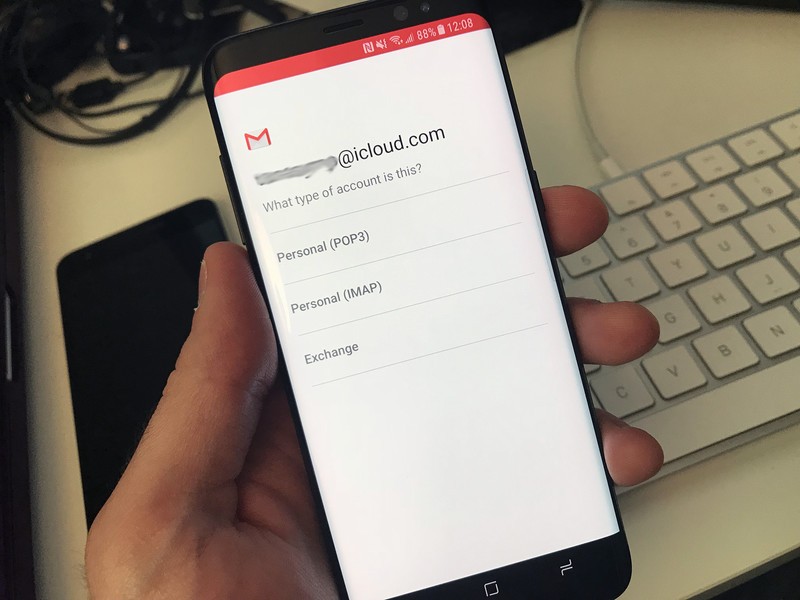
There’s no need to abandon your iCloud email address when you get a new Android device.
If you’re moving to an Android device from an iPhone or iPad, there’s every possibility you’re already set up and using an iCloud email address. Android devices require you to have a Google account (Gmail), but you might want to keep using your iCloud account for email. And that’s just fine.
The good news is it’s perfectly possible to get your iCloud email address up and running on your Android device. It’s pretty straight forward but does involve a little effort on your part. Here’s how.
How to add your iCloud email address to your Android device
Besides the Gmail app on your Android phone or tablet, you should also have an app just called “Email.” (There are also dozens of great alternatives on Google Play.) How it looks may vary from phone to phone, but the overall function should be the same since you need to set up your iCloud account using IMAP and SMTP.
However it looks, the key information remains the same. Here’s how to add your iCloud email address to your Android device,
How to add an iCloud email address to Android
Launch Settings by swiping down to reveal the notification shade and tapping the gear button.
Tap Accounts. On some phones, it may be under something like “Cloud and accounts”.
Tap Add account.
Tap Email if the option is there or tap Personal (IMAP) next to the Gmail symbol. If you choose the Gmail option, Gmail will automatically recognize your iCloud address and import the correct server settings.
If you chose the Email option, you’ll have to add the server settings manually:
- Incoming mail server:
- Server name: imap.mail.me.com
- SSL required: Yes
- Port: 993
- Username: The name portion of your iCloud email address. So if it’s johnsmith@icloud.com, just the “johnsmith” part.
- Password: Your iCloud email address password. You can also choose to generate an app-specific password.
- Outgoing mail server:
- Server name: smtp.mail.me.com
- SSL Required: Yes
- Port: 587
- SMTP Authentication Required: Yes
- Username: Your full iCloud email address, including the @icloud.com part
- Password: Use the password you used in the incoming mail server section, whether it was your original or the app-specific password you generated.
Tap Next or Continue or whichever button finishes the process.
If there is an error message in the SSL required section of either the incoming or outgoing mail server sections, use TSL instead.
Hopefully, the details above should be enough to get you up and running. It’s a little fiddly to get set up – especially if you’ve come from the iPhone which does it all for you – but it works, and it gets your existing email onto your new Android device.
Of course, there may be other apps out there that do this for you, or you might know of some tips and tricks to make things run a little smoother. If you’ve got anything that’ll help, drop it into the comments below!
Questions?
Let us know in the comments below.
Snapchat’s new Snap Map does exactly what you’d think
See what’s happening around the world on Snapchat.

Snapchat has introduced a new feature called “Snap Map” that does exactly what you’d think it does: shows you Snaps, on a map. You can move and zoom the map from city level all the way up to global level to see where people are, and you can see hot spots where multiple people are at the same place sharing.
You get to choose if you want to share your location with your friends, or you can go into Ghost Mode and keep things private. Snapchat says the app will only update when you open up Snapchat, rather than continuously track your movements.
This isn’t necessarily a direct competitor to the more granular location sharing features that apps like Google Maps and Glympse offer, but it is helpful for keeping people inside of Snapchat rather than jumping out elsewhere to find out where everyone is.
Global coral bleaching event may finally be ending
For the last three years, coral reefs in the Atlantic, Pacific and Indian oceans have been devastated by bleaching due to high ocean temperatures. But now, after looking at satellite and model data, the NOAA says that this terrible event might finally be at an end.
Coral bleaching is the result of elevated ocean water temperatures due to climate change. When coral experiences a change in conditions, it becomes stressed, and the algae that live symbiotically with the coral begin to leave. The coral starts turning white, which is why it’s called bleaching. Coral can recover from minor bleaching, but moderate or severe bleaching can often prove fatal.
Since 2015, all coral reefs in tropical areas around the world have experienced higher than normal temperatures; almost three quarters have been subject to temperatures that can cause bleaching. This is the third ever global coral bleaching event, and the most damaging; the first was in 1998.
While the end of this worldwide bleaching event is welcome good news, it doesn’t mean that coral reefs are safe. The Great Barrier Reef underwent coral bleaching for the second year in a row earlier this year, and reefs in the Caribbean, Hawaii and Florida might still be in danger. One small encouraging note, though, is that not all the coral reefs that were subject to bleaching temperatures were actually bleached. Scientists are now examining these systems to see if they have characteristics that can protect them from elevated water temperatures.
Via: Gizmodo
Source: NOAA
Next Sony Xperia flagship: What’s the story so far?
Sony’s most recent flagship, the Xperia XZ Premium, is all about specs and power. Not a huge amount changed in terms of design, aside from a few adjustments here and there, but it ticks almost all the boxes on the numbers sheet.
That of course means that its successor not only has its work cut out for it in the specs department, but with competitor flagships becoming more exciting in terms of design, Sony will need to pull something out of the bag in that area too.
Rumours have started to surface regarding the next Sony Xperia flagship and no doubt they will continue to circulate over the next few months. Here is everything we know so far.
Next Sony Xperia flagship: Release date
- IFA release likely
- 31 August 2017 probable date
Sony revealed in May that it would be announcing two flagship devices in the second half of 2017 that will sit alongside the Sony Xperia XZ Premium and the Xperia XZs, both of which debuted at Mobile World Congress 2017.
The company said it wanted to concentrate on “high value added” flagship models so the new flagship devices will be higher end than the likes of the Xperia X and Xperia X Compact.
Sony traditionally uses consumer electronic show, IFA, to announce new smartphones so we’re expecting this year to be no different. IFA 2017 takes place in Berlin between 1 and 6 September, with press days on 30 and 31 August.
Sony normally holds its press conference on the morning of the second press day. An educated guess would therefore suggest the next Sony Xperia flagship smartphone, or smartphones, should be unveiled on 31 August 2017.
Next Sony Xperia flagship: Design
- OmniBalance flat-slab design expected to continue
- Reduced bezels would be good to see
- A change in design would keep things exciting
Sony hasn’t strayed far when it comes to design. The Sony Xperia XZ Premium isn’t too far removed from the Sony Xperia Z that launched a few years ago, with both featuring an OmniBalance flat-slab design with glass on the front and rear.
A few changes have appeared here and there, such as the introduction of 2.5D glass for a more seamless finish between the glass and the edge of the device, as well as the addition of a fingerprint sensor into the side-mounted power button. On the whole though, all Xperia devices are distinguishable.
We’d like to see the new Xperia flagship reduce its bezels at the top and bottom of its display, as both Samsung and LG did this year, and we’d also like to see an edge-to-edge display transition from the Xperia XA range to the flagships. We’re not holding out breath for the latter though as that would mean a change to that side-mounted fingerprint sensor.
We’re expecting the flat slab rectangle to remain, but it would be great to see a change up in design somewhere to keep the Xperia devices exciting like those the current smartphones they find themselves up against.
Next Sony Xperia flagship: Display
- 4K resolution display could appear again
- HDR likely to be on board again
- Will Sony switch to AMOLED?
The Sony Xperia XZ Premium features a 4K HDR display, offering a super sharp pixel density of 801ppi. Sony has avoided Quad HD in the past at it always said it wasn’t worth the trade off in battery life given the lack of native content available for that resolution.
As there is now more native content at this resolution and many competitors are opting for it and higher, whether Sony will continue to avoid Quad HD is unclear. If the new 2017 Xperia flagships are to sit with the likes of the Xperia XZ Premium, a 4K display may appear again.
That said, Sony also considers the Xperia XZs a premium offering and this device has a Full HD display so it is not yet clear what resolution the new flagship will offer. We’d certainly expect HDR to be on board and an LCD panel, even if we would like to see Sony move to AMOLED.
JDI
There has been talk of Sony offering a 6-inch display panel with a 2:1 aspect ratio, which is the same ratio as the LG G6, but it is not clear if this will appear on any 2017 smartphones. The panel is said to be in production by Japan Display Inc, a joint venture between Sony, Toshiba and Hitachi, and it is said to offer “Pixel Eyes” technology which will apparently deliver darker blacks than what is commonly found on LCD panels.
If it does appear on any of Sony’s 2017 flagships, we can expect a device with very slim bezels so perhaps our wishes of those bezel reductions will come true after all.
- Mobile HDR: Dolby Vision, HDR10 and Mobile HDR Premium explained
Next Sony Xperia flagship: Camera
- Same Motion Eye camera expected
- Hope to see super slow-motion feature again
Camera has always been a main focal point for Sony regarding its smartphones. Not surprising given it supplies its sensors to many of its competitors, including the likes of OnePlus. The Sony Xperia XZ Premium featured the world’s first memory-stacked sensor, which allows it to offer a 960fps super-slow motion video feature, among other things.
This super-slow motion video feature is one of the best things about the XZ Premium and so we would expect it on any other Sony flagships released in 2017, along with the predictive capture feature, also found with the Motion Eye camera.
As this Motion Eye camera was new to the XZ Premium, it would be surprising to see another new sensor in the new flagships this year. Improvements will no doubt be made but we’re expecting the same 19-megapixel sensor on the rear of any new devices in 2017.
Next Sony Xperia flagship: Hardware
- Expecting Qualcomm’s latest platform
- Possible jump in RAM could be plausible
- MicroSD expected
Sony is one of Qualcomm’s most loyal fans, having opted for the chipset manufacturer’s latest platform in all its flagship devices over the years. The current flagship platform, as it were, is the Snapdragon 835, but whether this will still be the case in September is not yet known.
We can probably expect any Sony flagships launched this year to offer Qualcomm’s latest processor but it is not yet clear if this will be the SD835 or something different. A slight jump in RAM to 6GB would see the new Xperia flagship compete with the likes of the OnePlus 5 in terms of specs, but whether more than 4GB of RAM is necessary is a different matter.
Sony has always offered microSD support for storage expansion so doubt the new flagships will offer this too, with at least 64GB of internal storage.
There has been a suggestion that future Sony phones will be able to charge wirelessly from friend’s device, a refrigerator, washing machine or any device plugged into mains with a NFC power transmitter. It’s been claimed Sony has filed a patent for a second wireless antenna for NFC that transfers power rather than data.
Whether this will appear in this year’s flagships, in the future, or not at all, remains to be seen for now though. Patents don’t always come to fruition. USB Type-C will no doubt be on board any new devices though and the battery capacity should be at least around the 3000mAh mark, with fast charging and technologies including Sony’s Stamina Mode and Qnovo’s Adaptive Charging.
Next Sony Xperia flagship: Software
- Android Nougat with Sony software expected
- Same experience as XZ Premium likely
The next Sony Xperia flagship will probably launch on Android Nougat with Sony’s software over the top, meaning it should offer the same experience as the Xperia XZ Premium with perhaps a few adjustments.
Android O, the new version of Android, is due to be released in the latter half of the year but we suspect it will be a little after the Sony devices are expected.
The new devices will no doubt be guaranteed an update to the latest software at some point, but they are unlikely to come with it from out the box.
Next Sony Xperia flagship: Conclusion
For now, details surrounding the next Xperia flagship or flagships are guesswork. Sony said it will be announcing new devices and they would sit in the higher end of the company’s portfolio, but other details are scarce.
We’re expecting to hear more from Sony at IFA 2017 and more rumours will no doubt appear in the meantime so keep checking back as we will update this feature as we hear more.
Harman’s £200 JBL Pulse 3 launches with 360 sound and a LED lightshow
Samsung-owned Harman is bringing its JBL Pulse 3 to Europe.
First unveiled at CES 2017, the Bluetooth speaker made headlines because of its built-in lightshow. Harman’s JBL brand also ditched the mesh grill on previous Pulse speakers and used a durable semitransparent outer plastic shell, giving the speaker a lava lamp-like look. The Pulse 3 is also waterproof up to 3 feet of water for 30 minutes, with an IPX7 certification, thanks to the use of this tough plastic.
The Pulse 3 debuted in the US with a list price of $200, but now you can get it for £199.99 from Currys and JBL.com. JBL promises 360-degree sound with “base heavy sound”. The speaker features three drivers, dual passive radiators, a 12-hour battery life, and, as we mentioned earlier, an LED lightshow. The Pulse 3 can be separated into two sections, with the top hosting the LED lightshow.
- JBL Reflect Aware review: Lightning earphones for sporty iPhone 7 users
- This Harman Kardon speaker packs Microsoft’s Cortana
The bottom portion emits the sound, much like Google Home. Speaking of smart speakers, JBL said the Pulse 3 provides access to “Siri and Google Now” via JBL’s Voice Assistant Integration feature. In other words, you should be able to play music using voice commands. You can also control the speaker through the JBL Connect app, which allows you to do things like customise the lightshow, too.
Other features include the ability to wirelessly connect up to three mobile devices, as well as a built-in rechargeable Li-ion battery and a noise and echo-cancelling speakerphone. The JBL Pulse 3 will be available in Europe from August in white or black colour options.
Etsy slashes almost a quarter of its staff in attempt to refocus
Etsy is widely recognized as perhaps the premiere place online to go for handmade goods from sellers big and small. But despite the company’s ubiquity and influence, Etsy may have taken on too many projects that aren’t relevant to its core business. To that end, CEO Josh Silverman announced this morning that Etsy was laying off 15 percent of its workforce. That’s in addition to layoffs that were announced in early May; the total workforce reduction comes in at 22 percent, or about 230 employees.
Silverman said the layoffs were part of an effort to focus on Etsy’s “vital few initiatives,” though he didn’t specify exactly what parts of the company were being a drag. The only indication was that the company would focus on its “core marketplace.” However, Etsy has launched plenty of things in the past few years that stray from what the company is best known for, including local shopping guides to find sellers IRL as well as an online shop for crafting supplies (rather than crafts themselves).
The fact that Amazon, eater of worlds, has also gotten into the handmade crafts business over the last few years also cannot be ignored. The experience of using Etsy likely isn’t changing any time soon for sellers or buyers, but a renewed focus on what the company does best might help it through the challenges that led it to make these cuts in the first place.
Source: Etsy (PR Newswire)
Uber’s future is still tied to its founder
It’s said that those who don’t pay heed to history are forever doomed to repeat it, but Silicon Valley prides itself on its short memory. It tells its denizens that only by unlearning received wisdom can you see clear to remake the world in your own eyes. I wonder if, after another brutal few days at Uber, Travis Kalanick and co. wish they’d had their time over again to study a textbook.
It’s been a week since I last wrote about Uber, and since then a woman in India, who had been raped by one of its drivers, has sued the company because Uber executive Eric Alexander obtained her medical records through questionable means. The company began sending customers an apology for its conduct, saying that it had “failed to prioritize the people that helped get us here.” And, as part of this global mea culpa, it began the “180 days” program to improve relations with its drivers and, by extension, the public.
Half a day later and The New York Times broke the news that CEO and co-founder Travis Kalanick had resigned his position. Kalanick was actually on a leave of absence from the company at the time, ostensibly to grieve for his mother, who was recently killed in a boating accident. According to the report, a group of prominent investors produced a letter entitled “Moving Uber Forward,” demanding that Kalanick resign for good.
His departure means that Uber now needs to find an entirely new leadership team, including a CEO, COO and CFO. It will also need to replace those employees who were fired as a result of the investigation into its toxic, sexist culture, including Eric Alexander and Emil Michael. In addition, there are several open spots on its board of directors, including that of David Bonderman, who stepped down after making a sexist remark during a meeting about fixing the company’s sexism problem.
Many of these failures stem from Kalanick, who built Uber in the belief that the existing way of doing things was wrong. An adulatory 2015 profile in Fast Company described the executive as someone who likes “poking conventional wisdom in the eye.” Kalanick also previously praised the works of Ayn Rand and flirted with libertarianism, a philosophy that willfully ignores history in favor of self-centered belief.
Uber believed that the taxi industry was outdated, inefficient and in dire need of “disruption,” so it threw out the rulebook. Some of those rules, however, included background checks to ensure that drivers were not at risk of abusing their passengers, and safety laws to ensure that drivers didn’t work for too long, risking fatigue that could lead to crashes. Then there were important protections for the drivers, like ensuring that they had health insurance — they work hard, it’s only fair. Uber’s entire business model is, however, predicated upon the erosion of the postwar social contract.
But hey, who cares if your homeless Uber driver sleeps in the back of their car, which is mortgaged to them in perpetuity? Who minds that the person ferrying your kids or elderly relatives around could be suffering from an illness they can’t afford to treat? You don’t, because you saved a couple of bucks on a cab fare, could book it on your smartphone and got driven around in a Benz. In Kalanick’s world, if the drivers have problems, it’s because they can’t “take responsibility for their own shit.”
In the power vacuum left by Kalanick’s departure, Uber may, eventually, be waking up to the issue. On June 20th, the company launched the 180 Days initiative to make “meaningful changes and improvements” to the driving experience. Between now and the end of the year, the company says that it will give its drivers “earnings and support” that they can “depend on.”
To begin, Uber and UberEats drivers will be able to receive tips by the end of July, with a pilot program running in Seattle, Minneapolis and Houston before that. In addition, drivers who have to hang around for more than two minutes for a rider to turn up will earn a per-minute wait fee. That feature, similarly, is being rolled out gradually across the US, along with tweaks to Uber’s Quest and Driver Destination tools.
Perhaps most crucially, the company is allowing drivers to add a $0.04 per-mile charge to every ride. That money is then paid to Aon, which is running an injury protection insurance scheme that will pay out in the event of a “covered accident.” If a driver qualifies, he or she will be entitled to disability payments of up to $500 a week, up to $1,000,000 in medical expenses and a survivor benefit of up to $150,000 for your family.
Rebecca Smith of the National Employment Law Project feels that this doesn’t go far enough, however. In a statement, she said that “the improvements the email promises its drivers largely mimic the irresponsibility of the company’s founder, Travis Kalanick.” Her argument is that adding tipping “merely passes the responsibility for decent pay onto Uber’s riders—not Uber itself.” Smith’s not a fan of the private insurance plan, either, saying that the company should instead simply pay “its payroll taxes and covering drivers under state workers’ compensation systems.”
Then, in Seattle, Phoenix and Columbus, there’s the matter of providing extra protections to younger riders. Users between the ages of 13 to 17 will now have a “teen account” that marks them as such on the Uber system. If a ride is booked from one of these accounts, it will be directed to experienced and highly-rated drivers. The benefit for the drivers is that the ride will incur a $2 premium over a regular trip, but the fact that it’s needed at all is telling.
All of these are small changes, but they add up to the admission that Uber’s attempt to remake the world has faltered. The frankest response comes from Uber co-founder Garrett Camp, who sits as chairperson of the company’s board. In a Medium post, Camp said that his team had “failed to build some of the systems that every company needs to scale successfully.” Those systems included restrictions on employees sexually harassing their colleagues, preventing engineers from building tools to actively hinder law enforcement investigations and building a system that ensures drivers don’t work 90 hours a week for less than the minimum wage.
Camp adds that it is time for Uber to pause and think about “what really matters,” but a concern is that Uber really doesn’t know. It may never learn, thanks to the role Travis Kalanick had in building the company and the strength of his influence even after resigning as CEO. After all, he can still exert control over the startup’s practices and culture in his role as shareholder and board member.
Kalanick still owns a sizable portion of his company, and a recent Times investigation found an interesting clause in Uber’s stock procedures. When employees sell their stock to the company, the voting rights are handed straight to Kalanick. It’s not clear just how much power he personally wields, but he could vote down meaningful changes to Uber’s business if he feels it’s bad for business.
The former CEO said, as recently as February, that he would need to “fundamentally change as a leader and grow up.” But if he had any real interest in changing, he would have begun to do so when the need became apparent — in 2014. Perhaps his time in the wilderness will allow him to dwell on his company’s well-publicized ethical failings. Perhaps he’ll simply blame others and use his influence to preserve Uber as a company made in his own image. Either way, the future of Uber is very much still in Kalanick’s hands. The king is dead — long live the king.
Periscope adds a confusing way to support your favorite streamers
While Facebook is currently winning the livestreaming wars, rival Periscope has its fair share of devotees. The Twitter-owned service hosted 200 million broadcasts in 2016 and close to 77 million hours of live video in the first quarter of this year. Some Periscope broadcasters even draw huge crowds (Amanda Oleander, for example, is an LA artist with over 600,000 followers) with hundreds of hearts flooding the screen. Today, Periscope is announcing a new feature that’ll reward those broadcasters with more than mere likes. It’s called Super Hearts, which are essentially fancy hearts that viewers pay for with real money in exchange for attention. But the real benefit is for broadcasters: those Super Hearts could potentially turn into cold hard cash.
Here’s the way it works. Starting today, Periscope users will see a Super Heart icon on every live broadcast. Tap it, and you’ll see three different kinds of Super Hearts that you can choose to send. The cheapest is “sparkly”, the next one up has a bubbly effect and has your profile avatar in it, and the most expensive Super Heart also has your profile avatar plus it looks like it’s exploding diamonds. The hearts costs 33 coins, 66 coins and 111 coins respectively.
Coins? Ah, well that’s Periscope brand new in-app currency, which you buy with real money. There are seven different pricing tiers; the more coins you buy, the deeper the discount. It starts at 1,050 coins for $0.99 and goes all the way up to 132,650 coins for $99.99. It’s a model that many mobile gamers will likely find familiar.
Once you buy the coins, you can use those them to send Super Hearts. Select the type you want, as well as how many you wish to buy, and then tap away at the Super Heart icon during the broadcast to show the streamer your love.
After you send your very first Super Heart, you’ll see an automated shout-out that thanks you for sending it, which should help get the broadcaster’s attention. Super Heart users will also get a heart-shaped flair in their comments so they get noticed even more. Everyone who sends a Super Heart will get added to a leaderboard, which you can peek at the bottom of the screen, so you can compete and see who’s sending the most love. If that all sounds a little too much, broadcasters always have the option to toggle off Super Hearts in the settings.
But if you turn off Super Hearts, you won’t get stars. That’s right; in addition to seeing all these flying animated hearts and comments, broadcasters will also see a star count at the top of their screen. Each Super Heart has a star value — the more Super Hearts you get, the more stars you get. The star value of each Super Heart directly correlate to its coin value. So if a viewer spent 330 coins to get 10 Super Hearts and then sent them to you, those 10 Super Hearts would give you 330 stars. To clarify: coins are the purchase currency, while stars is the earned currency. According to Periscope, it did this to “avoid confusion,” but clearly, it didn’t succeed.
Along with introducing Super Hearts, Periscope is also launching a Super Broadcaster Program, which you’re only eligible for if you meet the minimum requirement of 185,000 stars. You still have to apply to get in, but once you do, you’ll have the opportunity to exchange your star balance for real cash money.
185,000 stars adds up to roughly $175 (it may be more or less, depending on transaction fees and so forth) and of course, you can always earn more by getting more stars. You can only cash out once per month, and that money will be directly deposited in your bank account. The program will launch in the US to start, but everyone in the world can start accumulating their star balance starting today. So by the time the application hits your part of the world, you could already be well on your way to being qualified.
The Super Broadcaster Program marks the very first time that Periscope broadcasters can monetize their streams. It’s completely different from Periscope’s existing VIP program, which aims to incentivize popular broadcasters with tools and tips to help grow their audience. The two programs are run separately, which means that VIP Periscopers have to apply for the Super Broadcaster Program just like everyone else.
That’s okay, because the Super Broadcaster Program was partly a result of feedback Periscope received from its broadcasters. “We’ve been having exploratory conversations with many members of the community, especially the VIPs,” says Annie Sultan, Periscope’s community manager. “There’s this desire for a new way to interact, but in a way that feels playful and very ‘Periscope-y’, that also provides support to the Periscopers.”
“Super Hearts are a new way to monetize their content, but in a way that’s authentic to us,” adds Sultan.
Other live streaming platforms offer similar incentives; Twitch lets the audience tip livestreamers with Cheer emotes, while YouTube Live viewers can pay for pinned messages known as Super Chat. Of course, YouTubers (and some Twitch streamers) also have the benefit of ad revenue, which Periscopers do not. Seeing as how Twitter dropped the ball by neglecting the talent on Vine, it’s heartening to see the company look for ways to pay its valued Periscopers. Even if it is doing so with an astoundingly convoluted system that involves three different currencies.
“The hearts are Periscope’s signature,” says Sara Haider, Periscope’s director of engineering. “It allows viewers to engage with broadcasters in lightweight, ephemeral, lovely kind of fluttering way, to show the broadcaster that they are liking what they’re seeing.”
“And to the broadcaster, it’s like hearing the roar of the crowd,” she adds. And with Super Hearts, that roar can finally be turned into dollars.
 AIVAnet