


Best Water-resistant Bluetooth speakers

Choose a great water-resistant Bluetooth speaker and singing in the shower will sound better than ever!
Bluetooth speakers are one of the most convenient ways to listen to music from pretty much any device. If you get yourself a water-resistant one, you don’t have to worry about it getting wet. Enjoy a poolside singalong by getting yourself a quality, water-resistant Bluetooth speaker. We’ve rounded up some of our favorites!
- UE Wonderboom
- Braven BRV-X
- UE Roll 2
- Archeer
- Polk Audio BOOM Swimmer
- UE Boom 2
- JBL Flip 3
UE Wonderboom

UE’s latest water-resistant Bluetooth speaker is cute as a button! The Wonderboom is a compact Bluetooth speaker with big sound, a lovely design, and an IPX7 rating, meaning it can be submerged in up to 1 meter of water for 30 minutes — it’s perfect for the shower. I’ve been testing this speaker and have been very impressed with its low end. The bass is surprisingly warm for such a small unit, and its size, again, is perfect for the shower.
Given its size, the Wonderboom does have a bit of trouble at higher volumes, with clarity capping out around the halfway mark on my phone’s volume. That being said, half my phone’s volume is plenty loud outside the shower and almost too much in it, so you don’t need to crank it at all.
It comes in six fun colors, and we’ll just hope the price comes down below its current $100 to make it a bit more competitive.
See at Amazon
Braven BRV-X

The Braven BRV-X is built like a tank. It weighs about 1.5 pounds and is covered in a rubberized shockproof exterior that makes the BRV-X incredibly rugged.
It has a certified IPX7 waterproof rating allowing it to be fully submerged in three feet of water for 30 minutes and function perfectly fine.
It has a built-in microphone and speaker, which allows you to respond to phone calls without getting out of the pool. It boasts a 12-hour battery life, which is more than serviceable for a day lounging by the pool. The Braven BRV-X will set you back about $200.
See at Amazon
UE Roll 2

The Ultimate Ears Roll 2 has an IPX7 rating, meaning submerging it in up to 3 feet of water for about half an hour won’t cause any damage, so your daily showers won’t affect it at all. Plus, on the back, it comes with a bungee cord loop, making it easy to wrap or tie the speaker around your curtain rod or shower head, so it stays out of your way while you’re headbanging in the shower.
The UE Roll 2 comes with a couple of improvements over its predecessor model. It has better sound, regarding both volume and quality, than its predecessor, and it also has an increased Bluetooth range of 100 feet, meaning your phone or tablet doesn’t even have to be in the hot, steamy bathroom while you’re getting clean.
Priced at around $99, it’s a tiny speaker with big sound that isn’t too big of a blow to your bank account.
See UE Roll 2 at Amazon
Archeer portable outdoor speaker

This portable speaker is really great for people who want a speaker for camping, hiking, boating, or any other outdoor activities. It really embraces the portable side of things by being extremely light for being so rugged, meaning you can take it everywhere you go!
While the Archeer can’t be submerged in water, its IP64 rating means it’s extremely resistant to dust but still has splash protection all for $88.
It offers 12 hours of playing time, a built-in microphone for taking phone calls, and even a LED flashlight on the side making it perfect for night time use.
See at Amazon
Polk Audio BOOM Swimmer

This little speaker was conceived by the folks at Polk Audio to be as versatile as possible. The tail on the end of this tadpole-looking device is actually bendable to fit around shower curtain rods or swimming pool railings with ease.
The great thing about the swimmer is its waterproof rating makes it able to be submerged in up to three feet of water without suffering any damage. Perfect for the kids to play with in the pool or to hang up in your shower, the Swimmer sure knows how to deliver.
It is a little small compared to some of the other speakers we have featured in this round up; however, we all know size isn’t everything.
See at Amazon
FUGOO Tough

FUGOO made this speaker to withstand a nuclear war. It has an extremely high waterproof and dustproof rating making it as close to mudproof, snowproof, and shockproof as a portable speaker can get.
It has a whopping 40 hours of battery life, meaning you can listen to your favorite tunes, podcasts, and audiobooks for as long as you need to between charges.
It has impressive sound, sporting six drivers on all four sides, it offers truly deep sounding 360 degree sound no matter which way it’s facing. On top of being able to take phone calls it also has Google Now compatibility, meaning all your questions can be answered with the tap of a button. Bluetooth not working so well? There’s an AUX port on the back for wired playback.
The FUGOO Tough will cost you around $114.
See at Amazon
UE Boom 2

The UE Boom 2 does its best to live up to its onomatopoeic name by offering impressive 360-degree sound in a small package. Its waterproof rating allows it to be submerged in three feet of water for 30 minutes and come out the other side working just fine. On top of being heavily water-resistant, it also is protected against dirt and mud and give you the ability to hand-wash the speaker with warm soapy water in order to clean it.
It has a battery life of 15 hours, and a Bluetooth range of 100 feet giving you more than enough time and space to enjoy your favorite sounds. Plus, if you find yourself lacking the power you want from just one UE Boom 2, you can set up another Boom 2 to make a stereo pair and really blow the roof off. It can also be entirely controlled from an app so you don’t need to even move to turn up the volume or skips songs.
The UE Boom 2 comes with a $199 price tag.
See at Amazon
JBL Flip 3

The JBL Flip 3 is a small, but powerful speaker that doesn’t hurt the wallet as much as some of the other selections we have featured. It offers clear sound and a well-balanced mix of highs and lows in order to give you a great listening experience.
The Flip 3 is able to accommodate non-Bluetooth playback with an AUX port and still has a very strong dust and water-resistant rating. You won’t be able to fully submerge the Flip 3; however, it can withstand a decent drizzling of rain and some splashes from the pool.
You even have the ability to pair Flip 3’s together through the JBL connect app, meaning you can listen to your favorite jams even louder and in stereo!
Overall, for the price of the JBL Flip 3 ($99), it’s a very solid speaker that will work for all your indoor and outdoor sound needs.
See at Amazon
Do you use a water-resistant speaker?
Do you have any experience with water-resistant speakers? Sound off in the comments below and let us know which ones you like and why!
Updated June 2017: We’ve added the UE Roll 2 to the list and removed the Monster Superstar Backfloat because it was out of stock.
Virgin Mobile goes all-in on iPhone, will no longer offer Android phones
In a sea of prepaid carriers, you have to do something dramatic to differentiate.
Virgin Mobile, the unconventional MVNO operating on the Sprint network, has announced it’s going iPhone-only. That’s right, it’s a whole mobile carrier that will only sell iPhones and service for them, in a move to hopefully focus on a profit center and distinguish itself from other prepaid carriers.

Virgin Mobile is kicking off the new iPhone exclusivity with a crazy plan that gives you 12 months of unlimited talk, text, and data for just $1 when you buy a new iPhone. Virgin Mobile’s “Inner Circle” also gives you access to some “exclusive” perks with partner companies. It all sounds very on-brand for Virgin.
Virgin Mobile wasn’t that great of a carrier, and there are plenty more to choose from.
It isn’t clear at this point what Virgin Mobile will do in terms of support for the customers it has who currently use Android phones, but we would assume there will be a long sunset period as those devices are phased out. The Virgin Mobile website has already cut out all of its Android devices, leaving you with the choice of a handful of iPhone models to buy. Virgin Mobile is surely hoping to convert many of its current Android customers to new iPhones as they consider switching to a new carrier.
Thankfully there are tons of prepaid carriers available that compete directly with Virgin Mobile, including the Sprint-operated Boost Mobile, and many let you bring your own device with no strings attached. Aside from offering a couple flagships a year, Virgin Mobile was rather selective in what phones it offered, giving you fewer choices than we’d like to see.

Watch our OnePlus 5 review video!
After plenty of hype, we have all of the details on the OnePlus 5. Coinciding with our complete review of the phone, we have also worked up an all-encompassing video review to bring you the quick take on the phone. Five minutes of our analysis of the OnePlus 5 paired up with some beautiful shots of the phone in action — just what you’ve been waiting for.
Be sure to check out the video review above, and when you’re done and looking for even more OnePlus 5 information you can read our full review to learn everything else about the phone.
- Android Central on YouTube
- OnePlus 5 full review
- OnePlus 5 vs. OnePlus 3
The LG V30 said to be announced at IFA 2017
It’s big, bold, and should appear in Berlin this September.
According to the Korean technology site ETNews, we should see the new LG V30 at September’s IFA 2017 show.
The G6-inspired design features an edge-to-edge OLED display. This would be the first OLED display LG has used since the G Flex series, but the industry trend has clearly seen the advantages OLED offers and the days of an LCD panel for mobile devices are numbered. LG also makes great displays and has heavily invested in building OLED panels. Other specs are said to be a Snapdragon 835, 3,200mAh battery, and an ESS Sabre DAC with a 3.5 mm headphone jack.
Expect to see 32GB, 64GB, and 128GB versions, which will be available in South Korea by late September. Price is rumored to be 800,000 KRW ($700) for the 64GB version. Also, expect to see the internet speculate that this is what to expect from the rumored LG Pixel 2 coming later this year.
While the original V10’s style surely has fans, the V30 is looking pretty good and might tempt more than a few people looking for the premium Android experience. We’ll know more when IFA fires up — we’ll be there to tell you everything worth talking about!
Bixby Voice is rolling out to those who signed up for early access
It’s a bit finicky in its preview state, but Bixby’s tender voice will help you forget it’s still half-baked.
I can’t tell you how excited I was to see that the Bixby Voice preview had hit my unlocked Galaxy S8. There was a bit of a language barrier between the two of us in the beginning, but after a bit of fumbling with Google Translate and a bit of digging into the settings, Bixby is now ready to use on my device.

Droid-Life posted earlier today about the Bixby Voice preview going live to those who had signed up for the Early Access Program last week. Coupled with the strange little update I received this week on the Galaxy S8, I was curious about whether that meant Bixby was on its way to my device.
Lo and behold, it appeared in the settings right after I’d updated my apps through the Galaxy Apps store, as Droid-life had originally suggested. I went through the setup process in Korean and then switched it to English from the settings.

A hint of what to look for when you’re looking for the Bixby Voice settings.
Once you have access, you’ll see an entirely new subset of options populate the Bixby settings panel. They include the ability to have Bixby “wake up” to the sound of your voice, as well as whether you want messages read aloud in high-quality audio. There is also a dictation option, and you can choose how terse or explanatory Bixby is once it fulfills a command.
At present, you can choose from three voices for Bixby through the preview. Two of them speak exclusively in Korean and will require that you understand the language for it to be effective. The other is Bixby’s female voice for the English-speaking audience. There are also video tutorials you can watch in case you’re totally lost on what it is that Bixby is supposed to do.
To make Bixby work, press and hold the dedicated button on the left side of the Galaxy S8 until you see the Bixby prompt pop up on the screen, then speak your command. I haven’t been able to get this particular feature to work in the interim, however, and I’m not entirely sure why, since Bixby has had no trouble recognizing my voice after I registered it.
There are definitely a couple of kinks that need to be worked out, not to mention a whole host of new options to parse through. For now, if you signed up for last week’s preview access, keep checking your phone until the update hits.
How to take the best Cardboard Camera photos
Flawless Cardboard Camera photos are not complicated, and so much fun to share.

Grabbing a good panorama of that perfect sunrise is often quite rewarding, but if you’re a fan of VR photos you can one-up your game with Cardboard Camera. Instead of a 2D panorama, you’re capturing a full 360-degree panorama with depth. This means the viewer gets to really feel like they are a part of the photo, as long as the photo you captured is something worth sharing.
A lot of people struggle to capture that perfect Cardboard Camera shot, often ending up with jagged lines or stitch errors in the shot. This is how you make sure those issues are never found in your Cardboard Camera photos!
Read more at VR Heads!
Samsung teams up with MLB for VR baseball highlights
Samsung and Major League Baseball want you to experience the spectacle of VR.
This is pretty neat. Samsung has teamed up with Major League Baseball to offer more than 20 virtual reality videos of America’s great pastime for the Gear VR this summer.
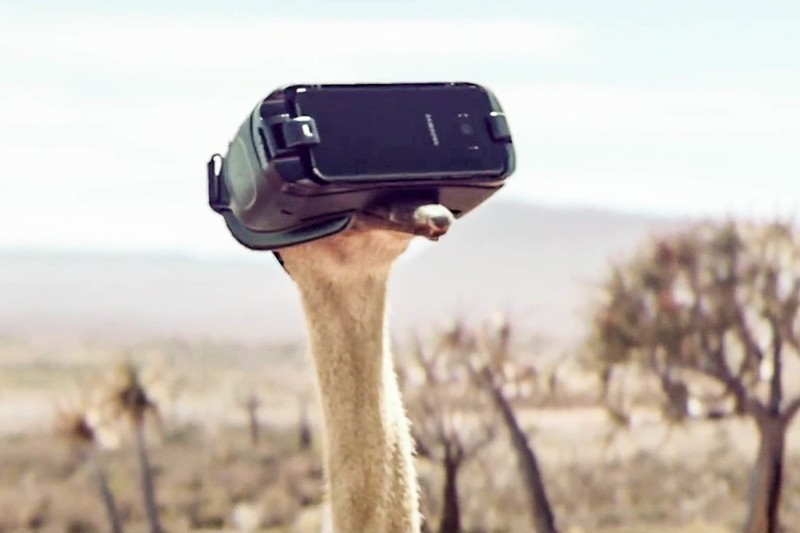
The MLB VR series within the Samsung VR app will immerse fans into the action with select content experiences, bringing them face to face with some of their favorite players and offering unrivaled views of iconic ballparks. What’s more, fans will be plunged right into the season’s most exciting moments, which include All-Star events and the American League and National League Championship Series – all leading up to the World Series itself.
The actual footage is captured by the new Gear 360 camera and will be accessible through the Samsung VR app which is preloaded on all new devices from the company. While the videos are viewable without a Gear VR, they are far more immersive with it.
The content, an example of which is embedded above, is available in Canada, Japan, Mexico, South Korea, Taiwan and the U.S.
See at Amazon
Get Even review: Unlike any other game you will have ever played
If you value originality higher than polish and slickness in your videogames, you’ve probably enjoyed a number of indie games recently. At the moment, the indie developer scene is thriving, and Get Even – created by tiny Polish outfit The Farm 51 – comes close to exemplifying what indie games should be all about.
That’s because, thanks to a clever premise and unconventional structure, it does a fine job of refusing to fit into any established games genre. If pressed, we’d describe it as a psychological puzzle-stealth-shooter, but that still wouldn’t do it justice.
Get Even review: What’s kind of game is it?
At first, Get Even feels like it will be an action-puzzler. You play Cole Black, a hard-bitten ex-military type proceeding through a derelict building near Birmingham, racing against time to free a kidnapped young woman named Grace.
Black has a phone equipped with a DNA scanner, an ultraviolet light and a map that can display enemies and their lines of sight – so at first, Get Even feels a bit like the detective missions in the Batman: Arkham games.
Black also has a gun and can perform takedowns, and when he reaches the captors, he dispatches them. But he can’t stop the bomb strapped to the girl from going off – even though she’s adamant that she knows the code to defuse it.
Instantly, things take a turn for the very weird indeed.
Get Even review: What’s the story?
Black wakes up in a super-creepy, gloriously run-down mental asylum populated by assorted psychos who are obsessed with a shadowy figure they call the Puppet-master. Moving around this asylum, he picks up clues about their backgrounds and psyches, must solve the odd puzzle (such as restoring power to electrified doors) and make choices about which ones to either kill when they threaten him or to release into other parts of the building.
Bandai Namco
Soon, the man who runs the asylum – known only as Mr Red, and viewed via television screens which litter the place – comes into play, and it emerges that Black is actually participating in an exercise involving a sort of VR headset that has the ability to let its wearers relive their (and others’) memories.
Black, it seems, is acting as a sort of virtual private investigator for Mr Red, and interspersed with the odd sequence back in the asylum, he must negotiate a series of stealth-heavy missions such as stealing a gun that shoots around corners (a handy piece of kit which he gets to use), and finding out what happened to other people who were murdered in the vicinity of the kidnapping.
Bandai Namco
He also often finds himself in a nightmarish reconstruction of a house, the floor of which assembles itself as he walks, discovering the intimate details of the troubled family life of a man called Robert Ramsey. If he completes his investigations, Black learns, he will be freed from the asylum.
Get Even review: How does it play?
Initially, it all seems a bit random and disjointed – especially since wonderfully sinister music enhances the feeling of creeping unease – but slowly, the disparate strands draw together to form a coherent whole. At which point, realisation begins to dawn, and Get Even reveals itself as a disturbing but thoroughly thought-provoking meditation on the nature of guilt and the unreliable nature of memory (even Alzheimer’s is touched upon).
Bandai Namco
Black’s VR helmet, codenamed Pandora, provides him with a room in which key findings from his investigations are laid out on pinboards, from whence he can revisit sequences in which he missed clues, which is a clever way of ensuring that Get Even’s gameplay constantly chops and changes. It’s the perfect antidote to those games in which you spend tens of hours doing the same thing over and over again.
Luckily, Get Even’s gameplay is pretty good, ranging from the intense to the meditative. Puzzles are interspersed among the shooting and stealth, and you often have to swap your gun for your phone in order to scan things like bloodstains and trigger key memories. Graphical cues like glitchy characters who semi-disassemble into wireframes remind you that you’re in a VR simulation, and as you work your way through the game, you learn much about the nature of the Pandora headset itself.
Towards the end of the game there are sequences in which Mr Red urges you to take a stealthy approach, but which only seem possible to negotiate if you adopt a full-on first-person shooter attitude. Anyway, the opportunity to hide behind cover and shoot enemies with the corner gun is too much fun to pass up.
Bandai Namco
Eventually, the game reaches an almighty crescendo of weirdness which, at times, is surprisingly emotional. Get Even’s writing duo are best known for their work with Derren Brown, and have succeeded brilliantly in their aim of messing with your mind. Naturally, there’s a huge false ending, after which further twists and revelations keep on coming.
Verdict
For an indie game, Get Even is satisfyingly long: it takes over ten hours to complete, and significantly more if you adopt a completist mindset.
It’s an interesting game, but not a perfect one. Graphically, although taking you through plenty of convincing (if rather depressing) real-world settings, it lacks the sort of polish you would expect from a game made by a 100-strong team (which, of course, it didn’t have).
One aspect of Get Even is beyond doubt: it really doesn’t feel like any other game that you will ever have played. It will also leave you emotionally drained, with plenty of new insights into the human psyche, and somewhat perturbed about the potential psychological drawbacks of what will happen if virtual reality ever reaches the stage when it allows us to relive our memories as if they were happening in real-time.
If you seek intellectual insight from videogames, you will love Get Even. It’s different; good different.
LG might launch its next LG V30 smartphone in September at IFA
LG is working on another flagship. It’ll be the successor to the LG V20. And it’s supposedly going to debut this autumn.
A report from Korean media outlet ETNews has claimed that LG will unveil the LG V30 at the IFA annual trade show in Berlin, Germany. This year’s show is set to take place from 1 September to 6 September 2017, though the phone will likely get unveiled a day earlier, on 31 August, presumably to beat the onslaught of phone announcements expected at the major expo.
- LG V30 could get August launch, LG G7 to move to January 2018 launch
- Best smartphones 2017: The best phones available to buy today
- LG and Qualcomm are working together on the Snapdragon 845 processor
Keep in mind the LG V20 arrived at IFA 2016, and LG is due for its yearly refresh cycle. Also, the LG V20 was the first phone to come with the current version of Android, Android 7.0 Nougat. In other words, there’s a possibility that the LG V30 will get another exclusive software collaboration; it could launch with Android O, which is scheduled for a mid-August release.
Other rumoured features include a 5.7-inch Quad HD display (possibly OLED with minimal bezels) and Qualcomm’s Snapdragon 835. ETNews said the LG V30 could cost 800,000 KRW in South Korea, which translates to $700/£550. It’s also expected to release in South Korea first, in mid-September, followed by other markets soon after. There’s no word yet on which markets.
Check out Pocket-lint’s LG V30 round up for more rumours.
Sony’s Koov is a candy-colored coding course for kids
STEM skills are in high demand right now, making toys that teach science and engineering popular with parents hoping to give their kids a leg up in the job market. Products like Hasbro’s new robot that teaches coding have joined kits like Lego Mindstorms on store shelves. Now Sony is making its own plunge into STEM education using the Koov robotics kit, with decades of design experience being put to work in the hopes of training the next generation of engineers.
Koov has a lot in common with Lego Mindstorms: Both are building sets that revolve around taking a “core” processing unit and attaching motors, sensors and non-connected colored blocks to it, with the assembled robot programmed via an app. But Koov blocks are more cube-like, as each piece is designed around sets of four boxes reminiscent of Tetris. The proprietary design isn’t just about being different, however. It means fewer pieces to manufacture and makes it easier for users to take an idea they have and envision it as pixel art.

Those are just the standard “dumb” blocks, however. The core unit, motors and battery are solid white to stand out, and shaped to accommodate their switches and ports. One thoughtful touch Sony added was the ability to separate the core processor and the battery pack. This means users don’t always have to design their projects around a huge central unit.
Budding programmers can choose the starter kit, which gives kids some basic lights and sensors to use. Or they can get the advanced set, which steps things up a bit by adding gears, wheels and an accelerometer to the mix. All of the pieces click together by pegs and holes placed at various places on each block, which are a bit difficult to pull apart. No worries, though, Sony included a block separator.

While very well designed, on a hardware level there’s nothing particularly unique here. STEM products like LittleBits’ new Code Kit also gives kids basic colorful components to put together simple games or robots. But those sets are also happy to just let users jump in, essentially saying “Here’s some pieces, here’s a few examples of what you could do, now build something.” That’s fine for more adventurous types, but what about aspiring builders who may feel intimidated by the amount of options and learning curve?

The Koov app for iPad, Windows and Mac takes a slower, more measured approach. Instead of asking users to just hop in, it takes small steps — the first mission is actually called “What is coding?” And, while this may be frustrating to kids itching to just build something, Sony wants Koov users to be cognizant of every step of the process. The instructions for each project include short animations showing where pieces go, and the 3D models can be rotated for a better look at how they’re put together. Subsequent lessons walk users through how to use the motors, how to program lights and even how to properly balance their robots so they don’t topple over.
The code is just as easy to assemble as the physical blocks. In the coding screen of the app, commands are represented by colorful pieces that users can push together like a puzzle. The corresponding code is printed within each virtual block so kids can see how it works and gain practical knowledge that can be applied to coding in the real world.
Gradually Koov’s lessons combine skills until kids are using every technique they’ve learned to build completely original creations. It focuses on creating a sense of comfort and fun, with colorful graphics and game-like mechanics that give users a feeling of progress. You can also go back at any time should you need a refresher or don’t fully understand something. It also doesn’t punish you for not logging in every day. (Though, in the future Sony may add some kind of reminder notification.)

Once kids are familiar with the basics of how everything works, they’re ready to start creating their own robot recipes and put them online. The social aspect is a big part of Koov. Users can share pictures and videos of their projects, explain what they did and interact with other users in the comments. And all uploaded projects will be vetted by an actual person, so parents don’t have to worry about their children seeing something inappropriate (at least not on Koov anyway). It also obeys the Children’s Online Privacy Protection Rule (COPPA), a federal law that bans storing the personal information of children younger than 13. This is important given that the target audience for Koov starts at age eight. While younger children could give it a try, Sony feels that eight is the sweet spot for students to really understand the concepts without feeling overwhelmed or needing a lot of help from their parents.

Right now there’s not much to look at terms of projects, since it’s only available in Japan right now. An English-language version is expected to ship in November, if the Indiegogo campaign that launched this week is a success. Kits are selling for around $300, but going the crowdfunding route also helps to stir up interest and lets Sony collect feedback before committing to a full retail launch. This is the first project from the company’s new Global Education division, and the hope is Koov will inspire the next generation of designers, builders and, just maybe, Sony employees.
 AIVAnet