


Carve thick paint or blend watercolors in Corel’s new Painter 2018
Why it matters to you
More traditional looks are available to be re-created digitally thanks to the software’s new tools.
Digital painting is getting even closer to the real thing. On Tuesday, Corel announced Painter 2018, an update to the popular graphics program that introduces more ways to re-create the look of traditional mediums digitally. The update includes “Thick Paint” as well as several new features designed to re-create a specific texture.
The new thick paint tool allows users to pile paint onto the digital canvas much like painting with thicker physical materials — Corel says users can pile up, push around, carve into, scrape and blend their digital paint. Using bristle brushes and palette knives on a touch-enabled device allows users to apply pressure, tilt, and rotation while using the tool.
Texture gets a brush of its own with 2.5D texture brushes inside Painter 2018. The tool allows users to import a 2D rendering of a 3D model and use that as a reference source to paint texture onto an image like scales or pores, Corel suggests. The tool also allows users to adjust how the light appears to hit the textured surface.
Images that already have a bit of texture are now easier to expand — texture synthesis is a new tool that allows users to recreate texture by sampling a small area of the image. Corel says that unlike just cloning the sample, the texture’s properties are randomized, creating a more seamless, natural look.
For adding texture without an existing source, Corel is also adding a brush library full of tools inspired by physical art tools. The new tools mimic traditional media while adding texture to digital art. That randomization was also added to the grain brushes, while more texture is also accessible in a new texture fill option.
Real brushes, however, drip — and Corel is factoring that in, too. New drip and liquid features allow users to blend brushes more naturally, including creating a digital watercolor piece.
The tools designed to mimic traditional methods are also joined by new selection brushes, which gives users more control over the selection with add and subtract options, and new cloning tools.
The update appears to continue Corel’s mix of traditional art and the latest digital tech. The company launched LiveSketch inside CorelDraw Graphics Suite 2017 while adding depth-aware effects to the PaintShop Pro X9 photo editor in 2016.
Painter 2018 retails for $429, with upgrades available for owners of previous versions for $229.
Artificial intelligence competes with itself to generate realistic human faces
Why it matters to you
This face-generating AI shows that artificial intelligence is getting closer to pulling us out of the uncanny valley.
You don’t need to have followed the tech world particularly closely to be aware that artificial intelligence has made some pretty massive strides in the past few years.
Self-driving cars, genuinely useful smart AI assistants, and impressive machine translation tools are just a few of the things experts once predicted would be impossible for a computer to carry, but which are now very much a part of our world.
Something computers still can’t quite nail, though? Creating computer-generated faces convincing enough to fool the brain into thinking we’re looking at something real. Nicknamed the “uncanny valley” by robotics professor Masahiro Mori in 1970, the results can be unconvincing at best — and, at worst, pretty darn creepy.
A new project carried out by Google researcher Mike Tyka (on his own time, and not an official Google project) sets out to take AI-generated faces to the next level. Called “Portraits of Imaginary People,” it utilizes neural networks to create faces that look impressively real — albeit stylized.
“It uses a neural network technique called ‘generative adversarial networks’ invented by Ian Goodfellow,” Tyka told Digital Trends. “GANs work by using two artificial neural networks which are playing an adversarial game. One — the ‘Generator’ — tries to generate increasingly convincing output, while the second — the ‘Critic’ — tries to learn to distinguish real photos from generated ones. With time, the generated output becomes increasingly realistic, as both adversaries try to outwit each other. As with all machine learning technology what’s cool is that you can create an algorithm simply by feeding through a large number of examples rather than having to hand construct the rules that govern the algorithm.”
If you think that’s cool, however, then you should check out an online demo by web developer AlteredQualia, which has taken Tyka’s work and combined it with yet another neural network called DeepWarp to create a demo in which Tyka’s faces follow your mouse as it moves around the screen.
We may not yet be at the point where AIs can create faces that completely fool our brains into thinking they’re real. However, as this work shows, we’re not a million miles away, either.
You can now swipe left or right on videos thanks to Hinge’s latest feature
Why it matters to you
Finding love can be hard, especially when you’re looking online. Hinge wants to make it easier by adding videos to profiles.
Swiping left and right on pictures alone is so 2015. Now that videos have firmly established themselves as the most popular kind of content online, they’re also making their way to dating apps. So get ready, love seekers. You’re going to need to not only find your most flattering photos, but your best moving photos, too. On Tuesday, June 27, Hinge added videos to its members’ profiles, allowing them to share existing videos from Instagram, Facebook, and their camera rolls to “bring their profile to life and show off personality.”
As it stands, the information made available to Hinge romantics is rather limited (as it is with just about any dating app out there). Users have six photos, three questions, and a few key statistics to convince the other fish in the sea that they’re worthy of being caught. And let’s face it, sometimes, you catch a dud.
But with the introduction of videos to Hinge profiles, the hope is that users will be able to share more dynamic representations of themselves. Starting on June 27, members will be able to exchange any of their existing photos with videos to add further “dimension and depth,” according to the dating app. Videos will be set on autoplay and will loop as you scroll through a potential match’s profile. While you can upload videos with sound, the default will be to play this content on mute (because you’ve got to be discreet if you’re swiping at work).
And don’t worry, Hinge assures us — the addition of video into your profile will not make things awkward, as members won’t be asked to upload front-facing testimonial-style videos. Rather, they’ll be sharing content that exists organically (or as organically as it can, given that it was created with the intention of being shared in some capacity).
Ultimately, said Justin McLeod, Hinge’s founder and CEO, “Our generation is already capturing and sharing so many parts of our lives through video because it’s more personal and more authentic. We expect it to lead to better connections and better dates. Two years from now I think we’ll all wonder how we used dating apps without video.”
Uber is trying to win you back by letting you request rides for loved ones
Why it matters to you
Want to feel selfless today? How about ordering an Uber for your grandmother or your girlfriend?
Uber has had a relatively tough time as of late garnering empathy from its user base. Despite an apology and the resignation of the company’s CEO, the ridesharing company still appears to have its work cut out in terms of winning over the public. But a new feature may help elicit warm and fuzzy feelings — it is a way for you to request a ride, not for yourself, but rather for a loved one.
Think of it as a great way to ensure that your grandmother gets from her home to your doorstep, or for your lucky significant other to get to the surprise date you planned. Now, when you request a ride in Uber, if you select a pickup address that is different from your current location, you will be asked if the ride is meant for a family member or friend. Then, you can select the passenger from your contact list, set his or her destination, and request the ride for him or her.
Once the Uber driver is en route, the rider will be notified via text message with both the driver’s details and a link to track the route. If they need to, they will also be able to contact the driver directly (and vice versa — if the driver gets lost, he or she can contact the passenger without going through you, the requester).
The focus of Uber’s new feature is an older generation of users who may have a phone (or even a smartphone) but not the technical knowhow to handle actually hailing a ride. “Seniors are concerned about losing their mobility as they age, and their loved ones can feel overwhelmed when managing the senior’s transportation needs,” Uber said. “Furthermore, today nearly 10 percent of the global population consists of people aged 65 and over and that number is only expected to increase.” The solution? Your good will.
“We’re committed to providing safe, reliable transportation options for everyone in the family,” Uber wrote. “So no matter where your loved ones need to be — and where you are located — a safe, reliable ride is just a few taps away.”
Uber already introduced this feature in more than 30 countries and more locations are said to be “coming soon.” You will need to have the most updated version of the app in order to take advantage of the new functionality, though.
How to Fix Controller Lag in Star Trek: Bridge Crew
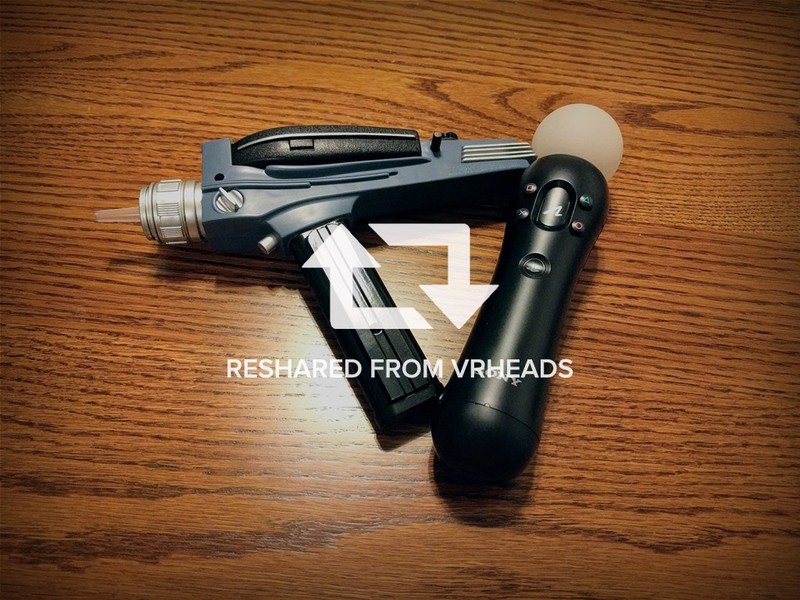
The fate of your starship depends on you! Don’t let lag ruin it!
Imagine this: you’re working in Engineering on the USS Enterprise. Three Klingon Birds-of-Prey are staring you down. Captain Kirk gives you the order to divert power to shields because torpedos are incoming. You mentally order your hands to move quickly over the console, but for some reason, it’s like you’re trapped in a Pakled’s body. Instead of quick moves, your hands slow to a crawl. You sweat as you feel everyone’s eyes on you, and your heart is pounding, yet nothing you do can will your body to move faster. Just as your hand finally nears the buttons that would save the day, photon torpedos strike the Enterprise, which disintegrates in a fiery explosion.
Sound like a bad time? Then you want to make certain that you try these tips to combat controller lag and drift in Star Trek: Bridge Crew, so when the red alert klaxon is blaring, you’re prepared to save the day!
Read more at VRHeads
Dreams do come true: Chrome OS will soon have a native night mode
Your circadian rhythm thanks you.
Night owls, I understand your perspective. Night time is the right time to hunker down, light a few candles, and get into the zone with your Chromebook. But all that blue light shining in our faces is detrimental to our sleep health, which is why Chrome OS will soon have a native night mode.
By way of Android Police, there’s a Night Light feature that’s just entered the Canary channel, where new features get tested out before they’re made public. Like Nougat’s built-in Night Mode feature, the Night Light tints the screen a subtle red-orange to help mitigate the effects of staring into a computer display so late at night.

Chrome OS’s Night Light feature.
Per Google+, the feature works as thus:
You can turn it on and off quickly whenever you want from the Status Menu (Alt + Shift + S) or go into Chrome OS Settings, adjust color temperature from cooler to warmer. In Canary 🐥 channel, you can now also set it in “Sunset to Sunrise” automatic mode or use a custom schedule as you can see below.
Since this feature is only recently making its rounds through the developer channel, it may take a few more months before we see the feature added to every version of Chrome OS. In the meantime, you can try out a Chrome extension like Screen Shader to get you through the night, provided you do most of your work through browser-based clients.
Chromebooks

- The best Chromebooks
- Should you buy a Chromebook?
- Google Play is coming to Chromebooks
- Acer Chromebook 14 review
- Join our Chromebook forums
NBC Sports introduces ‘Premier League Pass’ at $50 per season for cord cutters
Cord cutters will take any win they can get.
The opposing forces of hating cable providers while also loving sports just got a little friendlier. NBCUniversal has announced that it will offer a “Premier League Pass” subscription service for those who don’t have a cable subscription but want to keep up with the English Premier League. The subscription, which will be available in August as a part of the “NBC Sports Gold” platform, will cost $50 for the 17/18 EPL season and give subscribers access to 130 live matches and pre- and post-match studio programming.

Previously in order to watch EPL matches in the U.S. you had to have a cable subscription that included NBC Sports Network, where NBC broadcasts a majority of the big matches, while streaming every match online. The amazing part about NBC’s deal for EPL is that it actually makes more matches available in the U.S. than those in the UK even get access to. NBC has been particularly good about making the content available across multiple platforms, supporting the web, Android, Chromecast, Roku and more.
This is a huge deal for cord cutters who love sports.
So with Premier League Pass, a phone and a Cast-enabled device, you’ll have access to more EPL matches than you could possibly watch live for $50. If you’re a Premier League junkie living stateside you’ll find this to be a pretty sweet deal. While there are other subscription services of this ilk, such as MLS Live for the U.S. domestic league and Fox Soccer 2GO for more obscure competitions, nothing on the level of streaming the EPL has been offered before. The one catch, it seems, is that some of the big headline matches will be reserved for NBC proper — which thankfully is a channel most people will have access to with an over-the-air antenna via their local NBC affiliate.
Importantly for those who do have cable subscriptions, there doesn’t seem to be any downside there. NBC’s announcement claims “There will be no decrease in matches on NBC and NBCSN compared to prior seasons” and all EPL matches will still remain available on NBC Sports Live Extra through its website and app when you authenticate with a cable provider. But cord cutters don’t care about that — they’re happy they now have an option to follow the EPL without jumping through cable provider hoops.
Twitter can detect crime up to an hour faster than police
Twitter has repeatedly proven itself as an invaluable platform for information sharing during social crises. Now new research has shown its ability to detect serious incidents much faster than police reports — up to an hour faster, in fact.
By analysing data from the London riots in 2011, researchers at Cardiff University showed that computer systems could automatically scan through Twitter and identify potentially dangerous occurrences, such as windows being broken and cars being set on fire, long before they were reported to the Metropolitan Police Service.
The system could also identify Twitter rumors about where riots were likely to take place, as well real-time information about areas where people were gathering.
The researchers used a series of machine-learning algorithms to analyze each of the tweets from the dataset of 1.6 million tweets, taking into account a number of key features such as the time they were posted, the location where they were posted and the content of the tweet itself. The algorithms detected incidents quicker than police sources in all but two of the events reported.
The study comes just days after the chief constable of West Midlands Police said that, thanks to budget cuts, police would face “real challenges” tackling a repeat of the 2011 riots. Could Twitter-monitoring systems help pick up the shortfall if a similar event was to happen again?
The report’s authors think so. Co-author of the study Dr Pete Burnap, from Cardiff University’s School of Computer Science and Informatics, said: “We have previously used machine-learning and natural language processing on Twitter data to better understand online deviance, such as the spread of antagonistic narratives and cyber hate.
“In this research we show that online social media are becoming the go-to place to report observations of everyday occurrences — including social disorder and terrestrial criminal activity. We will never replace traditional policing resource on the ground but we have demonstrated that this research could augment existing intelligence gathering and draw on new technologies to support more established policing methods.”
Source: ACM Transactions on Internet Technology
Alcatel’s Idol 5S is a bargain if you can stomach Amazon ads
Alcatel’s Idol 4S phone was a good value at $350, but its emphasis on virtual reality support (such as a box that doubled as a headset) may have held it back. Unless you’re a big VR fan, wouldn’t you rather spend less on a no-frills device? You’re getting that opportunity soon. Amazon is including Alcatel’s new Idol 5S in its latest wave of Prime Exclusive phones, and it’s clear that you’re getting a solid deal. If you’re an Amazon Prime subscriber, the unlocked handset will ship on July 10th for $200 — you’ll have to put up with Amazon’s offers and ads, but that’s a low price for what looks to be a well-rounded device. It’s also available in a standard $280 version if you’d rather not turn your phone into a tiny billboard.
Whichever version you get, you’ll find a 5.2-inch 1080p display, an eight-core Snapdragon 625 processor, 3GB of RAM, 32GB of expandable storage and a rear-mounted fingerprint reader. Both the front (8 megapixels) and rear (12MP) cameras are stabilized, too, so you shouldn’t have to worry so much about blurry selfies. The specs are a slight step back from the 4S, but you’re also paying a lot less.
The initial version will only work with GSM carriers like AT&T or T-Mobile, but Amazon is promising Sprint and Verizon support later in the summer. We’d suggest looking at the Moto G5 series before you pull the trigger, as it’s sitting in a similar price range and might just tickle your fancy in a way Alcaltel’s phone doesn’t. However, the Idol 5S is inexpensive enough that you can at least mention it in the same breath as the G5 and similarly-priced hardware.
Source: Amazon (1), (2), Alcatel
London is the second city to get free gigabit WiFi kiosks
London’s countless telephone boxes become more redundant with every new mobile contract signed and throwaway tourist SIM purchased. Having a mind to update these payphones for the modern age, BT — which owns the majority of them — announced last year it had teamed up with the same crew behind New York’s LinkNYC free gigabit WiFi kiosks to make that happen. The first of these, installed along London’s Camden High Street, have been switched on today, offering the fastest public WiFi around, free phone calls, USB charging, maps, directions and other local info like weather forecasts, Tube service updates and community messages.
While the London kiosks have a slightly different name (InLinks as opposed to just Links), they are identical in what they offer, and are also funded entirely by advertising revenue generated from the large screens on either side of the monoliths. Intersection — the affiliate of Alphabet’s Sidewalk Labs that leads the Link projects — decided not to enable free internet access through the kiosks’ in-built tablets in its second city, though. This feature had to be disabled in New York, you might remember, due to a public porn problem.
Like the LinkNYC program, later plans for the UK’s next-gen phone boxes include temperature, traffic, air and noise pollution sensors. The idea being the environmental monitoring aspect will create the data streams needed for future smart city projects. New York City now hosts almost 900 free gigabit booths, with “thousands more” to be installed over the next few years. By comparison, London’s starting small with only a handful of cabinets along one major street, but many more are expected to spring up around the capital and in other large UK cities before the year’s out.
Source: BT, InLinkUK
 AIVAnet