


Massdrop x Sennheiser HD 6XX is back: Check out our quick review
The HD 6XX is a welcome and brilliantly executed second run for one of Sennheiser’s best audiophile values.
Update: As of June 26, 2017 the HD 6XX are back for another drop of 7,500 units. If you’re interested, we suggest you get yours now while they’re still available. Alternately, there are currently still HD 650s and HD 600s available online at a higher, but still value-packed price point.
Sennheiser has had more than its fair share of hits in the audiophile sweet spot, but the company’s HD 650, often regarded as one of the best audiophile headphones of its kind, stands apart. More than a decade after its debut, the HD 650 is back (sort of), and you might even say it’s better than ever. This second coming of the HD 650 is actualized in the Massdrop x Sennheiser HD 6XX, the result of a “first-ever” collaboration between the storied audio brand and the “audiophile” subset of Massdrop’s commerce community.
Nothing has changed about the 650’s sound signature — the same golden grit, silky smooth bass, and ultra-detailed topside are all present and accounted for here. But Massdrop has re-sculpted some key design traits for better usability and, best of all, the company will offer them as low as $250.
The goods
When the HD 650 debuted in 2003 (and for much of its tenure at the front of Sennheiser’s fleet), the headphones cost a cool $500-plus. And while the price has plummeted for the 6XX version, that doesn’t mean potential buyers won’t get a real taste of audiophile luxury. That experience begins with a hefty black case of thick cardboard, layered with an ample bed of hard foam, and boasting a black-gloss Sennheiser logo on the lid.
Inside, the cans rest in their foam bed, looking comfortably close to an OG pair of HD 650s. The giant open-back earpieces pop out like oval hula hoops, attached on an adjustable hinge and layered with dense mesh windows that unveil spiderwebbed drivers beneath. On the interior are thick earpads cloaked in the same fuzzy lining of “acoustic silk” that breeds luxurious comfort in the HD 650, which also boasts a brilliant acoustic seal. A Sennheiser logo atop the headband assures you of the high-quality sound within, and few details betray the new HD 6XX design.
Bill Roberson/Digital Trends
Bill Roberson/Digital Trends
Bill Roberson/Digital Trends
Bill Roberson/Digital Trends
A closer examination, however, reveals some moderate upgrades driven by Massdrop’s user base that set the 6XX apart. The most notable design change at the outset is the color — the HD 6XX trades the HD 650’s charcoal gray for almost pitch black, with lines along the borders cast in a subtle shade of Midnight blue (you’ll likely need sunlight to see them). The original “HD 650” badges above the earpieces have also been replaced with the “HD 6XX” moniker, matched by a Massdrop logo on the interior. Perhaps most notably, the removable cable now terminates with a 3.5mm jack rather than quarter-inch (with an included quarter-inch attachment), making these cans much more versatile to pair with all your many devices.
By the numbers, the HD 6XX tout a massive frequency response of a claimed 10Hz-41khz, which is otherworldly for headphones well below $500. The cable length has also been shortened from a studio-friendly 10 feet to a tighter 6-foot length. Total weight is 9.2 ounces, and these babies have some serious clamping force. That’s alleviated by the soft padding, making it easy to wear the 6XX for long listening stretches, although your hair will get appropriately disheveled by those mondo earpieces.
The sound
If you’ve already heard the HD 650, you may just want to skip this section and head straight to the “where the hell do I buy these” links below. If you’ve never heard the HD 650 before, you are in for a buttery treat that results in some of the best sound dynamic drivers can bring to the table — at this price point, and above.
Warm and brassy bass meets a midrange that dips close to the ruddy colors of analog tape saturation.
Specifically, we’re talking about warm and rigid bass, a midrange that dips close to the ruddy colors of analog tape saturation (without sacrificing an ounce of detail), and a laser tight response up top that helps illuminate vivid clarity and granular instrumental texture across the board. So yeah, they sound pretty good.
It’s easy to regard the HD 6XX’s sound signature as just another dynamic-driven headphone, bringing with it traits that often have audiophiles drawing lines in the sand between those who love a drop of pleasing warmth in their sonic coffee, and those who demand near-clinical dedication to the recording as it was originally rendered. However, what is so pleasing about the HD 6XX (and the 650 before it) is that these headphones offer a pleasant mixture of each, for a best-of-both-worlds scenario.
Yes, in the bass and midrange especially, these cans revel in the grimy grunge of ‘70s electric guitar tones and crunchy B3 organs, driving the sounds home with the presence of a vintage Marshall amplifier head. But they’re equally adept at revealing the subtleties of each recording as it stands, leaning into the cold detachment of a pop tune a la Chvrches, or even Depeche Mode. The HD 6XX’s knack for detail and presence includes all the instrumental textures and timbres an audiophile longs for, especially well outlined in the bubbly puffs of a saxophone reed, or the subtle scratches of a horse-hair bow across a violin’s strings.
Bill Roberson/Digital Trends
Apart from that gorgeous sound signature, the HD 6XX offer an open-range soundstage fit for Big Sky country. The open-back design perfectly distributes the sound waves, letting the instruments stretch out of those few inches from ear to ear, expanding into a sonic cloud around your head. The result is a sound that’s surprisingly akin to sitting in front of a good pair of studio monitors — or even sitting at the center of the recording room itself. That allows for the often-discussed virtue of hearing things you’ve never noticed in previous listens to your favorite tracks, from the rogue buzz of a guitar amp, to a quiet vocal double that’s never surfaced before.
Conclusion
In short, the HD 6XX is a welcome and brilliantly executed second run for one of Sennheiser’s best values, and a chance to nab easily accessible audiophile sound for a serious bargain. The only problem we have with the 6XX? With a limited run, there may not be enough to go around. Our advice is to grab the HD 6XX while you can.
- The best headphones you can buy
- The best wireless headphones
- The best completely wireless earbuds
Intel sixth- and seventh-gen chips are all vulnerable to hyperthreading bug
Why it matters to you
Unexplained crashes while using Intel’s sixth or seventh generation CPUs could well be due to a bug with hyperthreading.
A new bug discovered in the sixth and seventh generations of Intel’s central processors can affect any chip with hyperthreading enabled. Although a fix exists for some CPUs, it may be worth disabling hyperthreading just in case you run afoul of its potentially quite serious problems.
The microcode bug discovered in the Intel chips could, under certain conditions, cause processors to behave erratically, leading to possible application and system stability issues and even data corruption and data loss, according to Debian.org. The problem can exist on any operating system and will require a microcode update from Intel to fix properly.
The microcode fix for seventh-generation Kaby Lake processors is said to be with motherboard manufacturers right now. It will be distributed as a BIOS/UEFI update, so make sure to check your motherboard maker’s website to see if there’s a recent release. If not, you may want to contact them directly, but disabling hyperthreading in the meantime may be worthwhile.
For sixth-generation Skylake processors, there is an additional option, though updating your BIOS would be the best first step. The Debian wiki has further instructions on updating the microcode yourself, though it won’t be possible for all processors of that generation, and you will need to jump through a few hoops first.
If it seems overly technical, we’d again recommend disabling hyperthreading for now instead.
If you’re unsure whether your CPU is one of the potentially affected generations, there are a few things you can do. Intel has lists of processors from each generation alongside a notification of whether they support hyperthreading, but you’ll need to make sure you know your CPU’s model number. Fortunately finding that out is easy on Windows 10 PCs. Simply right-click on “My PC” select properties and you’ll be taken to the system panel where your processor’s name and number will be listed in an easy to read manner.
Check your CPU against the lists, and if you find it could be affected, take appropriate action.
We have reached out to Intel and have been assured a comment will be coming in short order. We’ll update this piece when we hear back from a representative.
AR Measure turns your phone into an AR-powered measuring tape
Why it matters to you
You’re probably not carrying around a measuring tape or ruler in your back pocket, but if you need to find the length of something in a pinch, this upcoming app can help.
As cool as augmented reality can be, the truth of the matter is, there just aren’t yet that many practical applications for the technology. After all, how many rooms in your home do you really have to redecorate? And how many coloring books do you actually want to bring to life? But fret not, friends. If you’re looking for a way to introduce some augmented reality into your life in a really useful way, meet AR Measure, a new app that lets you measure things with your phone.
But wait, you say — I can already measure things with my phone — I just use my physical handset as a de facto ruler! Sure, that works, if you’re really looking to hack a solution. But AR Measure is a much more elegant way to go about things. The brain child of creative collective Laan Labs, this little mobile app actually allows you to have an adjustable ruler on your phone. And it all relies on augmented reality.
In order for the app to work, AR Measure determines the distance between identified points in space. This in turn lets you measure any physical object using nothing more than your phone’s camera. You just point the camera at your desired starting point, pull your phone away from it, and end at the end of an object (or distance) — think of it as a measuring tape that you reel off with your phone’s camera.
The development of the app is still in relatively nascent stages, and as per the footage in the demo video, the resulting measurements aren’t completely accurate. But we’re talking a matter of millimeters, not inches, so it’s quite impressive all the same. And seeing as you probably don’t carry a ruler or measuring tape around in your back pocket, this app could be seriously helpful in a surprising number of situations.
Alas, Laan Labs has not yet announced a release date, so there’s no telling when we’ll actually be able to play around with AR Measure. But we do know that the app runs on Apple’s new ARKit framework, which means that it’s likely the app will appear when iOS 11 rolls out in full. That said, Laan Labs will let you enter your email address so you can be notified when the app debuts.
How I’m reliving my childhood through Android apps

Living in past is the fad again, and I’m leaning in by turning my smartphone into a time machine.
As if it wasn’t already obvious, nostalgia is in, everyone. ‘Tis the season for unearthing your middle school journals, busting out the retro video game consoles for marathon summer gaming sessions, and making playlists for the sole purpose of reminding you of that one faithful night.
Nostalgia doesn’t seem to be limited to my bubble either. Every old thing seems to be getting a reboot, from the Twin Peaks TV show to the Nokia 3310 cellphone, to high-rise jeans (Frankly, a fad I can get behind). I’m not sure if this is 2017 or 1997 anymore, so I thought that maybe it would be entertaining to use my Galaxy S8 as a time machine and take me back to when Bill Clinton was in the Oval Office and the Spice Girls were my favorite thing.
Games that take you back
Perhaps the best way to truly relive your past is through video games for the simple reason that they’re interactive. Playing Ecco II: The Tides of Time, for instance, brings me back to the arduous summer of 1995, when I realized that there was just no way in hell I was ever going to beat that game. That was the first time in my kid life that I’d experienced crushing defeat.
 Minesweeper: the game that only a few could conquer.
If you were a fan of the Sonic the Hedgehog games, you might want to grab the original title from the Play Store (and pay the $1.99 to remove ads). It’s been specially optimized for the mobile playing experience and it lets you save your game progress — not a thing you could do in 1991. You can also play as either Tails or Knuckles through the classic Sonic levels as soon as you finish your first round of the storyline.
I also sought out a classic Nokia-era Snake redux for my personal pleasure. This one’s fun because it features old school controls and you can choose your background to be one of five classic Nokia phones. This Minesweeper app is a blast from the past, too, though I’ll never be able to properly play the game, and Microsoft’s Solitaire reminds me of how I’d always use the original program as a ruse so my Dad wouldn’t catch me on the dial-up internet. (Sorry, Dad.)
Retro-inspired fare
Part of what’s helping fuel all of this sentiment and longing for the good old days is the fact that fads are cyclical and we’re at a point in time when the aura of the nineties and early millennium are what sells to the youths (I think).
I found some apps that hearken back to a digital time of yore and twist it up so it’s modern again. For instance, this app called Photo Text ASCII Art will help you transform your modern-day marvels into a relics of the past with a literal touch of a button, and then you can share those creations through other apps.
Vaporwave is also a musical genre that’s sparked and evolved precisely because of this same sort of wave of nostalgia hitting the dance scene. My favorite app to tune into vaporwave-style music is Nightwave Wave Plaza, which even utilizes Windows 98 dialog windows to add to the aesthetic. The music is chill, and you can still listen to it when the screen is off, like any other traditional music app.
If you’re simply not interested in playing the games of the past, maybe because you’ve played them too often in a bout of “the good old days”, there are plenty of retro-inspired games in the Play Store that are just as satiating. One of my favorites is 10000000, which I’ve already played through a couple of times out of sheer enjoyment of the game mechanics.
Old is new again

Oh, yes. That’s a fake Windows XP error screen.
Nostalgia can seem sort of nauseating when you’ve got too much of it surrounding you, and maybe the idea of downloads extra apps to your smartphone that already has limited storage space isn’t your idea of the best time.
However, it’s been proven that nostalgia is actually good for us as longer-living human beings, so I supposed a couple of apps that can quickly take me back might be worth the download after all.
Ultimate Guide to Samsung Gear VR!

Whatever you want to do with your Gear VR, we’ve got the details for you here!
Samsung’s Gear VR is easily one of the most accessible VR systems that is available today. Running off of a Samsung phone, this headset has benefited from lots of small but important improvements. The end result is a portable entertainment center, offering up games and movies and a huge selection of new ways to completely immerse yourself in new worlds.
Here’s everything you need to get the most out of your Samsung Gear VR!
Read more on VR Heads!
Nokia 6 hitting the U.S. in early July for $229 on Amazon
The global rebirth of the Nokia name continues.
The new Nokia 6, which we first saw back at MWC in Barcelona, is making its way to the U.S. in “early July” with an expectedly low price of $229. It comes stateside roughly six months after a launch in China and a bit more than a month after a launch elsewhere in the world.

Though the Nokia 6 is the top-end model the company offers — sitting above the 3 and 5 — it’s very much a mid- to low-end phone. The 5.5-inch LCD comes in at 1920×1080 resolution and has Gorilla Glass, which is nice, but other areas have been cut back. You’ll get a Snapdragon 430 processor, 3GB of RAM and 32GB of storage, plus a 3000mAh battery. The rear camera is a 16MP unit with 1-micron pixels and an f/2.0 lens.
As for networks, the Nokia 6 is set up for use on GSM/LTE carriers — so that means Verizon and Sprint are a no-go here. T-Mobile and its prepaid affiliates are fully supported, but a word of caution that LTE Band 29 and 30 are not included so AT&T is only partially supported. Do your research.
The Nokia 6 will be on sale at Amazon, putting it in front of plenty of people who cross-shop for inexpensive unlocked phones. It will have stiff competition from the likes of the Moto G5 Plus, which comes in at the same $229 price and can leverage a history of the Moto G name. HMD Global is certainly counting on the nostalgia of the Nokia name to pick up some sales in this competitive space.
Press release:
Nokia 6 arrives in the United States
The highly anticipated Nokia 6 smartphone will be available on Amazon
MIAMI, 26 June 2017 – HMD Global, the home of Nokia phones, is making its highly anticipated U.S. debut, bringing the Nokia 6 to U.S. fans in early July 2017 through Amazon.
Combining superior craftsmanship and distinctive design with an immersive audio experience and a 5.5″ full HD screen, the new Nokia 6 delivers a truly premium smartphone experience. The unibody of the Nokia 6 is crafted from a single block of 6000-series aluminium and is perfect for those who want a robust phone with outstanding entertainment credentials. The smart audio amplifier with dual speakers offers a deeper bass and outstanding clarity, while Dolby Atmos® sound delivers a powerful moving entertainment experience.
Premium design
Continuing the Nokia phones heritage for designing robust devices with style and finesse, the Nokia 6’s premium quality and inherent strength ensures it is built to perform and to help you take on life’s challenges. It takes 55 minutes to machine the seamless Nokia 6 aluminium unibody from a solid block of aluminium. It then receives two separate anodising processes, taking over 12 hours to complete, with each phone being polished no less than five times. The end result is an aluminium unibody with the highest level of visual and structural quality.
“It brings us great pleasure to introduce a new generation of U.S. fans to Nokia phones, while offering existing fans the same unparalleled and high quality Nokia phone experience they have come to love over the years,” said Maurizio Angelone, Vice President Americas, HMD Global. “The Nokia 6 exemplifies our commitment to best-in-class performance, design, and craftsmanship, and we are proud to offer American consumers a smartphone option that will not require them to sacrifice quality for cost.”
Entertainment everywhere
With outstanding color reproduction, the Nokia 6 has a bright, hybrid in-cell 5.5″ screen with full HD resolution viewed through sculpted Corning® Gorilla® Glass. The display stack is laminated enabling excellent sunlight readability without compromising the slim form.
Powered by the Qualcomm® Snapdragon™ 430 mobile platform and the Qualcomm® Adreno™ 505 graphics processor, the Nokia 6 strikes the perfect balance between performance and power consumption, designed to deliver premium quality entertainment on the go.
“Phones have become an extension of ourselves and are integral to so many aspects of our lives. From capturing memories and keeping us entertained, to keeping in touch and remembering important dates and anniversaries, our smartphones are often at the heart of everything we do,” said Juho Sarvikas, Chief Product Officer, HMD Global. “The new Nokia 6 sets a high bar for quality and we’ve taken no shortcuts to ensure the Nokia 6 rewards you with a premium experience for everyday use. From its bespoke design through to the quality entertainment features, we’ve designed the Nokia 6 to give you more.”
Great imaging experience
We have carefully thought about every aspect of the phone’s design, seamlessly integrating the Phase Detection Auto Focus 16MP camera into the body of the Nokia 6. Delivering sharp pictures, Nokia 6 also features a dual tone flash, meaning natural colors and skin tones indoors and out. With the exclusive camera user interface, automatic scene detection makes it easier to take great shots every time. And with an 8MP Autofocus front facing camera, you can take great shots from any angle.
Sale information
The Nokia 6 will initially only be available in Matte Black and Silver on Amazon beginning July 2017 and will retail at $229 MSRP. The phone will also be available in Tempered Blue and Copper later this summer.
Notes to Editors:
Technical Specifications for Nokia 6
- Networks: GSM: 850/900/1800/1900 WCDMA: Band 1, 2, 4, 5, 8 LTE: Band 2, 3, 4, 7, 12/17, 28, 38
- Network speed: LTE Cat. 4, 150Mbps DL/50Mbps UL
- Dual SIM variant
- OS: Android Nougat
- Chipset: Qualcomm® Snapdragon™ 430 mobile platform
- RAM: 3 GB LPPDDR 3
- Storage: 32 GB internal user memory[ii] with MicroSD card slot (support up to 128 GB support)
- Form factor: Touch monoblock with capacitive system keys
- Display: 5.5″ IPS LCD full HD (1920 x 1080, 16:9), sculpted Corning® Gorilla® Glass, 403 ppi pixel density, sunlight readability, 450 nits, laminated
- Camera: Primary camera: 16MP PDAF, 1.0um, f/2, dual tone flash; Front facing camera: 8MP AF, 1.12um, f/2, FOV 84˚
- Connectivity & Sensors: Micro USB (USB 2.0), OTG, 3.5mm ADJ Ambient light sensor, Proximity sensor, Accelerometer, E-compass, Gyroscope, Fingerprint Sensor, NFC, Wi-Fi 802.11 a/b/g/n, BT 4.1, ANT+, GPS/AGPS+GLONASS+BDS, FM/RDS.
- Battery: Integrated 3000 mAh battery
- Audio: Dual Speakers with Smart Amplifier (TFA9891) with Dolby Atmos®
- Dimensions: 154 x 75.8 x 7.85 mm (camera bump: 8.4mm)
Best Android Phone For Long Battery Life
- Best overall
- Best for sleekness
- Best on for less
- Best for hard workers
Best overall
Huawei Mate 9

See at Amazon
With a massive 5.9-inch display, you’d think that the Huawei Mate 9 wouldn’t be able to last a whole day — but you’d be dead wrong. That screen is helped along by a 4,000mAh battery — one of the biggest in its class — pushing the Mate 9 to a staggering 2-day average uptime. Huawei’s flagship device also has some Machine Learning chops that learn what apps you use most and least, in order to optimize them for battery usage.
Bottom line: A huge 4,000mAh cell plus software optimizations make the Huawei Mate 9 the best phone for battery life.
One more thing: Sometimes the Mate 9 can push battery optimizations a bit too far, so be sure to tweak your app settings when appropriate.
Why the Mate 9 is the best
An underrated performer in the U.S. because it doesn’t have carrier support, but the Huawei Mate 9 is a serious worker.
Huawei has come a long way since its days of questionable software and China-only releases. The Mate 9 is now officially available in the U.S., and you get a lot with its $599 price tag, including a 4,000mAh battery that has to be one of the best out there. The company’s homegrown Kirin 960 chip is not only fast, but its 16nm manufacturing process makes it extremely efficient.
Combined with the power-sipping 1080p LCD panel, the Mate 9 seemingly lasts forever; there wasn’t a single day that reviewer Alex Dobie worried about it dying by the afternoon:
The phone never failed to get us through a full day of mixed use on LTE and Wi-Fi, often with more than 50% in the tank by the evening. Even pushing the phone really hard with lots of photography and a little wireless tethering, we never came close to experiencing battery anxiety.
Other than battery life, the Mate 9 is just an all-around great phone, and Huawei has committed to updating it with Alexa support in the coming months.
Best for sleekness
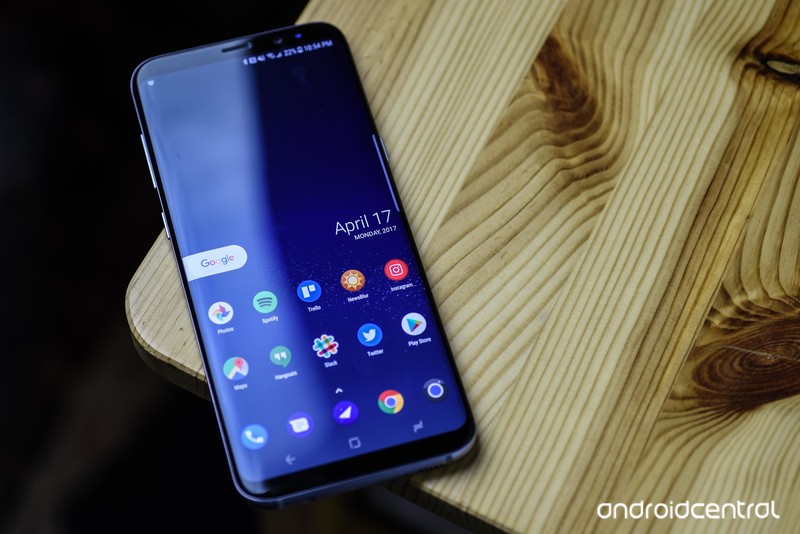
Samsung Galaxy S8+
See at AT&T
See at Sprint
See at T-Mobile
See at Verizon
See at Samsung
The Galaxy S8+ is the spiritual battery successor to the Galaxy S7 edge, and despite having a slightly smaller battery does an amazing job keeping the phone alive for as long as possible. That’s partly due to the amazing efficiency of the Snapdragon 835 chip, which we’re starting to see in more devices this year, but the GS8+ manages to outlast them all.
Bottom line: The Galaxy S8+ is a sleek, sophisticated and powerful Android phone — probably the best available overall — with amazing battery life.
One More thing: This highly-rated device is available at all four major carriers in the U.S., but if you’d rather live dangerously and contract-free, Samsung offers an unlocked model that also works overseas.
Best for less
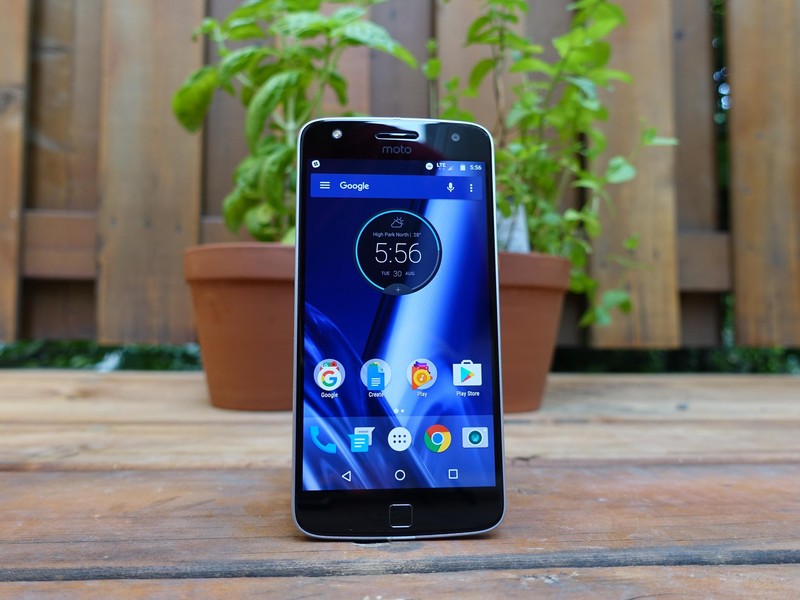
Moto Z Play
See at Motorola
The Moto Z Play starts quickly and keeps going. It’s actually quite amazing to witness. Thanks in part to the super-efficient Snapdragon 625 processor, which is built on a 14nm process, the phone rarely gets hot, and with eight cores, works smarter, not harder.
With a 3,510mAh battery inside, along with software that feels as light as a feather, the Moto Z Play is the longest-lasting $400 phone we’ve used. It’s also a pretty great smartphone, featuring a bright 5.5-inch display, a great 16MP camera, and support for Moto Mods.
Bottom-line: The Moto Z Play doesn’t sacrifice much from its more expensive, much thinner Moto Z sibling. If you can deal with the added girth, and a slight hit to processing abilities, you get one of the best, longest-lasting Android phones around.
One more thing: Pair the Moto Z Play with Incipio’s 2,220mAh OffGrid battery pack, and you have a whopping 5,730mAh combination that should last two full days, or longer!
Best for hard workers
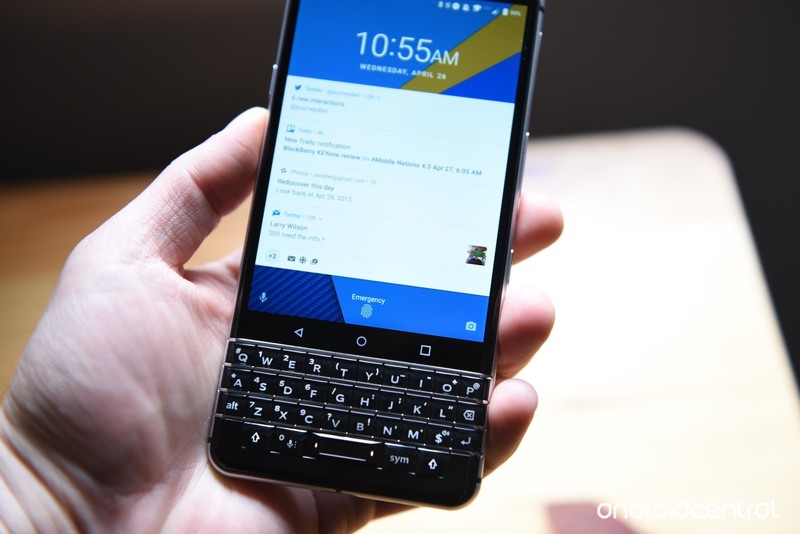
BlackBerry KEYone
See at Amazon
See at Best Buy
The BlackBerry KEYone is, unsurprisingly, a workhorse. There’s a lot going on beneath those classic BlackBerry keys, but the one thing you need to know is, like the Moto Z Play, it pairs a massive battery with an energy-sipping Snapdragon 625 processor. If you’re longing for the good ‘ol days of not having to charge your BlackBerry everyday, the KEYone fits the bill nicely.
Bottom-line: The KEYone is an exceptional phone with a near-perfect hardware keyboard and multi-day battery life.
One more thing: There are two separate variants of the KEYone, one for AT&T and T-Mobile and another for Verizon. Choose wisely.
Conclusion
Most phones claim to have “all-day battery life,” but few actually make it to bedtime. The Huawei Mate 9 actually backs up its claims, and does so while excelling in almost every other area.
Best overall
Huawei Mate 9
See at Amazon
With a massive 5.9-inch display, you’d think that the Huawei Mate 9 wouldn’t be able to last a whole day — but you’d be dead wrong. That screen is helped along by a 4,000mAh battery, one of the biggest in its class, pushing the Mate 9 to a staggering 2-day average uptime. Huawei’s flagship device also has some Machine Learning chops that learn what apps you use most and least, in order to optimize them for battery usage.
Bottom line: A huge 4,000mAh cell plus software optimizations make the Huawei Mate 9 the best phone for battery life.
One more thing: Sometimes the Mate 9 can push battery optimizations a bit too far, so be sure to tweak your app settings when appropriate.
Update June 2017: The Mate 9 stays on top of the list with its huge battery, but the Galaxy S8+ takes over from the GS7 edge and the Honor 8 gets bumped for the BlackBerry KEYone.
Google Wifi comes to France at €139, or €249 for a two-pack
Another country gets clean home Wi-Fi management from Google.
Google Wifi is extending its sales network to a new country, landing in France today. The mesh router system is going on sale at a variety of retailers, including the Google Store, Cdiscount, Boulanger and more.

A single Google Wifi point will set you back €139, which is a touch higher than the $129 here in the U.S. Interestingly, there’s no three-pack discount option in France, only a two-pack discount — you can get two access points to extend your network for €249.
As we’re now several months removed from the launch of Google Wifi, it’s good to see the router system still expanding to new areas — it can be easy to forget about “old” products and not bring them to new markets.
Google Hardware

- Google Wifi review
- Google Home review
- Everything you need to know about the Chromecast Ultra
- Chromecast vs Chromecast Ultra: Which should you buy?
Google Wifi:
Google
Amazon
Google Home:
Google
Best Buy
Chromecast Ultra:
Google
Best Buy
AT&T is rapidly expanding its rural wireless internet service
AT&T wasn’t kidding when it said it would expand its rural wireless internet service in short order. The carrier has launched its fixed-in-place cellular access in eight more southeastern states, providing broadband to over 70,000 locations that would otherwise have poor or non-existent internet coverage. That still doesn’t sound like much, but it’s much larger than the Georgia-only service AT&T started with in April. It also gets the provider much closer to its goal of serving over 400,000 locations by the end of 2017.
As before, subscribers will shell out $60 per month for an LTE connection with 160GB of data ($10 for every 50GB beyond that, up to $200). They’ll have download speeds of “at least” 10Mbps, which doesn’t meet FCC broadband definitions but is miles better than dial-up or basic DSL.
The rollout helps meet AT&T’s pledge to the FCC’s Connect America Fund, which aims to bring high-speed internet to the countryside and other areas that ISPs frequently don’t serve (often due to the high cost relative to the number of customers they’ll get). However, it also dovetails with a Trump administration infrastructure proposal that promises more resources for rural broadband access. Don’t be surprised if AT&T gets more of a helping hand going forward.
Source: AT&T
Amazon Echo Show Reviews: Privacy Concerns, Sound Improvements, and Video Calling as Killer App
Ahead of the launch of the Echo Show this Wednesday, June 28, Amazon has given review units to a few sites so that they can test out the new Echo and see how its 7-inch touch screen adds to the traditional Amazon Echo experience. Amazon revealed the $230 Echo Show earlier in May and bills it as having all of the features of the traditional Echo, with the addition of a display to enhance user interactivity.
According to The Verge, one of the best aspects of Echo Show is that, “you basically never need to tap the screen for anything, unless you really want to.” Instead of adding an array of touchscreen-required actions that overcomplicate the interface, the company focused on adapting the abilities of the previous Echo models to work with a touchscreen.
While there were some moments when the touchscreen’s “secondary importance” caused UI annoyances, the site largely admired Amazon’s decision to keep the voice control focus of the Echo line with Echo Show.
Are there things I don’t love about the Echo Show? Of course. I think it’s pretty homely and I think that the sound quality could be better for the price. But the improvements over the original Echo are big enough that it’s my favorite smart speaker right now.
From nearly any other company, adding a screen would have resulted in feature-itis of the worst kind. By holding back, the Echo Show feels like it does more. Its strength is in its simplicity.
In its review, TechCrunch described Echo Show’s video calling feature as the “killer app” for many users, allowing calls between two Echo Show devices, or between an Echo Show and the Alexa smartphone app. After entering a phone number, the Echo Show displays a list of other Echo owners from your own personal contact list, and from there you can directly call their Echo.
 Image via The Verge
The site noted that the screen is far too small for long movie sessions (currently only supporting video from Amazon Prime), and described its resolution as “middling,” but in video calls the Echo Show’s 7-inch touchscreen makes the most sense. Still, both TechCrunch and The Verge did find Echo Show’s “Drop In” feature slightly intrusive, as it lets selected friends and family pop into your Echo Show and see your home whenever they feel like it, but it’s not activated by default.
It’s a lot easier to use than Skype (though, to be fair, most things in this life are), but it’s currently limited to Show users, which means Amazon is going to sell a lot of these to family members looking for a simple way to keep in touch. There’s also an odd Drop-In option, which takes the whole picking-up-the-phone bit out of the equation, so select friends and family can communicate directly with little warning. I suppose there’s some value for users looking to periodically check in on loved ones, but the whole thing is too intrusive for my tastes.
Wired also referenced worry about Echo Show’s always-watching camera, but ultimately sees potential in the device’s future, particularly once Amazon begins adding in more “skills” for the Echo Show. The site continued an opinion shared in multiple reviews posted today, which is that the Echo Show’s speaker is better than that of the original Echo’s, but “it’s no Sonos.”
Still, I find the Show’s potential fascinating. The Alexa ecosystem has grown big enough that I suspect Netflix and Hulu will soon make video skills, most smart-home manufacturers will support the new device, and games and apps will pop up all over the place. Alexa’s voice recognition works well enough to make all of this work, and developers can access the camera, the screen, the microphone, and the speaker. The Echo Show is basically an always-on, plugged-in smartphone, which could become hugely powerful.
Amazon’s Echo Show is the latest in the company’s line of smart speaker systems, following the Echo, Echo Dot, and Echo Look. Apple is gearing up to finally enter the same market, with an announcement at WWDC this year for the “HomePod.” Apple said that its speaker is more focused on high-quality music playback than its smart speaker rivals, while also offering Siri-based AI features.
Check out more Echo Show reviews from the following sites:
– Business Insider
– Buzzfeed
– CNET
– Engadget
– TIME
– Bloomberg
– Gizmodo
– USA Today
– SlashGear
– The New York Times
Tags: Amazon, Amazon Echo, Alexa
Discuss this article in our forums
 AIVAnet