


Google urges Congress to revise outdated overseas data laws
Access to data stored overseas has become a contentious issue with tech companies and the US government. Today, in a speech given to the Heritage Foundation, a conservative think tank, Google’s senior vice president and general counsel, Kent Walker, urged Congress to update the laws concerning this topic.
On this front, Microsoft scored a major victory last year. A New York court ruled that the company had to release data stored on servers located in Ireland, but that was later overturned by a federal appeals court. In January of this year, the court narrowly decided not to rehear the case and the US Justice Department has until the end of this week to appeal the decision to the Supreme Court.
But after the decision in the Microsoft case, other courts reached opposing rulings in similar trials. In February, a US District Court in Pennsylvania ruled that Google had to comply with an FBI warrant to hand over data stored on an overseas server. And additional cases involving Google and Yahoo came to similar conclusions in Wisconsin, Florida and California.
After the ruling against Google in Pennsylvania, a brief written in support of the company was filed by Apple, Amazon and Microsoft. In it, they make a statement that speaks to Walker’s announcement today.
The document says, “Equally troubling, it invites foreign nations to reciprocate by likewise demanding that local offices of US technology companies turn over US citizens’ private communications stored on US soil,” and adds, “Only Congress can update the Stored Communications Act to reflect the new technological landscape while at the same time appropriately balancing relevant interests. Congress should promptly do so; but until it does, courts may not extend the SCA to reach data stored in another sovereign country.”
Similar to those statements, Walker today urged Congress to change relevant laws, making it clear what tech companies are to do when faced with government requests for data. He also proposed that the US should allow countries that commit to privacy and human rights to directly request data from US companies without have to first consult with the US government. Walker added that oppressive regimes should not be eligible.
Whether Congress will take action is unclear, but the EU is currently working on a similar legal reboot.
Source: Reuters
FCC may fine robocall spammer $120 million for illegal spoofing
Everyone hates those robocalls that target our phones to sell things we don’t need. They’re universally reviled, with Republicans backing legislation for ringless voicemail, the FTC offering a $25,000 reward for anti-robocall tech and AT&T and Burner both creating automatic robocall blocking systems for their customers. Now, an individual robocall scammer is facing a $120 million proposed fine from the FCC for his massive caller ID spoofing operation.
According to an FCC press release, the scammer, Adrian Abramovich of Miami, is in trouble for allegedly making 96 million illegally-spoofed robocalls across a three-month period to see timeshares. The fine is based on the 80,000 spoofed calls the FCC has been able to verify. It was TripAdvisor that started the investigation as the travel company began to get complaints about robocalls originating from the scammer back in 2016. A medical paging provider, Spōk, also complained to the FCC about similar calls that were also traced back to Abramovich.
Apparently, the scammer used a technique called “neighbor spoofing.” The caller ID of such calls matches the area code and the first three digits of the recipient’s phone number, which is more likely to be answered than calls that simply match the area code. This goes against The Truth in Caller ID Act of 2009, which prohibits spoofing to “cause harm, defraud, or wrongfully obtain anything of value,” according to the FCC. So far, Abramovich has only been given a citation, which warns the violator that if the practices continue, they may be subject to additional fines.
Source: FCC
Tesla is reportedly trying to build its own music streaming service
Tesla has continued to one-up its achievements as a successful proprietor of safe, green and increasingly autonomous electric vehicles. But it might venture out from the niche its carved for a much more saturated market: Streaming audio. Music industry sources told Recode that Tesla has been in talks with major labels to create a proprietary service that it would bundle with its cars.
However ready Tesla might be to jump headfirst into the plan is unknown, as are any details beyond possibly offering multiple tiers of service beginning with a Pandora-style online radio. Without more than these rumors, though, it’s hard to see why Tesla would jump into a saturated market when it could just license Spotify or Apple Music.
Starting a whole new side business seems foolish, especially in a niche where a service like Tidal can have major financial backing and artist exclusives yet still struggle to stay afloat. Or where Pandora, the first huge internet radio service, just launched its streaming on-demand service back in March to tepid applause. As Recode points out, Tesla’s new offering would have an uphill battle against the current titans: last they checked, Spotify claimed to have 50 million subscribers, while Apple Music alleged its userbase at 27 million.
Source: Recode
Sling TV extends cloud DVR to iOS devices
Sling TV’s cloud DVR service is now available for iPhone and iPad. The streaming service’s DVR “First Look” option costs an additional $5 per month and gives you 50 hours of DVR storage.
The iOS devices now join the growing list of DVR-supported systems, which includes AirTV players, Amazon Fire TVs and tablets, Android TVs and mobile devices, Apple TVs, Roku™ streaming players and TVs, Xbox consoles and Windows 10 devices.
Sling TV began beta testing its cloud DVR option last year and started rolling it out to users in April. This month, the feature got an upgrade with an added option to protect recorded shows from being deleted.
However, there are still a number of channels that don’t allow DVR recordings. Those channels are ABC, Freeform, Disney Channel, Disney XD, Disney JR, ESPN, ESPN2, ESPN3, ESPN Deportes, ESPN Goal Line, ESPN Buzzer Beater, ESPN Bases Loaded and the SEC Network as well as any on-demand only channel.
An app update released today will enable the new service on iOS devices for those with the “First Look” subscription.
Source: Sling TV (iTunes)
Griffin Launches New Survivor Cases for 10.5-Inch iPad Pro
Griffin today announced a new range of Survivor cases designed for Apple’s new 10.5-inch iPad Pro, introducing the Survivor Rugged Folio, Survivor Journey Folio, and Survivor Journey.
The Survivor Rugged Folio is the most protective case of the bunch, protecting the new iPad Pro from drops, dings, and scratches. It keeps the iPad safe from drops up to four feet with a polycarbonate exterior and flexible TPU shell that has a stain-resistant Tactical Grip cover.
It includes Griffin’s impact dispersion system for additional drop protection, and the frame includes built-in magnets that allows the iPad to be mounted on most magnetic surfaces.
Griffin’s Journey Survivor Folio is a folio-style case with front and back protection for the iPad. It is also made from a durable polycarbonate material, with a magnetic cover that can fold into a stable stand with multiple viewing and typing angles. It also protects the iPad Pro from drops up to four feet and it can be mounted on magnetic surfaces.
The Survivor Journey is Griffin’s simplest and lightest-weight case, offering protection for the rear of the iPad Pro. Like Griffin’s other cases, it can survive drops up to four feet, and it also includes magnets at the back of the case so the iPad Pro can be mounted on magnetic surfaces like refrigerators.
All three cases are available today from the Griffin website. The Survivor Journey is priced at $29.99, the Survivor Journey Folio is priced at $59.99, and the Survivor Rugged Folio is priced at $59.99.
Discuss this article in our forums
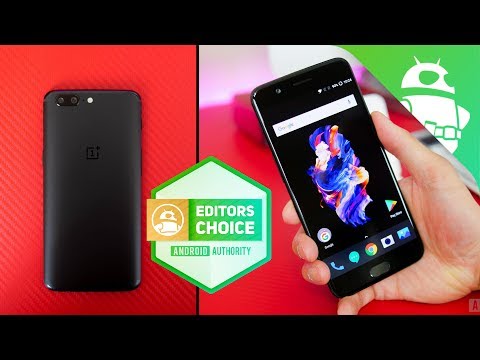
OnePlus 5 vs LG G6: quick look
OnePlus just took the wraps off their highly anticipated 2017 flagship, and it’s only natural to wonder how the latest and greatest from OnePlus compares to the other high-end smartphones out there. In this post, we go hands-on and give you a quick look at the OnePlus 5 vs LG G6!
See also:
OnePlus 5 review – the Never Settle promise lives on
2 days ago
Design
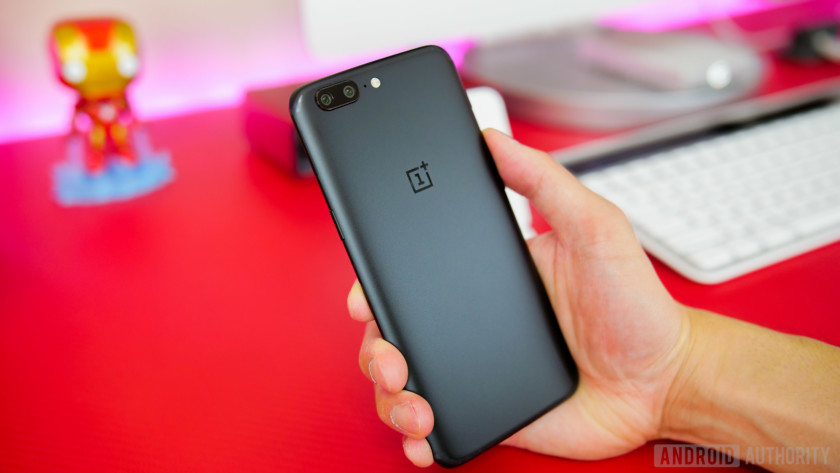
OnePlus has made significant design changes with the OnePlus 5, and the reaction to the new look has been divisive to say the least. There’s no denying that the OnePlus flagship shares a lot of similarities with the iPhone 7 Plus and even more so with the recently-announced OPPO R11. Regardless of how you feel about that, it has to be said that that the OnePlus 5 is definitely the most premium feeling flagship from the company yet. With its sleek full metal unibody, it’s also the thinnest smartphone released by OnePlus, with a thickness of just 7.25 mm.
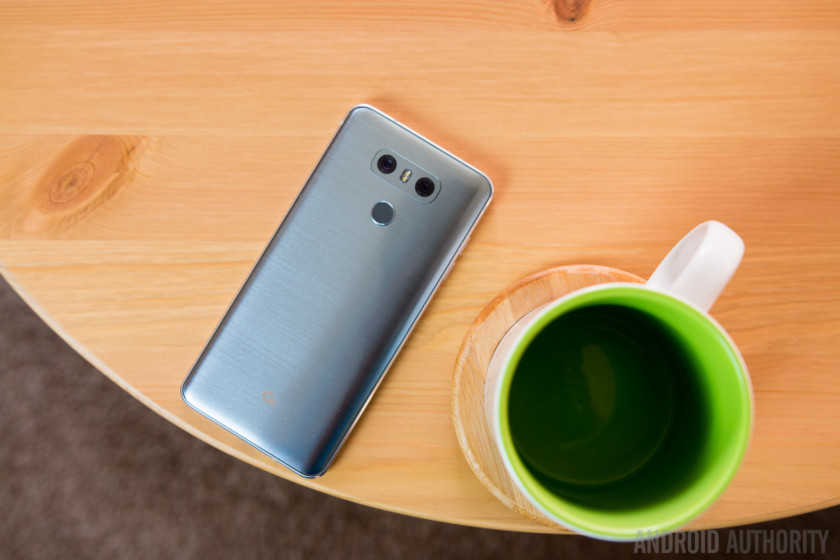
The LG G6 is definitely the more unique looking of the two, with ultra-thin bezels along the sides of the display that also comes with rounded corners to provide better impact protection. However, the metal and glass combination is increasingly common, with phones from Samsung, HTC and others featuring similar build materials.
Despite the slightly larger display, the LG G6 is the more compact of the two smartphones, which is a testament to what great job LG has done to keep the bezels thin and leave the front free of any capacitive or physical keys.
Display
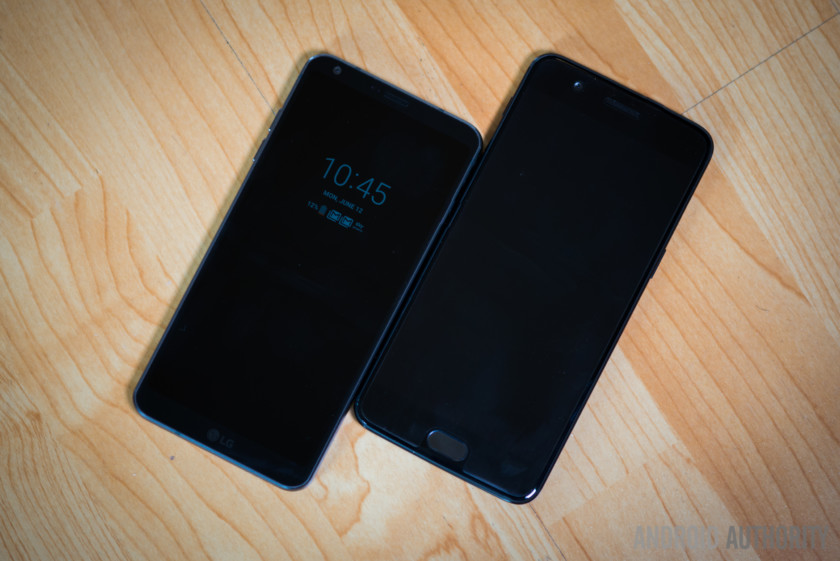
Speaking of the display, the LG G6 comes with a 5.7-inch screen with a Quad HD+ resolution, while OnePlus sticks with a 5.5-inch display with a Full HD resolution. This is another polarizing decision on the part of OnePlus — even though 1080p more than gets the job done and there are certainly some benefits in terms of battery life, it’s not wrong to expect or want a Quad HD screen from your flagship phone. That’s particularly true given that the OnePlus 5 is not as affordable as its predecessors.
See also:
OnePlus 5 vs Samsung Galaxy S8: quick look
2 days ago
Hardware and performance
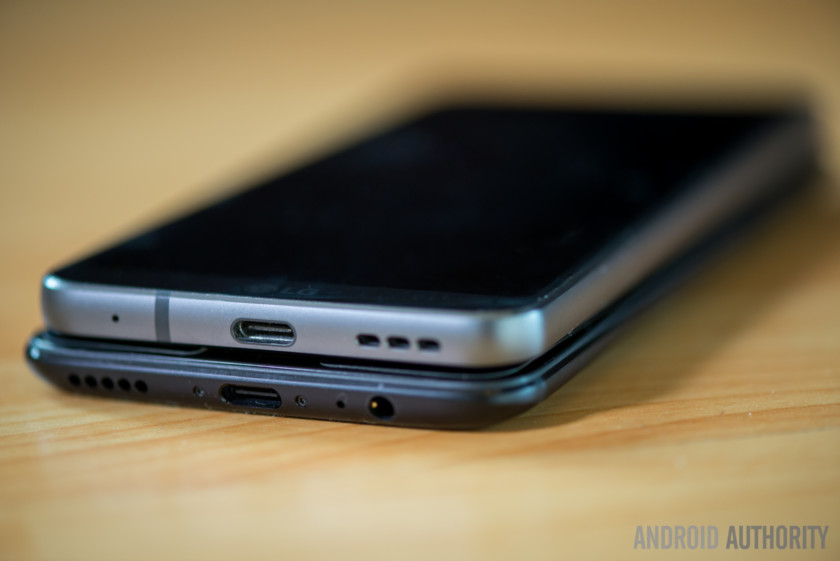
Where the OnePlus 5 does have a leg up is when you take a look at what’s under the hood. OnePlus has always offered the latest and greatest in terms of specs and this device is no different, coming with a Qualcomm Snapdragon 835 processor and either 6 GB or 8 GB of RAM. Both options are more than the 4 GB of RAM you get with the LG G6, and LG has also decided to stay with the Snapdragon 821 as the processor. Of course, this setup is still very capable and performance is not an issue at all with the G6, but it’s still an odd choice nevertheless.
(The brand new LG G6 Plus offers 6GB of RAM and 128GB of storage space, for what it’s worth.)
32 GB and 64 GB are the built-in storage options available with the G6, while the OnePlus 5 comes with either 64 GB or 128 GB, which also dictates how much RAM you are getting. However, the G6 does support expandable storage via microSD card. Another great feature of the G6 that the OnePlus 5 does not have is the IP68 rating for dust and water resistance.
In terms of battery, both smartphones come with 3,300 mAh units. The battery life of the LG G6 has been quite impressive, and we can expect even more from the OnePlus 5 because of its lower resolution display and more power efficient processor. Of course, we’ll only know for sure once we conduct our battery tests with the OnePlus 5.
Both devices support fast charging, but while the Qualcomm Quick Charge 3.0 with the LG G6 is fast, OnePlus’ upgraded Dash Charge offers impressive charging speeds, with OnePlus promising that you can get a full day of use after charging the phone for just half an hour.
Camera
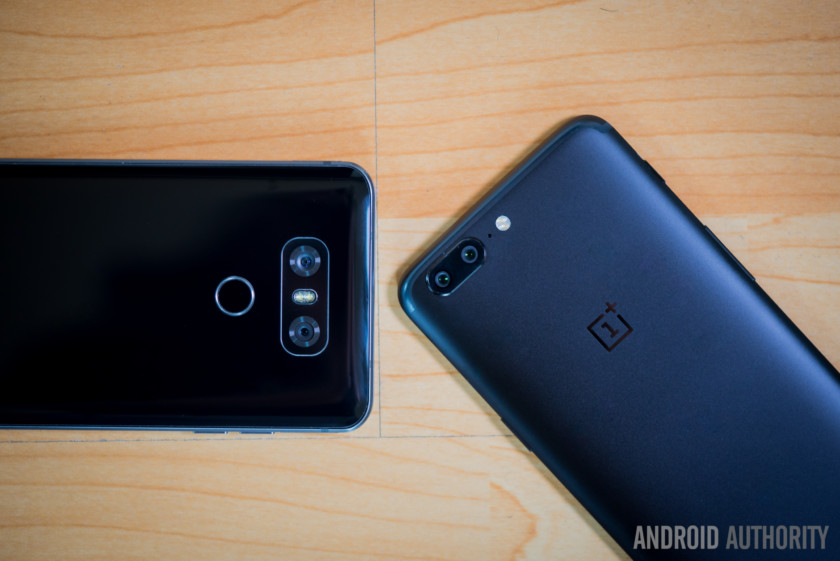
The biggest change with the OnePlus 5 is when it comes to the camera. The device features a dual camera setup on the back, with one 16 MP sensor with an f/1.7 aperture, and another 20 MP telephoto lens with an f/2.6 aperture. OnePlus says this is the highest resolution dual-camera system on any smartphone. The OnePlus 5 camera is central to the phone’s marketing message, and we are definitely excited to run it through its paces.
Related: OnePlus 5 vs the rest: what’s the best Android camera?
LG has its own take on the dual camera system, with the G6 featuring two 13 MP units on the back. The standard lens comes with a f/1.8 aperture, while the wide-angle lens unit comes with a f/2.4 aperture. The cameras of the LG G6 are excellent and are capable of taking breathtaking photos, and it will be interesting to see how the OnePlus 5 fares against the great smartphone cameras we now have in comprehensive comparisons.
Software
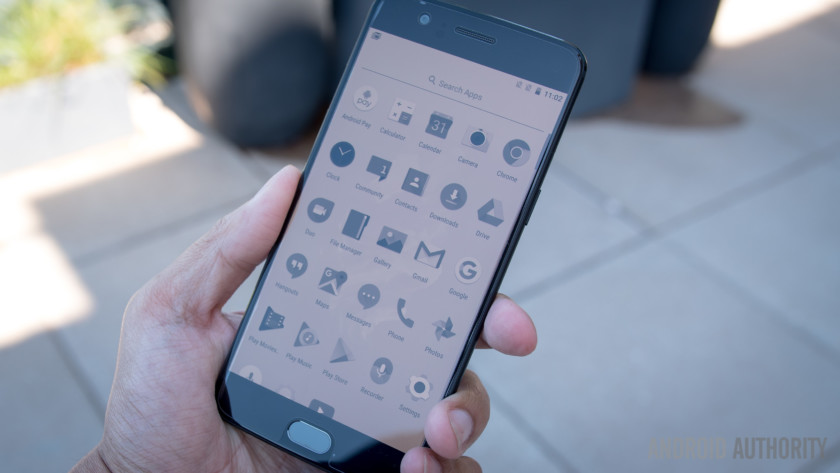
The OnePlus 5 is running OxygenOS based on Android 7.1.1 Nougat. As it’s always been the case, there are a lot of customization options here, but with a minimalist approach overall. New software features include a Reading Mode that uses gray-scale mapping and a blue light filter to provide a reading experience similar to what you get with an e-reader. Other notable features include automatic Night Mode, expanded screenshots, a Do Not Disturb gaming mode, and a whole lot more.
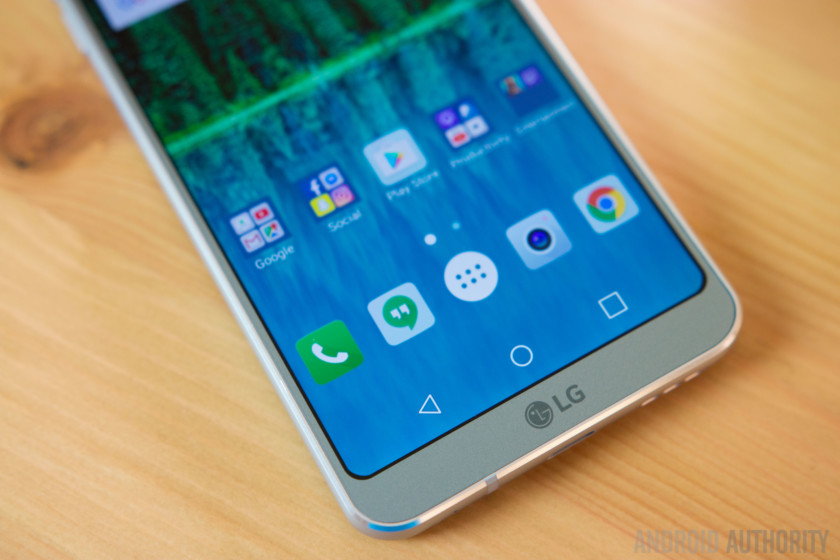
The LG G6 is running Android 7.0 Nougat with the latest version of the LG UX on top. LG has continued to clean up their software experience to provide a more minimalist interface. LG’s own apps have also been updated to take advantage of the 18:9 aspect ratio of the display which is also perfect when it comes to split view multi-tasking. LG has worked hard to optimize its software package and that really shines through with the smooth performance that we see.
Specs comparison
| Display | 5.5-inch AMOLED 1920 x 1080 resolution 16:9 aspect ratio 401 ppi |
5.7-inch IPS LCD 2880 x 1440 resolution 18:9 aspect ratio 564 ppi |
| Processor | 2.45 GHz Qualcomm Snapdragon 835 | 2.35 GHz Qualcomm Snapdragon 821 |
| GPU | Adreno 540 | Adreno 530 |
| RAM | 6/8 GB | 4 GB |
| Storage | 64/128 GB | 32/64/128 GB |
| MicroSD | No | Yes, up to 256 GB |
| Camera | Main: 16 MP Sony IMX 398 sensor, 1.12 μm, ƒ/1.7 aperture, EIS, dual LED flash Telephoto: 20 MP Sony IMX 350 sensor, 1.0 μm, ƒ/2.6 aperture 16 MP front-facing camera |
Rear: Dual 13 MP wide-angle sensor (ƒ/2.4 aperture / 125°) / 13 MP standard sensor (ƒ/1.8 aperture / 71°), OIS 2.0, PDAF
Front: 5 MP |
| Battery | 3,300 mAh | 3,300 mAh |
| Software | Android 7.1.1 Nougat OxygenOS |
Android 7.0 Nougat LG UX 6.0 |
| Water resistance | No | IP68 |
| SIM | Nano Dual-SIM |
Nano Single or dual-SIM |
| Dimensions and weight | 154.2 x 74.1 x 7.25 mm 153 grams |
148.9 x 71.9 x 7.9 mm 163 grams |
Pricing and final thoughts
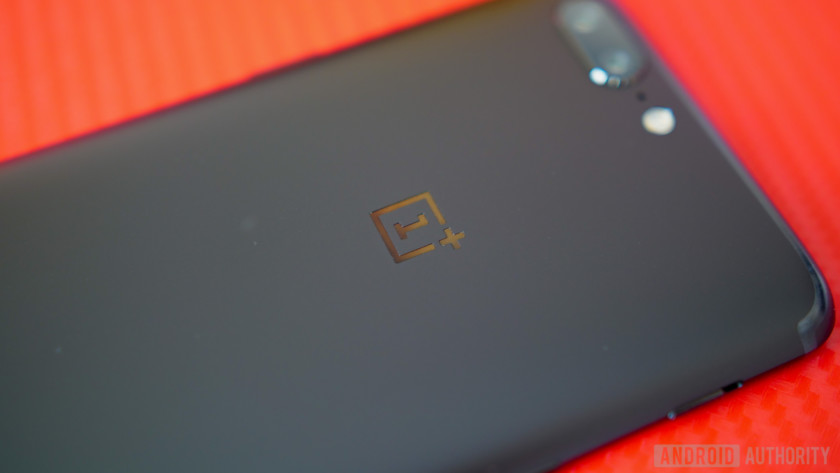
As far as pricing is concerned, the higher-end variant of the OnePlus 5 is priced at $539, while the one with 6 GB of RAM and 64 GB of storage will set you back $479. On the other hand, the price of the LG G6 ranges from anywhere between $600 and $720 depending on the the color option and whether it’s unlocked or from a network carrier. While the price of the OnePlus 5 does push closer into high-end pricing, it still remains the more affordable choice among current generation flagships.
So there you have it for this quick look at the OnePlus vs LG G6! When choosing between these smartphones, it really comes down to what you are looking for from your smartphone experience. The LG G6 has the advantage of a Quad HD display, water resistance, and a more unique design, while the OnePlus 5 offers a superior processing package and a more affordable price point. The camera of the G6 is fantastic and we’ll have to see how the promising OnePlus 5 fares in this regard. In any case, you aren’t going to be disappointed with either smartphone.
Want to learn more about the OnePlus 5? Check out our full review!
Use emoji to search Kayak for travel deals
The inevitable march to replace words with emoji continues apace, with the world granting more legitimacy to the cartoony mini-images. Last month, an Israeli court ruled that they counted as enough “intent” in a civil case to turn the tide in one side’s favor. But today is for you, travel fiends: Kayak now lets you search for destinations by emoji.
Most of the first ten emoji Kayak’s search engine will recognize make sense: The Statue of Liberty translates to New York City, sushi means Tokyo, a three-leaf clover for Dublin, a slot machine for Las Vegas. Others are abstract jokes, with the rabbit emoji surfacing Chicago’s O’Hare Airport (har har) and the red light klaxon bringing up Amsterdam (get it?).
Kayak is putting the next batch of 15 emoji-location pairings up to a vote, so head over if you want to elect a city you hate to surface when someone searches with the poop emoji. Or you can wait until T-Rexes and Zombies enter the emoji equation.
Source: Kayak
The Rave 15 sleeping bag features built-in gills for heat ventilation
Why it matters to you
The Nemo Rave 15 sleeping bag is the ideal solution for sweaty sleepers or summer campers.
Climbing into a sleeping bag on a hot, sticky summer night might not seem that appealing — unless your sleeping bag has gills.
Outdoor gear company Nemo designed the Rave 15 with breathability in mind, so you can be comfortable in milder temperatures. In addition to thermal gills for increased summer camping amenity, the new bag boasts an array of added features including a waterproof and breathable footbox.
This company first utilized this ventilation feature in its Canon -40 sleeping bag in order to increase the product’s utility across a wider range of temperatures.
For the Rave 15, Nemo modified the traditional mummy design into a unique spoon shape, which allows for more room around the elbows and the knees. The integrated thermal gills comprise two zippered slits down the front of the bag that can be pulled down in warm conditions to let heat out and keep you cool — without letting cold air back in.
On colder nights when staying warm is the primary concern, simply zip the slits back up. Vertical baffling ensures that no cold spots occur and the waterproof and breathable footbox fights condensation that forms on tent walls, attributing to dry, toasty feet all night long.
The Rave 15 is crafted with RDS certified 650-fill-power Nikwax Hydrophobic Down with its own water resistant properties, and is fluorocarbon-free.
An extra section of material around the neck is designed to be shoved into the collar to serve as a sort of draft prevention or can be pulled out for extra breathability.
For those who sweat in their sleeping bags or for balmy summer nights, the ventilating Rave 15 serves as an ideal solution. While its thermal gill features make for use in summer conditions, high-quality materials and design ensure it will keep you warm in colder conditions as well. The bag is rated to 15 degrees Fahrenheit.
Although not the lightest product on the market weighing in at a hefty 3 pounds, 3 ounces — its adaptability is worth its weight. The product is available in jade and pink or jade and sea glass. It also comes with its own cotton storage bag and drawstring stuff sack. The Rave 15 retails for $300 for the regular length on REI’s website, and $320 for the long version.
Windows 10 Task Manager now keeps an eye on graphics card usage, too
Why it matters to you
Insiders now have access to a tool that lets them track GPU usage without third-party software and it should come to all Windows users before long.
Microsoft updated the Windows 10 Task Manager in a new Insider build which allows it to keep an eye on graphics card usage. It joins trackers and graphs for CPU, memory, disk and network usage and offers support for single and multiple graphics processor (GPU) builds.
Although there are many advanced applications for keeping an eye on what your PC is doing, Windows 10 Task Manager remains one of the easiest baked-in tools for Windows users to see what’s going on inside your desktop or laptop. While it has provided CPU and memory tracking for some time though, GPU usage was never displayed, until now.
Released as part of the Windows 10 Insider Preview Build 16226 to insiders on the Fast ring, the new GPU tracking task manager offers some detailed information about your graphics cards and how they are working. The Task Manager can now tell you which graphics card you are running and what driver version you have and when they were updated.
More importantly, though, it also gives you a graph and percentage output for how much of the GPU itself is being utilized. There is even a smaller, secondary graph and read out for how much of your dedicated and shared GPU memory is being used, letting you know how close you are getting to pushing your card to its limit. That could be useful for when you are trying to find out how high to set certain graphical features in your favorite game, or during temperature testing.
If you need even more information that that, the Details tab can show your graphics processor utilization by process, so if running multiple programs or simulations at once, you can see which requires the most GPU power to render properly.
Microsoft states in its announcement that this feature is very much considered “under construction,” so there are likely to be bugs and problems with it. It asks that anyone discovering such issues get in touch and let it know via the Feedback Hub under “Desktop Environment > Task manager.”
This feature joins a number of new additions coming to Windows 10 in upcoming Insider builds, but Task Manager itself has a lot of extra tricks it up its sleeve you may not know about. Check out our handy guide to master this important Windows tool.
The Steam Summer Sale kicks off with a tempting discount on HTC Vive headset
Why it matters to you
VR headsets are still pretty expensive, and while the Steam discounton the HTC Vive isn’t huge, it’s still enough to make the headset an enticing choice.
Usually, the Steam Summer Sale means you’ll be picking up a bunch of half-priced games to fill up your already overflowing backlog. This year, however, Steam is upping the ante by offering a discount on the HTC Vive. Yep, the $800 VR headset.
The HTC Vive is now available on the Steam store for $750 — that might not sound like a huge discount, but buyers will also receive a $50 Steam credit. So, if you were already planning on spending at least $50 on Steam games and have an extra $750 lying around, this is a pretty good deal. Plus, it comes bundled with Star Trek: Bridge Crew, Richie’s Plank Experience, and Everest VR, along with a free month of HTC’s Viveport subscription service.
For everyone else, however, it might not be a deep enough discount to justify purchasing the HTC Vive. The VR headset has met with some serious competition from the Oculus Rift now that both platforms have their own touch controllers, but the Vive remains at the top of its game. According to Epic Games CEO Tim Sweeney, the HTC Vive is outselling the Oculus Rift 2-to-1, and this sale could push those numbers even higher.
There are still some pretty massive barriers to entry for most users, who will need a powerful PC to get the most out of the HTC Vive — plus a bunch of extra space to take advantage of the Vive’s room-scale VR experiences.
But with a growing catalog of games, including some high-profile entries like Star Trek: Bridge Crew, the Vive and its competitors — PlayStation VR and the Oculus Rift — are becoming more and more appealing to the average gamer. It’s with that in mind that the Steam Summer Sale also includes a number of popular VR games at a discont alongside the HTC Vive hardware.
The marked-down games currently up for grabs are all Vive Studios titles. They include Virtual Sports, Arcade Saga, Remembering Pearl Harbor, Knockout League, and Make VR.
So if you’ve been on the fence about VR, now would be a great time to get in on the action, but hurry up — the sale ends at 10 a.m. PT on July 5.
 AIVAnet