


Artificially intelligent doll identifies emotions using facial-recognition tech
Why it matters to you
This smart doll demonstrates a new cheap, privacy-oriented computer vision platform in action.
OK, let’s get this out the way up top: A robot doll that can sense your child’s emotions and change how it behaves accordingly sounds like the kind of high-concept horror movie a Hollywood screenwriter would pitch after binge-watching Westworld and a Chucky marathon.
In reality, it describes research being carried out by investigators at the University of Castilla-La Mancha in Ciudad Real, Spain. What they’ve built as a proof of concept is an artificially intelligent doll that can recognize eight different emotions and runs on an AI chip costing just 115 euros (around $130). Emotion recognition is carried out through facial-recognition technology, via a camera hidden in the doll’s mouth.
As project leader Oscar Deniz explains, the doll is something of a red herring.
“It’s actually an application of an open vision platform we have developed in our Horizon 2020 project, ‘Eyes of Things,’” Deniz, whose work focuses on computer vision and machine learning, told Digital Trends. “The vision platform has been designed for small size, cost, and maximum efficiency. Thus, the doll contains the board along with camera and battery. The board processes images to recognize the girl’s facial expression, allowing the doll to react accordingly. All of this is done inside the doll, meaning that no images are sent to the internet, which has been the case in other toys. This not only allows for better response time; it guarantees privacy.”
The “Eyes of Things” project started in January 2015 and runs through December of this year. Its objective is to design a new embedded vision platform, optimized for size, cost, performanc,e and power consumption. While there are plenty of fascinating facial-recognition technologies around, the fact that this tool does everything locally, rather than in the cloud, makes it particularly intriguing.
Besides dolls and other intelligent toys, the project aims to develop similar uses of vision-based AI for drones, robots, headsets, and video surveillance. Another use case the team has developed is something called the “museum audio guide,” which comprises a headset containing the AI board, a battery, and camera. The idea is that, when a museum visitors puts the headset on, the headset “sees” what they are looking at and provides contextual information.
“Currently, we have a number of prototypes available, and we are working on some demonstrators, but the idea is to generate [excitement] so that the platform can be commercialized,” Deniz said.
A paper describing the work was recently published in the journal Sensors.
Samsung plans stand-alone ‘Odyssey’ VR headsets with crazy sharp displays
Why it matters to you
Samsung aims to provide its customers with a VR headset solution that doesn’t require a snap-in smartphone, and based on the latest report, it will have a better viewing area than the Galaxy S8 phone.
The development of Samsung’s mobile virtual reality headset that will fall under the Odyssey brand is reportedly moving forward Unlike Samsung’s current Gear VR headset, it will be a self-contained unit that doesn’t rely on a snap-in smartphone. Instead, it will reportedly have a built-in, ultra-high-resolution display with a 2,000-pixels-per-inch (ppi) density, which is significantly sharper than what’s seen on the Samsung Galaxy S8 smartphone.
The company introduced a display with a similar density during the Society for Information Display 2017 convention held in Los Angeles in May. The liquid crystal display (LCD) measures 1.96 inches and is designed for virtual reality, augmented reality, and holograms. It has a resolution of 3,840 x 2,160 and a massive pixel density of 2,250 pixels per inch.
Samsung also revealed a glass-free 5.09-inch OLED display targeting virtual reality, 3D games, and 3D pop-up books. Joining this product was a stretchable OLED screen measuring 9.1 inches that could be “dented” up to 0.47 inches like a balloon, and then reverted back to its original shape. Samsung is reportedly working on an ultra-high-resolution OLED with a pixel density of 800 ppi as well.
It has a resolution of 3,840 x 2,160 and a massive pixel density of 2,250 pixels per inch.
Samsung’s head of research and development for software and services, Injong Rhee, confirmed that the company was working on a stand-alone mobile VR headset during its 2016 develop conference. He didn’t say when the headset would hit the market, but indicated that it would eventually support hand and gesture tracking.
Samsung may be putting its stand-alone virtual reality headset under the Odyssey brand to distinguish it from the smartphone-dependent Gear VR. Although Samsung sells an ATIV Odyssey smartphone through U.S. Cellular, the company uses the brand on a 15.6-inch notebook starting at $1,200. Sporting a 15.6-inch FHD screen, this gaming-friendly notebook is based on Intel’s Core i7-7700HQ processor and Nvidia GeForce GTX 1050 discrete graphics chip.
Google revealed its plans for a similar stand alone VR unit in May that will be built by Lenovo and HTC. Based on Google’s Daydream platform and a reference design co-developed with Qualcomm, it will enable users to engulf themselves in virtual reality experiences supporting full freedom of movement. The headsets will track objects and people in the physical world so users aren’t bumping into furniture, walls, or family members.
Samsung’s Gear VR headset is currently built to support a specific batch of Galaxy-branded smartphones, such as the most recent Galaxy S8. It’s backed by technology supplied by Facebook-owned Oculus VR, the makers of the Oculus Rift VR headset for PC. And while Gear VR doesn’t support the full-body movement experience seen on the HTC Vive and Oculus Rift, Samsung just recently introduced the Gear VR Controller for tracking hand motions.
The Google-backed stand-alone VR headsets built by HTC and Lenovo are slated to arrive in late 2017. We expect Samsung is shooting for the same window with its Odyssey-branded device. Will it support Daydream and rely on Google’s reference design? Guess we’ll find out over the next six months.
Samsung plans stand-alone ‘Odyssey’ VR headsets with crazy sharp displays
Why it matters to you
Samsung aims to provide its customers with a VR headset solution that doesn’t require a snap-in smartphone, and based on the latest report, it will have a better viewing area than the Galaxy S8 phone.
The development of Samsung’s mobile virtual reality headset that will fall under the Odyssey brand is reportedly moving forward Unlike Samsung’s current Gear VR headset, it will be a self-contained unit that doesn’t rely on a snap-in smartphone. Instead, it will reportedly have a built-in, ultra-high-resolution display with a 2,000-pixels-per-inch (ppi) density, which is significantly sharper than what’s seen on the Samsung Galaxy S8 smartphone.
The company introduced a display with a similar density during the Society for Information Display 2017 convention held in Los Angeles in May. The liquid crystal display (LCD) measures 1.96 inches and is designed for virtual reality, augmented reality, and holograms. It has a resolution of 3,840 x 2,160 and a massive pixel density of 2,250 pixels per inch.
Samsung also revealed a glass-free 5.09-inch OLED display targeting virtual reality, 3D games, and 3D pop-up books. Joining this product was a stretchable OLED screen measuring 9.1 inches that could be “dented” up to 0.47 inches like a balloon, and then reverted back to its original shape. Samsung is reportedly working on an ultra-high-resolution OLED with a pixel density of 800 ppi as well.
It has a resolution of 3,840 x 2,160 and a massive pixel density of 2,250 pixels per inch.
Samsung’s head of research and development for software and services, Injong Rhee, confirmed that the company was working on a stand-alone mobile VR headset during its 2016 develop conference. He didn’t say when the headset would hit the market, but indicated that it would eventually support hand and gesture tracking.
Samsung may be putting its stand-alone virtual reality headset under the Odyssey brand to distinguish it from the smartphone-dependent Gear VR. Although Samsung sells an ATIV Odyssey smartphone through U.S. Cellular, the company uses the brand on a 15.6-inch notebook starting at $1,200. Sporting a 15.6-inch FHD screen, this gaming-friendly notebook is based on Intel’s Core i7-7700HQ processor and Nvidia GeForce GTX 1050 discrete graphics chip.
Google revealed its plans for a similar stand alone VR unit in May that will be built by Lenovo and HTC. Based on Google’s Daydream platform and a reference design co-developed with Qualcomm, it will enable users to engulf themselves in virtual reality experiences supporting full freedom of movement. The headsets will track objects and people in the physical world so users aren’t bumping into furniture, walls, or family members.
Samsung’s Gear VR headset is currently built to support a specific batch of Galaxy-branded smartphones, such as the most recent Galaxy S8. It’s backed by technology supplied by Facebook-owned Oculus VR, the makers of the Oculus Rift VR headset for PC. And while Gear VR doesn’t support the full-body movement experience seen on the HTC Vive and Oculus Rift, Samsung just recently introduced the Gear VR Controller for tracking hand motions.
The Google-backed stand-alone VR headsets built by HTC and Lenovo are slated to arrive in late 2017. We expect Samsung is shooting for the same window with its Odyssey-branded device. Will it support Daydream and rely on Google’s reference design? Guess we’ll find out over the next six months.
Best Water-resistant Bluetooth speakers

Choose a great water-resistant Bluetooth speaker and singing in the shower will sound better than ever!
Bluetooth speakers are one of the most convenient ways to listen to music from pretty much any device. If you get yourself a water-resistant one, you don’t have to worry about it getting wet. Enjoy a poolside singalong by getting yourself a quality, water-resistant Bluetooth speaker. We’ve rounded up some of our favorites!
- UE Wonderboom
- Braven BRV-X
- UE Roll 2
- Archeer
- Polk Audio BOOM Swimmer
- UE Boom 2
- JBL Flip 3
UE Wonderboom

UE’s latest water-resistant Bluetooth speaker is cute as a button! The Wonderboom is a compact Bluetooth speaker with big sound, a lovely design, and an IPX7 rating, meaning it can be submerged in up to 1 meter of water for 30 minutes — it’s perfect for the shower. I’ve been testing this speaker and have been very impressed with its low end. The bass is surprisingly warm for such a small unit, and its size, again, is perfect for the shower.
Given its size, the Wonderboom does have a bit of trouble at higher volumes, with clarity capping out around the halfway mark on my phone’s volume. That being said, half my phone’s volume is plenty loud outside the shower and almost too much in it, so you don’t need to crank it at all.
It comes in six fun colors, and we’ll just hope the price comes down below its current $100 to make it a bit more competitive.
See at Amazon
Braven BRV-X

The Braven BRV-X is built like a tank. It weighs about 1.5 pounds and is covered in a rubberized shockproof exterior that makes the BRV-X incredibly rugged.
It has a certified IPX7 waterproof rating allowing it to be fully submerged in three feet of water for 30 minutes and function perfectly fine.
It has a built-in microphone and speaker, which allows you to respond to phone calls without getting out of the pool. It boasts a 12-hour battery life, which is more than serviceable for a day lounging by the pool. The Braven BRV-X will set you back about $200.
See at Amazon
UE Roll 2

The Ultimate Ears Roll 2 has an IPX7 rating, meaning submerging it in up to 3 feet of water for about half an hour won’t cause any damage, so your daily showers won’t affect it at all. Plus, on the back, it comes with a bungee cord loop, making it easy to wrap or tie the speaker around your curtain rod or shower head, so it stays out of your way while you’re headbanging in the shower.
The UE Roll 2 comes with a couple of improvements over its predecessor model. It has better sound, regarding both volume and quality, than its predecessor, and it also has an increased Bluetooth range of 100 feet, meaning your phone or tablet doesn’t even have to be in the hot, steamy bathroom while you’re getting clean.
Priced at around $99, it’s a tiny speaker with big sound that isn’t too big of a blow to your bank account.
See UE Roll 2 at Amazon
Archeer portable outdoor speaker

This portable speaker is really great for people who want a speaker for camping, hiking, boating, or any other outdoor activities. It really embraces the portable side of things by being extremely light for being so rugged, meaning you can take it everywhere you go!
While the Archeer can’t be submerged in water, its IP64 rating means it’s extremely resistant to dust but still has splash protection all for $88.
It offers 12 hours of playing time, a built-in microphone for taking phone calls, and even a LED flashlight on the side making it perfect for night time use.
See at Amazon
Polk Audio BOOM Swimmer

This little speaker was conceived by the folks at Polk Audio to be as versatile as possible. The tail on the end of this tadpole-looking device is actually bendable to fit around shower curtain rods or swimming pool railings with ease.
The great thing about the swimmer is its waterproof rating makes it able to be submerged in up to three feet of water without suffering any damage. Perfect for the kids to play with in the pool or to hang up in your shower, the Swimmer sure knows how to deliver.
It is a little small compared to some of the other speakers we have featured in this round up; however, we all know size isn’t everything.
See at Amazon
FUGOO Tough

FUGOO made this speaker to withstand a nuclear war. It has an extremely high waterproof and dustproof rating making it as close to mudproof, snowproof, and shockproof as a portable speaker can get.
It has a whopping 40 hours of battery life, meaning you can listen to your favorite tunes, podcasts, and audiobooks for as long as you need to between charges.
It has impressive sound, sporting six drivers on all four sides, it offers truly deep sounding 360 degree sound no matter which way it’s facing. On top of being able to take phone calls it also has Google Now compatibility, meaning all your questions can be answered with the tap of a button. Bluetooth not working so well? There’s an AUX port on the back for wired playback.
The FUGOO Tough will cost you around $114.
See at Amazon
UE Boom 2

The UE Boom 2 does its best to live up to its onomatopoeic name by offering impressive 360-degree sound in a small package. Its waterproof rating allows it to be submerged in three feet of water for 30 minutes and come out the other side working just fine. On top of being heavily water-resistant, it also is protected against dirt and mud and give you the ability to hand-wash the speaker with warm soapy water in order to clean it.
It has a battery life of 15 hours, and a Bluetooth range of 100 feet giving you more than enough time and space to enjoy your favorite sounds. Plus, if you find yourself lacking the power you want from just one UE Boom 2, you can set up another Boom 2 to make a stereo pair and really blow the roof off. It can also be entirely controlled from an app so you don’t need to even move to turn up the volume or skips songs.
The UE Boom 2 comes with a $199 price tag.
See at Amazon
JBL Flip 3

The JBL Flip 3 is a small, but powerful speaker that doesn’t hurt the wallet as much as some of the other selections we have featured. It offers clear sound and a well-balanced mix of highs and lows in order to give you a great listening experience.
The Flip 3 is able to accommodate non-Bluetooth playback with an AUX port and still has a very strong dust and water-resistant rating. You won’t be able to fully submerge the Flip 3; however, it can withstand a decent drizzling of rain and some splashes from the pool.
You even have the ability to pair Flip 3’s together through the JBL connect app, meaning you can listen to your favorite jams even louder and in stereo!
Overall, for the price of the JBL Flip 3 ($99), it’s a very solid speaker that will work for all your indoor and outdoor sound needs.
See at Amazon
Do you use a water-resistant speaker?
Do you have any experience with water-resistant speakers? Sound off in the comments below and let us know which ones you like and why!
Updated June 2017: We’ve added the UE Roll 2 to the list and removed the Monster Superstar Backfloat because it was out of stock.
Virgin Mobile goes all-in on iPhone, will no longer offer Android phones
In a sea of prepaid carriers, you have to do something dramatic to differentiate.
Virgin Mobile, the unconventional MVNO operating on the Sprint network, has announced it’s going iPhone-only. That’s right, it’s a whole mobile carrier that will only sell iPhones and service for them, in a move to hopefully focus on a profit center and distinguish itself from other prepaid carriers.

Virgin Mobile is kicking off the new iPhone exclusivity with a crazy plan that gives you 12 months of unlimited talk, text, and data for just $1 when you buy a new iPhone. Virgin Mobile’s “Inner Circle” also gives you access to some “exclusive” perks with partner companies. It all sounds very on-brand for Virgin.
Virgin Mobile wasn’t that great of a carrier, and there are plenty more to choose from.
It isn’t clear at this point what Virgin Mobile will do in terms of support for the customers it has who currently use Android phones, but we would assume there will be a long sunset period as those devices are phased out. The Virgin Mobile website has already cut out all of its Android devices, leaving you with the choice of a handful of iPhone models to buy. Virgin Mobile is surely hoping to convert many of its current Android customers to new iPhones as they consider switching to a new carrier.
Thankfully there are tons of prepaid carriers available that compete directly with Virgin Mobile, including the Sprint-operated Boost Mobile, and many let you bring your own device with no strings attached. Aside from offering a couple flagships a year, Virgin Mobile was rather selective in what phones it offered, giving you fewer choices than we’d like to see.

Watch our OnePlus 5 review video!
After plenty of hype, we have all of the details on the OnePlus 5. Coinciding with our complete review of the phone, we have also worked up an all-encompassing video review to bring you the quick take on the phone. Five minutes of our analysis of the OnePlus 5 paired up with some beautiful shots of the phone in action — just what you’ve been waiting for.
Be sure to check out the video review above, and when you’re done and looking for even more OnePlus 5 information you can read our full review to learn everything else about the phone.
- Android Central on YouTube
- OnePlus 5 full review
- OnePlus 5 vs. OnePlus 3
The LG V30 said to be announced at IFA 2017
It’s big, bold, and should appear in Berlin this September.
According to the Korean technology site ETNews, we should see the new LG V30 at September’s IFA 2017 show.
The G6-inspired design features an edge-to-edge OLED display. This would be the first OLED display LG has used since the G Flex series, but the industry trend has clearly seen the advantages OLED offers and the days of an LCD panel for mobile devices are numbered. LG also makes great displays and has heavily invested in building OLED panels. Other specs are said to be a Snapdragon 835, 3,200mAh battery, and an ESS Sabre DAC with a 3.5 mm headphone jack.
Expect to see 32GB, 64GB, and 128GB versions, which will be available in South Korea by late September. Price is rumored to be 800,000 KRW ($700) for the 64GB version. Also, expect to see the internet speculate that this is what to expect from the rumored LG Pixel 2 coming later this year.
While the original V10’s style surely has fans, the V30 is looking pretty good and might tempt more than a few people looking for the premium Android experience. We’ll know more when IFA fires up — we’ll be there to tell you everything worth talking about!
Bixby Voice is rolling out to those who signed up for early access
It’s a bit finicky in its preview state, but Bixby’s tender voice will help you forget it’s still half-baked.
I can’t tell you how excited I was to see that the Bixby Voice preview had hit my unlocked Galaxy S8. There was a bit of a language barrier between the two of us in the beginning, but after a bit of fumbling with Google Translate and a bit of digging into the settings, Bixby is now ready to use on my device.

Droid-Life posted earlier today about the Bixby Voice preview going live to those who had signed up for the Early Access Program last week. Coupled with the strange little update I received this week on the Galaxy S8, I was curious about whether that meant Bixby was on its way to my device.
Lo and behold, it appeared in the settings right after I’d updated my apps through the Galaxy Apps store, as Droid-life had originally suggested. I went through the setup process in Korean and then switched it to English from the settings.

A hint of what to look for when you’re looking for the Bixby Voice settings.
Once you have access, you’ll see an entirely new subset of options populate the Bixby settings panel. They include the ability to have Bixby “wake up” to the sound of your voice, as well as whether you want messages read aloud in high-quality audio. There is also a dictation option, and you can choose how terse or explanatory Bixby is once it fulfills a command.
At present, you can choose from three voices for Bixby through the preview. Two of them speak exclusively in Korean and will require that you understand the language for it to be effective. The other is Bixby’s female voice for the English-speaking audience. There are also video tutorials you can watch in case you’re totally lost on what it is that Bixby is supposed to do.
To make Bixby work, press and hold the dedicated button on the left side of the Galaxy S8 until you see the Bixby prompt pop up on the screen, then speak your command. I haven’t been able to get this particular feature to work in the interim, however, and I’m not entirely sure why, since Bixby has had no trouble recognizing my voice after I registered it.
There are definitely a couple of kinks that need to be worked out, not to mention a whole host of new options to parse through. For now, if you signed up for last week’s preview access, keep checking your phone until the update hits.
How to take the best Cardboard Camera photos
Flawless Cardboard Camera photos are not complicated, and so much fun to share.

Grabbing a good panorama of that perfect sunrise is often quite rewarding, but if you’re a fan of VR photos you can one-up your game with Cardboard Camera. Instead of a 2D panorama, you’re capturing a full 360-degree panorama with depth. This means the viewer gets to really feel like they are a part of the photo, as long as the photo you captured is something worth sharing.
A lot of people struggle to capture that perfect Cardboard Camera shot, often ending up with jagged lines or stitch errors in the shot. This is how you make sure those issues are never found in your Cardboard Camera photos!
Read more at VR Heads!
Samsung teams up with MLB for VR baseball highlights
Samsung and Major League Baseball want you to experience the spectacle of VR.
This is pretty neat. Samsung has teamed up with Major League Baseball to offer more than 20 virtual reality videos of America’s great pastime for the Gear VR this summer.
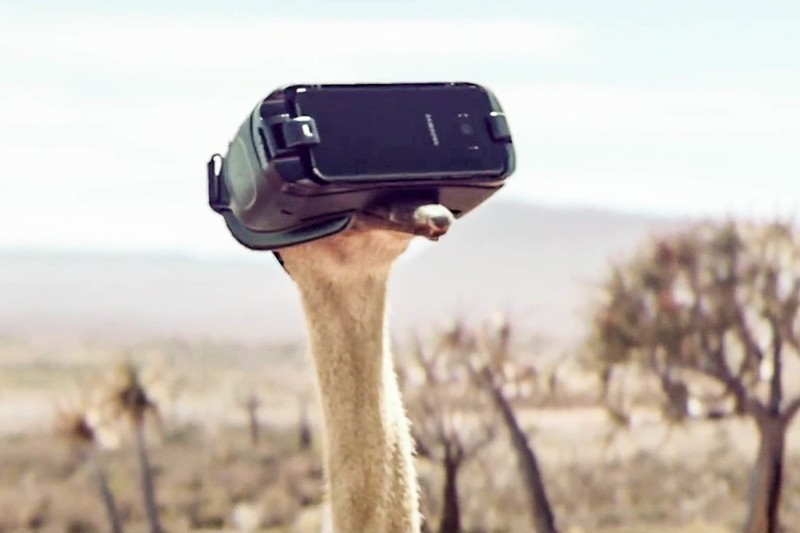
The MLB VR series within the Samsung VR app will immerse fans into the action with select content experiences, bringing them face to face with some of their favorite players and offering unrivaled views of iconic ballparks. What’s more, fans will be plunged right into the season’s most exciting moments, which include All-Star events and the American League and National League Championship Series – all leading up to the World Series itself.
The actual footage is captured by the new Gear 360 camera and will be accessible through the Samsung VR app which is preloaded on all new devices from the company. While the videos are viewable without a Gear VR, they are far more immersive with it.
The content, an example of which is embedded above, is available in Canada, Japan, Mexico, South Korea, Taiwan and the U.S.
See at Amazon
 AIVAnet