


Intel gives up on competing against Raspberry Pi
Say goodbye to Intel’s Edison, Joule and Galileo compute modules. The company has unceremoniously canceled its developer kit lineup, which were meant to give it a foothold in the burgeoning Internet of Things arena, ZDNet reports. Additionally, Intel also canceled several of its Recon Jet smart glasses products, though that’s less of a surprise. With Galileo, Intel wanted to compete directly against the ARM-powered Raspberry Pi, while Edison shrunk down a full development kit to the size of an SD card. Joule, which launched last year, was its most powerful compute module yet.
Intel hasn’t commented on why it’s canceling these products, though we hear that they’re definitely on their way out. At least Curie is still around, the company’s tiny module meant for wearables. Intel clearly wanted to avoid missing out on the IoT market as it did with mobile, so it’s a shame to see it gave up on these compute modules so early. As for Recon Jet, it makes sense to give up on smart glasses after Google Glass failed to take off.
Via: ZDNet
Twitch and Blizzard partner for broadcasts and ‘Overwatch’ loot
Twitch and Blizzard are teaming up in a big way this year. First up, if you’re a Twitch Prime member you’ve got some loot boxes coming your way for Overwatch. “Starting June 20th, Twitch Prime members will receive an Overwatch Golden Loot Box containing a guaranteed [note: emphasis is Twitch’s] legendary item, along with three additional in-game items like emotes, voice lines or character skins,” according to the Twitch blog post. And more on that note, Prime members are going to get 10 more loot boxes this year.
Twitch promises similar treatment for other Blizzard games including Heroes of the Storm and Hearthstone, which will start In August and September, respectively. This partnership goes back pretty far. According to Twitch, StarCraft II was one of the big inspirations for building the broadcasting service. As such, Twitch will be the official third-party broadcasting partner for some 20 Blizzard tournaments for its competitive games like Hearthstone, Overwatch and StarCraft II. More than that, Blizzard showed off new expansions for the game from the TwitchCon stage a few years ago.
So, which are you more excited about, look boxes or the broadcasts? Hit the comments and let us know.
Source: Twitch
Tumblr’s safe mode keeps racy material out of sight
There’s a lot of porn on Tumblr. Over a fifth of content on the site (disclaimer: it’s a sister brand through Verizon’s Yahoo purchase) is adults-only, if you ask the analytics firm SimilarWeb. And that’s a problem if you’re surfing from work or giving access to your kids, since there’s a real chance you could see some naughtiness. Tumblr is ready to help out beyond its existing filtering options, though. It’s introducing a safe mode to its mobile and web apps that hides sensitive material from view. You can still click to see the content if you’re over 18, but it won’t be visible right away. Also, Tumblr is keen to add that this includes all “sensitive” material, not just naked bodies.
The feature is strictly opt-in, and it’s easy to revert back. However, it’s also being joined by some tweaks to how you find content. Tumblr is now hiding explicit blogs (that is, those with sexually graphic material) from web search results for anyone who’s logged out or under 18. Direct links will still work, but you won’t stumble across something saucy by accident.
It’s easy to get around both changes, whether by leaving safe mode off (it’s optional for over-18s) or by logging in. As such, this isn’t so much an attempt to clean Tumblr itself as another attempt at cleaning up its image. It clearly doesn’t want to be defined by porn, and offering a safe mode could ease the minds of people who might otherwise shy away.

Via: TechCrunch
Source: Tumblr
Philips Hue Candle Light Bulb Now Available for Pre-Order in United States
Philips today sent out an email announcing that its White Ambiance E12 candle light bulb is now available for pre-order in the United States.
Priced at $29.95, the candle (or candelabra) bulb is designed to fit small decorative lamps with E12 sockets in the United States. Like other Hue bulbs, the new candle bulb can be connected to a Philips Hue bridge and controlled via HomeKit.
At the current time, Philips is only offering the White Ambiance candle bulb for pre-order in the United States, but the company has said that it also plans to offer a color version, so customers who prefer the Hue bulbs that support shades beyond white may want to wait for that version.
Philips originally announced its candle bulbs in March of 2017, launching them first in Europe. E14 candle light bulbs have been available in Europe in both color and white ambiance versions since April. According to Philips, the candle bulb is “one of the most requested products” from Philips Hue customers.
The bulb is a 40W equivalent, offering up to 570 lumens. It features deep dimming from warm white to cool daylight with a 2200k to 6500k color temperature range. The White and Color Ambiance version, when available, will offer the same white options along with support for 16 million colors.
Tag: Philips Hue
Discuss this article in our forums
T-Rex, Vampire, Crazy Face, Zombie, Giraffe, and Pie Among Emoji Included in New Unicode 10 Standard
The Unicode Consortium today released version 10.0.0 of the Unicode Standard, introducing 56 new emoji characters ranging from crazy face and face with monocle to t-rex, pie, and pretzel.
Emoji site Emojipedia has details on all of the new emoji that are included in the update, and has shared a sample image featuring visual representations of the new additions.
Some of the new emoji include star-struck, face with raised eyebrow (which Emojipedia says is also known as the “Colbert” face), exploding head, face vomiting, shushing face, face with hand over mouth, love you gesture, palms up together, brain, orange heart, scarf, gloves, coat, socks, zebra, giraffe, hedgehog, sauropod, cricket, coconut, broccoli, dumpling, fortune cookie, pie, cup with straw, and chopsticks.
New child, adult, and older adult emojis in a range of skin tones are included, as are options for person in steamy room, bearded person, mage, fairy, vampire, merperson, elf, genie, person climbing, person in lotus position, and more, with all of those emoji available in multiple skin tones and genders. While there are 56 distinct new emoji characters, gender/skin tone modifiers and flags bring that total to 239.
These new emoji will not be available for Apple products until Apple adds support for Unicode 10, and the actual artwork for each emoji on iOS and Mac devices will be up to Apple to provide.
It typically takes Apple several months to implement support for new emoji, so the Unicode 10 options could be implemented in the fall of 2017. Emoji in Unicode 9, which was released in June of 2016, were added to iOS in iOS 10.2 in October.
Tags: emoji, Unicode Consortium, Unicode 10
Discuss this article in our forums
Unreal Engine Gains Early Access Support for Developing VR Content in macOS High Sierra [Updated]
At its 2017 Worldwide Developers Conference, Apple announced Metal 2, the next-iteration of its graphics API for iOS, tvOS, and macOS. Metal 2 includes support for VR content creation for the first time, and when Metal 2 was highlighted at the event, Apple said Valve, Unity, and Unreal would bring their VR tools to the Mac.
Epic Games is making good on Apple’s promise, and has announced that it is releasing early access support for developing for virtual reality on Mac platforms through the Unreal Engine Github.
At WWDC, Industrial Light & Magic Chief Creative Officer John Knoll took the stage to demo the Unreal Editor running live in VR mode on one of Apple’s newly announced iMacs.
Going forward, Epic Games plans to add full support for VR development on macOS in an upcoming release. Mac VR support, along with general Metal 2 support and Mac optimizations, will ship in Unreal Engine 4.18, with previews coming in September and a full release coming in early October.
Valve started offering a SteamVR for macOS beta back on June 5, as did Unity.
Update: According to Epic Games, early access support will actually be available starting tomorrow morning.
Tags: Unreal Engine, Epic Games, Metal 2
Discuss this article in our forums
OnePlus 5 review – the Never Settle promise lives on
For a company that is only a few years old, OnePlus certainly has made a lot of positive strides in its short history. Going from an invite-only affair and growing into one of the most impressive low-cost phone brands on the planet, it’s hard not to be at least a little impressed. Of course, OnePlus hasn’t been without its share of drama and growing pains along the way (remember that “Ladies First” disaster?). Thankfully those days are long behind them.
So what’s next for OnePlus? We’re only a little over 6 months removed from the OnePlus 3T but, whether you’re ready for it or not, OnePlus’ new flagship is here.
See also:
OnePlus 5 officially announced with an all-new dual camera setup
5 hours ago
While the 3T was just an iterative update from the OnePlus 3, the new OnePlus 5 represents a much bigger change for the company. The latest flagship offers an updated design, as well as modern specs that easily compete with today’s most powerful flagships. These improved features don’t come without some sacrifice, however, as the OnePlus 5 is the most expensive release from the company to date.
The 5 starts at $479 — a far cry more expensive than the company’s 2014 flagship, the $299 OnePlus One. To be fair, the pricing here is still more affordable than many high-end flagships, and OnePlus has actually be slowly increasing its pricing structure with each iteration of the OnePlus line, so we honestly can’t say we are too surprised.
The big question is whether OnePlus’ price increase is worth it, and if the OnePlus still provides a great value for the asking price. That’s exactly what we aim to answer in our full OnePlus 5 review.
Design

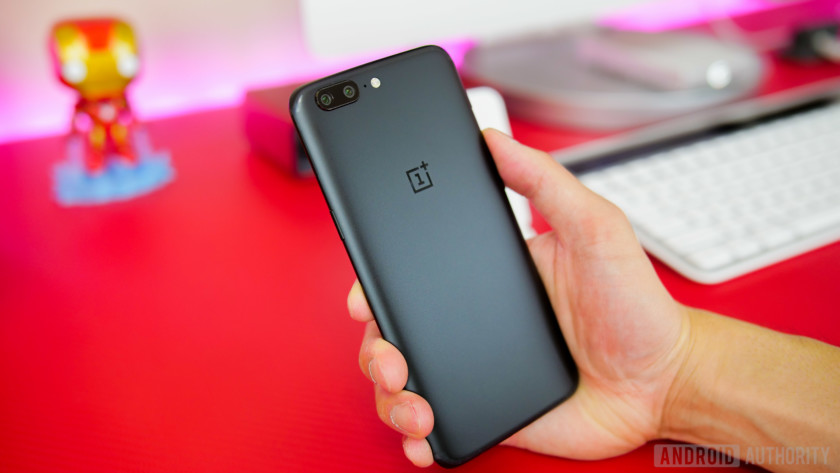
Just like the OnePlus 3 and 3T before it, OnePlus’ latest flagship offers a metallic body, though it’s much thinner this time around. Not only is the handset just 7.25 mm thin, it also features an aggressive taper around the sides that makes the phone feel even thinner. The antenna lines have also been redesigned to go around the perimeter of the phone instead of cutting across the back, making them a lot less noticeable.
Thanks to the rounded corners and edges, the OnePlus 5 looks great and is comfortable to hold. Still, it is worth noting that the thin sides make the phone a bit on the slippery side.
Just like the OnePlus 3 and 3T before it, OnePlus’ latest flagship offers a metallic body, though it’s much thinner this time around.
The new design changes are going to be a bit polarizing for some of you. While I’m certainly a fan of most of these changes, it is hard to deny that the OnePlus 5 heavily resembles an iPhone 7 Plus, especially with the addition of a dual camera system that’s similarly shaped and sits in the same location. I am happy to report that, unlike the iPhone, the OnePlus 5 does retain its headphone jack though.

OnePlus offers a much more limited selection of color options compared to many other modern flagships out there. If you pick up the base model (64 GB storage, 6 GB RAM), you’ll get it in Slate Gray. The more expensive model (128 GB storage, 8 GB RAM) comes in Midnight Black.

For those familiar with the OnePlus 3T, you’ll find the button placement here hasn’t really changed; the 5’s volume and alert slider are found on the left, the power button the right, the headphone jack on the bottom right, the USB Type-C port in the bottom center, and the speaker on the bottom left. Turning towards the front, the OnePlus 5 has a home button that functions as a fingerprint scanner, flanked by capacitive back and Recent Apps keys. The back key is on the left and the Recent Apps key is on the right by default, but you can flip the orientation if you prefer, via the Settings.
Overall, this still feels like a OnePlus phone, even if the inspiration for its design improvements are pretty obvious.
Related:
These are the official OnePlus 5 cases
2 hours ago
Display

In a world where QHD has quickly become the standard, and even a few phones have offered 4K displays, OnePlus takes a step backwards by sticking to a “old-fashioned” 1080p 5.5-inch AMOLED panel with a 16:9 resolution. Well, at least it is a step backwards on paper. Despite only being 1080p, the screen looks absolutely gorgeous and is probably the best Full HD panel ever to grace a smartphone.
The display offers vibrant colors that are full of contrast and deep blacks. It gets very bright, too, so even direct sunlight isn’t a real issue.
If I didn’t know it was 1080p, I’d probably think it was of a higher resolution than this. In other words don’t judge the display merely by its spec sheet, because this isn’t your typical 1080p display of yesteryear.
Performance & Hardware

As mentioned, the OnePlus 5 is offered in two variants. The base model has 64 GB storage and 6 GB RAM, while the more expensive variant has a whopping 128 GB storage and 8 GB RAM. Both phones are powered by the same Qualcomm Snapdragon 835 and Adreno 540 GPU. For this review I had the opportunity to test out the 128 GB/8 GB model, and I have to say — this phone is crazy fast!
The OnePlus 5 easily performs at the same level as other more expensive flagships (if not arguably a bit better) and probably has more power than anyone would ever need in a smartphone. That’s not a bad problem to have, of course.
Related:
Spec showdown: OnePlus 5 vs the competition
3 hours ago
Apps and games open quickly, scrolling is very smooth, and moving through the interface is nice and fluid.
Apps and games open quickly, scrolling is very smooth, and moving through the interface is nice and fluid. Touch response also feels much improved over previous OnePlus phones and seems to track my fingers a lot better when I’m typing, scrolling, or swiping. With so much RAM onboard this phone can hold a ton of apps in memory without ever breaking a sweat and it always felt snappy and responsive no matter how many apps I had open.

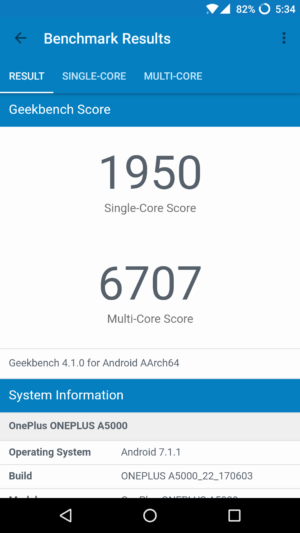
I’m not personally a fan of benchmarks, because I feel the on-paper story doesn’t always translate into the real world experience. That said, we understand many of you like to see performance quantified. With that in mind, we ran the OnePlus 5 through Geekbench, where it scored 1,950 on the single-core test and 6,707 on the multi-core test. Putting that into perspective, the Samsung Galaxy S8 scored 1945 when we ran it through the single-core test, and 6711 on the multi-core. Meanwhile, the HTC U11 scored 1912 on the single, and 6137 on the multi-score.
Obviously each time you run a benchmark, the score will vary a little, so factoring that in, the picture painted here is that the OnePlus 5 is every bit the performer that you’ll find with other new Android flagships.
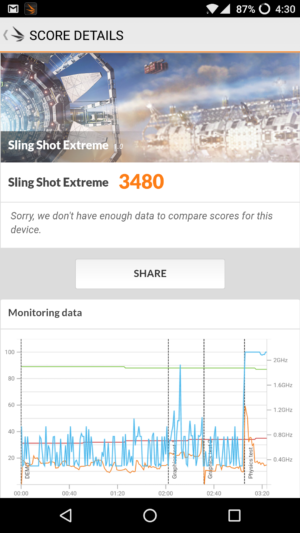

In short, the OnePlus 5 is a beast, and this story continues with the graphics department. Running the phone through 3DMark, the phone scored 3480 on Sling Shot Extreme. The Samsung Galaxy S8 scored 3470 on the same test, with the HTC U11 scoring 4483. Again, showing the phones are pretty much performing on the exact same level.
So that’s the processor and graphics. Moving past the processing package, the 5 offers a few other standout features, including one of the fastest front-facing fingerprint scanners I’ve ever used. We also like that it’s covered in ceramic so you don’t have to worry about it getting scratched up.
In short, the OnePlus 5 is a beast, both when it comes to processing and graphics.
As already briefly mentioned, the OnePlus 5 also keeps the ever so useful alert slider, which makes switching between different notification profiles an effortless experience. Although this isn’t new, it’s a feature that’s still very unique to OnePlus. The OnePlus 5 also has two SIM card slots – a feature not particularly common in phones, especially those offered in the states. It also comes with the latest Bluetooth 5, which is currently only supported by a couple other phones as of this writing.

While many of you likely use headphones or earbuds to consume media, there are times when you’re going to want to use the built-in speaker. So how does the OnePlus 5 fare in the sound quality department? I’d say it’s above average, but not certainly not what we’d describe as amazing. The speaker is much louder than I expected, but it also gets somewhat distorted at max volume and it’s pretty easy to accidentally muffle with your palm when using the phone in landscape.
in most aspects, the OnePlus 5 is on par with other newer, pricier flagships — though a few minor sacrifices are made to keep pricing down.
The OnePlus 5 speaker doesn’t begin to compete with some of the solid cameras we’ve seen from brands like HTC, but it’s far from what we’d describe as poor and gets the job done well enough.
When looking at the specs and features, the OnePlus 5 seems pretty close to being on par with other newer, pricier flagships… but that’s not to say that OnePlus didn’t cut a few corners in order to keep the pricing from getting too high. There’s no expandable storage or wireless charging, and the phone isn’t water and dust resistant. It’s that last point that probably matters the most, especially since wireless charging isn’t as common as it once was, and the 5 includes a large amount of internal storage.
With the exception of a few devices like the 2016 Google Pixel, most phones nowadays carry some sort of ingress protection. While we don’t find this to be a deal breaker, it might be for some. Still, you can’t expect OnePlus to offer every single feature found on more expensive phones, and overall there’s very little to complain about in terms of performance or hardware features.
Battery life

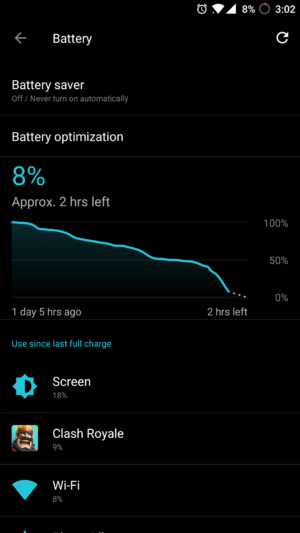
While the OnePlus 3T upgraded from the its predecessor’s 3,000 mAh battery to a much larger 3,400 mAh, the OnePlus 5 takes a small step backwards to 3,300 mAh. I can’t fault OnePlus for this, as its a small compromise required by the phone’s thinner design. And in reality, the difference is pretty much only on paper, as the OnePlus 5’s battery life is exceptionally good.
The 3,300 mAh battery lasts me comfortably throughout an entire day even with heavy use. That includes using the camera, watching quite a bit of YouTube, gaming for several hours, streaming music at the gym, and all the other usual stuff like reading emails and checking social media. On a much lighter day I’ll typically end the day with around 50%. When that happens I won’t charge the phone until the next day, so it is completely possible to get a day and half out of this phone.



Even if you go at it super hard, the good news is that OnePlus’ Dash Charge is absolutely amazing. It takes only 30 minutes to get a 60% charge, and roughly an hour and 20 minutes to go from empty to full. The quick charging here is insanely quick and power efficient, making the charging process so much easier and convenient.
Looking for more solid battery details, like full tests, screen-on time, and so forth? In order to get the review out to you in a timely manner and yet not sacrifice on the details, we’ll be bringing you a detailed OnePlus 5 battery review in the weeks to come, so stay tuned.
Camera

There are quite a few improvements found within the OnePlus 5, the biggest of which is easily the new dual camera system. Dual cameras are nearly a de facto setup for the majority of flagships nowadays, and every dual setup we’ve seen has had its own set of features that help it stand out from the crowd. Thankfully the OnePlus 5 is no exception.
Photos taken with the OnePlus 5 are well detailed, sharp without looking over sharpened, and color reproduction is more on the natural side and not overly saturated.
Most dual cameras either have the same resolution across both lenses or the secondary sensor is lower resolution. With the OnePlus 5 however, it’s the exact opposite. The main sensor is 16 megapixels with an f/1.7 aperture and electronic image stabilization. The secondary sensor is a 20 megapixel telephoto lens with a smaller f/2.6 aperture, though this lens doesn’t offer OIS or electronic stabilization. Similar to Apple’s implementation on the iPhone 7 Plus, the telephoto lens will let you optically zoom in by 2x without any loss in quality.
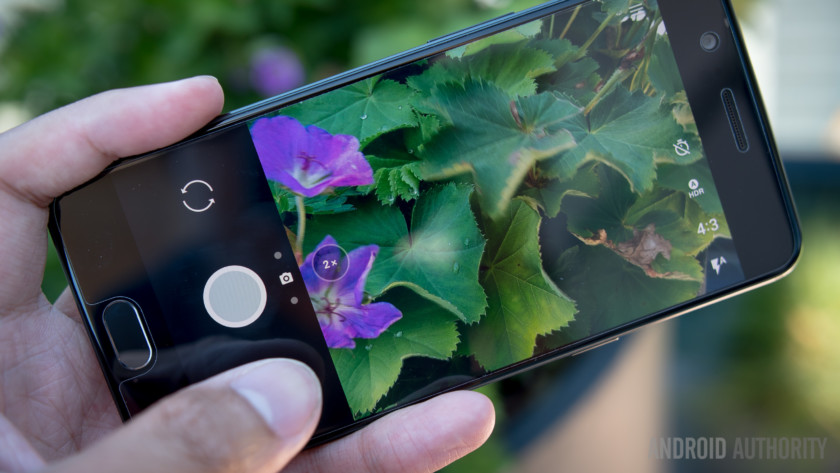
So how does this dual setup perform? Photos taken with the OnePlus 5 are well detailed, sharp without looking over sharpened, and color reproduction is more on the natural side and not overly saturated. The secondary telephoto lens is great for getting those closer up shots without losing any of the detail that you normally would from digital zoom. It’s perfect for getting closer on anything you want, but I found it to be especially great for macro shots. It is important to mention that it does produce slightly different colors from the main lens and is a little more inconsistent with exposure.
See also:
OnePlus 5 vs the rest: What’s the best Android camera?
5 hours ago
Low-light performance will depend on which camera you decide to use, with the second sensor being the weaker of the two due to a smaller pixel size, smaller aperture, and no stabilization. Photos from the telephoto lens are much more washed out, noisy, and full of lens flares and overblown highlights. White balance is the biggest issue of them all, though. The main sensor will give you much better results especially in terms of detail and color accuracy.

Turning to video, the camera is capable of recording 4K video, and EIS (electronic image stabilization) does a decent job at smoothing out any unwanted shakes and jitters. You can switch to the secondary sensor while recording to get closer on a subject, but because the second sensor lacks any form of stabilization the footage is noticeably more shaky.
Camera software improvements
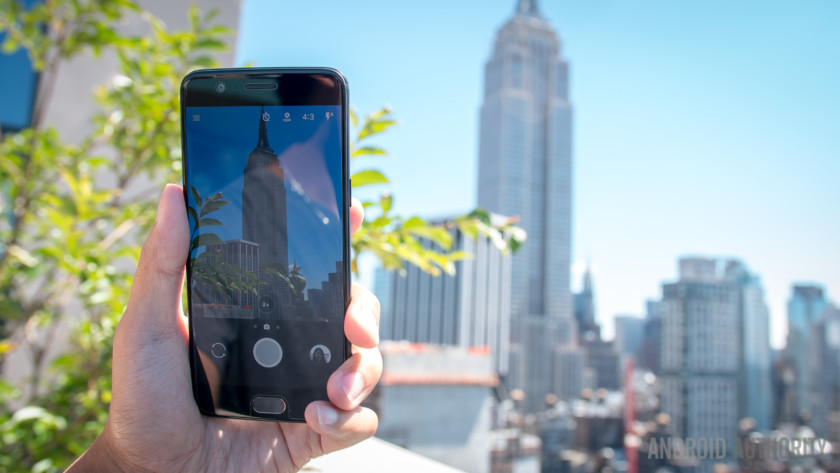
It’s not just the camera hardware that receives an upgrade with the OnePlus 5, as the software also has added a few improvements. First up, there’s a new portrait mode that simulates that nice blurry background or bokeh effect that you would normally get from a DSLR, while keeping the subject in razor sharp focus. Portrait mode pretty much works just as advertised. As long as you’re following the camera’s guidelines you can get some very convincing bokeh that creates a nice separation between the subject and the background.
For those that like as much control over the camera as possible, you’ll be happy to learn that the manual mode from the OnePlus 3 family has been replaced with a new pro mode that offers more control and a few nice enhancements. You can control all of the usual settings like ISO, white balance, shutter speed, focus, and exposure. But what I really like is the built-in histogram, the toggle to enable RAW directly on the viewfinder, and a horizon leveler to help you gauge when your shot is perfectly straight.
Software

One of the best things about OnePlus has always been its software. The OnePlus 5 is running the latest version of the company’s OxygenOS, which is based on stock Android 7.1.1 Nougat with a few more customizations baked in than you’d find with “pure Google Android” software. When OxygenOS first hit the scene after the company’s relationship with the ill-fated Cyanogen went south, it was promising yet raw. Thankfully it’s come a long way since then. While much of it remains the same on the surface, you can expect more bug fixes and software optimization which lend to an incredibly snappy experience.
Some of the returning features worth highlighting are the ability to customize accent colors, switch between a light or dark theme, and enable on-screen navigation keys. There are also a variety of off-screen gestures to open the camera, turn on the flash, or open up any application of your choice and other useful gestures like double tap to wake.



As for what’s new? OnePlus now includes a reading mode that turns the entire screen to grayscale, which, combined with a blue light filter, provides a similar experience to what you would get on an e-reader. There are also a few other nice extras like a do not disturb mode made specifically with gaming in mind, an updated app drawer that swipes from the bottom (just like the Pixel Launcher), and at least a few other minor cosmetic improvements that further compliment what was already a great software experience.
Specifications
| Display | 5.5-inch AMOLED 1920 x 1080 resolution 401 ppi 16:9 aspect ratio 2.5D Corning Gorilla Glass 5 |
| Processor | 2.45 GHz octa-core Qualcomm Snapdragon 835 mobile platform |
| GPU | Adreno 540 |
| RAM | 6/8 GB LPDDR4 |
| Storage | 64/128 GB UFS 2.1 2-lane |
| MicroSD | No |
| Cameras | Rear camera Main: 16 MP Sony IMX 398 sensor, 1.12 μm, ƒ/1.7 aperture, EIS, dual LED flash Telephoto: 20 MP Sony IMX 350 sensor, 1.0 μm, ƒ/2.6 aperture Front: 16 MP Sony IMX 371 sensor, 1.0 μm, ƒ/2.0 aperture, EIS |
| Battery | 3,300 mAh Non-removable Dash Charge (5V 4A) |
| Water resistant | No |
| Material | Anodized aluminum |
| Ports | USB Type-C (USB 2.0) 3.5 mm headphone jack |
| Connectivity | Wi-Fi: 802.11 a/b/g/n/ac, 2.4/5 GHz, 2×2 MIMO Bluetooth 5.0, supports aptX & aptX HD NFC GPS, GLONASS, BeiDou |
| Sensors | Fingerprint Hall Accelerometer Gyroscope Proximity Ambient light Electronic compass Sensor hub |
| Audio | Bottom-facing speaker 3 microphones with noise cancellation Supports AANC Dirac HD Sound |
| Network | LTE: Supports 3xCA, 64QAM & 256QAM Supports up to DL CAT 12 (600 Mbps) / UL CAT 13 (150 Mbps) depending on carrier support Bands: |
| SIM | Nano Dual-SIM |
| Software | Android 7.1.1 Nougat OxygenOS |
| Dimensions and weight | 154.2 x 74.1 x 7.25 mm 153 g |
| Colors | Midnight Black, Slate Gray |
Gallery
Pricing and final thoughts
We’ve already talked a little about pricing, but to reiterate, the base model of the OnePlus 5 will set buyers back $479/€499, with the more powerful Midnight Black model selling for $539/€559. So is it worth the asking price? Absolutely.
While many considered previous OnePlus models as ‘lower-cost flagships’, the OnePlus 5 brings an experience that is on par, and in some ways above the competition.
Sure, the OnePlus 5 has gone up in price from its predecessors, but there’s more packed into this phone than ever before and that makes it completely worth the price hike. Even better, it’s still cheaper than most other flagships offered on the market today. Yes, it’s missing a few key extras like expandable storage and water resistance, and the design sure isn’t going to please everyone. But at under $550, you’re going to have a hard time finding a flagship that offers a better experience.
While many considered previous OnePlus models as “lower-cost flagships”, the OnePlus 5 brings an experience that is on par, and in some ways above the competition… without charging the premium that brands like HTC, Samsung, and Apple expect you to pay. In fact, in many ways the downsides to the OnePlus 5 are the same as found with the Pixel family – an Apple-inspired design, no wireless charging, no expandable storage, and no waterproofing — but you get a faster processing package and a lower starting price.
At the end of the day, we feel that the OnePlus 5 is a no-brainer and we wholeheartedly recommend it. What do you think of OnePlus latest flagship? Does the Never Settle promise live on? Let us know your thoughts down in the comments.
See it at OnePlus
OnePlus 5 impressions from a Galaxy S8 user
2017 is proving to be the year when everyone brings their A-game to the smartphone industry, and OnePlus is no different. In case you missed it, OnePlus has officially announced its 3T successor, the OnePlus 5.
While the OnePlus 5 is the most expensive smartphone the company has ever made, the spec sheet is still quite impressive for a phone in this price range. But as we’ve found with other smartphones, there’s more to a great experience than just specs.
Related:
OnePlus 5 vs Samsung Galaxy S8: quick look
3 hours ago
I’ve been using the Galaxy S8 for the past couple of months, and I recently switched to the OnePlus 5 for about 72 hours to help with Android Authority’s review. I know 72 hours isn’t a ton of time to get acquainted with a phone, but I thought I’d give you my thoughts on the device so far.
Without further delay, here are one Galaxy S8 user’s thoughts on the OnePlus 5.
An awesome feature set

I won’t rehash the specs here, but looking at the spec sheet, the OnePlus 5 can absolutely compete (and surpass, in some cases) the Galaxy S8 and S8 Plus. The OnePlus 5’s Snapdragon 835 processor, Adreno 540 GPU, and 6/8 GB of RAM certainly deliver on their promise of offering a smooth and snappy experience overall. The S8 is quite the powerhouse too, with its Snapdragon 835, 4 GB of RAM, and 64 GB of storage. The S8, however, offers expandable storage via microSD, which is a feature you’ll have to live without if you choose the OnePlus 5.
Now, I’ve been using the Midnight Black variant, which comes with 8 GB of RAM and 128 GB of storage, though there is a Slate Gray model out there with 6 GB of RAM and 64 GB of storage.
Even with 30 apps open and running in the background, the OnePlus 5 didn’t slow down a bit.
Even with 30 apps open and running in the background, the OnePlus 5 didn’t slow down a bit. Many smartphones start slowing down a bit once you load up your data and open apps, but I never noticed the OnePlus 5 slow down once.
Our battery tests take longer than 72 hours, so I couldn’t run them in time for this piece. However, over the three days I’ve used this phone, battery life seems to be impressive. You can check out Lanh’s full OnePlus 5 review for a closer look at the battery.
Once your battery dies, though, you’ll be happy to hear that OnePlus’ Dash Charge has made a return. And boy is it fast! OnePlus says a 30 minute charge is enough to get through a whole day of use, and I’d say that’s about right, at least in my experience thus far.
See also:
OnePlus 5 officially announced with an all-new dual camera setup
5 hours ago
The OnePlus 5 could hold an LTE connection much stronger than any other phone I’ve used.
One major difference between these two devices that I’ve noticed is that radio reception seems much stronger on the OnePlus 5 compared to my Galaxy S8, especially when it comes to LTE connectivity. In terms of data speeds, both phones are on par, though I found the OnePlus 5 could hold an LTE connection much stronger than any other phone I’ve used. For example, many phones drop LTE connectivity when riding in an elevator in my building in San Francisco. The OnePlus 5 not only held it, but showed full coverage. Granted, this isn’t a scientific test at all, though it’s impressive nonetheless. Simply put, if you live in an area with spotty cell coverage, the OnePlus 5 could solve a lot of those problems.
A familiar camera experience

Let’s get the cat out of the bag – the OnePlus 5’s dual camera looks like the iPhone 7 Plus camera and acts a whole lot like it too. The regular 16 MP sensor is backed by a 20 MP telephoto sensor which offers 2x optical zoom as well as up to 10x digital zoom. The dual cameras also combine to offer a portrait mode with the data from the second sensor used to intelligently blur out background detail so only the subject is in focus. OnePlus’ new Fast Autofocus system uses the full pixel to quickly focus on a subject and definitely seems to be faster than on most phones which use Phase Detection Autofocus.

Images are rich, well-detailed and appear on the natural side.
In practice, the camera performs pretty well. Images are rich, well-detailed and appear more on the natural side versus other phones which prioritise saturation over color accuracy. The secondary telephoto lens allows you to take great close up and macro shots without loss of detail, while manual mode offers tons of controls for budding photographers. Low-light performance on the main sensor offers detail and accurate colors while video recording and Electronic Image Stabilisation provides a relatively smooth experience.
See also:
OnePlus 5 vs the rest: What’s the best Android camera?
5 hours ago
How does the camera compare to the competition though? Head over to our best Android camera shootout to find out as we compare the OnePlus 5 to the Galaxy S8, LG G6, Pixel XL, HTC U11 and Sony Xperia XZ Premium! Stay tuned as we’re also bringing you a closer look at how the camera has improved versus the OnePlus 3T last year as well as portrait mode shootout between the iPhone 7 Plus, OnePlus 5 and the Huawei P10!
OxygenOS vs TouchWiz

It’s common knowledge around the AA team that I’ve used TouchWiz for many years and have grown accustomed to, as well as learnt to live with, a lot of the quirks in Samsung’s software. The reason I like TouchWiz a lot is that it offers what I’ve come to expect from Android: tons of customisation, baked into the interface out of the box. That means no installing apps to do little things and while I wasn’t sure about OxygenOS, the software on the OnePlus 5 left an impression.
Yes, in some ways it doesn’t have quite the same plethora of options that TouchWiz has, but at the same time it’s super smooth and doesn’t seem to stutter like TouchWiz does in places. There’s no huge changes to the software this time around but there’s the usual array of improvements and from a first time OxygenOS user – well, technically second after my brief stint with the OnePlus 3T – the OnePlus 5 has me impressed. It contains most of what I’ve come to expect from TouchWiz in terms of features, but in a wrapper that’s buttery smooth and easy to use.
So close… yet so far

There’s a lot to like about the OnePlus 5 but there’s also a few things that I wish OnePlus had changed and the biggest of these is the display. With everyone adopting QuadHD and the Galaxy S8 sporting one of the best displays I’ve ever used, the Full HD panel on the OnePlus 5 seems like a step back. Even though it’s an AMOLED panel and boasts rich, vibrant colors and deep blacks, it’s a visible step back from the Galaxy S8. For most people, the OnePlus 5 display is going to be good and enjoyable but once you’ve used a Quad HD Super AMOLED, it’s hard to go back to something lower resolution.
The other big thing I wish that OnePlus had improved on was the design: in essence, the design of the OnePlus 5 is actually pretty similar to the OnePlus 3 or OnePlus 3T and that is rather disappointing. The OnePlus 5 looks no different to the Oppo R11 – or dare we say it, the iPhone 7 Plus – and it’s a shame that there’s been no major upgrades on the design front.
The OnePlus 5 looks no different to the Oppo R11 – or dare we say it, the iPhone 7 Plus
With that said, I love the little alert slider on the left of the phone as it’s a really simple way to flip between the various Do Not Disturb modes – Silent, Priority or Normal notifications. I’ve used the mute switch extensively on the iPhone as the fastest way to mute notifications during a meeting for example, and it’s nice to have a physical way to do so on an Android phone. Although it’s certainly not new, it is somewhat unique to OnePlus and has become a staple of their smartphone design philosophy.
Would I buy the OnePlus 5? Should you?
Overall, the OnePlus 5 is a curious smartphone. On the one hand, it’s exceptional value for money and it does a lot of things exceptionally well, but on the other, it doesn’t excite me as much as the Galaxy S8 does. That’s down to the display and design though, and for most people, the cost-savings over Samsung’s flagship will make the OnePlus 5 worthy of splashing out on.
Would I personally buy the OnePlus 5, I hear you ask? If I was to spend my hard-earned money on a phone right now, I do think it would be the OnePlus 5. The cost savings alone definitely make it a smartphone that many people should consider.
What do you think of the OnePlus 5 and do you plan to buy one? Let me know your thoughts in the comments below!
Check out our other OnePlus 5 coverage:
- Spec showdown: OnePlus 5 vs the competition
- First 5 things to do with your OnePlus 5
- These are the official OnePlus 5 cases
- Is the OnePlus 5 still a good deal at $479?
Buyer snags Apple I at a ‘discount’ price because of its memory modifications
Why it matters to you
The Apple I and many other pieces of technology and documentation from that computing era are worth a lot of money.
A working Apple I is rare and worth a lot of money. While a recently auctioned system was sold for $355,500, that is actually a rather low price tag for an Apple I in that condition. The buyer was able to get such a deal because the system had been modified to perform better than the original design.
While today Apple is focusing its efforts on future tech like augmented reality, in 1976 it was developing the original Apple I. Sold with a price tag of $666.66, the Apple I was Apple’s very first product and all 200 of the original machines were built by hand, many by Apple co-founder Steve Wozniak himself. Around 63 of the classic systems are accounted for with only a handful confirmed to be working, so anytime one goes on sale, it is quite a big event. This one though did not sell for as much as some of its peers because it featured some modifications from the original design.
Described in its listing as a “Working Apple-1 Personal Computer, Palo Alto, 1976,” it featured the original MOS Technologies 6502 microprocessor and 12KB of RAM. The original Apple I design came with 8KB of memory, which is where one of the modifications was made to this model, to add an additional 4KB.
That modification and the addition of EPROM was conducted by the original owner, Andrew Zacharias in the mid-1970s. The auction listing claims he later sold the system in 1978 for $300.
While the $335,500 this model ultimately sold for is quite a markup on the original purchase and resale prices, it is not quite as strong as some of its fellow Apple Is have sold for. Several have been sold over the past half-decade, with one reaching as much as $905,000. 9to5Mac reports that a further ‘Celebration’ model was sold in August 2016 for $815,000.
Much of that particular time period in computer development is considered extremely valuable now. The hardware itself is rare, but for those tempted to dig through their attics and basements in search of something valuable, even paperwork from that era can fetch thousands. A personal archive of Apple co-founder Ronald Wayne that included proof sheets from the Apple-1 Operation Manual and some blueprint drawings of the Apple II, fetched $25,000 in 2014.
How to get Google Play Music’s New Release Radio station without a Samsung phone
Nothing on the internet ever really dies, and an equally immutable fact could be nothing on the internet is ever really exclusive. Samsung smartphone owners were recently given exclusive access to Google Play Music’s “New Release Radio” station. The station is a personalized mix of new music releases — it’s updated daily and based on your listening preferences. This comes a few months after Samsung and Google partnered to make Google Play Music the default media player and streaming service on all Samsung phones.
If you have a Samsung phone, once you open the Google Play Music app, you will be prompted with a notification introducing the New Release Radio as a “Samsung Exclusive.” With a simple tap of the “check it out now” button you will be able to check out the station and add it to your Music Library. Google has not released numbers on how many people are paying for its streaming music service, but this is the latest attempt at bolstering those numbers and bringing more ears to Google. There is a free version of the service that does not require a subscription fee as well.
For Samsung, it is a way to make music streaming a selling point for new phones after its Milk Music streaming service was shut down in September 2016. Samsung Milk Music was meant to be an alternative to Pandora and Spotify, offering personalized radio stations free of charge and without ads. In the statement announcing Milk Music’s shutdown, Samsung noted it would be focusing on partnerships that help with “seamlessly integrating the best music services available today into our family of Galaxy devices.”
For those of us without Samsung smartphones, there’s good news — there is a way to enjoy Google Play Music’s daily playlist of newly released music, and you don’t even need a subscription. I tried the method mentioned below to get New Release Radio on my Moto Z Force Droid with a Gmail account that had no Google Play Music subscription, and within 20 seconds I was listening to Vince Staples’ latest song, Rain Come Down.
Spotify offers a Release Radar playlist, but only compiles the newest music released every Friday. Friday may be the international day new albums are released, but new music is being released every day in the age of blogs, Soundcloud, and YouTube. A few music veterans, like Apple Music’s Beats 1 Radio’s Zane Lowe, thinks music is being released so often, it’s hard to keep up with what is new.
Here is how to get the New Release Radio station on your mobile phone if you are not using a Samsung device:
Step 1: Navigate to the desktop website for New Release Radio from Google Play Music.
Step 2: Click on Add To Library.
Step 3: Open the Google Play Music app on your mobile device.
Step 4: Slide the left-side sidebar out and click on Music Library.
Step 5: Click on the Stations tab, and New Release Radio will be among your list of favorite stations.
Step 6: Click the Play button on the New Release Radio station and enjoy.
 AIVAnet